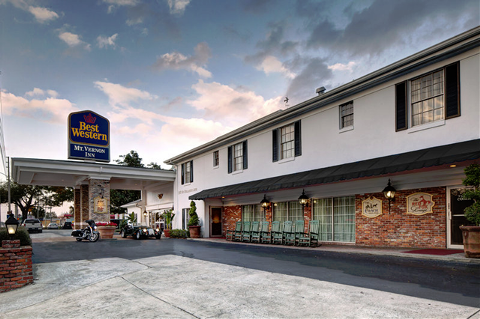
A Winter Park icon, the Mt. Vernon Inn, will close its doors forever on November 1. Long beloved by locals as a place to gather in the morning for breakfast or in the evening for drinks, the Red Fox Lounge will be replaced by three upscale restaurants boasting a combined total of 590 seats.
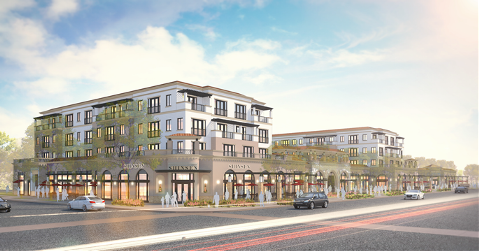
Rather than hotel rooms, the new establishment, to be known as The Luxe, is slated to have 53 apartment units with rents of $3,000 a month, according to the developer, Unicorp National Developments president Chuck Whittall. At a projected 223,940 square feet, the Luxe will be more than double the size of the Mt. Vernon and will require Unicorp to request a sort of hybrid zoning – a blend of the existing commercial C-3 zoning and a “planned development” category known as PD-1.
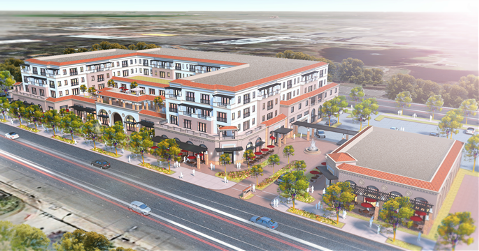 If the city grants it, this will be the first PD-1 zoning in Winter Park. A planned development is one that combines residential, retail and commercial establishments and is generally characterized by a high level of density.
Unicorp Needs Upzoning to Build The Luxe
Unicorp’s Chuck Whittall, who will be developing The Luxe if his deal to purchase the Mt. Vernon Inn goes through in early November, is entitled to ask for this blended zoning. The Winter Park City Commission, however, is in no way obligated to grant his request.
 The issue is slated to come before Planning & Zoning on November 4, and then before the City Commission on December 8.
Unicorp: 7 Parcels on 17-92
Mr. Whittall has amassed an ambitious amount of real estate along Highway 17-92. In addition to Mt. Vernon/Luxe property, Whittall has Lakeside Winter Park, home to Trader Joe’s, Gardens at Ravaudage, the Fleming’s Steak House property, the former Wazzabi property, the Cold Stone Creamery / Math building and Winter Park Terrace, the former site of Starbuck’s – a total of seven holdings.
‘T.O.D.’ Hits 17-92
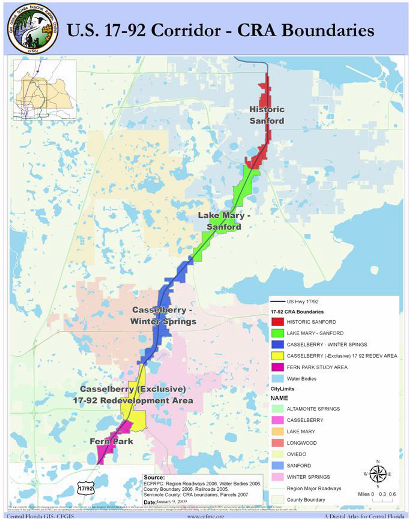 What we may be seeing is one example of Transit Oriented Development (TOD), which was described in a regional study created between 2007 and 2010 by the East Central Florida Regional Planning Council, entitled “The East Central Florida 2060 Plan.”
The East Central Florida region includes 68 cities in six counties – Orange, Osceola, Volusia, Seminole, Brevard and Lake.
2060 Plan: ‘Stop Urban Sprawl’
Creating a model by projecting current development patterns into the year 2060, the Planning Council found “a less than desirable and consumptive outcome that promotes sprawl . . . including irreversible damage to our environment and economy.”
The 2060 Plan is an attempt to avoid “development [ in ] the most critical ecosystems, [ promote ] denser growth in transit planned corridors, and [ to redevelop ] existing urban centers.”
East Central Florida boasts one lone corridor, comprised of three parallel arteries – 17-92, a portion of I-4 and SunRail. According to the 2060 Plan, “Aligning transportation and land use is essential to the success of corridors. The 17-92 corridor will be a transit oriented development that “feeds” SunRail . . . .”
ECF 2060 Plan
“Transit Doesn’t Work Without Density.”
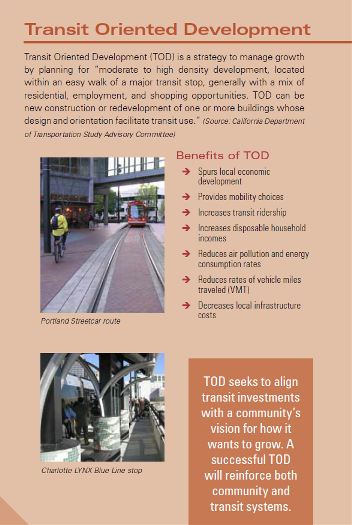 Transit Oriented Development is described in the 2060 Plan as, “. . . a strategy to manage growth by planning for ‘moderate to high density development, located within an easy walk of a major transit stop, generally with a mix of residential, employment, and shopping opportunities.”
Fred Milch, Transportation Planning Manager at the Central Florida Regional Planning Council, told the Voice, “Transit doesn’t work without density.”
Orlando Area Apt. Construction Jumps 56%
Chuck Whittall is not the only developer who has jumped on this bandwagon. According to the Federal Reserve Bank of Atlanta, the current pipeline of apartment construction activity in the Orlando metro area is the highest in the state.
It has gone from 3,640 starts in the second quarter of 2013 to 5,685 in the second quarter of 2014.
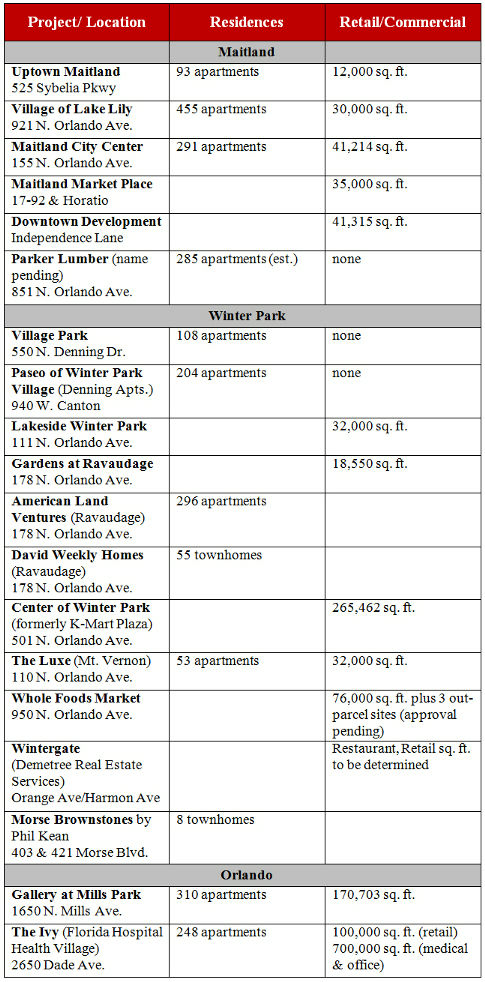
Listed below are developments — planned, under construction, or completed — along the Maitland-Winter Park-Orlando portion of the 17-92 corridor. Together, they represent 2,253 apartments, 63 townhomes and an estimated 1.4 million square feet of commercial and retail space – all worth in excess of $500 Million.
Florida Hospital Promotes TOD
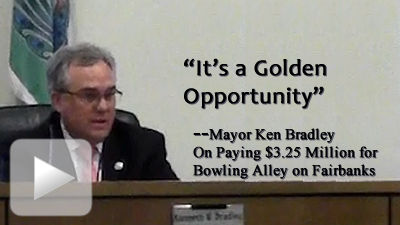
Winter Park Mayor Kenneth Bradley’s employer, Florida Hospital, has been at the forefront of TOD promoters. In a letter dated May 12, 2011, Florida Hospital President and CEO Lars Houmann wrote to Governor Rick Scott, “Florida Hospital will work cooperatively with businesses and municipalities all along SunRail to enhance ridership and development.”
Mayor Bradley announced today in the Winter Park Observer that he would not seek another term as mayor. His current term expires in March 2015. Noting the sacrifices involved in holding public office, Bradley said, “I’ve done what I feel like I came to do.”
FL Hospital Letter
No Gain Without Pain
 Metroplan Orlando’s Executive Director Harry Barley is optimistic about the prospects. “This is an important regional corridor,” said Barley, “and it will fit with our regional vision for growth.” But the transition to TOD does not come without a price.
In Winter Park’s immediate future, 17-92 congestion and declining SunRail ridership are on a head-on collision course with the looming six and one-half-year reconstruction of I-4. According to one developer, “It’s going to be painful.”
SunRail Ridership Plummets
If the objective of TOD was to get us out of our cars and onto a train before I-4 construction began, that effort has failed.
According to the Orlando Sentinel, SunRail ridership has steadily declined. For example, Florida Hospital’s Health Village is a huge mixed-use complex that exactly fits the “Florida 2060” model. It has approximately 17,000 employees, their own rail stop which was financed by the hospital, and a subsidy for employees who ride the train to work.
In August 2014, the Florida Hospital stop had an average of 181 SunRail riders per day.
Sentinel SunRail Story
No Coordination Among Corridor Cities
Asked if anyone was addressing the cumulative impact on the infrastructure along the corridor, Central Planning Council Executive Director Hugh Harling confirmed that all this new development falls within the jurisdiction of the local municipalities.
He said, “Each city operates independently.” And officials in Maitland 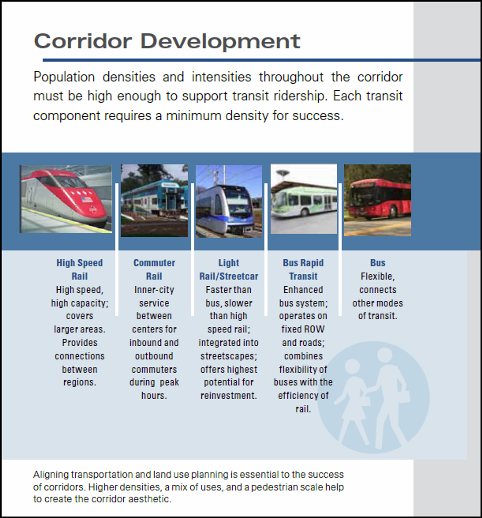 and Winter Park, who asked to remain unnamed, said that each city is concerned with its own piece of the pie and that there is virtually no coordination among them.
They confirmed that there is no regional person or organization responsible for regional coordination or oversight.
Regional Vision vs. Local Vision
Clearly, there is a vision plan already on the books – and has been since 2010.
TOD is barreling down the tracks straight at Winter Park, and it seems to be arriving way ahead of schedule. It may be very difficult for the City of Winter Park to embark on a local visioning process without being overtaken by the regional juggernaut.

 Gary Brewer, who served as Winter Park commissioner and mayor during the 1980s and 90s, told the Voice today he intends to run again for the WP Commission.
 Mackinnon pledged to “build consensus” among Winter Parkers, vowing to change the climate of governance that has sent the city “careening from one crisis of its own creation to another by promoting policies and projects that lack community support.”


Recent Comments