Winter Park Suspends Flock Cameras for At Least 90 Days
The police department said the cameras are a beneficial tool for solving crimes and would like to reinstate them once a new policy is finalized
Sept. 28, 2026
By Allison Smith
Winter Park Police Chief Tim Volkerson confirmed that his agency’s Flock cameras and any other automatic license plate readers (ALPRs) are no longer in use following a suspension of the program approved by the City Commission last week.
The suspension will run for at least 90 days, giving the department time to “assess and discuss” the changes needed to protect the privacy of law-abiding residents and guard against potential abuses by law enforcement, while still reaping the benefits the cameras provide as investigative and crime-solving tools, he said.
“We’ve made policy changes to try and keep up with putting appropriate guardrails on [license plate reader] systems,” Volkerson told the commission. “But it’s a very fluid thing … And honestly, I feel like a dog chasing my own tail, trying to keep up with everything.”
In August, Volkerson updated his department’s policy to more strictly limit how the camera database can be used, in response to incidents of police abuse elsewhere. In Haines City, about an hour southwest of Winter Park, a police officer was arrested and charged with official misconduct and other computer-related crimes. The officer allegedly used the Flock system for more than 700 searches over about two years to track the whereabouts of his estranged wife’s vehicle.
“We’re banning any of those features that create more of the feeling of distrust in the community,” Volkerson said.
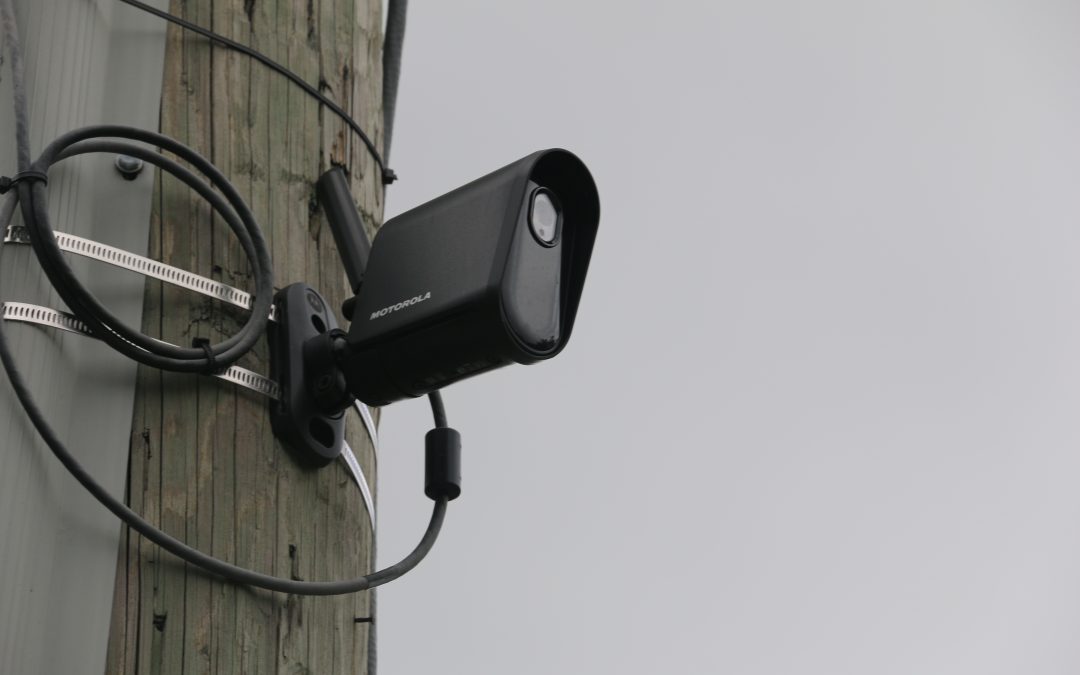
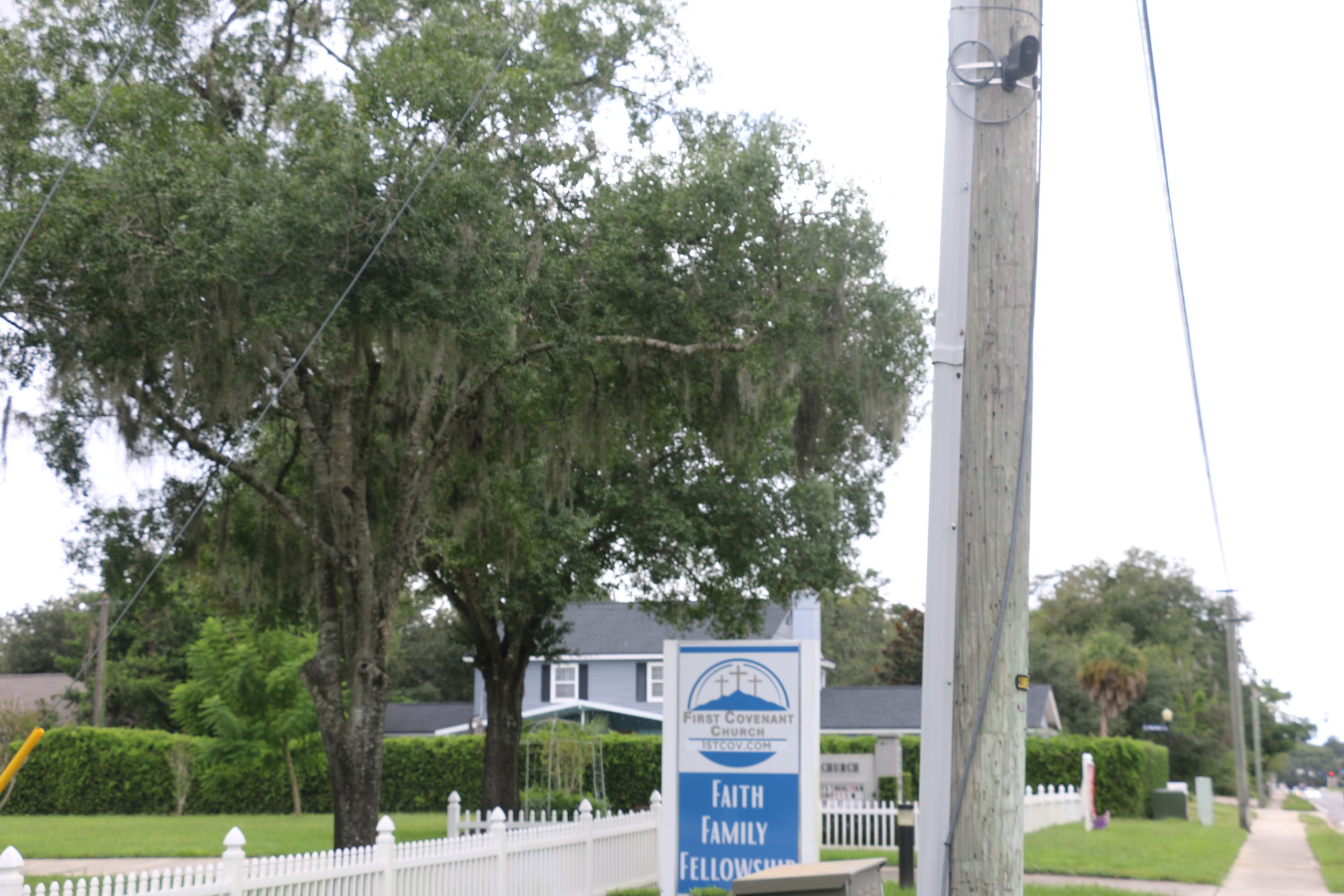
A camera appears on a utility pole near a church on Howell Branch Road in Winter Park. (Photo by Allison Smith)
However, he said he needs until at least early 2027 to determine what the full policy should look like going forward.
Commissioner Warren Lindsey expressed concern that the Florida Legislature could override whatever new policy the city comes up with when lawmakers meet again in March. In recent years, the Legislature has repeatedly preempted city and county rules, chipping away at local governments’ ability to govern themselves with one-size-fits-all solutions for the entire state.
Volkerson said he plans to stay in touch with lawmakers and address their concerns, and he hopes to have a policy in place before the annual legislative session begins in March.
Winter Park signed a 60-month contract with Flock Safety in 2023 for three cameras at a cost of $7,500 a year, according to the contract.
All three cameras were positioned on state-owned roads. They were deactivated after the Florida Department of Transportation revoked permits for such devices across the state in August.
Winter Park also uses cameras manufactured by Motorola Solutions, which primarily sells to government agencies and law enforcement, according to the company’s public financial filings. Those cameras are also included in the citywide suspension and will be subject to the new policy.
Volkerson declined to comment on how many Motorola cameras were recently in use, but said they were acquired through a grant.
Using the popular crowdsourced site Deflock, a Voice reporter attempted to photograph ALPRs in and around Winter Park. The Voice confirmed the locations of 13 cameras listed on the site’s interactive, open-source map.
Some of the cameras are on private property, such as the campus of Rollins College.
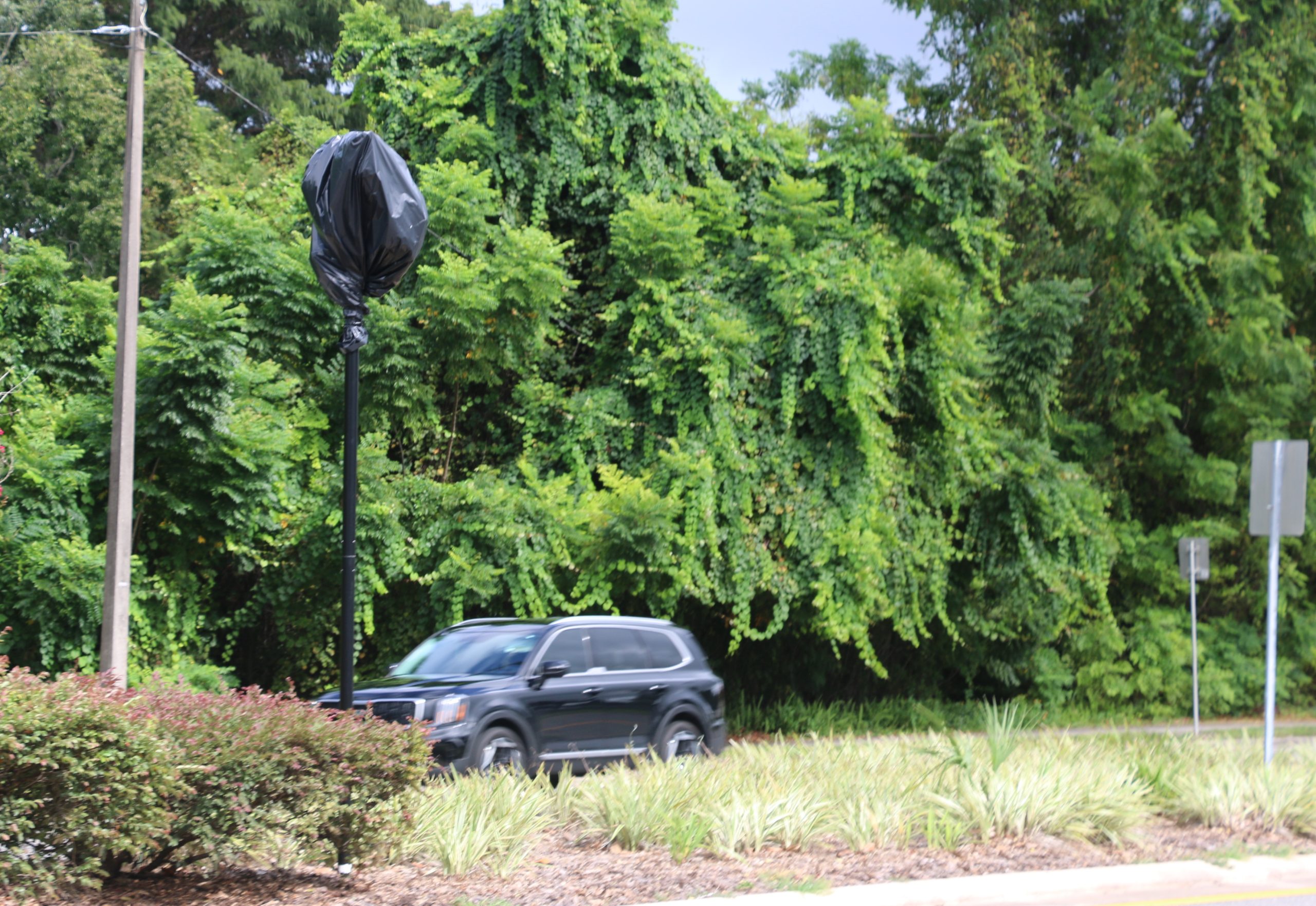
One camera on a median on Horatio Avenue near Howell Branch Road in Maitland appeared to be covered with a garbage bag.
A bag appears over a camera in Maitland on Horatio Avenue. (Photo by Allison Smith)
Volkerson said he expects the state to begin fining agencies for misuse of ALPR systems, similar to the penalties for abuse of another law enforcement database, the Driver and Vehicle Information Database, known as DAVID. That database contains Florida driver’s license numbers, home addresses, photos, signatures, birth dates, vehicle information and more. DAVID has also been prone to misuse by law enforcement and other officials over the years, and its rules could serve as a model for Flock technology.
“Protecting people’s privacy is extremely important,” Volkerson said. “Any violation of that is an extremely serious offense.”
According to the department’s ALPR policy, updated in August, the database can be used only for active investigations, and information cannot be shared with anyone who is not directly involved in the investigation.
The cameras use optical recognition technology to check license tags against a so-called “hot list.” They provide a visual and audible alarm when a tag matches lists of stolen vehicles, suspended driver’s licenses, registered sex offenders, registered felons and other local intelligence pertaining to gang or drug investigations, according to a copy of the policy.
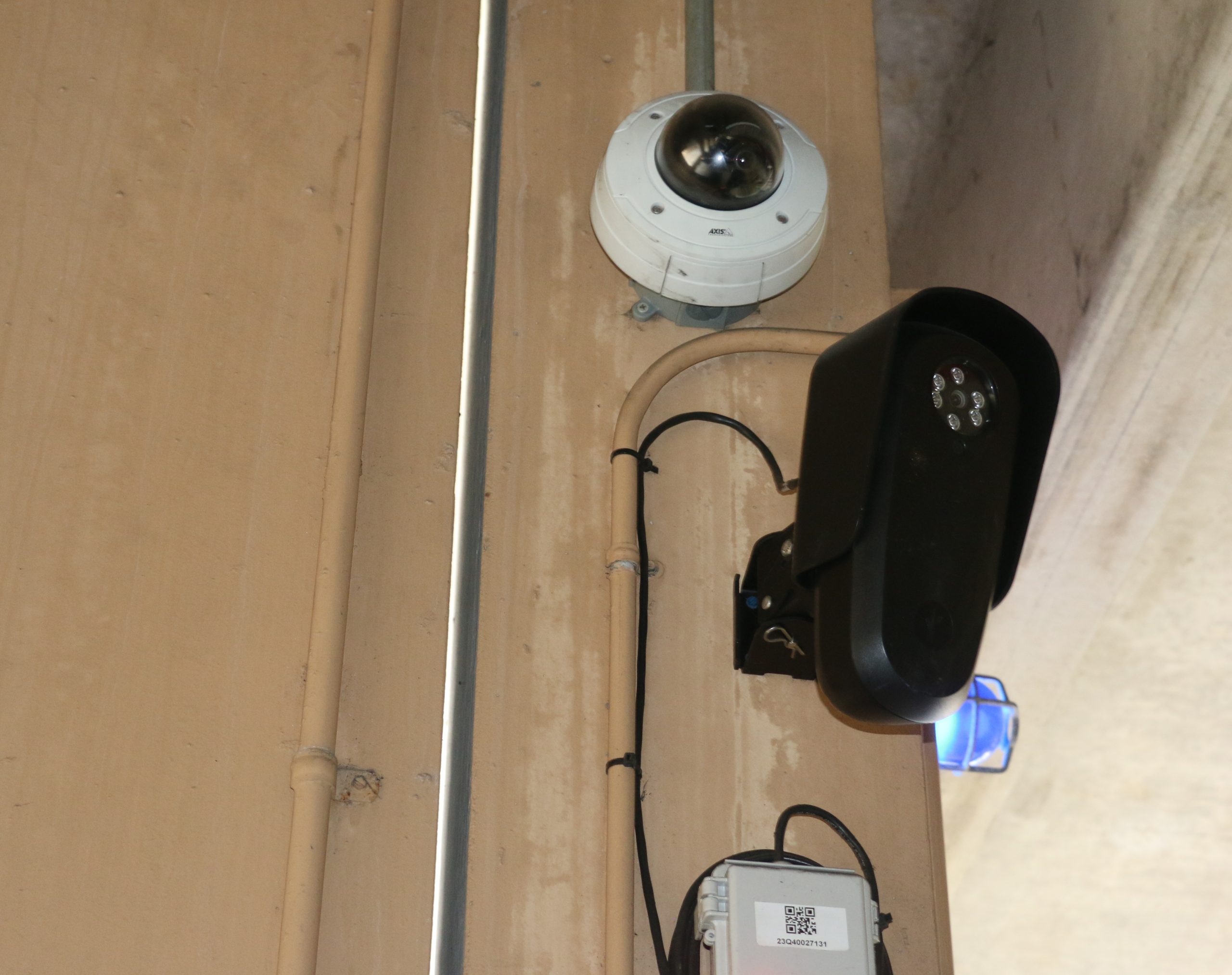
An APLR camera appears on the first floor of the Truist Parking garage just off Park Avenue in Winter Park. (Photo by Allison Smith)
Officers in Winter Park can manually add to the hot lists only in certain circumstances, such as a new Amber or Silver Alert, license plates related to wanted or missing persons, and those necessary for “gathering criminal intelligence during an active investigation.” Searches can be traced to the officer’s name and case number, and officers must enter a reason for each search.
Volkerson said the department still needs to determine a retention period for the images and information the cameras collect, along with rules for cameras near sensitive areas such as schools, health care facilities and churches.
Winter Park to Remove Flock Cameras Per State Order
“The cameras have value in terms of investigative and security uses, but the issue is whether or not people’s privacy rights and concerns over surveillance outweigh those legitimate and positive uses,” Commissioner Warren Lindsey told the Voice
Sept. 2, 2026
By Beth Kassab
Winter Park Police Chief Tim Volkerson said all three of the Flock cameras operating in Winter Park will be taken down in order to comply with a state order to remove the license plate readers from state roads.
Volkerson said the cameras will come down within 30 days as required by the order from the Florida Department of Transportation.
“… The recent exponential increase in deployments along our roadways, coupled with concerning reports of misuse, data privacy concerns and surveillance schemes merit immediate action to preserve Floridians’ sovereignty and quality of life,” read the memorandum dated Aug. 31.
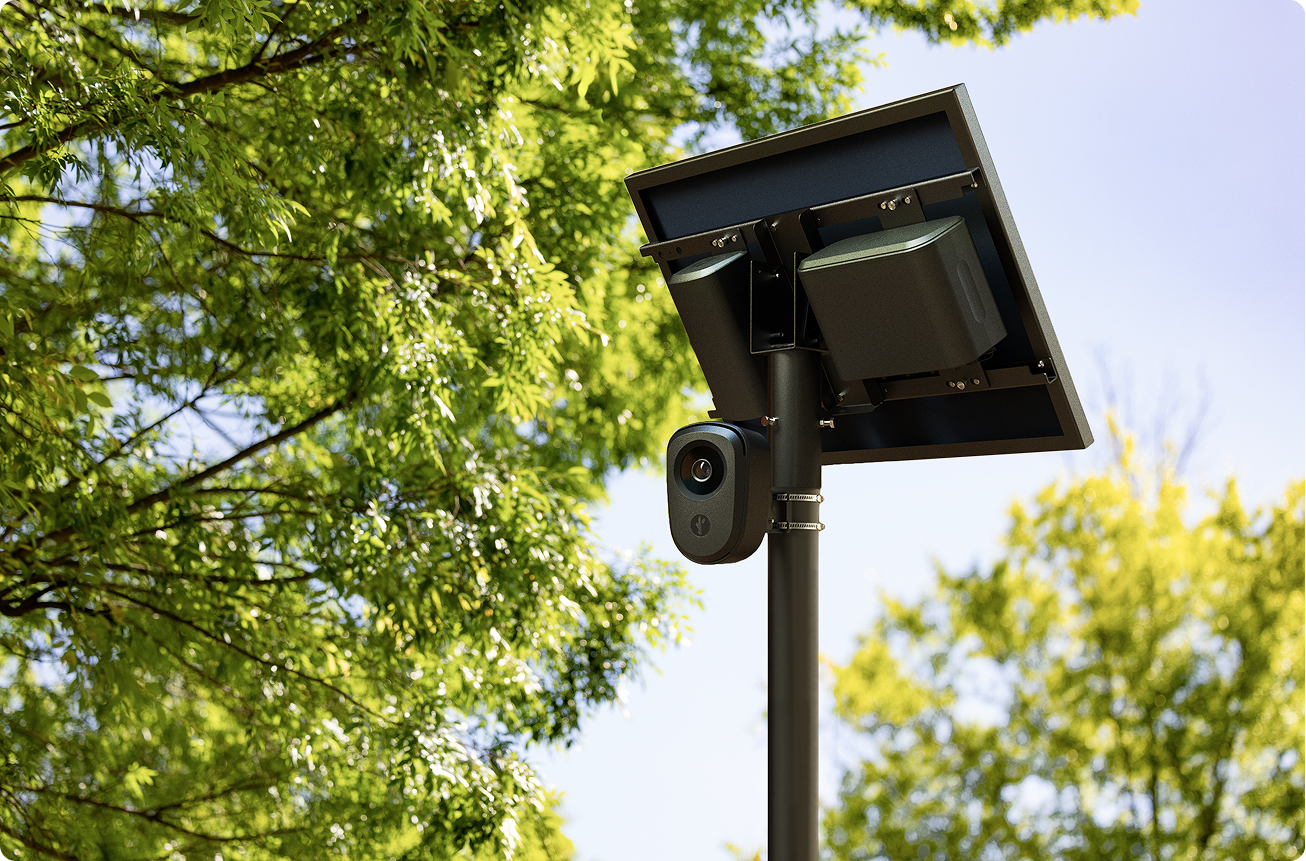
An example of how a camera appears on the road. (Photo courtesy of Flock Safety)
Winter Park has operated the cameras on Lee Road, Fairbanks Avenue and Aloma Avenue for about five years. All are on state-owned roads and must be removed to comply with the state’s order revoking permits for the devices.
Volkerson said it’s possible the cameras will be placed on city-owned roads, which would not be impacted by the state’s order. He said the original locations were selected because they cover the major roadways that lead in and out of the city of 30,000 people surrounded by Orlando, Maitland and neighboring Seminole County.
The Voice reported last month that Volkerson made changes to the way the police department used the cameras in response to increasing concerns about privacy and growing awareness about instances of law enforcement in other jurisdictions abusing the database created by the cameras. He ended direct access to Winter Park’s cameras by outside agencies and also said he planned to more strictly audit how his department was using the database.
Flock cameras, which get their name because they are manufactured by an Atlanta-based company called Flock Safety, are mounted along roadways and photograph vehicles. They create a searchable database of license plate numbers and other details such as the vehicle’s make, model and distinguishing characteristics. Police can search by inputting a description such as a blue Toyota RAV-4 with damage to the back bumper or by a tag number as part of an investigation.
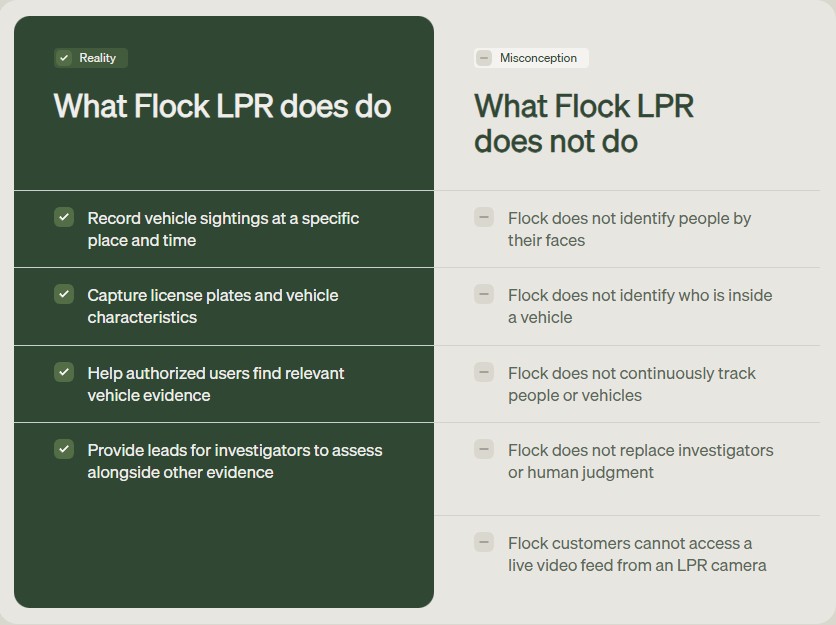
A chart from Flock Safety’s website attempts to address some concerns about the camera system.
Officers can also program the system to alert them if a vehicle with a specific description or tag number is captured by one of the cameras.
In July, his officers conducted between 50 and 60 searches using the cameras, which cost the department $7,500 a year to lease.
Volkerson previously told the Voice the network of surveillance provides a “huge benefit” for safety as a tool for solving crimes.
As an example, Volkerson said the cameras proved helpful earlier this year when there were some residential burglaries along Phelps Avenue. He said his officers pursued a suspect but lost him. About 20 minutes later, they received an alert for the vehicle from a camera near South Orlando Avenue and pursued it again but did not capture the suspect. Eventually a different agency’s camera alerted that the vehicle was near Apopka and the suspect was arrested.
But in recent months, the network of cameras has prompted nationwide backlash among people concerned about data collection and the privacy of law-abiding citizens.
Commissioner Warren Lindsey, who is also a well-known criminal defense attorney, said he has concerns about the cameras and wants to consider the risks and benefits before the city decides to continue to use them in other locations not governed by the state order.
“We need to look at it carefully,” he said. “Where does the data go and where is it used? The cameras have value in terms of investigative and security uses, but the issue is whether or not people’s privacy rights and concerns over surveillance outweigh those legitimate and positive uses.”
Commissioners Want Safety Class and Other Rules for Kids on E-Bikes
Winter Park is still considering exactly what rules to put in place and how to enforce them
Aug. 14, 2026
By Gabrielle Russon
Winter Park is considering imposing new regulations aimed to crack down on people driving electric bikes and motorized scooters dangerously around town.
The City Commission held a workshop Thursday to discuss how they want to craft a future city ordinance although they did not take an official vote. No public meeting date has been scheduled yet for the City Commission to vote on the final ordinance, spokeswoman Clarissa Howard said afterward.
The issue of e-bikes and e-scooters has been a hot topic in Central Florida. Just ahead of the new school year, Orange County Public Schools banned the devices for all students unless they have a valid driver’s license or learner’s permit. School officials expressed frustration that state and local governments have not acted sooner to pass any safety reforms.
On the workshop’s agenda, draft language of the ordinance proposed a 10 mph speed limit for any electric bicycle or motorized scooter traveling on sidewalks, shared-use paths, trails and parks. E-bikes and e-scooters would be banned on sidewalks within the central business district, Hannibal Square Neighborhood Commercial District or Orange Avenue District just like bicycles are.
But city officials questioned whether to include a specific speed limit at all.
Winter Park Police Chief Tim Volkerson said he was hesitant about the challenges of enforcing a 10 mph limit.
“Conceptually, I like the 10 miles an hour, but the reality is if you set a speed limit of 10 miles an hour, I’m going to have a line of people at my door wanting to know why we’re not running radar on sidewalks and giving kids tickets for going 11 and 12 mph on the sidewalks,” Volkerson said. “If it’s in ordinance, there is going to be an expectation that we are going to enforce it.”
He also warned some electric vehicles young people are riding don’t have speedometers.
“It’s hard to hold a 13- or 14-year-old kid accountable for going 10 miles an hour when he doesn’t have any method of determining that he’s going 10 miles an hour,” Volkerson said.
City officials suggested not having a specific speed limit at all but crafting the ordinance to say “unsafe speeds” or “carless” driving was prohibited on e-bikes and e-scooters.
However, Commissioner Elizabeth Ingram said if the city left it “broad like that, everyone’s going to have their own opinion of what is careless.”
Under the proposed ordinance, e-bike and motorized scooters would need to yield the right-of-way to any pedestrian.
Winter Park officials nixed a proposed provision to require e-bike and e-scooter drivers to carry a government-issued photograph ID.
Anyone under 16 will be required to take a city-approved safety education class to ride in city limits.
“I absolutely love the idea of requiring kids to attend the class. I think it’s very, very smart,” said Volkerson, who added that young people are already required to take a class to ride dirt bikes.
Volkerson balked at the idea of the city issuing a card to prove young people took the course. He preferred they get a certification of completion.
“They blow through stop signs,” Mayor Sheila DeCiccio said of young offenders she has witnessed. “They need to just learn the basic rules of the road.”
The proposed ordinance said parents or legal guardians would be held responsible for minors who get cited for violating the ordinance. City officials did not discuss how much the fines would cost.
“This is about accountability,” Commissioner Craig Russell said.
Other city officials acknowledged the city had limited leverage to handle repeat offenders since the city would not be giving licenses although Volkerson pointed out the city can impound e-bikes and e-scooters
“Tow company doesn’t care if it’s a bike or a car. You are going to pay a high impound fee for that,” Volkerson said.
Winter Park Police Chief Adds New Rules for Flock Cameras
Chief Tim Volkerson said the cameras that capture license plates are helpful in investigations, but wants to respond to concerns about the potential for abuse
Aug. 13, 2026
By Beth Kassab
Police Chief Tim Volkerson said Winter Park’s three flock cameras provide valuable information when it comes to tracking down criminal suspects.
But he told the Voice this week that he also understands growing concerns about how the cameras are used and worries about the potential for abuse.
That’s why he put new rules into place this week that no longer allow out-of-state agencies to access Winter Park’s system, continue to prohibit access by federal agencies and limit his own officers from using the data except for in cases of current and active investigations.
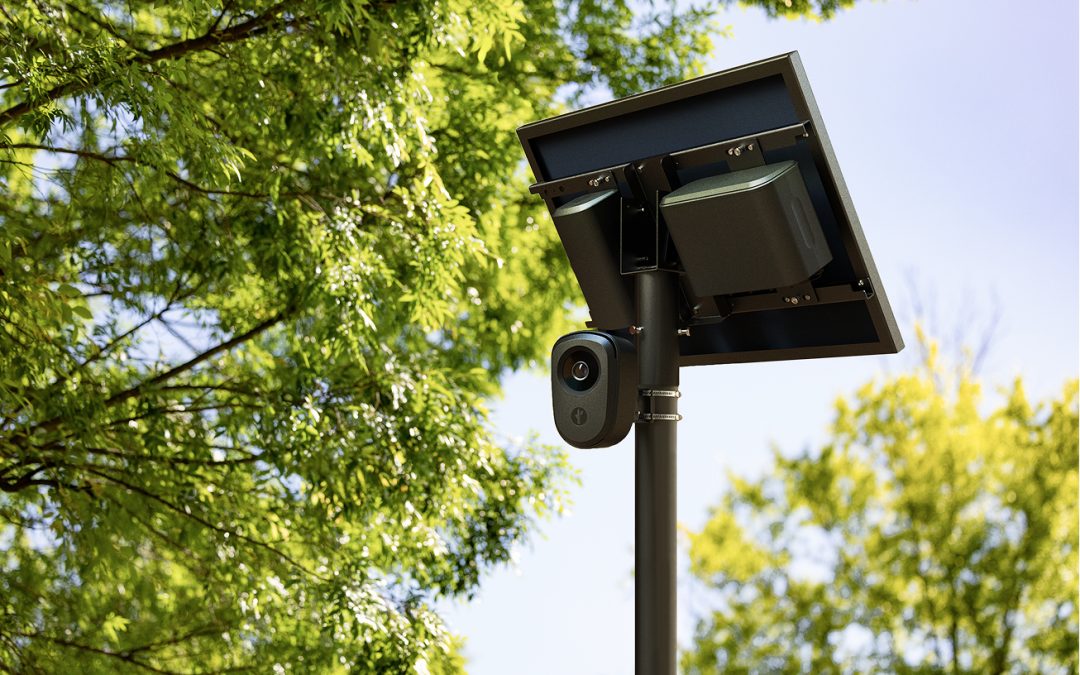
A Flock Safety image shows an example of what the cameras look like.
In addition, he said he’s adding more checks to monitor for misuse. The camera manufacturer announced on Thursday it made its own changes to enhance accountability and has rolled out a new audit mechanism and will require law enforcement agencies to adopt it by the end of the year, though Volkerson said he had not heard from the company directly as of Thursday.
“We’re going to build in a more robust audit system,” Volkerson said. “We value the tool and the safety it provides our community, but we also value the trust of our community and will continue to work to maintain that trust.”
Flock cameras, which get their name because they are manufactured by an Atlanta-based company called Flock Safety, are mounted along roadways and photograph vehicles. They create a searchable database of license plate numbers and other details such as the vehicle’s make, model and distinguishing characteristics.
On Thursday morning, the company announced a set of changes and new features that it says are designed to increase transparency and responsibility and prevent misuse.
“Abuse of Flock technology, at any level, is unacceptable,” said a message on Flock Safety’s website. “We have strengthened safeguards over the past nine years, from basic audit logs to proactive monitoring. Sixteen weeks ago, we introduced Audit Assistance, which detects abnormal activity and flags it for administrator review. In recent weeks, those reviews have been associated with arrests of several law enforcement officers who allegedly abused the system. More than one-third of our customers have voluntarily adopted audit assistance.”
The company said agencies who use its cameras will be required to adopt the audit system by the end of the year and it will roll out a “proactive lockout” feature that automatically suspends a user’s access to the data if it detects abnormal searches.
In addition, the data recorded by the cameras will only be saved for seven days instead of 30 days unless an officer shows there’s a reason to retain the information for longer.
“Our analysis shows that over 90% of searches without a full plate are done within a week,” the statement said. “Evidence Mode, which will roll out in the coming weeks, addresses the exceptional cases that take longer: detectives can preserve specific [automated license plate reader] data as evidence for an active investigation in cold storage, consistent with existing laws and policies.”
A chart from Flock Safety’s website addresses some concerns about the camera system.
In Winter Park, Volkerson said, three cameras have been in place on Lee Road, Fairbanks Avenue and Aloma Avenue for about five years. The lease for all three costs about $7,500 a year.
The cameras can be used in two ways: Police can search for a specific vehicle or tag number as part of an investigation or officers can program the system to alert them if when a vehicle associated with a crime is captured by one of the cameras.
Under the changes Volkerson is putting in place, outside agencies such as Orlando Police or the Orange County Sheriff’s Office will need to contact Winter Park PD in order to search data collected by Winter Park’s cameras. And the reverse is also true: Winter Park would need to contact other agencies if a case led them to require information from another city or county.
“It is a reciprocal network, so if we stop their access then we lose access going the other way as well,” he explained.
Last month his officers conducted between 50 and 60 searches.
As an example, Volkerson said the cameras proved helpful earlier this year when there were some residential burglaries along Phelps Avenue. He said his officers pursued a suspect but lost him. About 20 minutes later, they received an alert for the vehicle from a camera near South Orlando Avenue and pursued it again but did not capture the suspect. Eventually a different agency’s camera alerted that the vehicle was near Apopka and the suspect was arrested.
“It’s a huge benefit for the safety of the city,” Volkerson said of the camera network.
Privacy concerns among law-abiding citizens are a key concern that has emerged as the cameras have become more widespread across Florida and elsewhere.
Earlier this summer, an automotive journalist was testing out a Range Rover for TheDrive.com, an automotive news outlet, when multiple police vehicles surrounded the SUV in a Kohl’s parking lot in Plymouth, Minn. The man’s wife was in the passenger seat.
“After dropping off our Amazon returns, we’d just gotten back in the Range Rover and reversed maybe two feet out of the spot when four cop cars came flying out of nowhere and boxed us in,” he wrote. “The officers jumped out and started shouting. It’s a situation that can quickly and frequently turn bad, so as unprepared as I was, I followed their orders, got out with my hands up, and tried to figure out what the hell was happening.”
It turned out the license plate of the borrowed vehicle matched the plate of a stolen vehicle that had been entered into the Flock system incorrectly and that the police had been using the cameras to track the vehicle Feder was driving for days.
Police Chief Tim Volkerson
Closer to home in Tampa Bay, the St. Petersburg police chief recently addressed concerns about the cameras after a man drew national attention for wearing a t-shirt that reads “The Flock Blocker” as he protested the cameras by holding what appeared to be homemade shield on a long pole to block a camera lens.
And earlier this month a Haines City police officer was arrested and charged with official misconduct and other computer-related crimes after he used the Flock system for more than 700 searches over about two years to try to track the whereabouts of his estranged wife’s vehicle, according to a police investigation cited by news reports.
Volkerson said he understands the concerns and wants to ensure residents have trust in the system and understand police are using the data to try to solve crimes or find missing people, not track law-abiding people.
“I understand some of the complaints I have read,” he said. “I can see their point of view and I think it’s important to address that so we’re tightening things down so it does not become an issue. It’s the right thing to do.”
Police Chief Tim Volkerson said the cameras help enhance safety and could bring extra revenue for the department
Aug. 11, 2026
By Gabrielle Russon
Winter Park Police are looking to double the number of red light cameras in the city, a move that the police chief said would enhance safety as well as bring in new revenue amid talk of cutting the department’s budget as the state is pushing local governments to tighten their belts.
Last year, eight cameras posted at six intersections caught 24,400 violations– from blowing through a light to rolling right-on-red turns without a complete stop – and brought in $3.8 million in revenue.
Police Chief Tim Volkerson wants to add eight more red light cameras at the same six intersections, but facing different directions from the existing cameras.
“For example, Fairbanks and Orlando (Avenue) has a red light camera for westbound traffic,” Volkerson said. “It does not have a red light camera for eastbound traffic and it does not have a red light camera for north or southbound traffic.”
That intersection proved to be the third busiest of Winter Park’s red light cameras when it comes to issuing violations with nearly 3,600 tickets last year, according to police data analyzed by the Voice.
The camera on southbound Orlando Avenue at Lee Road resulted in nearly one-third of all the red light camera tickets last year. The second highest offending intersections were eastbound Lee and Orlando Avenue with 6,260 tickets.
Chief Tim Volkerson
Winter Park’s newest red light camera is at Phelps and Aloma is an intersection with a history of significant crashes, Volkerson said. That camera resulted in issuing about 1,600 red light violations last year.
Most of the violations caught on camera throughout the city are related to right-on-red turns. According to a state-required report that Volkerson is scheduled to deliver to the City Commission on Wednesday, nearly 70% of citations or 17,300 out of 25,000 violations during the 2025-26 fiscal year were for improper right turns on red signals.
Volkerson said safety is more important than money when it comes to adding red light cameras. But the topic came up at a recent City Commission work session as Volkerson presented his department’s budget, which includes keeping a community services position vacant next year to help reduce costs.
“Anyone that has lived in Winter Park would agree that the volume of cars that we have traveling through our city has increased,” Volkerson said. “The more important thing is for us to reduce crashes and even more importantly our goal is always to have zero fatalities.”
People speeding past red lights are most likely to cause T-bone or angular crashes that can have catastrophic results, Volkerson added. And Winter Park roads are active with cyclists heading out on the trails and early-morning runners training on the city streets every Saturday pre-dawn for Track Shack’s MarathonFest.
“If a byproduct is that it brings in revenue, that’s a good thing too, but that can never be and never should be the justification for doing it,” Winter Park City Commissioner Warren Lindsey told the Voice. “I would never ever support something just because it was a revenue producer when it wasn’t emphatically and primarily done for purposes of safety of motorists and pedestrians.”
A typical red light camera fine is $158 and the city of Winter Park collects $75 of that total with $2 going to police training and $73 to help fund the police budget. The rest of the money goes to the state for general revenue, health funds, and helping people with spinal cord injuries.
Volkerson is analyzing crash data to determine which intersections have the most cars passing through and the most crashes. The state requires cities to pass an ordinance in order to add new cameras and provide a reasoning for the locations.
“There has to be a nexus for us putting them there. We can’t just decide we’re going to put one at Park and Morse. We have to justify to the state why this is going there,” he told city officials at the budget work session.
Volkerson added he was not looking at school zones since those areas don’t generate enough traffic volume and are often already patrolled by officers.
Winter Park’s potential red light camera expansion comes as Floridians will be deciding whether or not to approve an overhaul of local property taxes in November.
Recently, the Florida State Fraternal Order of Police and the Florida Sheriffs Association came out strongly against the property tax ballot initiative, arguing the increase in homestead property tax exemptions could result in fewer dollars for essential services like public safety.
Volkerson declined to comment on personal stance on the ballot amendment.
“It’s up to each person to decide and vote,” Volkerson said.
Some, like Orange County Commissioner Kelly Martinez Semrad, fear that Amendment 3 will shrink funding for local governments.
“No matter how you shake it or how you roll the dice, property tax reform has an impact on the services that any municipality will be able to provide,” said Semrad, whose district includes Winter Park.
Semrad brought up whether red light camera tickets could help supplement the Orange County Sheriff’s budget if Amendment 3 passes as county officials held their own budget workshops last month.
“Ultimately we will have less revenue than than we do now … and we need to look for strategies to fill [revenue gaps]. So red light cameras might be an option,” she told the Voice. “I would rather tax somebody who made a mistake, did something wrong, ran a camera – than finding ways to tax others.”
Lindsey, the Winter Park commissioner who is also a criminal defense lawyer, said the presence of a red light camera has a real effect on drivers to make them more aware of their driving habits.
“The other thing is they’re less expensive to maintain than a police officer obviously,” Lindsey said. “You’re able to have them up there 24/7.”
Lindsey also liked that people who get cited have a process to contest their tickets and not get penalized on their driving records if they pay the civil fines.
According to the city’s report, nearly 74% of people who receive the notice of violations pay them.
In those cases, “It doesn’t affect you in the grand scheme of things on your record,” Lindsey said.
About 16% of civil violations result in a uniform traffic citation being issued because it wasn’t paid. Some drivers contest the citations in court, but the city did not report having any dismissed by a judge, though eight cases are currently pending, according to the city’s report.
There is one way to avoid the hassle altogether, Volkerson said.
“It’s really easy,” Volkerson said. “All you have to do is stop and not run the red light.”
On the Chopping Block: Police, Fire, Community Groups, Trash Collection
This week, in an email to residents, Mayor Sheila DeCiccio asked what should be cut in the city budget as a result of state-ordered reductions
Aug. 7, 2026
By Beth Kassab
After years of stripping power from locally elected mayors and commissions when it comes to everything from regulating where apartments can be built and how tall to whether cities can ban gas-powered leaf blowers or plastic straws, state leaders have reached a new level of micro-managing local governments: mandatory lists of budget fat.
Cities and counties will be required to publish those lists starting next year as a result of a new law (HB1329) signed by Gov. Ron DeSantis this summer.
But Winter Park is getting a jump on the exercise.
With potential property tax cuts looming in the form of Amendment 3 on the November ballot, city managers asked each department to lay out cuts to reduce their budgets by 10% (This exercise will be mandatory for local governments next year as a result of the new law.)
The results?
Here’s just a sample of what’s on the budget fat list in City Hall:
Eliminate a code enforcement officer position that is currently vacant ($75,000)
Eliminate funding for the Public Art Advisory Board ($15,000)
Eliminate the mailed printed version of quarterly Winter Park Update newsletter and monthly inserts in utility bills ($71,900)
Eliminate the use of accepting cash for city services like permits or other needs at the City Hall windows ($50,000)
Eliminate two vacant firefighter positions ($200,000)
Close a Fire Rescue engine company ($1.25 million)
Begin closing the library every Monday ($210,000)
Reduce garbage collection to one day per week ($300,000)
Reduce tree plantings, canopy maintenance and eliminate residential tree permits among other changes ($600,000 combined)
Eliminate the Historic Preservation Grant Program ($100,000)
Eliminate four police detectives, one traffic officer, one community service officer and two officers dedicated to homeless outreach ($1.15 million)
Eliminate body-worn cameras and live crime center for the police department ($300,000)
Reduce funding to community organizations such as the Winter Park History Museum, the Albin Polasek Museum & Sculpture Gardens, Mead Botanical Garden, Blue Bamboo and more. ($243,500)
You get the idea. And that’s not the complete list.
Also, to be clear, the spreadsheet of potential cuts provided by City Hall included about 45 items. Some of those were ways to increase revenue for the city (such as adding more red light cameras, which could result in $750,000 in new revenue). Even so, the total did not add up to $9.5 million or about 10% of the proposed budget’s nearly $95 million general fund. The proposed all-funds budget, which includes the utilities and other funds, is up to $247 million.
The Voice totaled the spreadsheet to about a $7.8 million overall reduction (including some revenue gains proposed).
“As you can see, getting to a budget cut of 10% would not be painless,” Mayor Sheila DeCiccio told the community in an email she sent out this week. “It could mean fewer police officers and detectives, longer emergency response times, reduced park maintenance, one-day a week trash collection, and fewer community programs.”
She asked residents in the email what they prefer to cut, explaining, “I’m writing this email because I believe you, our Winter Park residents, deserve to see the potential cuts that are being discussed. As always, I’m committed to full transparency.”
Winter Park staff estimates Amendment 3 would require cuts of $3.4 million in 2028 and $6.7 million in 2029. So far shy of the 10% exercise. But not far off once a few years into the new tax structure if it wins by the required 60% of voters in November.
The Voice has heard from some readers who appear to be under the impression that police and fire or other “essential services” can not be cut under Amendment 3, which would increase the homestead exemption ultimately to $250,000.
But that’s not the case. Cities and counties will still provide emergency services, to be sure, but at what level?
Florida House Republicans approved language that would ban local governments from reducing money for law enforcement, firefighters, and first responders below the level in either fiscal year 2025-26 or 2026-27, whichever was higher. But the Senate never approved that version and it died during the Legislative session.
That’s why police and sheriffs’ organizations have spoken out about the potential impact of the amendment and cuts that could result from it.
“The Florida Sheriffs Association is significantly concerned with Constitutional Amendment 3, which potentially allows Tallahassee to control your local budgets, creates longer law enforcement response times, limits communities’ abilities to provide road repairs and stormwater removal — these are a few things voters deserve to be aware of,” the organization said this week on Facebook.
And the soaring cost of police and fire service is a main driver of the growth in the budget the City Commission will consider this month.
Record-high pension costs for police officers and firefighters as well as a new labor contract with the Fire Union that included a 12% pay increase in 2026 will account for 70% of new costs in the proposed 2027 budget.
In 2021, for example, the starting salary for a Winter Park police officer was $22.84 an hour or about $48,000 a year. Today it’s $30.34 an hour or more than $63,000 a year.
Police Chief Tim Volkerson has said the increases are the result of pressure on wages from other departments who have raised pay as they have struggled to hire and retain officer.
The city has 121 full-time police staff and three part-time staff slated for 2027, up from 115 full-time staff and 13 part-time staff in 2023.
The budget for the fire department is up from $13.2 million in 2020 to a proposed nearly $19 million for next year. The department has grown from 81 full-time staff and two part-time staff in 2023 to 84 full-time staff and three part-time staff.
Translated into savings for individuals residents, homesteaded property owners would pay about $818 less per year to Winter Park. The total tax savings per year for Winter Park homeowners if the ballot measure passes would be $1,783, including the reduction paid to the city as well as the reductions in taxes paid to Orange County and St. Johns River Water Management District. (Taxes paid to schools would remain unchanged under the tax proposal on the ballot.)
The City Commission is slated to hear public input and consider portion of the budget at this meetings this month on Aug. 12 and Aug. 26 before final adoption of the budget by the end of September.
We Depend on your support, make a tax-deductible donation here.
Mission
The Winter Park Voice is a trusted nonprofit journalism site that covers our City Hall and beyond. We endeavor to engage, inform and connect citizens on all sides of issues affecting the quality of life in Winter Park.



Recent Comments