by Beth Kassab | Oct 19, 2026 | Arts and Culture, County News, News, Taxes
Jerry Demings Wins Approval for TDT Spending Plan
The amount for the Dr. Phillips arts center was reduced and commissioners rejected a bid to give the convention center more money
Oct. 19, 2026
By Beth Kassab
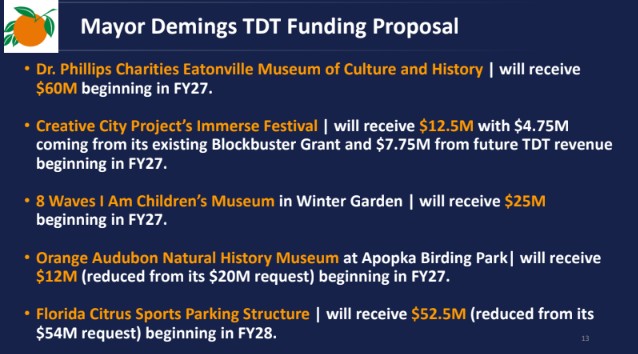
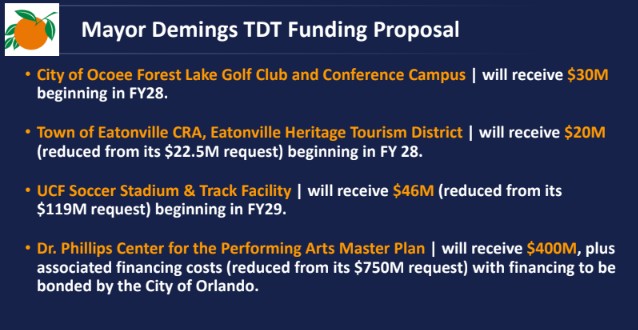
The Orange County Commission on Monday approved nearly $1 billion in projects funded by tourist development tax revenue, including new sports facilities at UCF and a $50 million reduction in funding for the Dr. Phillips Center for the Performing Arts.
A last-minute push to include several hundred million dollars for another expansion of the Orange County Convention Center, which has already cost $2 billion, failed to gain support from any commissioner except Mike Crabb, who was appointed to Seat 2 in August by Gov. Ron DeSantis.
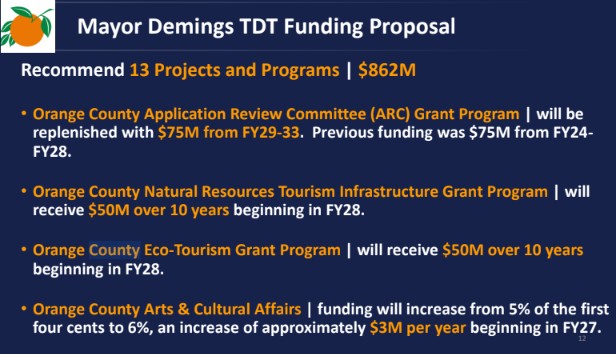
Representatives of the tourism industry joined forces with local labor union members in an unusual alliance to urge Mayor Jerry Demings to delay a vote on his plan to spend $860 million on 13 projects. Demings refused, arguing that a delay could mean many projects he considered worthy might never get another chance at funding. He also bristled at assertions that the decision-making process lacked transparency or had been rushed, rejecting the suggestion that he should leave the matter to whoever is elected mayor next month.
“Yes, [the end of] our tenure is for some of us just months away, but it doesn’t mean that we should just sit here and do nothing,” Demings said. “This is my home, where I was born and raised. For nearly seven decades, I’ve lived here. I have put my life on the line for this community. Been in some tough situations over the years. My blood, my sweat, my tears have gone into working on behalf of this community. I will not retreat from working in my home and taking care of the people who live here.”
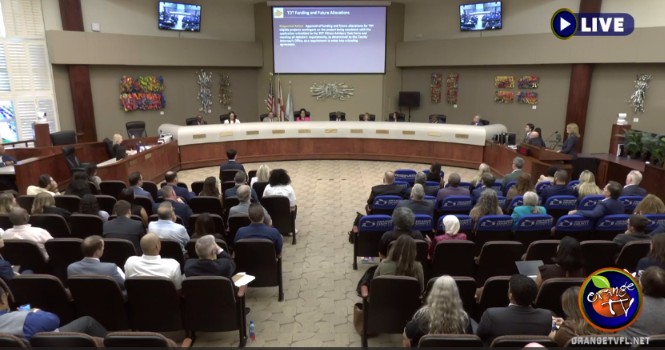
The 6-1 vote followed five hours of public testimony and debate.
Commissioner Kelly Semrad, who represents Winter Park, voted against the plan. Demings, Nicole Wilson, Crabb, Mayra Uribe, Maribel Gomez Cordero and Mike Scott voted in favor. Demings and Uribe are set to leave office soon, while Crabb and Scott are seeking election on Nov. 3.
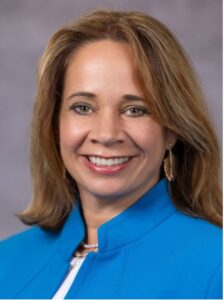
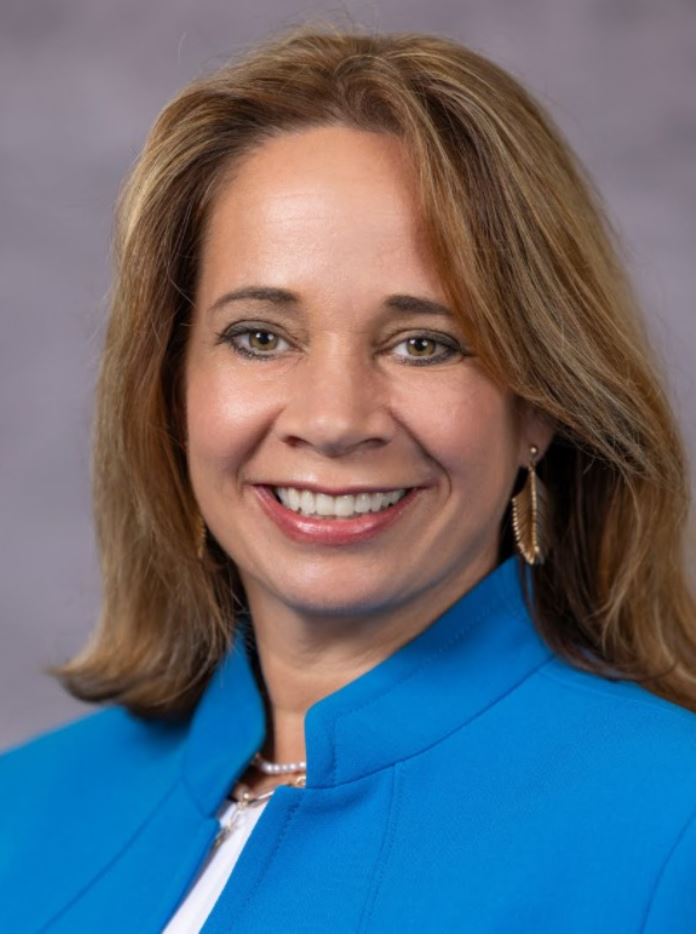
Kelly Semrad
Nine speakers, many of whom worked in hotel management or other senior hospitality positions, urged the commission to add the convention center expansion to Demings’ list of projects.
Demings, however, said he was unwilling to consider such a change. The previous expansion, for which he helped secure funding, is still under construction, and he questioned whether another expansion was necessary for the center to remain nationally competitive.
“How big is big enough?” Demings asked. “How big is too big? And there are citizens who think that that’s not the appropriate place to make investments.”
Crabb twice attempted to amend Demings’ plan. He presented a spreadsheet he had prepared with different funding amounts for the projects to make room for the convention center expansion. After his first motion failed, he tried again, this time seeking to delay votes on both the convention center and the arts center while funding the other projects. Both times the other commissioners sat in silence rather than offering a second for his motions and both failed.
At least 14 of the 78 speakers told commissioners they were concerned about transportation in Orange County and wanted some tourist tax revenue directed toward improving roads, bus service and rail.
“I point out all these venues that you want to additionally fund are functional. They have options,” said Eugene Staccardo, a resident and civic activist. “This community doesn’t have an adequate transit system for tourism, even after billions of dollars of upgrades to I-4. It’s functionally not meeting the needs of [the] community … Say no to these large TDT proposals that will financially tie our hands for decades. Reserve the money for the future and to be used on hopefully a future transit system.”
Demings said he did not believe the Florida Legislature would expand the legally permitted uses of tourist development tax revenue to allow Orange County to spend the money on local needs such as public transportation.
“This legislature and those in the immediate past have not been so kind to this community,” he said. “They preempted us left and right. We have been left to figure it out on our own … Every one of these projects that we talked about today will add jobs. You would think that not any of those jobs are good jobs, but I’m here to tell you, many of those jobs are good jobs.”
Florida lawmakers have, however, granted exceptions allowing specific communities to use tourist tax revenue for local needs, such as affordable housing and public safety, after those communities mounted strong campaigns for the changes.
Semrad questioned why her colleagues were willing to disregard both residents’ concerns about transportation and projections in Demings’ own plan showing that TDT reserves would fall below the recommended $300 million threshold in the coming years as a result of the spending.
Demings and county staff members said the projections assumed annual TDT revenue growth of 2% over much of the next 10 years, though actual growth could be higher. They also said the county’s convention center capital spending plan includes additional TDT revenue for projects such as elevator repairs and fire alarm system replacements. Because those funds are not always fully spent, they argued, the projections were conservative.
“You’re okay with it, and I hear all the reasons why that math works,” Semrad told the group. “But I’m also familiar with market uncertainty and the conditions in today’s marketplace that are concerning, and that numbers could soften, especially in terms of travel. We all see it at the pumps. You guys, anybody who’s bought an airline ticket lately knows how expensive it’s getting. It’s going to impact our tourism industry … So I’m uncomfortable when I see red numbers.”
Ultimately, Uribe moved to keep reserves at the recommended threshold by reducing the allocation for the Dr. Phillips Center for the Performing Arts from $400 million to $350 million.
The arts center is receiving the largest share of the mayor’s TDT spending plan to build new theaters, add parking and make other improvements.
Kathy Ramsberger, the center’s president and CEO, addressed the commission and confirmed that the center could still move forward with its projects under the reduced allocation.
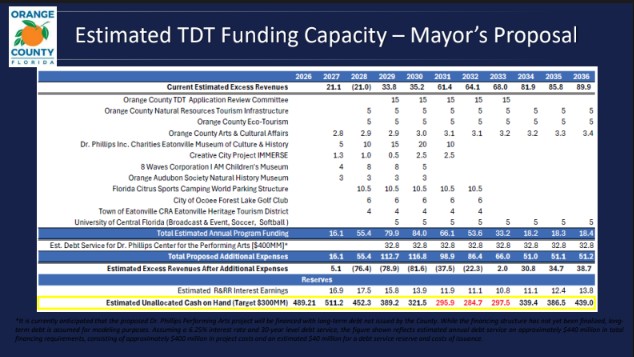
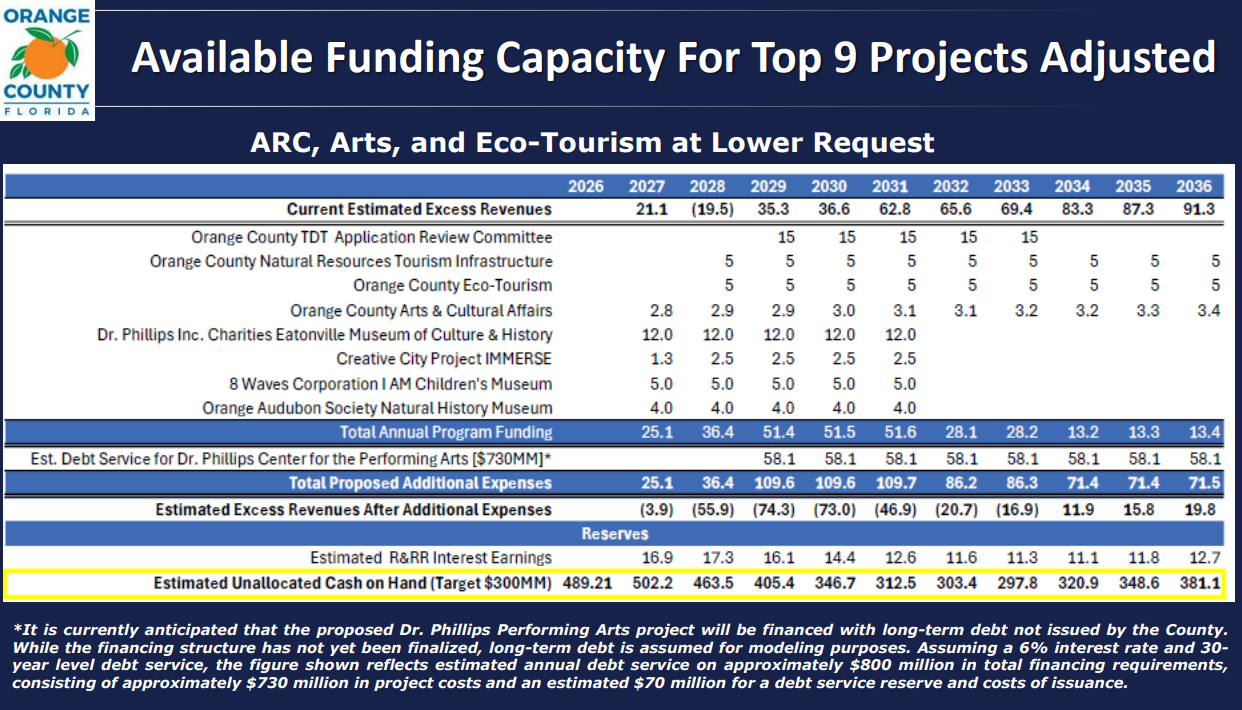
The following slides show the approved spending plan with the exception of the reduced arts center figure:
WinterParkVoiceEditor@gmaill.com
To comment or read comments from others, click here →

by Beth Kassab | Oct 19, 2026 | Arts and Culture, County News, News, Taxes
What's Going On? I-Drive Chamber, Unions, Kelly Semrad All Call to Slow Down Giving Away TDT Money
The unusual allies expressed concerns ahead of a meeting today where the County Commission is set to consider Mayor Jerry Demings’ plan to give out nearly $1 billion
Oct. 19, 2026
By Beth Kassab
When the Chamber of Commerce that represents the largest tourism interests on International Drive aligns with both the local labor union and the county commissioner who was elected on a campaign of pushing back against tourism’s political power, it’s a rare day in Orange County.
Those unusual allies appear to have different motivations, but they’re calling for the same thing: They want Orange Mayor Jerry Demings to slow down his push to allocate nearly $1 billion in Tourist Development Tax revenue to 13 projects without subjecting each one to greater scrutiny or more fully assessing what local communities will need over the long term.
Today, those groups will be seeking answers to a number of questions when Demings and County Commissioners meet this afternoon for a special meeting at which Demings will seek approval of his recommendations for the 13 projects.
Among those questions, which center on a process that began in late July with the first meeting of Demings’ 34-member citizen task force to evaluate the projects, are:
- How and why was a proposal to spend $46 million on new soccer and track-and-field facilities at the University of Central Florida (UCF) added back to Demings’ list as his 13th recommendation after the citizen task force made only 12 recommendations and funding for UCF didn’t even garner enough support for a full vote?
- Will proponents of another expansion of the Orange County Convention Center succeed in getting that project added to the recommendation list in the final hours, even though the citizen task force also rejected it?
- Were all the projects evaluated using the same comparable metrics and standards agreed upon by the task force to justify the use of public dollars?
- If the County Commission funds all 13 projects at the recommended levels, will any additional hotel bed-tax revenue be available for transportation or other local needs if the state eventually allows the expanded uses of the tax revenue recommended by the citizen task force? Both candidates seeking to become Florida’s next governor have expressed support for expanding those uses.
“Government moves slow until you put a billion dollars on the table for the tourism industry then it moves at the speed of light,” said Commissioner Kelly Semrad, who represents Winter Park, describing the timeline, which began less than three months ago.
Today’s meeting could provide the last major opportunity for debate on Demings’ plan to spend more than $860 million, mostly over the next 10 years. Some of the financial obligations, however, would extend much longer. Debt service on a major expansion of the Dr. Phillips Center for the Performing Arts, for example, would cost about $32.8 million annually for as long as 30 years.
The plan outlined by Mayor Jerry Demings as presented recently to county commissioners.
The meeting comes just two weeks before Election Day, when voters will select a new mayor and four commissioners, and about eight weeks before the winners are sworn into office.
John Stine, chairman of the International Drive Resort Area Chamber of Commerce, called the process “rushed and flawed” in a letter to the editor published in Sunday’s Orlando Sentinel.
“County commissioners have a responsibility to independently examine the recommendations before committing funds,” Stine wrote. “A task force recommendation should begin that scrutiny, not replace it. Unanswered questions require answers. Incomplete financial information requires further review.”
Similarly, the union representing food-service, housekeeping, and other workers at Walt Disney World and hotels near Universal Orlando and the Convention Center called for more time before the financial commitments are finalized.
Union leaders said Sunday in a news release that they would hold a news conference just before Demings’ meeting to urge the county to “take more time to evaluate the size and scope of the proposed commitments, provide greater transparency on the TDT financial picture, preserve flexibility for future transportation investments, and ensure tourism workers and the incoming County Commission have an opportunity to weigh in before long-term decisions are finalized.”
According to the county webpage dedicated to the citizen task force, today’s work session will be followed by a special Tourist Development Tax meeting on Nov. 6 and then a regular County Commission meeting on Dec. 1, just days before Demings is scheduled to leave office.
Linda Chapin, the former Orange County mayor who served as co-chair of the citizen task force, defended its process in an interview with the Voice on Sunday.
“We spent twice as much time on this task force as the last one did,” Chapin said. “We heard from three times as many applicants as the last one did, and we worked very hard to make sure this money benefited people across the community, so I will be very disappointed if they don’t move ahead.”
She said she was pleased that projects from Ocoee to Eatonville to more money to be handed out later to smaller arts organizations made it into the recommendations. She pointed to recent projects in Winter Park that received tourist development tax dollars such as the Rollins art museum and the Winter Park Playhouse as examples of how the tax is benefiting communities across the county rather than just in the central tourism areas.
Chapin did acknowledge, however, that she was “a little surprised” to see UCF’s project added to Demings’ recommendations after no one on the task force seconded a motion to include it among the projects the group endorsed.
She also said she was “very frustrated” that the task force was never given specifics about how much money it had to work with as it met in July and August.
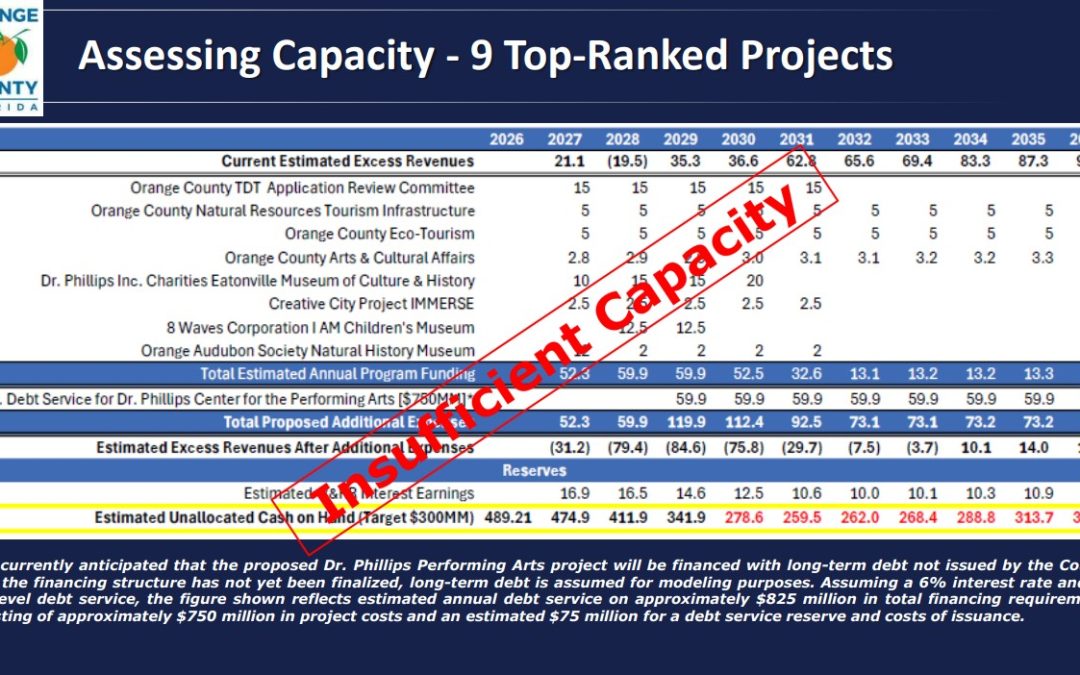
A PowerPoint presentation provided to commissioners by county staff last week included a chart showing that the projected costs of the 13 projects would exceed revenues from 2028 through 2032 before the balance returned to positive territory in 2033. The tax’s unallocated cash reserves, or rainy-day fund, would dip below the comptroller’s recommended target of $300 million in 2031, 2032, and 2033, according to projections that assume 8% growth in TDT revenue in 2026 and 2% annual growth thereafter.
But Chapin dismissed the notion that funding the recommended projects would tie up all available funds for the next decade. She also said she was concerned about what might really be driving some calls to slow the process until a new County Commission takes office.
“I fear that for some of these people, not all, it’s a ploy to see if they can put it off until the next board so they can give money to the convention center,” Chapin said.
She plans to attend today’s work session and said, “if I need to issue a red flag about the convention center, I’ll stand up and do it.”
Semrad and others, including Winter Park Mayor Sheila DeCiccio, who advocate directing more of the tax revenue toward local needs such as transportation infrastructure, say the latest convention center expansion’s failure to win approval from the task force was a victory for the community. They view the convention center, which has already cost $2 billion, as primarily benefiting hotels and businesses along International Drive.
Mike Crabb, who was appointed by Gov. Ron DeSantis to represent District 2, which includes Apopka, and is now in a runoff on Nov. 3 against Kamia Brown, sent a memo to fellow commissioners last week urging them to add the convention center back to the list of projects slated for funding. Among other recommendations, he suggested allocating $523 million to the convention center while reducing the $400 million Demings recommended for the Dr. Phillips Center for the Performing Arts to $150 million.
Commissioner Mike Scott, who represents the International Drive area, along with Tangelo Park and Pine Hills, and is seeking reelection next month against Lawanna Gelzer, also pushed to reconsider the convention center at a recent commission meeting.
Roseann Harrington, Demings’ chief of staff, said in an email to Semrad that the mayor had the discretion to add UCF back to the list because “commissioners mentioned three times” when they accepted the task force’s recommendations in August that the action “did not limit them to only selecting among the 12 recommended by the TDT Task Force. Commissioners expressed interest in the Orange County Convention Center (OCCC) and UCF.”
When Semrad, a UCF professor who studies hospitality economics, asked for more detail about how the projects were evaluated for economic impact and why the county used a traditional economic analysis rather than what she considered more informative measures — such as jobs and wages, geographic reach, long-term operating costs, financial sustainability, and future TDT revenue generation — Harrington suggested that Semrad conduct her own analysis.
“After speaking with six of the seven BCC members on the type of fiscal analysis they would like conducted, the consensus was to do a traditional economic analysis consistent with the work done by GSU,” Harrington wrote. “With that said, since you have expertise in financial and community analysis, please feel free to do your own research and we will be glad to distribute to the BCC.”
Semrad argued that clearer guidelines were needed not only for the metrics but also for the process.
“My concern is that both the applicant pool and the scope of that analysis appear to have changed without further public Board discussion,” she wrote to Harrington.
WinterParkVoiceEditor@gmail.com
To comment or read comments from others, click here →

by Beth Kassab | Oct 13, 2026 | Arts and Culture, Events, News
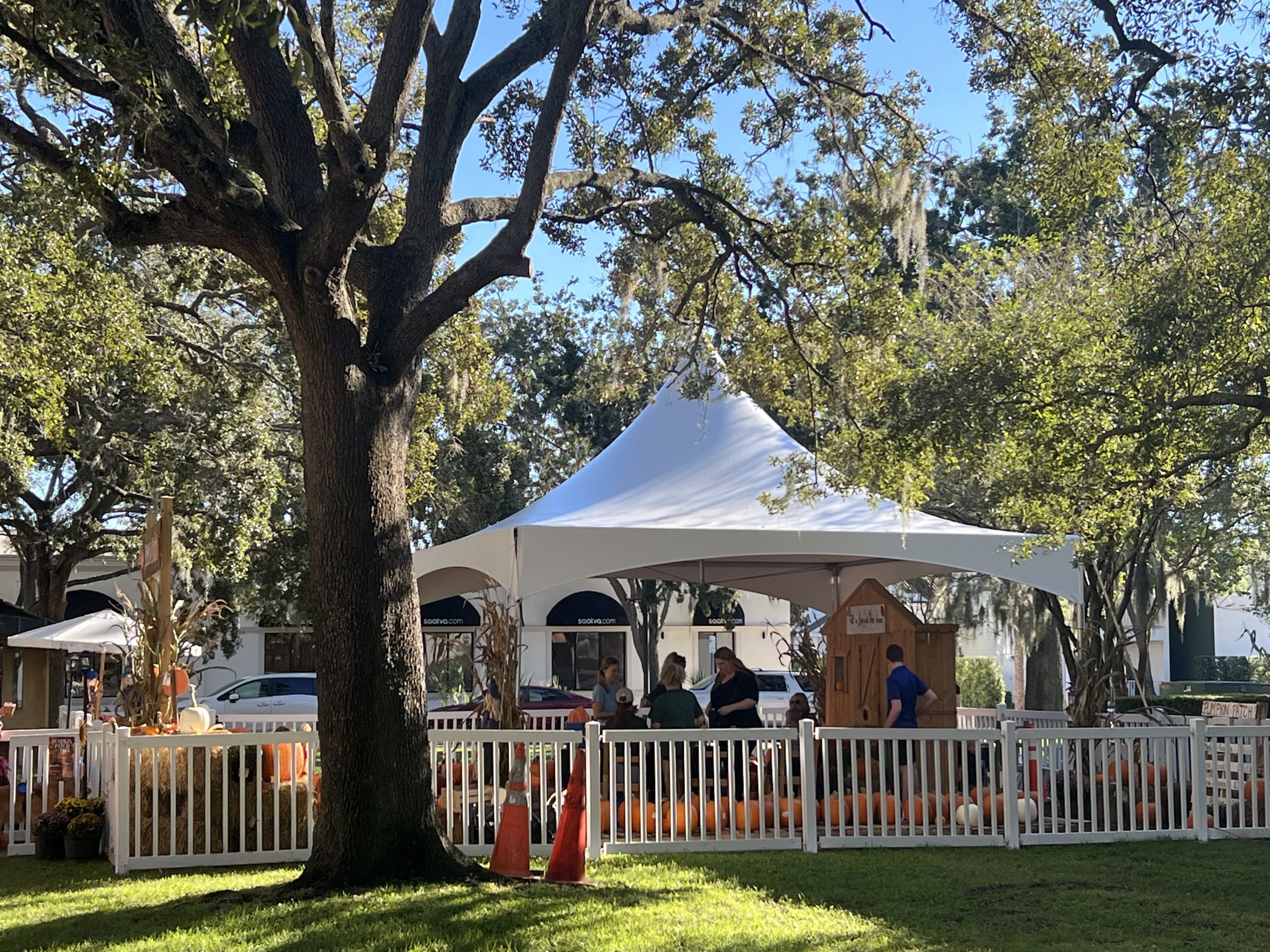
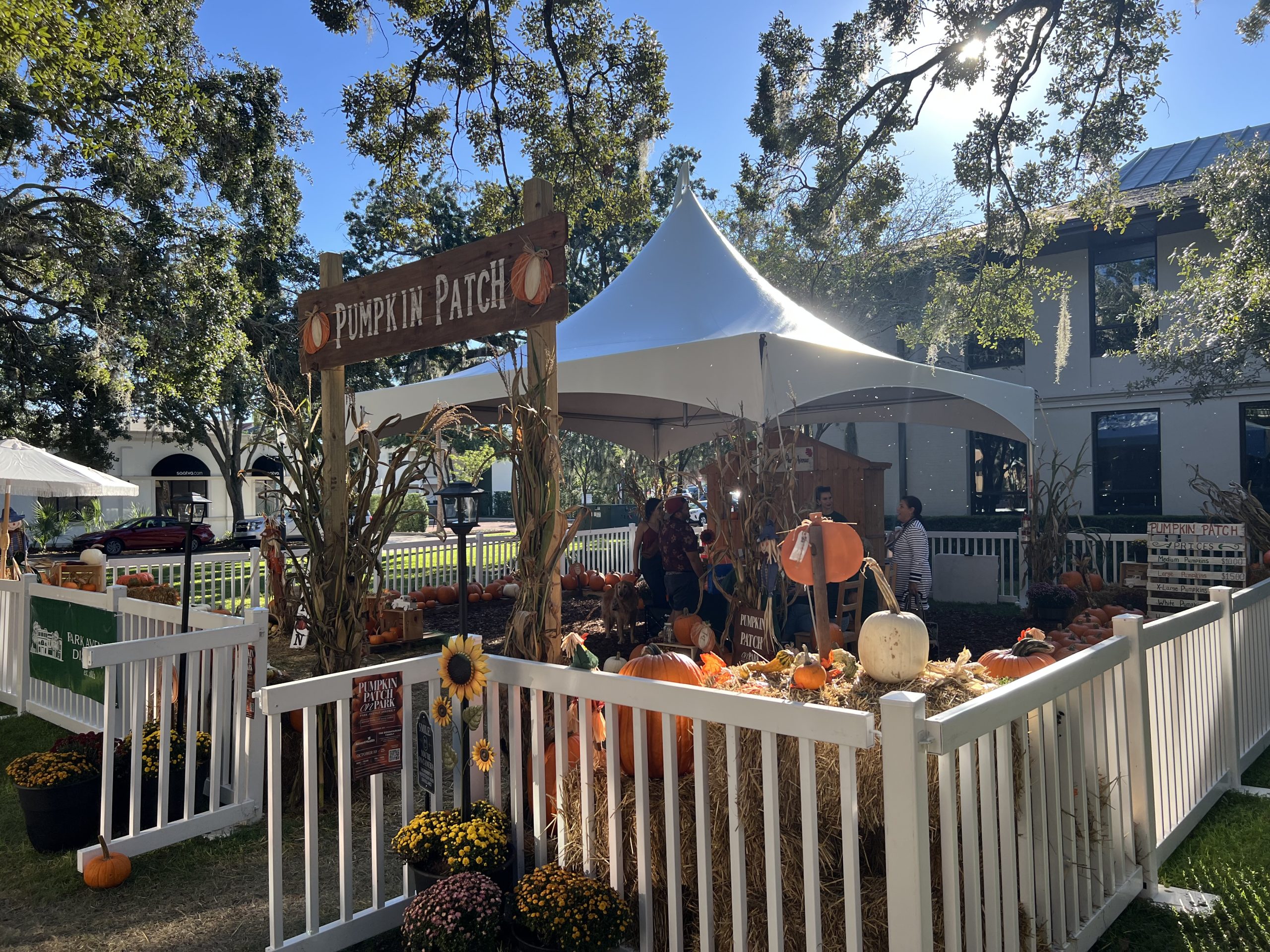
Photo Gallery: First Pumpkin Patch near City Hall
The pumpkin patch runs through Oct. 25 and benefits the Park Avenue District
Oct. 13, 2026
By Gabrielle Russon
About 2,200 people have visited the first-ever pumpkin patch that’s sprouted up by Winter Park City Hall.
Volunteers from schools and local businesses have picked up 150 shifts to help run the patch that will stay open through Oct. 25. The proceeds will benefit the Park Avenue District which supports small businesses and promotes the shopping and restaurant hub, said Allison Chandler, the district’s executive director.
“The new activation is part of the Park Avenue District’s growing investment in experiences that bring the community together, support local businesses and create new traditions while preserving the character and charm of Park Avenue,” the organization said in a news release.
The hours are 3 p.m. to 7 p.m., Monday–Thursday and from 9 a.m. to 6 p.m. on Friday, Saturday and Sunday.
To comment or read comments from others, click here →
by Beth Kassab | Sep 15, 2026 | Arts and Culture, City Commission, News, Taxes
Parking Fines to Increase, E-Bike Fines also added as Budget is Finalized
The City Commission also reduced the amount of money set to go to nonprofit Men of Integrity Mentoring Program and turned down requests to add dollars for the library and Blue Bamboo back into the budget
Sept. 15, 2026
By Beth Kassab
Winter Park will bring in additional revenue next year through higher fines for parking tickets, fees for non-residents to park at Dinky Dock and the dog park at Lake Baldwin, and new fines for kids and adults who violate recently approved rules governing the use of e-bikes and e-scooters.
The City Commission also made last-minute tweaks to the budget that takes effect Oct. 1, reducing the amount of money the nonprofit Men of Integrity Mentoring Program will receive and rejecting calls to restore cuts to the Winter Park Library and Blue Bamboo.
Some details remain unclear, including exactly how much the new fines for parking and micromobility violations could bring in.
The fees for non-residents to park at Dinky Dock and the dog park have not yet been set but could be in the range of $2 to $3 per hour. The pilot program is expected to start later in the year after a company is selected to administer it.
Motorists who park along the curb facing the wrong direction, overstay the allotted time at a curb or otherwise park in an unlawful manner will now face a $30 fine, up from $25.
Commissioner Elizabeth Ingram pushed for even higher parking fines, noting that the discussion occurred during a meeting that lasted more than five hours, with a substantial portion devoted to parking concerns related to a proposal to build a synagogue and daycare downtown.
She said she was “shocked” to learn that parking fines are only $25 and suggested they could be as high as $75 or even $150 to help change motorists’ behavior.
“It doesn’t hurt enough to teach someone,” she said.
City Manager Randy Knight warned that complaints would pour in if fines were raised that high.
“We get complaints about $25 all the time, and so if you go to $75 … maybe you each get to serve as cashier one day a week,” he said in jest.
Police Chief Tim Volkerson said his team issues parking fines every day and noted that Orlando recently raised its fine to $35.
The commission settled on a $30 fine for parking violations.
The group also raised the fines for violating the new micromobility ordinance to $35 for a first offense and $75 for a second offense.
When it came to the portion of the budget — about $480,000 — that the city spends on local nonprofit groups, a proposed $45,000 allocation for Men of Integrity was reduced to $20,000.
Commissioner Warren Lindsey said he wasn’t comfortable with the amount, given that the group is already provided free space at the Community Center and because commissioners are being forced to make some cuts that he called “painful and uncomfortable.”
Men of Integrity serves about 24 boys, including 10 in high school and 14 under the age of 12, said Antwon Carter, the group’s leader. Many of the kids attend Winter Park schools, but some travel from outside the city to attend the weekly program. An administrator for the program provided the Voice with a copy of Men of Integrity’s most recent tax form, which shows that the group’s revenues are typically less than $50,000.
Ingram attempted to restore some funding for Blue Bamboo in response to pleas from one of the group’s leaders but did not win enough support.
Officials from the Winter Park Library also asked the commission to consider restoring a $25,000 cut to its budget but did not win support.
Even with the $25,000 reduction, the Winter Park Library is still slated to receive nearly $50,000 more than last year in support from the city’s main budget and the Community Redevelopment Agency budget, for a total of $2.5 million.
The second required vote on the city budget is scheduled for Sept. 23.
WinterParkVoiceEditor@gmail.com
To comment or read comments from others, click here →
by Beth Kassab | Sep 15, 2026 | Arts and Culture, City Commission, County News, Election, News, Taxes
Will Orange Mayors Join Push to Rethink how Tourist Taxes are Spent?
Winter Park’s resolution is the latest sign of growing pressure to use the county’s nearly $400 million in annual Tourist Development Tax revenue for transportation, affordable housing and other needs
Sept. 15, 2026
By Beth Kassab
Mayor Sheila DeCiccio sent an email this week to her counterparts in other Orange County cities urging them to adopt resolutions in support of using the Tourist Development Tax to help pay for local needs such as transportation improvements and more affordable housing.
Winter Park adopted such a resolution last week that calls for Orange County to “explore every avenue to expand alternative uses of the tax, including but not limited to transportation and affordable housing, adding additional pennies, and lowering the 40% threshold for tourism promotion, and to make this a legislative priority.”
“This is the direction we need to go considering potentially November and the regional areas wanting to get access to public transportation,” said Commissioner Kris Cruzada during a brief discussion.
“November” referred to Amendment 3 on the Nov. 3 ballot, which could significantly reduce property tax collections by increasing the homestead exemption for homeowners and capping property tax growth on commercial and other properties. Property taxes pay for local police and fire departments, road and infrastructure work, parks and recreation and other services provided by local governments.
But the outcry over how Orange County spends its enormous haul of tax dollars collected on hotel rooms — a record $385 million last year — started long before the push this year to threaten property tax revenues.
A disparate chorus of local voices, from County Commissioner Kelly Semrad — who represents Winter Park and was elected on a platform that included reforming TDT in 2024 — to a few local lawmakers and Orlando Sentinel columnist Scott Maxwell, who was one of the earliest advocates for change, has reached a crescendo in recent years, urging that the largesse be used to help solve problems that stem from hosting 75 million visitors a year and housing the low-wage workers who power the tourism industry.
DeCiccio’s effort appears to be the first to attempt to organize mayors to come together on the topic and push for change at the county level.
Commissioner Warren Lindsey applauded her leadership shortly after the unanimous vote on Winter Park’s resolution.
“Hopefully it’ll make a difference to not only people in Winter Park but everyone in the Orlando area,” he said.
The wording of the resolution mirrors a recommendation made last month by Mayor Jerry Demings’ most recent Citizen Advisory Task Force, which, in a stunning rebuke of the long-held status quo, also voted down spending the tax on yet another expansion of the Convention Center, a parking garage at Camping World Stadium and more projects at the University of Central Florida.
Instead, the 34-member group, made up of appointees of county commissioners and city mayors, recommended spending more of the dollars collected from levies on hotel rooms on grants to support local arts and culture, as well as ecotourism projects.
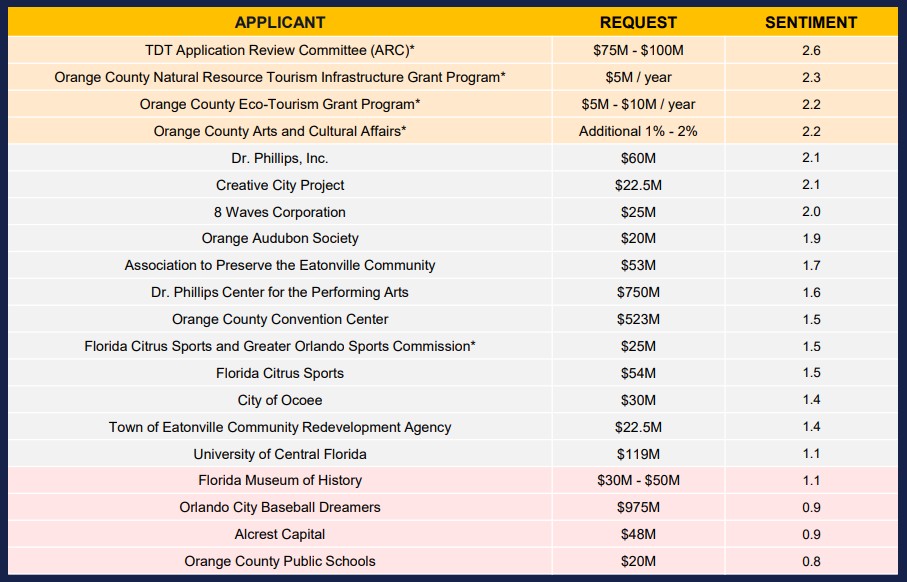
The projects related to the Orange County Convention Center, Florida Citrus Sports, the University of Central Florida as well as the bottom four projects on the above list were NOT recommended by the citizen task force.
The Orange County mayor and Board of County Commissioners arguably have the most power to change the way TDT money is spent.
They have the ultimate say over which projects get the dollars each year within the current confines of the spending rules. And, if other counties across Florida provide any guide, they could succeed in getting state permission to use the dollars for local needs if they made a deliberate lobbying push in Tallahassee.
But Demings, who has served as Orange County mayor since 2018, has not made a major effort to that end — or at least not a public one. Such a campaign would likely involve not only making a case to state lawmakers but also attempting to coalesce the major hotels, as well as Walt Disney World, Universal Orlando and other attractions, behind the idea.
November will also bring a new mayor for Orange County for the first time in eight years and, in another sign that the tide could be turning, both candidates recently rejected the idea of another convention center expansion and said they would support broadening how TDT dollars can be spent.
Linda Chapin moderated a forum last week between Tiffany Moore Russell and Chris Messina for the Orange County League of Women Voters and tried to pin both candidates down on the topic.
Chapin, who served as Orange County’s elected leader in the 1990s and just co-chaired the citizen task force, asked if they would support a convention center expansion.
Moore Russell, a former county commissioner and clerk of court and a Democrat in a very blue-leaning county who lives in Horizon West, hedged her response somewhat on the idea that “data” could one day show a need for more investment in the center.
“I would not have supported the expansion of the convention center unless I saw data that showed me where are we trying to go, what is it trying to achieve, and what’s the return on that investment,” she said. “And so, out of all the projects that I’ve seen so far, I’m a fan of the cultural and arts projects because I think they enhance our quality of life in this community. I am not a fan right now of building any major facilities until we know how do we support those who work in tourism? … We know we have a transportation challenge when it comes to those who visit here and those who work in the industry, as well as affordable housing and workforce housing. So for me, I’m not a fan of big projects right now because I think we need to support those who make our industry thrive in this community.”
Messina, a businessman and Republican who lives in unincorporated Winter Park, said he does not support an expansion because the convention business has changed and said he would have given more support to a proposed long-shot baseball project known as the Dreamers.
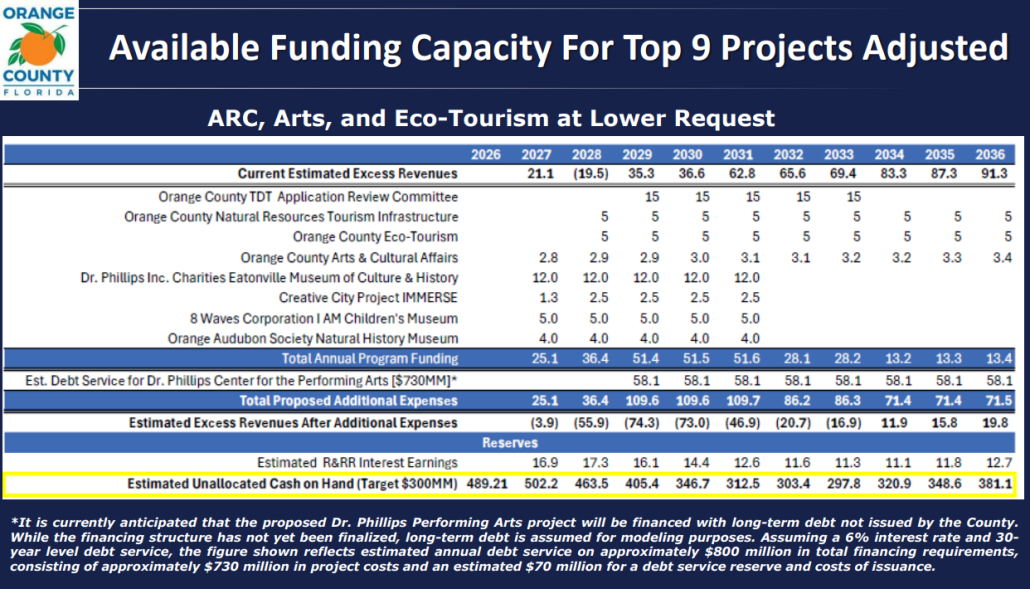
Under one scenario, a chart provided by Orange County, shows how the projects can be funded and maintain reserves. Multiple scenarios were presented at the county meeting on Aug. 25.
“There are only so many very large conventions you can bring into Orange County,” he said. “So I know we lost the Home Builders convention, and it was sort of like the sky is falling for some people, but that’s actually not the case. It’s better to be targeting two medium-sized conventions. They’ll bring more money, more business into Orange County than one large convention. One thing, though, I’ve been very public about that I would have done with the TDT dollars, is I would have looked at supporting the Dreamers in some way, shape, or fashion.”
When Chapin followed up about how the candidates would like to see Tourist Development Dollars used, Messina said he supported using them for tourist-related transportation, but not much else.
“I think we can look at an expanded definition of what tourism is, and without trying to go too far,” he said. “So, for instance, we have a world-class firefighting center, and we have a world-class SWAT team here. So why don’t we do some marketing around that and bring firefighters from around the world, SWAT teams from around the world, for a competition? That’s one thing we could do. Second thing, we can expand it to include transportation that’s focused on bringing tourists to their primary destinations, so from the airport to one of the big hotels or the theme parks. I think that’s a good use of the expanded TDT dollars. But beyond that, to affordable housing? I think that’s a stretch too far and will run us into a brick wall in terms of the legislation.”
Moore Russell was more willing to expand uses but echoed concerns expressed by Demings that the governor and state legislature could attempt to seize on the pot of money for their own use if given an opening.
“I want to marry this also with a question you asked previously about home rule,” she said during the forum. “So I am open to expanding the legislation, but I’m concerned that Tallahassee will take over the control of how we spend our TDT dollars. So we have to be very mindful and keep our eye on the control of our local dollar … But I do believe there is an opportunity to look at our statute about how we can support indirectly, or things that are impacted by tourism. So, you know, transportation — not just moving those who visit Orange County, but the people who work in this industry. There are many who ride the bus, to get to our theme parks, to get to our hotels, who are making sure that we are a great destination to visit. I believe we can justify with the data why we should invest those dollars. Workforce housing down on I-Drive for people to be able to live where they work? I think we can justify that.”
Today, the money is primarily used to pay off debt related to the convention center, as well as support its operations and maintenance, along with subsidizing advertising for the tourism industry and paying debt for the city of Orlando on the arena used by the Orlando Magic.
County officials have long pointed to a state law that governs the tax and limits its uses as the reason the pot of dollars can’t be used to pay for mass transit, public safety, affordable housing or other essential needs.
But other counties have succeeded in carving exceptions into the law when they have made a deliberate lobbying push.
For example, some beachfront counties are now allowed to use tourist tax dollars to fund lifeguards and law enforcement services “which are needed to address impacts related to increased tourism and visitors to an area.” And in 2024, the Legislature allowed local governments in the Florida Keys to use a portion of the money to purchase or build affordable housing.
A critical issue now is the timing of when the County Commission will vote on projects recommended by the task force or move to reintroduce the convention center or other proposals into the mix.
If Demings pushes the matter forward in the final months of his term, then it’s possible there won’t be any money left for the county to spend on other needs such as public transit.
Both DeCiccio and Semrad have expressed concerns about that happening.
A county spokeswoman said a date for the next vote and discussion in front of the Orange Commission has not been set, but that Demings intends to hear the matter before new commissioners and a new mayor take their posts on Nov. 17.
WinterParkVoiceEditor@gmail.com
To comment or read comments from others, click here →
by Beth Kassab | Sep 4, 2026 | Arts and Culture, City Commission, Taxes, Tree Canopy
Commissioners Propose Cuts and New Spending Ahead of Budget Vote
The first vote on the total $247 million budget is scheduled for Wednesday
Sept. 4, 2026
By Beth Kassab
In response to political pressure from state government to reduce expenditures, the Winter Park City Commission appears poised to spend less money maintaining its tree canopy as well as on code enforcement and parks programs and reduce a proposed increase to the library. But it is considering a new $45,000 payout to a local nonprofit called Men of Integrity that aims to mentor youth.
The commission is also in favor of raising more revenue for the city by adding red light cameras, starting a new program to charge non-residents for parking at the dog park at Lake Baldwin and Dinky Dock and charge credit card convenience fees on transactions with the city based on discussion at a recent work session.
The $247 million all-funds budget will be heard at the next commission meeting on Wednesday when the board is scheduled to take it’s first of two votes on the spending plan for the financial year that will begin Oct. 1. The city is expected to adopt the same property tax rate for the 19th consecutive year, though revenues from taxes have increased as a result of growing property values.
In addition to the threat of tax cuts if Amendment 3 passes in November, Winter Park leaders say they are also facing soaring costs related to police, fire and maintaining roads.
At least one commissioner pushed for more cuts to spending. Commissioner Warren Lindsey said he would prefer to reduce raises for city employees from 4% to 3.5%, but did not get consensus from other commissioners.
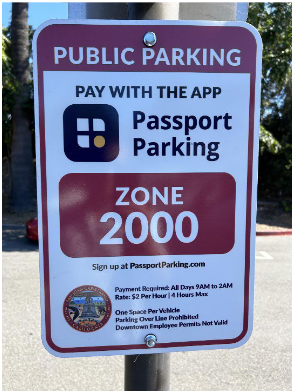
A photo of what parking signs could look like when the city begins charging for public parking in select areas to raise more revenue. The photo was included in city documents related to the program that will look to charge non-residents for parking.
Lindsey said he viewed a smaller raise as part of the “painful reality” of local governments facing significant reductions in property tax revenue if Amendment 3 passes in November.
“My recommendation is that we do it this coming year and not wait until November,” he said. “I feel it’s the responsible thing to do.”
But Mayor Sheila DeCiccio and others said they didn’t feel comfortable with reducing staff raises and pointed to an ongoing hiring freeze that will help conserve funds.
The group agreed to keep open a vacant code enforcement position ($75,000), freeze two vacant fire positions ($200,000) and cut back winter hours at city pools, which would reduce part-time parks staff ($100,000).
Commissioners said they would review the open positions mid-year and determine if there was a need to add any of them back into the budget.
In addition, the city appears poised to cut back significantly on its tree program by removing from the budget a vacant tree specialist position ($73,680); axing the vacant tree permitting position ($60,000) and cutting a watering truck as well as new tree plantings (approximately $270,000).
City Manager Randy Knight said the city is no longer saving many trees on private properties that owners or developers want to cut down because of changes lawmakers made to state law. It’s another example of pre-emption by state government to limit how local governments can make decisions.
While the city forestry department typically plants hundreds of trees per year on city right-of-way, the city is running out of public land for those plantings, Knight said.
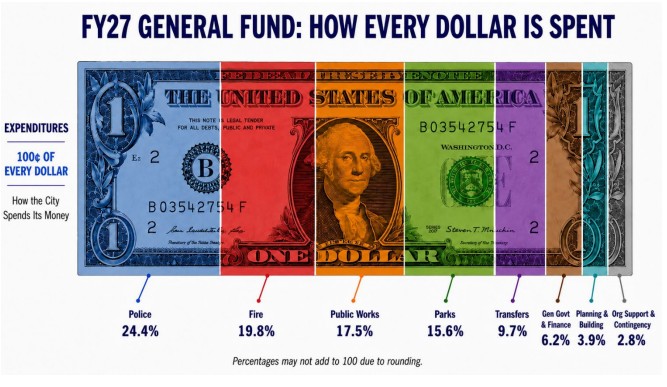
This graphic, included in city budget documents, shows how the city’s nearly $95 million general fund will be spent in the coming financial year to begin Oct. 1. The Winter Park Voice’s coverage of this year’s budget deliberations also includes the following stories linked below:
Also on the chopping block is $25,000 in funding for the library, $12,000 for an appreciation event typically held for people who serve on city boards, some Halloween and Easter events put on by the parks department some postage and printed materials that go to utility bill customers.
Even with a $25,000 reduction, the Winter Park Library is still slated to receive nearly $50,000 more than last year in support from the main city budget as well as the Community Redevelopment Agency budget for a total of $2.5 million.
Each year the city spends a quarter of one percent of gross revenues from the general fund, electric utility fund and water utility fund — or about $480,0000 total — on nonprofit community groups. This year those expenditures are proposed as:
- $105,000 for Mead Botanical Gardens, a $3,000 increase over last year
- $99,900 for the Winter Park Historical Association, also about a $3,0000 increase
- $43,800 for Winter Park Day Nursery, a $1,300 increase
- $20,000 for United Arts representing no change from last year
- $28,900 for the Polasek Museum, a $900 increase
- $0 for Blue Bamboo, a $12,500 decrease after discussion by the City Commission
- $45,000 for Men of Integrity, which had not received any funding since $18,000 two years ago
Men of Integrity is a nonprofit that operates out of the Winter Park Community Center and serves about 24 boys, including 10 in high school and 14 under the age of 12, said Antwon Carter, the group’s leader. Many of the kids attend Winter Park schools but some travel from outside the city to attend the weekly program.
Carter’s group is the only nonprofit commissioners proposed adding to the budget after wrote to the city in August and asked for the money to support his mentoring program that provides help with college readiness, STEM activities, financial literacy, fieldtrips and a hot meal during weekly meetings among other services.
An administrator for the program provided the Voice with a copy of Men of Integrity’s most recent tax form that show’s the group’s revenues are typically less than $50,000.
The group said it mostly relies on volunteers and out-of-pocket expenditures by Carter.
“This mission is also deeply personal to me,” Carter said in an email to the Voice. “I grew up in Winter Park, and I understand firsthand what can be produced when a young person is given a strong foundation. For generations, programs centered around the Winter Park Community Center have played an important role in youth development. Whether young people came directly from the surrounding neighborhood or were brought there by their parents, the Center provided a place where they could experience mentorship, structure, opportunity, and the positive influence of the broader community.”
Carter, who said he now lives in Apopka, appeared at the budget work session and told commissioners the $45,000 would provide a needed infusion of dollars to reduce the group’s need to ask for more in the future.
Some commissioners, including Lindsey and Kris Cruzada, questioned if the group should receive the full amount of its request without providing more information to the city.
But there appeared to be enough commissioners in favor of the expenditure to move it ahead to a vote on Wednesday as part of the overall budget.
The nonprofit organizations slated to received money from the city’s CRA budget are:
- $14,000 for the Enzian Theater, a $4,000 increase
- $51,500 for the Heritage Center, a $1,500 increase
- $44,300 for the Welbourne Day Nursery, a $1,300 increase
- $50,800 for the Winter Park Playhouse, a $1,500 increase
- $398,610 for the library, part of it’s overall $2.5 million in city funding
When it comes to raising more funds for the city government, red light cameras and credit card convenience fees are among the top projected generators.
Police Chief Tim Volkerson said the city is still considering where additional cameras could be placed and, if they are approved by the state, they likely would not be up and running until May or so and could generate some $750,000.
Credit card convenience fees could yield $1.2 million for the city when people buy permits, pay bills or conduct other business at City Hall.
And a pilot program to charge non-city residents to park at Dinky Dock or the dog park at Baldwin Park could bring in an estimated $100,000 or more when it begins as early as the spring.
Paid parking has long been a controversial topic in Winter Park, which offers free parking throughout the city including along busy Park Avenue. If the pilot is successful, city officials said program could expand to other areas and, once again, be aimed at non-residents.
WinterParkVoiceEditor@gmail.com
To comment or read comments from others, click here →



Recent Comments