WP Political Season Heats Up

WP Political Season Heats Up

Former Mayor to Run for Leary’s Commission Seat


Gary Brewer, who served as Winter Park commissioner and mayor during the 1980s and 90s, told the Voice today he intends to run again for the WP Commission.

Brewer said he plans to file next week for the seat being vacated by Steve Leary, who this week announced his run for WP Mayor.

Also today, former Florida Circuit Court Judge Cynthia Mackinnon followed up her recent campaign treasury filing with a candidacy announcement calling for “A new type of leader.”

Mackinnon pledged to “build consensus” among Winter Parkers, vowing to change the climate of governance that has sent the city “careening from one crisis of its own creation to another by promoting policies and projects that lack community support.”

Click the button below to see the full text of Mackinnon’s announcement.

Commissioner Leary declined a Voice request for a candidacy statement.

Mackinnon Announcement

Mackinnon Treasury Filing

Leary Treasury Filing

To comment or read comments from others, click here →

Leary to Run for WP Mayor

Leary to Run for WP Mayor

Leary Must Resign His Seat — Voters Will Elect New Commissioner


One week after Mayor Ken Bradley announced he would not seek a third term, city Commissioner Steven Leary filed his intention Monday to be Winter Park’s next mayor.

Leary, the mayor’s strongest ally on the board, will have at least one other challenger. Cynthia Mackinnon, formerly a judge in the Ninth Judicial Circuit, also has appointed a campaign treasurer and opened a bank account in the mayoral race.

Leary’s decision means city voters now will have two vacancies to fill in the March city election. In order to run for mayor, he must step down from his current seat. He must submit his resignation plans ten days before the qualifying period starts December 29, said City Clerk Cindy Bonham. The date he decides to make his resignation effective, however, has to occur before the mayoral term begins. 

Depending on what date Leary picks to resign, a temporary appointee might be needed to fill his seat until the March election. The mayor and the three other commissioners would make that appointment if necessary. 

Mr. Leary said Monday he has not yet decided how soon he will resign.

To comment or read comments from others, click here →

Westsiders Win Fight for Low-Density

Westsiders Win Fight for Low-Density

Developer Abandons High-Density Plan — Offers Single Family Homes Instead

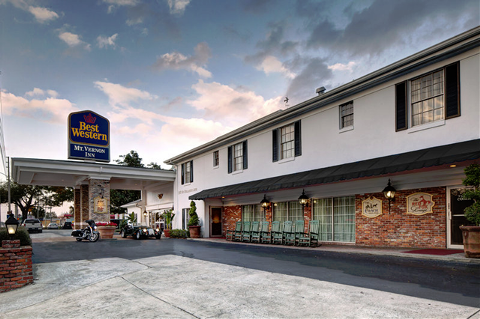
A Winter Park icon, the Mt. Vernon Inn, will close its doors forever on November 1. Long beloved by locals as a place to gather in the morning for breakfast or in the evening for drinks, the Red Fox Lounge will be replaced by three upscale restaurants boasting a combined total of 590 seats.

Rather than hotel rooms, the new establishment, to be known as The Luxe, is slated to have 53 apartment units with rents of $3,000 a month, according to the developer, Unicorp National Developments president Chuck Whittall. At a projected 223,940 square feet, the Luxe will be more than double the size of the Mt. Vernon and will require Unicorp to request a sort of hybrid zoning – a blend of the existing commercial C-3 zoning and a “planned development” category known as PD-1.
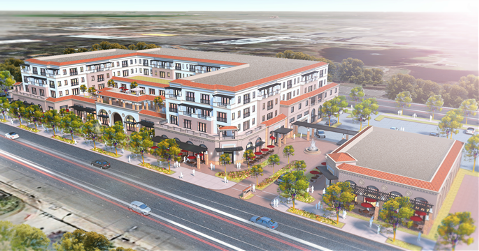
If the city grants it, this will be the first PD-1 zoning in Winter Park. A planned development is one that combines residential, retail and commercial establishments and is generally characterized by a high level of density.

Unicorp Needs Upzoning to Build The Luxe

Unicorp’s Chuck Whittall, who will be developing The Luxe if his deal to purchase the Mt. Vernon Inn goes through in early November, is entitled to ask for this blended zoning. The Winter Park City Commission, however, is in no way obligated to grant his request.
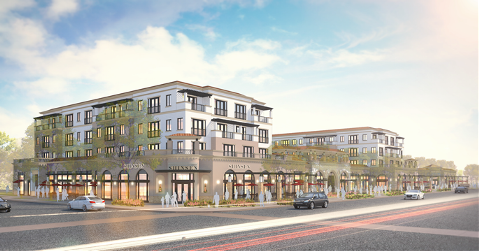
The issue is slated to come before Planning & Zoning on November 4, and then before the City Commission on December 8.

Unicorp: 7 Parcels on 17-92

Mr. Whittall has amassed an ambitious amount of real estate along Highway 17-92. In addition to Mt. Vernon/Luxe property, Whittall has Lakeside Winter Park, home to Trader Joe’s, Gardens at Ravaudage, the Fleming’s Steak House property, the former Wazzabi property, the Cold Stone Creamery / Math building and Winter Park Terrace, the former site of Starbuck’s – a total of seven holdings.

‘T.O.D.’ Hits 17-92
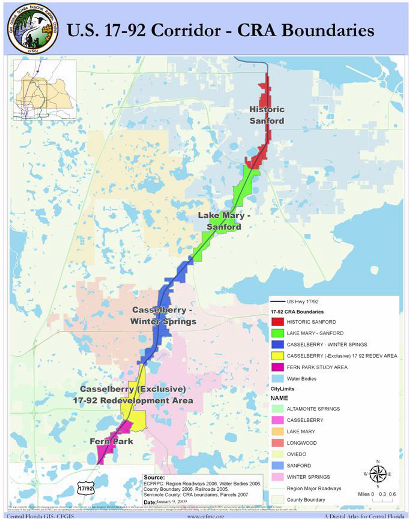
What we may be seeing is one example of Transit Oriented Development (TOD), which was described in a regional study created between 2007 and 2010 by the East Central Florida Regional Planning Council, entitled “The East Central Florida 2060 Plan.”

The East Central Florida region includes 68 cities in six counties – Orange, Osceola, Volusia, Seminole, Brevard and Lake.

2060 Plan: ‘Stop Urban Sprawl’

Creating a model by projecting current development patterns into the year 2060, the Planning Council found “a less than desirable and consumptive outcome that promotes sprawl . . . including irreversible damage to our environment and economy.”

The 2060 Plan is an attempt to avoid “development [ in ] the most critical ecosystems, [ promote ] denser growth in transit planned corridors, and [ to redevelop ] existing urban centers.”

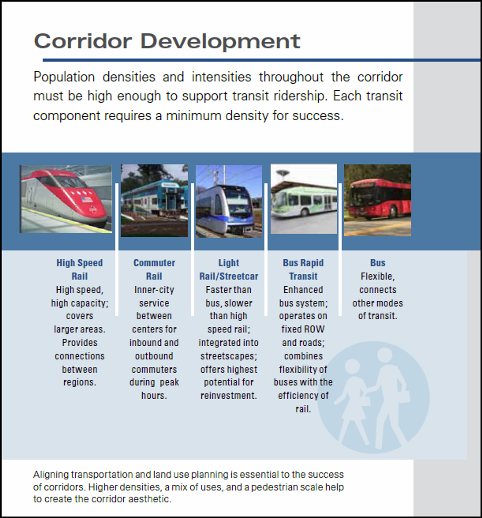
East Central Florida boasts one lone corridor, comprised of three parallel arteries – 17-92, a portion of I-4 and SunRail. According to the 2060 Plan, “Aligning transportation and land use is essential to the success of corridors. The 17-92 corridor will be a transit oriented development that “feeds” SunRail . . . .”

  ECF 2060 Plan

“Transit Doesn’t Work Without Density.”
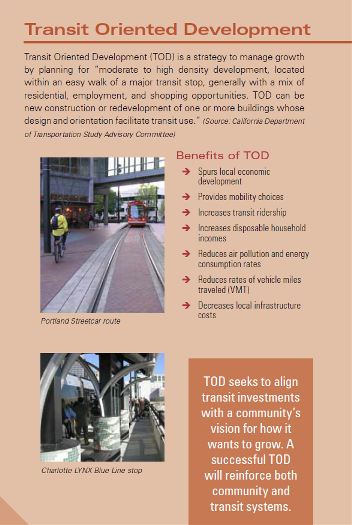
Transit Oriented Development is described in the 2060 Plan as, “. . . a strategy to manage growth by planning for ‘moderate to high density development, located within an easy walk of a major transit stop, generally with a mix of residential, employment, and shopping opportunities.”

Fred Milch, Transportation Planning Manager at the Central Florida Regional Planning Council, told the Voice, “Transit doesn’t work without density.”

Orlando Area Apt. Construction Jumps 56%

Chuck Whittall is not the only developer who has jumped on this bandwagon. According to the Federal Reserve Bank of Atlanta, the current pipeline of apartment construction activity in the Orlando metro area is the highest in the state.

It has gone from 3,640 starts in the second quarter of 2013 to 5,685 in the second quarter of 2014.

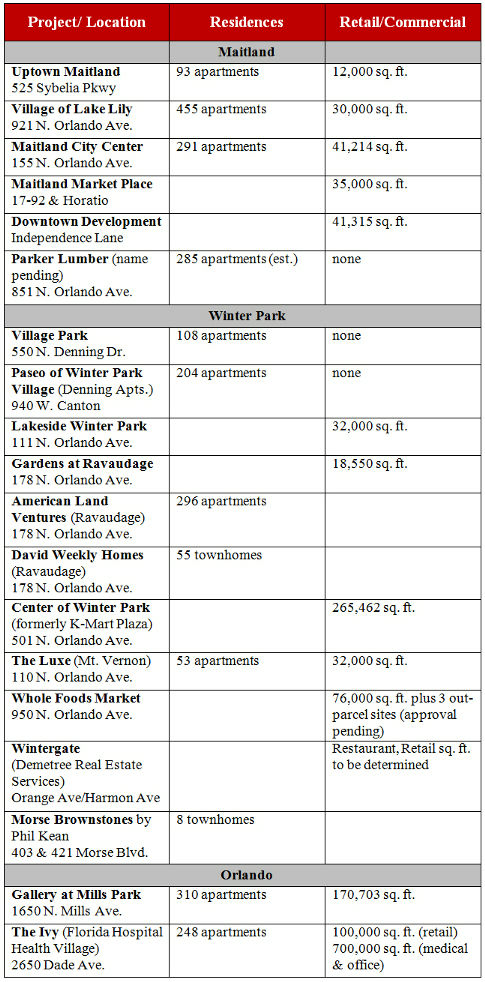
Listed below are developments — planned, under construction, or completed — along the Maitland-Winter Park-Orlando portion of the 17-92 corridor. Together, they represent 2,253 apartments, 63 townhomes and an estimated 1.4 million square feet of commercial and retail space – all worth in excess of $500 Million.

Florida Hospital Promotes TOD

Winter Park Mayor Kenneth Bradley’s employer, Florida Hospital, has been at the forefront of TOD promoters. In a letter dated May 12, 2011, Florida Hospital President and CEO Lars Houmann wrote to Governor Rick Scott, “Florida Hospital will work cooperatively with businesses and municipalities all along SunRail to enhance ridership and development.”

Mayor Bradley announced today in the Winter Park Observer that he would not seek another term as mayor. His current term expires in March 2015. Noting the sacrifices involved in holding public office, Bradley said, “I’ve done what I feel like I came to do.”

  FL Hospital Letter

No Gain Without Pain
Metroplan Orlando’s Executive Director Harry Barley is optimistic about the prospects. “This is an important regional corridor,” said Barley, “and it will fit with our regional vision for growth.” But the transition to TOD does not come without a price.

In Winter Park’s immediate future, 17-92 congestion and declining SunRail ridership are on a head-on collision course with the looming six and one-half-year reconstruction of I-4. According to one developer, “It’s going to be painful.”

SunRail Ridership Plummets

If the objective of TOD was to get us out of our cars and onto a train before I-4 construction began, that effort has failed.

According to the Orlando Sentinel, SunRail ridership has steadily declined. For example, Florida Hospital’s Health Village is a huge mixed-use complex that exactly fits the “Florida 2060” model. It has approximately 17,000 employees, their own rail stop which was financed by the hospital, and a subsidy for employees who ride the train to work.

In August 2014, the Florida Hospital stop had an average of 181 SunRail riders per day.

  Sentinel SunRail Story

No Coordination Among Corridor Cities

Asked if anyone was addressing the cumulative impact on the infrastructure along the corridor, Central Planning Council Executive Director Hugh Harling confirmed that all this new development falls within the jurisdiction of the local municipalities.

He said, “Each city operates independently.” And officials in Maitland and Winter Park, who asked to remain unnamed, said that each city is concerned with its own piece of the pie and that there is virtually no coordination among them.
They confirmed that there is no regional person or organization responsible for regional coordination or oversight.

Regional Vision vs. Local Vision

Clearly, there is a vision plan already on the books – and has been since 2010.

TOD is barreling down the tracks straight at Winter Park, and it seems to be arriving way ahead of schedule. It may be very difficult for the City of Winter Park to embark on a local visioning process without being overtaken by the regional juggernaut.
To comment or read comments from others, click here →

News Alert–Bowling Alley Slides Into Gutter on a 3-3 Split

News Alert--Bowling Alley Slides Into Gutter on a 3-3 Split

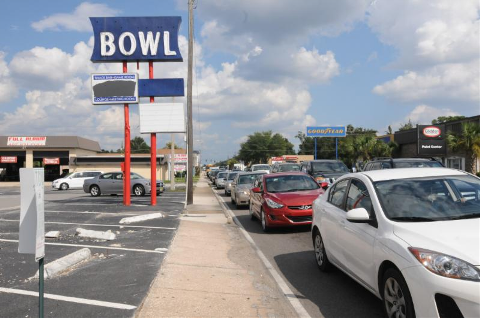
The Voice reported on September 19 that the Community  Redevelopment Advisory Board and the Parks & Recreation Advisory Board narrowly approved the purchase of the Fairbanks Avenue Bowling Alley at 1111 Fairbanks Avenue. On September 22, however, the Community Redevelopment Agency (CRA) voted down the $3,250,000  purchase of the 1.6 acre property on a 3-3 split.


Bradley, Leary, McMacken on Losing Side

Bradley_McMackin_Leary_500x180.fw

The CRA Advisory Board is made up of citizens serving in an advisory capacity only. The Community Redevelopment Agency, which is comprised of the mayor and four commissioners, plus a representative from Orange County, Frank DeToma, is the decision-making body.


Knight: “The price is the price.”

Bowlingv2 Bradley

City Manager Randy Knight kicked off the discussion by reporting that he had

spoken with the seller, Scott Fish of UP Developments, and that Fish was

unwilling to take less than the $3.25 Million asking price. “So,” said Knight, “the price is the price.”

But, What’s the Value? 

Whatever the price, the value is still unclear. City staff has, to date, not had the land appraised nor are they able to answer questions about what other, similar pieces of property are available.

McMacken: “We’re adding a substantial piece to a great park.”

Arguing in favor of the acquisition, Commissioner Tom McMacken said he thought, long term, this would be “money well spent.”

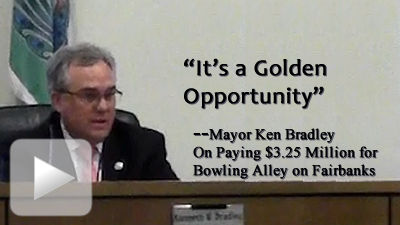
Bradley later stated, “This is a property that’s never been on the market . . . never, ever been on the market.”

Cooper: “Don’t Talk to me about an asphalt park.” 

Bowlingv2 Cooper

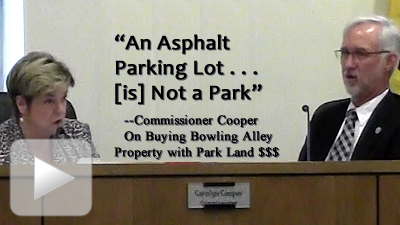
“The struggle I’m having,” said Cooper, “is that staff’s plan for this – and generally those plans come to fruition – is for this to be an asphalt parking lot . . . So that’s not park. Don’t talk to me about an asphalt park.”


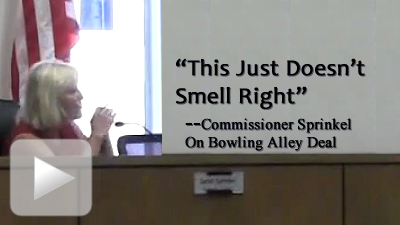
For Commissioner Sprinkel, the deal didn’t pass the sniff test. She said that while the bowling alley acquisition deal may have been familiar to some on the dais, “It just dropped into my lap.”  She said she felt the commission had not spent sufficient time discussing the acquisition or exploring the different possibilities that might be available to them. “I just feel like it’s too fast,” she said, “it’s not considering everything, and it just doesn’t feel right.”

How Are We Going to Pay for This?

Bowlingv2 Sprinkel

One issue that arose repeatedly was the funding source. The acquisition of the property had first come up during the budget discussion at the August 25 commission meeting.


The city proposed to use $1,650,000 from CRA reserves, $975,000 from the Parks Acquisition Funds and $625,000 from the sale of land to the medical practice of Dr. Ivan Castro. The CRA reserves, however, had only $1,400,000 — not $1,650,000. Where to find $250,000?


$245,000 Mysteriously Materializes

Expenditures for CRA Projects and Community Initiatives in the CRA budget proposed on August 25 totaled $1,165,148. Without a murmur, by September 22, total CRA expenditures had fallen to $920,648.


These are the projects that took the hit.   

CRA Project or 

Community Initiative

8/25 Proposed

Budget

9/22 Proposed

Budget

Heritage Center Operation

40,000

30,000

Housing Rehab Assistance

20,000

0

Business Façade Matching PRG

25,000

0

West Meadow Ice Rink

225,000

225,000

W. Morse Blvd. Streetscape

100,000

0

Signs and Wayfinding

90,000

0


The money cut from these projects totals $245,000 – just about enough to make up the shortfall needed to purchase the bowling alley.


Bowlingv2 WilliamsCitizens Object to Lack of Transparency

As the mayor opened the floor for public comment, Larry Williams of Eucalyptus Properties approached the podium. First he pointed out that the mayor had been mistaken when he stated that the bowling alley property had never been on the market. “Indeed, it has been on the market,” said Williams, who explained that he himself had optioned the property six years ago, but decided not to buy it because it would be difficult to develop.

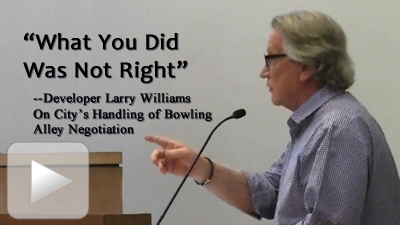
Williams went on to address the City Manager: “What you did, Randy, was not right,” he said. “This is a lot of money. You don’t negotiate this kind of deal without putting it out on the table. . . .There’s one thing that’s been absent in this conversation far too much, and that’s the price.”

Williams pointed out that not only is the city paying a premium for land that has limited utility, but also, the city staff at no time requested a property appraisal or verification from Fish of $300,000 in carrying costs he was asking from the city.

Woody Woodall: “This is Not a Park.”

Woody Woodall, who currently sits on the CRA Advisory Board and who voted against the acquisition, insisted, “This is a lousy deal.” He objected to depleting CRA reserves. If the money is there, he said, “I’d rather we spend it on something that will be a positive addition to our parks.”

Will the Commission Seek Last-Minute Appraisal?

As the Commission prepared to vote, Commissioner Cooper proposed to table the matter until the city could get an appraisal on the property, but that amendment failed.

The Board then voted for an amendment to seek a property appraisal. Commissioner Sprinkel questioned the value of such an appraisal. “What happens if the appraisal comes back at less than what the price is?” she wanted to know. When Bradley asked if she wanted to put that forward in the form of an amendment, Sprinkel replied, “I’m not going to vote for it anyway, so it doesn’t make any difference to me.”

When Bradley sought to reassure Sprinkel that the property was “sure to appraise,” especially since there is a building on it of “who knows how many square feet,” Sprinkel replied, “No one knows. That’s the whole problem – we don’t know any of this.”

Bowling Alley Purchase Fails

With that, the clerk read the role. Leary, Bradley and McMacken voted for the purchase.  Sprinkel, Cooper and DeToma voted against.

The 3 – 3 vote was not enough. The motion failed. 


To comment or read comments from others, click here →

Will City Strike a Fair Deal to Buy Bowling Alley?

Will City Strike a Fair Deal to Buy Bowling Alley?

Some Say It’s a High Price to Pay


September 18, 2014 – High Noon. City Manager Randy Knight called a joint meeting of the Community Redevelopment (CRA) Advisory Board and the Parks & Recreation Board to discuss the purchase of the Fairbanks Avenue Bowling Alley at 1111 W. Fairbanks Ave. The two boards met at the Winter Park Country Club golf club house.
Scott Fish, of UP Developments, LLC, developer of the new Whole Foods, has contracted with Rollins College to purchase the bowling alley for $2,950,000. Fish is willing to assign his contract with Rollins to the city, so the city can buy the bowling alley property to extend Martin Luther King, Jr., Park.

City Rushes to Meet Deadline

The city will waste no time waiting until after the visioning process to seize the opportunity. The contract between UP Developments and Rollins is scheduled to close October 27, creating urgency among city staff to reach a decision. The matter will go before the CRA Board at 2:30 Monday, September 22, and will be on the agenda of the commission meeting which immediately follows.

Rollins Bought Property in 2013

Rollins purchased the bowling alley property in the late spring of 2013, when it looked like Harper-Shepherd Field would become a Minor League baseball stadium. Rollins needed space for other teams that use Harper-Shepherd. Being next to Martin Luther King, Jr., Park, the bowling alley property was an ideal location for Rollins to expand their playing fields.
When it became clear that baseball would not be coming to Winter Park, however, Rollins no longer needed expansion room and sought to sell the property. UP Developments, LLC,, stepped in and contracted to buy the property from Rollins.
Apparently, the city has been interested in the bowling alley property for some time, with an eye to expanding MLK Park and mitigating some of the traffic problems on Fairbanks. When they approached Scott Fish about it, Fish agreed to assign his contract with Rollins to the city, so that the city can buy the property from Rollins and UP Developments will withdraw from the transaction.

Purchase Will Expand MLK Park, Add Parking

City purchase of this property would expand MLK Park by approximately 1.6 acres, allowing for a non-regulation sized playing field. It would also create an additional 100 parking spaces for the park and for business establishments along Fairbanks and 17-92. Preliminary plans also call for an extended right-hand turn lane along west-bound Fairbanks at the intersection with 17-92.

Cost to City — $3.25 Million

The city proposes to pay for the property with funds from several different sources. They include:

CRA contribution from fund reserved for debt service $1,650,000
Parks Acquisition funds 975,000
Sale of city land at 300 Pennsylvania Ave. 625,000
TOTAL
$3,250,000

UP Development’s contract with Rollins is for $2,950,000. According to Winter Park Communications Director Clarissa Howard, the additional $300,000 the city is willing to pay would compensate Scott Fish for “real estate fees and site plan design fees associated with the property.”

“Is this a fair price?”

CRA Advisory Board member Daniel Butts asked City Manager Knight if he thought this was a fair price for the property. Knight replied, “It’s higher than market value,” but added that there has been no appraisal on the property.
Butts then wanted to know how much the city would lose in tax revenues. He pointed out that this expenditure would “wipe out the rainy-day fund” for CRA debt service. The debt he was referring to is on the Community Center in the Hannibal Square neighborhood. The “rainy day” fund would cover this debt service should property values fall again as they did in 2010-2011.

Land Acquisition Only the Beginning

Parks & Recreation Advisory Board member Janet Atkins pointed out that acquisition of the land was only the beginning, and that considerable additional funds would be required to demolish the building and to redevelop the property. It is also unclear who would pay for widening Fairbanks to create the right turn lane onto 17-92. She said, however, that “this is a great first step toward expanding this park.”

Parks & Rec Votes to Approve the Purchase

Parks & Recreation Director John Holland stated the land purchase would help meet the goals of the Parks & Rec Department in three ways. First, it would add park land, consistent with the Comprehensive Plan mandate to provide one acre of green space per 10,000 residents. “We are right on the line of meeting that level of service,” said Holland. He pointed out that there is a need for more multi-purpose playing fields. And, third, there is a current parking shortage at MLK Park.

CRA Votes Approval — with Strings Attached

The CRA Advisory Board, which voted separately, required more discussion. Daniel Butts wanted to know if the city had any other funding source. Noting that the city has reserves of $27 Million, Butts suggested the city contribute at least half of the purchase price to avoid depleting CRA contingency funds. He also urged Randy Knight and Planning Director Dori Stone to go to Scott Fish and to Rollins to re-negotiate the sale and come back with a better price. The CRA then voted three to two to approve as amended.
The measure is scheduled to go before the CRA at 2:30 Monday, September 22, and then to the Commission, which meets at 3:30 immediately following the CRA.

To comment or read comments from others, click here →