Comp Plan Amendment Fails; City Takes Up FY 2015 Budget

Comp Plan Amendment Fails; City Takes Up FY 2015 Budget

Considers Funding Regional Arts Center

In an abrupt turnaround, the city commission acquiesced to city staff recommendations and citizen sentiment and voted unanimously to quash the proposed amendment to the Winter Park Comp Plan. The proposed change would have increased density of development on four-lane roads and eliminated parking garages from the calculation of allowable building size.

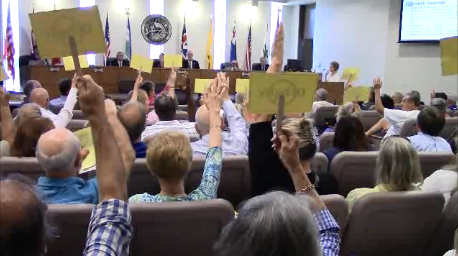
A standing-room-only crowd, most of them carrying the “indoor” version of the now familiar No Density signs, filled the chambers on the evening of August 25. As the proposed amendment came up for discussion, City Planning Director Dori Stone took the podium to articulate staff’s recommendation regarding the amendment. She stated, “Staff is recommending that we not adopt [the amendment] until we go through the visioning process.”

Commissioner Carolyn Cooper made a motion Not to Adopt; Commissioner Sarah Sprinkel seconded, and the motion Not to Adopt passed unanimously.

Commission Gets Down to the Nitty-Gritty Business of the City

After a break, the chambers cleared of yellow signs and the commission got down to the first episode of the city’s yearly reality show – The Budget. August 25 was the first of three commission meetings that will see discussions and, ultimately, finalization of the FY 2015 city budget.

There is good news in this budget – the millage rate is set to remain the same, as it has for the past seven years. It allocates substantial additional funds for tree purchases. And the city reserves are holding steady at about 30 percent.

New Funding Mechanism for Organizational Support

This year’s proposal includes a mechanism for funding organizational support, based on a quarter point revenue contribution from each of the three major funds: General Fund, Electric, and Water & Wastewater. Current estimates put the funding pool at approximately $294,500 – nearly double what has been provided in the past. The current budget proposal, however, allocates $257,000 for organizational support.

To date, the city has received requests from six organizations. The chart below shows the amount each organization requested and the amount the city proposes to allocate.


Organization


Funding Request

 
Proposed Allocation

United Arts

$17,000

$15,000

WP Day Nursery

  24,000

    7,000

Mead Gardens

  85,000

  75,000

WP Historical Association

  70,000

  60,000

WP Playhouse

  30,000

      -0-

Performing Arts Center*

$100k for 10 years

$100k for 10 years

DPAC Scores Big

The Performing Arts Center referred to here is the Dr. Phillips Performing Arts Center (DPAC) in Orlando. Winter Park proposes to contribute $100,000 a year over the next 10 years, totaling $1 Million. This year’s $100,000 contribution represents approximately 39 percent of the total allocation for organizational support.

According to DPAC Communications Director Scott Bowman, the budget for DPAC now stands at $513 Million. Two-thirds of this money will come from public funds and a third from private donors. This regional facility will boast a 2,700-seat Broadway-type theater, a 1,700-seat acoustical theater and a 300-seat venue for smaller performances.

Winter Park is the only city so far to have offered a pledge of municipal funds to DPAC.

Will WP Kids & Orgs Play 2nd Fiddle to DPAC?

Since 25 percent of Winter Parkers’ taxes go to Orange County, according to Winter Park Communications Director Clarissa Howard, Winter Park’s $100,000-a-year organizational support contribution will not be the only Winter Park dollars DPAC will receive.

It is difficult to imagine what impact Winter Park’s $100,000-dollars-a-year will have on a $513 Million project. It is easier to envision the effect that an additional $100,000 a year over the next 10 years might have if it were spread among local organizations such as the Winter Park Day Nursery or the Winter Park Playhouse.

Future Commissions Hands Are Not Tied

Communications Director Clarissa Howard did confirm in an email to the Voice, “Although commission can plan for a 10-year, $100,000 funding to DPAC, they cannot commit future commissions to this funding amount. Every commission has the ability to approve the levels of funding they feel are needed at that time.”


To comment or read comments from others, click here →

Yes, You Can Fight City Hall

Yes, You Can Fight City Hall

P&Z Turns Down Request for Hannibal Square UP-Zoning

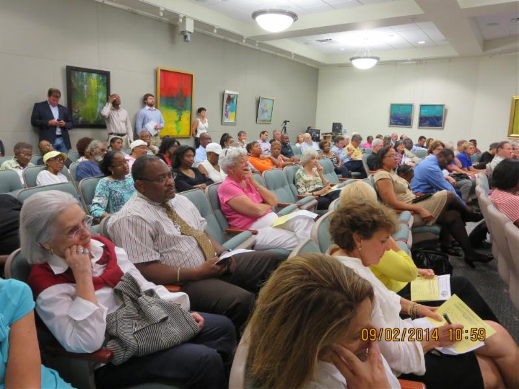
A phenomenon occurred on the night of September 2 as a standing-room-only crowd of Winter Park citizens packed the Commission Chambers for a Planning and Zoning (P&Z) Board meeting. The residents spoke; the Planning & Zoning Board members heard them.

Hannibal Square Neighborhood Character Threatened

 Hanging in the balance was the fate of the blocks bordered by Canton and Capen Avenues in the Hannibal Square neighborhood, where Sydgan Corporation, represented by Dan Bellows, sought to change the zoning from single family, detached dwellings, designated R-1, to R-2 zoning to accommodate a development of multi-family dwellings Bellows would like to build there.

Winter Parkers Take Back the Power

In what the Orlando Sentinel termed “the inescapable calculus that gives citizens clout over public policy,” citizens rose, one after another, to speak against the creeping encroachment of density and traffic in Winter Park neighborhoods, especially those on the west side of the city. They pointed out that Sydgan knew the property was zoned R-1 when they bought it, and that the Comprehensive Plan clearly set forth protections for the single-family, low-density residential character of the Hannibal Square neighborhood.

Bellows Skips Community Meeting

This was the third time Sydgan and David Weekly Homes had come before the city with a plan to build multi-family dwellings on the block of lots bordered by Canton and Capen. After a contentious meeting last spring, city planners had asked Dan Bellows to meet with Hannibal Square residents and reach some mutual agreement. Hannibal Square residents held a meeting at the Community Center, but Bellows did not attend. Instead he sent his lawyer. No compromise resulted.

Gary Barker took the podium to point out that it was not the duty of the P&Z to ensure that developers make money from properties they have bought. “You do, however, have an obligation to represent the will of the citizens of this town,” he said.

Residents Speak – Loud and Clear

“The commissioners have decided to do a visioning, so why in the world are we continuing to amend the Comp Plan and change the zoning?” argued neighborhood leader Mary Daniels. “When you are doing a vision plan, that includes your residents. The residents do have a voice and we ask that you hear us.”

Jennifer Anderson suggested the board members “hit the pause button” and wait until the city has worked through the visioning process before making a decision that could change the character of the neighborhood. It is unlikely the city would allow development of this sort on Palmer or Via Tuscany or in my neighborhood, she pointed out. “I would hope you would treat this community in the same way you would treat mine.”

Former Rollins College President Thaddeus Seymour observed that the representative for the builder, David Weekly Homes, referred to what he built as “product” rather than homes. “That sums up the problem for me,” said Seymour.

P&Z Hits the ‘Pause’ Button

As the board deliberated Sydgan’s request, it was clear that the voices of the citizens still rang in their ears. Board member Tom Sacha deplored the division that envelopes the city, with citizens polarized and seemingly unable to reach any compromise. “Let the visioning process work itself through,” he said. “We need to step back and pause for a moment.”

And in a clear demonstration of representative government, the Planning & Zoning Board denied Sydgan’s request for a zoning change by a four to two vote.


To comment or read comments from others, click here →

Citizen PACs Give Winter Parkers Stronger Voice at City Hall

Citizen PACs Give Winter Parkers Stronger Voice at City Hall

Mayor Bradley Pushes Back Against Baseball Petitioners & “No Density” Advocates

Even in the dog days of summer, Winter Park citizens are making a lot of noise, and the city is beginning to hear them.

While one Political Action Committee (PAC), “Protect MLK, Jr. Park,” was circulating a petition for an ordinance to prevent building a baseball stadium in Martin Luther King, Jr., Park, a second PAC, “Citizens for Managed Growth,” was formed to distribute the yellow “No Density” signs that currently dot the lawns of homes throughout Winter Park.

Chaired by Roderick Sward, Citizens for Managed Growth was formed in response to the June 9 commission vote to amend the Comprehensive Plan to allow increased density and intensity of development.

PAC Chairman Blindsided at Mayor’s Coffee Talk

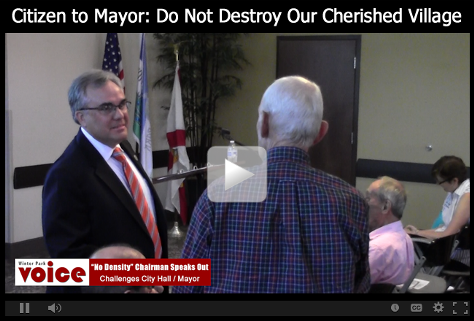
On Friday morning, July 11, at the mayor’s coffee talk at the Chamber of Commerce, Sward was caught off guard by Winter Park Hospital CEO Mayor Kenneth Bradley when Bradley unexpectedly handed him the microphone and asked him to explain the purpose of Citizens for Managed Growth.

Sward stood and articulated the concerns of Winter Parkers that the proposed changes to the Comp Plan would drastically alter the village character of Winter Park. He stated that the citizens felt they were not being heard by the city and had formed a PAC to publicly air their views by placing “No Density” signs around the city.

The following Monday, July 14, the commission convened to consider, among other things, the final reading of the ordinance to prevent a Minor League baseball stadium from being built in Martin Luther King, Jr. Park.

Mayor’s Amendment Fails to Force a Referendum

The ordinance had some rough early innings, as an essential paragraph had been accidentally omitted by the City Attorney’s office. Assistant City Attorney William E. Reischmann corrected the error, however, and the ordinance in its original form came up for discussion and a final vote.

Insisting that Martin Luther King, Jr. Park had never been seriously considered as a stadium venue, Mayor Bradley proposed a minor amendment to the effect that the measure would become an ordinance “if the city decided to build a baseball stadium.” This action could have forced the ordinance onto the ballot as a referendum.

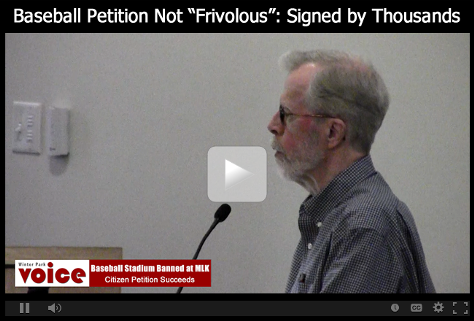
Rebutting the mayor’s dismissal of MLK Park as a serious possibility for the baseball stadium, PAC Chairman Gene Randall pointed out that MLK was very much in the running as a site for the stadium until the formation of the PAC, when it suddenly dropped to the bottom of the list. “This wasn’t a frivolous ordinance at the time we formed the PAC,” said Randall. (Video 16:22)

Bradley Confronts Citizen PAC Chairman in Audience

As the issue finally came to a vote, Bradley’s amendment failed and the commission voted unanimously to pass the ordinance as it was brought by the citizens to the city. Bradley then called a recess.

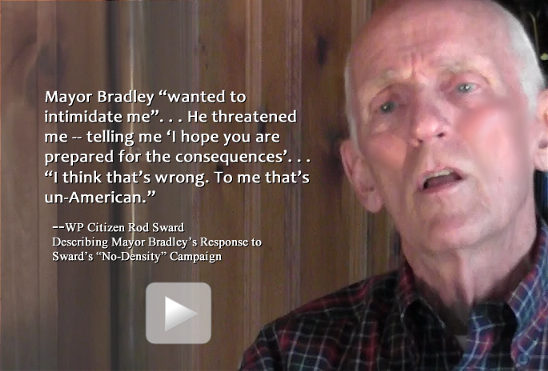
With MLK Park now safe from the baseball stadium, the crowd of citizens milled around the ante chambers, turning their attention to the proposed changes to the Comp Plan. Mayor Bradley emerged from the chambers and approached Rod Sward, interrupting Sward’s conversation. Bradley demanded to know who had contacted him to form the Citizens for Managed Growth PAC. When Sward declined to answer, Bradley admonished him to be “ready for the consequences.” In a subsequent interview with the Voice, Sward described his encounter with the mayor. Mayor Bradley did not respond to the Voice’s request for comment.

Comp Plan Amendment Due Back Any Day

When asked if they had received approval for the proposed Comp Plan amendment that was sent to Tallahassee in mid-June — the subject of Citizens for Managed Growth and their “No Density” signs — City Planning Manager Jeff Briggs responded that staff had not yet received it, but that they expected it any day. “However,” said Briggs, “staff is now working on visioning . . . The amendment does not have to be considered now.”

Briggs was referring to the fact that the commission has 180 days, or six months, in which to act on the proposed amendment once it is approved in Tallahassee. If they fail to act within that time, the amendment simply dies.

Will the amendment be part of the larger vision?

As to the probable disposition of the amendment, several possibilities exist, though no one claims to know what will happen. The commission could bring it up for a vote as soon as they receive it from Tallahassee. They could wait for five to six months before they act. They could consider the amendment within the context of the visioning process and let the results of that process guide their decision. Or, they could decide to reframe the amendment to conform with the final results of the visioning process.

Mayor Flips a U-Turn on Visioning

What seems to be driving city staff’s attention away from Comp Plan amendments and focusing their efforts instead on visioning has to do with Mayor Bradley’s own vision of the visioning process. Bradley has gone from resisting a visioning effort involving “the same 24 angry citizens” to moving full bore toward what he terms a “scientific” visioning process to determine the future direction of the city.

City Staff Works to Structure the Process

Asked whether the city has identified a consultant to guide the visioning process, Briggs said they had not. He explained that there is much work to be done before anyone knows what form the visioning process will take. Choosing a consultant “is not like bidding out tires,” said Briggs. Staff will need further direction from the commission regarding the choice of a consultant, how the surveys will be conducted and the overall budget parameters.

Citizen Voices Equal in Weight to Voices of Advisory Boards

Communications Director Clarissa Howard confirmed that the planning staff is working hard to structure the visioning process. She said that the visioning would not result in a new Comprehensive Plan, as had been previously suggested, but that the results would be used to review the current plan.

She confirmed that City Advisory Boards would have an active role in the visioning process, but said, “The voices of the citizens will be equal in weight to the voices of the [ advisory ] board members. Outreach is very important to city staff.”

To comment or read comments from others, click here →

THE ROAD TO GRIDLOCK: City Revokes BC Clinic Building Permit

THE ROAD TO GRIDLOCK: City Revokes BC Clinic Building Permit

Deal for Lakeside Blue Cross Clinic Parking Falls Through

City staff confirmed that they have revoked the amended conditional use permit for the Blue Cross clinic that is under construction at the Lakeside Development on 17-92, which also houses Trader Joe’s.


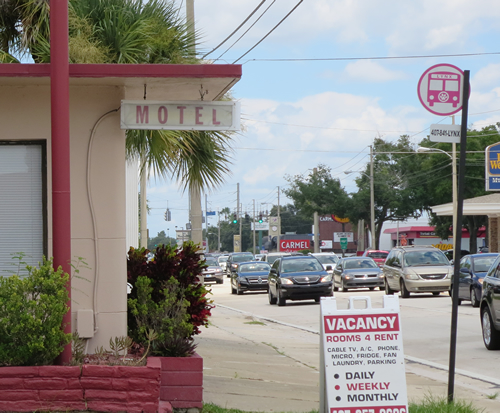
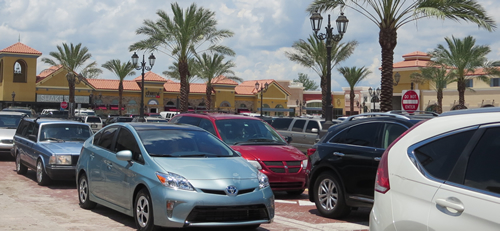
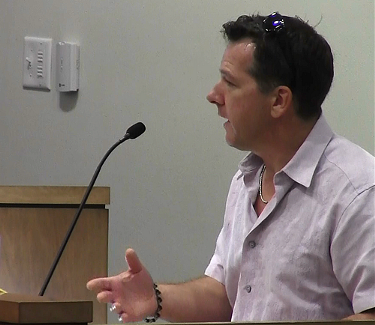
To grant the permit, on March 4, the Planning and Zoning Board relied on promises by Unicorp National Developments, Inc., that they had secured auxillary parking at the site of the Sweet Motel at 271 S. Orlando Avenue, below, which they planned to raze and turn into a parking lot. Unicorp has failed to close on the deal, and the sale will not proceed.
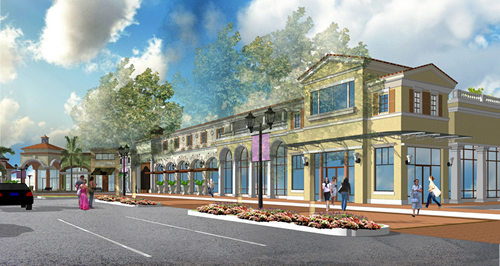
The failure of the deal leaves Unicorp short 21 parking places in an unfinished development where parking is already a nightmare.  Where Unicorp will come up with the additional 21 spaces is unknown. A Unicorp spokesman was not available for comment.


Chuck Whittall to March 4 P&Z:

“What we’re doing here will be a huge enhancement to the area.”


The Promise


The Reality

Clarissa Howard, Winter Park Director of Communications, said the city will allow the developer to complete exterior construction on the clinic so the structure can be closed and protected from the elements. No interior work can proceed, however, until Unicorp comes up with the required 21 parking places.


To comment or read comments from others, click here →

BASEBALL SHOCKER: City Says Harper-Shepherd Stadium Deal Dead

BASEBALL SHOCKER: City Says Harper-Shepherd Stadium Deal Dead

Did Pressure from WP Citizens Make the Difference?

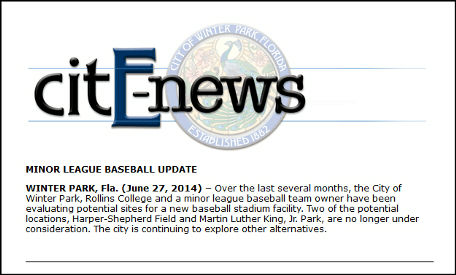
The number of potential sites for minor league baseball has just gone from four to two. The city announced late this afternoon that Rollins College Harper-Shepherd Field is no longer in play. Martin Luther King, Jr., Park was removed from the lineup earlier this week by an ordinance, the result of a citizen petition, prohibiting building a stadium in the park.

This most recent development in the up-and-down fortunes of stadium negotiations comes one day after a Rollins Board of Trustees meeting. Sources tell the Voice that a significant letter-writing campaign waged by concerned Winter Parkers was part of Trustee deliberations. How much of a role the letters — numbering in the “hundreds” according to our sources — played in Trustees’ decision to strike Harper-Shepherd from the list is unknown.

The remaining potential sites are Ravaudage and the Votech property at Denning and Webster, which is currently owned by Orange County Public Schools. Stay tuned as this story develops over the next days and weeks. 

To comment or read comments from others, click here →