by Beth Kassab | Dec 1, 2023 | City Commission, Election, News
Winter Park High coach enters commission seat race
Three candidates are now vying for Seat 2 on the City Commission while Commissioner Sheila DeCiccio remains unopposed headed into qualifying
Dec. 1, 2023
By Beth Kassab
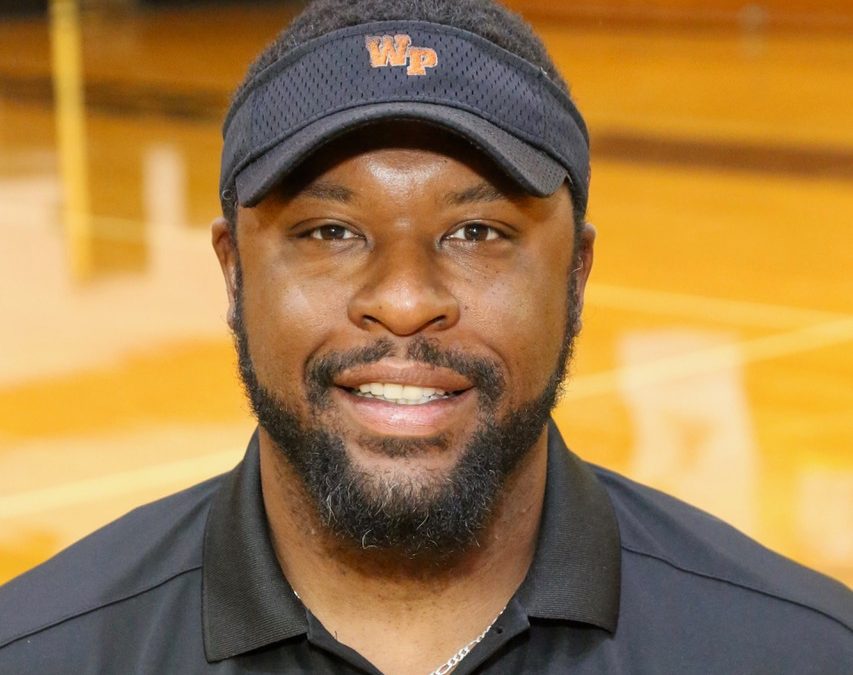
Winter Park High School football and wrestling coach Craig Russell said this week he would run for City Commission Seat 2, making it a three-way contest as Sheila DeCiccio remains unopposed for mayor.
Jason Johnson, an attorney, and Stockton Reeves, who runs a public safety firm, are also running for the commission seat that opened when DeCiccio, also an attorney, decided to run for mayor.
The qualifying period for the March 19 election opens on Monday and runs until Dec. 11.
Russell, 43, graduated from Winter Park High and the University of Central Florida before he began his 20-year teaching and coaching career at his alma mater. He is an assistant football coach and head wrestling coach and teaches weightlifting. He said he wanted to enter the race to bring a voice from his generation to City Hall.
“I feel like it’s time for me to step up from my generation to help bring a change for our leadership and our community,” said Russell, a first-time candidate for office. “I want to make it better for our kids.”
He said creating more affordable housing and extending the city’s Community Redevelopment Agency west of downtown are among his priorities.
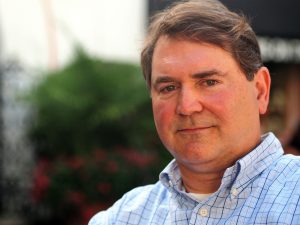
Stockton Reeves, candidate for Winter Park City Commission.
Russell, who is Black, said he doesn’t want to make his race an issue in the election, but he is aware that Winter Park has not had a Black commissioner more than 130 years.
“I think me getting up there and voicing my experience will remind people we’re a lot more inclusive than we have a reputation to be,” he said.
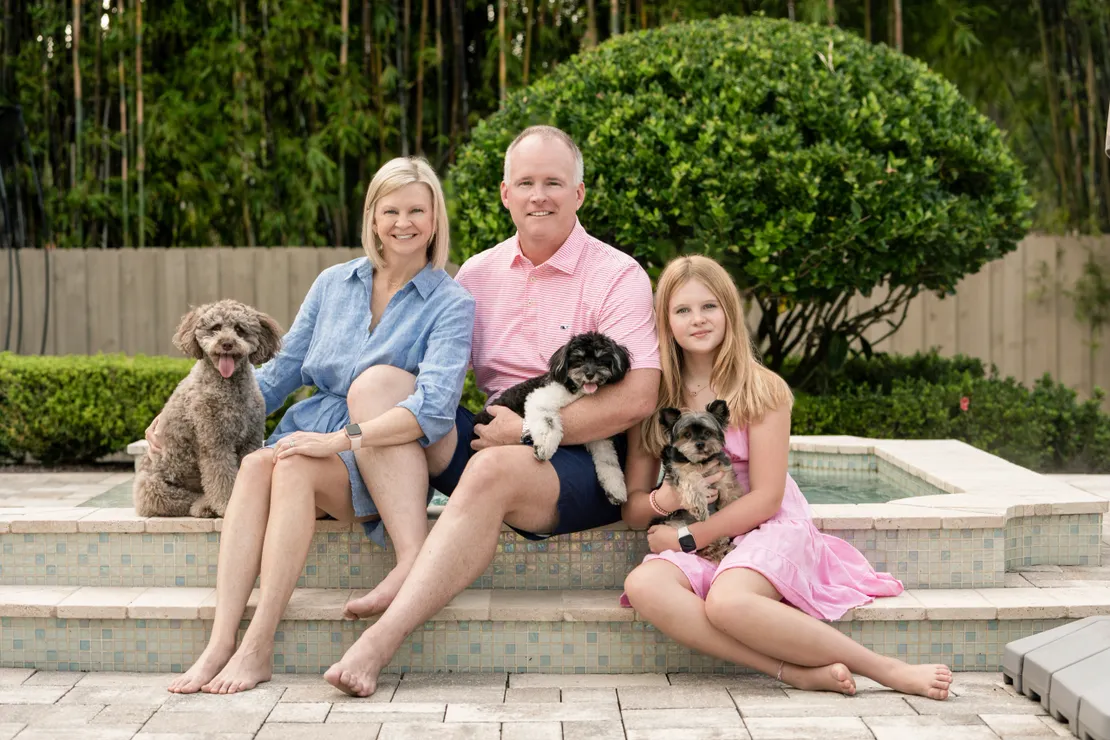
Jason Johnson, an attorney in the Winter Park office of the Byrd Campbell law firm, announced in October that he will run for the seat. He is also a first-time candidate who has lived in Winter Park for 13 years with his wife, Lori, and their daughter. He serves as chairman of the city’s Board of Adjustments, which rules on homeowner applications for building variances.
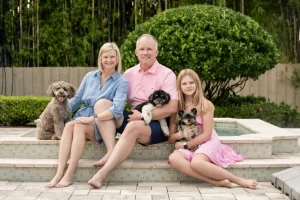
Jason Johnson, candidate for Winter Park City Commission, with wife, Lori, and daughter, Molly.
Johnson, who estimated he has raised about $17,000 in his campaign account so far, said his main priority is preserving Winter Park’s charm.
“It’s all about preserving this community that we all love,” Johnson said.
Stockton Reeves, executive director of the Center for Public Safety, also entered the race in October. He ran for the Florida House in 2018 and lost to Rep. Anna Eskamani in the general election. He has served on a number of city boards and is now vice chairman of the Civil Service Board and has run for commission before, but was not elected.
Reeves, who describes himself as a third-generation resident of the city, could not be reached for comment. But he earlier told the Voice that advocating for police and firefighters is among his top priorities.
WinterParkVoiceEditor@gmail.com
To comment or read comments from others, click here →
by Beth Kassab | Dec 1, 2023 | Uncategorized
Looking for the holiday spirit? Check the city's event schedule
From Nights at the Morse to the annual boat parade, Winter Park offers something for everyone
Dec. 1, 2023
By Beth Kassab
December is busy for everyone, but especially in the city of Winter Park where the calendar is jam-packed with holiday festivities.
You can find a full calendar of events here.
Wreaths Across America, the boat parade, Chanukah on the Park, visits from Santa and special events at the Morse Museum are all part of the lineup. Don’t miss your favorites!
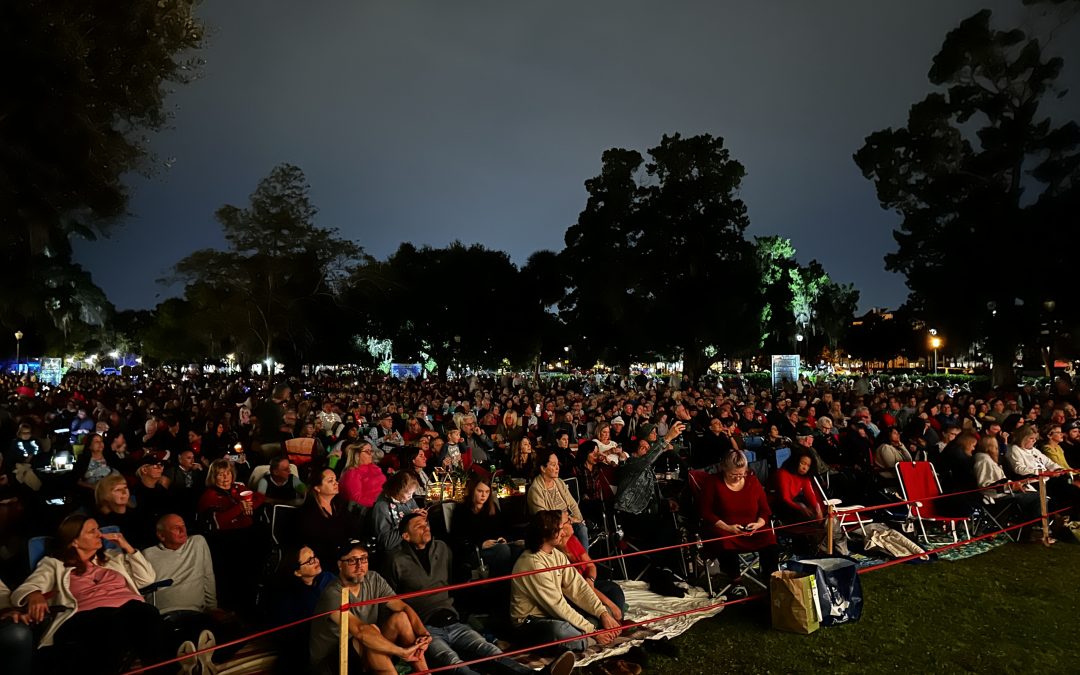
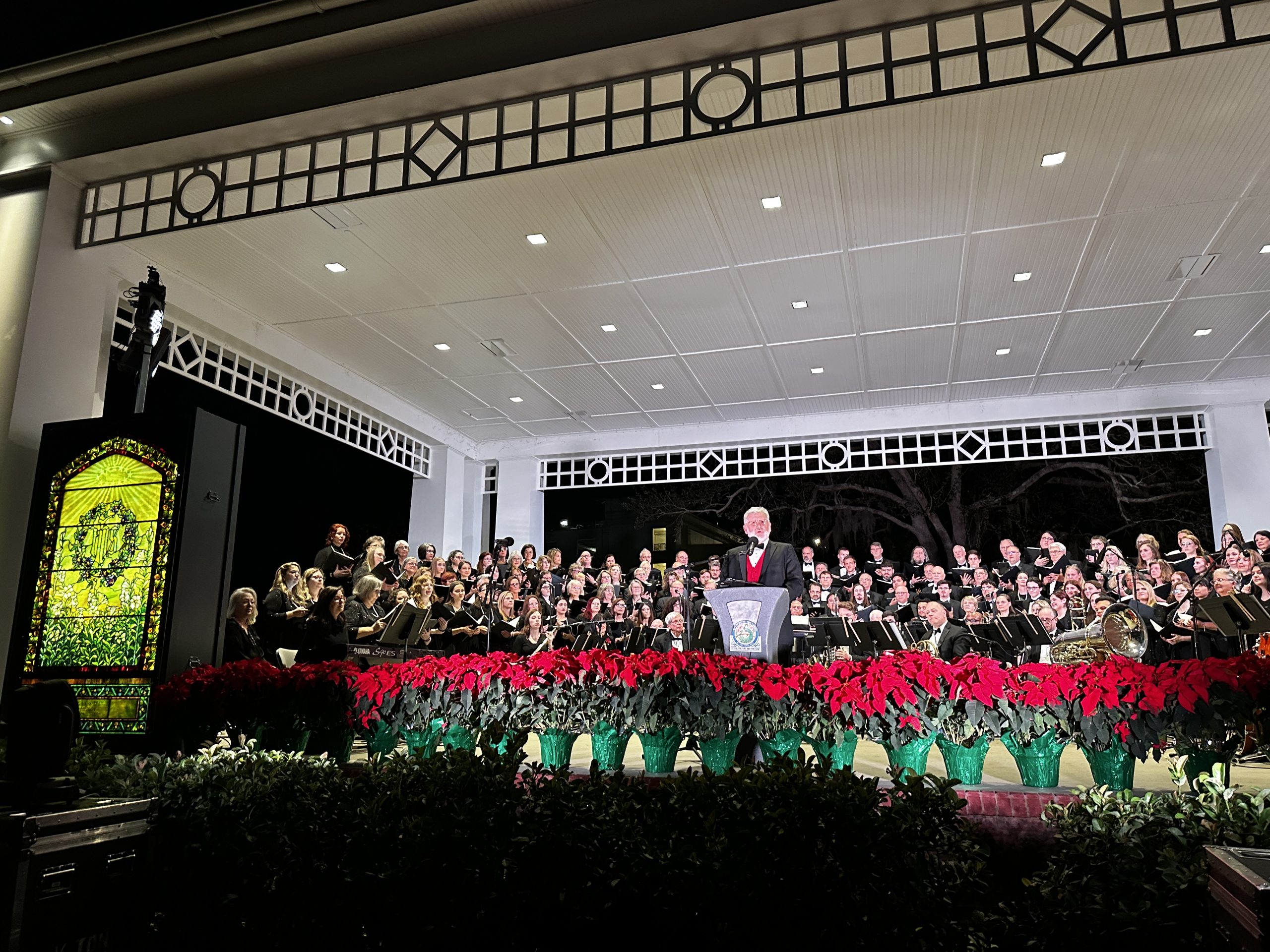
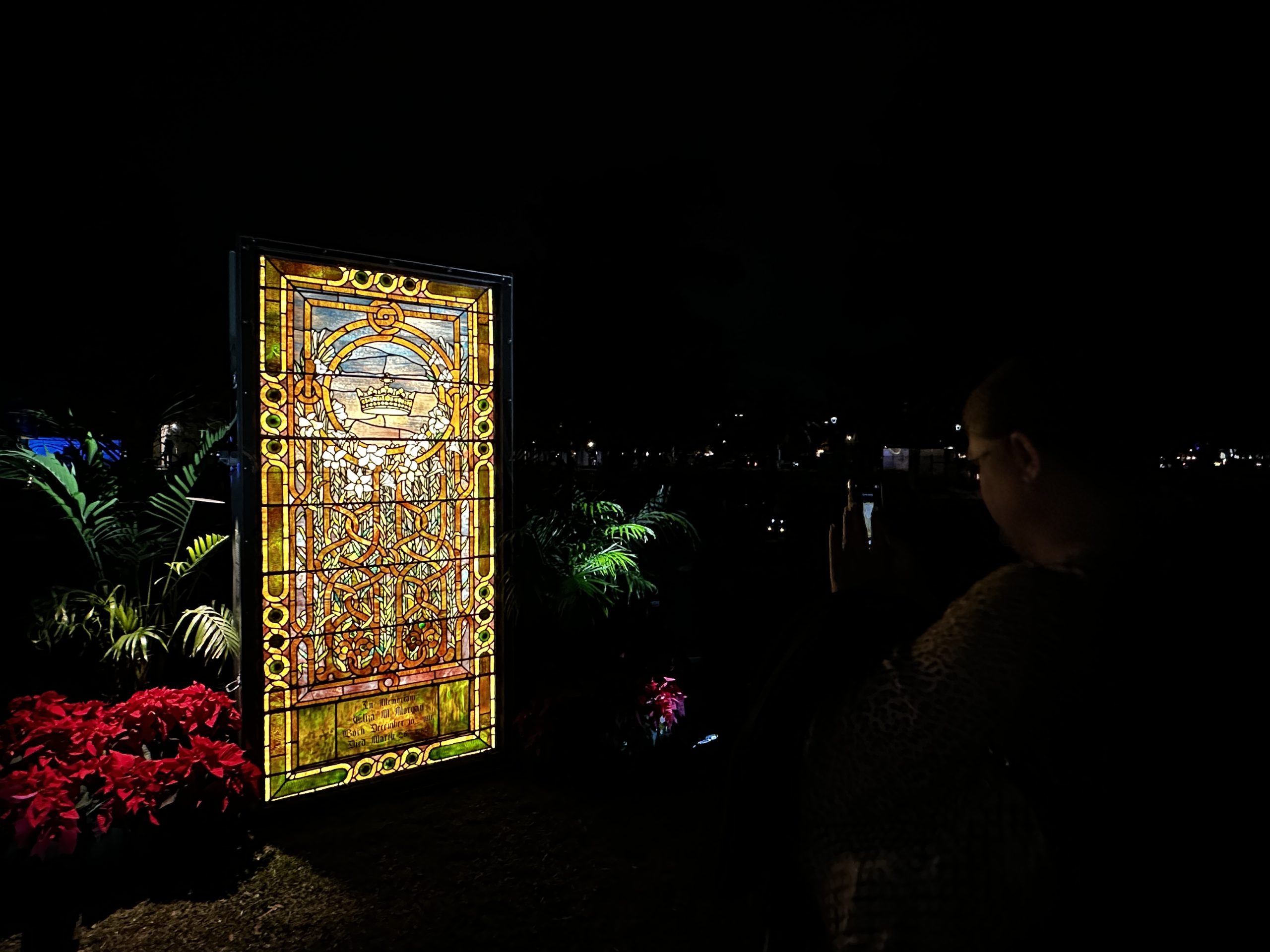
Here are a couple highlights from the event earlier this week that featured Tiffany glass in Central Park alongside the Bach Festival Choir.
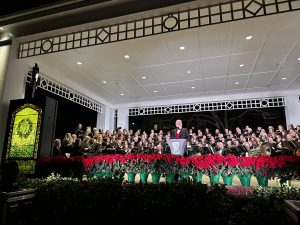
John Sinclair leads the Bach Festival Choir and Brass Ensemble at Christmas in the Park on Thursday. (Courtesy: city of Winter Park)
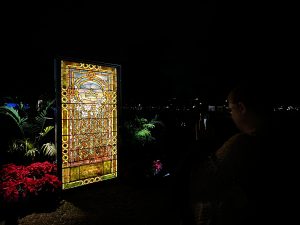
A Tiffany window on display in Central Park as part of the annual Christmas in the Park event. (Courtesy: city of Winter Park)
To comment or read comments from others, click here →

by Beth Kassab | Nov 18, 2023 | City Commission, News, Uncategorized
Neighbor fed up with construction of mega mansion on Palmer Avenue
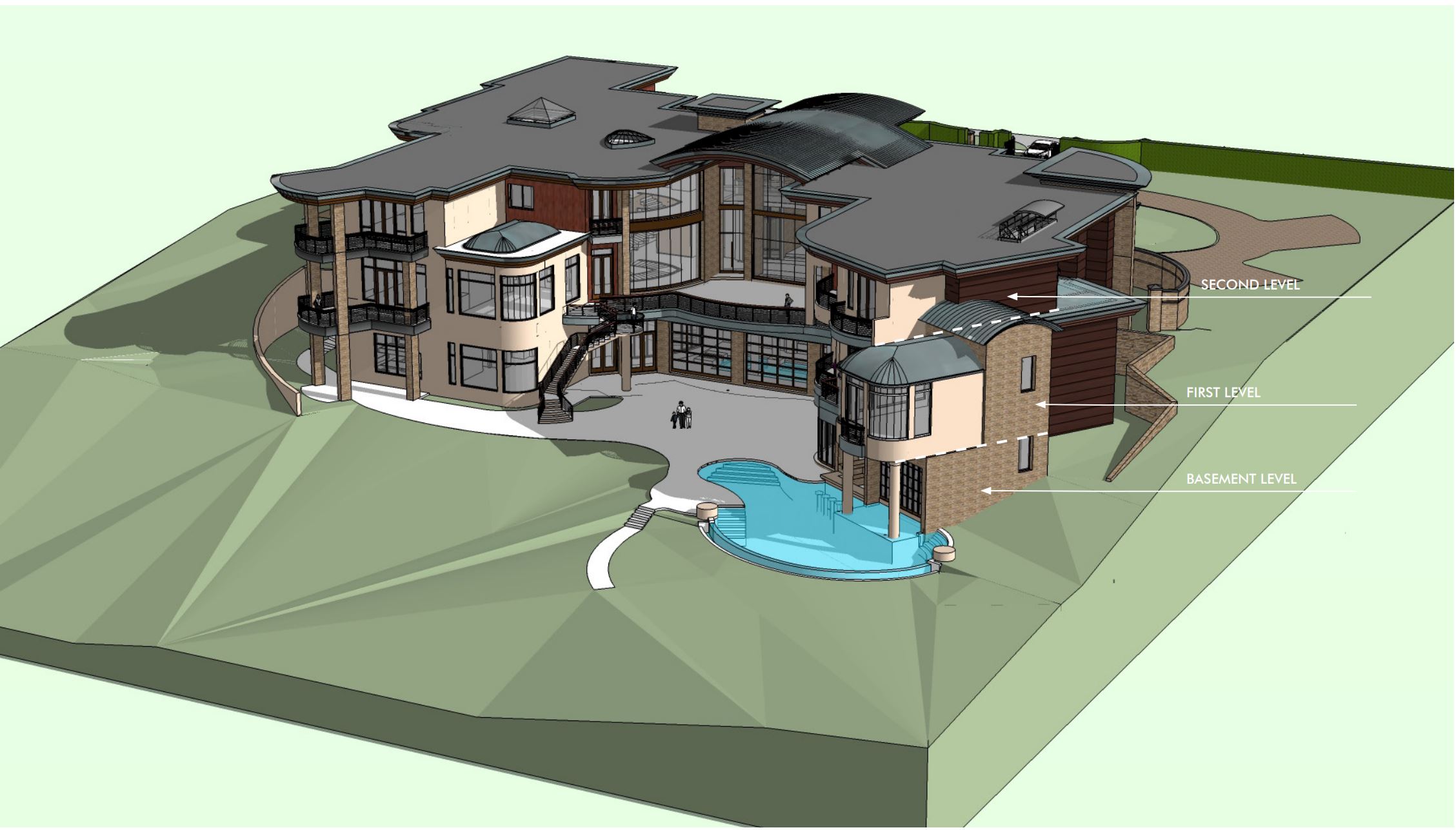
Marc and Sharon Hagle started construction on the 40,000-square-foot home that includes a greenhouse and a gun range in 2021
Nov. 17, 2023
By Beth Kassab
Jerome Henin says he wakes up to the sound of beeping construction vehicles, hears the loud whirl of a commercial-sized air-conditioning unit at all hours from inside his home and must repeatedly clean layers of concrete dust that has settled on his own cars.
“Every morning for three years, I wake up to the sound of these beeps at 6:45,” Henin said. “I open my door every morning … you have so much going on, it’s amazing how traumatic it is.”
It’s not the kind of ambiance you would expect along Palmer Avenue, a mostly quiet road lined with trees and stately lakefront homes where occasional speeders have been the primary nuisance.
For Henin, though, living next to the largest residential construction project in the region has meant a cacophony of disturbances and concerns, according to a letter from his attorney Tucker Byrd to the City Commission and city administrators.
“The city has done little or nothing to address the problems, which seem to compound and increase, almost daily,” the Oct. 27 letter stated.
The letter outlined concerns ranging from whether the permits are still active on the property nearly three years into construction to questions about noise and safety related to the gun range and stormwater runoff.
An attorney for the city responded last week that there are no code violations related to the property and that Henin’s concerns are unfounded.
 “Living next door puts Mr. Henin and his family in the possible line of fire and sound,” said the letter from Byrd. “Possessing firearms may be a constitutional right, but discharging them in a neighborhood with impunity surely should be reviewed.”
The response from city attorney Richard Geller said the gun range is “permitted as an indoor, enclosed facility in the basement of the house.”
“The city does not understand your contention that Mr. Henin and his family are in the ‘possible line of fire,'” he wrote. “The gun range includes acoustical tiles for sound amelioration. The city addressed this concern when raised my Mr. Henin before construction began.”
When asked about the construction complaints this week, Marc Hagle, who operates large commercial and residential developer Tricor International, told the Voice, “I’m not going to comment on all of that,” and hung up the phone.
Hagle and his wife Sharon purchased the property in 2017 for $3.6 million. The couple has been called the first married pair on a commercial space flight after they took an 11-minute ride on a Blue Origin rocket some 62 miles above earth last year.
The Hagles made headlines this year over a lawsuit they filed against the CEO of OceanGate Expeditions, the company that operated the submersible vehicle to view the wreckage of the Titanic, before the sub imploded this summer, killing everyone on board. The couple had made a deposit to ride on one of the undersea voyages, but their trip was delayed.
Henin, a native of France, is also a developer of residential and commercial properties in Florida and Europe. His home next door to the Hagles was built in 1926 by famed Winter Park architect James Gamble Rogers and at 9,700-square-feet is less than a quarter of the size of the house under construction.
Henin said he is disappointed by the city’s response to his concerns. The city attorney suggested he call the police about noise complaints and said the Hagles’ contractor has said he will perform sound testing periodically to make sure there are no violations.
Geller, the attorney for the city, also said officials are not aware of any terrain alterations that would cause stormwater runoff onto the Henin property nor is there anything the city can do about a large electrical transformer box installed about 40 feet from Henin’s driveway because it serves the entire neighborhood and utilities crews must be able to access it.
“The city should be our guardian … should be our protector,” Henin said. “They are saying it’s not our problem, basically.”
WinterParkVoiceEditor@gmail.com
To comment or read comments from others, click here →

by Beth Kassab | Nov 15, 2023 | News, Uncategorized
Donna Kelce no stranger to Winter Park. Could Taylor Swift follow?
The mom of NFL stars Jason Kelce and Travis Kelce, who is dating Taylor Swift, nonchalantly promotes Winter Park on social media
Nov. 15, 2023
By Beth Kassab
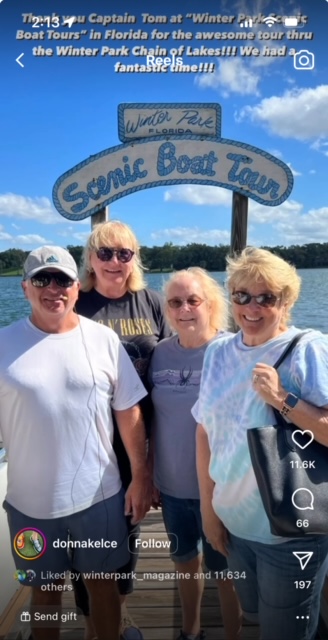
Just two weeks ago, the world’s most famous mother — at least in terms of pop culture cachet — posed on the dock of the Winter Park Scenic Boat Tour and gushed, “Thank you Captain Tom … We had a fantastic time!!!”
Donna Kelce’s Oct. 29 Instagram post quickly tallied more than 11,000 likes from her nearly 360,000 followers. It was at least her second time on the tour — she also posted a serene video through one of the Winter Park Chain of Lakes canals in 2020.
“My daughter pointed it out to me,” said Tom Smith, who has led boat tours for 14 years. “She saw it on Instagram and said, ‘Hey, Dad, you had someone pretty famous on your boat!'”
Smith said he’s a big football fan and, of course, knows who Travis Kelce is, but he said Donna Kelce was unassuming and content to blend in with the crowd while she was on the tour.
Kelce, whose recognition has soared since Taylor Swift first appeared in the family box at son Travis’ Kansas City Chiefs game in September, owns a condo in Baldwin Park — the Orlando neighborhood just south of Winter Park’s border. (Full disclosure: this writer is an unabashed Swiftie, lover of all the lyrical Eras and known to have traded a friendship bracelet or two.)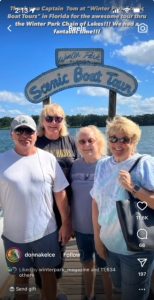
And while Kelce is just like any proud mom supporting her sons and causes that are important to her, she can’t help but also promote Central Florida along the way since she appears to call the region home when she’s not traveling.
Her local presence is now gaining off-the-charts attention — a photo of her attending a showing of Swift’s The Eras Tour Film over the weekend at a local theater went viral after Swiftie and local movie-goer Danielle Sparks posted the sighting on TikTok. Every outlet from People Magazine to Entertainment Tonight carried the photo.
Sparks told the Voice in a text message that she isn’t naming the theater where she spotted Kelce to protect her privacy. This writer and Central Florida native’s best guess based on the distinctive carpet in the background, is that it wasn’t the newly-renovated Regal in Winter Park Village, but the AMC at Altamonte Mall.
By Sunday, when the photo first appeared, the whole world was swooning over Swift’s lyric change on Saturday night while performing “Karma” in Buenos Aires, Argentina with Travis Kelce in attendance. Instead of “Karma is the guy on the screen … ” she sang, “Karma is the guy on the Chiefs coming straight home to me.” A video of Swift leaving the stage and running into Travis’ arms has been shared hundreds of thousands of times since the weekend.
Kelce didn’t post about seeing the film herself, though she did confirm to People that she saw it and thought it was “awesome.”
She has, though, posted other Central Florida locales — even if by accident.
Kelce appeared in a video for Kind Snacks posted to her Instagram in October in front of what locals immediately recognized as the University of Central Florida’s football stadium.
And six months ago, she filmed a video inside the Chico’s on Park Avenue in Winter Park ahead of Mother’s Day where she answered questions about her famous sons and her personal style that was posted to the brand’s YouTube channel. Kelce said in the video that some of her favorite wardrobe pieces are from the boutique.
Winter Parkers are used to the trappings of wealth and fame.
The Central Florida enclave nestled on a chain of lakes is studded with stunning homes belonging to entrepreneurs, real estate moguls and NBA players. And plenty of well-known names claim the address, like Poet Laureate Billy Collins, comedian Carrot Top and, for a time, soccer star Alex Morgan.
“Mama Kelce,” as she is affectionately known, was already scoring name recognition and deals with brands before Swift entered the picture. She famously wore a jersey that was half Philadelphia Eagles (Jason Kelce’s team) and half Kansas City Chiefs when the brothers faced each other in the Super Bowl earlier this year.
Her connection to Swift, though, arguably launches her into another stratosphere.
The masterful songwriter’s Eras Tour and recent album releases have smashed records, earning comparisons to The Beatles. Her “1989 (Taylor’s Version)” just became her 13th No. 1 album on the Billboard 200 (tying Drake), a tally surpassed only by Jay-Z with 14 No. 1 albums and The Beatles with 19, according to Billboard.
But even The Beatles — well, one of them — was a regular around Winter Park not long ago. Paul McCartney was spotted around town with some frequency before his stepson graduated from Rollins College in 2015.
Could it one day be Swift (not in the blue dress) on a boat tour?
“That would be super fun,” said Smith, the boat captain. “I would love to do it. I don’t know if I’d do it during the day … We have these trips at night, which are really fun, and that might be better for her.”
WinterParkVoiceEditor@gmail.com
To comment or read comments from others, click here →

by Beth Kassab | Nov 10, 2023 | City Commission, News, Uncategorized
Commission tables decision on more incentives for Ravaudage
Commissioners questioned whether they should reimburse the mixed-use development for road, drainage and sidewalk improvements
Nov. 10, 2023
By Beth Kassab
Commissioners voted unanimously to table a request from the developer of Ravaudage for $300,000 in reimbursements for road, sidewalk and drainage improvements.
Mayor Phil Anderson said he did not have all the information he needed to make a decision.
“I think, normally, we use reimbursements as incentives to get something the city otherwise would not have,” Anderson said. “I’m not sure I understand the extent of the premium the city is getting in exchange for the provision being proposed.”
The Ravaudage development on the corner of U.S. 17-92 and Lee Road is already entitled to as much as $1.2 million over 10 years in city reimbursements for improvements to city right-of-way.
The new reimbursement request is tied to construction on sections of Lewis Drive and Bennett Avenue, which were annexed into the city in 2020 and so weren’t part of the original 2017 agreement with the developer.
Multimodal Transportation Impact Fees paid by businesses within Ravaudage is expected to raise more money than the reimbursement amount estimated at $301,327. Impact fees are paid by developers to cities or counties as part of the development approval process. The dollars are typically used to offset additional costs to local governments to be caused by the new homes or businesses such as police, fire, sewer or schools.
Developer Dan Bellows was in the audience, but did not address the commission.
Several commissioners cited the Whole Foods plaza and noted the developer in that case did not receive reimbursements for making road, stormwater and sidewalk improvements.
“I just think that the citizens and the government has been pretty generous toward this,” said Commissioner Todd Weaver. “If another developer came and asked for this, I don’t know if this commission would say yes to this.”
WinterParkVoiceEditor@gmail.com
To comment or read comments from others, click here →


Recent Comments