by Beth Kassab | Sep 22, 2023 | City Commission, News, Zoning and Development
McCraney Property wants to build headquarters on land city wanted for park
The property management company is under contract to buy land on Orange Avenue owned by Bank OZK
Sept. 22, 2023
By Beth Kassab
After city officials learned earlier this month that Bank OZK accepted another offer on two acres the city tried to buy to expand Seven Oaks Park, speculation swirled over the identity of the buyer.
This week representatives of McCraney Property Company reached out to city staff and said they plan to purchase the land and are proposing to build an office to serve as the company’s headquarters, a city spokeswoman confirmed.
The city has not yet received any documents related to the plans. A call to the offices of Steven McCraney, the company’s president and chief executive officer who also lives in Winter Park, was not returned.
McCraney Property has offices in Orlando, West Palm Beach and Charlotte, N.C., according to its website.
“Since its founding in 1989, the company has grown to be one of the most active developers of high-finish industrial real estate – e-commerce fulfillment and distribution facilities – and private acquisition in Florida, Georgia, North Carolina, and South Carolina’s major markets,” the site states.
It’s unclear when the sale of the land will close or how soon the company is looking to start construction.
The city offered Bank OZK (formerly Bank of the Ozarks) about $6 million for the property on top of waiving impact fees on a site at mixed-use development Ravaudage, where the bank apparently now intends to build a branch.
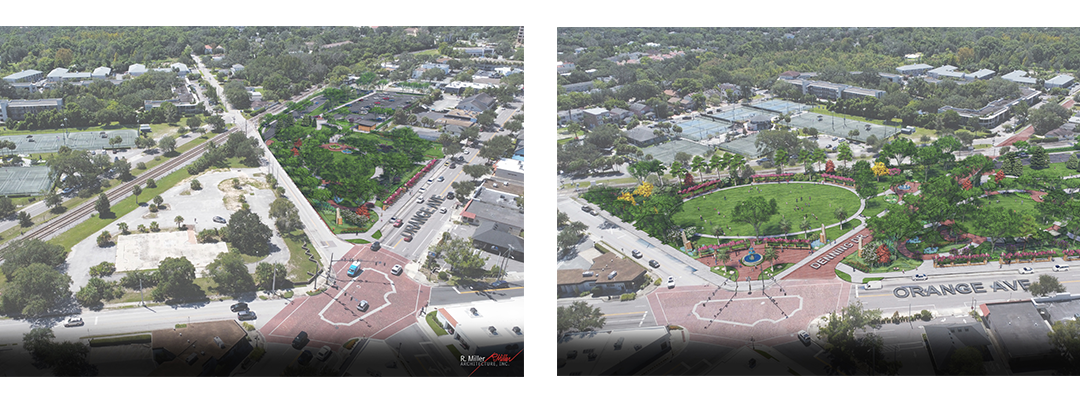
The Winter Park Land Trust offered $500,000 in private funding to help the city purchase the land and convert it to park space. The above renderings show the site as it exists today compared to how it could have looked as greenspace.
Questions or comments? Email the editor at WinterParkVoiceEditor@gmail.com
To comment or read comments from others, click here →
by Beth Kassab | Sep 15, 2023 | City Commission, News
Winter Park total budget grows by $9.5 million
Fee increases, flood control and new library hours are just some of the changes for next year
Sept. 15, 2023
By Beth Kassab
Winter Park City Commissioners gave the first of two required approvals to next year’s budget, which will grow by $9.5 million or nearly 5% over this year to $208 million.
The property tax rate remained the same and the general fund increased by about 10% led by higher tax revenue driven by the growth in property values.
However, a number of fees charged by the city will increase.
City leaders pointed over the summer to inflation and the higher cost of wages as justification for raising fees.
Those include:
- The cost of the city’s garbage collection contract with WastePro is set to go up by 45%, sending fees up by about 20%. The budget estimates homeowners will pay about $5 extra on average each month to account for the higher prices.
- Fees associated with the city’s parks, facilities and programs will go up by 5% to raise an additional $350,000 to cover higher expenses of maintaining the buildings and greenspaces.
- Ambulance transport fees will go up by 10% to raise an additional $100,000 to $150,000. The fee hasn’t been raised in more than five years and is sometimes covered by health insurance or Medicare rather than residents, the proposal noted.
- Water and sewer rates will go up by 7% in line with the index put out by the Public Service Commission, which regulates investor-owned utilities across Florida.
- Stormwater rates, which help cover the cost of drainage and infrastructure to prevent and reduce flooding, will go up 8% next year following two previous years of increases of 5% each. Owners of the largest homes will pay more while owners of smaller properties could pay less, according to the new rate structure.
Other notable budget changes include:
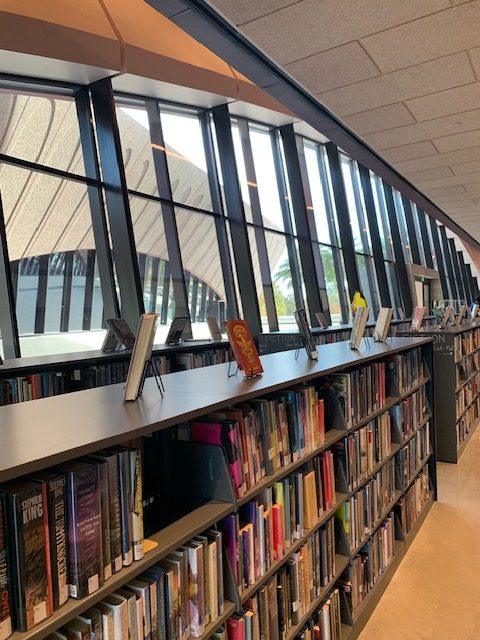
- An additional $350,000 for the Winter Park Library, which will allow expanded hours and programming, including on Sundays. The money will come from the Community Redevelopment Agency’s budget and is planned to continue on an annual basis.
- At least $1.5 million is set aside, also from the CRA budget, for stormwater improvements such as flood prevention on the city’s west side, which makes up the CRA.
- $200,000 will go toward projects that are part of the Transportation Master Plan.
- $150,000 in the general fund is set aside as a potential matching grant for the Mead Garden Trails project.
- About $150,000 will be devoted from the general fund to create a new construction manager position within Public Works.
- About $113,000 will be devoted to a new community services officer civilian role for Winter Park Police.
- About $1 million over two years to make improvements to Aloma Avenue and S.R. 426 as part of the Fix 426 initiative. Staff noted that more funds may be needed, but that the nearly $700,000 in contingency funds as well as $19 million in the city’s reserve funds could serve as bridge funding.
Questions or comments? Email the editor at WinterParkVoiceEditor@gmail.com
To comment or read comments from others, click here →
by Beth Kassab | Sep 15, 2023 | City Commission, News
Higher stormwater fees irk residents
Some homeowners objected to how the fees are calculated, prompting the city to set up an appeals process to request changes
Sept. 15, 2023
By Beth Kassab
Winter Park City Commissioners unanimously approved higher stormwater fees for many residents and a new way of collecting the fees for all residents, a change expected to generate an additional $600,000 a year in revenue for projects to help treat runoff from storms and prevent flooding.
The decision came after a handful of residents spoke out against the changes in response to letters that went out late last month that explained the new cost per property and noted that residents will now be charged for stormwater management on their annual property tax bill rather than monthly water utility bills.
“I don’t think this is even remotely fair,” said one resident who described himself as a commercial property owner and said the cost is a “rainwater tax” that will amount to a “stress test” passed on to his tenants.
The fees are calculated by the amount of impervious surface on each lot — or the amount of concrete, asphalt and other materials that impede rain from soaking back into the ground.
A resident who lives in a 6,300-square-foot house said the letter she received noted her annual fee will rise by $766 or about $63 a month. She questioned why the city counts her gravel driveway as impervious and why the ratio of grass and vegetation on her lot wasn’t factored in.
A representative of The Gallery condominium complex wanted to know why unit owners are being charged different amounts simply because they live on different parcels within the same development.
“Your process is flawed,” she said.
Wes Hamil, director of the city Finance Department, said residents who feel their fees were miscalculated can file an appeal here on the city’s Web site.
The Voice first reported the changes to the fees in June. Not everyone is seeing an increase:
The more than 540 owners of homes larger than 8,900 square feet will see the largest jump in price — an estimated $24.61 per month or nearly $300 a year more than under the old fee structure, according to a city analysis. Houses less than 2,899-square-feet are likely to see a decrease in stormwater fees, with the smallest homes seeing the largest savings. The price drop is estimated to range from about $9 a year to about $60 a year.
Mayor Phil Anderson said the city fell behind in keeping up with inflation and other rising costs over the past decade to treat and control storm run-off. While the year-over-year increase appears high, he said, it works out to a 2.6% annual compounded growth rate since 2013.
“The city got behind in recovering expenses for our stormwater maintenance program,” Anderson said, noting that even with the increases the city will still need to take dollars from other sources for major flood prevention projects.
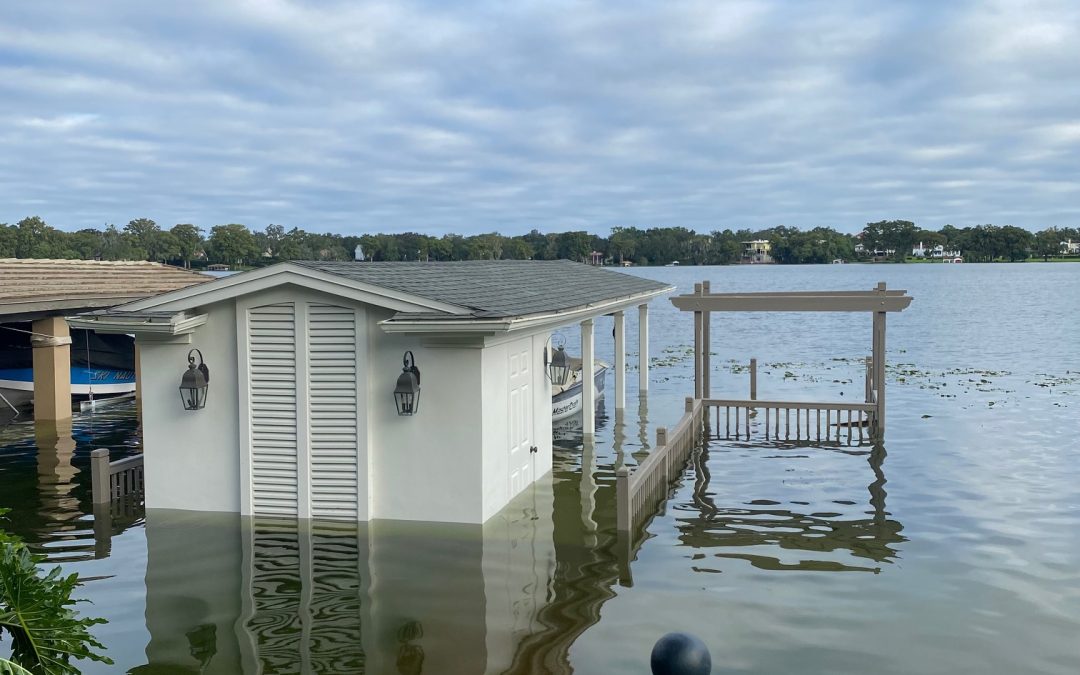
Studies are underway now to determine how to prevent future flooding like what Winter Park experienced last year after Hurricane Ian. The increase in fees are not expected to cover the cost of those fixes.
“The stormwater utility in my opinion has always been underfunded,” said Commissioner Todd Weaver. “Ian gave us some valuable lessons and we really need to address those … this increase is very necessary.”
Questions or comments? Email the editor at WinterParkVoiceEditor@gmail.com
To comment or read comments from others, click here →
by Beth Kassab | Sep 15, 2023 | City Commission, News, Zoning and Development
Vision dashed? Bank enters contract to sell land that city wanted for park
Commissioner Marty Sullivan urged the city to make another unsolicited offer to buy the property, but hopes for a deal dimmed
Sept. 15, 2023
By Beth Kassab
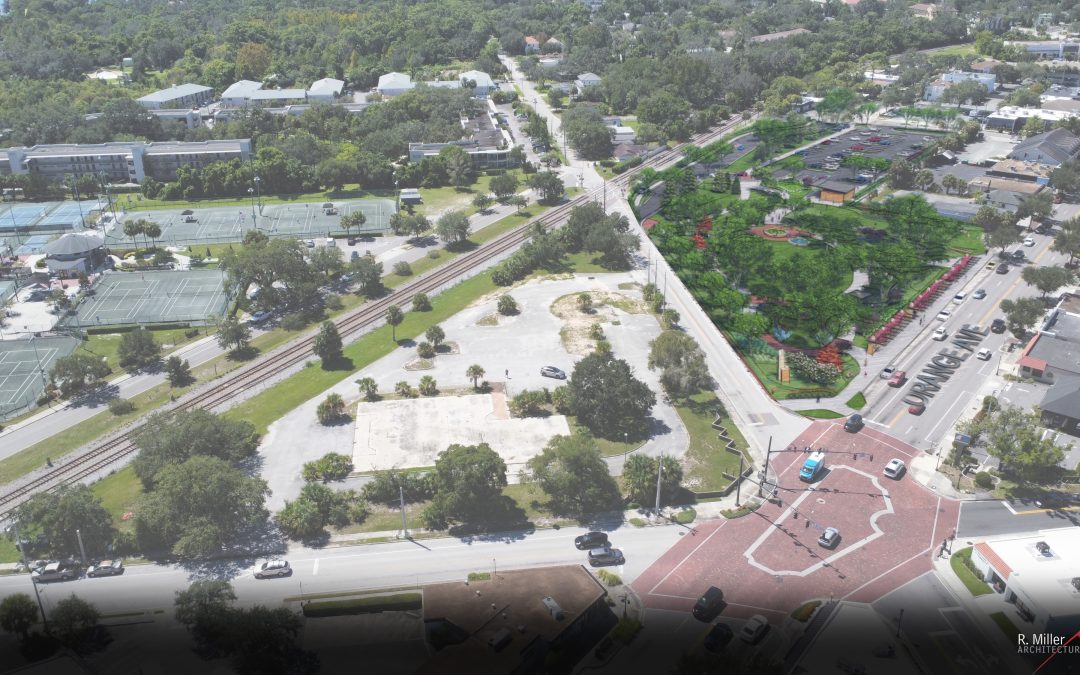
After a contentious public meeting over how — or even if — the city should acquire 2 acres on Orange Avenue to expand Seven Oaks Park, Friday brought what appeared to be a final blow to any last hopes for a deal: the broker the landowner Bank OZK said the property is under contract with another buyer.
City Manager Randy Knight let Commissioners know the news Friday afternoon, just one day after the city sent another unsolicited offer to the Arkansas-based bank previously known as Bank of the Ozarks to purchase the vacant property for about $6 million.
That offer was the result of a 3-2 vote on Wednesday night to, for a third time, attempt to purchase the property after the city learned on Monday that the bank accepted an offer from an unknown buyer. Mayor Phil Anderson and Commissioner Kris Cruzada voted against the offer.
Commissioner Marty Sullivan, who tried to insert money for the purchase in next year’s city budget, but withdrew that motion for lack of enough support. Sullivan said he wanted to call the vote to demonstrate to the bank that commissioners weren’t “dragging our feet” over the acquisition. In public meetings there was a lack of unanimous support to spend contingency funds or issue bonds to finance the purchase.
Sullivan said he supported the citizens who “took the long view” of what the property could mean decades from now: a more connected series of green spaces from Mead Botanical Gardens to the Winter Park Tennis Center to Seven Oaks, which is still under construction along Orange Avue.
For some in the city, including supporters of the private Winter Park Land Trust, which offered $500,000 toward the deal, the bank’s parcel represented a vision to maintain Winter Park’s small urban village charm and would have preserved a slice of increasingly scarce undeveloped land in a busy business corridor.
“I’d like to see Orange Avenue become more like Park Avenue rather than become more like U.S. Highway 17-92,” said Brad Blum, a member of the land trust and former chief executive officer of Olive Garden and Burger King, who attended the meeting.
But the practical implications of a more than $6 million purchase during a year with a number of competing priorities for a piece of the city’s $208 million budget were too difficult to overcome for Anderson and Cruzada.
“I’m not about to put up money when we don’t even know where it’s going to come from and burden residents,” Cruzada said.
Anderson said floating $4.5 million in bonds, the difference after taking about $1 million from the city’s parks acquisition fund and $500,000 from the Land Trust, made the most sense, but he said other priorities such as new fire stations and flood control improvements are more pressing needs.
“I’m just not feeling or hearing the grassroots support demanding that this is the best use for city funds,” he said.
Vice Mayor Sheila DeCiccio said she supported the idea of buying the property to preserve as greenspace, but no longer felt the bank was dealing with the city in good faith. For that reason, she did not support Sullivan’s motion on Wednesday to add the bank property to the city budget, which left Commissioner Todd Weaver as the only likely “yes” vote in addition to Sullivan. As a result, Sullivan withdrew that motion.
“This is the third time the bank has pulled the rug out from under the city,” she said. “They have not dealt with us in good faith and have played us to get another offer.”
The bank did not respond to a call for comment.
Questions or comments? Email the editor at WinterParkVoiceEditor@gmail.com
To comment or read comments from others, click here →
by Beth Kassab | Sep 11, 2023 | City Commission, News, Uncategorized
Bank OZK tells city it will sell to another buyer
Commissioners and greenspace advocates had rallied to purchase the parcel on Orange Avenue to expand Seven Oaks Park
Sept. 11, 2023
By Beth Kassab
City Manager Randy Knight notified commissioners today that the owners of a 2-acre piece of land the city wants to buy to expand Seven Oaks park on Orange Avenue have accepted an offer from another buyer, according to an email obtained by the Voice.
Knight and City Spokeswoman Clarissa Howard did not return a request for comment.
Knight wrote that a broker for Bank OZK (formerly Bank of the Ozarks) told him “the Bank has accepted an offer from another party that met their price and has a more streamlined path to approvals and closing,” according to the email.
Commissioner Marty Sullivan, who had led the charge for the city to acquire the property, said it appears likely the vacant land will be developed into a commercial building, though the identity of the other buyer isn’t known.
“I’m extremely disappointed that Bank OZK did not ask us for a counteroffer,” Sullivan said.
Commissioners are set on Wednesday to take the first of two votes on the city’s more than $200 million budget for next year and are expected to discuss the purchase of the parcel and how to finance a deal.
Sullivan said the city’s lack of firm commitment to the deal could have influenced the bank to pursue another offer and wants a vote taken on Wednesday.
“If we can commit, it opens the possibility of the bank reconsidering,” he said.
In the latest round of negotiations, the city offered $6 million for the land appraised at $5.8 million and said it would waive more than $130,000 worth of mobility fees. The bank’s broker presented a counteroffer that included the $6 million sales price plus a waiver for $267,000 worth of transportation impact fees and the city would pay about $60,000 in doc stamp and title fees.
That offer was contingent on approval by the Bank OZK executive team and the city was still waiting to hear back when Knight was informed Monday that the bank accepted another buyer.
A call to the bank’s spokeswoman was not immediately returned.
The Winter Park Land Trust, which advocates for the preservation of greenspace, pledged at least $500,000 from board members toward the project.
Steve Goldman, chairman of the land trust’s board, also expressed disappointment over the loss of potential open space in an increasingly dense corridor.
“The job of the land trust is to look forward — not to just be concerned with our immediate needs — but to look out over the next few decades for a good city plan that balances park land against urban development,” said Goldman, who is also a supporter of the Winter Park Voice. “It’s very clear to everyone who studied this that we are going to need more park space if we are going to retain the feeling we currently have in Winter Park, which is the reason many of us moved here.”
Questions or comments? Email the editor at WinterParkVoiceEditor@gmail.com
To comment or read comments from others, click here →
Recent Comments