by Beth Kassab | Mar 11, 2024 | City Commission, Election, News, Uncategorized
Candidates' final push for votes underway
With just one week until Election Day, voters hear closing arguments from candidates
March 11, 2024
By Beth Kassab
With just seven days until election day, candidates are making a final push for votes this week and the latest financial reports reveal who leads in campaign spending and fundraising.
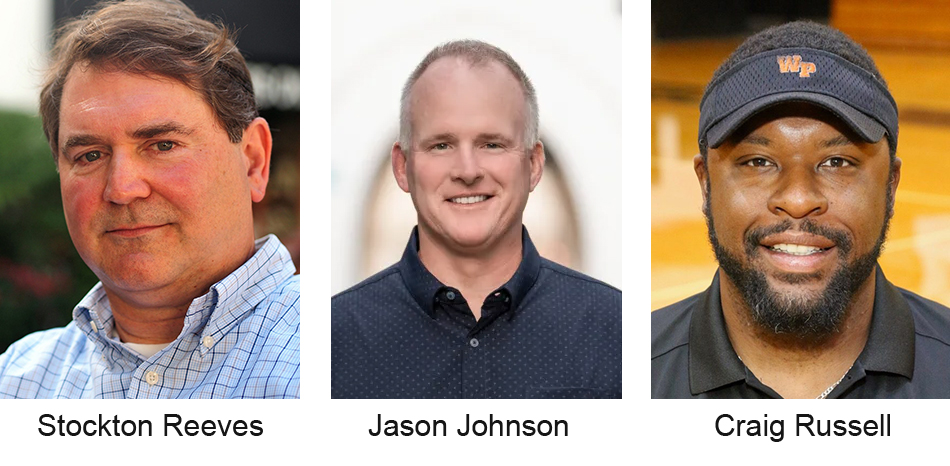
Jason Johnson and Craig Russell, both running for Seat 2 on the City Commission, released dueling closing argument emails over the weekend.
“The results of this race could come down to just a handful of votes,” read an email to voters from Russell’s campaign manager.
The coach and teacher at Winter Park High School is running “to promote transparency, accountability and representation for all our residents,” the email stated.
Russell is bringing the biggest money to the race with his campaign spending $42,000 so far — more than the other two candidates in his race as well the two candidates in the mayor’s race.
The difference is even more stark when coupled with the money raised by the Winter Park Chamber of Commerce’s political action committee known as Winter PAC, which raised $21,000 and spent more than $10,000 on Russell’s behalf, according to the reports filed with the city clerk. Russell is the only candidate endorsed by the chamber.
Contributions to the PAC include $7,500 from developer Allan Keen and his wife and one of his business entities, Development Opportunities Holding. Another $1,000 is from Automotive Services Network, a company controlled by the Holler family, which has also been a big contributor to Russell’s campaign account.
The Hollers, which own car dealerships as well as high-visibility Winter Park real estate along Fairbanks, Orange and Park avenues, contributed $8,000 to Russell from their associated businesses. Another $3,000 came from Holler family attorney Frank Hamner and his businesses.
Hamner told the Voice recently that the contributions from himself and the Holler family are unrelated to the family’s development interests in the city and that they know and support Russell as a community and nonprofit leader who serves underprivileged families.
The City Commission balked in January at a request from city staff to include some changes in the comprehensive plan that could potentially make it easier for the Hollers to develop a lot along the busy intersection of Fairbanks Avenue and Denning Drive, where the city is also trying to obtain more land for turn lanes to ease traffic congestion.
At a candidate forum last week at Westminster Winter Park, a senior living community, Russell appeared to indirectly address the money supporting his campaign.
“I’m nobody’s puppet as some of my opponents might believe,” he said, according to a video posted on YouTube of the event. “I speak for the residents and myself and that alone,” noting that he believed in mindful growth “not like Maitland,” in response to a question from the moderator about how Winter Park should balance neighborhood stability with business growth.
Russell also called out what he sees as “an elitist mindset” among current leaders that he says is “creating stagnation in this city that will inhibit its ability to grow.”
Johnson, who has raised $43,000 and spent $32,000, responded by saying the question sounded like “it was drafted by somebody at the Winter Park Chamber of Commerce, whose sole goal is to advance the interests of developers.”
“My job here is to preserve our residential communities,” he said. “We don’t need to pave over this city for commercial development.”
In Johnson’s email to voters over the weekend he attempted to further draw a distinction from his opponent, noting that he was not endorsed by the Chamber.
“I personally consider this a badge of honor,” he wrote. “I oppose the excessive high-rise and high-density developments that the Chamber supports. I support attractive and in-scale development that enhances the charm of Winter Park.”
Stockton Reeves, who has raised $69,000 and spent $42,000, emphasized his long family history in Winter Park and said he believes there is already enough affordable and workforce housing in the city. Most of his campaign funds have come in the form of a loan — worth $53,000 — from himself.
If one of the three candidates does not capture more than 50% of the vote on March 19, then the top two vote getters will head into a runoff to be decided on April 16.
In the mayor’s race, Sheila DeCiccio, the current vice mayor, has raised more than $40,000 and spent $30,000 so far. In recent days she has sent out an email thanking supporters and inviting them to an election night party.
DeCiccio also appeared at a forum at Westminster and, as has become a pattern in her race, she was the only candidate to show up.
Michael Cameron, her opponent, has not appeared at any of the public forums or at either private forum held for seniors at the Westminster and Mayflower communities.
He has raised $5,700 and spent nearly all of that on a political consulting firm.
WinterParkVoiceEditor@gmail.com
To comment or read comments from others, click here →

by Beth Kassab | Mar 9, 2024 | City Commission, News, Uncategorized
Jason Brodeur preempts cities on gas leaf blowers and wants study done
The state senator acted in the final days of the legislative session after the Winter Park City Commission caved to his request to put its ban on gas-powered blowers up to voters
March 8, 2024
By Beth Kassab
City Commissioners this week will be asked for final approval to place a question on next year’s ballot asking voters if they want to keep a ban on gas-powered leaf blowers — a policy intended to lower harmful emissions and the nearly universally detested noise from the devices.
Since the first of two needed approvals by the board two weeks ago, the political climate surrounding the debate has intensified with one state senator attempting to make the piece of lawn equipment the latest symbol of the anti-woke crowd.
When commissioners first voted 3-2 on Feb. 28 to put the policy on next year’s ballot (Todd Weaver and Marty Sullivan voted against it), they did so after City Manager Randy Knight told them Sen. Jason Brodeur agreed to stop his effort to preempt cities from banning gas blowers if the city put the question to voters.
But Brodeur moved forward anyway the very next morning.
He added language to the state budget to prohibit cities from amending or enacting such bans until July 2025 and added $100,000 to the state budget from the Air Pollution Control Trust Fund for the state Department of Environmental Protection to study the life cycle of gas-powered blowers versus battery-powered blowers.

Jason Brodeur
City officials have said the language doesn’t apply to Winter Park because its ordinance is already in place (it was passed in 2022, though it hasn’t yet been enacted because commissioners agreed to a delay to allow time for residents and landscape companies to transition to new blowers).
But Brodeur told the Voice in an email exchange that he did intend for his preemption to apply to Winter Park.
“Yes it applies,” Brodeur wrote. “Although they had a suspended ordinance it would require another vote to enact a ban, which will be preempted under the new law, should it be signed.”
He didn’t specify exactly what kind of vote he believed was required.
As it stands today, if the voter referendum does not go forward, the city’s ban is set to take effect in July — just five months from now — with fines delayed until January.
Brodeur said he felt forced to act immediately to prevent that from happening.
“I had hours (in the week before their meeting) to decide if I would ensure it would all be delayed. So I did,” he said in an email to the Voice. “I don’t have the luxury of monthly meetings and hours of discussion. If I didn’t act when I did, I wouldn’t have been able to and the net effect after their 42 months (30 prior months and the remaining 12 before the referendum) will be an extra 2-3 months of delay. Small price to pay for protection of consumers and businesses. Belts and suspenders. July 1, 2025 will be the next time they can enact anything if the voters choose to.”
Mayor Phil Anderson, when told of Brodeur’s interpretation of the state budget language, said he did not want to comment until he had the opportunity to more fully understand it.
Commissioner Todd Weaver said he doesn’t think the new state language impacts Winter Park or other Florida cities that have already enacted a ban on gas leaf blowers, but called the move by Brodeur “disingenuous.”
“For me, it’s a battle in a bigger war, and the war is pushing back against the Legislature from taking away our home rule,” he said. “I feel that Sen. Brodeur misled us because — it won’t affect us — but he’s trying to crowd out other cities that want to do it.”
Brodeur also heard some pushback on the Senate floor last week in the final hours of the state budget debate.
Sen. Jason Pizzo, a Democrat from Hollywood, asked if Brodeur wasn’t exploiting the budget process by pushing new policy — without any notice or debate — by tying a costly study to the idea.
“How is that not cheating by just throwing some appropriations on it?” Pizzo asked, later emphasizing, “Why do a preemption, which is policy, on a subject not discussed or passed in committee?”
Brodeur said the study was crucial to understand the environmental hazards of lithium ion batteries — the batteries often used in portable electronic devices — in landfills and specifically mentioned fires at landfills caused by batteries. He also said the “effect of not doing this is a tax increase,” because transitioning to electric leaf blowers will cause consumers and landscape companies to spend money.
The U.S. Environmental Protection Agency published in 2021 an analysis of lithium ion battery fires in waste management and recycling.
The report found 245 fires in 64 waste management facilities likely related to lithium metal or lithium ion batteries.
But that problem is from old batteries discarded from a wide range of products such as phones, laptops, wireless headphones, gaming devices and more. Lawn equipment wasn’t even mentioned in the study.
Questions surrounding the proper regulation of and consumer education about battery disposal from the products many people now find essential to daily life are already being asked and debated.
That problem would exist with or without electric leaf blowers.
And data from the EPA also shows that Florida leads the nation when it comes to pollutants in the form of fine particulates from gas lawn equipment like blowers and mowers. Those microscopic droplets are inhaled and can cause serious health problems, according to the agency.
That’s one of the reasons, in addition to the nuisance caused by the noise from blowers, that Winter Park commissioners said they acted in the first place now more than two years ago.
Brodeur required the state study to be done by January because he wants voters to have the information before the March 2025 referendum, if that goes forward.
“Instead of virtue signaling or political preferences dictating policies that should largely be left to a homeowners’ association, I would like to give consumers and business owners the scientific knowledge to know whether enacting a de facto tax increase on anyone who owns a gas powered leaf blower is worth the cost,” Brodeur said. “Because if we don’t have a safety or environmental reason for these ordinances, all liberty is at risk.”
WinterParkVoiceEditor@gmail.com
To comment or read comments from others, click here →
by Beth Kassab | Feb 28, 2024 | City Commission, News
Voters will decide gas leaf blower ban next year
The referendum comes in response to a threat of state preemption by Sen. Jason Brodeur
Feb. 28, 2024
By Beth Kassab
Voters will decide next year whether to keep or toss the city’s ban on gas powered leaf blowers in March 2025 .
Commissioners voted 3-2 to put the question on the ballot in response to Sen. Jason Brodeur’s threat to preempt such a ban in cities across Florida after residents complained that the ban was an example of local government overreach.
Mayor Phil Anderson, Vice Mayor Sheila DeCiccio and Commissioner Kris Cruzada voted in favor of putting the question on the ballot. Commissioners Todd Weaver and Marty Sullivan voted against it.
If voters decide to keep the ban, it will go into effect in the summer of 2025.
The ordinance was unanimously adopted by the commission in January of 2022, but wasn’t set to go into effect until June of this year.
Commissioners said the ordinance is necessary to protect residents from the ear-piercing noise and pollution that results from the gas blowers.
Weaver, who has led the call for the ban, noted that governments intervene when substances or devices are deemed harmful such as asbestos in buildings or the cocaine that was once in the old formula for Coca Cola.
Wednesday night’s action means it will remain on hold until after the vote a year from now.
WinterParkVoiceEditor@gmail.com
To comment or read comments from others, click here →
by Beth Kassab | Feb 28, 2024 | City Commission, News, Orange Avenue Overlay, Zoning and Development
After last minute change, commission unanimously approves McCraney building
The three-story development, which is the first approved in Orange Avenue Overlay, will provide offices and some other use such as a small restaurant or furniture store
Feb. 28, 2024
By Beth Kassab
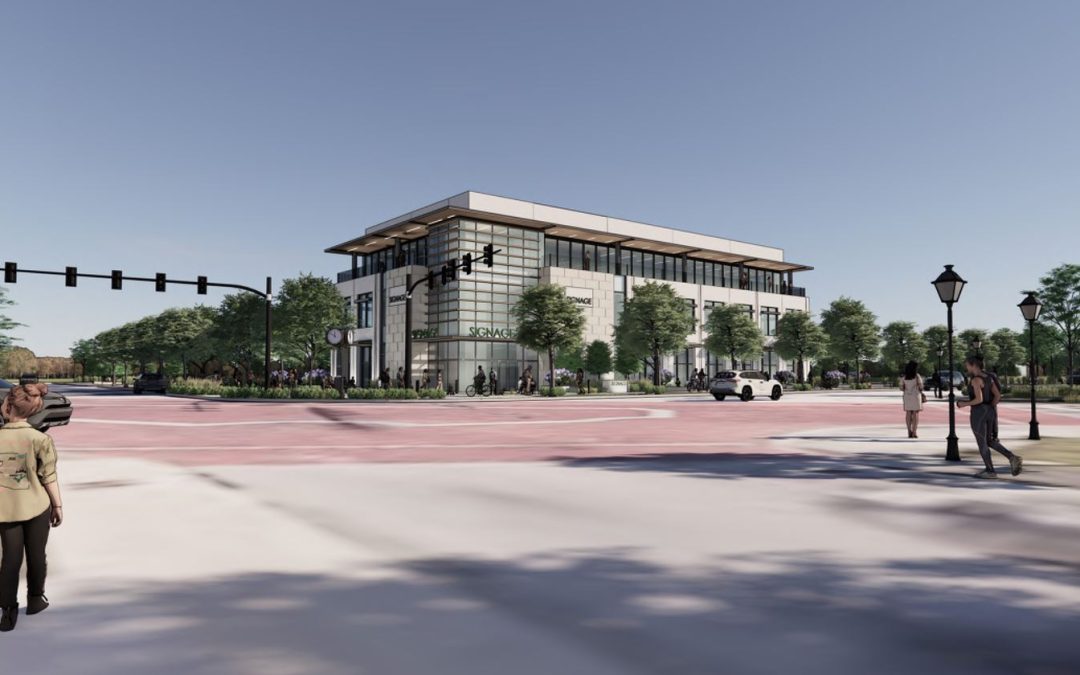
The City Commission unanimously approved a three-story building of mostly offices on Wednesday at the six-way intersection of Orange and Minnesota avenues and Denning Drive.
Developer Steve McCraney’s project is the first to be approved under the Orange Avenue Overlay, which sets the tone and density for redevelopment along the corridor between Rollins College and U.S. 17-92.
The Commission appeared poised to deny the project with three commissioners — Vice Mayor Sheila DeCiccio and commissioners Todd Weaver and Marty Sullivan — saying they could not vote in favor of it because the building would only contain offices rather than mixed uses as the city code requires.
DeCiccio said she was concerned that allowing the departure from code would set a precedent for other developments that would undermine the vision for the area.
“If we capitulate to you on this issue the entire OAO is out,” she said. “We will be open to endless lawsuits for those who do not get their way.”
About three hours into the discussion, Mayor Phil Anderson called for a break. When the meeting resumed about 20 minutes later, McCraney attorney Becky Wilson offered that at least 25% of the building would include other uses such as a less than 12-seat restaurant, furniture store, personal service provider such as a fitness center or salon.
After that, all five commissioners approved the project.
A number of residents spoke passionately for and against the development.
Anderson said he considered it a “win-win” because McCraney could have built a much larger building on the property. He also noted the previous version of the Orange Avenue Overlay put in place by a different commission five years ago would have yielded a much different result.
“Five years ago, the prior commission had a very different vision,” he said. “The buildings would have been three to four times the size allowed now.”
WinterParkVoiceEditor@gmail.com
To comment or read comments from others, click here →

by Beth Kassab | Feb 28, 2024 | City Commission, News, Uncategorized, Zoning and Development
Rollins presses pause on request for faculty apartments
The controversial project, which would have provided accessible housing to faculty and staff near the liberal arts campus, drew criticism from neighbors
Feb. 28, 2024
By Beth Kassab
Rollins College withdrew its request to build faculty apartments a few blocks from Park Avenue after an outcry from neighbors and concerns from commissioners that the building wouldn’t fit in the neighborhood.
“College leadership has talked with each commissioner over the past several weeks, seeking input and feedback on accommodations while striving to preserve the integrity of the project,” Rollins administrators said in a statement. “This project remains a strategic priority of the college. We will take time to explore our options and come back with a project that benefits the College and the City’s Central Business District.”
President Grant Cornwell has said the college needs to be able to offer attainable housing to recruit younger faculty because housing prices in Winter Park are often $1 million or more.

A rendering shows a faculty and staff apartment project proposed by Rollins College.
Workforce housing and affordable housing are often thrown around as priorities of the City Commission, particularly in the context of expanding the city’s Community Redevelopment Agency.
But the Rollins project quickly became a target for neighbors to shoot down, asserting the building would decrease their property values.
In January, Rollins attempted to appease some of those concerns by lowering the number of proposed units from 48 to 39 and reducing the size and length of the building along Welbourne Avenue.
The proposal was for a three-story 72,933-square-foot building with 104 parking spaces, which meets code requirements, according to a memorandum from city staff.
A number of residents of the Douglas Grand condominium building said they feared their own units will drop in value because of Rollins’ planned framed construction with what they called too few architectural details to emulate the Spanish-Mediterranean style the main campus is known for.
“Please consider whether or not you would purchase a $1 million residence across the street from what would be at best an average maintained, subsidized apartment complex,” read one email to commissioners from a resident.
“It is the appearance of the rental facility that makes it even more distasteful,” read another.
“Not to sound snotty, but this is the type of apartment better suited for cities like Fern Park or Casselberry,” a resident wrote.
In it’s statement, Rollins did not say when it expected to try again to seek approval for the project, but signaled it would do so eventually.
“We remain committed to ongoing dialogue with commissioners as we continue to refine the proposal,” the statement said. “We are grateful to the many Winter Park residents and community members who have shown support for this initiative aimed at addressing the college’s workforce housing needs.”
WinterParkVoiceEditor@gmail.com
To comment or read comments from others, click here →
by Beth Kassab | Feb 28, 2024 | City Commission, Election, News, Uncategorized
Big money flows into Winter Park elections
The three-way race for Seat 2 on the City Commission is also proving a tight financial contest
Feb. 28, 2024
By Beth Kassab
Money is flowing into Winter Park elections, with five candidates for two open seats raising a combined $200,000 so far, and about half of that still on hand to spend before the March 19 election.
The biggest money is pouring into the three-way race for Seat 2 on the City Commission.
Craig Russell, a teacher and coach at Winter Park High School and first-time candidate, raised $49,128, according to the most recent reports filed with the city clerk last week. That figure was enough to overtake the $41,952 raised by Jason Johnson, an attorney and also a first-time candidate, who was the early money leader in the race.
The Winter Park Chamber of Commerce announced earlier this month that it would endorse Russell and his contribution records show a $1,000 check from the chamber’s political action committee as well as donations from other business leaders associated with the chamber.
Notably, at least $8,000 in contributions are from businesses owned by or associated with the Holler family, which owns car dealerships and Winter Park real estate. Individual checks are logged from Holler Honda, Holler Hyundai, Holler Driver’s Mart, Classic Mazda and Audi among others, according to the reports.
Frank Hamner, an attorney for the Hollers, gave two separate checks of $1,000 a piece on Jan. 16 and Feb. 16, both marked as individual contributions. Hamner said in an email message that one of those contributions was “misclassified” on the report and was actually from his law firm rather than a personal check. Each individual and business is limited to $1,000 maximum per cycle.
Strong Persuader Arms, a gun store on Wymore Road owned by Hamner, also contributed $1,000 on Feb. 16.
The combined total donations related to Hamner and the Hollers adds up to $11,000 or more than 20% of Russell’s total contributions.
The Holler family or corporations affiliated with the family own prominent land along Orange, Fairbanks and Park avenues that could one day be redeveloped. The family also was at one time involved in a lawsuit against the city of Winter Park, arguing that commissioners improperly overturned the original Orange Avenue Overlay zoning rules.
Hamner said the Hollers’ support of Russell evolved because they know him as a leader in the community from his work at the high school and his nonprofit Army of Angels.
“The property they own and plans for that property have zero to do with supporting Coach Russell,” he said, noting that Russell is “a great leader” and an “impressive young man.”
Russell told the Voice, “I am no more beholden to developers than I am to the other citizens of Winter Park, including our police, firemen, nurses, young professionals and others who can’t enjoy Winter Park because there’s nowhere for them to live.”
At a candidate forum hosted by the Chamber of Commerce, he said he was open to the idea of revisiting the original overlay plans.
At that same forum, Johnson said he was not interested in revisiting the OAO.
A mix of well-known names contributed to Johnson, including Full Sail University CEO Ed Haddock and his wife Edye, who each gave $1,000; a $1,000 from former Winter Park Mayor David Strong; $1,000 from former gubernatorial candidate Chris King and $1,000 from former U.S. Congressman Alan Grayson.
Noting that his opponents have surpassed him in fundraising, Johnson said he doesn’t believe the race will be decided on money alone. He said he’s been focusing on talking with as many voters as he can in individual and small group meetings.
He is the only candidate who lists detailed expenses for coffee with voters or stakeholders such as Police Chief Tim Volkerson and former Mayor Terry Hotard and sponsoring a golf tournament for Dommerich Elementary.
“I’m not trying to win the battle of the mailers,” Johnson said. “Getting in front of people and talking to voters is really, in my opinion, where this race is won.”
Mailers appear to be a key strategy for Stockton Reeves, who has sent at least eight to voters homes so far.
Reeves, the executive director for the Center for Public Safety who also ran for a Florida House seat, has brought the most money into his campaign account with more than $69,000 so far. But the bulk of that total — $53,000 — is in the form of loans from himself to his campaign. That means he’s raised just $16,000 from other contributors.
He received $250 from David Albertson, a former citrus grower and real estate investor who was one of the original founders of the Orlando Magic and $250 from Mike Clelland, an attorney and former Democratic member of the Florida House among others.
Reeves declined to answer questions about his mailers or fundraising because, “I will be giving away our strategy for the final few weeks of the campaign.”
With less than three weeks until Election Day on March 19, vote-by-mail has already started and early voting at select locations will begin on March 4 and run through March 17.
Sheila DeCiccio, who is leaving Seat 2 to run for mayor, is the clear money frontrunner in her race. She has picked up nearly $40,000 in contributions and spent more than $25,000 so far, according to reports.
Her contributors include $1,000 from King, the former gubernatorial candidate, Strong, the former mayor, and Alan Keen, an attorney and developer.
Michael Cameron, who is running against DeCiccio and owns a real estate school, has raised $4,971 and has spent nearly all of that on a political consultant called Panoplia Consulting Group started in 2022 by former Republican state house candidate Jeremy Sisson.
Panoplia’s web site describes itself as a firm that “exclusively serves Kingdom-focused candidates who are called to serve their communities in a civic capacity.”
The site calls on candidates to “put on the full armor of God” and says, “We equip our clients with the armor and weapons necessary to do battle in the political arena.”
Cameron, who has not appeared at any public forums and also skipped a private forum at the Mayflower senior living community, did not respond to questions from the Voice.
WinterParkVoiceEditor@gmail.com
To comment or read comments from others, click here →



Recent Comments