
by Beth Kassab | Mar 15, 2025 | City Commission, Election, News
On a parting note, Todd Weaver questions WP Chamber's political activity
At the commissioner’s final meeting, he asked whether the chamber can or should continue to operate its political action committee from a city-leased building
March 15, 2025
By Beth Kassab
At the end of his final meeting this week, Todd Weaver suggested the city could terminate or buy out the Winter Park Chamber of Commerce’s 99-year lease on a city building and questioned whether the group’s political action committee violated the lease agreement.
Weaver said he is unhappy with the group’s political activities and the city is in need of more space for staff and could use 151 W. Lyman Avenue, the city-owned building across from City Hall occupied by the chamber. He also questioned the quality of the Welcome Center the chamber operates in the building as part of its agreement.
“For me, the chamber should be promoting all commerce in the city … they’ve lost sight of our residents,” Weaver said. “… I’m not thrilled that the chamber is actively working against the commission. They backed another person against someone who is an incumbent … I’ve gone over the lease with the city manager and I’ll let them talk about the pitfalls, but something we as a commission should think about for economic reasons is for the city to allow the chamber of commerce to operate as they have, but elsewhere.”
The move came on the heels of Tuesday’s election, which saw a heated contest for Seat 3 with the chamber’s PAC spending more than $30,000 in an attempt to defeat incumbent Kris Cruzada and support challenger Justin Vermuth.
Cruzada, an attorney who was first elected in 2022, won big — taking nearly 63% of the vote — despite being significantly outraised by Vermuth, a lobbyist for the timeshare industry who collected $94,000 and spent $91,000, according to the most recent finance reports. Cruzada raised $36,000 and spent $27,000.
The PAC was created last year with attorney Brian Mills named as chairman and has raised $85,000 and spent $67,000 during the 2024 and 2025 election cycles. In 2024, the group backed Commissioner Craig Russell, who narrowly defeated Jason Johnson to fill a seat left open by Sheila DeCiccio when she ran for mayor.
City attorney Kurt Ardaman said in response to Weaver’s questions at Wednesday’s meeting that it did not appear the city had the ability to buy out the chamber from its lease unless the chamber had sublet a portion of the building without notifying the city or unless the city negotiated a new arrangement with the chamber.
Ardaman said the lease started in 2005 and runs through 2104. In exchange for the century-long lease without monthly rent, the chamber spent about $900,000 to redevelop the site, he said.
Chamber President and CEO Betsy Gardner said through a spokeswoman that the chamber had not sublet any portion of the building to any individual or entity.
Winter PAC lists its address as the chamber’s address and Gardner is listed as its registered agent in documents filed with the city last year.
According to a “Frequently Asked Questions” sheet sent to the Voice, the PAC is operated separately from the chamber itself.
“The Chamber Board and CEO do not control Winter PAC,” the FAQ reads. “While the organizations are associated and aligned with the tenets of the Chamber’s Prosperity Scorecard, they are separate entities with separate bank accounts and independent boards of directors.”
Commissioner Marty Sullivan, whose term is up next year, said, “I believe it deserves a deeper look,” in response to the questions brought up by Weaver.
Cruzada, who will be sworn in for his second term later this month, said, “I wouldn’t mind an inquiry to see if there is a provision in the lease they may be violating.”
Russell, the only current commissioner who had the backing of the chamber and who will also be up for re-election next year, said “nothing from me” when his turn came to speak and then questioned the timing of the discussion.
“Why now?” he asked.
Weaver, who opted not to run for re-election this year, responded that the the PAC was formed after the lease went into effect.
“I get it,” Russell responded. “I’m not interested.”
But with three commissioners — Weaver, Sullivan and Cruzada — signaling interest, the city attorney was asked to research the matter further to determine if there are any concerns related to the lease.
BusinessForce, a political action committee based in Orlando, split from the former Orlando Regional Chamber of Commerce years ago after starting out as an affiliated organization similar to Winter PAC.
PACs are routinely used in Florida politics to infuse races with more money than a candidate can often raise through a campaign account alone. That’s because individuals can give unlimited contributions to political committees while candidates are limited to accepting no more than $1,000 per individual or entity each election.
The catch is that, under Florida election rules, political committees can not coordinate activities with a candidate.
The chamber’s own FAQ sheet spells out the rules this way: “The primary purpose of a Political Committee (PC) is to support or oppose any candidate or issue. A PC may also make an independent expenditure, meaning it can spend money to expressly advocate for the election/defeat of
a candidate/issue as long as it is not controlled by, coordinated with, or made upon consultation with any candidate, political committee or agent of such.”
Throughout Vermuth’s campaign, Winter PAC reported multiple expenses labeled as “independent expenditure regarding a candidate” for mail pieces.
For example, two appear on the most recent report filed: one for nearly $8,000 and one for $2,300. All such expenditures on Winter PAC’s reports were paid to MDW Communications LLC at 7765 Lake Worth Road, Suite 210 in Lake Worth.
MDW Communications is a political advertising firm that, according to its website, designs “digital and direct mail strategies that have helped over 150 progressive campaigns and causes win since 2014.”
Vermuth, on his own candidate financial reports, listed a number of expenses for polling, palm cards, mail pieces and paid calls to a group called “Claughton Consulting” that also lists as its address 7765 Lake Worth Road, Suite 210 in Lake Worth.
Searched on a map, the address appears to be in or near a Publix shopping plaza, just east of the Florida Turnpike in Palm Beach County.
The Voice asked Vermuth for information about Claughton Consulting in February and he declined to answer the question. He did not respond to emails seeking comment about the election this week.
An email address on a web site found for Claughton Consulting is invalid. No response was received to questions submitted through a form on the web site.
Only one other local candidate has used Claughton Consulting, according to a search of the state campaign finance database and a search of Orange County campaign finance records.
Steve Leary, the former Winter Park mayor and unsuccessful candidate last year for Orange County Commission, paid the firm through his campaign as well as through his political committee. Neighbors for a Sensible Orange County paid the firm $65,000 last year. Leary’s own campaign account paid Claughton $105,000 last year, according to finance records.
Gardner said the chamber did not recommend Claughton to Vermuth.
“Winter PAC did use MDW for its communications in this cycle,” she said. ” MDW had done a fantastic job on another project for the Chamber. We did not recommend Claughton Consulting to Mr. Vermuth’s campaign.
MDW Communications did not immediately respond to e-mailed questions about why MDW’s address appears as the same address for Claughton on campaign reports filed separately by Winter PAC and Vermuth’s campaign.
MDW is frequently used by mostly Democratic candidates across the state. The firm has been paid more than $16 million going back to 2013, according to the state campaign finance database. Multiple addresses are listed for the firm in the database, including the one in Lake Worth.
Orange County elections records show the firm has taken in more than $100,000 dating back to 2020 for work in local races.
WinterParkVoiceEditor@gmail.com
To comment or read comments from others, click here →
by Beth Kassab | Mar 11, 2025 | City Commission, Election, News, Uncategorized
Kris Cruzada elected to second term and residents reject leaf blower ban
The incumbent fended off a challenge from a candidate who was endorsed by the Chamber of Commerce and far outraised him
March 11, 2025
By Beth Kassab
Commissioner Kris Cruzada won a second term on Tuesday night with 63% of the vote, defeating first-time candidate Justin Vermuth, who took 37%.
Cruzada, 51, was outspent by Vermuth, 43, by more than 4 to 1 in the race. Vermuth, who was endorsed by the Winter Park Chamber of Commerce and raised more than $86,000 compared to Cruzada’s $28,000, said he wanted to cut taxes and the city’s spending.
Cruzada, an attorney who was first elected to Seat 3 in March 2022, defended his record on the commission and warned that revenue and spending cuts could also mean a loss of quality in services such as parks, roads, utilities and more.
Neither Cruzada nor Vermuth, who is also an attorney and the lobbyist for the association that represents timeshares, immediately responded to requests for comment about the results.
Cruzada’s victory represents a win for a coalition of residents who consider themselves skeptical of new development that could alter the charm and character of the city known for its chain of lakes and the Spanish-Mediterranean architecture of Rollins College.
His supporters largely support the current version of the Orange Avenue Overlay development rules, which limit building height and density.
Cruzada’s donors included $2,000 bundled from Full Sail University Co-Chairman and CEO Edward Haddock and one of his companies; $2,000 from former Mayor Phil Anderson and Jennifer Anderson; $500 from former Commissioner Carolyn Cooper and $250 from David Odahowski, president and CEO of the Edyth Bush Charitable Foundation.
Vermuth’s donors included $10,000 bundled by Golden Corral franchisee Eric Holm and his companies, $10,000 bundled by the Holler family’s companies, which own car dealerships and property impacted by the Orange Avenue Overlay; $2,000 from the tourism industry, $1,000 from Jacqueline Siegel, known as the “Queen of Versailles” and wife of timeshare magnate David Siegel and $500 from former Mayor Steve Leary’s political committee.
The chamber’s political action committee spent more than $30,000 for several mailers and other efforts on his behalf. Last year the chamber used a similar strategy to help elect Craig Russell, a football coach and teacher at Winter Park High, who won by 34 votes.

Justin Vermuth
Meanwhile, residents rejected a ban on gas-powered leaf blowers that the commission put into place in early 2022, but never enforced.
Voters said no to the controversial ban, which drew the ire of landscaping companies and state Sen. Jason Brodeur, with 55% of the vote.
The vote means a repeal of the ordinance that was set to take effect this summer.
A total of 4,638 ballots were cast in the Winter Park election, putting turnout at nearly 21%, the highest of the five cities in Orange County that held elections on Tuesday. Winter Park has 22,533 registered voters, including 7,858 Democrats, 8,449 Republicans, 5,590 without a party affiliation and 636 registered with other parties.
The turnout was lower than last year’s in Winter Park, which topped 30% and was boosted by Florida’s Republican presidential preference primary on the same ballot. This year surpassed turnout of 19% in 2022, when Cruzada was first elected.
WinterParkVoiceEditor@gmail.com
To comment or read comments from others, click here →
by Beth Kassab | Mar 11, 2025 | City Commission, Election, News
Election Day Updates: Kris Cruzada, Justin Vermuth and the leaf blower referendum
Voters will decide who takes Seat 3 on the City Commission and the fate of a ban on gas-powered leaf blowers
March 11, 2025
By Beth Kassab
Update at 4:45 p.m.
Turnout has continued to pick up throughout the day, now at just under 18% in Winter Park or 3,943 votes cast.
That’s an increase of more than 1,400 votes since 11 a.m. this morning when turnout stood at 11% or 2,479 votes cast, including mail, early and Election Day votes reported in near real time by the Orange County Supervisor of Elections Office. There are 22,533 registered voters in Winter Park.
Polls remain open until 7 p.m.
Republicans have slightly edged out Democrats in turnout in Winter Park, where the GOP also holds a lead in voter registrations.
Next highest is Windermere at 16% turnout and and Belle Isle12% turnou t. Windermere is deciding a single city council seat and Belle Isle is deciding its next mayor.
Maitland, which is deciding a council seat, saw turnout at about 9% so far.
And Ocoee, which has three charter questions on the ballot, sits at just higher than 3%.
Winter Park will determine with Seat 3 incumbent Kris Cruzada gets a second term or if challenger Justin Vermuth gets a turn in City Hall.
Cruzada said it’s been a “positive” morning so far and he’s out waving signs at precincts.
Vermuth posted on Facebook that he and his wife voted early this morning and waved signs with their children.
Around the time the polls opened, Vermuth posted a photo of himself with Commissioner Craig Russell, who won last year’s election by just over 30 votes.
“The last City Commission race came down to just a handful of votes — so please, if you stand with Justin and want to ensure that we keep our taxes low and our spending responsible, support our small local businesses, prioritize hiring SRO officers over code enforcement officers, make sure our first responders have all the resources they need, and enhance our local parks, playgrounds and green spaces, get out and vote,” he wrote.
The City Commission has never had to choose between school resource officers and code enforcement officers. Both are funded. And school resource officers remained in schools even as Winter Park — along with others cities — and Orange County Public Schools negotiated how much each local government will pay for the costs of the officers. City Manager Randy Knight said he hopes to have a resolution to the negotiations soon, though not in time for Wednesday’s City Commission meeting.
Winter Park honored one of the officers assigned to Winter Park High School as its officer of the year in January.
For a Q&A with both candidates click here. For the latest update on who is funding the candidates click here.
Voters will also decide the fate of the city’s gas-powered leaf blower ban, which has prompted campaigning by Sen. Jason Brodeur, R-Sanford.
A “yes” vote will repeal the ordinance and lift the ban on internal combustion, or gas-powered, leaf blowers. A “no” vote will allow for the ban to remain in place. If voters keep the ban it would take effect in July.
The ban was unanimously approved by the commission in January 2022, but has never been enforced.
Other Florida cities like Miami Beach, Naples, Palm Beach, South Miami, Key Biscayne and Pinecrest have similar ordinances to reduce noise from leaf blowers.
Warren Lindsey was elected to Seat 4 without opposition after incumbent Todd Weaver decided not to seek reelection.
This is a developing story. Check back for updates.
WinterParkVoiceEditor@gmail.com
To comment or read comments from others, click here →

by Beth Kassab | Mar 7, 2025 | City Commission, Election, News
Senator and commissioner duel in final days before vote on leaf blower ban
Ahead of Tuesday’s election, voters are hearing from Sen. Jason Brodeur and Commissioner Todd Weaver about the ban on gas-powered leaf blowers
March 7, 2025
By Kathryn Brudzinski
In the final days and weeks leading up to Winter Park’s election on Tuesday, a state senator and a city commissioner faced off with dueling emails and campaign ads over the ballot question about a ban on gas-powered leaf blowers.
Sen. Jason Brodeur, R-Sanford, used a political committee he controls to pay for ads that call the ban “bad for local businesses.”
Brodeur, who got involved in the controversy over the ban last year and forced commissioners to put the issue on the ballot by threatening state action, told the Voice this week he didn’t think the commission adequately addressed the needs of the business community and the “obvious burden” to consumers through increased costs.
“If people want battery powered blowers, they can just hire them now,” Brodeur said in a text message. “A ban on choices in the marketplace is a slippery slope. Next it will be trimmers, then lawn mowers, then they’re telling you what color your house is and that you must have a brick mailbox. They are not a homeowners association, they’re a city commission.”
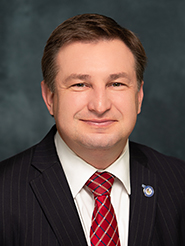
Jason Brodeur
Brodeur is the chairperson of Citizens for Solutions, the political committee that sent the mailers and emails.
In a Feb. 28 email signed by Brodeur, the committee argued that the ban was “not just about leaf blowers – it’s about stopping unnecessary regulations that hurt working families and small businesses.”
Commissioner Todd Weaver, one of the most outspoken advocates for the ban, sent an email to residents this week and questioned what he called Brodeur’s “strange attention to local issues,” while so many critical state issues loom such as low wages and homeowner insurance rates.
“One must wonder why we have a state senator, who lives in Sanford, and who continues to meddle in local Winter Park affairs,” read the email from Weaver, who opted not to run for re-election this year.
In January, Brodeur sent residents emails to argue against an unrelated city matter, but one also personal to Weaver. He urged residents to speak out against Weaver’s request to add his home to the city’s historic register. The request was ultimately tabled.
Brodeur’s mostly Seminole County district folds in a small piece of Orange County, including Winter Park.
Weaver argued the commission provided contractors “ample time” to make the equipment switch by delaying enforcement multiple times since the leaf-blower ordinance was first passed in 2022.
He also emphasized the long-term cost and public health benefits electric blowers can offer, despite the equipment being more expensive up-front.
“The energy to run electric lawn tools costs about ¼ of what gasoline currently costs,” the email read. “This does not translate to higher costs for customers as Brodeur implies. Worst case: the cost difference is a wash … More importantly, it is about the health of landscaping workers using gas-powered tools.”
Voters will find the question on their Tuesday ballots along with the race for City Commission Seat 3 between incumbent Kris Cruzada and candidate Justin Vermuth.

Todd Weaver
A “yes” vote will repeal the ordinance and lift the ban on internal combustion, or gas-powered, leaf blowers. A “no” vote will allow for the ban to remain in place. If voters keep the ban it would take effect in July.
The ban was unanimously approved by the commission in January 2022, but has never been enforced.
Other Florida cities like Miami Beach, Naples, Palm Beach, South Miami, Key Biscayne and Pinecrest have similar ordinances to reduce noise from leaf blowers.
Winter Park’s ban received major pushback from local landscape companies in the months before it was set to take effect last year. They complained about the cost of changing equipment and concerns about battery power that would slow them down and hurt business.
That’s when Brodeur stepped in as the state Legislature was still in session. He threatened to write a law that would cancel out the ban if the city didn’t once again delay enforcement and put the question on this year’s ballot for voters to decide.
The result was a 3-2 decision by the commission in April 2024 to place the issue on the ballot. Mayor Sheila DeCiccio, Commissioner Craig Russell and Cruzada voted in favor. Commissioner Marty Sullivan and Weaver voted against.
Brodeur still added language to the state’s budget attempting to prohibit cities from enacting gas-powered leaf blower ordinances until after a $100,000 study on the life cycle of gas-powered versus battery-powered blowers was completed.
The study was vetoed by Gov. Ron DeSantis.
During the commission’s April 2024 meeting DeCiccio and others voiced their concerns about Brodeur’s approach and the future impacts of the referendum.
“I am worried about the precedent that this will set if any time someone does not like what the commission does, they can complain to the senator and threaten preemption,” DeCiccio said.
She also said that landscapers had nearly three years to make the transition to electric leaf blowers from the time of the original ordinance.
Weaver said during that meeting that in addition to numerous noise complaints, severe health and environmental impacts associated with the use of the gas-powered lawn equipment were also cause for concern.
“The reason this tool was picked out, not only for the noise, is because it’s the only one of the arsenal of gas-powered tools that almost always run at full-throttle,” Weaver said, adding that he was concerned Brodeur had not effectively researched the issue.
The ordinance came following noise complaints, which intensified as more residents worked from home during the pandemic, and environmental and health concerns. The commission gave residents and their landscape contractors 30 months to make the switch to alternative equipment like electric leaf blowers.
The city offered a one-per-household $50 rebate for electric leaf blowers purchased between Jan. 15, 2024 to Jan. 1, 2025 that would be applied as a credit to a resident’s utility bill.
Gas-powered leaf blowers typically use a two-stroke engine that mixes gasoline with oil to operate, burning a portion of the mixture and emitting the rest as an aerosol exhaust. Studies have shown public health concerns related to the exhaust because it contains known carcinogens and can be linked to diseases such as cancer.
Another concern is the level of noise the equipment produces. A 2017 study found that the sound produced by gas-powered leaf blowers can travel long distances in a community at “levels known to increase the risk of adverse health effects.”
Populations like workers, children, the elderly, the sick, those who work from home or work overnight shifts are considered most vulnerable to the impacts.
WinterParkVoiceEditor@gmail.com
Kathryn Brudzinski is a reporter based in Orlando and a University of Central Florida graduate with a degree in journalism, as well as a certificate in public and professional writing. Her work has appeared in Oviedo Community News, VoxPopuli and The Charge.
To comment or read comments from others, click here →
by Beth Kassab | Mar 4, 2025 | Election, News, Uncategorized
Kris Cruzada v. Justin Vermuth: The candidates answer questions
Both men say they want to run an efficient city government but have different ideas about spending and whether cutting property taxes is the right call
March 4, 2025
By Beth Kassab
Next week, Winter Park will choose between Kris Cruzada, an attorney and the incumbent in Seat 3 on the City Commission, and Justin Vermuth, a first-time candidate who is also an attorney and lobbyist for the timeshare industry.
Cruzada, 51, is married with two children and grew up in the area and has owned his home off the Winter Park Pines golf course since 2007.
Vermuth, 43, is also married with two children and purchased a lakefront home off South Lakemont Avenue in 2015.
Justin Vermuth
Vermuth, was endorsed by the Winter Park Chamber of Commerce, and has accumulated a large campaign chest funded largely by real estate and business interests.
Cruzada, who was first elected in 2022, says he declined the Chamber’s financial support before Vermuth entered the race and is running a less funded campaign focused on door-to-door outreach.
Here are the candidates’ responses to emailed questions from the Voice. Some responses are edited for length and clarity.
Question: Can you tell me a little bit about your philosophy on parking? Does Winter Park have too much? Too little? What should be done in regards to parking policy?
Kris Cruzada: The city is balancing current needs with space efficiency. The city reduced parking minimums because of the over abundance of parking in some of the commercial office properties. At certain times, mainly lunchtime, there is a demand for parking along Park Avenue. A lot of patrons want to park within 1/8 mile to 1/4 mile from their destination. From a recent city study, data showed that there was sufficient parking within a 1.5 mile radius of Park Avenue and Morse Boulevard. From personal experience, I find myself parking at Capen or Whipple and walking in to Park Ave. In the future, I anticipate declining car ownership, the city has to balance future needs with current needs and multi-modal transportation options.
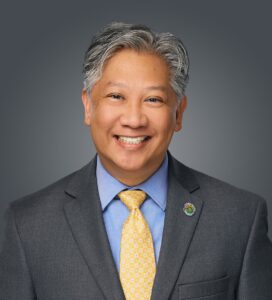
Kris Cruzada
Justin Vermuth: When it comes to parking, we need to take into consideration the needs of our small business owners in addition to the needs of residents. I believe we can balance protecting what makes Winter Park so unique with smart, well-planned parking options while prioritizing walkability. The Winter Park Chamber brought in Henry Grabar last year who offered up innovative ideas on how to address our parking dilemma.
Q: Do you support SunRail? What should the role of cities like Winter Park be in funding SunRail and wider transit options?
Cruzada: Yes. Currently, the city provides funding support [for SunRail] of $350,000, plus CPI [Consumer Price Index], per year. I would currently not want to fund more from the city due to our needs with our own Transportation Master Plan.
Vermuth: I do support SunRail! Between making it easier to travel to downtown Orlando and bringing in visitors who want to enjoy our restaurants and small businesses, I think SunRail has been a net benefit. I think that maintaining the Sunrail station in Winter Park is something that we can definitely do without raising taxes or increasing spending.
Q: Do you support the half-cent sales tax proposal (that’s been discussed by Orange County) for transit?
Cruzada: I would, if Sunrail and Lynx could coordinate a budget that would prioritize weekend ridership and extended hours that would relieve parking on the weekends in Winter Park (especially when the City has events) and assist the service industry employees in Central Florida.
Vermuth: This issue will once again be for the voters to decide. I would like a clearer plan for how the money would benefit Winter Park residents. Before adding something like this to the ballot, we should do everything we can to meet our needs by reviewing our existing budget, cutting spending, and being more efficient.
Q for Justin Vermuth: Your campaign materials say you want to “lower taxes” and “limit unnecessary government spending.” Which taxes, specifically, do you want to lower and by how much? When it comes to spending, what would you cut and how?
A: Right now, our City Commission is declaring victory because the millage rate hasn’t increased. We need to cut the millage rate and stop spending money on unnecessary items, like additional code enforcement officers.
Q for Kris Cruzada: Your opponent says he wants to “lower taxes” and “limit unnecessary government spending.” Is cutting taxes in Winter Park (lowering the millage rate) possible without cutting services and, if so, and how? When it comes to spending, would you make cuts?
Cruzada: With inflation running high, and no signs of letting up in the near future, it would not be prudent to cut our millage rate. Keep in mind, for every rise or drop in our millage rate by a quarter point, .0025, we would gain/lose approximately $2.25 million in property tax revenue. When it comes to spending cuts, I’d look at two areas to help make us more efficient. Analyze the overtime hours and explore cross-training within some of our departments. In analyzing cost cutting, I’d be pay close attention to how it would affect our key performance indicators. I do not want to jeopardize our level of service that our residents have come to expect.
Q for Vermuth: What are examples of the “government overreach that attacks our small businesses and homeowners” you mention in your campaign materials? Which policies would you change in this regard?
Vermuth: One big example was the ban on gas powered leaf blowers, which caused additional costs for businesses and homeowners. I oppose the ban my opponent put in place and will be voting yes to overturn it! Another is the hiring of additional code enforcement officers–while failing to hire school resource officers! My goal is to protect what makes Winter Park special. We can’t let our government or a few empowered elites become an overly prescriptive Homeowners’ Association, telling small businesses and homeowners what they can and can’t do.
Context provided by the Voice: Cruzada was not yet elected when the ban was adopted as part of an amendment to the city’s noise ordinance in early 2022. Winter Park did not threaten to take school resource officers out of schools. In fact, the resource officers continued to work on campuses throughout the city even without a signed contract with Orange County Public Schools. City Manager Randy Knight has said the issue is not whether the city will pay, but how much. The cost is being negotiated because several cities, including Winter Park, argue the school district should use more of the state dollars designated for safety toward school resource officer costs.
Q for Kris Cruzada: How do you respond to your opponent’s claims that the current commission is engaging in “government overreach that attacks our small businesses and homeowners?”
Cruzada: The City is always trying to find ways to improve our quality of life. The leaf blower ordinance originally came about prior to my term on the dais. It came about because of the many residents working from home, during COVID on Zoom or Microsoft Teams calls, that complained about the noise from leaf blowers. The ordinance had a provision to delay enforcement for local landscapers/lawn maintenance companies to adapt. However, as we came closer to the time to begin enforcement, many of the lawn maintenance crews complained that it was difficult for them to charge electric blower batteries in the field or in shops because of the sheer number they had to have to fulfill their workload. As a result, the Commission voted to have it go to a referendum. We have listened to the residents and the small businesses within the community and brought it to a referendum for residents to decide.
Q: What is the role of arts in the community?
Vermuth: Winter Parks’ arts and culture are a huge part of what makes our community so special. I will oppose cuts to arts and culture while using my platform and relationships to seek state and federal funding sources to reduce the burden on taxpayers.
Cruzada: The arts allows for people to see and hear expressive ideas, which often bridge gaps between people and diverse groups. Arts within a community allows people to connect and grow with one another by reflecting on shared experiences, emotions and values.
Q: Would you support new expenditures to the Dr. Phillips Performing Arts Center?
Vermuth: Yes, provided they don’t lead to a tax increase.
Cruzada: Not at this time. I’d like to focus on more of our local nonprofit art institutions within the city.
Context provided by the Voice: A previous City Commission voted to spend $1 million on the Dr. Phillips Center in Orlando ($100,000 per year for 10 years) and that payment period has now ended.
Q: Any other specific elements of your platform that you want to share with readers? What other messages about your candidacy do you want to get across that help differentiate you from your opponent?
Vermuth: I have three kids who attend school at Brookshire Elementary. That’s why one of my top priorities is to ensure that the safety of our students, teachers, and everyone who works at Winter Park’s public schools comes first. In addition, I think that my campaign can appeal to families who have a story like me and Lindsay’s — people who have worked hard and saved up in order to buy a house here. I recently learned that 4 out of 10 Winter Park students qualify for free and reduced lunch. It’s clear that while Winter Park is a wonderful place to live and work, there is more that we can do to make sure that every family feels safe, supported and secure.
Cruzada: My platform reflects a balanced approach to managing a full-service city. Winter Park residents and businesses expect a high level of service, along with a great quality of life. My goals are to stay focused on maintaining our quality of life. I have taken the initiative to go out to meet the residents by canvassing. As I have campaigned, I have met so many residents on their doorstep. Sometimes, residents talk about their history of living in Winter Park and how they first came to Winter Park. Winter Parkers are passionate about their city and are always seeking ways to improve it. Whether they live in Brookshire Heights, Kenilworth Shores, Waterbridge, Orwin Manor, Lake Bell, Park Grove, Lake Forest Park, Windsong, Arbor Park, College Quarter, Virginia Heights, Killarney Estates, The Shores of Lake Killarney, (so many neighborhoods that are too many to list), I have learned so much from the residents and their neighborhoods and know that they care about the city.
WinterParkVoiceEditor@gmail.com
To comment or read comments from others, click here →
by Beth Kassab | Feb 14, 2025 | City Commission, Election, News, Uncategorized
Endorsed by the Winter Park chamber PAC, Justin Vermuth builds campaign chest
Incumbent Kris Cruzada said he is relying on mostly smaller donations from residents
Feb. 14, 2025
By Beth Kassab
Justin Vermuth, who is challenging Kris Cruzada for Seat 3 on the City Commission, is leading the fundraising contest so far, bolstered by at least $10,000 in contributions from companies related to the Holler family and the attorney for the prominent landowners and car dealers.
Vermuth, who was endorsed this week by the political action committee affiliated with the Winter Park Chamber of Commerce, reported $24,515 in contributions through Feb. 4 while Cruzada, the incumbent, raised $16,400 ahead of the March 11 election.
The bulk of Vermuth’s money, or $20,000, came in $1,000 donations — the maximum allowed per donor per campaign cycle.
For example, a total of $10,000 comes from companies associated with the Holler family such as Holler Hyundai, Holler Honda, Classic Mazda, Audi North Orlando, Classic Honda and Driver’s Mart Sanford. They gave $1,000 each.
So did Frank Hamner, the longtime attorney for the Holler family. Hamner, who serves as spokesman for the family, did not return a phone call or email seeking comment.
Asked about his relationship with the Holler family and how he met them, Vermuth said via email that he’s proud “to have support from residents, small businesses, and community leaders across Winter Park.”
“We’re building a broad coalition of supporters, many of whom have chosen to donate to my campaign,” he said. “I’m also proud to have an outstanding campaign team for advertising and polling.”
He declined to share the results of his polling so far.
Bundled contributions from companies related to the Holler family will seem a familiar strategy to those who follow Winter Park politics. Last year the family’s companies contributed in a similar way to Craig Russell, who won Seat 2 over Jason Johnson, by 34 votes.
The Hollers, along with landowner Mary Demetree, sued the city of Winter Park alleging that a series of development rules known as the Orange Avenue Overlay, where the family owns property, were improperly overturned in 2020. The new rules still stand.
Last year the City Commission, including Cruzada, approved the Holler’s proposal for a portion of its property at Fairbanks Avenue and Denning Drive that involved providing a piece of land to the city to widen the road and make improvements at the busy intersection.
Another similarity to last year’s election cycle: Vermuth, like Russell, has the support of Winter PAC, the political action committee affiliated with the Winter Park Chamber of Commerce. The PAC has raised more than $85,000 since the start of last year’s campaigns and spent more than $40,000.
It’s most recent expenditure on Feb. 10 is listed as nearly $8,000 for mailers related to a candidate paid to MDW Communications, which shares the same Lake Worth address as a political consulting firm called Claughton Consulting. Vermuth’s campaign has paid more than $11,000 to Claughton Consulting for polling, palm cards, e-mail services and yard signs, according to financial reports.
“The Winter PAC board of directors voted to endorse Vermuth because they believe he will bring a needed perspective shift in leadership, and he has personal experience with issues families in our community are facing,” read a press release from the PAC released this week.
Cruzada said he was approached with a potential contribution from the chamber PAC before Vermuth entered the race in mid January, but declined because he said he felt more comfortable taking contributions from individuals.
A chamber spokeswoman did not immediately respond to a question from the Voice about whether Cruzada was offered the group’s support.
“I think I have a record that shows I have worked with the Winter Park chamber,” Cruzada said, noting that he helped the group lobby for arts dollars in Tallahassee and also supported changes to the city’s parking code pushed by the chamber to reduce the amount of parking spaces developers must build in certain instances. “I was more about individual donations versus, say, a PAC … My supporters who walked neighborhoods and campaigned for me, I didn’t want to leave them behind at all. They are very well informed voters and participants in Winter Park policy.”
Less than half of Cruzada’s $16,000 campaign fund — about $6,000 has come in the form of $1,000 checks. His top donors include two former mayors — Phil Anderson and David Strong and Sally Flynn, a local resident and an organizer and volunteer for his campaign. (Full disclosure: Strong and Flynn are key supporters of the nonprofit Voice, which is solely supported by community contributions. See our editorial policy here.)
Most of Cruzada’s contributions come in the form of smaller-dollar amounts from more than 45 individuals, mostly Winter Park residents.
Vermuth’s other contributors included $3,000 from Seth Heller and his financial services companies in South Florida. Jason Gamel, president of the American Resort Development Association, also gave $1,000.
Vermuth serves as a senior vice president and chief lobbyist for the association that represents timeshare companies across the nation.
Two lobbyists from the firm The Southern Group — Kelly Cohen and Kaley Slattery — gave a combined $300. The firm represents a list of influential clients from Walt Disney World to Tavistock Development Company, which is seeking to develop large tracts of land in east Orange County.
About 20 Winter Park residents contributed to Vermuth’s campaign, including former Commissioner Sarah Sprinkel and chamber officer Carroll Goggin, according to the reports.
Update: This story was updated to include comments from Vermuth.
WinterParkVoiceEditor@gmail.com
To comment or read comments from others, click here →

Recent Comments