by Beth Kassab | Jul 17, 2025 | City Commission, News, Police
Federal Lawsuit Against City and Police Over Killing of Unarmed Man Ends
Winter Park Police shot the man seven times at his niece’s wedding in 2022
July 17, 2025
By Gabrielle Russon
In a lawsuit settlement, the city of Winter Park won’t pay anything to Daniel Knight’s fiancée nor admit any wrongdoing after police shot and killed the unarmed man at his niece’s wedding in 2022.
The federal lawsuit filed by Mellisa Cruz, the mother of two of Knight’s children, against the city of Winter Park and the police was settled and dismissed in May, according to court records.
The agreement came just months after a partial victory for the family when a federal judge ruled her claim could proceed against one of the officers, who fired his weapon seven times. The judge called the shooting “so far beyond the hazy border between excessive and acceptable force that the official had to know he was violating the Constitution even without case law on point.”
Cruz will not receive any money from Winter Park nor its insurance company nor the officer nor his insurance company, spokeswoman Clarissa Howard confirmed to the Voice.
The probate court must approve the settlement agreement, Howard added.
However, it appears that Cruz could still get some compensation even though no other additional lawsuits have been filed.
“The city is not party to any other settlement with the plaintiff that may have taken place, however, we understand there may be discussions regarding other settlements,” Howard said, declining to comment further.
Cruz’s attorney Paul Aloise Jr., declined to comment for this story.
Against Knight’s estate, creditors have filed claims for more than $100,000, including about $44,000 for a 2019 Chevrolet Suburban and $47,000 for a 2019 Dodge Ram 1500, according to Polk County Probate Court records.
The probate case became inactive in November 2023 because of the pending wrongful death lawsuit.
A Winter Park Police Sergeant shot and killed Knight, who was unarmed and intoxicated, less than two minutes after arriving at the Winter Park Events Center on Feb. 19, 2022, records show.
Knight’s niece was left in a bloody wedding dress while wedding guests screamed in horror.
The family accused the police of escalating the scene and acting aggressively after a city employee called 911 and complained Knight was behaving in a “violent” manner. The family told police he had too much to drink and they had taken him outside for some air, where he was standing with his sister as police arrived.
Knight got into a scuffle with police after they tried to separate him from his sister and he refused. Knight struck one of the police officers leading up to the shooting, the records also said.
U.S. District Judge Roy B. Dalton Jr. noted Knight had been defending his sister when the police, who did not announce themselves, arrived in the dark at the wedding reception.
Dalton ruled Sgt. Kenton Talton, who killed Knight, was not immune from Cruz’s lawsuit.
Knight’s family had “sufficiently pled that the use of deadly force was not objectively reasonable under these circumstances,” Dalton wrote in his February ruling. “… Shooting an unarmed man seven times at point-blank range within just a few minutes of arriving on scene, without first trying to de-escalate, investigate, or use less-than-deadly force, is also ‘so far beyond the hazy border between excessive and acceptable force that the official had to know he was violating the Constitution even without case law on point.”
The officers involved at the shooting were cleared of any wrongdoing by the Orange County State Attorney in 2023.
That decision, authorities said, was because Knight did not follow the officers’ commands and Knight hit one of the officers who fell backward and was knocked out. A second officer tried to use his taser on Knight but that failed.
Winter Park leaders celebrated their legal victory in May after the lawsuit’s end.
“I know we were successful with the Knight lawsuit,” Mayor Sheila DeCiccio said when asking the city for an update during the May 28 city council meeting.
“That case has been dismissed, it was really our insurance attorneys working on that,” City Manager Randy Knight said.
Knight’s sister, Katrina Knight, who witnessed the shooting, had spoken out at city council meetings to raise attention about her brother’s death and excessive police force.
“My family has the right to see Daniel remembered for who he truly was, not for the false narrative that was created to justify his killing,” she wrote city officials in a February email.
She declined to comment for this story because of the pending settlement.
Correction: An earlier version of the story stated the incorrect date for a City Commission meeting in May. The date was May 28.
WinterParkVoiceEditor@gmail.com
To comment or read comments from others, click here →
by Beth Kassab | Jul 7, 2025 | City Commission, News, Police
Residents face higher electric and water rates in new proposed budget
The draft $233.5 million city spending plan represents a nearly 9% increase over last year
July 7, 2025
By Beth Kassab
Winter Park residents will start to pay higher electric and water bills later this year if higher rates proposed in the 2026 budget are approved by the City Commission.
The Commission will begin on Wednesday to consider the draft budget for $233.5 million across all funds, an 8.9% or $19 million increase over this year amid widespread uncertainty about the national economic outlook and signs of slowing growth.
About half of the city’s budget increase is driven by the cost of undergrounding electric wires — a popular multi-year project that cuts down on outages — and other improvements to the city’s water and wastewater systems, which prompted staff to push for increases in the rates that utility customers will pay.
This year the city celebrated the 20th anniversary of its acquisition of the electric utility from the former Progress Energy, now Duke Energy, in a landmark deal that promised better reliability and lower rates.
Winter Park, which has about 30,000 residents, often boasts of providing customers with one of the lowest electric bills in the state .Over the most recent 12-month period, the city’s rates were about 10% below the average for municipal-owned utilities in Florida and 33% below Duke Energy.
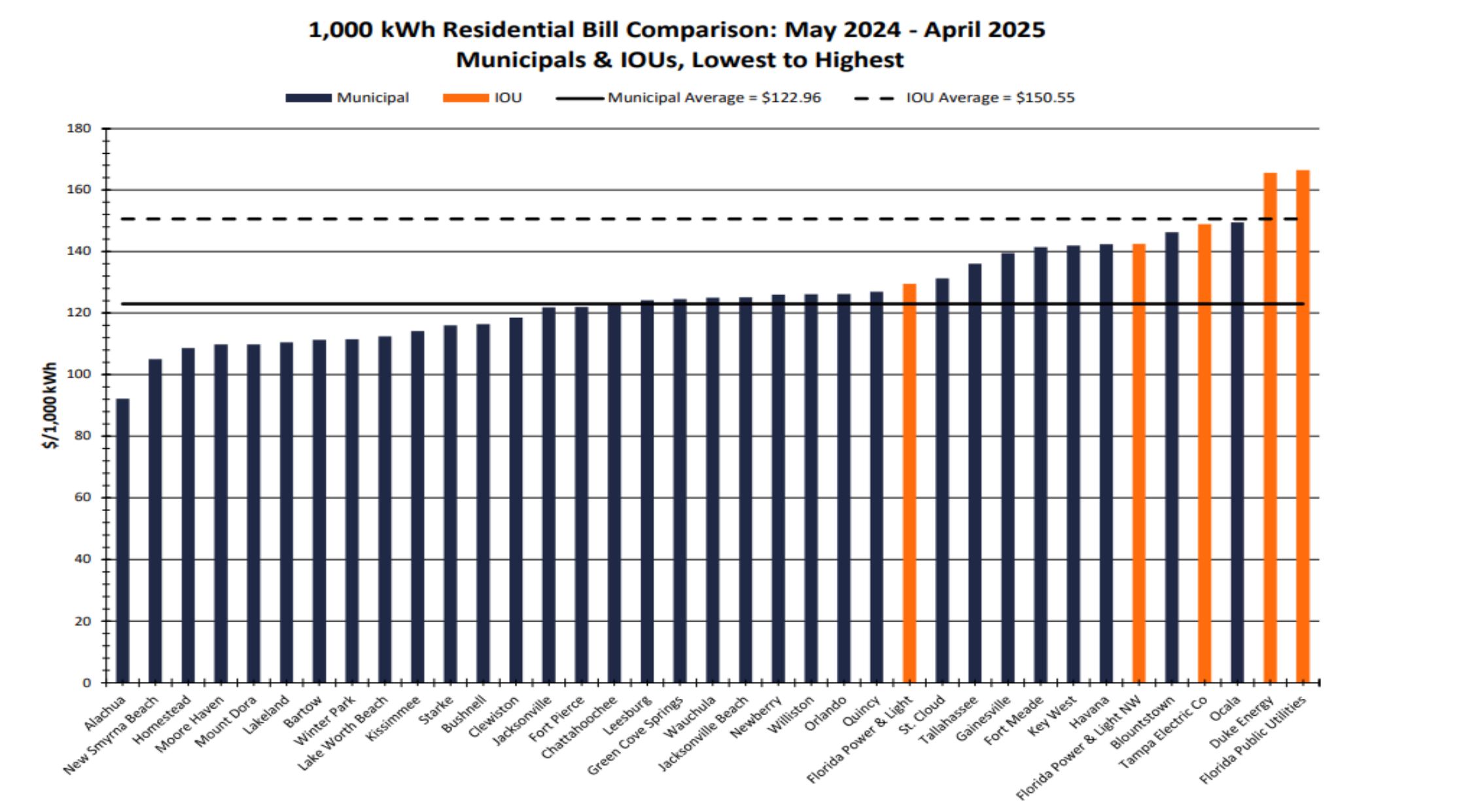
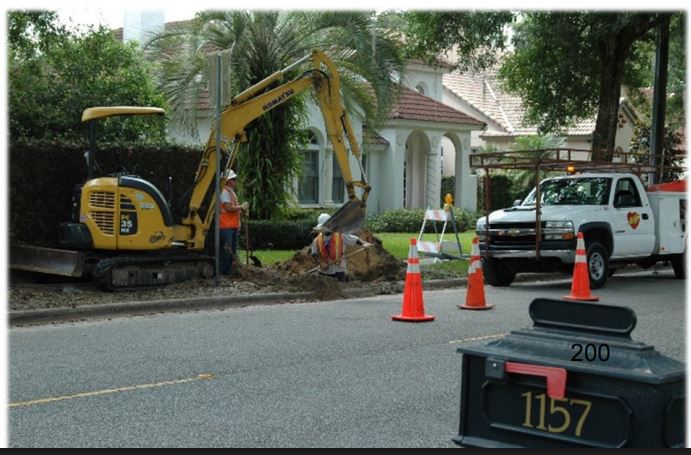
A chart from the draft 2026 budget proposal shows how Winter Park’s electric rates compare across the state. Above image: A crew from the city’s electric utility works outside of a resident’s home. (Photo courtesy of Winter Park Budget Proposal)
But the cost of the undergrounding project, which is now set to be complete by 2030, on top of persistent inflation means expenses are outpacing the current rate structure and, as the proposal noted, “the ability to continue to hold rates but still provide safe and reliable electricity has ended.”
The proposal calls for a 10% increase or about $15 more per month on a 1,000 kWh customer bill. The higher rates will fund the undergrounding project, substation and facility improvements and meter replacement, according to the budget document.
“While this is higher than would have been preferred, not having an annual index or policy for raising rates gradually leaves the utility with making periodic dramatic increases when outside shocks such as inflation and tariffs, affect the ability to maintain the current level of service,” reads the draft proposal. “It is actually surprising that the utility has not had to raise its non-fuel rates for years and is a testament to the extremely good power agreements and low-cost operation of the utility.”
Staff is proposing an additional 2% increase on water bills on top of the 2.23% increase set by the state Public Service Commission, which regulates utilities. The total adjustment would mean a $3.41 increase per month on the average 8,000 gallon customer.
The additional money would help the water utility keep up with capital expenses and stop using reserves to fund its obligations to help improve regional wastewater treatment plants.
Stormwater rates are also set to increase about $4 a month, according to the draft, based on a rate structure the City Commission put in place last year to increase rates by one penny per each property’s impervious square foot, each year, for three years. Those dollars go toward flood prevention, including setting into motion the results of recent basin studies, which identified the most urgent needs.
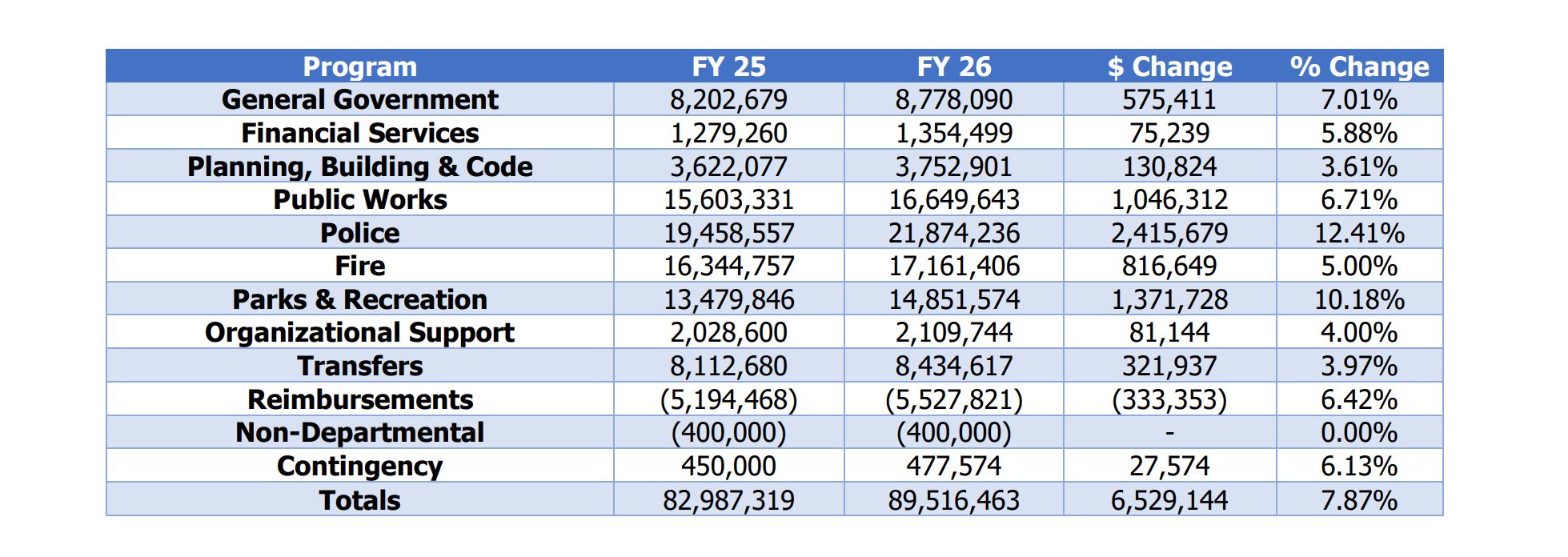
A chart from the draft proposal breaks down Winter Park’s General Fund, which makes up the largest portion of the city’s budget.
On top of those increases that will hit residents directly in the wallet each month, the budget proposal emphasized the need to balance an uncertain economic climate with political and other pressure to increase wages for police office officers.
“We are entering our 5th year of elevated inflation,” the budget draft states. “The long-vaunted U.S. economy is showing some concerning cracks as job growth is slowing, the number of home buyers vs home sellers has been dropping, retail sales are down, businesses have reduced hiring, creating the largest difference in unemployment between recent college graduates and the general workforce in years. All this points to a slowing economy that is likely going to remain at an elevated new normal of inflation around 3%. This means that the city will be experiencing slowing revenue growth while still facing an elevated inflation rate.
The draft noted that city governments often see a lag of about 18 months between signs of weakness in the economy and when the city begins to feel the downturn.
The budget keeps the city’s property tax rate the same — at 4.2991 mills, including debt service — though revenue will increase as property values increase. Each mill generates $1 for every $1,000 in the assessed value of a property.
“Property taxes are continuing to row the boat for the city’s fiscal picture, rising 7% and accounting for 44% of General Fund revenue,” the draft states. “This stabilizing force is what keeps most city services humming. Its rate of growth is sufficient to support the existing level of city services, but it is limited in what it can provide in excess of just staying on course.”
But even that steady revenue source is being threatened as Gov. Ron DeSantis and the Florida Legislature are looking to cut property taxes while putting pressure on local governments to increase police pay.
DeSantis announced proposed pay increases of 25% for state public safety workers, which pushing cities to set higher wages for their own police and fire personnel to stay competitive.
Winter Park plans to spend an additional $700,000 on public safety pay next year so that the starting salary for Winter Park police officers will reach about $65,000. At the same time, public safety pension costs will rise by $671,000.
Overall, the city employs 555 people and is budgeting for 2% cost of living raises plus an additional merit increase of up to 3%. The city is the fourth largest employer in Winter Park after AdventHealth, Orange County Schools and Rollins College. Publix rounds out the Top 5.
Other budget highlights include a warning that the capital improvement budget is tight and some projects may be deferred, particularly in the area of Parks & Recreation.
The current proposal calls for $885,000 for the following:
- $410,000 for ball tracking technology at the Winter Park Pines driving range and bunker improvements at the Winter Park Nine
- $200,000 through a grant application to replace eight hard courts at the Tennis Center
- $75,000 for LED lighting at athletic fields and tennis courts
- $150,000 for the landscaping office
- $50,000 for general parks maintenance
“The ability to fund new capital projects and priorities is diminished and doing anything new outside of identifying new revenue sources or grant opportunities will be difficult without cutting other services,” the proposal stated. “City services are only as reliable as the people, equipment, and infrastructure that deliver them.”
The city also expects its reserve funds to decline when measured as a percent of reoccurring expenses in the General Fund. Winter Park officials have stated their goal is to maintain reserves equal to about 30% of those costs and have reached that in recent years.
The new budget proposes $478,000 in contingency funds, which would bring the total reserves to about $22.3 million by the end of 2026, or about 26% of expenses. It would take another $3.6 million in savings to get to the 30% mark.
“It should be noted that even though the percentage is slipping, the total balance in the reserves is increasing,” the draft said.
Wednesday will kick off budget discussions in front of the City Commission. Time is set aside for public input on the budget during the City Commission meetings on Aug. 13 and Aug. 27. The first of the two required Commission votes on the budget is scheduled for Sept. 10.
WinterParkVoiceEditor@gmail.com
To comment or read comments from others, click here →
by Beth Kassab | Jun 8, 2025 | Election 2016, News, Police
Winter Park Police try to help homeless one person at a time
A new unit aims to connect people who are living on the streets with organizations that can provide new IDs, food, health care and other resources
June 6, 2025
By Kathryn Brudzinski
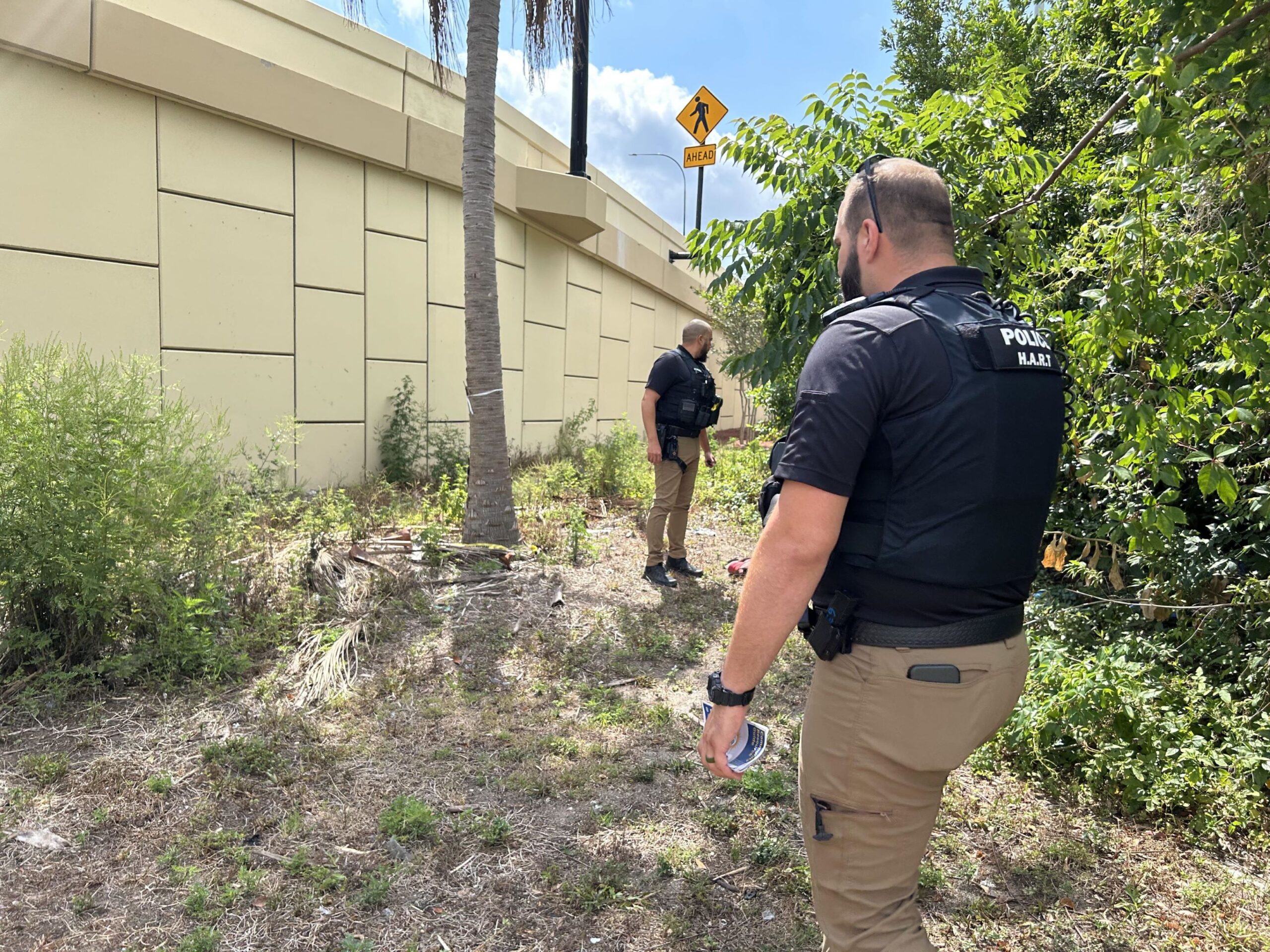
Winter Park Police officers Kyle Liquori and Rick Thomas made their way on foot on a recent afternoon to a weed-infested alcove tucked under the Rev. Kenneth C. Crossman railway bridge over U.S. 17-92.
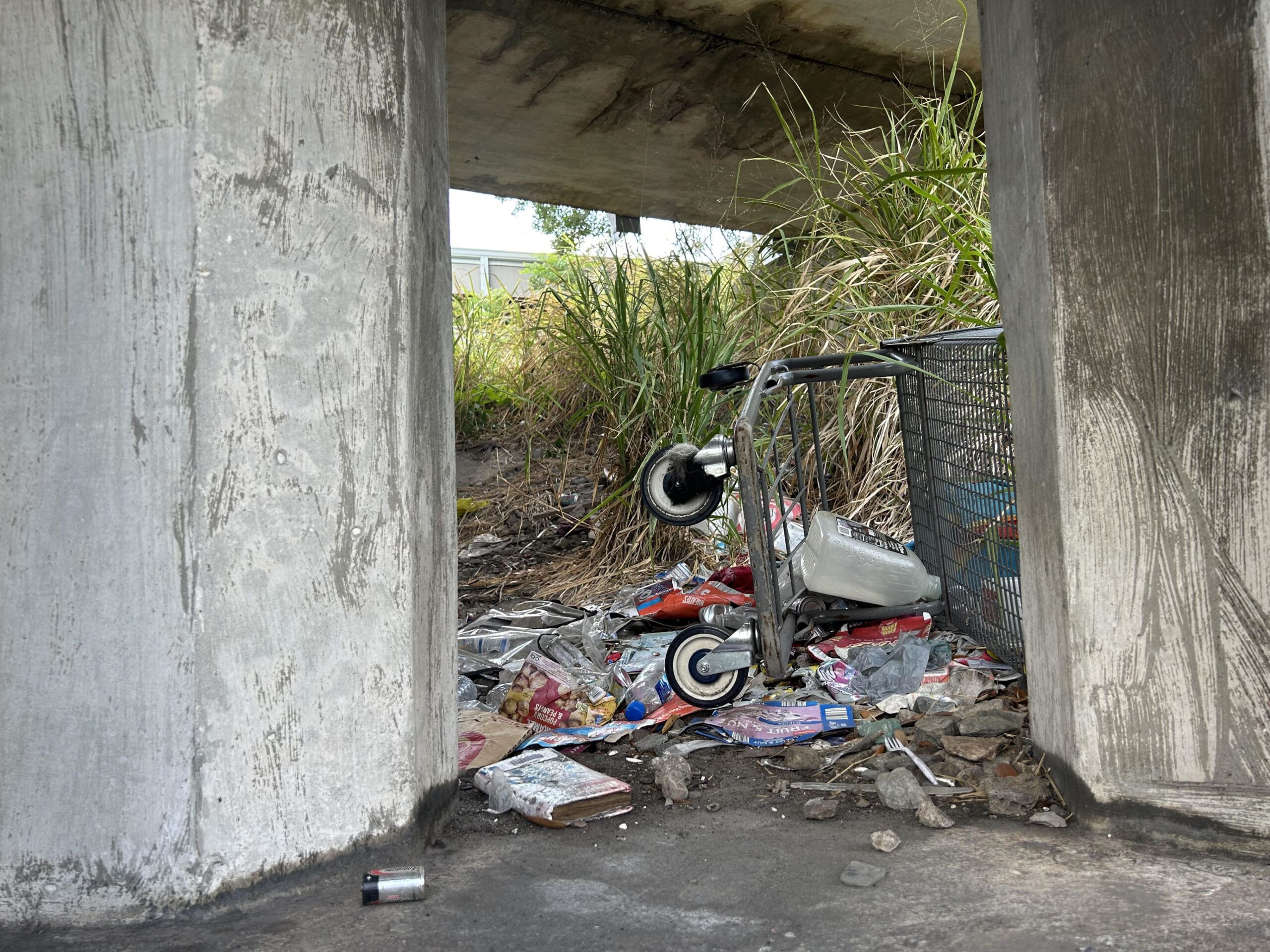
The officers found what they were looking for just out of plain sight from drivers whizzing along the busy stretch near the border between Winter Park and Maitland – an overturned shopping cart surrounded by empty tuna cans, batteries, plastic plates, a dirty blanket and a weathered library book amid a pile of trash and abandoned belongings.
“You can see they killed all the grass there,” Liquori said, pointing to a patch of packed down dirt. “You can tell someone’s been sleeping there recently.”
“Don’t think anyone’s here now, though,” Thomas said, leaning past the sidewalk railing for a better look.
It’s one of the signs of homelessness that’s become as familiar to the pair of officers in recent months as the oak-canopied brick streets and old Florida mansions that often define Winter Park.
Liquori and Thomas make up the police department’s new Homeless Advocacy Response Team, a program Winter Park tested last year and started up again in February with the help of a federal grant.
The idea combines elements of policing with potential aid for one of Central Florida’s most intractable problems. As soaring housing costs across the region have pushed more people out of a stable place to live, Liquori and Thomas are patrolling the streets to connect people with help rather than arrest them for crimes.
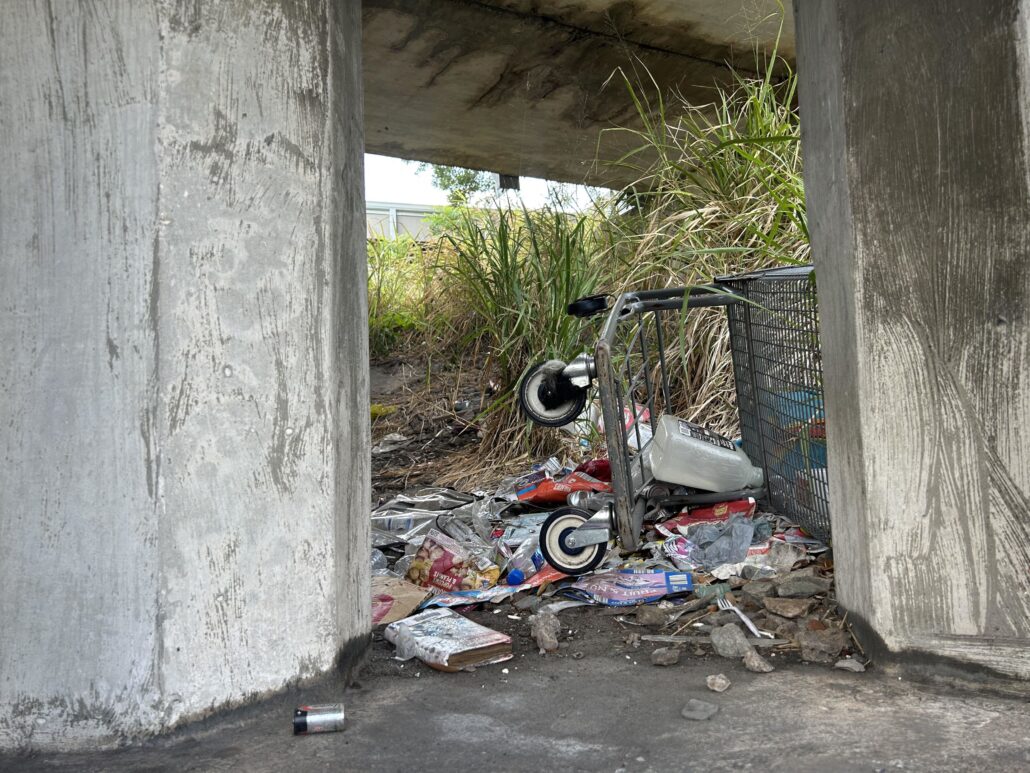
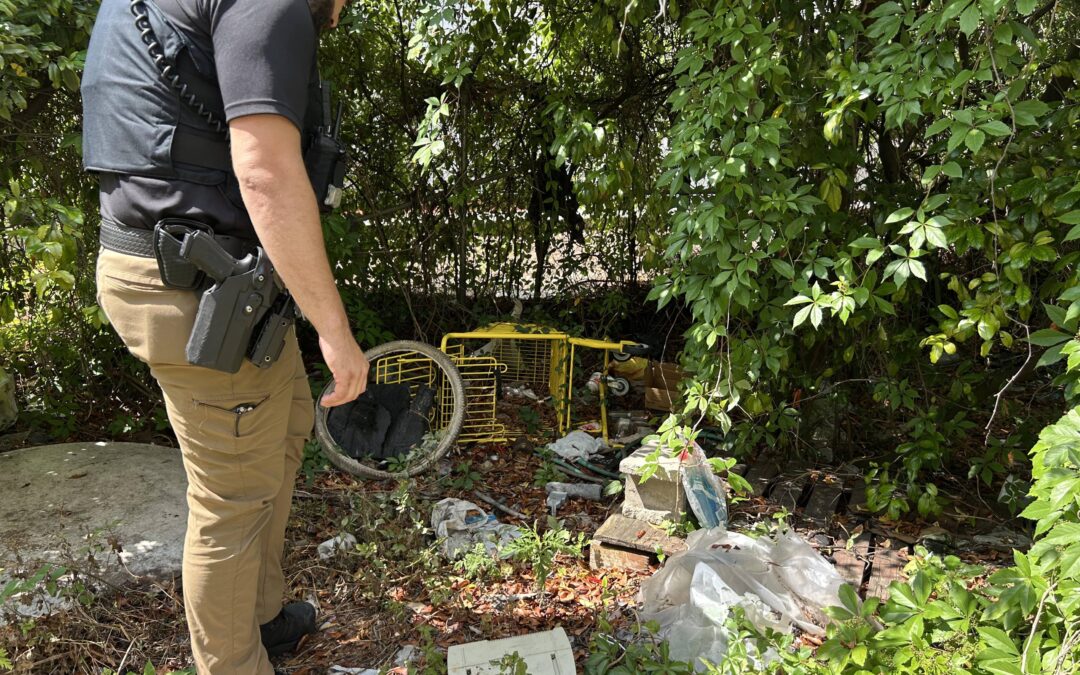
An overturned shopping cart sits under the Rev. Kenneth C. Crossman railway bridge over U.S. 17-92. Above photo: Officer Kyle Liquori investigates an abandoned camp tucked in the trees near I-4. (Photos by Kathryn Brudzinski)
“This is the side of things that people don’t see a whole lot of the time,” Liquori, standing in the shade of the bridge. “You’re driving, going to work, and you’re not really looking up here, right? But there’s plenty of places like this.”
The start of the officers’ new roles happened to coincide with a new Florida law that bans sleeping on public property.
So far the pair haven’t made any arrests related to public camping, they said. Many of the camp sites they find are on private land in wooded areas or hidden behind gas stations or other businesses. But the new state mandate has complicated their mission.
“It’s tough,” Liquori said. “When we go out, we have to inform them of the law. That’s our job first and foremost as law enforcement officers. But then we’re trying to help them out, too, so it’s a fine line.”
The officers set out on the special patrol four days a week, typically starting at 6 a.m. when those who slept outdoors for the night are more likely to still be at their camps.
Officer Kyle Liquori, right, looks for any potentially dangerous materials like drug paraphernalia surrounding a camp near Interstate 4 with Officer Rick Thomas.
HART, the department’s shorthand for the program, aims to give time for officers to build one-on-one relationships with people they find on the streets. A little trust and familiarity, the officers said, goes a long way when a person is trying to decide if they will accept help from other groups that can provide meals, clothes, mental health services or housing.
“It can be hard to get through to those people and say, ‘Hey, let me help you,’” Liquori said. “Let’s go get you a hot shower, let’s go get food or get laundry done. They’ve had to do things by themselves for so long, they’re going to continue to do things by themselves.”
Both men wear polos and khakis with protective vests and carry their department-issued firearms. They drive a marked pickup truck without the barrier that separates officers in the front of a patrol vehicle from passengers in the backseat. They say they use water bottles, cleaning wipes, tissues and more from the supply stock they carry than they use handcuffs.
Driving through the city on a recent Monday, they showed a reporter their typical route, which often focuses on the east side of Winter Park. They encounter more people there, usually more men than women and usually middle-aged or older.
“As we help one or two people out, we’ll see two new faces,” Liquori said. “It’s a revolving door, at least three to five people a day that we’re getting out with and talking to and helping.”
Homelessness isn’t new, especially in Orange County, where hourly wages are lower than the national average and rents soared after the pandemic.
Winter Park’s Brookshire Elementary, Lakemont Elementary and Winter Park High School this year tallied a combined 10 students living in motels, one in a shelter and 76 bunking up with another family or other shared arrangements, according to records from Orange County Public Schools.
Eric Gray, executive director of the Christian Service Center for the Homeless, said the number of people in need of permanent housing is steadily increasing.
“Nationally, the overall number of people experiencing homelessness on a single night in 2023 was about 650,000, but in 2024 that number went to 770,000,” Gray said. “That increase compared to the rest of the population means it’s the highest percentage of the population in the United States experiencing homelessness since the Great Depression.”
Liquori and Thomas said they’ve noticed it’s easier to help people who are newer to sleeping on the streets than those who have lived without a permanent residence for a long time.
“The longer you stay in that cycle, the harder it is to come out of it,” Liquori said. “When we get out with people that are recently homeless, we have a greater success rate of them accepting resources or them getting the help versus people that have been homeless longer.”
The pair said they see the toll homelessness takes on the mental and physical health of people they meet and they are mindful that some people may have had negative interactions with police in the past.
Being homeless can “consume” a person, Liquori said, when that person’s priorities are reduced to simple survival while potentially dealing with mental health, physical disabilities or addiction issues.
“For some people, they’re just trying to get along and get by their day,” Thomas said.
That’s why the officers said they don’t force anyone to accept help. But in cases where someone is willing, the officers show them a list they created, and routinely update, of organizations like The Sharing Center, Family Promise of Greater Orlando or the Samaritan Resource Center and give them a ride to the place of their choice.
“We never force anyone to go to get help anywhere,” Liquori said. “We’re trying to establish more relationships with people on an individual level. We’re walking up to the front door, we’re introducing them to the intake person. We’re doing a better job exchanging hands, that way they get the care and the resources they need.”
The interactions mean Thomas and Liquori get to know some of the “regulars” they encounter on patrol and check back in on them. After months on the job, they know where to look – certain street corners, wooded areas behind gas stations, the hidden nooks under overpasses.
One such regular, they recalled, is a man who they learned is a veteran named Eugene. He told them he became homeless years ago after he fell from a ladder and was injured.
“He just didn’t have the insurance to have coverage,” Thomas said. “He was an hourly employee, fell behind and became homeless. You know, you get hurt and can’t work for a couple of months and then your employer lets you go.”
They said they found out the man could possibly qualify for housing through the Pathlight HOME organization in Orlando, but he didn’t have his military discharge paperwork or other documents.
Thomas drove him to the Lake Baldwin Veteran Affairs Clinic.
“The first day he initially went there to get his paperwork and he ended up getting some prescriptions that he needed filled and got some medical treatment,” Thomas said. “He didn’t get the paperwork that day, but at least he got what he needed. I came back and picked him up and gave him another ride another day to actually get his paperwork.”
Many of the people they encounter are in a similar situation – they’ve lost their official identification and other documents they need to get a job or access to services. The officers say IDignity, a local nonprofit that helps people recover proof of identity, has been helpful.
“That’s the problem if you’re homeless and you lose your paperwork or ID, you don’t have anything to get another one,” Liquori said.
Gray said cities like Winter Park must also confront the “horror” of homelessness by investing in more services within its borders and by helping to create more affordable housing.
Of the more than a dozen charitable organizations and resource providers on the Winter Park Police website for homeless resources only two of those have Winter Park addresses: Jewish Family Services of Orlando and Greater Promise of Greater Orlando.
“These are the last things that communities like Winter Park want to be doing because they attract the very element that they don’t want in their community,” Gray said. “But the reality is that the people who are homeless right now in Winter Park were, 90 percent of the time, last housed in Winter Park.”
He said Orange County’s affordable housing deficit is about 75,000 units. The greater Orlando area ranks as one of the worst places in the nation for affordable housing. For every 100 extremely low-income renters, the region has just 19 affordable and available units, according to a new report on the housing gap from the National Low Income Housing Coalition.
“We’re growing further out of balance,” Gray said. “It’s going in the wrong direction. There’s very few places available in the community that people can legitimately afford without spending almost half or more of their income on rent or even a mortgage.”
He said his organization has seen law enforcement units take more action since Florida’s public camping ban took effect to clear out places where known encampments are set up, even for a single individual.
“They’re not being rude or aggressive about it, they’re just abiding by the law and the way that it’s written now,” Gray said. “Law enforcement officers are the ones that are the most unhappy about it from our experience. None of them decided to become a police officer because they could help move homeless people along to another place.”
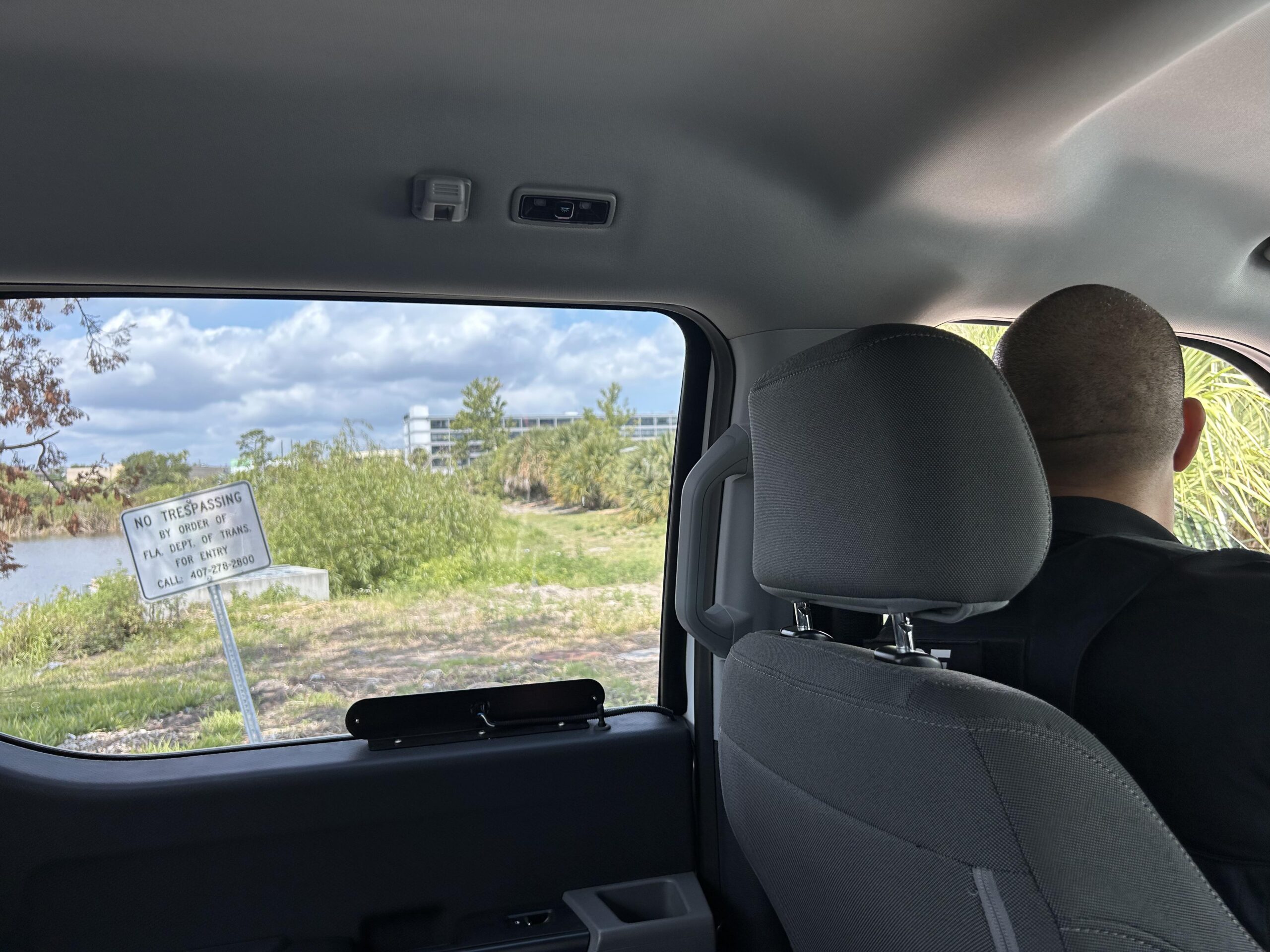
Liquori and Thomas have seen it, too. They recently discovered that a homeless camp just out of their jurisdiction on a pond and hidden behind a tree line had been cleared away.
“Orange County or someone must have come here and cleaned the camp out all on the back,” Thomas said, pointing out a newly installed no trespassing sign from the Florida Department of Transportation. “There were 15, maybe 20 tents back here. We haven’t been back here in a couple weeks … but it looks like it’s all gone.”
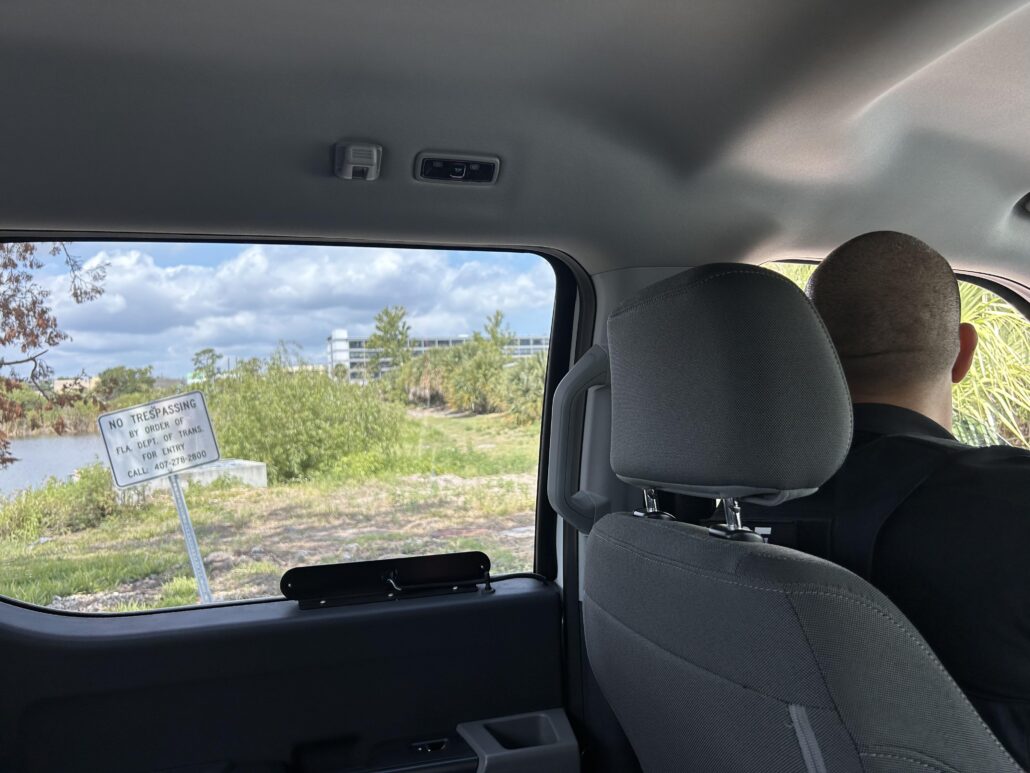
Officer Rick Thomas discovers just over the border of Winter Park that more than a dozen tents were recently cleared away.
The change made Liquori pause.
“They kind of had a somewhat permanent place to stay, but now they’re just roaming the streets,” Liquori said. “It’s tough, you know? What’s better?”
Liquori and Thomas often take on the responsibility of cleaning up camp sites they find on public property in Winter Park, loading stolen shopping carts into the bed of their truck to return to stores and clearing away trash and other abandoned items.
“Yeah, it’s dirty and disgusting and someone has to clean this up,” Liquori said, looking at a plastic sleeping mat hidden in the trees at another camp near Interstate 4 and Fairbanks Avenue. “But someone was living back here at some point, you know? That’s the real sad part. This was someone’s home.”
WinterParkVoiceEditor@gmail.com
Kathryn Brudzinski is a reporter based in Orlando and a University of Central Florida graduate with a degree in journalism, as well as a certificate in public and professional writing. Her work has appeared in Oviedo Community News, VoxPopuli and The Charge.
To comment or read comments from others, click here →

Recent Comments