Rosen Hotels Leader Calls for Tourist Transportation Tax to Boost SunRail, Lynx
Frank Santos, who lives in Winter Park, says out-of-state visitors would pay for the upgrades as an added tax on hotel bills
Nov. 14, 2025
By Beth Kassab
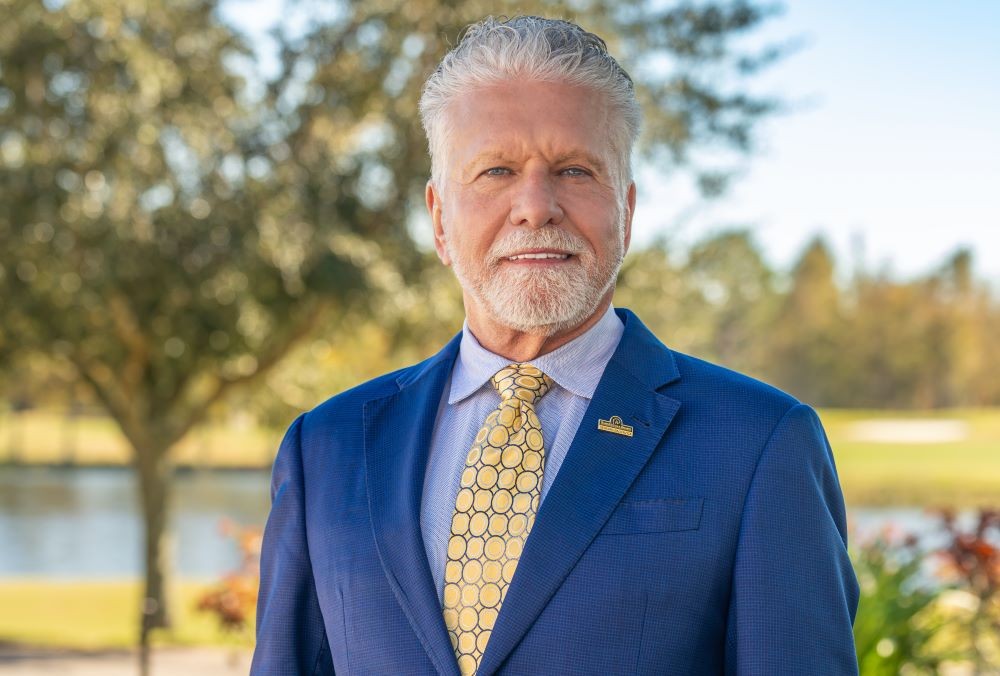
Frank Santos wanted to make SunRail work as his daily commute.
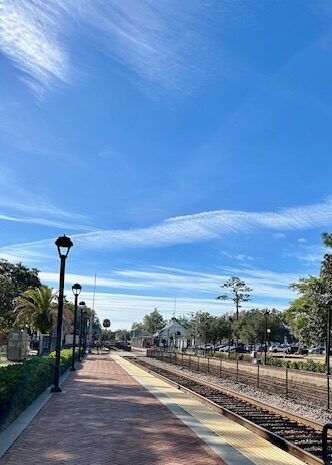
The chief executive officer of Rosen Hotels & Resorts had a lot in his favor. He lives just three blocks from the Winter Park station. On his morning walk to the train he often stopped at Croissant Gourmet on Morse Boulevard for coffee and, occasionally, a pastry.
He spent the ride to his office near International Drive reading the day’s news or getting work done — something impossible to do behind the wheel on Interstate 4.
Santos even devised a system for when he arrived at SunRail’s Sand Lake Road Station, the closest stop to his office overlooking the golf course at Rosen Shingle Creek. He left a car there Monday through Friday to cover the last 15 minutes or so of his trip.
But after about a year, he stopped taking SunRail.
“It was just complicated,” he said. He called his experiment with Central Florida’s underfunded and incomplete mass transit system largely worthwhile — even enjoyable at times — but one that underscored how the region is built around the door-to-door convenience of cars.
“I would do it again if I could get closer to my office,” he said.
It’s been about five years since he stopped his regular SunRail commute. Since then, he has helped guide his company, which operates seven hotels, through the COVID pandemic and, last year, the death of founder Harris Rosen.
But this week he found himself reflecting on those train rides and what he sees as untapped potential for Central Florida to finally build a mass transit system that works for more people.
Santos acknowledged that any inconvenience he experienced on SunRail, or the gridlock he faces routinely on I-4, is small compared to what some of his employees endure. Many Rosen Hotels workers and others who earn their livelihoods as restaurant servers, ride attendants, desk clerks, housekeepers, and groundskeepers rely on the Lynx bus system and spend hours on buses each day.
“We need our employees to get to work faster,” he said. “My employees take up to two hours to get to work.”
That’s why an idea he has tossed around since 1999 now has a name: the Tourist Transportation Tax.
It would be paid only by out-of-state tourists on their hotel bills, and the revenue would be used exclusively for transportation needs such as extending SunRail to Orlando International Airport and the Convention Center and, for the first time, providing a dedicated funding source for Lynx so it can add buses and increase route frequency.
The proposal is gaining interest across the state, including in Winter Park.
Winter Park Mayor Sheila DeCiccio said she shares many of the same goals: extending SunRail service to weekends, which could reduce traffic during major events such as the Winter Park Sidewalk Art Festival, and improving bus service.
Winter Park was SunRail’s second-busiest station last year with 124,000 riders, according to system statistics. Only the Lynx Central Station stop in downtown Orlando had more, with 138,000 passengers.
“We offered to pay for the train to run on the weekend and they wouldn’t do it,” DeCiccio said. “We want the train to run in and out of the airport. We want the buses to run better. Those are exactly the kinds of things I’ll be looking for in a plan.”
DeCiccio’s comments came after joining about 200 people who listened to Santos’ proposal — as well as a plan by Sen. Carlos Guillermo Smith, who wants to change how existing hotel-room tax dollars are spent — at an Orange County League of Women Voters luncheon this week.
The discussion turned tense at times, with Santos arguing that Guillermo Smith’s statements about the Lynx budget were misleading and stepping in to defend the tourism industry, which he noted already contributes heavily to roads, schools, parks, and other essential services as the top property taxpayers in Orange County.
Walt Disney Company, Universal Studios, Marriott Resorts, Hilton Hotels & Resorts, and SeaWorld regularly appear on the county’s Top 10 list of property taxpayers, according to the property appraiser’s records.
Guillermo Smith, an Orlando Democrat, was especially critical of the public dollars allocated to Visit Orlando for marketing hotels and attractions. The quasi-public tourism bureau was the subject of a recent county audit that questioned its expenditures.
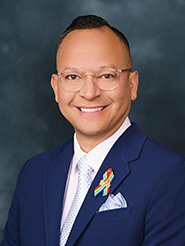
“I think $105 million in public money to Visit Orlando is an insane amount to give when we have so many community challenges,” he said. “We know that tourism is a huge economic driver in our region. … But we also have to acknowledge that tourists place a large strain on our community’s resources.”
Santos defended the spending.
“The senator doesn’t understand the cost of doing business,” he said. “We spend $40 million a year on sales and marketing at Rosen Hotels. Coming out of COVID, everyone understands the cost of doing business has increased.”
How much of the current 6% tax on hotel stays should be devoted to tourism marketing, the convention center, and other industry needs — versus helping local residents — has long been debated in Central Florida.
The difference this time is that someone from the tourism industry is proposing a new solution instead of simply guarding the existing 6%, which generated $385 million last year.
Santos still wants to protect that 6 cents on the dollar collected by hotels. But he wants to add another 1 to 4 cents dedicated to transportation.
Right now, he explained, guests pay 12.5% in taxes on hotel bills: 6% in Tourist Development Tax and 6.5% in sales tax.
Other popular destinations charge more. Chicago charges 17.3%. Austin charges 17%. New Orleans charges 16.2%. New York charges 14.75%.
“We could go as high as another four cents,” he said.
The steady revenue stream provided by the tax could be leveraged to finance major projects through bonds. One extra cent could generate nearly $350 million in bonding capacity, according to projections.
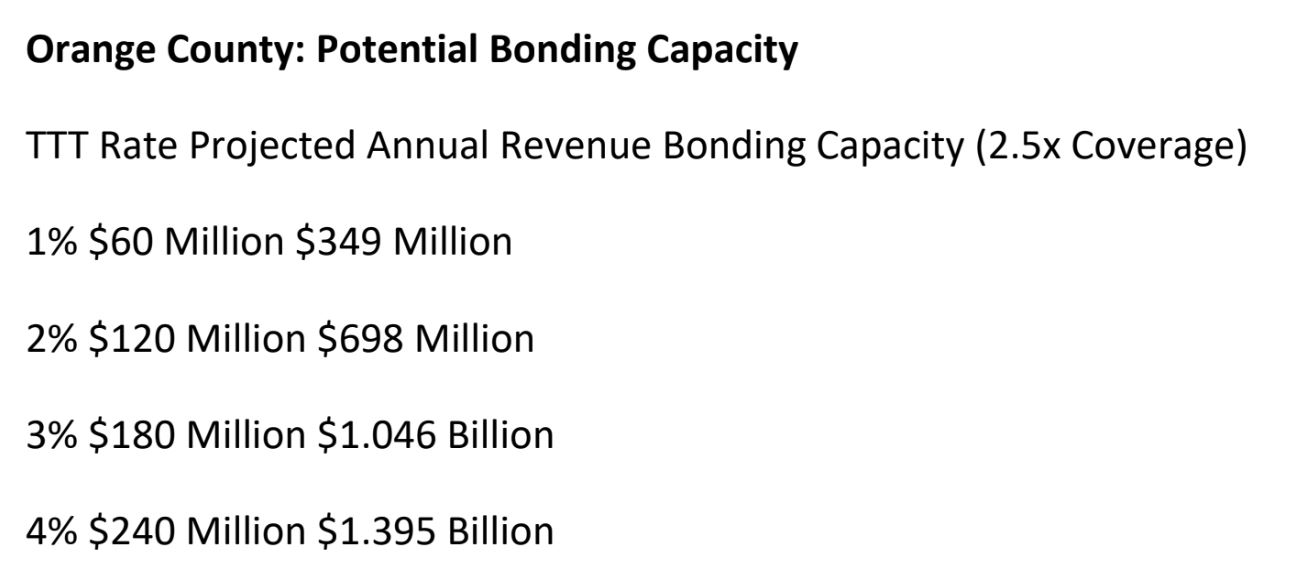
This table projects what different tax rates would generate each year and the capacity to bond against that revenue to fund projects. Source: Policy memorandum on Santos’ proposal
Importantly, hotels would exempt visitors with Florida driver’s licenses from paying the tax, meaning out-of-state visitors would fund the upgrades.
Santos needs the proposal to pass the Legislature and then win voter approval in a referendum. He says he has begun speaking with more tourism leaders to build support.
Without naming names, he said some organizations have encouraged him to continue pushing. At least one major group has suggested increasing the sales tax to fund transit — an idea backed by Orange County Mayor Jerry Demings that failed at the ballot in 2022.
Harris Rosen himself supported Santos’ plan before his death about a year ago, Santos said.
So he plans to keep talking, keep meeting, and keep spreading the word about the region’s needs.
One way he wants to do that is through another experiment. He plans to ride Lynx from a neighborhood where many workers live to his hotels on and near International Drive so he can better understand their challenges.
“I want to do it during the morning,” he said. “I plan to ride the bus from Pine Hills to my office.”
At the end of the day, he’ll face a familiar problem for any transit user in a car-centric region.
“And then I’ll find a way to get back home,” he said.
WinterParkVoiceEditor@gmail.com
Finding the funding to expand our public transit/train system is long overdue. I would love to be able to take the Sunrail to and from the airport. The congestion of cars both on the roads and on arrival at the airport would be greatly lessened if that option were available. And the cost of the train would eliminate costs for scarce parking. Increasing the hotel tax on tourists to be comparable to other popular tourist destinations makes sense.
If Amazon can deliver to my house $5.35 plastic retainer clips for my car within 12 hours of my order, I have to believe LYNX has room for improvements. Ask transportation companies like Mears or Disney fleet services to review the locations, timing and logistics of moving the majority of daily riders who depend on the bus to get to work.
BTW, I had a free 30 day return. IOWs, they would have come back to my house to pick up the $5.35 return package, too. Is this a great country or what?
Finally, someone with influence is taking up this fight. Having 24/7 Sunrail service to the airport would be a dream come true. Being able to hop on the train to shop and have dinner/drinks at Disney Springs would be wonderful. Anything to stay off I-4!!
Please, please, please make this happen.
I’m tired of prioritizing tourists over local residents’’ transportation needs. Expand Sunrail!
After review after review of the costly alignments through I-Drive and to the Convention Center, etc, it’s time to rethink the Sunrail link to the airport. A tram of the same type on the airport property to the Sand Lake Sunrail station would cost a fraction of the other alignments. Most of that easement is on airport property.
It’s not only much cheaper and faster to build, it would activate much more Sunrail ridership. The TDT should pay the lion’s share for this transportation amenity, which would benefit both tourism and the local population.