
Synagogue Proposal Faces Fresh Scrutiny as Winter Park Commissioner Defends Impartiality
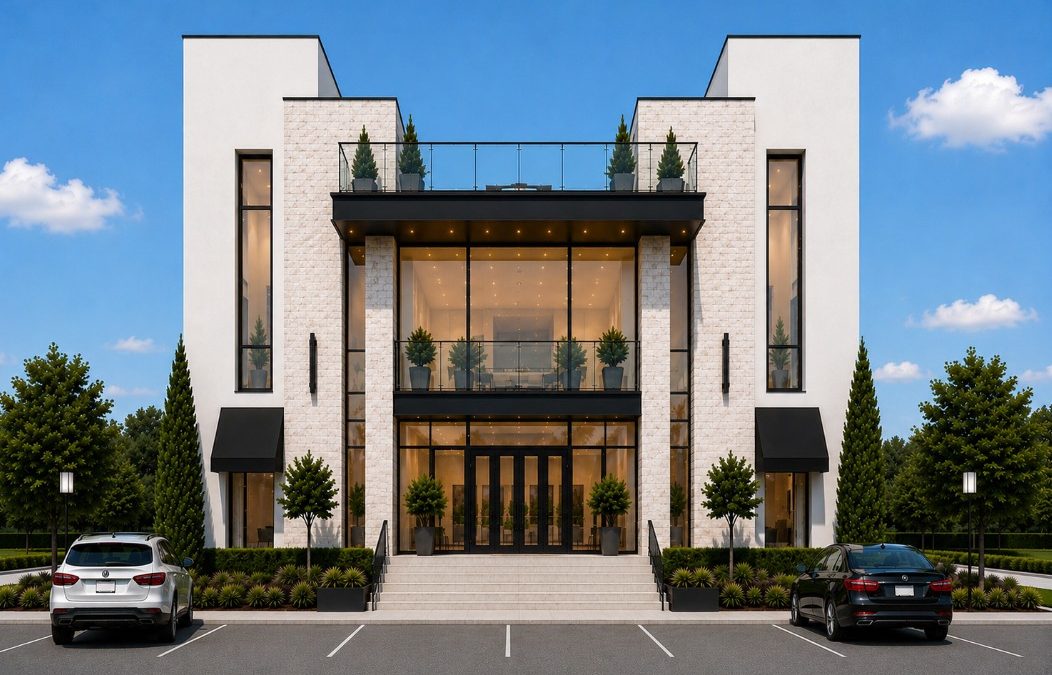
Chabad of Greater Orlando is seeking to build the city’s first permanent synagogue near Park Avenue that would also include a daycare and rooftop deck
Oct. 23, 2026
By Beth Kassab
A second vote required to approve what would be Winter Park’s first permanent synagogue has been delayed again, as opponents challenge the project’s compliance with city code and raise questions about a city commissioner’s acceptance of complimentary Orlando Magic tickets from a friend who received them from the rabbi leading the project.
The City Commission was scheduled to take up the matter Oct. 28, but Chabad of Greater Orlando, the organization behind the proposed synagogue and daycare, and GAI Consultants, which is seeking to build five townhomes on the parcel, asked to postpone the hearing until Dec. 9.
Frank Santos, who says he has spent $15,000 on consultants to review the project, is aggressively contesting the proposal. He argues that it would negatively affect a townhome he owns and other nearby properties through significantly increased traffic and noise, as well as the introduction of a predominantly nonresidential use on the site of the El Cortez Apartments at the corner of Morse Boulevard and Knowles Avenue.
Santos’ attorney, former Orange County Commissioner Ted Edwards, and consultant Jeff Briggs, who retired less than two years ago as the city’s longtime planning director, have identified what they describe as “significant missed setbacks, buffers, parking deficiencies and related matters.” They also contend that the synagogue approval process must essentially start over, with the proposal returning to the Planning & Zoning Board, according to a letter Edwards sent to the City Commission earlier this week.

City officials did not respond to a request for comment on the letter. Rebecca Wilson, the attorney representing Chabad and GAI, has said at public meetings that the project has worked to make alterations to be compatible with the neighborhood and agreed to more than 20 conditions including no amplified noise on the roof deck and limiting the number of children in the daycare.
She has said there are more than residential uses next to the property, including a church and office and retail space.
“Your code itself says that religious institutions and daycares are allowed if we go through this conditional use process,” Wilson said on Sept. 9, noting she’s lost count of the number of conditions placed on the development but it has “proven it’s compatibility” with the neighborhood.
Santos said the townhome he purchased in 2019 on Interlachen Avenue, which backs up to the proposed synagogue property, represents a “significant investment.” He said he does not live there and does not intend to do so in the future. Instead, he lives in another Winter Park home, a little more than a mile away, north of Palm Cemetery.
“My bigger concern is the impact on downtown Winter Park and the greater area,” he said Friday.
Santos, chief executive officer of Rosen Hotels & Resorts, also said he is communicating with Jonathan Beaton, owner of the public relations firm Inside Advantage PR. Beaton reached out to Santos and offered to help his cause, citing his own concerns about traffic and parking as a Winter Park resident.
Beaton filed a public records request with the city on Sept. 12, three days after the City Commission voted 4-1 to table the second vote, with Commissioner Kris Cruzada dissenting. Commissioner Elizabeth Ingram, who had voted in favor of the project as part of a 3-2 vote in August, said she could not support it again that night because of unanswered questions about the daycare’s playground and concerns about traffic.
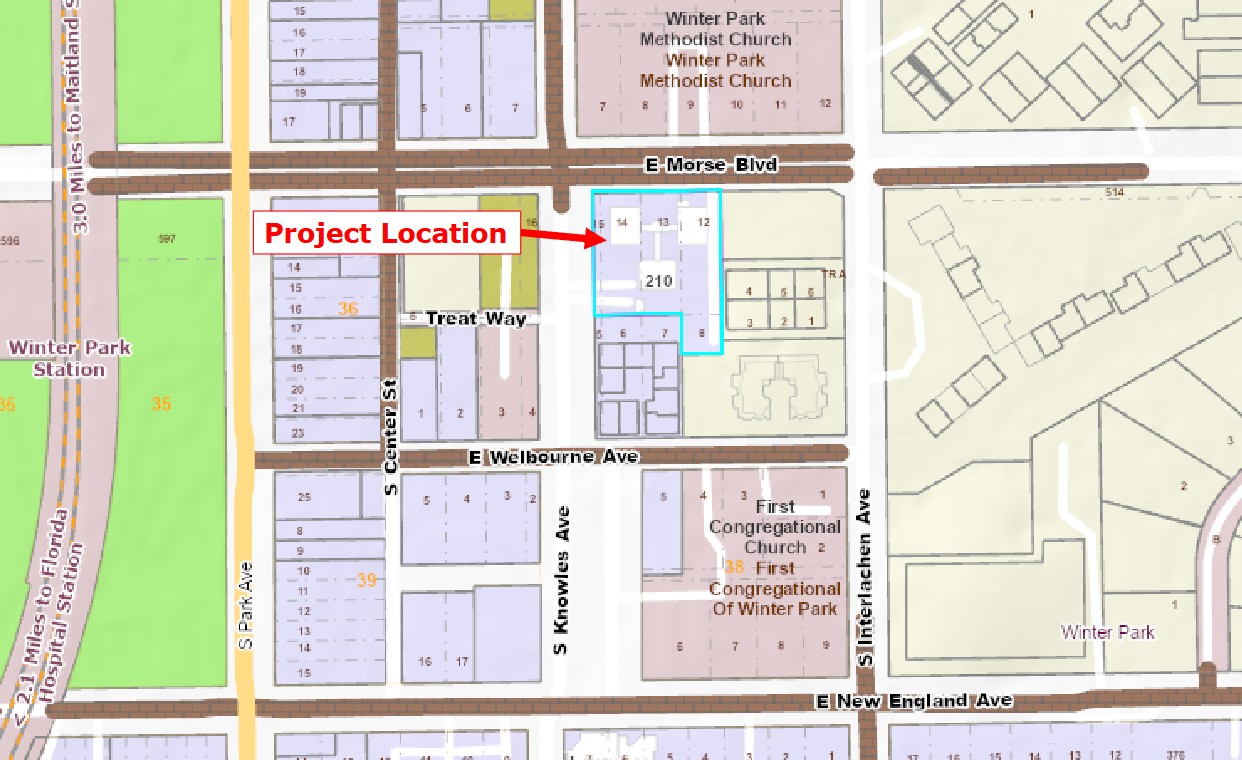
Beaton, who previously served as a spokesman for former Congressman Alan Grayson, requested a wide range of records concerning communications to and from commissioners and city staff related to the project.
The request yielded hundreds of emails involving all five commissioners, but only Ingram’s records appeared to include text messages and calendar entries.
Among those records was a text message Ingram sent to Rabbi Dovid Dubov, one of Chabad’s leaders, at 9:31 a.m. on June 4:
“Good morning, Rabbi Dubov! we had a great time at the magic game – thanks again!!! I would be happy to meet with you to discuss the synagogue.”
She also suggested a potential meeting date.
Dubov replied, “Great to hear!” and the two settled on a meeting in July.
Beaton sent the Voice a screenshot showing only that exchange last week and also contacted other media outlets.
The Voice’s review of additional records and interviews provided further context about the tickets and the timing of the communications.
Other records and interviews revealed that the Orlando Magic game in question took place in April, before Ingram said she had seen or was even aware of Chabad’s plans, which would later come before the commission. She received the tickets through a friend who had gotten them from Dubov. The tickets were among dozens of complimentary tickets Chabad distributed to promote the game, which coincided with the annual Jewish Heritage Night with the Orlando Magic.
And Ingram’s message to the rabbi on the screenshot was actually a response to a message she received from him two days earlier on June 2, the same day Chabad and GAI held a community meeting with neighborhood residents. The meeting took place about a month before the proposal was first tabled at the July 7 Planning & Zoning Board meeting.
Dubov’s June 2 message read:
“Good afternoon Commissioner Elizabeth Ingram! I hope you’re doing well and that you enjoyed our Jewish Heritage Night with the Orlando Magic back on April 6. I received your contact information [from a mutual friend] and wanted to reach out regarding the development of our first synagogue in Winter Park. As we move through the planning process, I would love the opportunity to share the vision and current plans with you, hear your thoughts, and receive your feedback as well. If you are open to meeting sometime, please let me know what works best for you. It would be greatly appreciated.”
Dubov told the Voice in a text message that Chabad has participated in the annual event with the Magic for years and has distributed “hundreds of complimentary tickets as part of our efforts to make Jewish Heritage Night welcoming and accessible to all.” He declined to answer additional questions.
Ingram, who took office in March after running unopposed, said Dubov gave the tickets to a friend of hers, and she attended the April 6 game with her family.
She said she did not hear from the rabbi again until two months later, when he contacted her after obtaining her phone number from another mutual connection, as he explained in his message.
Ingram said she nearly always agrees to meet with people who request a conversation and has also met with opponents of the synagogue proposal. Records show that she had a meeting scheduled with Santos around the same time, on July 14.
Ingram said she thanked Dubov for the tickets out of politeness because he brought them up when he initiated their text exchange.
“He never brought it up again,” she said. “Do you really think I’m going to be swayed on this huge development proposal from one Magic game months ago?”
Ingram said she learned from a reporter last week that opponents of the synagogue were raising questions about the Magic tickets. She then received a call from Santos, who suggested she might feel pressure to recuse herself from the next vote because she had accepted the tickets. He also told her there were photos of her in a suite at the Kia Center, where the Magic play.
Ingram said the tickets she received for Jewish Heritage Night were not for a suite. She said she later sat in a suite with friends and family at a different game that month, paying her own way. She said the photos Santos referenced, which were posted on her Facebook page, were taken at that game.
“He called me and said he has a lot of stuff,” she told the Voice. “I told him the whole story, and I thought, how can you say I’ve not been asking hard questions? Anyone could tell I was really conflicted over the plans [for the synagogue].”
In fact, it was Ingram’s questions on Sept. 9, before the Magic game became an issue, that helped prevent the proposal from winning approval that night and led to the vote being tabled. The other commissioners appeared divided, with two leaning in favor (Cruzada and Craig Russell) and two opposed (Sheila DeCiccio and Warren Lindsey). Those were the same positions they had taken during the first vote in August, leaving Ingram as the potential swing vote who could decide the matter.
Santos told the Voice that he made a “courtesy call” to Ingram about the tickets and photos he had been told were on Facebook.
“I told her I was getting photos of her and her family in a suite,” he said. “I’m not on Facebook. Other people are insinuating and trying to connect the dots, not me.”
Ingram released a statement Thursday evening saying she had asked the city attorney whether she could recuse herself from the next vote “because of the misleading narratives that have circulated regarding my attendance at the basketball game.”
“In no way am I concerned of my ability to remain fair and impartial,” she said in the statement. “I felt stepping aside would help prevent further controversy and avoid undermining public confidence in the commission’s final decision.”
But City Attorney Kurt Ardaman told her that elected officials are “required” to vote on matters before the commission because abstention is allowed only in cases involving a conflict of interest. Such conflicts require “a special private economic gain or loss” for the elected official, an immediate family member or the official’s employer. Ardaman said Ingram does not have a conflict of interest in this matter.
“I listen to our residents and consider different perspectives, but my decisions are my own,” Ingram said in the statement. “I believe every development application deserves fair consideration under the applicable laws and land-use standards. Political support, personal relationships and outside criticism does not determine my vote.”
Ingram also said she did not believe the tickets were worth more than $100. However, she has now filed a gift disclosure form required under state ethics rules “in the interest of full disclosure.”
Additional records provided by the city show no text messages between Ingram and Dubov after June 23 when they continued a discussion about scaling back the synagogue’s size in response to community feedback.
On June 19, Ingram had shared her concerns about the scale of the proposal with Dubov.
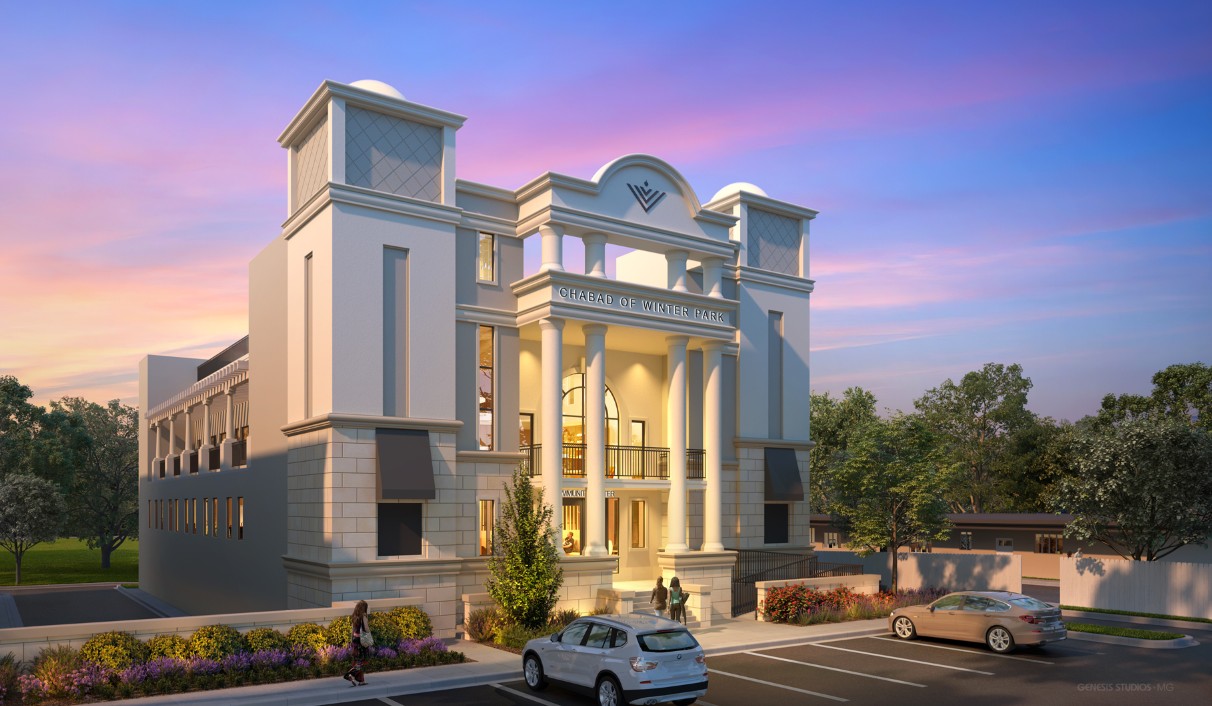
An earlier rendering of the synagogue shows a different style of architecture before community feedback.
“I wanted to let you know this now in case you are willing and able to work with the architect on a revised concept that would be slightly smaller,” she wrote. “I think that is going to be the biggest hurdle going into the planning and zoning meeting and then commission meeting.”
It is not unusual for commissioners to share feedback on development plans or request architectural changes.
The Planning & Zoning Board approved the project with scaled-back renderings on Aug. 4 in a 5-0 vote. One member was absent, and another abstained because he works as an urban planner and had been asked to consult on the project before the application was submitted.
Ingram also received text messages and emails from other people about the proposal, including a text from Nikki Seybold, who is working with Santos and Edwards to determine whether the synagogue project complies with city requirements for parking and setbacks. Seybold texted Ingram on the morning of Aug. 28, two days after the commission’s first vote on the project, and asked whether they could speak by phone.
“Hey Nikki! Yes, I am actually just walking out of a doctor’s appointment so I will give you a call in a few minutes when I get in my car,” Ingram responded.
Ingram said her text exchanges with Seybold and Dubov reflect her philosophy of meeting with as many people as possible to learn about city issues.
“I’m very friendly to everyone,” she said. “They might bring up something to me that I hadn’t considered.”
Santos said he has a meeting scheduled next week with Edwards, the city attorney and city staff to determine whether the proposal violates city code, as he contends.
“I don’t want to spend any more of my time or my money on this issue,” he said. “I want it to go away.”
But he said that if the city did not require all the necessary waivers to bring the project into compliance with code, that would raise questions about other developments, particularly as construction has ramped up in downtown Winter Park in recent years.
“Did the Alfond Inn apply for all the waivers? Did the Rollins museum apply for all the waivers?” he asked. “This is not just about this project; it’s about past projects and future projects.”
WinterParkVoiceEditor@gmail.com
The story is not about a commissioner who uses her inexperience as an excuse to break the rules, it is not about a rabbi who may have tried to influence a public official with magic tickets- nor is it about a resident and neighbor who trying to protect his home and significant investment. It’s about a development proposal for a commercial mixed use enterprise on residential property . The applicant ignored code and failed to include significant deviations from code in their applications .
Shame on WP voice for choosing
Salacious hearsay story line instead of facts that identify the merits both for and against this project. Stick to the facts.
This article says that attorney Becky Wilson requests that the public hearing be delayed from Oct 28? Do we know why? Was she contacted for this article?
Also, not sure why the planning and zoning vote
5-0 is highlighted in blue in your story. But it is also noteworthy that after planning and zoning , the first commission vote was 3-2 and the second time the commision did not vote on the project, but instead voted to table 4-1.
It would be interesting to examine the facts that have caused this shift in support .
I hope that you will continue to work on this story .
When words appear in blue that means they are hyperlinks that you can click on. That will take you to previous stories. All of the votes you mention are not only in the story, but they are active links to previous stories that explain the very question you are asking reasoning among commissioners.
Lots of anti Semitic sentiments here at the Voice in the past. if Beth cares, she better be on top of the comments.
Hi Ellie, Thank you. If I missed something in a comment this is published please alert me to it.
Commissioner Ingram did nothing wrong as she received the tickets from a friend. Sounds like a lot of money is being spent trying to stop this beautiful synagogue from being built by a few people. There are churches surrounding the area making it a great opportunity to build the Chabad center. It will not impact traffic, it will not produce excessive noise, and it will add another wonderful group to our city. Why people would oppose this project boggles my mind. I hope and pray that the city commissioners recognize the benefits to the community.
The central issue isn’t whether Commissioner Ingram believes she can remain impartial. It’s whether accepting five complimentary Magic tickets originating with a representative of a development applicant complied with Winter Park’s own ethics code.
Section 1.03 prohibits city officers from accepting gifts from anyone doing or known to be seeking business with the city. There is no stated dollar threshold or friendship exception.
Ingram thanked Rabbi Dubov for the game and, in the same text, agreed to discuss his proposed development.
Yes, there is a dollar value. The thing about reporting is that you have to seek information and context and not just link to random old agenda packets on the the web. The city relies on a state statute that says the following: No later than July 1 of each year, each reporting individual or procurement employee shall file a statement listing each gift having a value in excess of $100 received by the reporting individual or procurement employee, either directly or indirectly, from a governmental entity or a direct-support organization specifically authorized by law to support a governmental entity. The statement shall list the name of the person providing the gift, a description of the gift, the date or dates on which the gift was given, and the value of the total gifts given during the calendar year for which the report is made. The reporting individual or procurement employee shall attach to the statement any report received by him or her in accordance with paragraph (c), which report shall become a public record when filed with the statement of the reporting individual or procurement employee. The reporting individual or procurement employee may explain any differences between the report of the reporting individual or procurement employee and the attached reports. The annual report filed by a reporting individual shall be filed with the financial disclosure statement required by either s. 8, Art. II of the State Constitution or s. 112.3145, as applicable to the reporting individual. The annual report filed by a procurement employee shall be filed with the Commission on Ethics. The report filed by a reporting individual or procurement employee who left office or employment during the calendar year covered by the report shall be filed by July 1 of the year after leaving office or employment at the same location as his or her final financial disclosure statement or, in the case of a former procurement employee, with the Commission on Ethics.
And here’s the skinny straight from the city spokeswoman because I asked about this (link to full state statute referred to above is also below):
The City Charter Section 2.18 requires the City Commission to adopt by ordinance and maintain a local code of ethics. This was added in 2009. The city formed an Ethic Board that debated the issue for several months and the Commission ultimately decided to adopt an ordinance that simply stated the city will follow state ethics rules. Below is what was codified in our code.
Chapter 48 – CODE OF ETHICS
Sec. 48-1. – Compliance with state ethics laws.
The city will follow and abide by all state law related to ethics and ethical issues, including, but not limited to, the Code of Ethics for Public Officers and Employees, as provided in F.S. ch. 112, pt. III (F.S. § 112.311 et seq.). The city will also follow and abide by all future modifications to state laws related to ethics and ethical issues.
(Code 1993, § 48-1; Ord. No. 2818-10, § 1, 7-26-2010)
Sec. 48-2. – Enforcement.
The city will utilize the state enforcement agency, currently known as the Florida Commission on Ethics, to evaluate concerns raised. Persons interested in filing a complaint shall do so within the process established by the state.
(Code 1993, § 48-2; Ord. No. 2818-10, § 2, 7-26-2010)
Sec. 48-3. – Education.
The city will annually offer ethics education to its elected officials, appointed board and committee members, department heads, and employees higher on the personnel chart than department heads, in conjunction with one or more new member orientation meetings.
Further, the city will encourage its residents and community members to be familiar with the state laws regarding ethics and ethical issues and ask that these residents and community members voluntarily comply with the intent and spirit of the law.
(Code 1993, § 48-3; Ord. No. 2818-10, § 3, 7-26-2010)
Here is link to the Florida Statute referenced in the code. https://www.leg.state.fl.us/Statutes/index.cfm?App_mode=Display_Statute&URL=0100-0199/0112/0112PartIIIContentsIndex.html&StatuteYear=2021&Title=%2D%3E2021%2D%3EChapter%20112%2D%3EPart%20III
Beth, there are two issues here people are conflating.
1. State law does not prohibit public officials from accepting all gifts. All accepted gifts worth more than $100 must be reported.
2. State law does prohibit public officials from accepting all gifts that are based on an understanding that their vote, official action, or judgment would be influenced by such gift. Doing do is subject to criminal prosecution and expulsion from office.
The issue is not whether or not Ms. Ingram had such an understanding as that very likely can never be proven. The issue is that she exposed herself to accusations of taking a bribe. This is where the lack of experience and judgment is evidenced. She now knows that the only acceptable behavior by a public officer is to decline any offer of anything of value from everyone. Too late for this case, but at least she now hopefully better understands the scope and obligations of her fiduciary duty.
The commission and opponents better be careful about the perceived look of antisemitism with their decision. There are Christian churches all up and down Interlochen Avenue. Nobody is complaining about them.
Those churches have been there for more than 100 years. Rollins College was founded by the Congregationalist Church.
Overdevelopment, parking and traffic have become massive issues in the last few decades.
I don’t think anyone is complaining about the churches, but there are a number of complaints about the traffic congestion generated by their schools. Just try to get down Interlachen, Morse, New York, etc. during their drop off and pick up times.
Too bad this turned into a soap opera. Hoping each commission member will limit their considerations to facts relevant to their responsibility, to wit:
1. The codes applicable to the property.
2. The exceptions and conditions being addressed.
3. The existence and extent of precedents for approving such exceptions and conditions.
4. The impact on traffic, neighbors, and the downtown area.
MORE PARKING:
This project ADDS PARKING to the site, and RELIEVES PARKING OVERFLOW from the 35 old apartments.
The observant congregation of WP Chabad is tiny. Half of the pre-school children are those of the Rabbinical which would drive or walk there anyway.
Parking is not the reason to object to this project. This project ADDS PARKING to the Pk Ave District. APPROVE this project to relieve the current lack of parking at this corner.
there is a Magic Jewish Heritage Night? Who knew?
I have always felt that this synagogue, in the middle of downtown WP, squished onto a small parcel of land, in an area already overcrowded with churches and daycare with extremely long pick up/drop off lines, was a bad idea. It is going to create more negative than positive. This synagogue needs much more land than downtown WP can offer.
…from a resident who has been living and working in this downtown area for over 60 yrs…
Why did it take concerned citizens filing public records requests to bring this to light when journalists should’ve been doing this to begin with?
What journalists? Where?
The Rollins Museum of Art is a free, nationally accredited teaching museum located ON the campus of Rollins College in Winter Park, Florida.
Monday Closed
Tuesday 9 AM–4 PM
Wednesday 9 AM–4 PM
Thursday 9 AM–7 PM
Friday 9 AM–4 PM
Saturday 11 AM–4 PM
Sunday 12–4 PM
Yes, let’s talk about the Rollins Museum that will be moving into its new location on Interlachen. Last time I went to a member’s event on Rollins’ campus I asked about the parking situation for the museum members. I was told that parking had not yet been addressed for members.
So a new museum is being built without the consideration for parking. Very interesting.
Why are citizens being scrutinized more closely than the city staff and politicians?
Transparency is needed in our democracy
Synagogue services are on Saturday. Th churches across the street and within a block are much larger,MUCH more traffic and on Sunday. No conflict.
Day care drop off for 60 kids is in underground garage by concession (and this particular group has large families, much less single kid drop offs and thus less traffic). Neighboring towns have synagogue but ZERO is Winter Park. What is this really about?
Because Rollins has never been held responsible by city to provide the required parking for its ever expanding multitude of uses in the same downtown core, how can a different standard be fairly applied to the synagogue? Because the Alfond and neighboring church schools are permitted to overcrowd and block the streets at many times during each week, how can the synagogue be held to a different standard? Rollins (The Alfond) has even caused direct REMOVAL of about 20-30 previously available PUBLIC curbside parking places along a main thoroughfare (on New England Ave from Chase through and beyond Alexander PL on the north side of the street via yellow striping and no parking signs. How can the commission justly treat the synagogue differently than so many others have been treated? By not requiring Rollins, et al, to comply with our laws over and over again, our ability to enforce laws across the board as written is vastly undercut. Neighbors and other residents are correct that the result of allowing this plan to come to fruition will cause some traffic gridlock, parking, and other avoidable consequences. (Night time party on the roof anyone?) But the precedent for nearby exceptions has long been set. The townhomes, on the other hand, should be held to strictly comply with codes in all respects.
Rollins owns the 476 space parking garage on Lyman across from the site of the new Crummer School building and art museum. About 330 spaces in that garage are now allocated to the Alfond Inn and the Lawrence Center property development, also owned by Rollins. Rollins built a new garage on campus that adds about 775 on campus spaces to free up spaces in the Lyman garage formerly used for on-campus parking.
To my fellow Winter Park residents: I encourage you to reread this article carefully.
This is clearly not about Elizabeth or her receiving Magic tickets from a friend. She was never offered those tickets by the Rabbi. Rather, this appears to be about a handful of residents—whose names I will leave out—who are determined to keep this project off the table, regardless of the circumstances.
You can label this politically however you want, but at the end of the day, it comes down to one word that I refuse to use.
One resident, in particular, has reportedly spent thousands of dollars fighting this project and even went onto Commissioner Ingram’s Facebook account to download photos from an entirely different Magic game in an apparent effort to build a narrative against her.
Let’s be clear: Commissioner Ingram is the one commissioner who has genuinely taken the time to listen to both sides and work toward a solution. She has engaged with the synagogue and pushed for meaningful changes, including reducing the proposed number of children and addressing other concerns raised by residents.
She reviewed the proposals, challenged the synagogue to make adjustments, and took her responsibility as a commissioner seriously—perhaps more seriously than some of her peers.
So, before pointing fingers at Commissioner Ingram, I would encourage everyone to look at the bigger picture. The real questions should be directed toward those who are determined to defeat this project at any cost and who, in my opinion, are using Commissioner Ingram as a means to advance their own agenda.
Winter Park deserves an honest, fair, and fact-based discussion—not a campaign built on selective information and personal attacks.
Absolutely agree with this!! The offer came from a friend and well before there was even a proposal and others are amplifying this for their own personal gain! This is completely irrelevant.
I know Commissioner Ingram personally, and I can say without hesitation that she is a person of integrity and strong character. She genuinely cares about this community and the people in it. I have every confidence that she makes her decisions based on what she believes is right, not personal favors or outside influence.
I imagine the word you are avoiding is antisemitism. Because it sure feels that way to me. Even though there are 2 or 3 Jews against the synagogue because of parking/traffic, there is an undercurrent of so much more. Especially, when you have opponents to the project scouring Elizabeth Ingram’s Facebook looking for something to threaten her with and then accusing her of wrongdoing when, in fact, there was nothing there. What many don’t realize is Rabbi Dovid Dubov worked with the City of Winter Park from the beginning of this project, to make sure the temple would fit in and be an asset. Chabad made changes to the design and compromised with about 20 conditions to get what would be the first Jewish temple in Winter Park approved. What should be happening, especially in today’s climate of increasing Jew-hatred, is the city should be bending over backwards to include our Jewish community in our downtown space.
It is not about Elizabeth/ but who is the friend ? she keeps mentioning a friend- but never says who this person is.
Five tickets is a lot. Did any other commissioner attend? And who else received tickets- seems like tie Chabad was giving them away-
It just seems like an odd scenario – while there may be nothing to hide, it would be good to understand the circumstances. Would like to focus on this development instead of sideline drama/ but…..
If you feel absolutely compelled to post without attributing your comment to your own name, you should think twice about whether the comment should be posted at all.
I have known Commissioner Ingram for years. While this is obviously her first experience as an elected official, I know her to be a person of the highest integrity.
The suggestion that her acceptance of tickets from a third party for an event that occurred months before her consideration of Chabad’s application (and before the CUP was ever actually filed) was some sort of “pay-to-play” scheme is simply asinine.
WP Voice donations-
On your website, it is stated that your organization may consider donations to cover certain topics. Do you make known these considerations? It also states that you list donations of more than 5000 per year. Why not list all donations and why not list the stories that you are paid to cover. You also state that you maintain control of content/ but why not keep your reader informed ? Are you receiving donations to write about El Cortez or Merrywood ?
No I have never accepted donations to facilitate a certain topic of coverage. Other organizations do so for broad topics such as education or environmental issues. I included that in our editorial policy in case we ever have such an opportunity as we follow the best practices and standards of INN. Even if we accepted money for a certain broad topic, the donors would not have any editorial control or judgment over the content. That’s the case for any donations we take in. Here’s our full editorial policy for anyone interested: The Winter Park Voice is an independent source of news and endeavors to deliver journalism that makes an impact in Winter Park and surrounding communities.
We subscribe to standards of editorial independence adopted by the Institute for Nonprofit News:
Our organization retains full authority over editorial content to protect the best journalistic and business interests of our organization. We maintain a firewall between news coverage decisions and sources of all revenue. Acceptance of financial support does not constitute implied or actual endorsement of donors or their products, services or opinions.
We accept gifts, grants and sponsorships from individuals and organizations for the general support of our activities, but our news judgments are made independently and not on the basis of donor support.
Our organization may consider donations to support the coverage of particular topics, but our organization maintains editorial control of the coverage. We will cede no right of review or influence of editorial content, nor of unauthorized distribution of editorial content.
Our organization will make public all donors who give a total of $5,000 or more per year. We will accept anonymous donations for general support only if it is clear that sufficient safeguards have been put into place that the expenditure of that donation is made independently by our organization and in compliance with INN’s Membership Standards.
Five Magic tickets. A commissioner who filed a disclosure after questions arose. A local publication whose financial supporters are active in City politics. And a City Commission making multimillion-dollar decisions with too little public discussion of the people and priorities behind them.
These issues deserve to be examined together and not because they prove a conspiracy, but because they raise legitimate questions about accountability, political influence, and consistency.
Start with Commissioner Elizabeth Ingram.
She accepted five complimentary Orlando Magic tickets originating with someone associated with a development applicant. According to the reporting, she initially believed the tickets did not require disclosure and filed the paperwork after questions arose.
What supported that initial judgment? What were the tickets worth? Did she seek guidance before accepting them? Which ethics provisions applied?
And have all relevant gifts and communications been properly disclosed?
These questions concern public trust. Being described as “nice” or “inexperienced” does not answer them. Residents should expect preparation, sound judgment, and an understanding of ethical obligations from every person sitting on the dais.
Then there’s Beth Kassab and the Winter Park Voice.
The Voice has previously scrutinized Steve Leary’s campaign contributions and development relationships. Yet Kassab chose to combine Ingram’s ticket controversy with a much broader synagogue development story.
Look at the Facebook discussion. Parking, architecture, religion, traffic, zoning. Those subjects dominate the comments while the separate questions about Ingram’s judgment receive comparatively little attention.
Why wasn’t this a standalone accountability investigation?
And let’s discuss the political relationships surrounding the Voice.
The publication publicly identifies Sally Flynn, Steve Goldman, and David Strong as major financial supporters. Phil and Jennifer Anderson recruited Ingram to run. They don’t get to claim the shield of concerned resident from the record of the commissioners they support and the consequences to the taxpayers of Winter Park.
Those are documented political and financial relationships. They do not prove editorial interference, but they make transparency and consistent journalistic standards especially important.
These are questions a serious local news organization should investigate.
The public should examine the campaign-finance records to determine which contributors support multiple commissioners, which organizations participate in campaigns, and how those relationships intersect with major policy decisions.
But let’s not lose sight of the immediate issue.
Commissioner Ingram owes residents documented answers about the tickets and her disclosure. The reporter owes readers a clear explanation of the applicable ethics rules and the editorial decision to combine two distinct controversies.
The City owes taxpayers transparent accounting for its spending decisions. And the Voice should apply the same investigative scrutiny to every commissioner, regardless of political relationships.
Winter Park doesn’t need another argument about who is nice, who is inexperienced, or which political faction is offended.
It needs records, answers, and consistent standards.
Follow the money. Examine the votes. Publish the documents. Apply the same rules to everyone.
Hi Michael, I appreciate your thoughts. I stand by my reporting on this. If the questions about the Magic tickets came up separate and apart from a larger effort to defeat the synagogue’s proposal then I could see it being a separate story. But it did not. The tickets came up as part of a public records request and then circulated by opponents of the synagogue. Context and nuance is important. The service a local news site like the Voice can provide is to look at all the records and interview people involved and report out the facts — not run with one single narrative or the other. As for the Voice’s financial contributions, we are incredibly grateful to every single person who donates. The old funding model to support local news completely disintegrated since my career began about 25 years ago. If you look around the country, the nonprofit model is gaining the most momentum. People who donate to the Voice don’t have any say over our stories whatsoever. Those who support us aren’t supporting individual stories that they may or may not like on any given day. What they are supporting is a news operation that does its best, adheres to the ethics and principles the Voice believes in and provides information (without a paywall) that people otherwise wouldn’t have access to. Like all human endeavors, news reporting is imperfect at times. But what we provide is pretty darn good. And we also provide this comment board to have these discussions, which I agree are important.
Peter Weldon, your response above dodges. Those garages are in no way the parking solution you suggest. They were not built for a new and growing number of buildings and uses and they can’t and don’t meet the burdensome demand for parking on Rollin’s ever-expanding campus. Rollins was allowed to build and then expand the Alfond without providing new or adequate parking and then the new Lawrence Center property buildings were approved without new or adequate parking. Similarly, though not Rollins, the new Edyth Bush building was also aapproved without providing new, adequate parking for the usage and sq footage. It is plainly fair to ask: how or why may the synagogue be fairly held to different standards than other nearby institutions?
Beth, I appreciate the response, but I think your explanation illustrates the central disagreement.
You say the Magic tickets did not emerge separately from the effort to oppose the synagogue. Fair enough. Readers deserve to know who requested the records, why they requested them, and how the information became public.
But the motivation of the people who uncovered information does not determine whether the information deserves independent scrutiny.
If a political opponent’s public-records request reveals questions about an elected official’s acceptance of gifts, the journalist’s obligation is to investigate those questions on their merits.
The synagogue’s opponents may have their own agenda. That doesn’t answer whether Commissioner Ingram exercised appropriate judgment when she accepted five complimentary Magic tickets, how she established their value, or why she filed a disclosure after questions arose.
Those are questions about the Commissioner, regardless of who first raised them.
And that’s where I disagree with your editorial decision.
The Voice previously examined Steve Leary’s campaign contributors and development relationships. The motivations of people who criticized Leary did not make those relationships any less newsworthy. The same principle should apply to Commissioner Ingram.
As for the Voice’s funding, I accept that you say donors have no editorial control. But readers can still reasonably examine the overlap between a publication’s financial supporters and local political activity. That is a question about transparency and consistent standards, not proof of donor interference.
Your response explains why you included the synagogue controversy. It doesn’t explain why the ticket issue could not also receive a focused, standalone investigation.
What were the tickets worth? What supported Ingram’s initial valuation? Which ethics provisions governed their acceptance? Has an independent authority reviewed the disclosure and acceptance questions?
Those questions remain whether someone supports the synagogue, opposes it, or has no opinion whatsoever.
Context matters. So does accountability.
The source of an allegation is part of the story. It should not determine the level of scrutiny applied to the public official involved
Again, I do appreciate your comments. Since I began this role at the Voice, I began posting the names of our largest donors on our website. I do this because I believe in transparency. We also follow a number of other best practices, including ethical standards, for operating in the nonprofit news space. It’s up to readers like you whether you want to read us or not. As for the Magic tickets used by Commissioner Elizabeth Ingram, I reported on the matter in great detail in the story. And I will continue to report on any developments that occur. On top of that, I post comments like yours that question (or even directly insult) my work because, once again, our goal here is to give folks information and facilitate a productive conversation. Just curious, would you ask the same questions about transparency and accountability of those who published the ticket story and made declarations about individual motivations without laying out a clear timeline or context?