
Synagogue Proposal Faces Fresh Scrutiny as Winter Park Commissioner Defends Impartiality
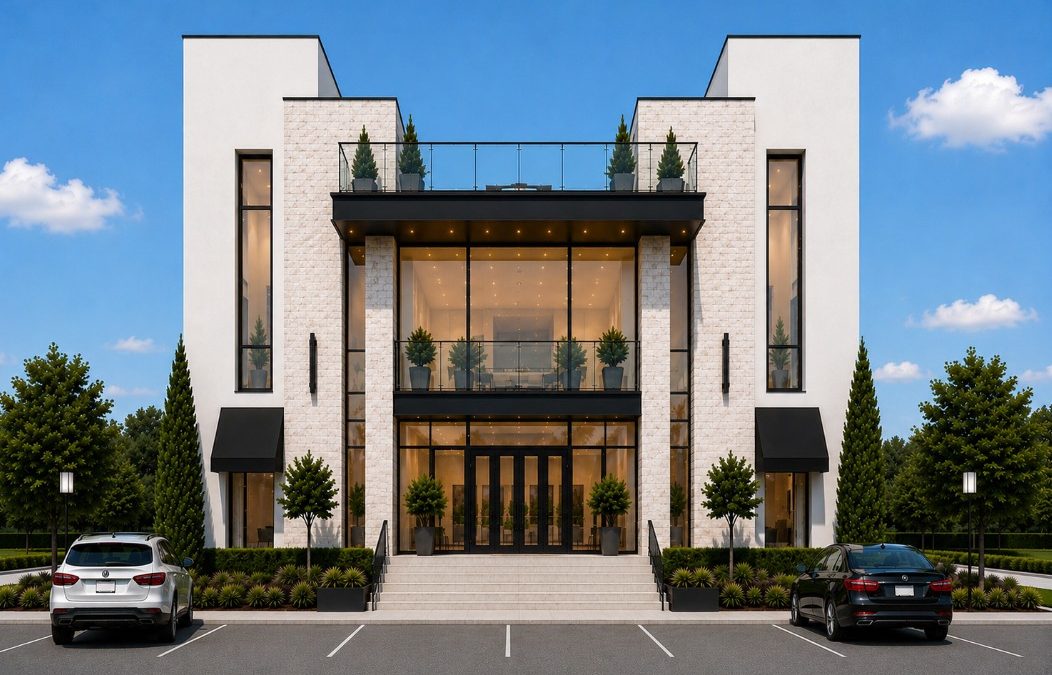
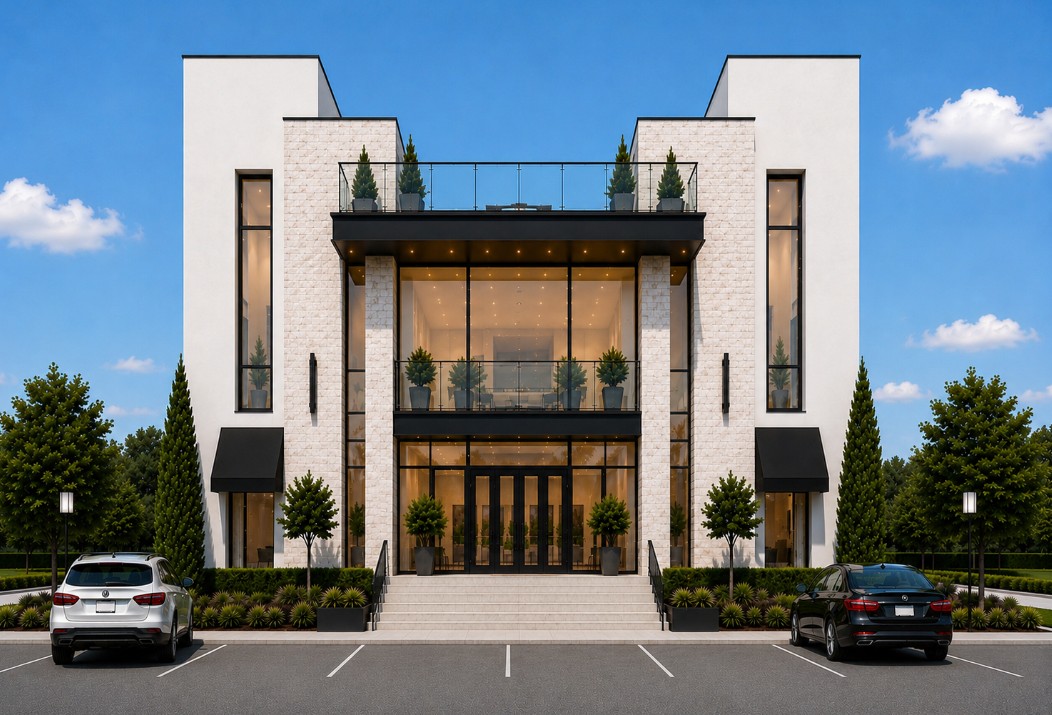
Chabad of Greater Orlando is seeking to build the city’s first permanent synagogue near Park Avenue that would also include a daycare and rooftop deck
Oct. 23, 2026
By Beth Kassab
A second vote required to approve what would be Winter Park’s first permanent synagogue has been delayed again, as opponents challenge the project’s compliance with city code and raise questions about a city commissioner’s acceptance of complimentary Orlando Magic tickets from a friend who received them from the rabbi leading the project.
The City Commission was scheduled to take up the matter Oct. 28, but Chabad of Greater Orlando, the organization behind the proposed synagogue and daycare, and GAI Consultants, which is seeking to build five townhomes on the parcel, asked to postpone the hearing until Dec. 9.
Frank Santos, who says he has spent $15,000 on consultants to review the project, is aggressively contesting the proposal. He argues that it would negatively affect a townhome he owns and other nearby properties through significantly increased traffic and noise, as well as the introduction of a predominantly nonresidential use on the site of the El Cortez Apartments at the corner of Morse Boulevard and Knowles Avenue.
Santos’ attorney, former Orange County Commissioner Ted Edwards, and consultant Jeff Briggs, who retired less than two years ago as the city’s longtime planning director, have identified what they describe as “significant missed setbacks, buffers, parking deficiencies and related matters.” They also contend that the synagogue approval process must essentially start over, with the proposal returning to the Planning & Zoning Board, according to a letter Edwards sent to the City Commission earlier this week.
City officials did not respond to a request for comment on the letter. Rebecca Wilson, the attorney representing Chabad and GAI, has said at public meetings that the project has worked to make alterations to be compatible with the neighborhood and agreed to more than 20 conditions including no amplified noise on the roof deck and limiting the number of children in the daycare.
She has said there are more than residential uses next to the property, including a church and office and retail space.
“Your code itself says that religious institutions and daycares are allowed if we go through this conditional use process,” Wilson said on Sept. 9, noting she’s lost count of the number of conditions placed on the development but it has “proven it’s compatibility” with the neighborhood.
Santos said the townhome he purchased in 2019 on Interlachen Avenue, which backs up to the proposed synagogue property, represents a “significant investment.” He said he does not live there and does not intend to do so in the future. Instead, he lives in another Winter Park home, a little more than a mile away, north of Palm Cemetery.
“My bigger concern is the impact on downtown Winter Park and the greater area,” he said Friday.
Santos, chief executive officer of Rosen Hotels & Resorts, also said he is communicating with Jonathan Beaton, owner of the public relations firm Inside Advantage PR. Beaton reached out to Santos and offered to help his cause, citing his own concerns about traffic and parking as a Winter Park resident.
Beaton filed a public records request with the city on Sept. 12, three days after the City Commission voted 4-1 to table the second vote, with Commissioner Kris Cruzada dissenting. Commissioner Elizabeth Ingram, who had voted in favor of the project as part of a 3-2 vote in August, said she could not support it again that night because of unanswered questions about the daycare’s playground and concerns about traffic.
Beaton, who previously served as a spokesman for former Congressman Alan Grayson, requested a wide range of records concerning communications to and from commissioners and city staff related to the project.
The request yielded hundreds of emails involving all five commissioners, but only Ingram’s records appeared to include text messages and calendar entries.
Among those records was a text message Ingram sent to Rabbi Dovid Dubov, one of Chabad’s leaders, at 9:31 a.m. on June 4:
“Good morning, Rabbi Dubov! we had a great time at the magic game – thanks again!!! I would be happy to meet with you to discuss the synagogue.”
She also suggested a potential meeting date.
Dubov replied, “Great to hear!” and the two settled on a meeting in July.
Beaton sent the Voice a screenshot showing only that exchange last week and also contacted other media outlets.
The Voice’s review of additional records and interviews provided further context about the tickets and the timing of the communications.
Other records and interviews revealed that the Orlando Magic game in question took place in April, before Ingram said she had seen or was even aware of Chabad’s plans, which would later come before the commission. She received the tickets through a friend who had gotten them from Dubov. The tickets were among dozens of complimentary tickets Chabad distributed to promote the game, which coincided with the annual Jewish Heritage Night with the Orlando Magic.
And Ingram’s message to the rabbi on the screenshot was actually a response to a message she received from him two days earlier on June 2, the same day Chabad and GAI held a community meeting with neighborhood residents. The meeting took place about a month before the proposal was first tabled at the July 7 Planning & Zoning Board meeting.
Dubov’s June 2 message read:
“Good afternoon Commissioner Elizabeth Ingram! I hope you’re doing well and that you enjoyed our Jewish Heritage Night with the Orlando Magic back on April 6. I received your contact information [from a mutual friend] and wanted to reach out regarding the development of our first synagogue in Winter Park. As we move through the planning process, I would love the opportunity to share the vision and current plans with you, hear your thoughts, and receive your feedback as well. If you are open to meeting sometime, please let me know what works best for you. It would be greatly appreciated.”
Dubov told the Voice in a text message that Chabad has participated in the annual event with the Magic for years and has distributed “hundreds of complimentary tickets as part of our efforts to make Jewish Heritage Night welcoming and accessible to all.” He declined to answer additional questions.
Ingram, who took office in March after running unopposed, said Dubov gave the tickets to a friend of hers, and she attended the April 6 game with her family.
She said she did not hear from the rabbi again until two months later, when he contacted her after obtaining her phone number from another mutual connection, as he explained in his message.
Ingram said she nearly always agrees to meet with people who request a conversation and has also met with opponents of the synagogue proposal. Records show that she had a meeting scheduled with Santos around the same time, on July 14.
Ingram said she thanked Dubov for the tickets out of politeness because he brought them up when he initiated their text exchange.
“He never brought it up again,” she said. “Do you really think I’m going to be swayed on this huge development proposal from one Magic game months ago?”
Ingram said she learned from a reporter last week that opponents of the synagogue were raising questions about the Magic tickets. She then received a call from Santos, who suggested she might feel pressure to recuse herself from the next vote because she had accepted the tickets. He also told her there were photos of her in a suite at the Kia Center, where the Magic play.
Ingram said the tickets she received for Jewish Heritage Night were not for a suite. She said she later sat in a suite with friends and family at a different game that month, paying her own way. She said the photos Santos referenced, which were posted on her Facebook page, were taken at that game.
“He called me and said he has a lot of stuff,” she told the Voice. “I told him the whole story, and I thought, how can you say I’ve not been asking hard questions? Anyone could tell I was really conflicted over the plans [for the synagogue].”
In fact, it was Ingram’s questions on Sept. 9, before the Magic game became an issue, that helped prevent the proposal from winning approval that night and led to the vote being tabled. The other commissioners appeared divided, with two leaning in favor (Cruzada and Craig Russell) and two opposed (Sheila DeCiccio and Warren Lindsey). Those were the same positions they had taken during the first vote in August, leaving Ingram as the potential swing vote who could decide the matter.
Santos told the Voice that he made a “courtesy call” to Ingram about the tickets and photos he had been told were on Facebook.
“I told her I was getting photos of her and her family in a suite,” he said. “I’m not on Facebook. Other people are insinuating and trying to connect the dots, not me.”
Ingram released a statement Thursday evening saying she had asked the city attorney whether she could recuse herself from the next vote “because of the misleading narratives that have circulated regarding my attendance at the basketball game.”
“In no way am I concerned of my ability to remain fair and impartial,” she said in the statement. “I felt stepping aside would help prevent further controversy and avoid undermining public confidence in the commission’s final decision.”
But City Attorney Kurt Ardaman told her that elected officials are “required” to vote on matters before the commission because abstention is allowed only in cases involving a conflict of interest. Such conflicts require “a special private economic gain or loss” for the elected official, an immediate family member or the official’s employer. Ardaman said Ingram does not have a conflict of interest in this matter.
“I listen to our residents and consider different perspectives, but my decisions are my own,” Ingram said in the statement. “I believe every development application deserves fair consideration under the applicable laws and land-use standards. Political support, personal relationships and outside criticism does not determine my vote.”
Ingram also said she did not believe the tickets were worth more than $100. However, she has now filed a gift disclosure form required under state ethics rules “in the interest of full disclosure.”
Additional records provided by the city show no text messages between Ingram and Dubov after June 23 when they continued a discussion about scaling back the synagogue’s size in response to community feedback.
On June 19, Ingram had shared her concerns about the scale of the proposal with Dubov.
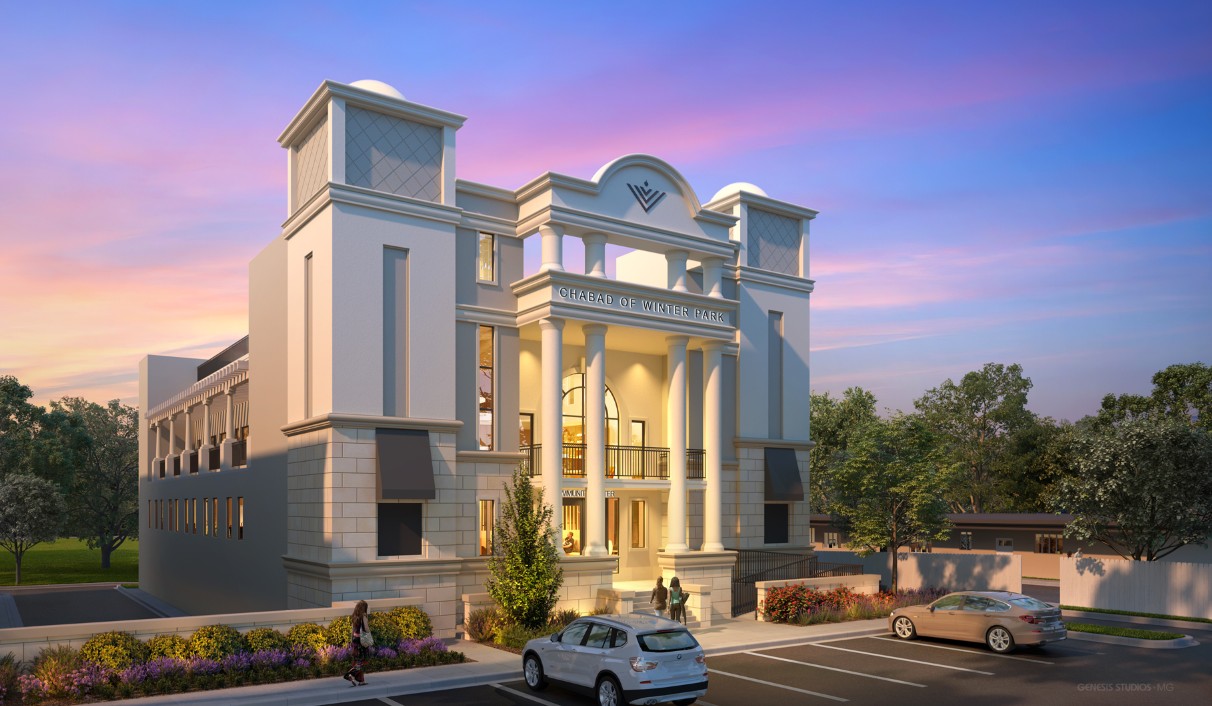
An earlier rendering of the synagogue shows a different style of architecture before community feedback.
“I wanted to let you know this now in case you are willing and able to work with the architect on a revised concept that would be slightly smaller,” she wrote. “I think that is going to be the biggest hurdle going into the planning and zoning meeting and then commission meeting.”
It is not unusual for commissioners to share feedback on development plans or request architectural changes.
The Planning & Zoning Board approved the project with scaled-back renderings on Aug. 4 in a 5-0 vote. One member was absent, and another abstained because he works as an urban planner and had been asked to consult on the project before the application was submitted.
Ingram also received text messages and emails from other people about the proposal, including a text from Nikki Seybold, who is working with Santos and Edwards to determine whether the synagogue project complies with city requirements for parking and setbacks. Seybold texted Ingram on the morning of Aug. 28, two days after the commission’s first vote on the project, and asked whether they could speak by phone.
“Hey Nikki! Yes, I am actually just walking out of a doctor’s appointment so I will give you a call in a few minutes when I get in my car,” Ingram responded.
Ingram said her text exchanges with Seybold and Dubov reflect her philosophy of meeting with as many people as possible to learn about city issues.
“I’m very friendly to everyone,” she said. “They might bring up something to me that I hadn’t considered.”
Santos said he has a meeting scheduled next week with Edwards, the city attorney and city staff to determine whether the proposal violates city code, as he contends.
“I don’t want to spend any more of my time or my money on this issue,” he said. “I want it to go away.”
But he said that if the city did not require all the necessary waivers to bring the project into compliance with code, that would raise questions about other developments, particularly as construction has ramped up in downtown Winter Park in recent years.
“Did the Alfond Inn apply for all the waivers? Did the Rollins museum apply for all the waivers?” he asked. “This is not just about this project; it’s about past projects and future projects.”
WinterParkVoiceEditor@gmail.com
The story is not about a commissioner who uses her inexperience as an excuse to break the rules, it is not about a rabbi who may have tried to influence a public official with magic tickets- nor is it about a resident and neighbor who trying to protect his home and significant investment. It’s about a development proposal for a commercial mixed use enterprise on residential property . The applicant ignored code and failed to include significant deviations from code in their applications .
Shame on WP voice for choosing
Salacious hearsay story line instead of facts that identify the merits both for and against this project. Stick to the facts.