by Beth Kassab | Mar 11, 2025 | City Commission, Election, News, Uncategorized
Kris Cruzada elected to second term and residents reject leaf blower ban
The incumbent fended off a challenge from a candidate who was endorsed by the Chamber of Commerce and far outraised him
March 11, 2025
By Beth Kassab
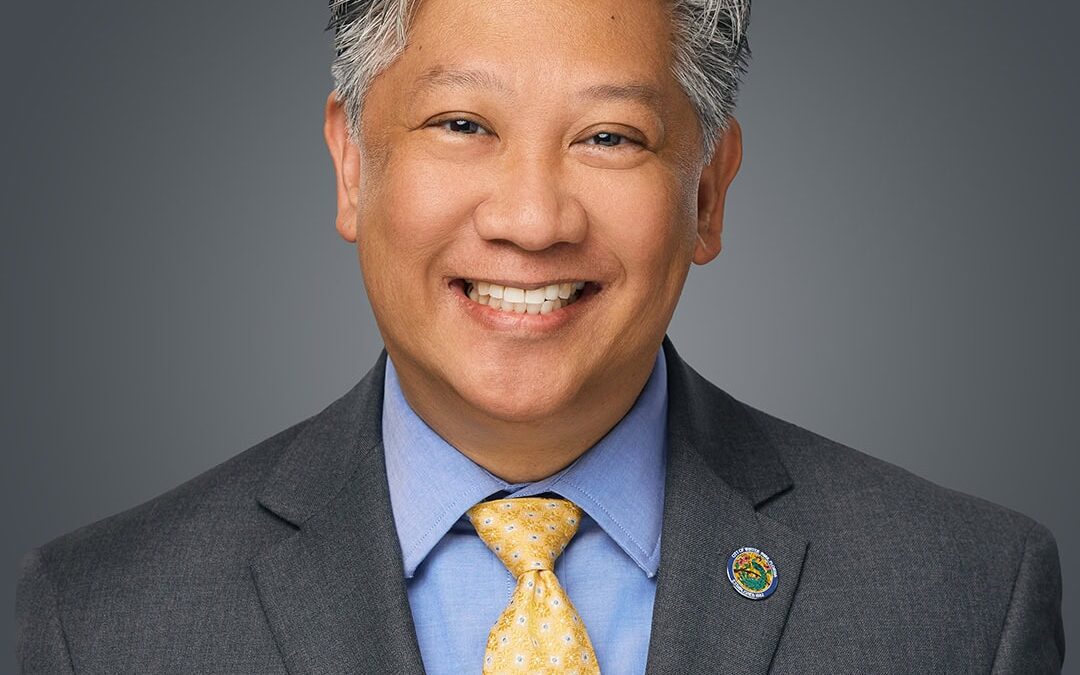
Commissioner Kris Cruzada won a second term on Tuesday night with 63% of the vote, defeating first-time candidate Justin Vermuth, who took 37%.
Cruzada, 51, was outspent by Vermuth, 43, by more than 4 to 1 in the race. Vermuth, who was endorsed by the Winter Park Chamber of Commerce and raised more than $86,000 compared to Cruzada’s $28,000, said he wanted to cut taxes and the city’s spending.
Cruzada, an attorney who was first elected to Seat 3 in March 2022, defended his record on the commission and warned that revenue and spending cuts could also mean a loss of quality in services such as parks, roads, utilities and more.
Neither Cruzada nor Vermuth, who is also an attorney and the lobbyist for the association that represents timeshares, immediately responded to requests for comment about the results.
Cruzada’s victory represents a win for a coalition of residents who consider themselves skeptical of new development that could alter the charm and character of the city known for its chain of lakes and the Spanish-Mediterranean architecture of Rollins College.
His supporters largely support the current version of the Orange Avenue Overlay development rules, which limit building height and density.
Cruzada’s donors included $2,000 bundled from Full Sail University Co-Chairman and CEO Edward Haddock and one of his companies; $2,000 from former Mayor Phil Anderson and Jennifer Anderson; $500 from former Commissioner Carolyn Cooper and $250 from David Odahowski, president and CEO of the Edyth Bush Charitable Foundation.
Vermuth’s donors included $10,000 bundled by Golden Corral franchisee Eric Holm and his companies, $10,000 bundled by the Holler family’s companies, which own car dealerships and property impacted by the Orange Avenue Overlay; $2,000 from the tourism industry, $1,000 from Jacqueline Siegel, known as the “Queen of Versailles” and wife of timeshare magnate David Siegel and $500 from former Mayor Steve Leary’s political committee.
The chamber’s political action committee spent more than $30,000 for several mailers and other efforts on his behalf. Last year the chamber used a similar strategy to help elect Craig Russell, a football coach and teacher at Winter Park High, who won by 34 votes.

Justin Vermuth
Meanwhile, residents rejected a ban on gas-powered leaf blowers that the commission put into place in early 2022, but never enforced.
Voters said no to the controversial ban, which drew the ire of landscaping companies and state Sen. Jason Brodeur, with 55% of the vote.
The vote means a repeal of the ordinance that was set to take effect this summer.
A total of 4,638 ballots were cast in the Winter Park election, putting turnout at nearly 21%, the highest of the five cities in Orange County that held elections on Tuesday. Winter Park has 22,533 registered voters, including 7,858 Democrats, 8,449 Republicans, 5,590 without a party affiliation and 636 registered with other parties.
The turnout was lower than last year’s in Winter Park, which topped 30% and was boosted by Florida’s Republican presidential preference primary on the same ballot. This year surpassed turnout of 19% in 2022, when Cruzada was first elected.
WinterParkVoiceEditor@gmail.com
To comment or read comments from others, click here →
by Beth Kassab | Mar 11, 2025 | City Commission, Election, News
Election Day Updates: Kris Cruzada, Justin Vermuth and the leaf blower referendum
Voters will decide who takes Seat 3 on the City Commission and the fate of a ban on gas-powered leaf blowers
March 11, 2025
By Beth Kassab
Update at 4:45 p.m.
Turnout has continued to pick up throughout the day, now at just under 18% in Winter Park or 3,943 votes cast.
That’s an increase of more than 1,400 votes since 11 a.m. this morning when turnout stood at 11% or 2,479 votes cast, including mail, early and Election Day votes reported in near real time by the Orange County Supervisor of Elections Office. There are 22,533 registered voters in Winter Park.
Polls remain open until 7 p.m.
Republicans have slightly edged out Democrats in turnout in Winter Park, where the GOP also holds a lead in voter registrations.
Next highest is Windermere at 16% turnout and and Belle Isle12% turnou t. Windermere is deciding a single city council seat and Belle Isle is deciding its next mayor.
Maitland, which is deciding a council seat, saw turnout at about 9% so far.
And Ocoee, which has three charter questions on the ballot, sits at just higher than 3%.
Winter Park will determine with Seat 3 incumbent Kris Cruzada gets a second term or if challenger Justin Vermuth gets a turn in City Hall.
Cruzada said it’s been a “positive” morning so far and he’s out waving signs at precincts.
Vermuth posted on Facebook that he and his wife voted early this morning and waved signs with their children.
Around the time the polls opened, Vermuth posted a photo of himself with Commissioner Craig Russell, who won last year’s election by just over 30 votes.
“The last City Commission race came down to just a handful of votes — so please, if you stand with Justin and want to ensure that we keep our taxes low and our spending responsible, support our small local businesses, prioritize hiring SRO officers over code enforcement officers, make sure our first responders have all the resources they need, and enhance our local parks, playgrounds and green spaces, get out and vote,” he wrote.
The City Commission has never had to choose between school resource officers and code enforcement officers. Both are funded. And school resource officers remained in schools even as Winter Park — along with others cities — and Orange County Public Schools negotiated how much each local government will pay for the costs of the officers. City Manager Randy Knight said he hopes to have a resolution to the negotiations soon, though not in time for Wednesday’s City Commission meeting.
Winter Park honored one of the officers assigned to Winter Park High School as its officer of the year in January.
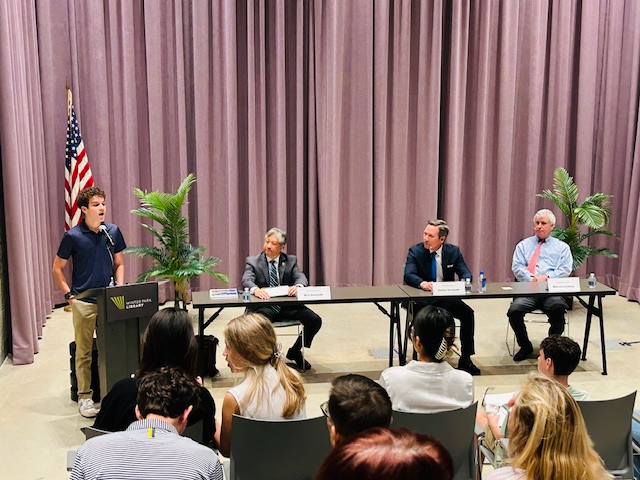
For a Q&A with both candidates click here. For the latest update on who is funding the candidates click here.
Voters will also decide the fate of the city’s gas-powered leaf blower ban, which has prompted campaigning by Sen. Jason Brodeur, R-Sanford.
A “yes” vote will repeal the ordinance and lift the ban on internal combustion, or gas-powered, leaf blowers. A “no” vote will allow for the ban to remain in place. If voters keep the ban it would take effect in July.
The ban was unanimously approved by the commission in January 2022, but has never been enforced.
Other Florida cities like Miami Beach, Naples, Palm Beach, South Miami, Key Biscayne and Pinecrest have similar ordinances to reduce noise from leaf blowers.
Warren Lindsey was elected to Seat 4 without opposition after incumbent Todd Weaver decided not to seek reelection.
This is a developing story. Check back for updates.
WinterParkVoiceEditor@gmail.com
To comment or read comments from others, click here →

by Beth Kassab | Mar 7, 2025 | City Commission, Election, News
Senator and commissioner duel in final days before vote on leaf blower ban
Ahead of Tuesday’s election, voters are hearing from Sen. Jason Brodeur and Commissioner Todd Weaver about the ban on gas-powered leaf blowers
March 7, 2025
By Kathryn Brudzinski
In the final days and weeks leading up to Winter Park’s election on Tuesday, a state senator and a city commissioner faced off with dueling emails and campaign ads over the ballot question about a ban on gas-powered leaf blowers.
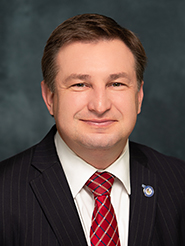
Sen. Jason Brodeur, R-Sanford, used a political committee he controls to pay for ads that call the ban “bad for local businesses.”
Brodeur, who got involved in the controversy over the ban last year and forced commissioners to put the issue on the ballot by threatening state action, told the Voice this week he didn’t think the commission adequately addressed the needs of the business community and the “obvious burden” to consumers through increased costs.
“If people want battery powered blowers, they can just hire them now,” Brodeur said in a text message. “A ban on choices in the marketplace is a slippery slope. Next it will be trimmers, then lawn mowers, then they’re telling you what color your house is and that you must have a brick mailbox. They are not a homeowners association, they’re a city commission.”
Jason Brodeur
Brodeur is the chairperson of Citizens for Solutions, the political committee that sent the mailers and emails.
In a Feb. 28 email signed by Brodeur, the committee argued that the ban was “not just about leaf blowers – it’s about stopping unnecessary regulations that hurt working families and small businesses.”
Commissioner Todd Weaver, one of the most outspoken advocates for the ban, sent an email to residents this week and questioned what he called Brodeur’s “strange attention to local issues,” while so many critical state issues loom such as low wages and homeowner insurance rates.
“One must wonder why we have a state senator, who lives in Sanford, and who continues to meddle in local Winter Park affairs,” read the email from Weaver, who opted not to run for re-election this year.
In January, Brodeur sent residents emails to argue against an unrelated city matter, but one also personal to Weaver. He urged residents to speak out against Weaver’s request to add his home to the city’s historic register. The request was ultimately tabled.
Brodeur’s mostly Seminole County district folds in a small piece of Orange County, including Winter Park.
Weaver argued the commission provided contractors “ample time” to make the equipment switch by delaying enforcement multiple times since the leaf-blower ordinance was first passed in 2022.
He also emphasized the long-term cost and public health benefits electric blowers can offer, despite the equipment being more expensive up-front.
“The energy to run electric lawn tools costs about ¼ of what gasoline currently costs,” the email read. “This does not translate to higher costs for customers as Brodeur implies. Worst case: the cost difference is a wash … More importantly, it is about the health of landscaping workers using gas-powered tools.”
Voters will find the question on their Tuesday ballots along with the race for City Commission Seat 3 between incumbent Kris Cruzada and candidate Justin Vermuth.

Todd Weaver
A “yes” vote will repeal the ordinance and lift the ban on internal combustion, or gas-powered, leaf blowers. A “no” vote will allow for the ban to remain in place. If voters keep the ban it would take effect in July.
The ban was unanimously approved by the commission in January 2022, but has never been enforced.
Other Florida cities like Miami Beach, Naples, Palm Beach, South Miami, Key Biscayne and Pinecrest have similar ordinances to reduce noise from leaf blowers.
Winter Park’s ban received major pushback from local landscape companies in the months before it was set to take effect last year. They complained about the cost of changing equipment and concerns about battery power that would slow them down and hurt business.
That’s when Brodeur stepped in as the state Legislature was still in session. He threatened to write a law that would cancel out the ban if the city didn’t once again delay enforcement and put the question on this year’s ballot for voters to decide.
The result was a 3-2 decision by the commission in April 2024 to place the issue on the ballot. Mayor Sheila DeCiccio, Commissioner Craig Russell and Cruzada voted in favor. Commissioner Marty Sullivan and Weaver voted against.
Brodeur still added language to the state’s budget attempting to prohibit cities from enacting gas-powered leaf blower ordinances until after a $100,000 study on the life cycle of gas-powered versus battery-powered blowers was completed.
The study was vetoed by Gov. Ron DeSantis.
During the commission’s April 2024 meeting DeCiccio and others voiced their concerns about Brodeur’s approach and the future impacts of the referendum.
“I am worried about the precedent that this will set if any time someone does not like what the commission does, they can complain to the senator and threaten preemption,” DeCiccio said.
She also said that landscapers had nearly three years to make the transition to electric leaf blowers from the time of the original ordinance.
Weaver said during that meeting that in addition to numerous noise complaints, severe health and environmental impacts associated with the use of the gas-powered lawn equipment were also cause for concern.
“The reason this tool was picked out, not only for the noise, is because it’s the only one of the arsenal of gas-powered tools that almost always run at full-throttle,” Weaver said, adding that he was concerned Brodeur had not effectively researched the issue.
The ordinance came following noise complaints, which intensified as more residents worked from home during the pandemic, and environmental and health concerns. The commission gave residents and their landscape contractors 30 months to make the switch to alternative equipment like electric leaf blowers.
The city offered a one-per-household $50 rebate for electric leaf blowers purchased between Jan. 15, 2024 to Jan. 1, 2025 that would be applied as a credit to a resident’s utility bill.
Gas-powered leaf blowers typically use a two-stroke engine that mixes gasoline with oil to operate, burning a portion of the mixture and emitting the rest as an aerosol exhaust. Studies have shown public health concerns related to the exhaust because it contains known carcinogens and can be linked to diseases such as cancer.
Another concern is the level of noise the equipment produces. A 2017 study found that the sound produced by gas-powered leaf blowers can travel long distances in a community at “levels known to increase the risk of adverse health effects.”
Populations like workers, children, the elderly, the sick, those who work from home or work overnight shifts are considered most vulnerable to the impacts.
WinterParkVoiceEditor@gmail.com
Kathryn Brudzinski is a reporter based in Orlando and a University of Central Florida graduate with a degree in journalism, as well as a certificate in public and professional writing. Her work has appeared in Oviedo Community News, VoxPopuli and The Charge.
To comment or read comments from others, click here →
by Beth Kassab | Feb 25, 2025 | City Commission, News
Judge rules lawsuit can proceed against Winter Park police officer who killed man at wedding
The federal judge noted in his order that Daniel Knight “posed little serious danger to two armed police because he was unarmed and drunk” when he was shot by an officer at the Winter Park Events Center in 2022
Feb. 25, 2025
By Gabrielle Russon
The Winter Park Police sergeant who shot and killed Daniel Knight at his niece’s wedding is not immune from a wrongful death lawsuit, a federal judge ruled recently.
U.S. District Judge Roy B. Dalton Jr. said Knight’s family had “sufficiently pled that the use of deadly force was not objectively reasonable under these circumstances” and denied a motion to dismiss Sgt. Kenton Talton from the lawsuit filed last year by Knight’s family.
“Here, Knight’s family begged the officers to slow down and pleaded that he was not hurting anyone, but Talton shot him less than two minutes after arriving on the scene,” Dalton wrote in his Jan. 28 order. “Yet the initial crime for which (Knight) was approached was relatively insignificant—at best, drunk and disorderly. He posed little serious danger to two armed police because he was unarmed and drunk. He was not a flight risk given that he was surrounded by family.”
It’s the latest court update after Knight was shot and killed in 2022 at the Winter Park Events Center.
The Orange County State Attorney cleared the police officers of any criminal wrongdoing in 2023.
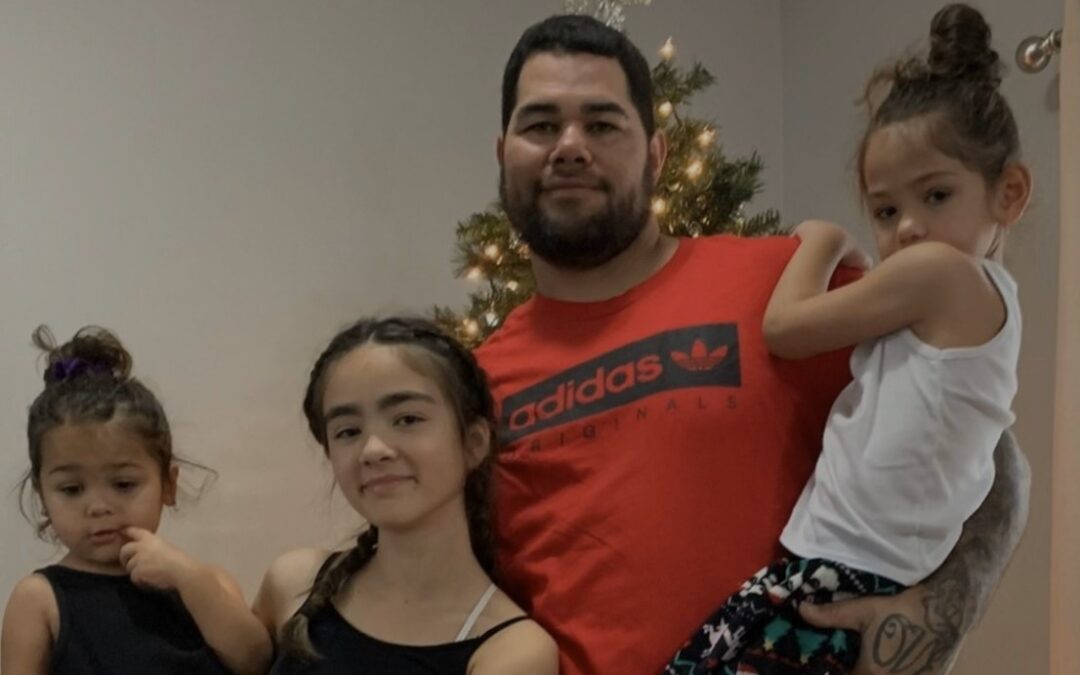
Nearly one year ago, Mellisa Cruz, who is the mother of Knight’s two children, sued the City of Winter Park, Winter Park Police Chief Timothy Volkerson, Talton and Officer Craig Campbell in a federal lawsuit. (Daniel Knight and family pictured above.)
Dalton wrote police’s use of force must be “proportional to the need.”
“… Shooting an unarmed man seven times at point-blank range within just a few minutes of arriving on scene, without first trying to de-escalate, investigate, or use less-than-deadly force, is also ‘so far beyond the hazy border between excessive and acceptable force that the official had to know he was violating the Constitution even without case law on point,’” Dalton wrote.
Meanwhile, Dalton ordered Campbell, who had also been involved in the scuffle that night, to be removed as a party from the lawsuit and the claims dismissed without prejudice, which means Cruz could retry again in court.
“Campbell is a different story,” the judge wrote. “Campbell did not shoot Knight, nor is there any suggestion in the Complaint that Campbell intended for Talton to do so. … So on these facts, Talton is not entitled to sovereign immunity, but Campbell is.”
The officers, the judge wrote, did not identify themselves as police when they arrived at the wedding and asked Knight to put his hands behind his back. It was also dark so wedding guests could not see the officers’ uniforms, the judge also said.
Knight’s sister stood in front of her brother to defend him as the incident quickly escalated. Campbell grabbed her and that’s when Knight hit Cambell to defend his sister. Talton and Knight got into a ‘brief scuffle’ and then Talton fired, the judge wrote in summarizing what happened.
The judge acknowledged Knight struck Campbell but wrote “that must be placed in the context that the police did not announce themselves and he was defending his sister from an apparent stranger who grabbed her.”
The officers first attempted to deploy a taser on Knight, but missed, according to police reports.
Some of the claims in Cruz’s lawsuit accused police of violating Knight’s constitutional rights. Dalton dismissed the 14th Amendment, but ruled Cruz’s 4th Amendment claim can continue to be litigated. The lawsuit contended Knight had been deprived of his life, liberty, and due process of law as well as the constitutional right to be free from excessive force.
Cruz’s attorney said he was pleased with the judge’s ruling which allows all but one of Cruz’s claims to move forward even though he said he disagrees and believes Campbell played “a key role in escalating the encounter.”
“The Court’s ruling allows us to continue to fight in the pursuit of justice for the entire Knight family, as Daniel’s life was taken far too soon and without justification,” Paul Aloise Jr. said in a statement Tuesday.
Talton and Campbell’s attorney Joshua Walker filed a motion last year to dismiss the lawsuit, urging the courts to “keep in mind” police are required to make quick decisions under high-stress circumstances.
“Knight had reportedly engaged in violent, drunken altercations with wedding guests inside the venue before the officers arrived. He was drunk, irate, resisting anyone with authority, acting violently and throwing the wedding guests to the floor. Knight continued this aggression when the officers arrived, and when he was told to place his hands behind his back, he immediately punched Ofc. Campbell, then engaged in a ‘brief scuffle’ with Sgt. Talton. This created a pressing emergency that required Sgt. Talton to act fast in order to protect himself, his fellow officer, and the surrounding citizens,” Walker wrote in his motion to dismiss. “Sgt. Talton and Ofc. Campbell were undeniably placed in a tense, uncertain, and rapidly evolving situation. This is precisely the circumstance in which officers are afforded deference in carrying out the most difficult aspects of their service.”
Walker did not respond to a request for comment Tuesday on the judge’s ruling.
In a response filed last week, Talton denied the lawsuit’s allegations and continued to blame Knight for the shooting.
Talton argued “Daniel Knight was more than 50% at fault for the incident” and was guilty of negligence causing his own death since Knight drank alcohol “to the point of intoxication,” behaved aggressively, ignored policers’ instructions and committed felonies against the police officers.
City spokeswoman Clarissa Howard declined to comment for this story because of the pending litigation.
Knight’s family had regularly spoken out at Winter Park City Commission meetings since their loved one’s death.
“The police just ignored us. They want to talk about all the commands they gave us. They don’t talk about how they escalated the situation by getting louder and louder and getting into an argument with a drunk person who wasn’t even committing a crime,” said Katrina Knight, who described her brother as a loving father who had a fiancé.
WinterParkVoiceEditor@gmail.com
Gabrielle Russon is a former Orlando Sentinel reporter who began freelance writing in 2021. She lives in Orlando with her family and writes about politics, education, theme parks and the courts.
To comment or read comments from others, click here →

by Beth Kassab | Feb 18, 2025 | City Commission, News, Uncategorized
Up to $100k in city grants available for Winter Park nonprofits via proposed new process
Like many local governments, Winter Park has long supported local organizations, including $1 million to the Dr. Phillips Center. Now it’s looking to formalize how it selects which nonprofits receive money
Feb. 18, 2025
By Beth Kassab
Winter Park nonprofits will be able to compete for a slice of the $100,000 in public funds previously designated each year for the Dr. Phillips Center for the Performing Arts under a new process likely to be established this spring.
Commissioners agreed at a workshop last week to form a committee made of volunteer members from other city advisory boards to review and rank applications for $10,000 grants of the available funds.
The city paid $1 million to the arts center in Orlando over 10 years and made its final payment last year.
A new committee process, which is likely to come before the City Commission next month, is the result of months of discussion over how to set clear and fair parameters for disbursing the money to local nonprofits now that the $100,000 each year is available for other uses.
The city’s current policy calls for 0.25% of revenues from the General Fund, Water & Wastewater fund and Electric fund or about $420,000 each year to be dedicated to supporting local nonprofits. It’s not uncommon for cities and counties to use a portion of their budgets to help local service and arts and culture groups.
Under the plan, six nonprofits that have existed as a line item in the city budget for years would remain there and be “grandfathered in” rather than be part of the competitive process.
Those organizations and their current allocations are:
United Arts: $19,000
Albin Polasek Museum & Sculpture Gardens: $27,000
Winter Park Day Nursery: $41,000
Mead Botanical Garden: $98,000
Winter Park History Museum: $93,000
Blue Bamboo Center for the Arts: $12,000
Two other groups are included in this year’s budget but will not be grandfathered in: Men of Integrity at $18,000 and the Winter Park Institute at $25,000.
Kathy Ramsberger, CEO of the Dr. Phillips Center in downtown Orlando, appeared at last week’s commission meeting to report on the venue’s work so far and ask for more dollars in the future. Winter Park contributed $1 million to the $625 million project, which now includes the Walt Disney Theater, Steinmetz Hall, the Alexis & Jim Pugh Theater and Judson’s Live (pictured above). She talked about plans to build an additional 750-seat theater and other spaces such as an outdoor amphitheater.
Mayor Sheila DeCiccio told Ramsberger at the end of the presentation that the commission could potentially discuss the arts center when the city’s annual budget talks begin this summer.
DeCiccio told the Voice that the arts center would be required to apply through the new process, if it’s approved, just as any other nonprofit would be asked to do.
At the workshop commissioners appeared supportive of requiring the groups seeking grants to be based in Winter Park.
Commissioner Craig Russell questioned why the focus appeared to be on arts and culture rather than social service organizations.
Peter Moore, director of the city’s management and budget department, said the reason is because the social services category is so large.
“That’s OK,” Russell said. “There is a significant need.”
Russell, a Winter Park High School teacher and coach who runs a nonprofit aimed at needy students and families, said he would never apply for the dollars because of his role on the commission, but noted the good the dollars could potentially do in that sector.
Moore said the grant program could be revised to more explicitly include education and social service missions.
The commission is set to consider a formal proposal on the new grant process in March.
WinterParkVoiceEditor@gmail.com
To comment or read comments from others, click here →
by Beth Kassab | Feb 14, 2025 | City Commission, Election, News, Uncategorized
Endorsed by the Winter Park chamber PAC, Justin Vermuth builds campaign chest
Incumbent Kris Cruzada said he is relying on mostly smaller donations from residents
Feb. 14, 2025
By Beth Kassab
Justin Vermuth, who is challenging Kris Cruzada for Seat 3 on the City Commission, is leading the fundraising contest so far, bolstered by at least $10,000 in contributions from companies related to the Holler family and the attorney for the prominent landowners and car dealers.
Vermuth, who was endorsed this week by the political action committee affiliated with the Winter Park Chamber of Commerce, reported $24,515 in contributions through Feb. 4 while Cruzada, the incumbent, raised $16,400 ahead of the March 11 election.
The bulk of Vermuth’s money, or $20,000, came in $1,000 donations — the maximum allowed per donor per campaign cycle.
For example, a total of $10,000 comes from companies associated with the Holler family such as Holler Hyundai, Holler Honda, Classic Mazda, Audi North Orlando, Classic Honda and Driver’s Mart Sanford. They gave $1,000 each.
So did Frank Hamner, the longtime attorney for the Holler family. Hamner, who serves as spokesman for the family, did not return a phone call or email seeking comment.
Asked about his relationship with the Holler family and how he met them, Vermuth said via email that he’s proud “to have support from residents, small businesses, and community leaders across Winter Park.”
“We’re building a broad coalition of supporters, many of whom have chosen to donate to my campaign,” he said. “I’m also proud to have an outstanding campaign team for advertising and polling.”
He declined to share the results of his polling so far.
Bundled contributions from companies related to the Holler family will seem a familiar strategy to those who follow Winter Park politics. Last year the family’s companies contributed in a similar way to Craig Russell, who won Seat 2 over Jason Johnson, by 34 votes.
The Hollers, along with landowner Mary Demetree, sued the city of Winter Park alleging that a series of development rules known as the Orange Avenue Overlay, where the family owns property, were improperly overturned in 2020. The new rules still stand.
Last year the City Commission, including Cruzada, approved the Holler’s proposal for a portion of its property at Fairbanks Avenue and Denning Drive that involved providing a piece of land to the city to widen the road and make improvements at the busy intersection.
Another similarity to last year’s election cycle: Vermuth, like Russell, has the support of Winter PAC, the political action committee affiliated with the Winter Park Chamber of Commerce. The PAC has raised more than $85,000 since the start of last year’s campaigns and spent more than $40,000.
It’s most recent expenditure on Feb. 10 is listed as nearly $8,000 for mailers related to a candidate paid to MDW Communications, which shares the same Lake Worth address as a political consulting firm called Claughton Consulting. Vermuth’s campaign has paid more than $11,000 to Claughton Consulting for polling, palm cards, e-mail services and yard signs, according to financial reports.
“The Winter PAC board of directors voted to endorse Vermuth because they believe he will bring a needed perspective shift in leadership, and he has personal experience with issues families in our community are facing,” read a press release from the PAC released this week.
Cruzada said he was approached with a potential contribution from the chamber PAC before Vermuth entered the race in mid January, but declined because he said he felt more comfortable taking contributions from individuals.
A chamber spokeswoman did not immediately respond to a question from the Voice about whether Cruzada was offered the group’s support.
“I think I have a record that shows I have worked with the Winter Park chamber,” Cruzada said, noting that he helped the group lobby for arts dollars in Tallahassee and also supported changes to the city’s parking code pushed by the chamber to reduce the amount of parking spaces developers must build in certain instances. “I was more about individual donations versus, say, a PAC … My supporters who walked neighborhoods and campaigned for me, I didn’t want to leave them behind at all. They are very well informed voters and participants in Winter Park policy.”
Less than half of Cruzada’s $16,000 campaign fund — about $6,000 has come in the form of $1,000 checks. His top donors include two former mayors — Phil Anderson and David Strong and Sally Flynn, a local resident and an organizer and volunteer for his campaign. (Full disclosure: Strong and Flynn are key supporters of the nonprofit Voice, which is solely supported by community contributions. See our editorial policy here.)
Most of Cruzada’s contributions come in the form of smaller-dollar amounts from more than 45 individuals, mostly Winter Park residents.
Vermuth’s other contributors included $3,000 from Seth Heller and his financial services companies in South Florida. Jason Gamel, president of the American Resort Development Association, also gave $1,000.
Vermuth serves as a senior vice president and chief lobbyist for the association that represents timeshare companies across the nation.
Two lobbyists from the firm The Southern Group — Kelly Cohen and Kaley Slattery — gave a combined $300. The firm represents a list of influential clients from Walt Disney World to Tavistock Development Company, which is seeking to develop large tracts of land in east Orange County.
About 20 Winter Park residents contributed to Vermuth’s campaign, including former Commissioner Sarah Sprinkel and chamber officer Carroll Goggin, according to the reports.
Update: This story was updated to include comments from Vermuth.
WinterParkVoiceEditor@gmail.com
To comment or read comments from others, click here →

Recent Comments