by Beth Kassab | Oct 14, 2023 | City Commission, Election, News, Uncategorized
Terry Hotard enters race for mayor against Sheila DeCiccio
The former mayor says he will challenge the current vice mayor in the March election
Oct. 13, 2023
By Beth Kassab
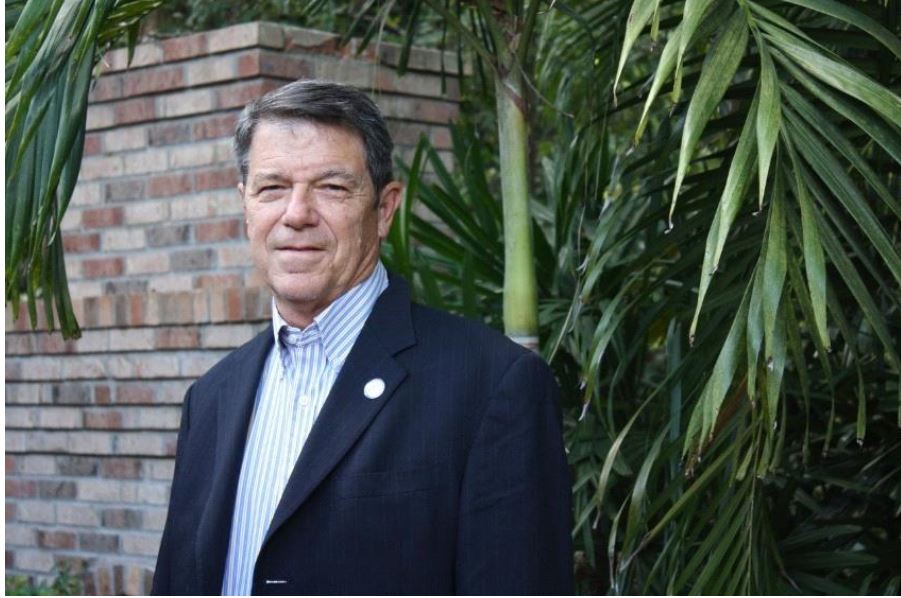
Former Mayor Terry Hotard said he will run against Vice Mayor Sheila DeCiccio for the city’s top elected post, driven to run by controversy over utility boxes that have appeared in the city right-of-way outside the Palmer Avenue property owned by Marc and Sharon Hagle, who are constructing the largest home in Winter Park.
“It’s a quality of life issue,” said Hotard, who served as mayor in the early 2000’s and worked for the company that became Duke Energy before he served as assistant director of Winter Park’s electric utility. “Once those boxes are put in place they will never move.”
He said the green boxes, which house electrical equipment, can fade over time and attract graffiti. He said the city’s own code mandates the boxes be on private property rather than on city-owned land.

Sheila DeCiccio talks with residents at a meet-and-greet event.
A spokeswoman for the city cited a different portion of the code, but said alternatives are being considered for the transformer boxes near the Hagle house, which is expected to be 40,000-square-feet on the shore of Lake Osceola.
“The city is researching a more aesthetically pleasing alternative for these public utility boxes including traffic signal cabinets,” said Clarissa Howard.
Hotard said he enjoyed his time as a city commissioner in the 1990s and then as mayor in the early 2000’s before he went on to serve as assistant director of the city’s electric utility.
“I feel like I have a little bit of gas left in the tank and I have something to offer,” he said of the upcoming race.
DeCiccio announced her candidacy earlier this month and highlighted infrastructure needs as one of her top priorities.
“We’ve made great headway, but there’s still a lot to be done to maintain the heart and charm of the city,” she said shortly after that announcement. “Hurricane Ian laid bare a lot of our problems such as pipes that need maintenance, brick streets that need attention. Infrastructure is the No. 1 issue and we can’t kick this can down the road anymore.”
DeCiccio, an attorney who has lived in Winter Park for more than 40 years, said water basin studies ordered by the current commission along with more bike paths and extending sidewalks will be key for the city’s future.
She had to resign from her commission seat in order to run for mayor. Her resignation will take effect in April 2024, at the time she would take over as mayor if elected to that job. As a result, there is also a contest to fill Seat 2 on the five-seat dais.
There are two challengers for Seat 2: attorney Jason Johnson and Stockton Reeves, who leads the Center for Public Safety, which helps local governments build new police and fire stations.
Reeves said one of his key issues is advocating for police officers and firefighters.
“That’s one of the things that kind of pushed me to do this,” he said, noting he wants to reassess the policies at the police department and fire department to make sure that officers can donate sick time or other benefits to each other in times of need.
Stockton Reeves
Reeves, who has served on a number of city boards and is now vice chairman of the Civil Service Board, grew up in Winter Park and has run for commission before, but was not elected. In 2018, he ran as a Republican against Democrat Anna Eskamani for the Florida House and lost.
In 2020, Gov. Ron DeSantis issued a public reprimand of Reeves after the Ethics Commission ruled that he violated financial disclosure requirements. Reeves said the matter was “the most technical of a technicality.”
Jason Johnson, who works in the Winter Park office of the Byrd Campbell law firm, is a first-time candidate who has lived in Winter Park for 13 years with his wife, Lori, and their daughter. He is chairman of the city’s Board of Adjustments, which rules on homeowner applications for building variances.
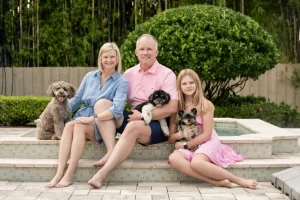
Jason Johnson, candidate for Winter Park City Commission, with wife, Lori, and daughter, Molly.
“My north star in all of this is to preserve the charm of Winter Park, but I’m also a rule-of-law guy and I recognize that landowners have rights and due process exists,” he told the Voice earlier this month.
Official qualifying for both the mayoral contest and Seat 2 does not end until mid-December.
Questions or comments? Email the editor at WinterParkVoiceEditor@gmail.com
To comment or read comments from others, click here →
by Beth Kassab | Oct 14, 2023 | City Commission, News
News & Notes: Randy Knight gets thumbs up from commission
Howell Branch tail project stopped and parks wi-fi to get upgraded
Oct. 13, 2023
By Beth Kassab
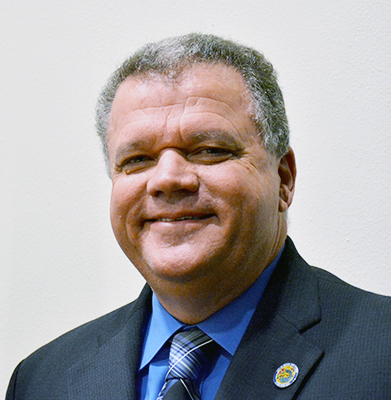
City Commissioners gave a nod of approval to longtime City Manager Randy Knight during his annual job evaluation, approving a 5% raise that will bring his salary from about $240,000 to $252,000.
The raise includes a 2.5% increase that all city employees received along with the maximum 2.5% merit increase available to city staff this year.
Commissioner Sheila DeCiccio, who is running for mayor, moved to give Knight the maximum.
“My feeling is he does a great job with all of the conflicting interests he has coming at him,” she said.
Mayor Phil Anderson agreed pointing to what he called “big strategic initiatives” in recent years such as the purchase of an 18-hole golf course, the recovery from Hurricane Ian and now the expansion of the Community Redevelopment Agency tax district and potential annexations.
“Not that everything is perfect,” he said. “I think there are areas for improvement.”
Howell Branch trail scuttled
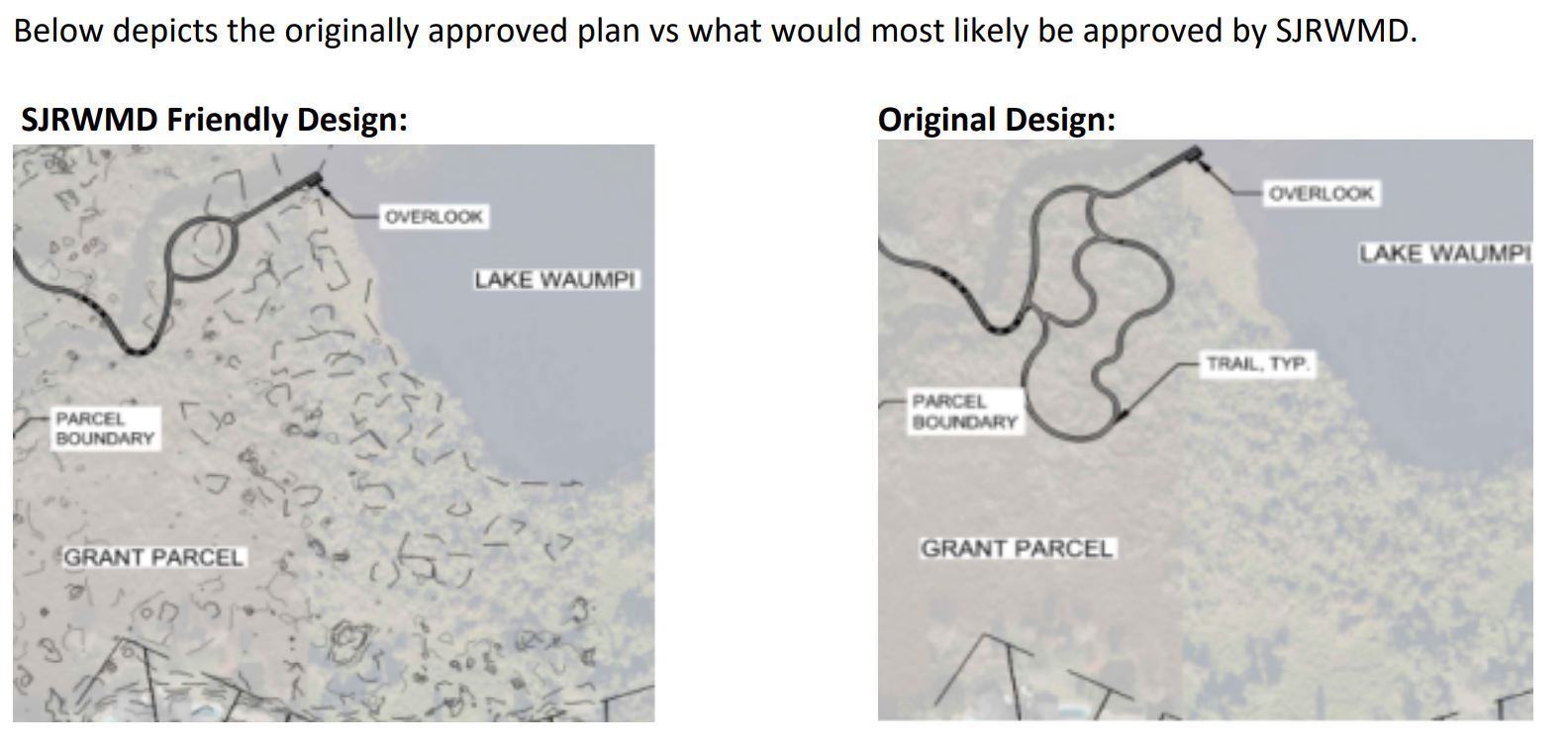
Plans to build a trail through Howell Branch Preserve for birdwatching, fishing and other activities died this week when commissioners decided the project had grown too expensive.

Originally estimated at $227,000, the cost increased to as much as $530,000 after the St. Johns Water Management District reviewed the plans and objected to the design and route of the trail because of impacts to the wetlands.
The city received a $2 million grant from the state in 2015 to acquire more than 40 acres of wetlands next to 50 acres of wetlands already owned by the city. A portion of the funds was to be used for the trail project and other improvements.
City staff told the commission the changes requested by the water management district, along with objections by residents who live near the property, led to a recommendation to discontinue the project.
Commissioners approved a new proposal to direct a portion of the funds instead to other improvements at Howell Branch Preserve.
“It’s sad, but I concur that maybe we can turn it into something good because that retention pond area is kind of a mess,” said Commissioner Marty Sullivan. “It could be a very nice feature since we can’t move forward with trail project.”
Wi-fi upgrades in parks
During the COVID-19 pandemic the city installed public access wi-fi in Central Park and Shady Park and the nodes are now in need of an upgrade, according to a staff memo.
Money for the project comes from American Rescue Plan Act funds, a series of federal grants intended to help local governments in the aftermath of the COVID shutdowns.
Winter Park received more than $15 million in ARPA funds and will spend $30,000 on the wi-fi upgrades in the parks.
Questions or comments? Email the editor at WinterParkVoiceEditor@gmail.com
To comment or read comments from others, click here →
by Beth Kassab | Oct 12, 2023 | City Commission, News, Tree Canopy
Who can help preserve Winter Park's tree canopy? You.
Experts will offer tips and answer questions at public forum
Oct. 12, 2023
By Beth Kassab
A who’s who of Winter Park tree advocates will come together on Thursday, Oct. 19 for a panel on how to keep the city’s valued tree canopy healthy.
The forum will run from 6 to 7:30 p.m. at the Winter Park Library and will be hosted by the Winter Park Land Trust’s Tree Committee. The event is free and open to the public.
The panel will include Josh Nye, Winter Park’s parks services manager; Jorden Hinrichsen, the city’s Urban Forestry superintendent; Kim Ashby, Tree Preservation Board Chair; Forrest McCullough, McCullough Arboriculture; and Commissioner Marty Sullivan. Leslie Poole, who leads the Trees Committee for the land trust will be the moderator.
The meeting is noticed as a public meeting and additional commissioners and tree board members are expected to attend.
“Trees do more than enhance the beauty of our city,” read a release from the land trust. “They cool our homes, reducing energy use; help prevent soil erosion; remove air pollutants; filter stormwater run-off; and provide shade on blistering city streets.”
Questions or comments? Email the editor at WinterParkVoiceEditor@gmail.com
To comment or read comments from others, click here →

by Beth Kassab | Oct 4, 2023 | City Commission, Election, News, Uncategorized
Sheila DeCiccio to run for Winter Park mayor
Jason Johnson announces run for DeCiccio’s remaining term
Oct. 3, 2023
By Beth Kassab
Winter Park Commissioner Sheila DeCiccio announced this week she is running for mayor, triggering a special election for the remainder of her term that has already attracted at least one contender: local attorney Jason Johnson.
DeCiccio, who was elected in March to a second commission term without opposition, said she will make improving the city’s infrastructure and preserving Winter Park’s small town feel the central focus of her campaign.
“We’ve made great headway, but there’s still a lot to be done to maintain the heart and charm of the city,” she said. “Hurricane Ian laid bare a lot of our problems such as pipes that need maintenance, brick streets that need attention. Infrastructure is the No. 1 issue and we can’t kick this can down the road anymore.”
She pointed to the water basin studies ordered by the current commission and priorities set out in the transportation master plan, including more bike paths and extending sidewalks, as foundations for taking the city to the next level.
Winter Park is a city manager form of government, which means Randy Knight oversees the day-to-day operations of the town of about 30,000 people and a more than $200 million budget. But the mayor and commission hire the city manager and set policy and the mayor can be highly influential when it comes to driving an agenda or steering debate, particularly at public meetings.
DeCiccio, who moved to Winter Park more than 40 years ago after working as an assistant district attorney in Massachusetts, became the first woman partner at the Lowndes law firm in the 1980s. She went on to practice law with her husband, Dan, at DeCiccio & Johnson and has served on the city’s Planning & Zoning and Code Enforcement boards. The couple has two adult children.
She was first elected to the City Commission in March 2020 as the world was shutting down because of the COVID-19 pandemic. Then two years later as the pandemic finally eased, Winter Park experienced some of the worst flooding in its history as Hurricane Ian brought record-level rain across the region.
She said those tumultuous events have sharpened her focus on keeping the city financially strong and prepared for the next emergency.
“We’ve learned from all of it,” she said. “That’s why infrastructure is my No. 1 priority.”
Mayor Phil Anderson, who is not seeking a second term, said he supports DeCiccio’s campaign and wants to see the long-term planning he helped initiate as mayor carried forward.
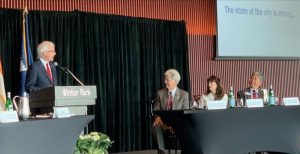
Mayor Phil Anderson gives the state of the city address earlier this year as commissioners Marty Sullivan, Sheila DeCiccio and Kris Cruzada look on.
“I supported her in her first election and we really got to know each other,” Anderson said. “I’ve continued to enjoy working with her as she runs for and hopefully serves as mayor.”
Social media influencer Dino Favara on Friday posted on X, formerly known as Twitter, that he is joining the race for mayor. His name is not yet listed on the city’s election site, but he confirmed to the Voice that he intends to run. He did not immediately provide more information, but his TikTok account, which has about 20,000 followers says he works as a social media content creator and has also worked as a substitute teacher, wedding DJ and for children’s programs at an Orlando church.
The official qualifying period for the March 19, 2024 election doesn’t end until December.
In order to run, DeCiccio announced she would resign from her commission seat on April 10, the date she would take office as mayor if she is elected.
That means there will be a special election for the final two years of her three-year term as Seat 2 Commissioner.
Jason Johnson, candidate for Winter Park City Commission, with wife, Lori, and daughter, Molly.
Jason Johnson, an attorney in the Winter Park office of the Byrd Campbell law firm, announced this week he will run for the seat. He is a first-time candidate who has lived in Winter Park for 13 years with his wife, Lori, and their daughter. He is also chairman of the city’s Board of Adjustments, which rules on homeowner applications for building variances.
“My north star in all of this is to preserve the charm of Winter Park, but I’m also a rule-of-law guy and I recognize that landowners have rights and due process exists,” he said.
Stockton Reeves, executive director of the Center for Public Safety, is running for the seat, according to the city elections site. Reeves did not immediately respond to a request for more information. He ran for the Florida House in 2018 and lost to Rep. Anna Eskamani in the general election.
Justin Vermuth, also an attorney, said he explored the idea of running but told the Voice this week he does not plan to enter the race.
The qualifying period for candidates to enter the contests for mayor and the commission seat ends Dec. 11.
Questions or comments? Email the editor at WinterParkVoiceEditor@gmail.com
To comment or read comments from others, click here →
by Beth Kassab | Sep 29, 2023 | City Commission, News, Taxes
Winter Park passes $208 million budget
Mayor also provides update on the city’s plan to extend and expand the CRA
Sept. 29, 2023
By Beth Kassab
Winter Park City Commissioners gave final approval Wednesday to a $208 million budget, a $9.5 million increase over last year.
City Manager Randy Knight proposed a last minute change, which won consensus from the board, to drop the city’s federal lobbyist and hire a grant writer, a move that he said will bring “more bang for our buck.” The city’s $6,500 per month contract with Thorn Run Partners will end.
The second and final budget hearing brought little public debate. Two residents complained that the commission is too “progressive” with “out-of-control spending.”
Gigi Papa, who frequently attends the public meetings, urged more people to run for office, noting that the two commissioners up for re-election earlier this year — Sheila DeCiccio and Marty Sullivan — did not face any opposition.
Mayor Phil Anderson, who is up for re-election in March, but is not expected to run again, addressed some of the concerns. He explained that inflation and increased labor costs are the biggest drivers of the budget increase as the city sought to add positions such as in the police department in order to maintain the same level of service to residents.
One person complained that the city’s efforts to underground powerlines are still not complete even as spending has increased on the library and other projects.
Anderson noted that the undergrounding is still underway and delays are not related to a shortage of funds, but long supply lags for transformers and other in-demand equipment.
“We’re not undercapitalized, we can do it,” Anderson said. “We just don’t have the materials to allow us to complete it.”
Anderson and Knight also provided a short update about a recent meeting with Orange County Commissioner Emily Bonilla, who represents Winter Park.
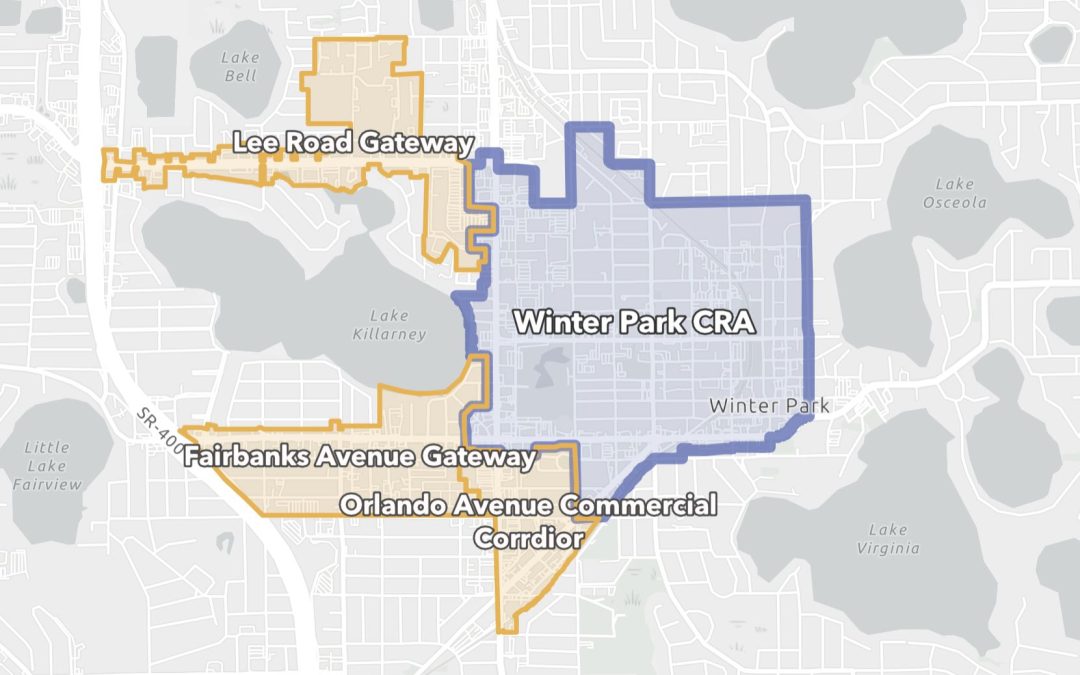
They said she was receptive to the city’s proposal to extend and expand its Community Redevelopment Agency or the special tax district centered on downtown that is scheduled to end in 2027.
Winter Park leaders want to continue the district beyond that and expand its boundaries (see above map for proposal), but that plan must be approved by the county. The decision will be critical to the city’s future considering the CRA is a key source of budget revenue such as providing $350,000 additional dollars next year to expand the hours and services at the library.
Anderson noted that Bonilla and county officials will want to see solid proposals to address affordable housing and transportation needs with those dollars. A consultant is preparing a report for the city and the application for the extension is expected to be considered by the county in the Spring.
Questions or comments? Email the editor at WinterParkVoiceEditor@gmail.com
To comment or read comments from others, click here →

by Beth Kassab | Sep 29, 2023 | City Commission, News, Uncategorized
Winter Park Police budget jumps nearly 8% with more officers, equipment
New tasers designed to give officers better odds at subduing combative people as the department also looks to more cameras and technology to improve efficiency
Sept. 29, 2023
By Beth Kassab
[Note: This story has been updated to include additional context about crime statistics.]
New tasers, a central dashboard of surveillance cameras and two new positions are driving increased costs at the Winter Park Police Department, which accounts for the largest piece — nearly a quarter — of the city’s $77 million general fund.
The department’s budget will grow nearly 8% to more than $18 million, up from $16.8 million this year.
Chief Tim Volkerson said the changes will allow the department to maintain its high standards and improve how officers respond to calls or conduct criminal investigations as call for service shot up 14% from 2021 to 2022 and nearly 20% since 2020, when calls lagged significantly because of the COVID-19 pandemic.
Traffic crashes are still below pre-pandemic levels, but are trending up again. Calls related to Baker and Marchman acts, which are related to individuals who are struggling with mental illness or drug addition, are up nearly 7%.
A key enhancement will be the addition of a sworn officer position, bringing the department’s total to 83 sworn positions. A second civilian community service officer will be hired in 2024.
Volkerson said the department will maintain its quality benchmarks even as his agency and others across the country are struggling to find good candidates for the job.
That means WPPD will not, for example, drop its requirement for officers to complete a timed physical agility test as other departments have done.
“We haven’t changed our hiring standards,” he said.
Four positions are currently unfilled, though Volkerson said candidates are being processed and he expects to make new hires in the next month or so.
A second civilian community service officer, part of a program that started last year, is slated to begin in the Spring.
Volkerson said that program has been a “tremendous success” because the officer, who doesn’t carry a firearm, can respond to minor traffic incidents or nonviolent calls. That frees up sworn officers to handle other cases.
Officers are also carrying new tasers with upgraded features that make it easier to aim the electronic prongs at a subject because the taser projects two laser dots — one for each prong — onto the target instead of just one. A flick of the officer’s wrist can adjust the aim of the prongs based on how close the officer is to the subject.
The tasers also provide two chances for the officer to fire at the subject rather than a single shot followed by a cumbersome reloading process.
“If you miss with the first one, all you have to do is pull the trigger again,” Volkerson said, noting that the new technology also means an officer’s body camera automatically turns on when a taser is drawn.
That technology could mean life or death for some people who are being confronted by police. In 2022, a Winter Park officer shot and killed Daniel Knight, 39, after the officer attempted to fire his taser, but missed and the confrontation continued to escalate. Knight, who was intoxicated and refused officer’s commands to step away from his sister before striking an officer, died at his niece’s wedding reception at the Winter Park Events Center.
Volkerson would not comment on whether he thought the upgraded tasers could have made a difference in the case of Knight because the family told the city it plans to file a lawsuit and the internal affairs investigation is still incomplete.
In another move to improve safety and aid criminal investigations, the department is continuing to upgrade a network of camera feeds, both public and private, from across the city into a real-time crime center.
The project, which Volkerson said started during the pandemic, is undergoing a $600,000 upgrade to overlay map data along with computer-aided dispatch information across 16 monitors.
“It will expedite intelligence gathering and provide greater efficiency of response to critical incidents and criminal investigations as they unfold,” stated the budget proposal.
So far the system includes the city’s cameras that monitor public spaces as well as cameras from the Orange County Public School System, Rollins College and private businesses who opt into the program. Businesses and residents can register their cameras with the police department and select the level of access and monitoring they want — such as only during emergency calls or more frequently.
Volkerson said the video network has already aided responses. For example, officers were able to monitor a vehicle fire at a public housing complex and guide crews to the exact location. In another case, patrol officers spotted a stolen car and it happened to stop in front of a camera. The feed allowed the department to watch as officers conducted a felony stop and monitor the wider scene, which enabled the officers making the stop to focus on the driver.
Red light cameras will also continue to be part of the city’s traffic enforcement. Six cameras at intersections are in place today and the department plans to add two more in coordination with the Florida Department of Transportation. The new locations are not yet available.
This summer a new state law took effect that allows speed cameras in school zones that would trigger mailed tickets similar to the red light cameras. Winter Park plans to begin using those as well, though the exact locations and timing are not yet finalized, Volkerson said.
Questions or comments? Email the editor at WinterParkVoiceEditor@gmail.com
To comment or read comments from others, click here →



Recent Comments