by Beth Kassab | Oct 14, 2023 | City Commission, Election, News, Uncategorized
Terry Hotard enters race for mayor against Sheila DeCiccio
The former mayor says he will challenge the current vice mayor in the March election
Oct. 13, 2023
By Beth Kassab
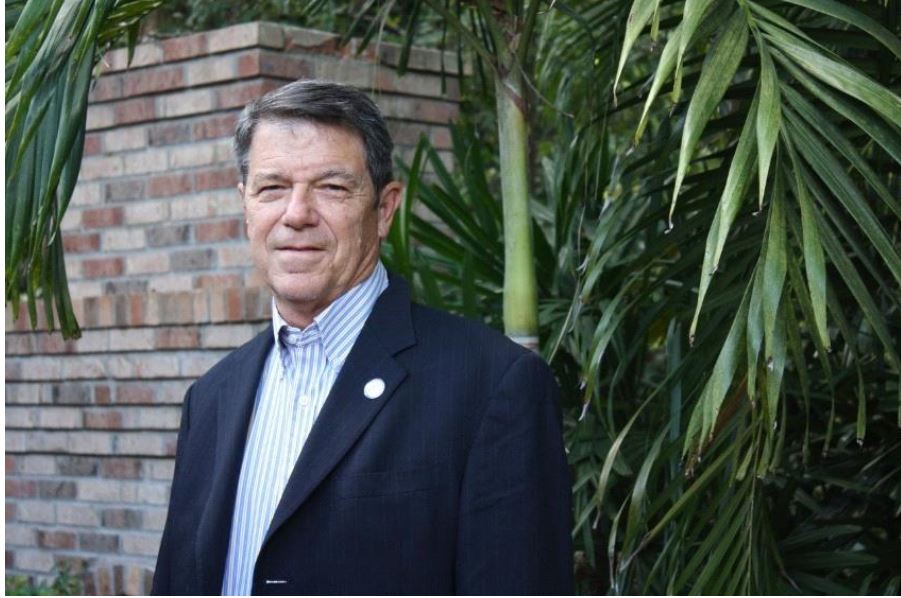
Former Mayor Terry Hotard said he will run against Vice Mayor Sheila DeCiccio for the city’s top elected post, driven to run by controversy over utility boxes that have appeared in the city right-of-way outside the Palmer Avenue property owned by Marc and Sharon Hagle, who are constructing the largest home in Winter Park.
“It’s a quality of life issue,” said Hotard, who served as mayor in the early 2000’s and worked for the company that became Duke Energy before he served as assistant director of Winter Park’s electric utility. “Once those boxes are put in place they will never move.”
He said the green boxes, which house electrical equipment, can fade over time and attract graffiti. He said the city’s own code mandates the boxes be on private property rather than on city-owned land.
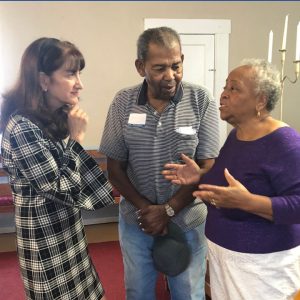
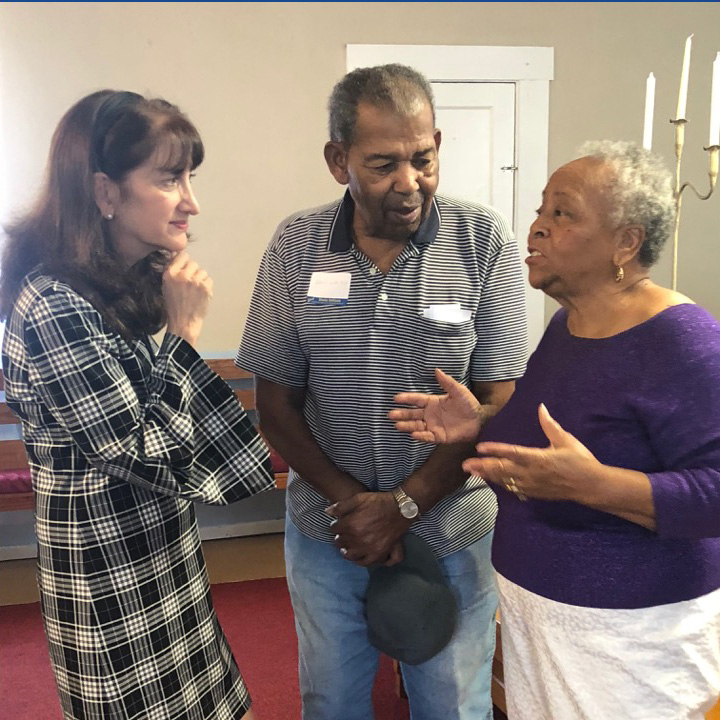
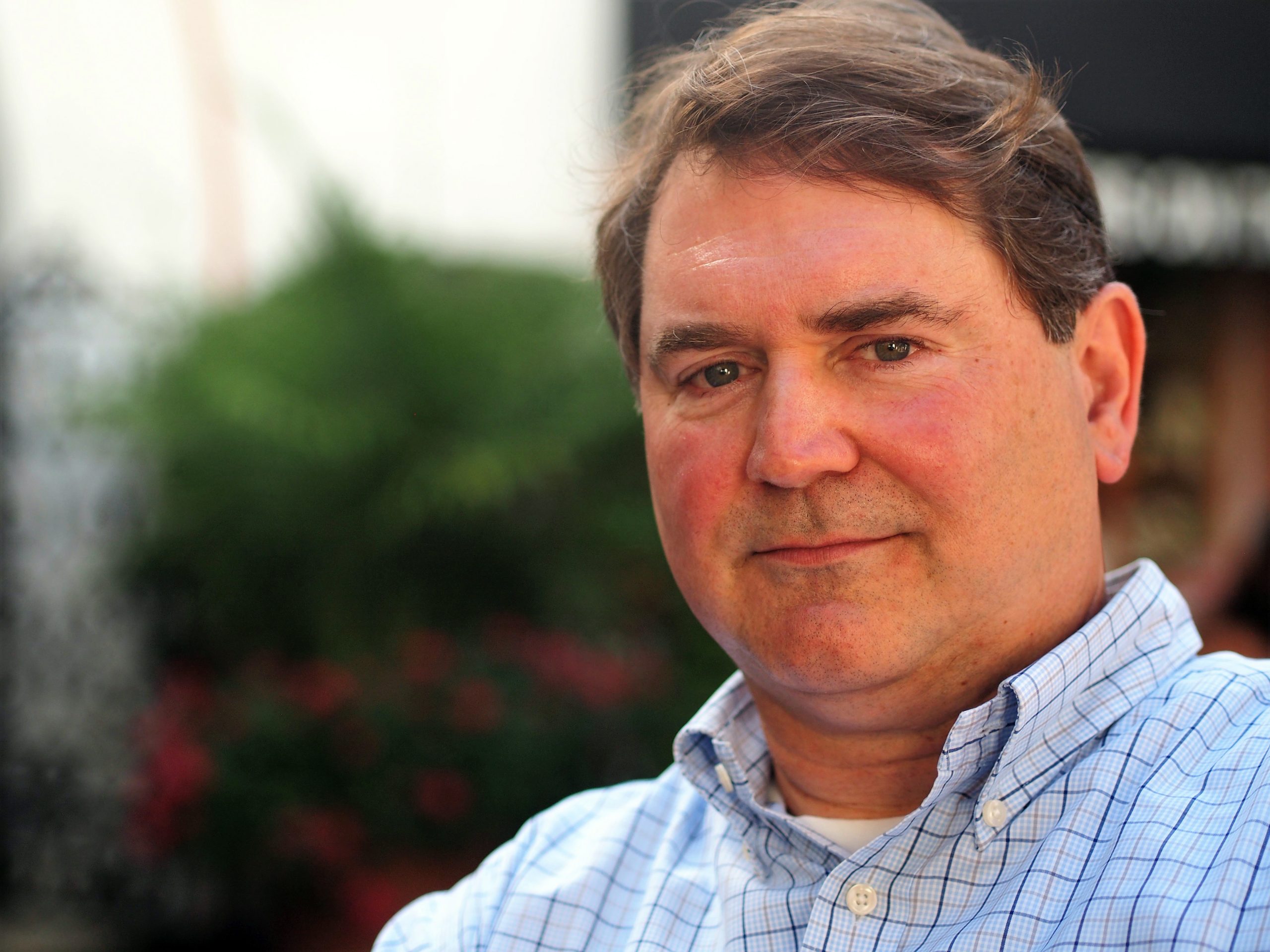
Sheila DeCiccio talks with residents at a meet-and-greet event.
A spokeswoman for the city cited a different portion of the code, but said alternatives are being considered for the transformer boxes near the Hagle house, which is expected to be 40,000-square-feet on the shore of Lake Osceola.
“The city is researching a more aesthetically pleasing alternative for these public utility boxes including traffic signal cabinets,” said Clarissa Howard.
Hotard said he enjoyed his time as a city commissioner in the 1990s and then as mayor in the early 2000’s before he went on to serve as assistant director of the city’s electric utility.
“I feel like I have a little bit of gas left in the tank and I have something to offer,” he said of the upcoming race.
DeCiccio announced her candidacy earlier this month and highlighted infrastructure needs as one of her top priorities.
“We’ve made great headway, but there’s still a lot to be done to maintain the heart and charm of the city,” she said shortly after that announcement. “Hurricane Ian laid bare a lot of our problems such as pipes that need maintenance, brick streets that need attention. Infrastructure is the No. 1 issue and we can’t kick this can down the road anymore.”
DeCiccio, an attorney who has lived in Winter Park for more than 40 years, said water basin studies ordered by the current commission along with more bike paths and extending sidewalks will be key for the city’s future.
She had to resign from her commission seat in order to run for mayor. Her resignation will take effect in April 2024, at the time she would take over as mayor if elected to that job. As a result, there is also a contest to fill Seat 2 on the five-seat dais.
There are two challengers for Seat 2: attorney Jason Johnson and Stockton Reeves, who leads the Center for Public Safety, which helps local governments build new police and fire stations.
Reeves said one of his key issues is advocating for police officers and firefighters.
“That’s one of the things that kind of pushed me to do this,” he said, noting he wants to reassess the policies at the police department and fire department to make sure that officers can donate sick time or other benefits to each other in times of need.
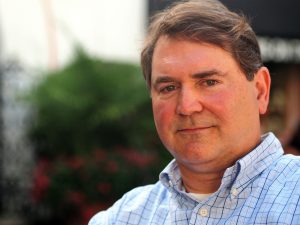
Stockton Reeves
Reeves, who has served on a number of city boards and is now vice chairman of the Civil Service Board, grew up in Winter Park and has run for commission before, but was not elected. In 2018, he ran as a Republican against Democrat Anna Eskamani for the Florida House and lost.
In 2020, Gov. Ron DeSantis issued a public reprimand of Reeves after the Ethics Commission ruled that he violated financial disclosure requirements. Reeves said the matter was “the most technical of a technicality.”
Jason Johnson, who works in the Winter Park office of the Byrd Campbell law firm, is a first-time candidate who has lived in Winter Park for 13 years with his wife, Lori, and their daughter. He is chairman of the city’s Board of Adjustments, which rules on homeowner applications for building variances.
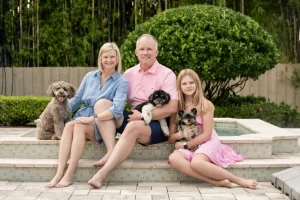
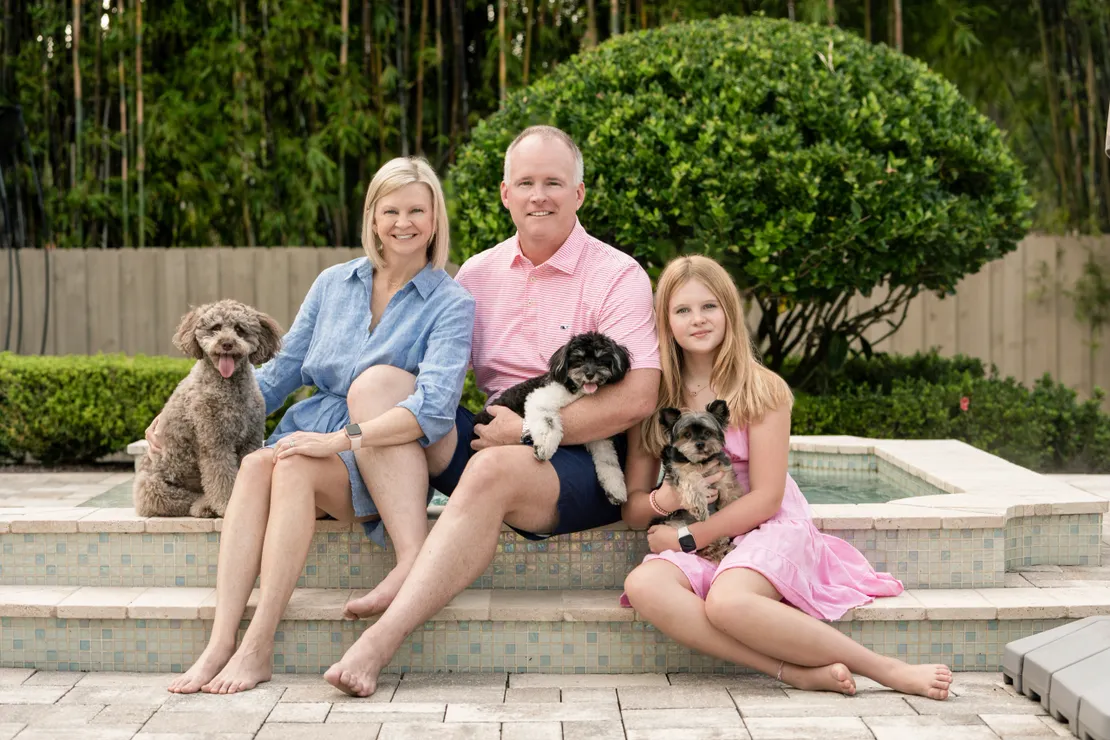
Jason Johnson, candidate for Winter Park City Commission, with wife, Lori, and daughter, Molly.
“My north star in all of this is to preserve the charm of Winter Park, but I’m also a rule-of-law guy and I recognize that landowners have rights and due process exists,” he told the Voice earlier this month.
Official qualifying for both the mayoral contest and Seat 2 does not end until mid-December.
Questions or comments? Email the editor at WinterParkVoiceEditor@gmail.com
To comment or read comments from others, click here →

by Beth Kassab | Oct 4, 2023 | City Commission, Election, News, Uncategorized
Sheila DeCiccio to run for Winter Park mayor
Jason Johnson announces run for DeCiccio’s remaining term
Oct. 3, 2023
By Beth Kassab
Winter Park Commissioner Sheila DeCiccio announced this week she is running for mayor, triggering a special election for the remainder of her term that has already attracted at least one contender: local attorney Jason Johnson.
DeCiccio, who was elected in March to a second commission term without opposition, said she will make improving the city’s infrastructure and preserving Winter Park’s small town feel the central focus of her campaign.
“We’ve made great headway, but there’s still a lot to be done to maintain the heart and charm of the city,” she said. “Hurricane Ian laid bare a lot of our problems such as pipes that need maintenance, brick streets that need attention. Infrastructure is the No. 1 issue and we can’t kick this can down the road anymore.”
She pointed to the water basin studies ordered by the current commission and priorities set out in the transportation master plan, including more bike paths and extending sidewalks, as foundations for taking the city to the next level.
Winter Park is a city manager form of government, which means Randy Knight oversees the day-to-day operations of the town of about 30,000 people and a more than $200 million budget. But the mayor and commission hire the city manager and set policy and the mayor can be highly influential when it comes to driving an agenda or steering debate, particularly at public meetings.
DeCiccio, who moved to Winter Park more than 40 years ago after working as an assistant district attorney in Massachusetts, became the first woman partner at the Lowndes law firm in the 1980s. She went on to practice law with her husband, Dan, at DeCiccio & Johnson and has served on the city’s Planning & Zoning and Code Enforcement boards. The couple has two adult children.
She was first elected to the City Commission in March 2020 as the world was shutting down because of the COVID-19 pandemic. Then two years later as the pandemic finally eased, Winter Park experienced some of the worst flooding in its history as Hurricane Ian brought record-level rain across the region.
She said those tumultuous events have sharpened her focus on keeping the city financially strong and prepared for the next emergency.
“We’ve learned from all of it,” she said. “That’s why infrastructure is my No. 1 priority.”
Mayor Phil Anderson, who is not seeking a second term, said he supports DeCiccio’s campaign and wants to see the long-term planning he helped initiate as mayor carried forward.
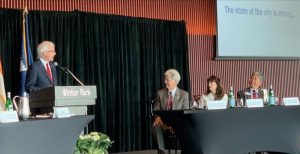
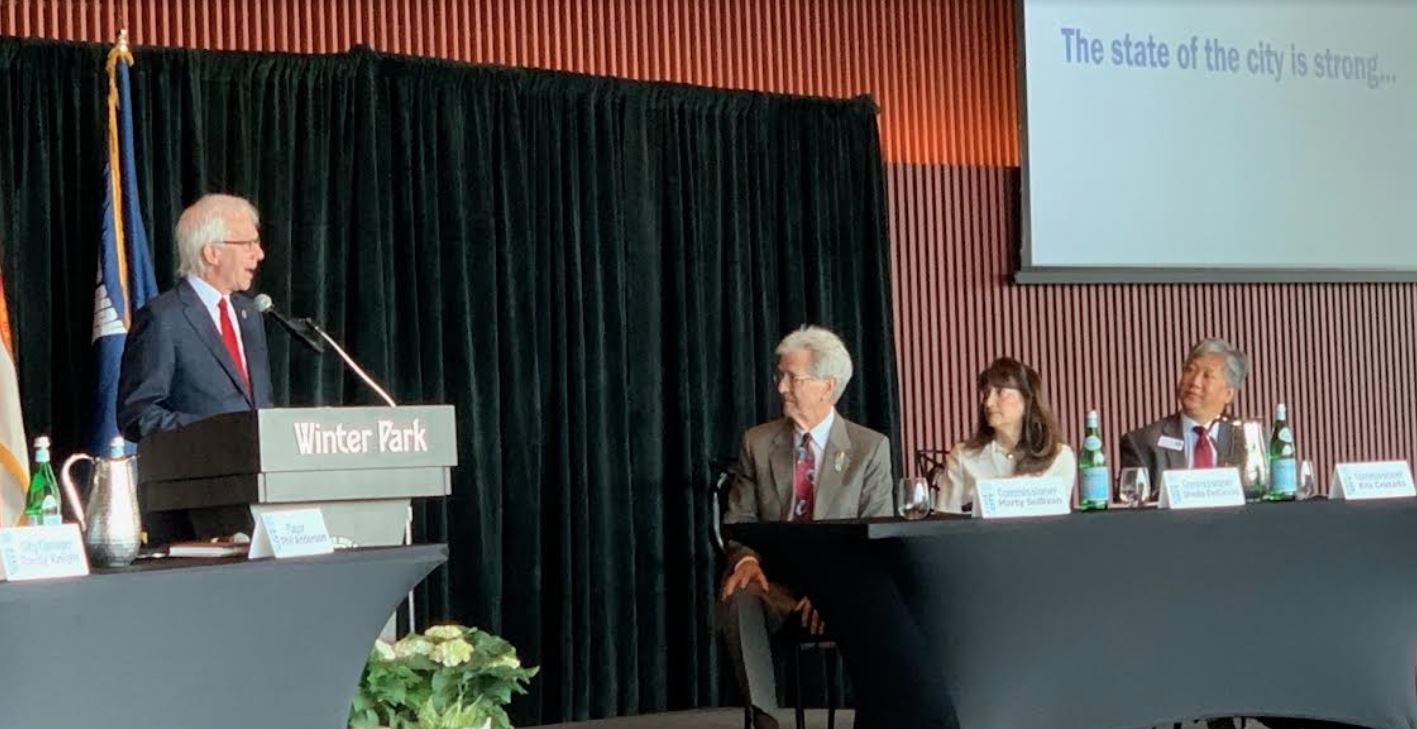
Mayor Phil Anderson gives the state of the city address earlier this year as commissioners Marty Sullivan, Sheila DeCiccio and Kris Cruzada look on.
“I supported her in her first election and we really got to know each other,” Anderson said. “I’ve continued to enjoy working with her as she runs for and hopefully serves as mayor.”
Social media influencer Dino Favara on Friday posted on X, formerly known as Twitter, that he is joining the race for mayor. His name is not yet listed on the city’s election site, but he confirmed to the Voice that he intends to run. He did not immediately provide more information, but his TikTok account, which has about 20,000 followers says he works as a social media content creator and has also worked as a substitute teacher, wedding DJ and for children’s programs at an Orlando church.
The official qualifying period for the March 19, 2024 election doesn’t end until December.
In order to run, DeCiccio announced she would resign from her commission seat on April 10, the date she would take office as mayor if she is elected.
That means there will be a special election for the final two years of her three-year term as Seat 2 Commissioner.
Jason Johnson, candidate for Winter Park City Commission, with wife, Lori, and daughter, Molly.
Jason Johnson, an attorney in the Winter Park office of the Byrd Campbell law firm, announced this week he will run for the seat. He is a first-time candidate who has lived in Winter Park for 13 years with his wife, Lori, and their daughter. He is also chairman of the city’s Board of Adjustments, which rules on homeowner applications for building variances.
“My north star in all of this is to preserve the charm of Winter Park, but I’m also a rule-of-law guy and I recognize that landowners have rights and due process exists,” he said.
Stockton Reeves, executive director of the Center for Public Safety, is running for the seat, according to the city elections site. Reeves did not immediately respond to a request for more information. He ran for the Florida House in 2018 and lost to Rep. Anna Eskamani in the general election.
Justin Vermuth, also an attorney, said he explored the idea of running but told the Voice this week he does not plan to enter the race.
The qualifying period for candidates to enter the contests for mayor and the commission seat ends Dec. 11.
Questions or comments? Email the editor at WinterParkVoiceEditor@gmail.com
To comment or read comments from others, click here →
by Beth Kassab | Sep 29, 2023 | City Commission, News, Uncategorized
Winter Park Police budget jumps nearly 8% with more officers, equipment
New tasers designed to give officers better odds at subduing combative people as the department also looks to more cameras and technology to improve efficiency
Sept. 29, 2023
By Beth Kassab
[Note: This story has been updated to include additional context about crime statistics.]
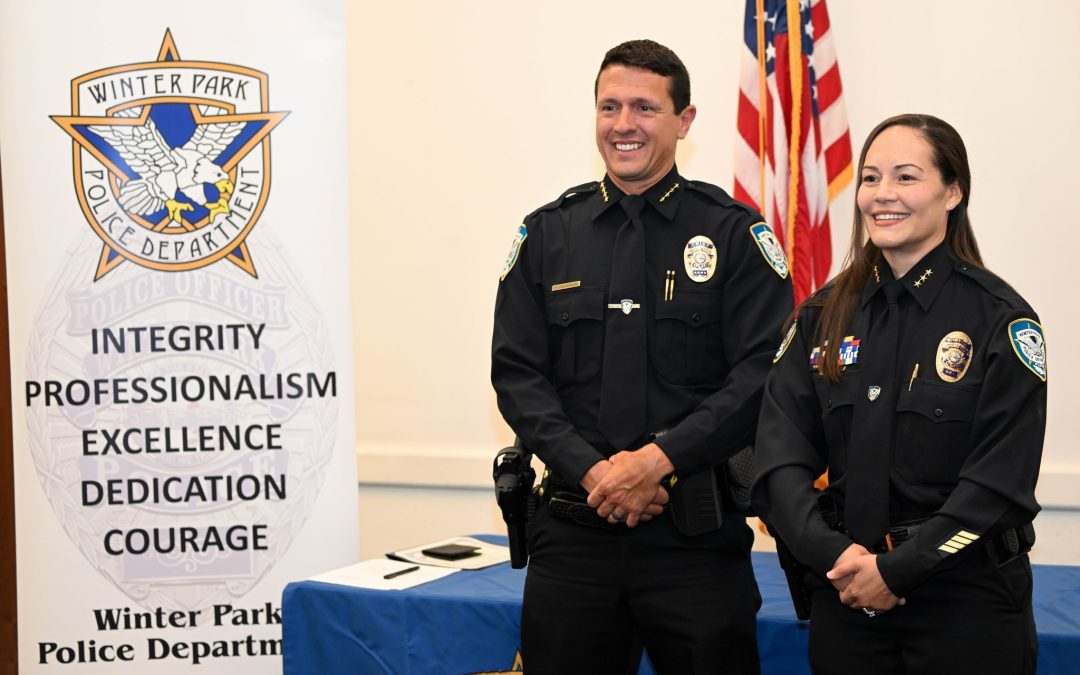
New tasers, a central dashboard of surveillance cameras and two new positions are driving increased costs at the Winter Park Police Department, which accounts for the largest piece — nearly a quarter — of the city’s $77 million general fund.
The department’s budget will grow nearly 8% to more than $18 million, up from $16.8 million this year.
Chief Tim Volkerson said the changes will allow the department to maintain its high standards and improve how officers respond to calls or conduct criminal investigations as call for service shot up 14% from 2021 to 2022 and nearly 20% since 2020, when calls lagged significantly because of the COVID-19 pandemic.
Traffic crashes are still below pre-pandemic levels, but are trending up again. Calls related to Baker and Marchman acts, which are related to individuals who are struggling with mental illness or drug addition, are up nearly 7%.
A key enhancement will be the addition of a sworn officer position, bringing the department’s total to 83 sworn positions. A second civilian community service officer will be hired in 2024.
Volkerson said the department will maintain its quality benchmarks even as his agency and others across the country are struggling to find good candidates for the job.
That means WPPD will not, for example, drop its requirement for officers to complete a timed physical agility test as other departments have done.
“We haven’t changed our hiring standards,” he said.
Four positions are currently unfilled, though Volkerson said candidates are being processed and he expects to make new hires in the next month or so.
A second civilian community service officer, part of a program that started last year, is slated to begin in the Spring.
Volkerson said that program has been a “tremendous success” because the officer, who doesn’t carry a firearm, can respond to minor traffic incidents or nonviolent calls. That frees up sworn officers to handle other cases.
Officers are also carrying new tasers with upgraded features that make it easier to aim the electronic prongs at a subject because the taser projects two laser dots — one for each prong — onto the target instead of just one. A flick of the officer’s wrist can adjust the aim of the prongs based on how close the officer is to the subject.
The tasers also provide two chances for the officer to fire at the subject rather than a single shot followed by a cumbersome reloading process.
“If you miss with the first one, all you have to do is pull the trigger again,” Volkerson said, noting that the new technology also means an officer’s body camera automatically turns on when a taser is drawn.
That technology could mean life or death for some people who are being confronted by police. In 2022, a Winter Park officer shot and killed Daniel Knight, 39, after the officer attempted to fire his taser, but missed and the confrontation continued to escalate. Knight, who was intoxicated and refused officer’s commands to step away from his sister before striking an officer, died at his niece’s wedding reception at the Winter Park Events Center.
Volkerson would not comment on whether he thought the upgraded tasers could have made a difference in the case of Knight because the family told the city it plans to file a lawsuit and the internal affairs investigation is still incomplete.
In another move to improve safety and aid criminal investigations, the department is continuing to upgrade a network of camera feeds, both public and private, from across the city into a real-time crime center.
The project, which Volkerson said started during the pandemic, is undergoing a $600,000 upgrade to overlay map data along with computer-aided dispatch information across 16 monitors.
“It will expedite intelligence gathering and provide greater efficiency of response to critical incidents and criminal investigations as they unfold,” stated the budget proposal.
So far the system includes the city’s cameras that monitor public spaces as well as cameras from the Orange County Public School System, Rollins College and private businesses who opt into the program. Businesses and residents can register their cameras with the police department and select the level of access and monitoring they want — such as only during emergency calls or more frequently.
Volkerson said the video network has already aided responses. For example, officers were able to monitor a vehicle fire at a public housing complex and guide crews to the exact location. In another case, patrol officers spotted a stolen car and it happened to stop in front of a camera. The feed allowed the department to watch as officers conducted a felony stop and monitor the wider scene, which enabled the officers making the stop to focus on the driver.
Red light cameras will also continue to be part of the city’s traffic enforcement. Six cameras at intersections are in place today and the department plans to add two more in coordination with the Florida Department of Transportation. The new locations are not yet available.
This summer a new state law took effect that allows speed cameras in school zones that would trigger mailed tickets similar to the red light cameras. Winter Park plans to begin using those as well, though the exact locations and timing are not yet finalized, Volkerson said.
Questions or comments? Email the editor at WinterParkVoiceEditor@gmail.com
To comment or read comments from others, click here →
by Beth Kassab | Sep 22, 2023 | Uncategorized
Isle of Sicily homeowner fined $260k for tree removal and shoreline damage
City said violations are “egregious” and “irreparable.” Homeowner says he will appeal the Code Compliance Board’s decision
Sept. 22, 2023
By Beth Kassab
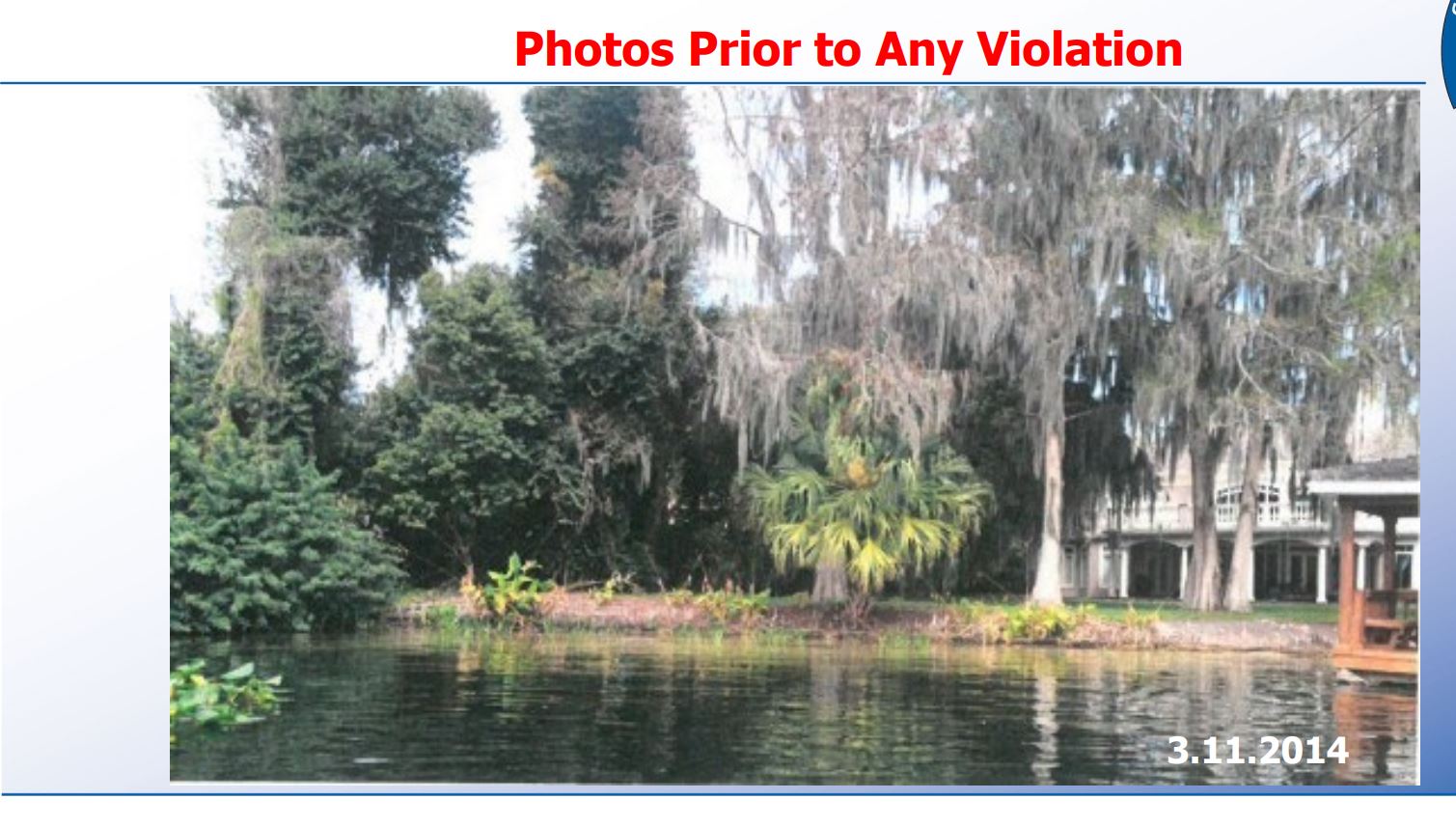
A photo dated from 2014 shows the lakefront lot at 6 Isle of Sicily lush with mature bald cypress trees, laurel oaks and other native plants.
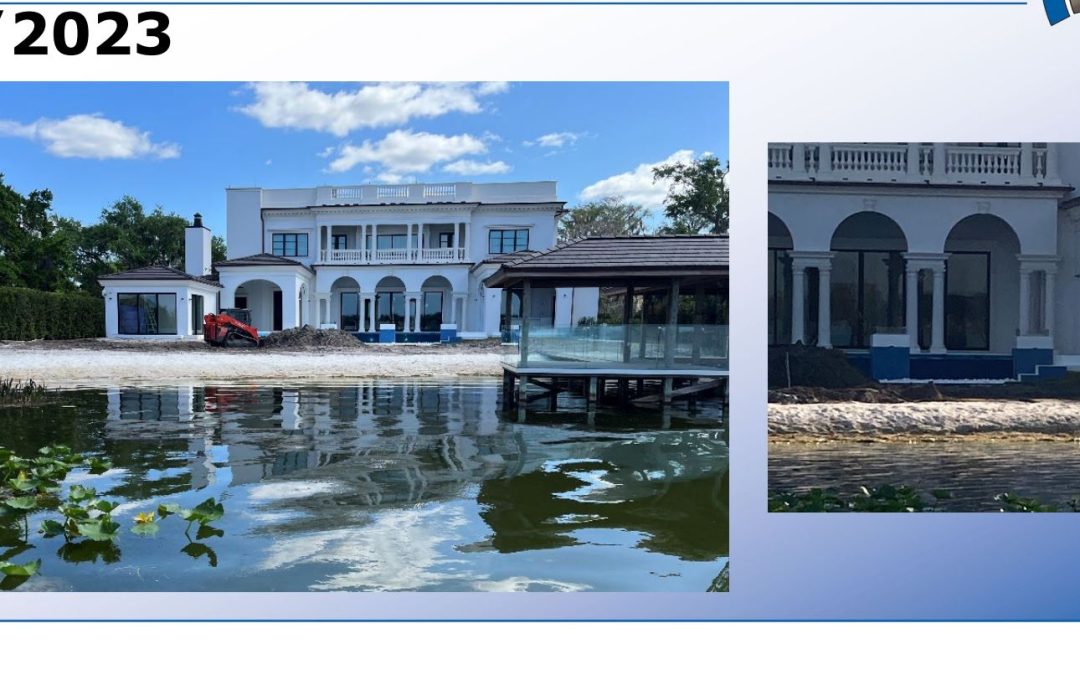
But flip through a series of photos collected by the city of Winter Park from 2015 to 2023 and the same property appears increasingly barren of trees as an artificial white sand beach spreads over the shoreline, smothering native aquatic plants.
The changes at one of the 11 palatial homes nestled on the Lake Maitland peninsula at the north end of the Winter Park Chain of Lakes is the subject of a long and contentious code compliance case over two of Winter Park’s most cherished assets: its tree canopy and lakes.
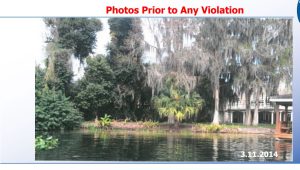
A 2014 photo shows the property before trees and other vegetation were removed.
“It is difficult to imagine a more egregious set of willful, knowing and repeated violations that attack the essence of what our city code is intended to protect,” said Rick Geller, the attorney who represented the city the Sept. 7 Code Compliance Board where the case was presented.
The board approved fines totaling more than $260,000, including $150,600 related to the unpermitted removal of 13 bald cypress trees and one laurel oak. Another $110,500 in fines are related to importing sand without a permit that altered the shoreline and improper grading of the property in a special flood hazard area.
Some of the trees removed were replacement trees that the homeowners were ordered to plant in 2016 after they were found to have violated the tree ordinance the first time.
Homeowners Oliver and Rosemary Dawoud did not appear at the hearing or send a representative. Oliver Dawoud, chief executive officer of Aventus Health, which operates pharmacies, laboratories and other medical services, alerted the city attorney on the day of the hearing that he would be unable to attend.
Dawoud told the Voice that he plans to appeal the board’s decision. He has 30 days from Sept. 7, the day of the meeting, to file a court challenge.
He said two of the trees were removed because of lightening strikes and he understood he had permission to remove them. As for the sand, he said he thought he was placing the sediment above his property line — rather than in the lake — and didn’t understand the ramifications of the water level rising and wave action or storms sweeping the sand away from his property where it can harm native plants and contribute to water discoloration, erosion and algae blooms.
“I felt horrible when they told me that,” he said, recalling a conversation he had months ago with a state environmental officer and said he has since had some of the sand removed.
Geller said during the public hearing that Dawoud has not taken action to address the violations.
Winter Park Urban Forestry Superintendent Josh Nye testified at the hearing and estimated it would take 40 years to grow new bald cypress trees to the point of maturity of those lost on the property.
Gloria Eby, the city’s director of natural resources and sustainability, noted the importance of the trees, other vegetation and a healthy shoreline for the city’s larger ecosystem.
“The plants act as kidneys for your lake,” she said, explaining that they soak up nutrients from runoff and play an important role in keeping the water clean.
Dawoud and his wife purchased the property in 2015 for $4 million, according to property records. They tore down the existing house and began new construction. They moved into the new home this year.
“In 2014 the property was mostly lined with beautiful trees and vegetation,” Geller noted. “Today the property is stark and denuded. A mansion, however imposing or impressive you may find it, does not fix a barren or denuded landscape.”
Questions or comments? Email the editor at WinterParkVoiceEditor@gmail.com
To comment or read comments from others, click here →
by Beth Kassab | Sep 11, 2023 | City Commission, News, Uncategorized
Bank OZK tells city it will sell to another buyer
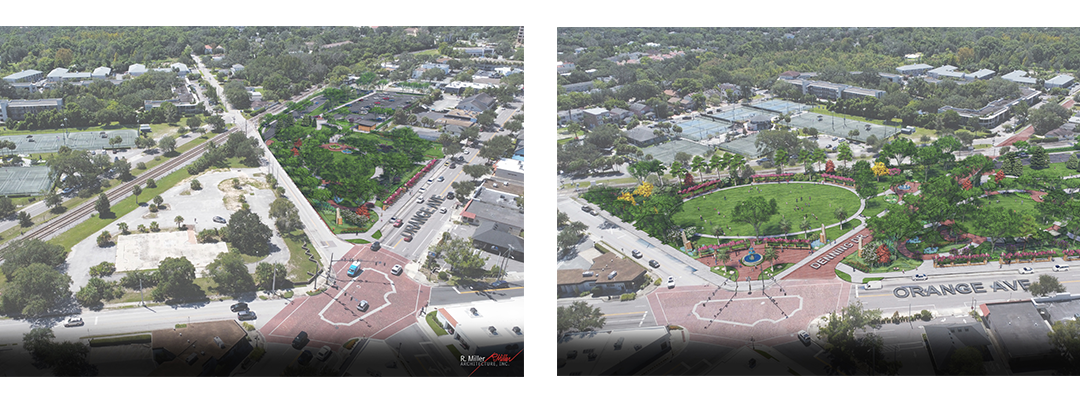
Commissioners and greenspace advocates had rallied to purchase the parcel on Orange Avenue to expand Seven Oaks Park
Sept. 11, 2023
By Beth Kassab
City Manager Randy Knight notified commissioners today that the owners of a 2-acre piece of land the city wants to buy to expand Seven Oaks park on Orange Avenue have accepted an offer from another buyer, according to an email obtained by the Voice.
Knight and City Spokeswoman Clarissa Howard did not return a request for comment.
Knight wrote that a broker for Bank OZK (formerly Bank of the Ozarks) told him “the Bank has accepted an offer from another party that met their price and has a more streamlined path to approvals and closing,” according to the email.
Commissioner Marty Sullivan, who had led the charge for the city to acquire the property, said it appears likely the vacant land will be developed into a commercial building, though the identity of the other buyer isn’t known.
“I’m extremely disappointed that Bank OZK did not ask us for a counteroffer,” Sullivan said.
Commissioners are set on Wednesday to take the first of two votes on the city’s more than $200 million budget for next year and are expected to discuss the purchase of the parcel and how to finance a deal.
Sullivan said the city’s lack of firm commitment to the deal could have influenced the bank to pursue another offer and wants a vote taken on Wednesday.
“If we can commit, it opens the possibility of the bank reconsidering,” he said.
In the latest round of negotiations, the city offered $6 million for the land appraised at $5.8 million and said it would waive more than $130,000 worth of mobility fees. The bank’s broker presented a counteroffer that included the $6 million sales price plus a waiver for $267,000 worth of transportation impact fees and the city would pay about $60,000 in doc stamp and title fees.
That offer was contingent on approval by the Bank OZK executive team and the city was still waiting to hear back when Knight was informed Monday that the bank accepted another buyer.
A call to the bank’s spokeswoman was not immediately returned.
The Winter Park Land Trust, which advocates for the preservation of greenspace, pledged at least $500,000 from board members toward the project.
Steve Goldman, chairman of the land trust’s board, also expressed disappointment over the loss of potential open space in an increasingly dense corridor.
“The job of the land trust is to look forward — not to just be concerned with our immediate needs — but to look out over the next few decades for a good city plan that balances park land against urban development,” said Goldman, who is also a supporter of the Winter Park Voice. “It’s very clear to everyone who studied this that we are going to need more park space if we are going to retain the feeling we currently have in Winter Park, which is the reason many of us moved here.”
Questions or comments? Email the editor at WinterParkVoiceEditor@gmail.com
To comment or read comments from others, click here →
by Beth Kassab | Sep 2, 2023 | City Commission, News, Uncategorized
Former Mayor Joe Terranova remembered for service and mentorship
Current commissioners say they will miss his wise counsel and humor
Sept. 2, 2023
By Anne Mooney
Winter Park lost a leader and a friend this week. Former Mayor Joe Terranova, who was known as a champion for the city’s charm and status as a “premier urban village” died Monday. He was 98.
Terranova, who served as mayor from 1997 to 2000, was also a driving force behind the Center for Independent Living, a Winter Park-based nonprofit that promotes inclusion and accessibility for people with disabilities and served on the committee that helped create the Charles Hosmer Morse Museum of American Art, a cultural centerpiece of the city.
“Joe was a valuable counselor to all of us who serve the city,” said Mayor Phil Anderson. “He had a zest for living that took him around the globe serving his country and brought him back to Winter Park to serve his community. I will remember Joe’s smile and his understanding that the government is there to serve its citizens.”
He was a past president of the University Club and chaired the ad hoc committee responsible for extensive renovations to the Club and was a member of the Winter Park Historical Association and the Winter Park Library Board of Trustees.
Terranova was also an active member of St. Margaret Mary Catholic Church.
Commissioner Kris Cruzada recalled that he met the former mayor while he was campaigning for his own seat.
“He was a very dynamic and accomplished individual,” Cruzada said. “He’s the one who introduced me to Winter Park’s vision of being the premier urban village for our region – a concept I always felt while growing up in Central Florida, but was never able to articulate until he mentioned it to me.”
Commissioner Todd Weaver also met Terranova while campaigning and said he possessed a rare combination listening skills and the ability to dole out sage advice.
“We became instant friends,” Weaver recalled. “I don’t know many people who are as wise as Joe, or who can deliver a short answer with such humor and friendliness.”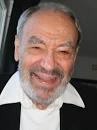
Terranova grew up in the Washington, D.C. area. After completing high school, he went into the Army during World War II. He was stationed in Europe, where he served in the 14th Armored Division, 25th Tank Battalion.
He returned to Washington in 1948 and entered Benjamin Franklin University to study accounting. In order to take the CPA exam, however, he found it necessary to transfer to George Washington University where he studied economics and successfully completed the CPA exam.
After graduation, Terranova worked at a couple of private CPA firms in D.C., but said he found the work dull. When the opportunity to join the Foreign Service presented itself, he jumped at it and thus began a distinguished career in the service of his country, according to his own account from a 1992 interview by the Winter Park History Museum.
His assignments took him all over the world. He went from Libera to Spain to Yugoslavia and back to Washington, D.C. The State Department had formed an audit team, and since Terranova was one of the few foreign service officers who was a CPA, he was asked to join.
After four years in D.C. he was back overseas, this time in Pakistan and from there to Paris. Asked during the museum’s interview what he liked best about Paris, Joe replied, “. . . I like to eat . . . and there is no greater place to be than Paris because that really is the capital of food as far as I’m concerned. There is no city or no country that has such an exquisite choice of food . . . and I took full advantage of it.”
The year was 1965, so it was not long before Terranova had to abandon his beloved Paris for a post in the American Embassy in Vietnam. Of his tour in Vietnam, Joe remarked, “Well, it was a most unusual way to conduct a civilian operation . . . while you’re fighting a full-blown war.”
He returned to the states for a sabbatical at the Navy War College in Newport, R.I. Toward the end of his tour there, he received a call from a friend asking if he wanted to return to Paris. “Well, I thought about that for about one-tenth of a second,” said Joe, “and said Yes! Back to the food!”
Terranova’s last assignment before he retired was at the Foreign Service Institute, an in-house training department for the State Department.
As he neared retirement, Joe and his wife decided they would like to end up in Florida. A close friend recommended Winter Park, and in 1981, the Terranovas came to Winter Park.
“Joe will be remembered for his service as mayor, his good humor, his willingness to listen, his time as a mentor and his warm and enduring smile,” said Vice Mayor Sheila DeCiccio. “He will be missed, but not forgotten.”
Special thanks to the Winter Park History Museum for access to the transcript of an oral interview with Joe Terranova from Sept. 27, 1992.
Questions or comments? Email the editor at WinterParkVoiceEditor@gmail.com
To comment or read comments from others, click here →

Recent Comments