P&Z Nixes Assisted Living Facility

P&Z Nixes Assisted Living Facility

Building Too Big for the Pumpkin Patch

On December 2, the Planning & Zoning Board met before a standing-room-only crowd of St. John’s Lutheran Church parishioners and other Winter Park neighbors to hear the application of Sentio Investments LLC to build a 73,000 square foot Assisted Living Facility (ALF) on 1.88 acres fronting 17-92. The vacant acreage hosts the Halloween pumpkin sale each year and is known locally as the Pumpkin Patch.

St. John’s Faces Hard Times

In recent years, St. John’s has fallen on hard times financially and is facing the necessity to sell the adjacent land facing Hwy 17-92. According to City Planning Manager Jeff Briggs, the ALF proposed by Sentio, “per square foot, for the property it’s on, would be the largest building, at 90 percent floor area ratio, [on the entire Winter Park section of the] 17-92 corridor.”

Winter Park resident Wendy Anderson, President of the St. John’s Church Council, told P&Z that the church has “a very large mortgage which we frankly cannot afford. If we cannot sell this property, there is a good likelihood that St. John’s will close its doors.”

“No More Monsters”

Many residents of the Mead Gardens community were present to oppose the project. One concern was the amount of cut-through traffic, which would be added to traffic already clogging the area as a result of commuter rail and the density of development along both 17-92 and Denning. Another concern was the sheer size of the proposed building, which far exceeded anything currently allowed under the existing zoning.

Using the location to build a facility for assisted living and memory care did not pose much of an issue. Though church spokesmen said the use would be compatible with the mission of the church, they acknowledged that the proposed ALF was a for-profit enterprise and was in no way faith-based.

Residents Speak Out

Winter Park resident Sara Brady spoke for many of her neighbors when she stated that while they were not opposed to development or to the church selling the land, “We want smart, compatible development.” 

P&Z Denial Unanimous

When the chairman closed the floor for public comment, P&Z Board Member Peter Weldon spoke first.  He said he respected the situation in which the church found itself. However, “What’s before us is not the condition of the church,” he said, but questions of land use policy. He stated that he would not be opposed to a similar project at that location, but one that was much smaller. “I’m going to vote no,” he concluded.

Board Member Tom Sacha pointed out that over preceding months, P&Z has set a precedent with other developers who came before them asking to put large structures on land previously zoned for low-density single family dwellings. P&Z has denied those developers on grounds that if they acquired land with a particular zoning, the new projects should fit within the existing zoning. Sacha, too, voted against the Sentio proposal.

The rest of the board members followed suit, and Sentio’s request failed on a unanimous No vote.

To comment or read comments from others, click here →

Change in Development Rule Likely

Change in Development Rule Likely

Downtown Core and Wetlands at Risk


4_hands_300x140.fw

Comes now a tale, wonky and dry as a bone, about a seemingly simple piece of bureaucracy that could forever alter the face of Winter Park. You may want to wade through these words to find out how Monday’s vote could affect the city.


Rules Change Proposed for Downtown & Wetlands Development

City commissioners appear poised to change the rules for approving buildings in wetlands and in the core of downtown. A commission hearing at 3:30 p.m. Monday will consider eliminating the current requirement of a 4-1 super-majority vote to allow downtown and wetlands development, reducing the requirement to a simple majority of 3-2 votes.

The proposed change may appear minor compared to votes on looming projects such as the huge Ravaudage development. Arguably, however, it could have long-term effects.

Vote Requirement Change from 4-1 to 3-2

If it is approved, developers who want to build three-story buildings downtown would need to win over only three commissioners instead of four. The same would hold true for someone wanting to build in the city’s floodplain between Lake Sue and Lake Virginia and those north of Lake Maitland. The current city commission often votes 3-2 in favor of development, with Mayor Ken Bradley and Commissioners Steve Leary and Sarah Sprinkel voting in the majority.

Historically, Winter Park has held the line on tall buildings and wetlands construction. The super-majority requirement was a safeguard to ensure that proposals for downtown and wetlands developments have broad community support.

City Staff: Change Would Bring ‘Consistency’ 

Most of the current commissioners, however, have little love for 4-1 votes. It stripped most of them from its books after City Attorney Larry Brown issued an opinion that they conflicted with the city charter. Brown said a better way to handle concerns about development would be to word land-use policies more strongly. No such stronger language is under consideration, however.

Left on the books at the time were the requirements for 4-1 votes dealing with wetlands and downtown. Brown said those conditional-use votes did not conflict with the charter. But at the October 13 commission meeting, City Planner Jeff Briggs said their removal would bring “consistency” to the code.

Cooper: “There May Be Times a 4-1 Vote is Desirable”

Most commissioners said they liked that idea, but Commissioner Carolyn Cooper opposed it because she said there may be times a four-vote majority is desired. As a compromise, Commissioner Tom McMacken proposed toughening those reviews by increasing the number of public hearings required from one to two. 

P&Z Shoots Down McMacken Compromise

The Planning & Zoning board, however, on October 28 unanimously recommended against that change. Advisory board members said two hearings would run “counter to the city’s desire to streamline the development review process” and would delay some requests. 


Mayoral Candidates: Lukewarm Toward Super-majority Votes

In interviews with the Voice, neither Cynthia Mackinnon nor Commissioner Steve Leary, the two candidates in the current mayoral race, expressed enthusiasm for super-majority votes. Mackinnon noted they “are relatively rare,” but added she was “not in favor doing a bunch of piecemeal changes” related to land use before the city finishes its upcoming visioning process. “To me, the best approach to any changes in the code is to finish the visioning first,” she said.

Commissioner Leary dismissed the idea that a simple majority vote could make it easier for development to occur in wetlands and downtown. “It’s never as simple as, if you’re doing this, you’re making it easier,” he said. “I don’t believe it’s going to be an issue.”

Monday’s vote is the first of two. The second and final hearing on whether to eliminate the super-majority vote is likely to be held in December.


Note:  The Comments section has been restored to its previous format. Thank you for your patience during our technical difficulties. Click the link above and tell us what’s on your mind.

To comment or read comments from others, click here →

Westsiders Win Fight for Low-Density

Westsiders Win Fight for Low-Density

Developer Abandons High-Density Plan — Offers Single Family Homes Instead

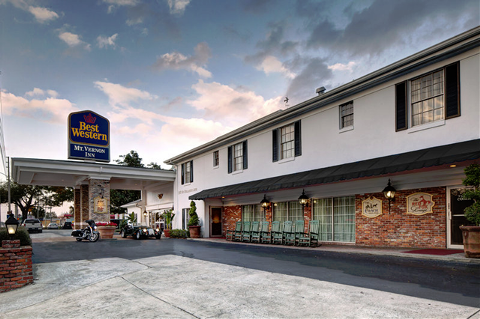
A Winter Park icon, the Mt. Vernon Inn, will close its doors forever on November 1. Long beloved by locals as a place to gather in the morning for breakfast or in the evening for drinks, the Red Fox Lounge will be replaced by three upscale restaurants boasting a combined total of 590 seats.

Rather than hotel rooms, the new establishment, to be known as The Luxe, is slated to have 53 apartment units with rents of $3,000 a month, according to the developer, Unicorp National Developments president Chuck Whittall. At a projected 223,940 square feet, the Luxe will be more than double the size of the Mt. Vernon and will require Unicorp to request a sort of hybrid zoning – a blend of the existing commercial C-3 zoning and a “planned development” category known as PD-1.
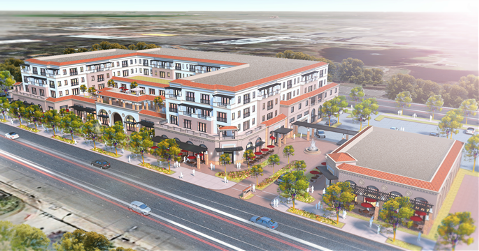
If the city grants it, this will be the first PD-1 zoning in Winter Park. A planned development is one that combines residential, retail and commercial establishments and is generally characterized by a high level of density.

Unicorp Needs Upzoning to Build The Luxe

Unicorp’s Chuck Whittall, who will be developing The Luxe if his deal to purchase the Mt. Vernon Inn goes through in early November, is entitled to ask for this blended zoning. The Winter Park City Commission, however, is in no way obligated to grant his request.
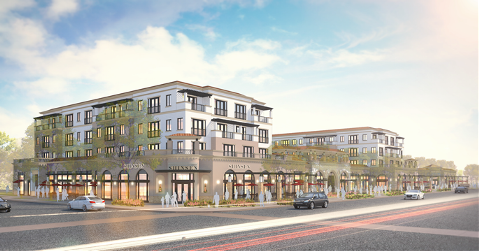
The issue is slated to come before Planning & Zoning on November 4, and then before the City Commission on December 8.

Unicorp: 7 Parcels on 17-92

Mr. Whittall has amassed an ambitious amount of real estate along Highway 17-92. In addition to Mt. Vernon/Luxe property, Whittall has Lakeside Winter Park, home to Trader Joe’s, Gardens at Ravaudage, the Fleming’s Steak House property, the former Wazzabi property, the Cold Stone Creamery / Math building and Winter Park Terrace, the former site of Starbuck’s – a total of seven holdings.

‘T.O.D.’ Hits 17-92
What we may be seeing is one example of Transit Oriented Development (TOD), which was described in a regional study created between 2007 and 2010 by the East Central Florida Regional Planning Council, entitled “The East Central Florida 2060 Plan.”

The East Central Florida region includes 68 cities in six counties – Orange, Osceola, Volusia, Seminole, Brevard and Lake.

2060 Plan: ‘Stop Urban Sprawl’

Creating a model by projecting current development patterns into the year 2060, the Planning Council found “a less than desirable and consumptive outcome that promotes sprawl . . . including irreversible damage to our environment and economy.”

The 2060 Plan is an attempt to avoid “development [ in ] the most critical ecosystems, [ promote ] denser growth in transit planned corridors, and [ to redevelop ] existing urban centers.”

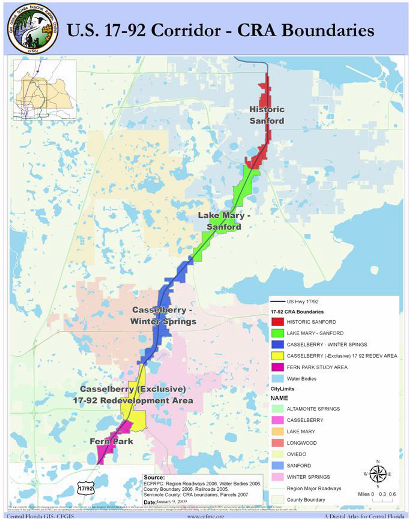
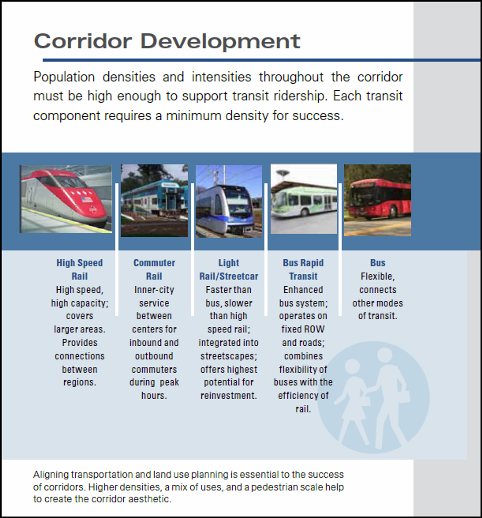
East Central Florida boasts one lone corridor, comprised of three parallel arteries – 17-92, a portion of I-4 and SunRail. According to the 2060 Plan, “Aligning transportation and land use is essential to the success of corridors. The 17-92 corridor will be a transit oriented development that “feeds” SunRail . . . .”

  ECF 2060 Plan

“Transit Doesn’t Work Without Density.”
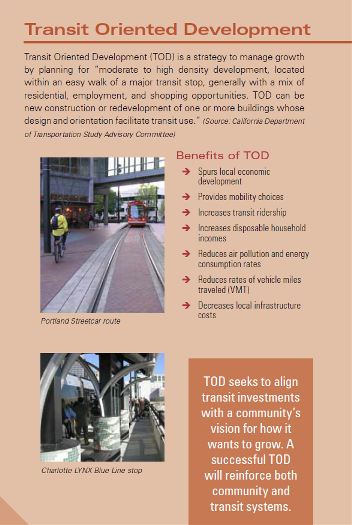
Transit Oriented Development is described in the 2060 Plan as, “. . . a strategy to manage growth by planning for ‘moderate to high density development, located within an easy walk of a major transit stop, generally with a mix of residential, employment, and shopping opportunities.”

Fred Milch, Transportation Planning Manager at the Central Florida Regional Planning Council, told the Voice, “Transit doesn’t work without density.”

Orlando Area Apt. Construction Jumps 56%

Chuck Whittall is not the only developer who has jumped on this bandwagon. According to the Federal Reserve Bank of Atlanta, the current pipeline of apartment construction activity in the Orlando metro area is the highest in the state.

It has gone from 3,640 starts in the second quarter of 2013 to 5,685 in the second quarter of 2014.

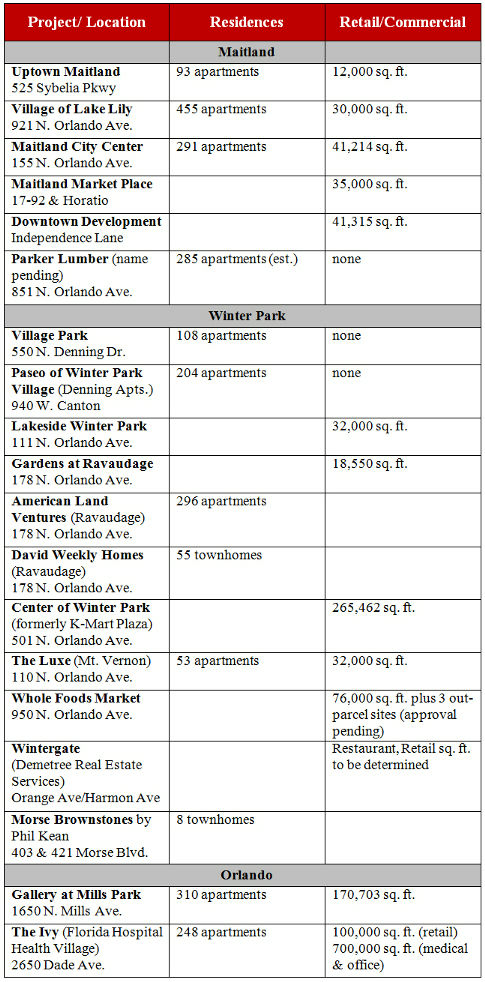
Listed below are developments — planned, under construction, or completed — along the Maitland-Winter Park-Orlando portion of the 17-92 corridor. Together, they represent 2,253 apartments, 63 townhomes and an estimated 1.4 million square feet of commercial and retail space – all worth in excess of $500 Million.

Florida Hospital Promotes TOD

Winter Park Mayor Kenneth Bradley’s employer, Florida Hospital, has been at the forefront of TOD promoters. In a letter dated May 12, 2011, Florida Hospital President and CEO Lars Houmann wrote to Governor Rick Scott, “Florida Hospital will work cooperatively with businesses and municipalities all along SunRail to enhance ridership and development.”

Mayor Bradley announced today in the Winter Park Observer that he would not seek another term as mayor. His current term expires in March 2015. Noting the sacrifices involved in holding public office, Bradley said, “I’ve done what I feel like I came to do.”

  FL Hospital Letter

No Gain Without Pain
Metroplan Orlando’s Executive Director Harry Barley is optimistic about the prospects. “This is an important regional corridor,” said Barley, “and it will fit with our regional vision for growth.” But the transition to TOD does not come without a price.

In Winter Park’s immediate future, 17-92 congestion and declining SunRail ridership are on a head-on collision course with the looming six and one-half-year reconstruction of I-4. According to one developer, “It’s going to be painful.”

SunRail Ridership Plummets

If the objective of TOD was to get us out of our cars and onto a train before I-4 construction began, that effort has failed.

According to the Orlando Sentinel, SunRail ridership has steadily declined. For example, Florida Hospital’s Health Village is a huge mixed-use complex that exactly fits the “Florida 2060” model. It has approximately 17,000 employees, their own rail stop which was financed by the hospital, and a subsidy for employees who ride the train to work.

In August 2014, the Florida Hospital stop had an average of 181 SunRail riders per day.

  Sentinel SunRail Story

No Coordination Among Corridor Cities

Asked if anyone was addressing the cumulative impact on the infrastructure along the corridor, Central Planning Council Executive Director Hugh Harling confirmed that all this new development falls within the jurisdiction of the local municipalities.

He said, “Each city operates independently.” And officials in Maitland and Winter Park, who asked to remain unnamed, said that each city is concerned with its own piece of the pie and that there is virtually no coordination among them.
They confirmed that there is no regional person or organization responsible for regional coordination or oversight.

Regional Vision vs. Local Vision

Clearly, there is a vision plan already on the books – and has been since 2010.

TOD is barreling down the tracks straight at Winter Park, and it seems to be arriving way ahead of schedule. It may be very difficult for the City of Winter Park to embark on a local visioning process without being overtaken by the regional juggernaut.
To comment or read comments from others, click here →

Will City Strike a Fair Deal to Buy Bowling Alley?

Will City Strike a Fair Deal to Buy Bowling Alley?

Some Say It’s a High Price to Pay


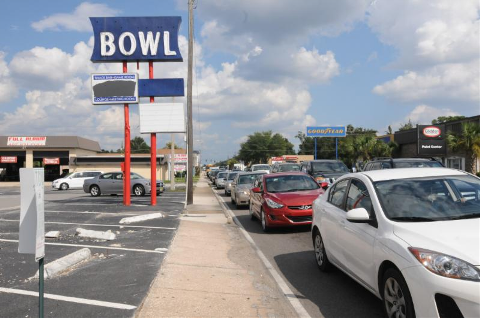
September 18, 2014 – High Noon. City Manager Randy Knight called a joint meeting of the Community Redevelopment (CRA) Advisory Board and the Parks & Recreation Board to discuss the purchase of the Fairbanks Avenue Bowling Alley at 1111 W. Fairbanks Ave. The two boards met at the Winter Park Country Club golf club house.
Scott Fish, of UP Developments, LLC, developer of the new Whole Foods, has contracted with Rollins College to purchase the bowling alley for $2,950,000. Fish is willing to assign his contract with Rollins to the city, so the city can buy the bowling alley property to extend Martin Luther King, Jr., Park.

City Rushes to Meet Deadline

The city will waste no time waiting until after the visioning process to seize the opportunity. The contract between UP Developments and Rollins is scheduled to close October 27, creating urgency among city staff to reach a decision. The matter will go before the CRA Board at 2:30 Monday, September 22, and will be on the agenda of the commission meeting which immediately follows.

Rollins Bought Property in 2013

Rollins purchased the bowling alley property in the late spring of 2013, when it looked like Harper-Shepherd Field would become a Minor League baseball stadium. Rollins needed space for other teams that use Harper-Shepherd. Being next to Martin Luther King, Jr., Park, the bowling alley property was an ideal location for Rollins to expand their playing fields.
When it became clear that baseball would not be coming to Winter Park, however, Rollins no longer needed expansion room and sought to sell the property. UP Developments, LLC,, stepped in and contracted to buy the property from Rollins.
Apparently, the city has been interested in the bowling alley property for some time, with an eye to expanding MLK Park and mitigating some of the traffic problems on Fairbanks. When they approached Scott Fish about it, Fish agreed to assign his contract with Rollins to the city, so that the city can buy the property from Rollins and UP Developments will withdraw from the transaction.

Purchase Will Expand MLK Park, Add Parking

City purchase of this property would expand MLK Park by approximately 1.6 acres, allowing for a non-regulation sized playing field. It would also create an additional 100 parking spaces for the park and for business establishments along Fairbanks and 17-92. Preliminary plans also call for an extended right-hand turn lane along west-bound Fairbanks at the intersection with 17-92.

Cost to City — $3.25 Million

The city proposes to pay for the property with funds from several different sources. They include:

CRA contribution from fund reserved for debt service $1,650,000
Parks Acquisition funds 975,000
Sale of city land at 300 Pennsylvania Ave. 625,000
TOTAL
$3,250,000

UP Development’s contract with Rollins is for $2,950,000. According to Winter Park Communications Director Clarissa Howard, the additional $300,000 the city is willing to pay would compensate Scott Fish for “real estate fees and site plan design fees associated with the property.”

“Is this a fair price?”

CRA Advisory Board member Daniel Butts asked City Manager Knight if he thought this was a fair price for the property. Knight replied, “It’s higher than market value,” but added that there has been no appraisal on the property.
Butts then wanted to know how much the city would lose in tax revenues. He pointed out that this expenditure would “wipe out the rainy-day fund” for CRA debt service. The debt he was referring to is on the Community Center in the Hannibal Square neighborhood. The “rainy day” fund would cover this debt service should property values fall again as they did in 2010-2011.

Land Acquisition Only the Beginning

Parks & Recreation Advisory Board member Janet Atkins pointed out that acquisition of the land was only the beginning, and that considerable additional funds would be required to demolish the building and to redevelop the property. It is also unclear who would pay for widening Fairbanks to create the right turn lane onto 17-92. She said, however, that “this is a great first step toward expanding this park.”

Parks & Rec Votes to Approve the Purchase

Parks & Recreation Director John Holland stated the land purchase would help meet the goals of the Parks & Rec Department in three ways. First, it would add park land, consistent with the Comprehensive Plan mandate to provide one acre of green space per 10,000 residents. “We are right on the line of meeting that level of service,” said Holland. He pointed out that there is a need for more multi-purpose playing fields. And, third, there is a current parking shortage at MLK Park.

CRA Votes Approval — with Strings Attached

The CRA Advisory Board, which voted separately, required more discussion. Daniel Butts wanted to know if the city had any other funding source. Noting that the city has reserves of $27 Million, Butts suggested the city contribute at least half of the purchase price to avoid depleting CRA contingency funds. He also urged Randy Knight and Planning Director Dori Stone to go to Scott Fish and to Rollins to re-negotiate the sale and come back with a better price. The CRA then voted three to two to approve as amended.
The measure is scheduled to go before the CRA at 2:30 Monday, September 22, and then to the Commission, which meets at 3:30 immediately following the CRA.

To comment or read comments from others, click here →

Yes, You Can Fight City Hall

Yes, You Can Fight City Hall

P&Z Turns Down Request for Hannibal Square UP-Zoning

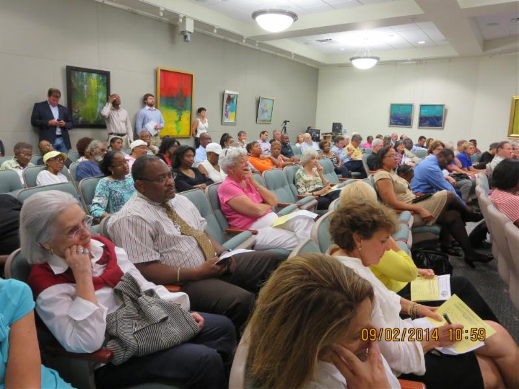
A phenomenon occurred on the night of September 2 as a standing-room-only crowd of Winter Park citizens packed the Commission Chambers for a Planning and Zoning (P&Z) Board meeting. The residents spoke; the Planning & Zoning Board members heard them.

Hannibal Square Neighborhood Character Threatened

 Hanging in the balance was the fate of the blocks bordered by Canton and Capen Avenues in the Hannibal Square neighborhood, where Sydgan Corporation, represented by Dan Bellows, sought to change the zoning from single family, detached dwellings, designated R-1, to R-2 zoning to accommodate a development of multi-family dwellings Bellows would like to build there.

Winter Parkers Take Back the Power

In what the Orlando Sentinel termed “the inescapable calculus that gives citizens clout over public policy,” citizens rose, one after another, to speak against the creeping encroachment of density and traffic in Winter Park neighborhoods, especially those on the west side of the city. They pointed out that Sydgan knew the property was zoned R-1 when they bought it, and that the Comprehensive Plan clearly set forth protections for the single-family, low-density residential character of the Hannibal Square neighborhood.

Bellows Skips Community Meeting

This was the third time Sydgan and David Weekly Homes had come before the city with a plan to build multi-family dwellings on the block of lots bordered by Canton and Capen. After a contentious meeting last spring, city planners had asked Dan Bellows to meet with Hannibal Square residents and reach some mutual agreement. Hannibal Square residents held a meeting at the Community Center, but Bellows did not attend. Instead he sent his lawyer. No compromise resulted.

Gary Barker took the podium to point out that it was not the duty of the P&Z to ensure that developers make money from properties they have bought. “You do, however, have an obligation to represent the will of the citizens of this town,” he said.

Residents Speak – Loud and Clear

“The commissioners have decided to do a visioning, so why in the world are we continuing to amend the Comp Plan and change the zoning?” argued neighborhood leader Mary Daniels. “When you are doing a vision plan, that includes your residents. The residents do have a voice and we ask that you hear us.”

Jennifer Anderson suggested the board members “hit the pause button” and wait until the city has worked through the visioning process before making a decision that could change the character of the neighborhood. It is unlikely the city would allow development of this sort on Palmer or Via Tuscany or in my neighborhood, she pointed out. “I would hope you would treat this community in the same way you would treat mine.”

Former Rollins College President Thaddeus Seymour observed that the representative for the builder, David Weekly Homes, referred to what he built as “product” rather than homes. “That sums up the problem for me,” said Seymour.

P&Z Hits the ‘Pause’ Button

As the board deliberated Sydgan’s request, it was clear that the voices of the citizens still rang in their ears. Board member Tom Sacha deplored the division that envelopes the city, with citizens polarized and seemingly unable to reach any compromise. “Let the visioning process work itself through,” he said. “We need to step back and pause for a moment.”

And in a clear demonstration of representative government, the Planning & Zoning Board denied Sydgan’s request for a zoning change by a four to two vote.


To comment or read comments from others, click here →

Citizen PACs Give Winter Parkers Stronger Voice at City Hall

Citizen PACs Give Winter Parkers Stronger Voice at City Hall

Mayor Bradley Pushes Back Against Baseball Petitioners & “No Density” Advocates

Even in the dog days of summer, Winter Park citizens are making a lot of noise, and the city is beginning to hear them.

While one Political Action Committee (PAC), “Protect MLK, Jr. Park,” was circulating a petition for an ordinance to prevent building a baseball stadium in Martin Luther King, Jr., Park, a second PAC, “Citizens for Managed Growth,” was formed to distribute the yellow “No Density” signs that currently dot the lawns of homes throughout Winter Park.

Chaired by Roderick Sward, Citizens for Managed Growth was formed in response to the June 9 commission vote to amend the Comprehensive Plan to allow increased density and intensity of development.

PAC Chairman Blindsided at Mayor’s Coffee Talk

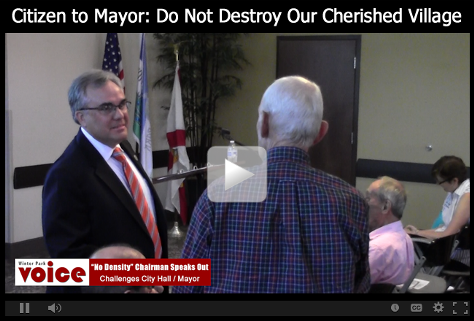
On Friday morning, July 11, at the mayor’s coffee talk at the Chamber of Commerce, Sward was caught off guard by Winter Park Hospital CEO Mayor Kenneth Bradley when Bradley unexpectedly handed him the microphone and asked him to explain the purpose of Citizens for Managed Growth.

Sward stood and articulated the concerns of Winter Parkers that the proposed changes to the Comp Plan would drastically alter the village character of Winter Park. He stated that the citizens felt they were not being heard by the city and had formed a PAC to publicly air their views by placing “No Density” signs around the city.

The following Monday, July 14, the commission convened to consider, among other things, the final reading of the ordinance to prevent a Minor League baseball stadium from being built in Martin Luther King, Jr. Park.

Mayor’s Amendment Fails to Force a Referendum

The ordinance had some rough early innings, as an essential paragraph had been accidentally omitted by the City Attorney’s office. Assistant City Attorney William E. Reischmann corrected the error, however, and the ordinance in its original form came up for discussion and a final vote.

Insisting that Martin Luther King, Jr. Park had never been seriously considered as a stadium venue, Mayor Bradley proposed a minor amendment to the effect that the measure would become an ordinance “if the city decided to build a baseball stadium.” This action could have forced the ordinance onto the ballot as a referendum.

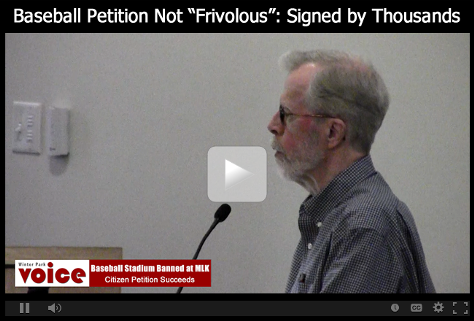
Rebutting the mayor’s dismissal of MLK Park as a serious possibility for the baseball stadium, PAC Chairman Gene Randall pointed out that MLK was very much in the running as a site for the stadium until the formation of the PAC, when it suddenly dropped to the bottom of the list. “This wasn’t a frivolous ordinance at the time we formed the PAC,” said Randall. (Video 16:22)

Bradley Confronts Citizen PAC Chairman in Audience

As the issue finally came to a vote, Bradley’s amendment failed and the commission voted unanimously to pass the ordinance as it was brought by the citizens to the city. Bradley then called a recess.

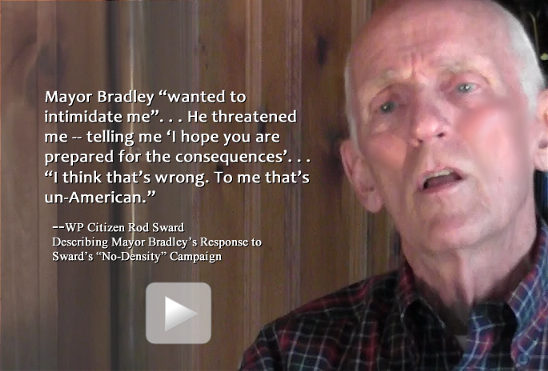
With MLK Park now safe from the baseball stadium, the crowd of citizens milled around the ante chambers, turning their attention to the proposed changes to the Comp Plan. Mayor Bradley emerged from the chambers and approached Rod Sward, interrupting Sward’s conversation. Bradley demanded to know who had contacted him to form the Citizens for Managed Growth PAC. When Sward declined to answer, Bradley admonished him to be “ready for the consequences.” In a subsequent interview with the Voice, Sward described his encounter with the mayor. Mayor Bradley did not respond to the Voice’s request for comment.

Comp Plan Amendment Due Back Any Day

When asked if they had received approval for the proposed Comp Plan amendment that was sent to Tallahassee in mid-June — the subject of Citizens for Managed Growth and their “No Density” signs — City Planning Manager Jeff Briggs responded that staff had not yet received it, but that they expected it any day. “However,” said Briggs, “staff is now working on visioning . . . The amendment does not have to be considered now.”

Briggs was referring to the fact that the commission has 180 days, or six months, in which to act on the proposed amendment once it is approved in Tallahassee. If they fail to act within that time, the amendment simply dies.

Will the amendment be part of the larger vision?

As to the probable disposition of the amendment, several possibilities exist, though no one claims to know what will happen. The commission could bring it up for a vote as soon as they receive it from Tallahassee. They could wait for five to six months before they act. They could consider the amendment within the context of the visioning process and let the results of that process guide their decision. Or, they could decide to reframe the amendment to conform with the final results of the visioning process.

Mayor Flips a U-Turn on Visioning

What seems to be driving city staff’s attention away from Comp Plan amendments and focusing their efforts instead on visioning has to do with Mayor Bradley’s own vision of the visioning process. Bradley has gone from resisting a visioning effort involving “the same 24 angry citizens” to moving full bore toward what he terms a “scientific” visioning process to determine the future direction of the city.

City Staff Works to Structure the Process

Asked whether the city has identified a consultant to guide the visioning process, Briggs said they had not. He explained that there is much work to be done before anyone knows what form the visioning process will take. Choosing a consultant “is not like bidding out tires,” said Briggs. Staff will need further direction from the commission regarding the choice of a consultant, how the surveys will be conducted and the overall budget parameters.

Citizen Voices Equal in Weight to Voices of Advisory Boards

Communications Director Clarissa Howard confirmed that the planning staff is working hard to structure the visioning process. She said that the visioning would not result in a new Comprehensive Plan, as had been previously suggested, but that the results would be used to review the current plan.

She confirmed that City Advisory Boards would have an active role in the visioning process, but said, “The voices of the citizens will be equal in weight to the voices of the [ advisory ] board members. Outreach is very important to city staff.”

To comment or read comments from others, click here →