|
 On a rainy June night, after a long and sometimes acrimonious meeting, the Winter Park Commission voted three to two in favor of a sweeping amendment to Chapter 58 of the Comprehensive Land Use Plan that would open Winter Park’s floodgates to increased density and intensity along all major four-lane roads. On a rainy June night, after a long and sometimes acrimonious meeting, the Winter Park Commission voted three to two in favor of a sweeping amendment to Chapter 58 of the Comprehensive Land Use Plan that would open Winter Park’s floodgates to increased density and intensity along all major four-lane roads.
The same three commissioners – Steven Leary, Sarah Sprinkel and Mayor Kenneth Bradley – also voted to remove parking garages from the calculation of the allowable size of commercial buildings.
A request to make these revisions to the Comprehensive Plan will now be submitted to the Florida Department of Economic Opportunity (DEO) in Tallahassee. The DEO review process will take approximately three months; if the DEO approves the request, city staff has an additional 45 days to bring the revisions back to the commission for a final vote.
If that time table holds, a final vote on proposed changes to the Comprehensive Plan is due sometime in mid-November 2014.
Are Winter Parkers Ready for Bigger Buildings & More Parking Garages?
The increase in density would be enabled by merging two land use categories into one high-density category designated simply “Planned Development (PD).” In the staff presentation, Director of Planning Dori Stone and Planning Manager Jeff Briggs discussed the advantages of Planned Development, explaining that replacing parking lots with parking garages would reduce the appearance of urban sprawl. They cited the strip mall parking currently fronting 17-92. A Planned Development would place a parking garage discreetly behind the building, allowing more green space and improving the appearance from the road. Removing the square footage of the parking garage from calculations of allowable building size, known as the Floor Area Ratio, or FAR, would provide more space for commercial enterprise.
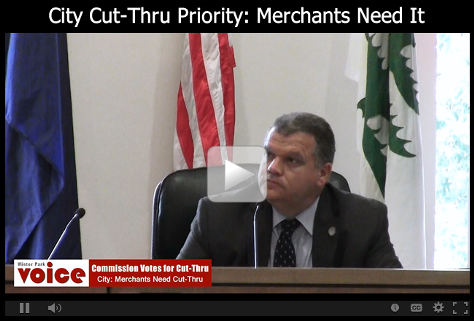
Commissioner Sarah Sprinkel asked Dori Stone, “Why would someone want a PD [ Planned Development ]?”
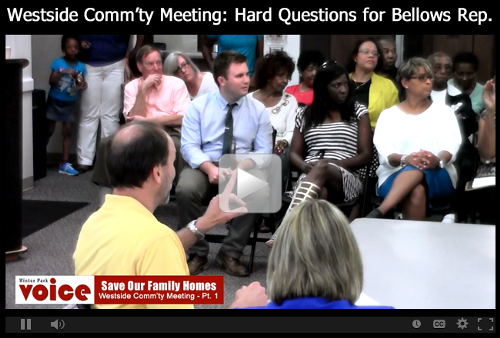
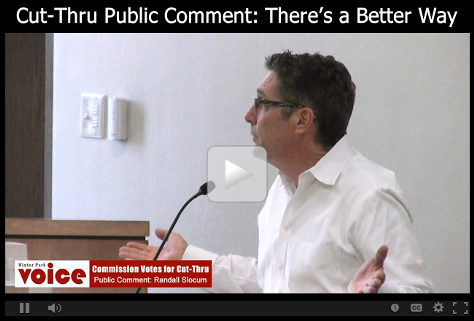
Stone replied, “They might get a little more density and intensity . . . they might also be able to get that parking garage that would allow them to have that 200% FAR.” (Click image above for video.)
City Proposal Allows Planned Developments to Move Closer to Park Avenue
Both the commissioners and the citizens in attendance expressed mixed feelings about Planned Development. Examples of PDs are Baldwin Park, Celebration and Lake Nona. Some noted that Winter Park is not Baldwin Park and doesn’t want to be, while others acknowledged the advantages of placing Planned Developments west of 17-92 and along Lee Road in areas that need revitalization.
 The real bone of contention was ‘more density and more intensity.’ Winter Park residents who attended that June 9, 2014, commission meeting were not ready for it. The real bone of contention was ‘more density and more intensity.’ Winter Park residents who attended that June 9, 2014, commission meeting were not ready for it.
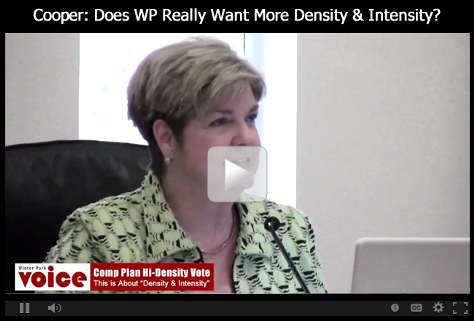
Commissioner Carolyn Cooper summed it up when she said, “What we are talking about here is density and intensity of land use . . .”
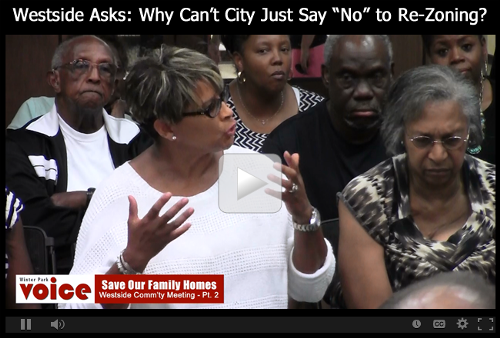
Cooper explained that she had worked in the past to have PDs in certain carefully selected areas west of 17-92. PDs would give the city more flexibility in negotiating with developers to achieve better projects and to get more green space. She said, at that time the city was willing to accept more density and intensity in those areas in order to get better developments. “But,” she asked, “is it really necessary to subject the community to a change in intensity and density . . . from 45 percent to 200 percent? That’s where the rub happens.”
Cooper: Surveys Show Citizens Want Development “Cautiously Controlled”
“We did surveys in those days,” she continued, “. . .and found we had a population that wanted development that was cautiously controlled.”
Prohibiting high density construction east of 17-92, especially high density for any single retail establishment, ensured among other things that there would be no ‘big box’ stores in the core of Winter Park. If the proposed revisions to the Comprehensive Plan are approved, this ‘firewall’ protection would be eliminated.
Commissioner Tom McMacken asked city staff for confirmation that the proposed Comp Plan changes would go to Tallahassee for DEO review, would come back in approximately three months with DEO comments and suggestions, and that staff would have 45 days to address any DEO concerns and to make appropriate revisions to the Land Development Codes that accompany the Comp Plan before they presented the final version to the commission for a definitive vote.
Broad Cross-Section of Winter Parkers Step Forward to Oppose Comp Plan Change
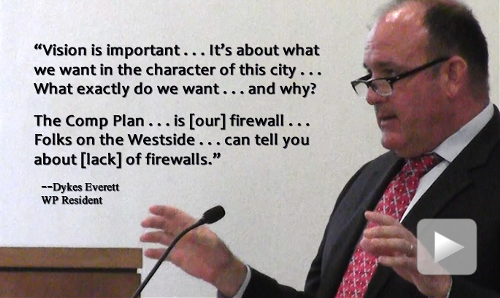 As staff concluded their presentation, the floor was opened for public comment. Twenty-five citizens offered comment. As staff concluded their presentation, the floor was opened for public comment. Twenty-five citizens offered comment.
Twenty-four spoke against making such sweeping changes to the Comprehensive Plan, one spoke in favor.
It was clear from the tenor of the comments that the objections were less about Planned Development and more about the elimination from the Comp Plan of protections against commercial encroachment on residential areas.
Commissioner Leary Called Out for Possible Conflict of Interest
The second speaker, Judy Maynard, nearly derailed the meeting by suggesting that Commissioner Steven Leary, whose company recently purchased the former Thomas Lumber Company property on Orange Avenue, recuse himself from the vote. She said that because Orange Avenue is one of the four-lane roads that would be eligible for a PD, Leary would unfairly benefit from approval of the proposed zoning changes.
Although her comment drew a firestorm of procedural protest from Mayor Bradley, Ms. Maynard was, eventually, able to state her position. Click Maynard image below for video of the exchange.
 |
Citizen: “Commissioner Leary . . . I feel that you have a vested . . .” [ Mayor interrupts ]
Citizen: “Regarding Commissioner Leary . . .” [ Mayor interrupts ]
Citizen:“I believe that Commissioner Leary . . .” [ Mayor interrupts ]
Mayor:“I’m telling you [ your comment ] is inappropriate . . .”
Citizen Explains:“I believe that [ Leary ] should recuse himself from this vote . . . He has a vested interest with his property . . . He can use [ this vote ] for his own benefit.”
–Exchange between Mayor Bradley & WP resident Judy Maynard during Public Comment segment of City Hearing.
|
 |
City Attorney Asks State Ethics Commission for Opinion on Possible Leary “Voting Conflict”
In May 2014, City Attorney Larry Brown filed a “Request for advisory opinion on behalf of a member of the City Commission of the City of Winter Park.” The May 6 filing, made on behalf of Commissioner Leary, included this summary:
“A member of the Commission of the City of Winter Park is 1 of 14 partners in a limited liability company that owns property located across the street from one of several sites the City is currently considering as a site for a minor league baseball stadium.2 The Commissioner requests an opinion whether his vote on the selection of a site for a minor league baseball stadium is prohibited as a voting conflict under Section 112.3143, Florida Statutes, because the vote would inure to his special private gain or the private gain of his business associates with whom he is involved in the ownership of the property.”
The City’s advisory request is still being considered by the State Ethics Commission. A decision is expected within the next 30 days.
Request for Ethics Opinion
State Ethics Commission Denies Leary Request to Remain Anonymous
 Mr. Brown closes his letter to the State Ethics Board with this request: “We will greatly appreciate your opinion on behalf of the City of Winter Park and this individual Commissioner whose name should be withheld at his request from the opinion.” Mr. Brown closes his letter to the State Ethics Board with this request: “We will greatly appreciate your opinion on behalf of the City of Winter Park and this individual Commissioner whose name should be withheld at his request from the opinion.”
Brown’s request was ultimately denied by the Florida Commission on Ethics attorney:
“Although no opinion will be published (placed on our website upon issuance) with the City Commissioner’s name in it unless he grants permission, we need his name for our records and in order to move forward with your inquiry; and there is no anonymity for him (for example, his name may appear in meeting materials posted on our website prior to the meeting in which the opinion request will be considered by the Commission, or a person could make a public records request and learn his name).”
Denial of Anonymity
Tensions Run High as Citizens Challenge Commissioners: “Who Supports This Plan?”
Tension continued to build as citizen after citizen rose to speak. They entreated the commissioners to listen to homeowners and leave the current Comp Plan in place until the city can ascertain what effect current unfinished construction, plus the imminent I-4 construction, will have on roads and infrastructure. They worried about increased pressure on public safety services that would result in longer emergency response time.
A recurrent theme was the lack of planning and opportunity for public input and the speed with which the commission was putting forward the proposed changes. Michael Spencer of Orange Avenue noted that the 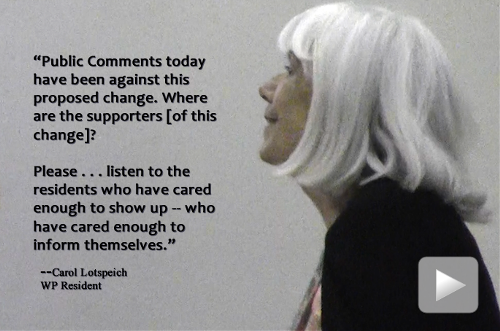 proposed changes are not in keeping with the vision of the Comprehensive Plan. proposed changes are not in keeping with the vision of the Comprehensive Plan.
The city has the luxury of being in good financial shape, he noted. He urged the commission to “take a step back” and seek input from all the stakeholders before deciding to change the Comp Plan.
One after another, residents urged the commission to “step back,” “slow down,” seek public input.
Carol Lotspeich wondered, “Where are the supporters?” noting that all public comment to that point had been opposed to the proposed changes.
“You’ve been elected by the tax-paying residents of Winter Park to represent the interests of those residents.” she said.
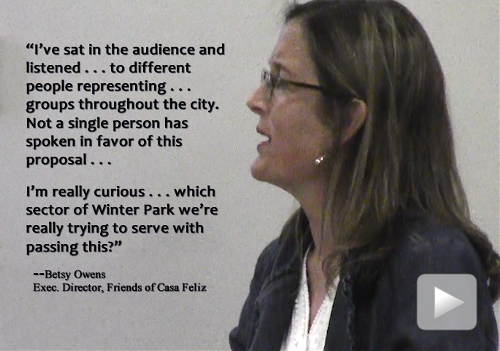 Betsy Owens, Executive Director, Friends of Casa Feliz, rose to speak reminding Commissioners that none of the “different people representing different professions, neighborhoods, socioeconomic and racial groups throughout the city” had spoken in favor of the Comp Plan change. Betsy Owens, Executive Director, Friends of Casa Feliz, rose to speak reminding Commissioners that none of the “different people representing different professions, neighborhoods, socioeconomic and racial groups throughout the city” had spoken in favor of the Comp Plan change.
Winter Park resident Pat MacDonald noted that the report from Wallace, Roberts and Todd LLC, consultants hired by the city, strongly recommended receiving input from the community. “That just doesn’t seem to have happened. What happened there?” she asked.
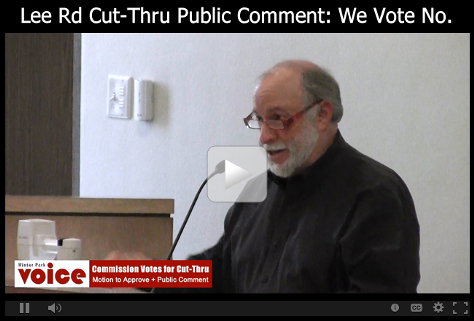
Video of All Public Comments
In his remarks stating that he would not vote to approve the proposed Comp Plan changes at this time, Commissioner McMacken appeared to endorse the residents’ requests for a visioning process.
“A visioning process goes way beyond where we are this evening,” he said. “I voted for the Lee Road extension because I believed that was necessary. This change is not necessary. At least, not at this time.”
Video of McMacken Remarks
Comp Plan Change Passes on 3 to 2 Vote
The motion to send the request to change the Comprehensive Plan to Tallahassee for their review passed on a 3 to 2 vote: Bradley, Sprinkel and Leary in favor, Cooper and McMacken opposed.
Late Night Meeting Ends With Commissioners Trading Accusations
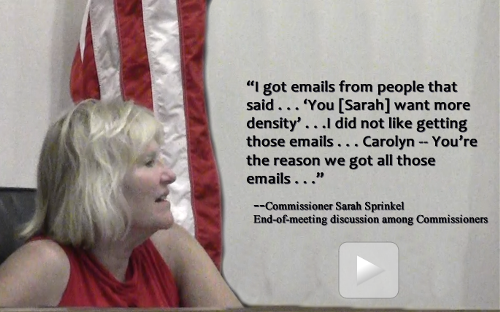 After the chambers had cleared and only the commissioners and a few staff remained, the commissioners paused to reflect on how they thought the meeting had gone. The type of tense exchange that ensued has become commonplace on this commission. After the chambers had cleared and only the commissioners and a few staff remained, the commissioners paused to reflect on how they thought the meeting had gone. The type of tense exchange that ensued has become commonplace on this commission.
Commissioner Sprinkel accused Commissioner Cooper of “inciting” the public with her emails.
Sprinkel, Mayor Bradley and others have complained for years about Cooper’s newsletters and the discomfort it occasionally causes for Commissioners.
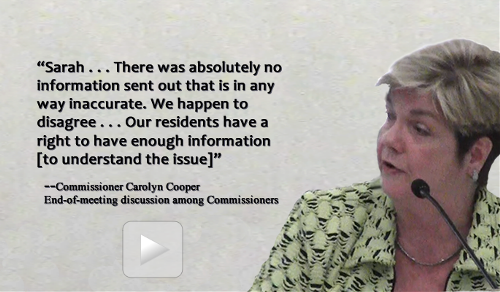 Commissioner Cooper countered with a suggestion that the City offer its citizens more opportunities to learn about City initiatives. Commissioner Cooper countered with a suggestion that the City offer its citizens more opportunities to learn about City initiatives.
“The problem is, the public never sees us discussing how we might be able to come to some sort of agreement . . . That’s what workshops and visioning could do.”
Cooper assured Sprinkel and others on the Commission that she will continue to send information to citizens: “I will continue to communicate with people . . . I will continue to say when I think it’s important that they participate.”
Bradley: I Don’t Want Visioning Sessions if These Citizens Will Be There
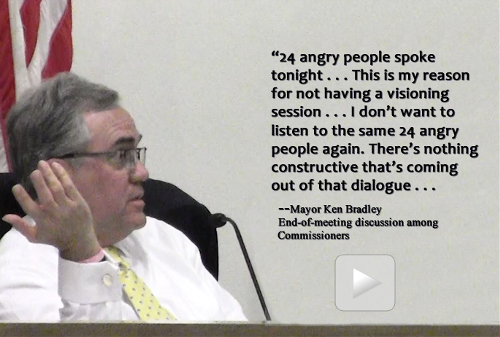 After further exchanges about how public input might best be handled, Mayor Bradley offered his opinion of the visioning process. After further exchanges about how public input might best be handled, Mayor Bradley offered his opinion of the visioning process.
“I can’t let this evening go without a few comments . . . twenty-four angry people spoke tonight.
“They were vetted and baited into that . . .
“There were comments tonight made that developers are bad.
‘This is about greed’ somebody said. Greed! Where is greed coming from in this?”
Video of All Commissioner Remarks
Meeting Discord and Comp Plan Vote Spark Strong Citizen Response
Word of this meeting spread quickly. On June 14, Lisa Everett circulated an email in which she responded to an email from Commissioner Sarah Sprinkel in which she defended her vote for the changes. In the text of this email, Everett wrote, “We deserve to understand why the City is acting on discrete recommendations while completely ignoring the fundamental WRT recommendation that the City first ‘[ d ]evelop a methodology for conducting a 9-12 month long city-wide visioning process with ample opportunities for meaningful public input.”
Retired Judge Cynthia MacKinnon: WP Commissioners Arrogant, Dismissive, Demeaning
On June 17, retired 9th Judicial Circuit Court Judge Cynthia MacKinnon wrote in a ‘My Word’ column in the Orlando Sentinel, “City staffers and commissioners display a stunning disinterest in citizen questions and concerns about the future of our community. For a real lesson in arrogant governance, watch videos of commission meetings as commissioners dismiss and demean citizens who question commissioners’ recent vote to amend the Comprehensive Plan. . . .”
Former County Commissioner Segal: WP Officials Should Learn to “Disagree Without Being Disagreeable”
Remarking on MacKinnon’s column, former Orange County Commissioner Bill Segal wrote on his Facebook page, “. . . . I am hearing and feeling great deal of concern from people I have come to know as reasonable. I have also heard from people who have been to the meetings that disagreement is not welcome. Sure hope this board doesn’t turn the Council back over to the No growth folks because of actions and/or demeanor.”
To a friend who responded to his post, Segal wrote further about MacKinnon’s column, “On its best day, you get 2 Winter Parkers together and you get 3 opinions. . . .It also touched on the fact that we are in a time of great change in what has been a bit of a “Village”. Much of it I may agree with, but Our City Council needs to be mindful that much is happening all at once, people need to be educated, have the issues explained, and part of the job when serving on these Councils includes the tough job sometimes of having to take a punch, without punching back, and the willingness to “suffer fools”, to listen and perhaps disagree without being disagreeable. Many “Centrist” Winter Park Residents, need to feel that they are informed, and that our “Electeds” don’t take a “just trust us” attitude.”
Local Academic Explains How Increasing Density Can “Cannibalize Neighborhoods”
On June 13, Richard Reep, an architect with VOA Associates, Inc., and an adjunct professor for the Environmental and Growth Studies Department at Rollins College, wrote in New Geography “When, in the process of allowing density, a city destroys the very values that it is supposed to promote, then the city ends of cannibalizing its neighborhoods for little benefit other than the one-time gain that the developers will realize from the sale of these newly built products. Income streams are put into mortgage-holders’ pockets, and . . . one more highly localized economy disintegrates.”
Link to Reep Article
At June 23 Commission Meeting City Officials Attempt More Civil Approach to Bridging Deep Divide in WP
Two weeks later, the June 23 commission meeting promised to end on a somewhat more harmonious note than its predecessor on June 9. The mayor and commissioners agreed that the city needs to provide more information to its citizens in advance of taking action on issues that will have long-term effect.
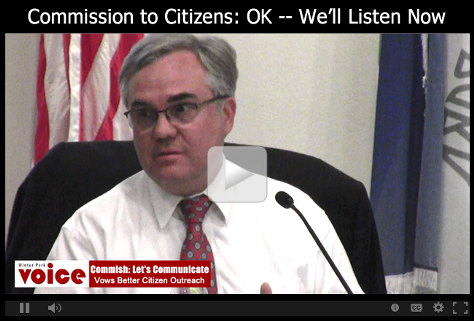 Ms. Sprinkel described a workshop she attended called “Shared Values & Shared Future,” conducted by Central Florida Regional Leadership. “If you go out to our community,” she said, “our community will tell you it’s all about how we feel. . . . We have to pay attention that whatever people feel, is reality.” Ms. Sprinkel described a workshop she attended called “Shared Values & Shared Future,” conducted by Central Florida Regional Leadership. “If you go out to our community,” she said, “our community will tell you it’s all about how we feel. . . . We have to pay attention that whatever people feel, is reality.”
Commissioners Sprinkel and Cooper made several suggestions about information that could be posted on the city’s website. Commissioner Cooper expanded on Sprinkel’s remarks by suggesting that proposed changes to the Comprehensive Plan also be posted on the city website before they come before the commission.
Until this point, the commissioners seemed to be in general agreement that there was a need for more education and transparency. Mayor Bradley, however, expressed disagreement, saying he believed the citizens are disagreeing with the vision currently in place and that the real problem lies with the Comprehensive Plan itself — that citizens are “mad” at the current Comprehensive Plan. “They’re mad at what’s being built at the DMV site” he said. “They’re mad at other kinds of developments that are being done under our current Comprehensive Plan. So I think it’s time to do a ‘touchpoint . . .” Bradley asserted that it’s time for the City to take a look at updating and revising the current Comprehensive Plan.
Bradley asked that at least two of his fellow commissioners commit to creating an agenda item calling for a “community-wide scientific process” to ascertain the true feelings of all the citizenry and to guard against the distribution of “misinformation.”
The final exchange between the mayor and Commissioner Cooper demonstrated just how thin is the veil of civility. After several interruptions, Ms. Cooper was able to point out that the only reason some of the developments citizens dislike were approved is “because we as a commission voted [ in prior years ] to make three major changes to the Comprehensive Plan.
–We voted to increase allowable building height from three to four stories.
–We changed the zoning from office or commercial (45% to 60% FAR) to R4 (200% FAR).
–And we passed a special change to allow us to increase the density by utilizing the density on the adjacent lot.”
“So it’s not quite fair to say that all this has happened under the current Comprehensive Plan as it is,” she said, “because the only way it was able to happen is because we, as a legislative body, made those changes.” |

 Unicorp has failed to close on the deal, and the sale will not proceed.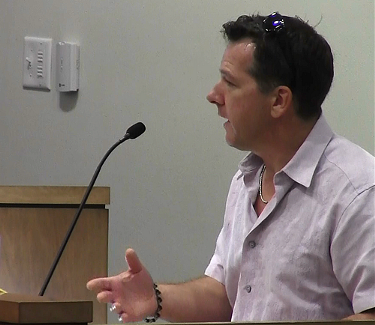






 – The city was not adequately informed or prepared to make this decision at this time.
Recent Comments