Upcoming Demolitions: At Racquet Club, a Gamble Rogers House and Park Ave Apartments
Two city advisory boards will consider the three projects this week
Oct. 7, 2025
By Beth Kassab
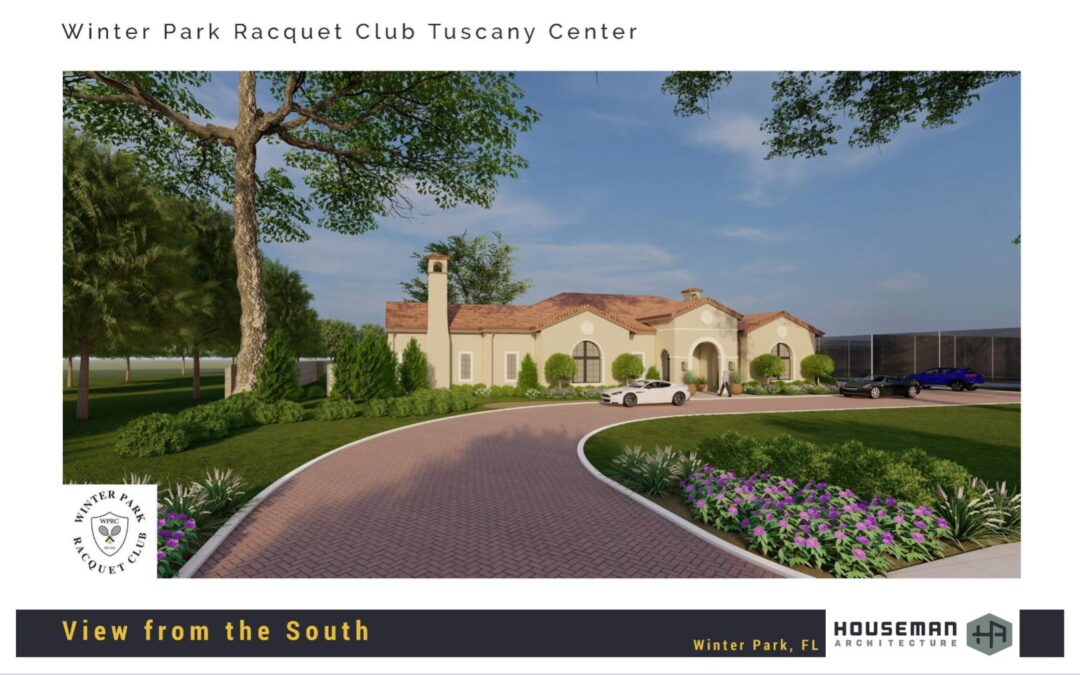
One of Winter Park’s most exclusive hang-outs wants permission to demolish a 5,400-square-foot two-story building at the front of its property and build a larger one-story structure to house a fitness center, locker rooms, tennis shop and offices.
The Planning & Zoning Board will consider the proposal Tuesday evening by the Winter Park Racquet Club, a private club that dates back to the early 1950s on Lake Maitland that offers swimming, dining, pickleball and tennis with initiation fees that run upwards of $22,500, according to one document that advertised a job posting there.
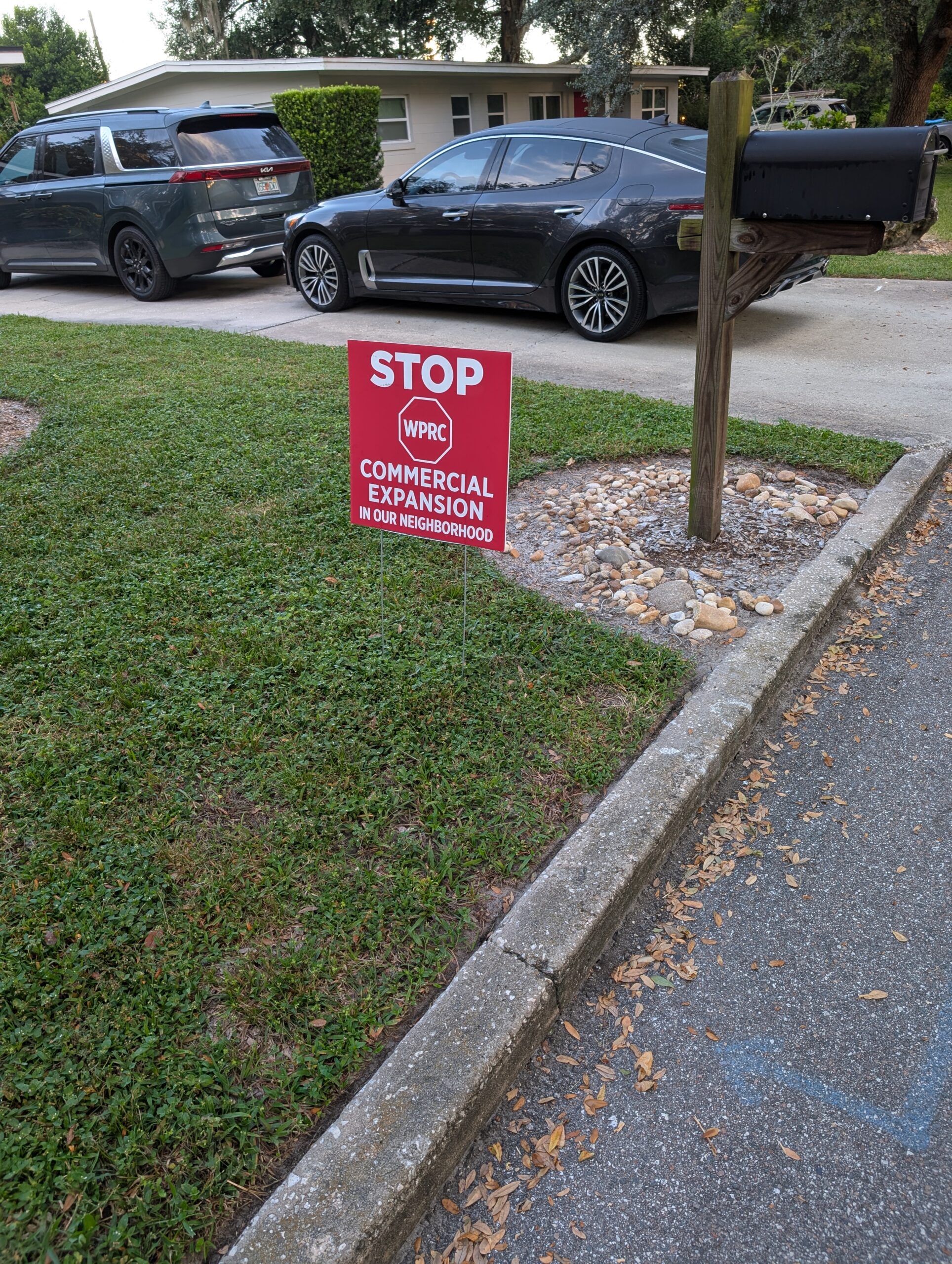
The changes at 2111 Via Tuscany have drawn criticism from neighbors on the residential street who say they are worried about commercial-like development, traffic and noise. As a result, the proposal has gone through revisions since the concept was tabled at the Sept. 2 Planning & Zoning Board meeting.
“The style will add cohesion to the rest of the club buildings, including the original clubhouse which was designed by [local architect James] Gamble Rogers,” read a description submitted by the club. “It will also mimic the aesthetics of neighboring homes, and the intent is for people driving by to assume that it is a residence that has been here all along.”
Residents expressed concerns about the disruptions to be caused by construction, light pollution, parking and other issues, according the minutes of a neighborhood meeting.
“I am extremely concerned that this project continues to seek to convert this house into a commercial multi-use facility,” Marci Greenberg, who lives across the street, wrote to the city, one of a number of emails received about the project. “With the new plans, there will still be a significant increase in traffic, parking in front of the building (as the new circular drive is 20 ft wide which is as wide as Via Tuscany) and an increase in noise. The current house, as such, contributes to the character and ambiance of the neighborhood. The proposed building looks commercial and detracts from our residential neighborhood.”
The club manager did not return a call for comment, but documents say the club is on a “membership waitlist” and is not accepting new members, meaning the project is not intended to allow any growth or expansion of services.
In response to concerns, the club has removed from the plans new parking that was to be added in front of the building and replaced it with a circular driveway.
City staff is also requesting other conditions such as the hours of operation remain the same, no new lighting be added and most exterior lights (other than for safety purposes) be turned off by 10 p.m.
Noise issues are also being addressed, according to the staff report.
“[The club] is proposing a six-foot acoustic sound barrier behind the eight-foot podocarpus hedge in front along Via Tuscany to screen the parking and buffer the noise concerns raised by the neighborhood,” it said. “This sound barrier will be the same barrier used to buffer the pickleball courts that is designed to reduce noise levels in outdoor settings and is made of a dense, soundproofing composite, and unlike a solid and rigid concrete wall, it both blocks and absorbs sounds more effectively.”
Another Gamble Rogers House Likely Gone
Not far from the Racquet Club is a secluded peninsula that stretches into Lake Maitland from its eastern shore called the Isle of Sicily — one of the city’s richest streets. James Gamble Rogers II, who also designed the racquet club, constructed the first home on the isle about 1930, an 1,800-square-foot French provincial home known as Four Winds that the famed architect lived in with his family until 1949.
Now the house at 3 Isle of Sicily is likely to be torn down as part of a plan to builder a larger home on the property.
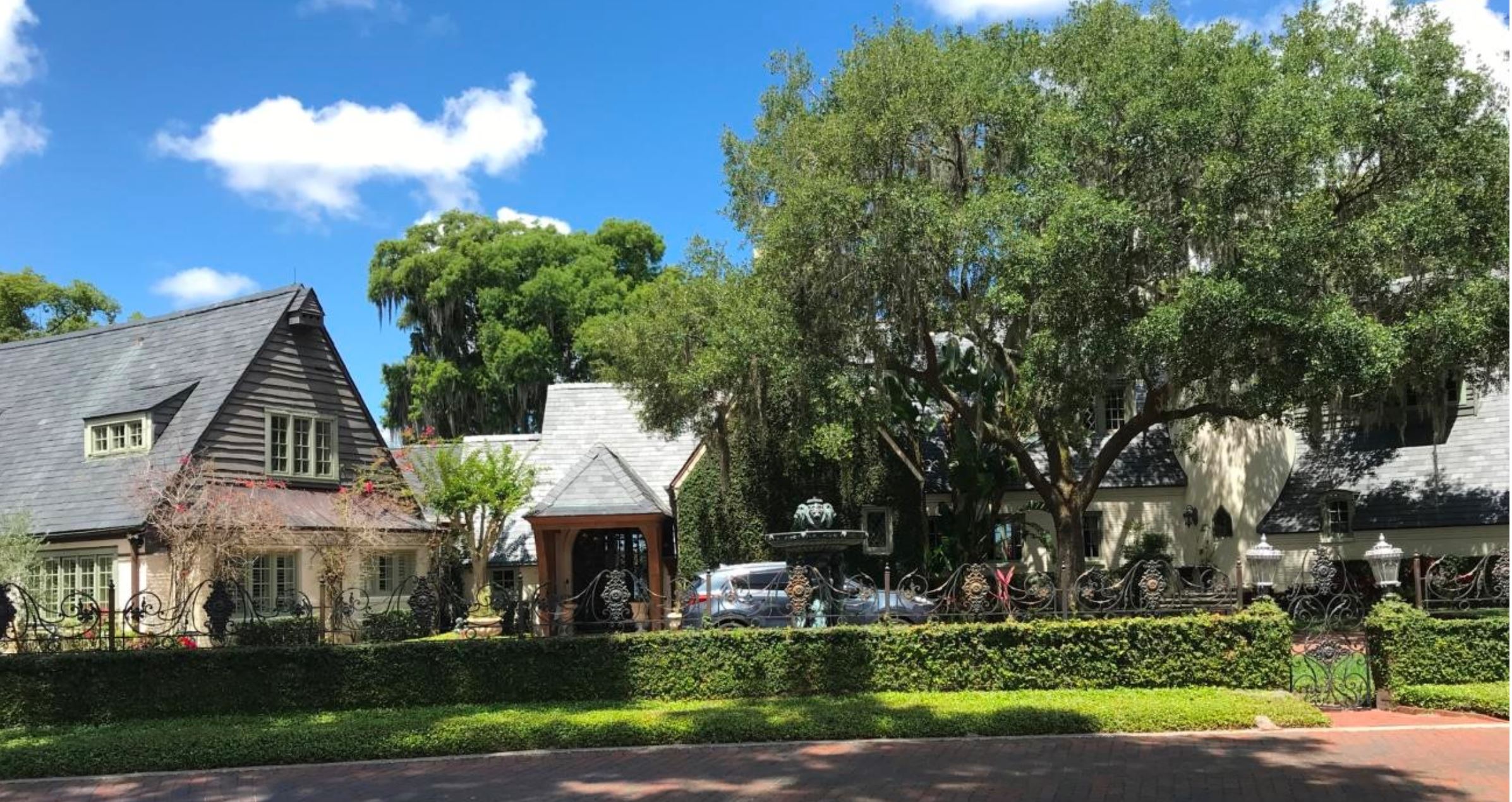
Over the years, the house was renovated extensively and now sits at more than 7,000-square feet.
Owners Kamran and Mina Khosravani, who acquired the property in 2011, are looking to build a new home that will top 10,400 square feet.
The home is not on the city’s historic register so the owners don’t need permission to demolish it, but will ask the P&Z Board today for approval of the new lakefront construction.
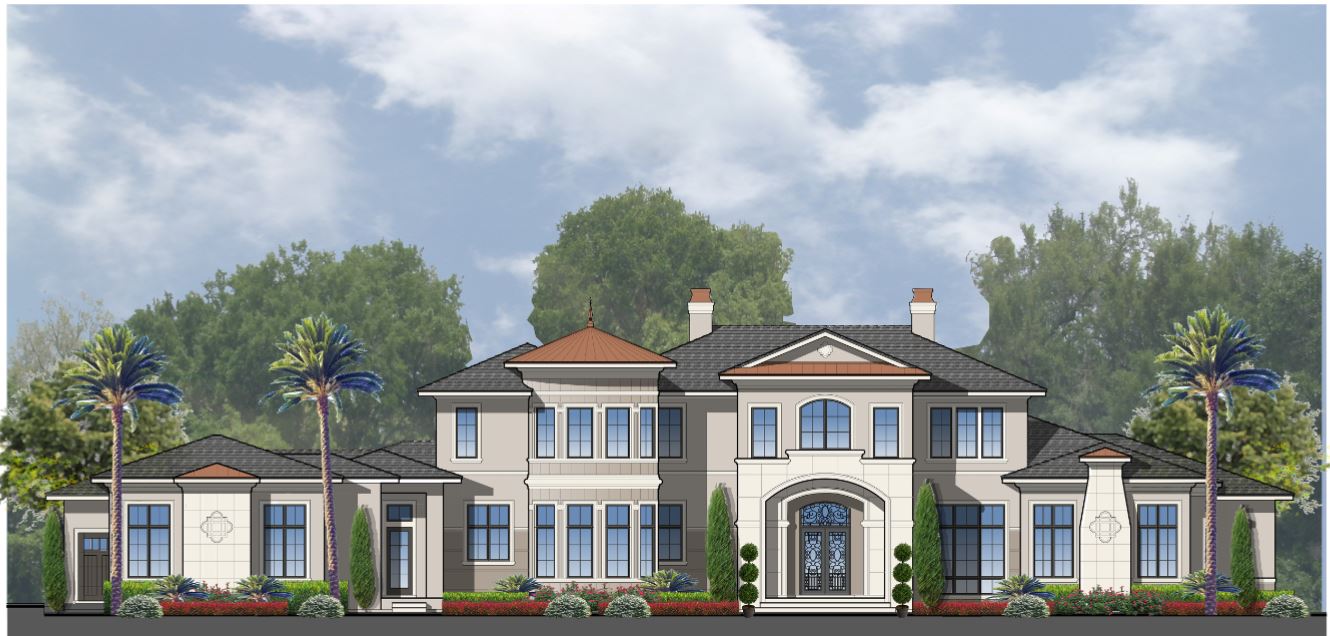
Jack Rogers, architect and son of Gamble Rogers, said he’s sorry to see the house come down, but it hasn’t looked like the original in decades.
“Unfortunately, the damage was done 50 or more years ago,” Rogers said. “The original house is completely gone.”
His father, who is also known for the Florida State Supreme Court Building in Tallahassee and the Olin Library on the Rollins College Campus, built about 50 houses in Winter Park, he said. His papers and plans are preserved at the Winter Park Library.
“There’s probably 15 or 20 left and eight or 10 are absolutely precious and we seem to be losing them at the rate of one or two a year,” Rogers said. “We still have several wonderful examples.”
Park Ave Apartments Face Demo for Townhomes and Synagogue
The apartment buildings dating back to 1922 known as El Cortez could be demolished to make way for new townhomes and a new synagogue if the Historic Preservation Board approves a proposal up for consideration on Wednesday.
The board tabled the request at its Sept. 10 meeting in order to see if the developer could save one of the three buildings at 210 E. Morse Blvd. that are part of the Interlachen Avenue Historic District. The property is also the last R-4 zoned land just off Park Avenue that has yet to be redeveloped.
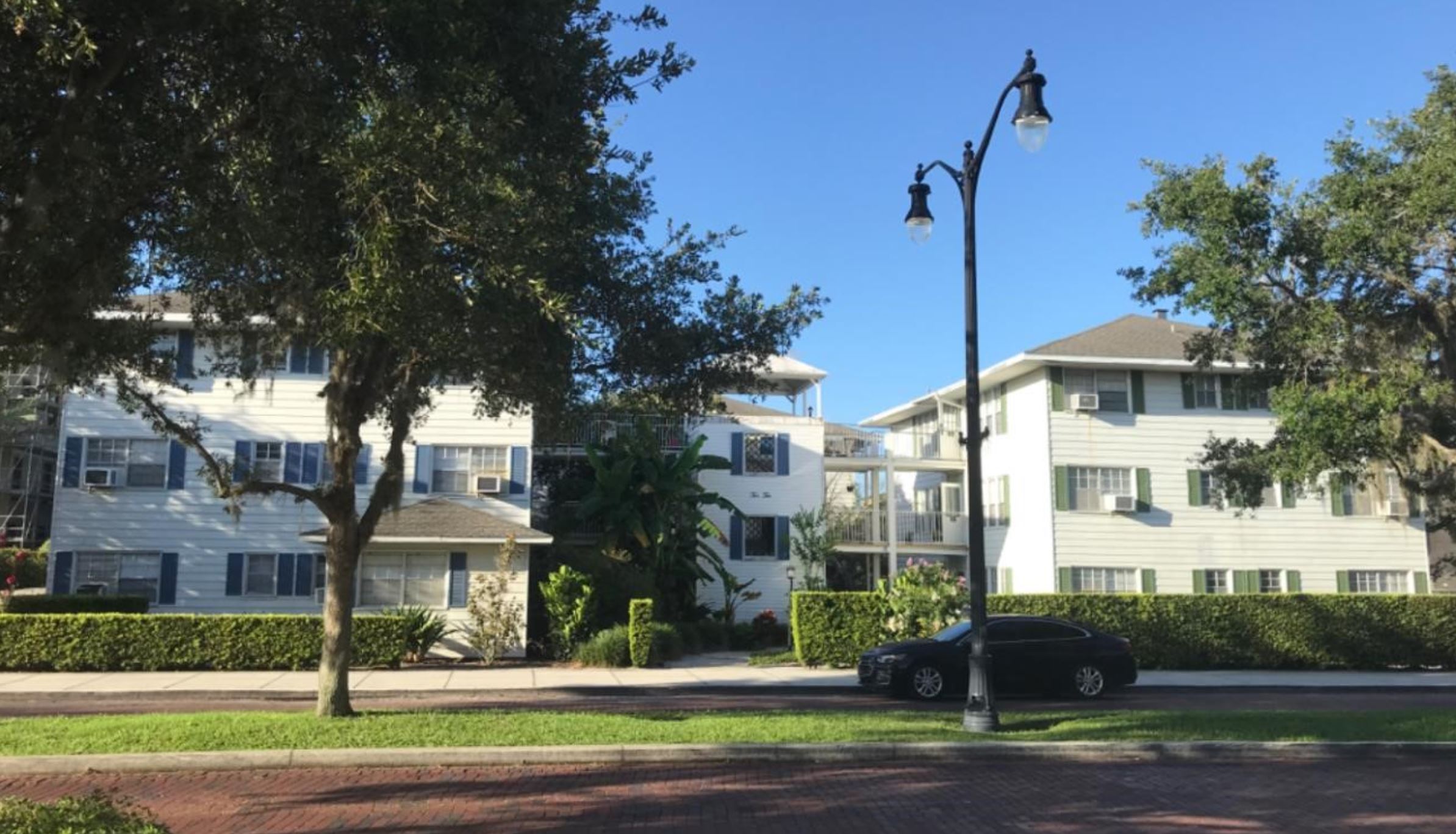
The city discourages demolition of so-called “contributing structures” to historic districts such as El Cortez, but does approve knock-downs when preservation isn’t feasible.
The property owner and applicant for the project, a company called El Cortez LTD and managed by AGPM founder Scott Zimmerman, said the buildings represent a “frame vernacular style,” but have been significantly altered over time with no original exterior materials or features remaining.
The new development would create townhomes on Morse and a synagogue along Knowles Avenue. Staff received 32 letters in support of the project and one against, according to documents related to the meeting.
In the 1920s the building were constructed as upscale apartments amid growing demand for more housing in downtown Winter Park and near Rollins College. Over the years, a number of notable people lived there, according to National Register of Historic Places documents, such as “physician Benjamin Hart; Christopher Honaas, director of the Rollins College Conservatory of Music; Flora Magoun, secretary to the Conservatory; Margaret Windau, district director of the Florida Welfare Board; Helen Drinker, proprietress of a women’s fashion shop on Park Avenue North; and William Stein, a Romance Languages professor at Rollins College of Jewish descent who had recently immigrated from Austria to avoid Nazi persecution.”
Rogers said his dad told him he also stayed at El Cortez while Windsong, the Isle of Sicily property also likely set for demolition, was being constructed.
City staff is recommending approval of the project with the following conditions: A historic marker be placed there to commemorate the historical significance of the property and that the demolition not occur until the owner has a building permit from the city to ensure development plans don’t change between the time of the tear-down and new construction.
New Historic Survey Considered
The Historic Preservation Board will also on Wednesday consider a contract with Orlando-based KMF Architects for $75,000 to survey the city’s historic assets.
The proposal calls for updating the 2001 and 2013 surveys and will include an evaluation of Mid-Century Modern architecture (1950s-1970s), a era that hasn’t previously been surveyed citywide.
The work on Mid-Century Modern work will include a focus on Orwin Manor “to support the city’s consideration of a potential historic district designation.”
Four historic districts already exist in Winter Park — Downtown, College Quarter, Virginia Heights East and Interlachen Avenue — and those will be evaluated to determine if any non-contributing buildings now meet criteria for contributing status.
The survey will update records and remove properties on previous surveys that have since been demolished to produce a detailed report with photos that is both “informative and user-friendly,” according to the architects’ proposal.
WinterParkVoiceEditor@gmail.com
The Voice lied about Winter Park not having a Christmas tradition.
So why should residents believe The Voice now about the historic buildings?
“Oh what a tangled web we weave when first we practice to deceive.” (Sir Walter Scott)
Please point me to that “lie.” I won’t hold my breath. Because it doesn’t exist. The stories actually stated very clearly that the traditions would continue such as the tree, parade, Bach Festival and Tiffany windows etc. Not sure how one could even come close to stating there was a “lie.” Thanks for continuing to read and comment, though!
C’mon, I’m not the biggest fan of The Voice somedays, but Beth is doing a good job on the stories she is covering with very limited assistance. No need to come at her with the “ lies “ thing!
Thank you for raising the community’s awareness about the future fate of these important historical structures.
This is stellar reporting and exactly want I am looking for in local news as a city resident. Thank you for your hard work, Beth!
While I’ve long considered it a miracle that they were still here amidst the Palm Beach-ification of Park Avenue, I’m still very sad about the El Cortez. I rented a first floor unit, sight unseen, from out of state when I moved to WP in 1996, not knowing a soul in the area. The second year, I moved up one flight to a slightly larger unit. While they were small on space, they were huge on charm with the original wood floors and claw foot tubs. My first apt. still had the 1920’s wall-mounted bathroom sink, and all units had circa 1940s gas stoves, which were replaced with new ones during my time. You didn’t walk into the kitchen, you stood in front of it.
It was a real full circle moment when, nearly 20 years later, I was the poster artist for the WPSAF, with my artwork featured on all street signage and merchandise, just one block from those tiny apartments that had helped me lay a foundation.
Over the years, I’ve met multiple others who, like myself, found the perfect first step in a new area at the El Cortez – where a modest budget still allowed access to the charms of Park Avenue. As the whole district increasingly becomes a luxury product packaged in a jewel box, the loss of a location that truly helped establish generations of residents is not to be discounted.
I agree, so sad. I lived in a second floor 2 bedroom with a roommate for 2 years in the 1980’s while attending Rollins College. Reading your description of the original bath fixtures, the gas heater (which I sat in front of while studying during cold days), and the kitchen we “stood” in brought back vivid memories of all things I loved about the place. My roommate and I refinished the floors ourselves and painted the bathroom walls and the outside of the clawfoot tub pink. The place was so charming!
RE the comment about “lies” in this publication: When I complained about a comment presenting a provably false lie as fact, Beth promptly removed it. I believe she does her best to be factual in her reporting (and also not let commenters present opinion as fact or outright lie).
So, I suggest the readers notify her if something is false. I feel she will fix it. That said, there are multiple viewpoints in the world and I do get the feeling Beth’s sympathies are left-leaning. But outright lies in this publication? Not that I’ve seen.
Thank you to whoever made this comment. I am human and I correct any errors and/or typos (both happen) as soon as I catch them or if pointed out. For the record, for as long as I’ve been a working journalist I’ve been registered to vote without a party affiliation. I don’t vote in any primaries. All journalists have personal opinions (I’m not a robot lol) but I take very seriously my obligation to readers to be fair and accurate and present the information that will serve our readers so that they can use that information however they see fit. Thanks!
We are losing the charm that once defined Winter Park — the warmth, the character, the sense of history that made this town so special. Almost every new structure feels modern and cold, showing little deference to the craftsmanship and spirit of our past. Perhaps the reason the entry markers were installed on Park Avenue was to remind residents and visitors that Winter Park is not just another development — it’s a historic community with a soul worth preserving. Without those reminders, someone driving from North Park Avenue into downtown might easily mistake it for Baldwin Park.
Thank you. I agree with you 100%. Unfortunately, the people who are approving all of these changes don’t care as much as they say they do.
Agree 100%. Winter Park used to be a lovely mix of Colonial, Tudor, Neoclassical, Craftsman, Mid Century Modern, Mediterranean, Cape Cod, Ranch, etc (you get the point) homes. Now the new builds are a minimalist collection of square boxes barely one step up from Brutalist architecture with cold interiors to match. Aren’t there any architects left wanting to design something with skilled detail? Aren’t the details what makes a home truly expensive? The sheer time it takes to do detailed work? i.e. CRAFTSMANSHIP.
WP is going to be a soulless collection of hotel like modern boxes with two out of place antique arches when it’s all said and done. Sad.
What does Copilot AI have to say (Copilot AI platform, 10/7/20205-prompt-how has WP become gentrified and what will the future look like):
How Winter Park Became Gentrified
Winter Park’s gentrification has unfolded gradually over the past few decades, shaped by several interlocking forces:
• Upscale Redevelopment: Historic neighborhoods and commercial corridors have seen significant investment in luxury housing, boutique retail, and high-end dining. This has attracted wealthier residents and shifted the city’s socioeconomic profile.
• Rising Property Values: Property prices have surged, especially in areas near Park Avenue and the lakes. This has made it difficult for lower-income and long-time residents to remain, contributing to displacement and reduced housing affordability City of Winter Park.
• Annexation and Expansion: Since 2003, Winter Park has expanded its boundaries through annexation, incorporating adjacent residential areas. This has allowed the city to extend its development model and increase its tax base City of Winter Park.
• Demographic Shifts: The city’s population has grown steadily, with a marked increase in year-round residents. Seasonal residency has declined, reinforcing a more permanent, affluent community City of Winter Park.
• Climate Gentrification: As sea level rise threatens coastal areas, inland cities like Winter Park—located at a higher elevation—are becoming more desirable. This has led to increased demand and investment, further accelerating gentrification LeRoy Collins Institute.
What’s Next for Winter Park?
Looking ahead, several trends are likely to shape Winter Park’s future:
• Continued Population Growth: The city is expected to grow through both internal development and further annexations. This will increase demand for housing and public services City of Winter Park.
• Land Use Intensification: Winter Park’s comprehensive plan emphasizes strategic land use to accommodate growth while preserving quality of life. Expect more mixed-use developments and higher-density housing in select areas City of Winter Park.
• Climate Migration Pressure: As coastal Floridians seek refuge from flooding and rising insurance costs, Winter Park may see an influx of new residents. This could strain infrastructure and exacerbate affordability challenges LeRoy Collins Institute.
• Green Infrastructure and “Green Gentrification”: Investments in parks, sustainability, and flood resilience may make neighborhoods more attractive—but also more expensive. Without safeguards, this could displace vulnerable populations Number Analytics.
• Policy Interventions: To mitigate displacement, Winter Park may need to adopt stronger affordable housing policies, inclusionary zoning, and community engagement strategies. These will be critical to balancing growth with equity.
I was amused watching the Historic Preservation Board’s furrowed brows and clasped hands over the possible loss of the El Cortez. (In 1983 the owner of the buildings told me they were still standing because the termites were holding hands)
The historic board is using the social policy of “affordable housing” and “Florida Vernacular” architecture to keep a worn out building standing.
By the way, El Cortez’s $1300 a month for a 450 sq. ft. worn out 1 bedroom is above market rate. Around the corner, Park East on Knowles Ave. has studios of 475 sq. ft. for $1295 and 1 bedrooms, 650 sq. ft. for $1350…also, you get central air and heat and a shower! Yipee!
So are they actually going to demo 2111 via Tuscany? I couldn’t tell if it’s that or they are building on.
Hi, I have a full story coming, but the vote was 5-1 to approve the Racquet Club’s plans with multiple conditions. So, yes, the home that is currently there will be torn down.