Winter Park’s Library Should Stay in Our Downtown

Winter Park's Library Should Stay in Our Downtown
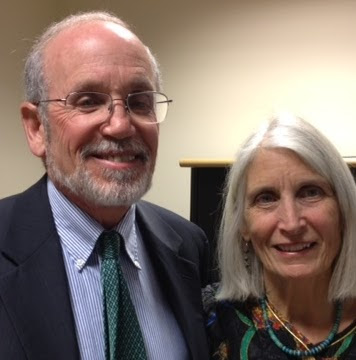
 

bobandjillEditor’s Note:  Bob and Jill Bendick have lived in Winter Park for almost 20 years. Jill is a retired software engineer. Bob has a background in urban, regional and environmental planning.  

We have lived in Winter Park for almost 20 years and have long been users and supporters of the Winter Park Library.  Jill has spent many Sundays volunteering at the library bookstore.


Good Case for Library Expansion

Through hard work and research the Library Task Force has made a good case for expansion of the library building to serve the people of Winter Park in the 21st Century, but we object to the relocation of the library to either of the two sites in and adjacent to Martin Luther King Park.  A new or expanded library should continue to be located in Winter Park’s downtown area.


Base Final Site Decision on Visioning Process

In May we wrote to the City Commission to suggest that a decision on the expansion and potential relocation of the library should await completion of the Winter Park visioning process now underway.  Our reasoning was that a new library, as the largest foreseeable investment by the city in a cultural and educational facility, should reflect and reinforce our collective vision for the city’s future.


We suggested that it is reasonable to wait a few months until the completion of the visioning process before making the library siting decision. It is now clear that the Commission is moving forward with the library project without with the benefit of advice from the Visioning Steering Committee.


Should We Jump Ahead of Visioning?

From our perspective this then requires that we jump ahead of the visioning effort to imagine what it might recommend.  We certainly cannot predict the whole picture, but one would hope and expect that the Visioning Steering Committee and, ultimately, the City Commission will conclude that the attribute that makes Winter Park so unique in Florida is its graceful, busy, pedestrian and transit-friendly downtown. Maintaining the sense of place and the spirit of community of the downtown area should be a pillar of the City’s vision for its future.


Downtown Character Depends on Community Investment

It is an illusion to believe that the economic and social vitality of this special area will take care of itself without continuing attention from the City government.  Florida is littered with downtowns that have, sadly, succumbed to competition from sprawling, automobile-centered commercial development nearby.  Winter Park’s downtown will only retain its character and function as the heart of our community by continuing investment by the City in community events, services, public transportation, and public facilities concentrated in that area.


Environmental Quality Makes WP Sustainable

This brings us to the library which is now proposed to be located between what some city officials call the 17-92 and Denning Avenue “corridors”.  While this area deserves redevelopment, it is a pedestrian unfriendly, traffic-clogged, and architecturally generic competitor to Winter Park’s historic downtown. A decision by the City to move its most important cultural institution from its downtown to this area can only be interpreted as a decision by the City of Winter Park to move away from what makes this a unique community and toward exactly the kind of development patterns that have damaged so much of Florida.  And the fact that the proposed library location takes away precious green space would convey an additional message about the city’s future — that the quality of the environment that makes the city sustainable is unimportant.


Collective Vision of WP in the 21st Century

As we said in our May letter to the City Commission, a decision of this importance should not be made simply from the internal perspective of the library and its advocates, but should take into account the larger framework that is our collective vision for the future of Winter Park in the 21st Century.


Finally, we, and we suspect many others, would likely be supporters of a referendum to pay for a new or expanded library if it were part of a coherent plan to build upon what makes this City such a special place to live.  But we will oppose the expenditure of our tax dollars for construction of a library building that undermines the quality and character of life that residents of Winter Park appreciate and enjoy.

To comment or read comments from others, click here →

Winter Parkers Respond to Mayor’s “Thank You” Survey

Winter Parkers Respond to Mayor's "Thank You" Survey

Read Results Here


Leary Mailer-2

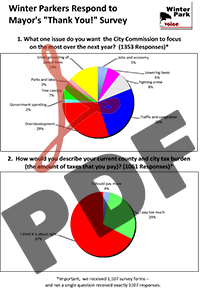
Remember about two weeks after the March 10 election? Newly elected Mayor Steven Leary sent a questionnaire out to some Winter Park residents asking for their opinions about the City.

At that time, the Voice published an open letter to Mayor Leary, asking questions that many of you had posed to us. Mayor Leary has, so far, not responded to our questions, but 1,107 of you responded to Mayor Leary’s questions. The Voice obtained your responses to the Mayor’s questionnaire through a public records request.

We know you’ve been wondering . . . so here it is. This is what you told the mayor.

More Than 1,000 Survey Responses

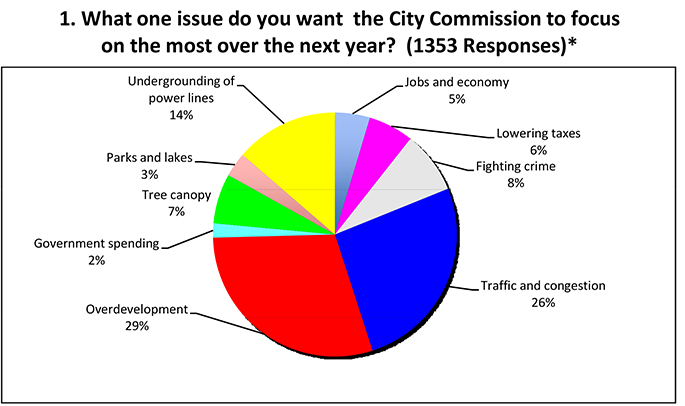
While not all of you responded to every question, many of you gave more than one response to a single question. Note that Question #1 had more than 1,300 responses – although we received only 1,107 survey forms. Some commented that the questions were confusing or called for a response that did not reflect the true feelings of the respondent.

Not All WP Residents Received Survey

When asked, the Leary campaign said that one survey was mailed to each household in Winter Park – either electronically or by U.S. Postal Service. The campaign did not confirm or deny that all survey recipients lived in Winter Park. The Voice heard from a number of readers who live in Winter Park who did not receive surveys. The Voice does not know the total number of surveys mailed or how criteria for the mailing were established. We could not, therefore, determine the sample size or the demographic used.

City Doing a Good Job

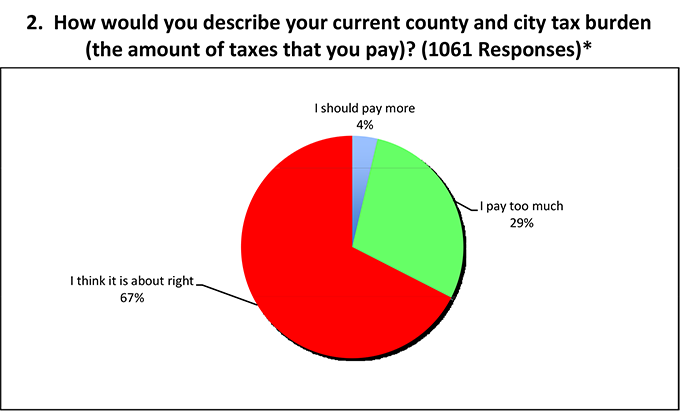
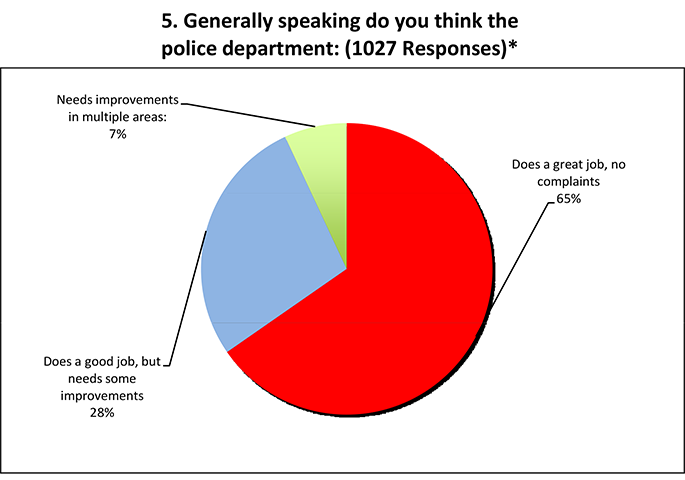
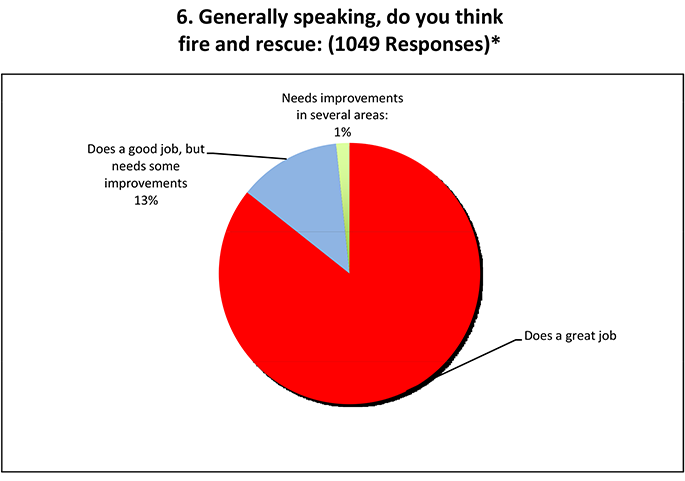
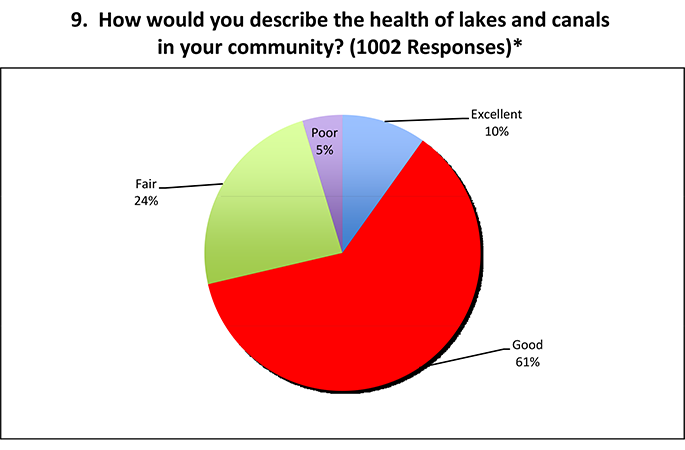
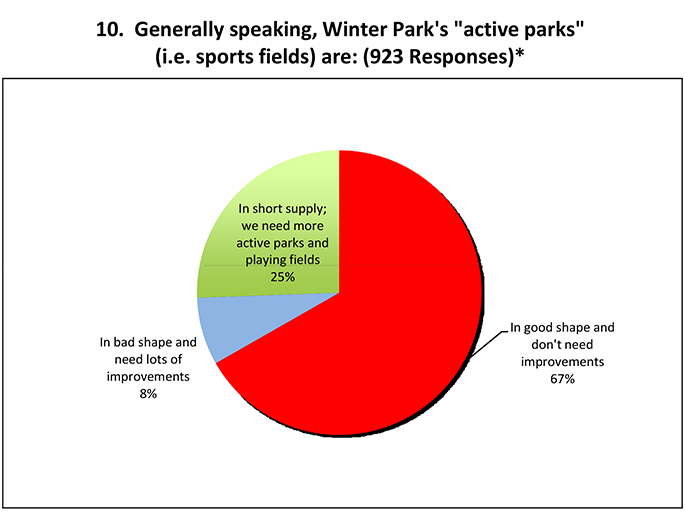
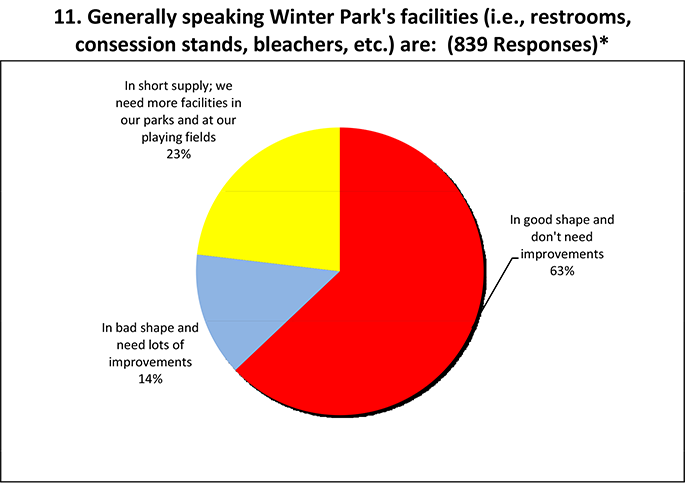
Most of you who did respond think the tax structure is about right and that the City is doing a good job – especially the Police and Fire Departments. More than half of you expressed concern about over-development, traffic and congestion.

Comments Not Included

More than half of you responded “other” and added comments on the survey forms. Because of the individual nature of the comments, we were not able to tabulate them and have not included the comments in the results.

“Protect Winter Park”

The type of comment we saw most often is summed in this respondent’s plea to the new mayor: “Please – keep your campaign promises. Protect Winter Park’s uniqueness. Once it is gone – too late!”

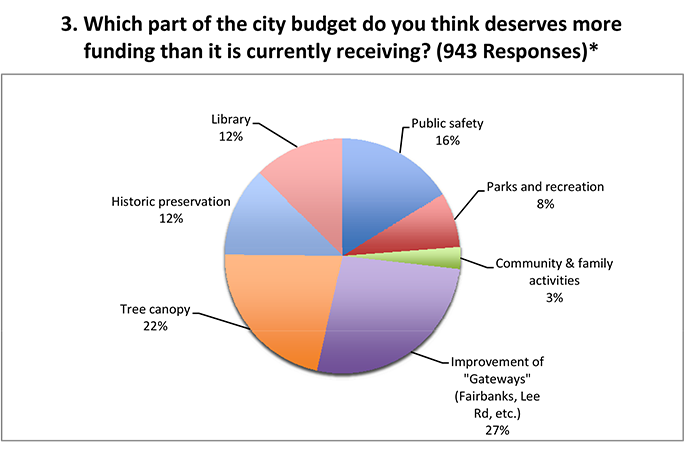
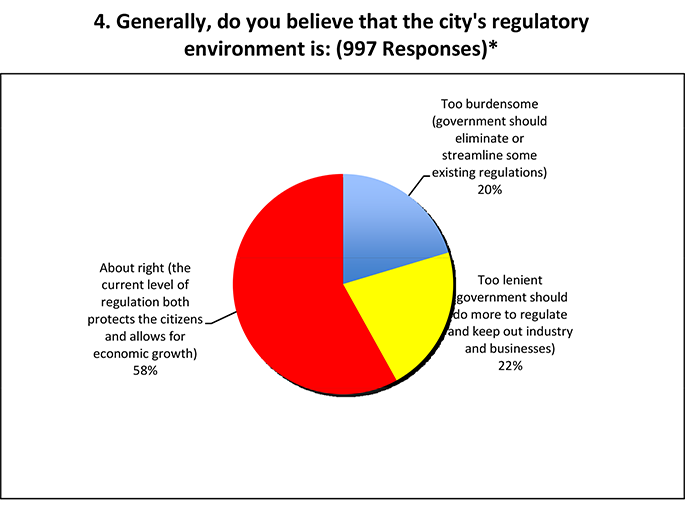
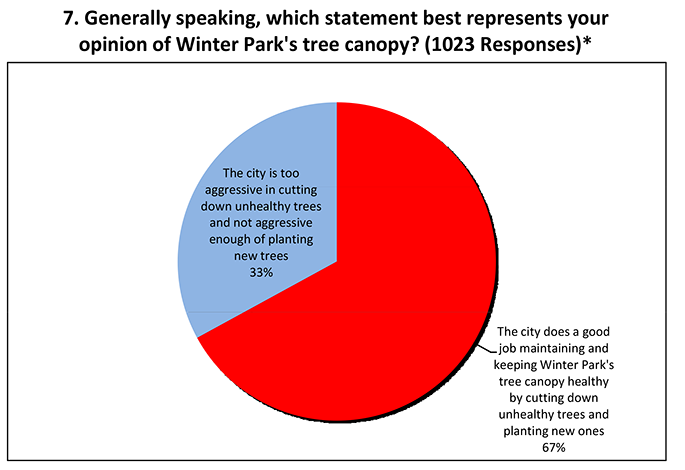
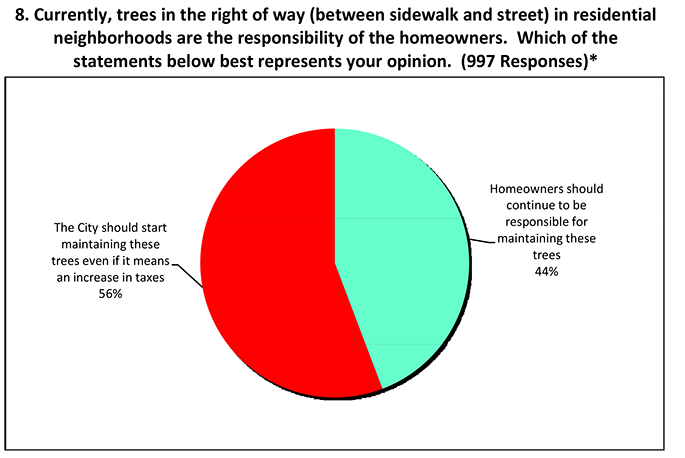
But the devil is in the details, and the details are all here in the charts.


To comment or read comments from others, click here →

DPAC Donation Rankles

DPAC Donation Rankles

It’s Coming Around Again


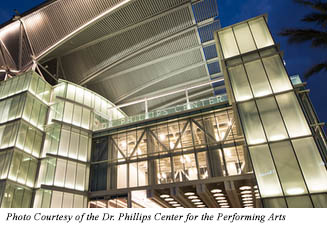
As Budget Season approaches, the specter of nine more annual $100,000 contributions to Orlando’s Dr. Philips Performing Arts Center (DPAC) remains a bone of contention among Winter Parkers. At the June 9 Utilities Advisory Board (UAB) meeting, a group of citizens voiced their opposition to using the Utilities Fund for any portion of the City’s charitable contributions in the coming 2015-16 fiscal year. In Fiscal 2014-15, two-thirds of the City’s contributions to charitable organizations came from the Utilities Fund, and the Utilities Advisory Board members did not find out about it until April 2015 when they read it in the paper.

UAB member John Reker, who was rotating off the board after the June 9 meeting, spoke as a concerned citizen. He stated that utility rates are determined by the Cost of Service and said he does not believe it is appropriate to charge customers for anything other than the cost of delivering water and electricity.

Reker was replaced by former Commissioner Barbara DeVane, who was on the Commission when the City purchased the utilities company. At this meeting, DeVane said, “When we bought the utility, we promised the utility money would stay in the utility.”

According to the City website, the board’s mandate is to advise “the Mayor and City Commission on matters regarding the capital needs, rate structures and policies related to the operation of the city’s utilities system.” In other words, the UAB determines how much we pay for water and electricity, and they are responsible for all capital improvements to the system, like undergrounding.

How much we pay for our utilities determines how much is in the Utilities Fund to make repairs in the event of equipment failure or power outage, and how long it will take to complete the undergrounding process. The only money the utility company has comes from the rate-payers. Diversion of funds from the Utilities Fund necessarily hinders the performance of their charge.

The Winter Park City Charter states: “Transfer or use of collected sewer fee funds for other than sewer purposes must be approved by a voter referendum.” The City Charter was written in 1983, predating the City’s purchase of the utility company. At the time, the only utility Winter Park had was sewer. Since the Charter has not been updated to reflect the current situation, there is no current proscription on diverting electric or water revenues to the General Fund.

City Manager Randy Knight pointed out that the UAB operates solely as advisors and that only the City can spend money.  He went on to say, just because the City dipped into the Utilities Fund for the FY 2014-15 charitable contributions, that did not mean the City would utilize this fund in future years. Knight acknowledged that he was responsible for using the Utilities Fund for a portion of the charitable donations in last year’s budget, clearly subscribing to the “ask-forgiveness-not-permission” school of thought.

UAB Chair Katherine Johnson had prepared a draft memo titled “Proposed Guidance Regarding the Use of City of Winter Park’s Electric Utility and Water/Wastewater Revenues.” She stated that the board was “agnostic” on the subject of the individual donation recipients, but was concerned about the precedent it set. She told the Observer, “This raiding of the utility funds for other purposes is a problem that is systemic in other jurisdictions that I’m familiar with.”

She told the Voice that she wanted to ensure that the priority for the utility funds remains focused on long-term capital projects that will improve the safety and reliability of utility operations and that will benefit the utility’s customers.

“We already give 6 percent of the utility revenues to the City for the general fund,” said Johnson. “This past year they appropriated another quarter percent,” (amounting to approximately $175,000) “and the funds were redirected without the opportunity for a discussion among UAB members and City staff about the long-term impacts of this decision.”


To comment or read comments from others, click here →

P & Z Thwarts West Side Zoning Change

P & Z Thwarts West Side Zoning Change

Approves Comp Plan Change for Lakeside Crossing


Lakeside Crossing Wins More Parking


On June 2, Unicorp’s request to the Planning & Zoning (P&Z) Board for a Comprehensive Plan change, unlike many of their previous efforts, sailed through. Unicorp was requesting permission to add 75 parking spaces at the Lakeside Crossing project on the site of the former Mt. Vernon Inn. The additional spaces will change the garage from two to three levels, amounting to a 3.4 percent increase in Floor-Area Ratio (FAR). According to developer Chuck Whittall, half the spaces will be for Lakeside Crossing use and the other half will be for public parking.


Comp Plan Change to Affect 17-92 Corridor

City Planner Jeff Briggs stated that the change in the Comp Plan would apply to all developments along the 17-92 planning area. Most unusual in this context was Briggs’ smiling countenance as he enthusiastically recommended that P&Z approve the Comp Plan change. P&Z approval was unanimous.


Applicant Seeks West SideUp-Zoning

In an all-too-familiar scenario, the next applicant, land planning consultant Javier Omana, requested a zoning change for a single-family lot on West Lyman Avenue in the Hannibal Square neighborhood. Omana and his partner, Chris Hite, plan to build a single-family dwelling  and wanted the lot re-zoned from R-1 to R-2 to enable them to build a larger house. R-2 zoning would allow them to build a duplex on the property if they chose, and would allow greater square footage.

The subject property is in the middle of a block that is zoned R-1. The Comprehensive Plan specifically prohibits rezoning lots smaller than 50 by 150 feet, which this lot is. Granting the request would set the stage for other lots in that area to be up-zoned.


“No Multi-Family”

Omana assured city staff that he had no intention of building a duplex on the land, that he simply needed an additional 220 square feet in order to complete a two-car garage at the rear of the property. City staff and P&Z Board members suggested possible remedies for the 220-square-foot shortfall and offered to help the applicant obtain a variance, which would require no zoning change.

Omana and Hite insisted on their demand for up-zoning. As part of their justification, they presented an ‘Urban Design Plan’ for the entire neighborhood to show what the area could look like — if only the zoning were different. There was liberal use of buzz words like context, connectivity, place-making, new urbanism, and TOD (Transit Oriented Development). Omana regretted the City’s lack of “institutional and regulatory framework to allow us to do what we’re doing. However,” he said, “we appeal to the City’s sense of doing the right thing.”

Bellows Weighs In

Speaking on behalf of the applicant, developer Dan Bellows supported the application for R-2 zoning, insisting that the City “amends the Comp Plan all the time.” He failed to mention his own experience before this board, which repeatedly turned down his requests for up-zoning in the Hannibal Square neighborhood, finally resulting in a project that is compliant. The Orlando Business Journal reports that Omana has served as a consultant to Bellows on the Ravaudage project.

Neighbors Aren’t Buying

One Winter Park resident approached the podium, somewhat sheepishly admitting that this was “the most awkward way” he had ever found to meet a new neighbor. His back yard adjoins the back of the lot on which Omana plans to build. He stated that he and his wife had made a substantial investment in their home and hoped that the single-family, low-density character of the neighborhood would not be disrupted.

The remarks of Christina Hite’s son brought into sharp relief the difference in perspective between those who live in the Hannibal Square neighborhood now and those who would move in. He stated his belief that history should not be a concern, because there was really “not much there.” In his view, the block is largely empty and up-zoning would create an opportunity for others to move in to the area and improve it.


P&Z:“NO”

Once again, P&Z was unanimous in their decision, this time to deny. Tom Sacha argued for maintaining current zoning, citing previous attempts to change the zoning. In each case, the applicants eventually came back with plans that fit within current zoning requirements. While Sacha did not name the applicants, it was clear that at least one project he referred to had been proposed by Dan Bellows.

Pete Weldon summed up the board’s stance in the interest of the City. “The City should be patient,” he said. “It shouldn’t be stubborn and it shouldn’t be dogmatic, but it should be patient. I don’t see anything here that says we should become less patient than we are.”


To comment or read comments from others, click here →

HP Ordinance – Path to Preservation or Slippery Slope?

HP Ordinance - Path to Preservation or Slippery Slope?

WP Residents Duke It Out on Facebook


For more than a year, the Historic Preservation Board (HPB) has worked to craft an Historic Preservation Ordinance that would be a big step on the city’s path to becoming a “Certified Local Government” (CLG). CLG status would qualify the City for state and federal funds to protect and promote the City’s historic assets.

HPB & Ad Hoc Committee Lead Parallel Lives

During the same time frame, an ad hoc committee of Winter Park citizens with diverse points of view formed to work toward a consensus on Historic Preservation. Committee members were Attorney Frank Hamner, Casa Feliz Director Betsy Owens, Attorney and Developer Dykes Everett, Architect and President of Mead Botanical Gardens, Inc., Jeffrey Blydenburg, Real Estate Broker Scott Hillman and Landscape Architect Stephen Pategas. Together they sought to understand Winter Park’s current regulations, the inventory of historic structures, trends regarding those assets and how Winter Park compares in these respects with other Florida cities.


HPB Includes Committee Suggestions in Draft Ordinance

Early this year, the ad hoc committee offered their suggestions to the HPB.  Although the HPB did not incorporate all the committee’s suggestions, they did adopt many of the recommended changes and, in February 2015, HPB voted unanimously to approve the draft ordinance.

The next step in the process was to present the draft ordinance to the citizens and receive their input. Two meetings – morning and evening –were scheduled Thursday, May 7, at the Chamber of Commerce Welcome Center.


Facebook Lights Up

Once the meetings were announced, the internet lit up. On Wednesday, April 29, Peter Weldon sent a “Winter Park Perspective” blast email urging residents in bold type to “Take Action to Protect Your Rights.”

“Small Group of Extremists”

“This proposal is being promoted by the Winter Park anti-development lobby,” wrote Weldon, “a small group seeking to impose their values without regard to your values . . . . We cannot let a small group of extremists limit our freedoms or put our equity at risk.”


“First Step Down the Slippery Slope . . .”

And with that, they were off and running. The lively debate that began on the internet spilled into the Welcome Center on the morning of May 7. The first speaker to take the podium was Winter Park resident Brian Thomas, who called the draft ordinance “The first step down the slippery slope.”

Peter Weldon spoke next to express his support for historic designation of individual properties, explaining that his opposition was to the designation of historic districts.


Frank Hamner: “Property Rights Guy”

Frank Hamner, a member of the ad hoc citizens’ committee, rose to explain that the focus of his group was on the educational value of their effort. He identified himself as “a property rights guy,” but said he believed there are historic assets in Winter Park that do need to be preserved. 

WP Ordinance Weakest in FL


Casa Feliz Executive Director Betsy Owens, also a member of the ad hoc committee, pointed out there are fewer than 10 districts in Winter Park that would qualify for historic designation. She went on to compare Winter Park’s proposed ordinance with those of other Florida Cities, noting that the proposed ordinance would lift Winter Park from having the weakest ordinance in the state to being “simply among the weakest.”


Commissioners Resist Move to Change HPB

Less than a week later, at the May 11 City Commission meeting, Historic Preservation was again at the forefront. Mayor Steve Leary brought forth nominations for all the boards that had members rotating off. Three of those nominations were for the Historic Preservation Board. Former Orange County Commissioner Bill Segal and Winter Park architect Phil Kean were nominated for regular board seats, and Winter Park resident Laura Armstrong was nominated as alternate.


Commissioner Tom McMacken requested that all board appointments be approved except for the Historic Preservation Board. The Commission voted 3 to 2 to approve the other board appointments and to discuss the HPB nominations separately. Mayor Leary and Commissioner Sarah Sprinkel cast the dissenting votes.


McMacken Urges: Delay HPB Appointments

McMacken then requested that the Commission delay any appointments to the HPB until the proposed ordinance had been brought before the Commission and had been voted either up or down. “I just hate to change pitchers at the bottom of the ninth inning,” said McMacken. “Putting new people on there now sets the dial back, and I don’t want to see [the ordinance] delayed any further.”

A lively discussion ensued in which the Mayor said, based on public comments at the May 7 meetings, he thought perhaps the ordinance should not move forward. Leary argued that the two nominees, Kean and Segal, would contribute to the process.

Commissioners: Don’t Derail a Year’s Work

Commissioners McMacken and Carolyn Cooper emphasized that their objections to the appointments had nothing to do with the appointees. They simply wanted the HPB to have the chance to bring more than a year’s work on the ordinance to a conclusion.


McMacken and Cooper argued that one important component of the proposed ordinance has to do with specific criteria for board composition. Compliance with board composition criteria set by state and federal agencies would be necessary for Winter Park to achieve CLG status. Preserving the present composition of the board, even if the number is reduced from 7 to 5, would avoid the possibility of appointing someone who might not fit the revised criteria.

Phil Kean and Bill Segal Turned Down

At the end of the day, the Commissioners voted separately on each of the three nominees. Phil Kean and Bill Segal were voted down, 3 to 2, with Leary and Sprinkel again casting dissenting votes.


Laura Armstrong Appointed to HPB

In a surprise turn, Commissioner Greg Seidel voted in favor of the alternate candidate, Laura Armstrong, whose qualification was that she had once placed her home on the historic register. So Ms. Armstrong took a full board seat, leaving one vacant full board seat and one vacant alternate seat.

Asked why he had voted for Ms. Armstrong, Commissioner Seidel said that she was the only candidate who had mentioned historic preservation on her application.


Back to Facebook

Once again, the internet lit up. Phil Kean and Bill Segal both posted their disappointments on Facebook. Kean wrote in his post,“If you are a citizen of Winter Park, please reach out to the three commissioners that voted me not qualified and let them know that I would make a great board member. They are Carolyn Cooper, Greg Seidel and Tom McMacken. MayorSteveLeary andSarah Sprinkelsupported me. I want to thank you in advance for your help in this.”

Bill Segal had a somewhat more philosophical view on the matter, though he did acknowledge that he was disappointed. He wrote on Facebook, “. . .just remember life is a two way street, everything doesn’t have to be all one way or the other, and when you find yourself so passionate about an issue that is not life or death, often it is a good time to listen to new voices, and new ideas. Sounds like the same people have been battling over the same stuff for far too long.”

Steve Leary, still insisting that the vote was ‘about the people’, posted on May 12: “I do not believe it productive to criticize my fellow commission members or theorize on their rationale for voting against Phil and Bill. Rather, I am hopeful that Commissioner(s) Seidel, McMacken, and/or Cooper will reconsider Mr. Kean and Mr. Segal for appointment to the HPB.”

And perhaps they will reconsider – after the ordinance has come before the Winter Park City Commission and has either passed or failed.

To comment or read comments from others, click here →