by Beth Kassab | Aug 26, 2026 | Columnist Bob Morris
Column: The Uplifting Story of One Park Ave Shop
How boobs – and class – equal business for local entrepreneur
By Bob Morris, Columnist
Hello, hungry people.
I was out for a morning walk the other day — it was 7:30-ish — and Winter Park’s main drag was largely deserted except for us early a.m. pavement pounders.
Then from the block ahead came a loud commotion, lots of cheering and shouting.
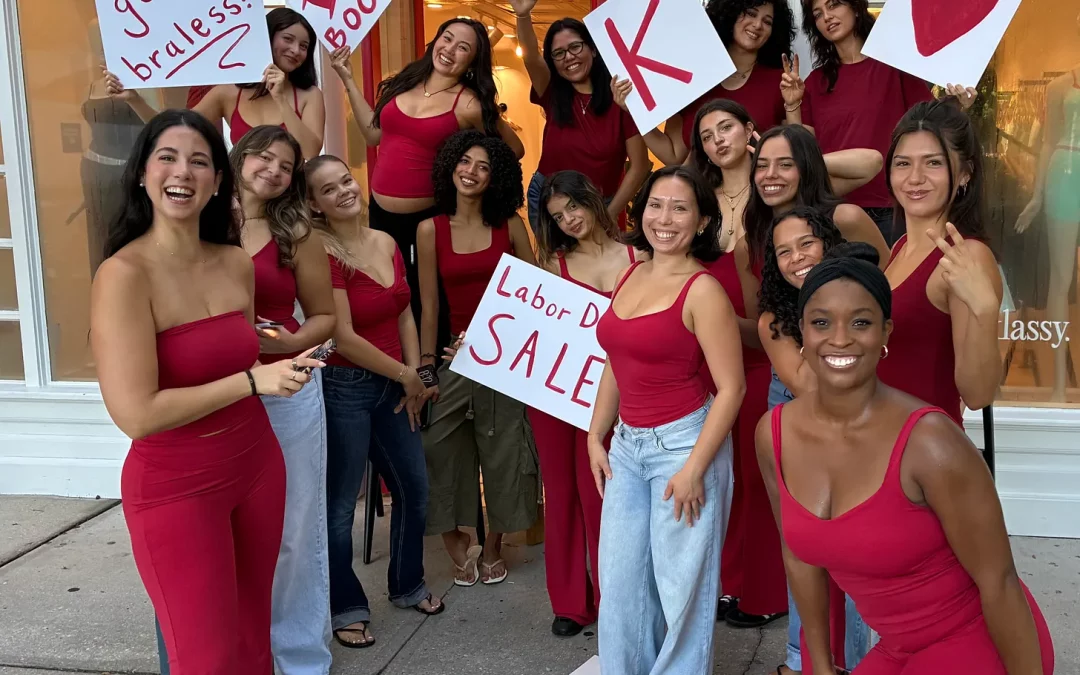
And I saw a dozen or so women dressed in red and waving signs that said: “Go Braless!” and “I ❤️Boobs!”
I picked up the pace.
From a distance, it had all the signs of a 1960s-era women’s lib demonstration, but for the fact that the participants were better dressed. And not angry. They were smiling.
So, being a creepy old guy, I stopped and gawked and asked what was going on.
Turns out, it was a photo shoot for a Labor Day sale at the store where they work.
“We specialize in clothing that women can wear without needing a bra,” said one of the women in front of the store.
This gave me pause. I had reached a point where I could not hold up my end of the conversation.
And yet, I persisted.
“Can’t women go braless in any type of clothing?” I asked.
This got laughs and indulgent smiles from the women in red.
“Sometimes that’s too revealing,” said one of them. “And jiggly.”
“And sometimes it’s too scratchy,” said another.
“Plus, bras aren’t comfortable,” said yet another.
Again, not my field of expertise. But I wasn’t finished being a creepy old guy.
“OK if I take a photo?” I asked.
They were, as you can see, all for it.
“We love encouraging women to go braless,” said one. “In the right kind of clothes.”
Said another: “We love spreading the word on social media.”
And so, friends, here we are.
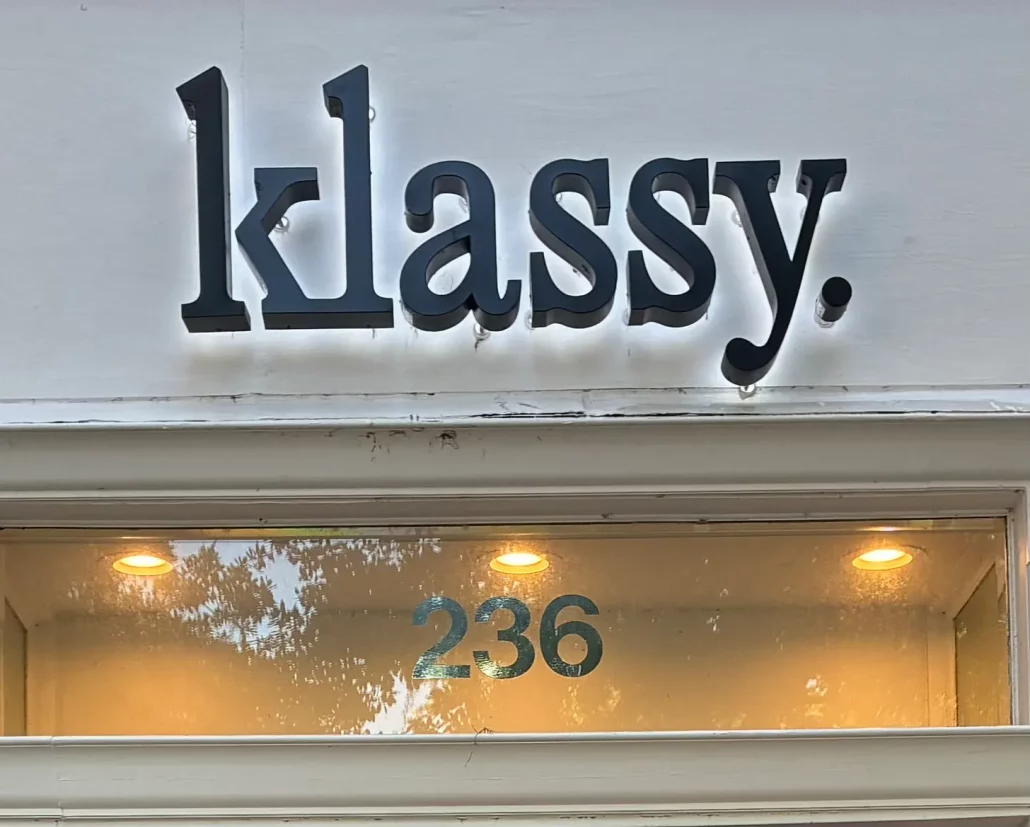
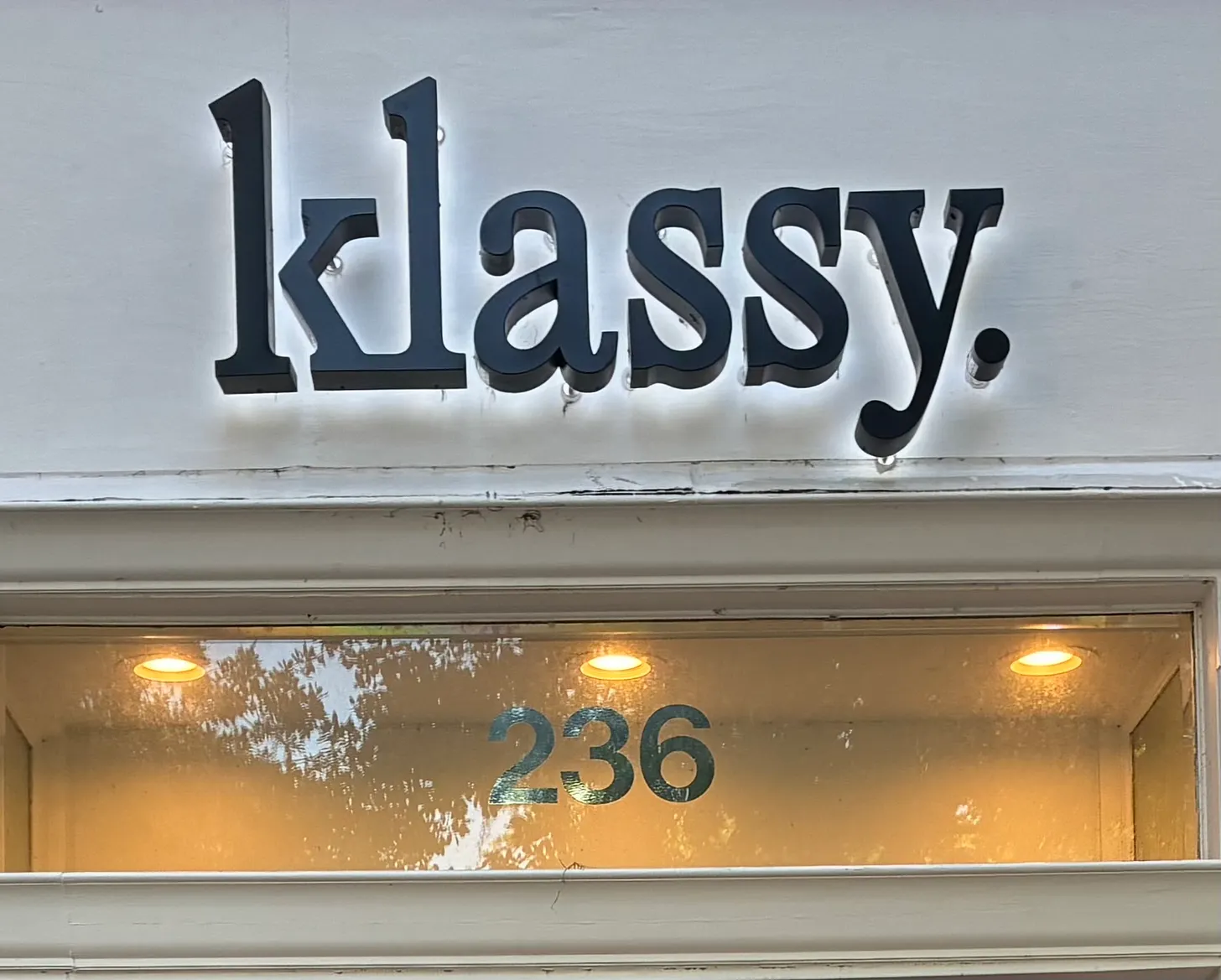
The name of the store is — klassy. — and that period, apparently, is necessary.
Yes, it looks like a comma in the photo below. But that’s a shadow. It’s really a period, And it has a purpose.
Other brands — JOANN. and Marc Jacobs., for instance — employ periods, too. It’s a design thing. The period, I am told, “sends a psychological cue of confidence, completeness, and finality — communicating that the brand is the ‘definitive’ word on what they do.”
And the lowercase presentation, I am further told, “mimics modern texting habits, making a retail storefront feel more human, direct, and casual rather than corporate.”
Who knew?
Now for the klassy. origin story. (Actually, that period is confounding and we will henceforth dispense with it.)
The klassy co-founder, Natalie Rogers Soto, grew up right here in the Orlando area. She got tired of uncomfortable bras that weren’t flattering to her outerwear, and she couldn’t find built-in bras that felt right. So she started designing her own.
In 2018, she and her husband, Jacob, launched klassy online. It was slow going at first. But they posted twice daily on TikTok. And in 2022, klassy went viral with its summer “brami” (a hybrid bra and camisole) and hit $1 million in sales in a single day.
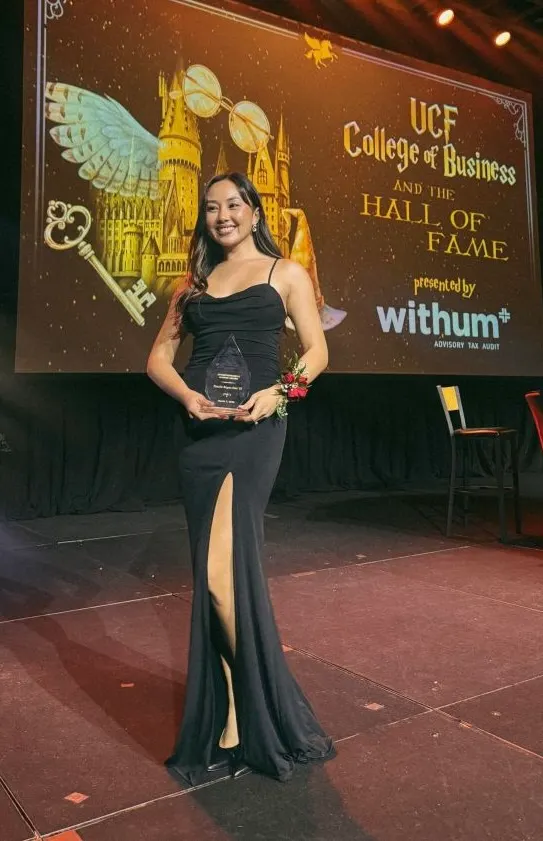
They opened the first and, so far, only klassy retail store in Winter Park at the tail end of 2025. And in March 2026, Natalie was honored by her alma mater with induction into the University of Central Florida College of Business Hall of Fame.
How’s that for an “uplifting,” story?
“It’s all about body positivity and feeling good in your own skin,” one of the women outside the klassy store said.
It reminds me of the origin story of another clothing line, Lululemon, which has a store just down the street from klassy.
Back in 2002, when Lululemon launched its first shop in Vancouver, the owners advertised that they would give $200 worth of clothing to the first 30 people who showed up naked on a specified morning. Being Vancouver, it was rainy and very cold. Yet, way more than 30 people stood shivering outside in bathrobes that day and, after they stripped down, Lululemon let them all inside and gave them free stuff.
I have searched for photos of this historic event. Sadly, I’ve come up short.
Fast forward to present-day: Lululemon now has 811 stores and, in 2025, rang up sales of $11.1 billion.
Far be it from me to suggest that klassy is on the same trajectory. But to think that you could become a billionaire by helping women go braless? Surely it would boggle the minds of 1960s-era feminists.
I kinda wanted to take a peek inside the klassy store. Just so that, years from now, I can say I knew it when.
“Come back at 10 o’clock when we open,” said one of the women in red. “We have a little coffee shop inside. You can try our specialty, a ‘matcha k.’”
Maybe another day.
And so I carried on, just a guy on an early morning walk who set out with no expectations, learned a little something, met some lovely women, and came away with a bounce in his step.
Is this a great country or what?
WinterParkVoiceEditor@gmail.com
This commentary originally appeared on Bob Morris’ Substack. A former newspaper columnist and magazine editor, Bob is author of the Zack Chasteen series of mysteries set in Florida and the Caribbean, along with several non-fiction books and collections of essays. A fourth-generation Floridian, he lives in Winter Park.
To comment or read comments from others, click here →
by Beth Kassab | Aug 21, 2026 | Chain of Lakes, Environment, News
How Healthy is Lake Virginia? New Buoy Sends Real-Time Data
The project from the Freshwater Alliance at Rollins will help scientists and average lake goers know more about the quality of the Winter Park Chain of Lakes
Aug. 21, 2026
By Beth Kassab
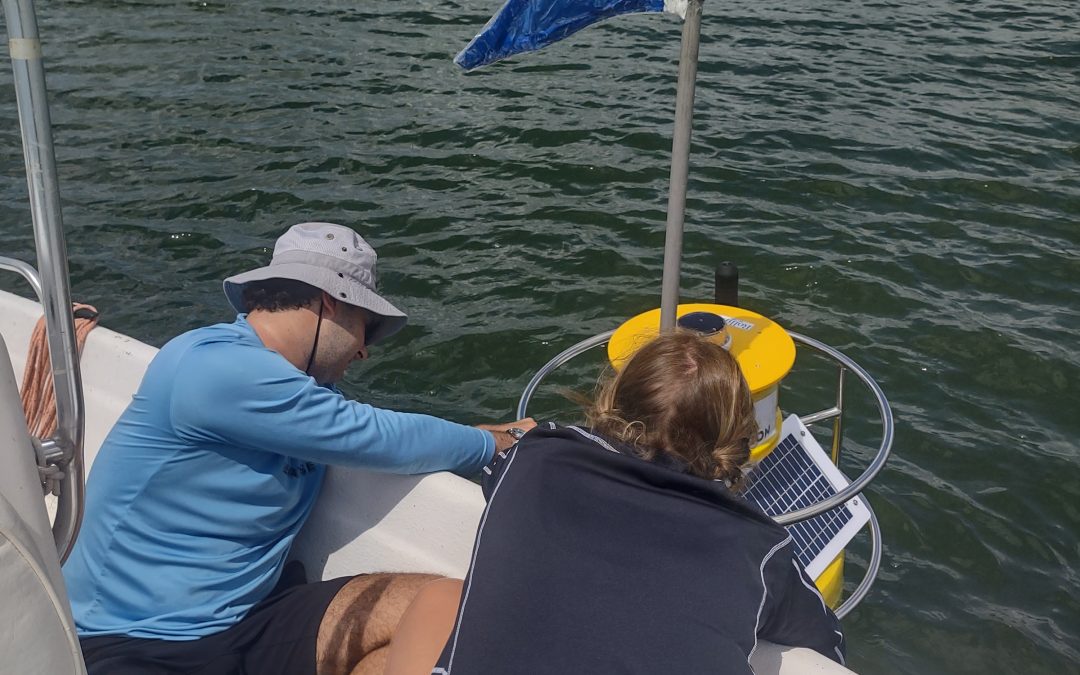
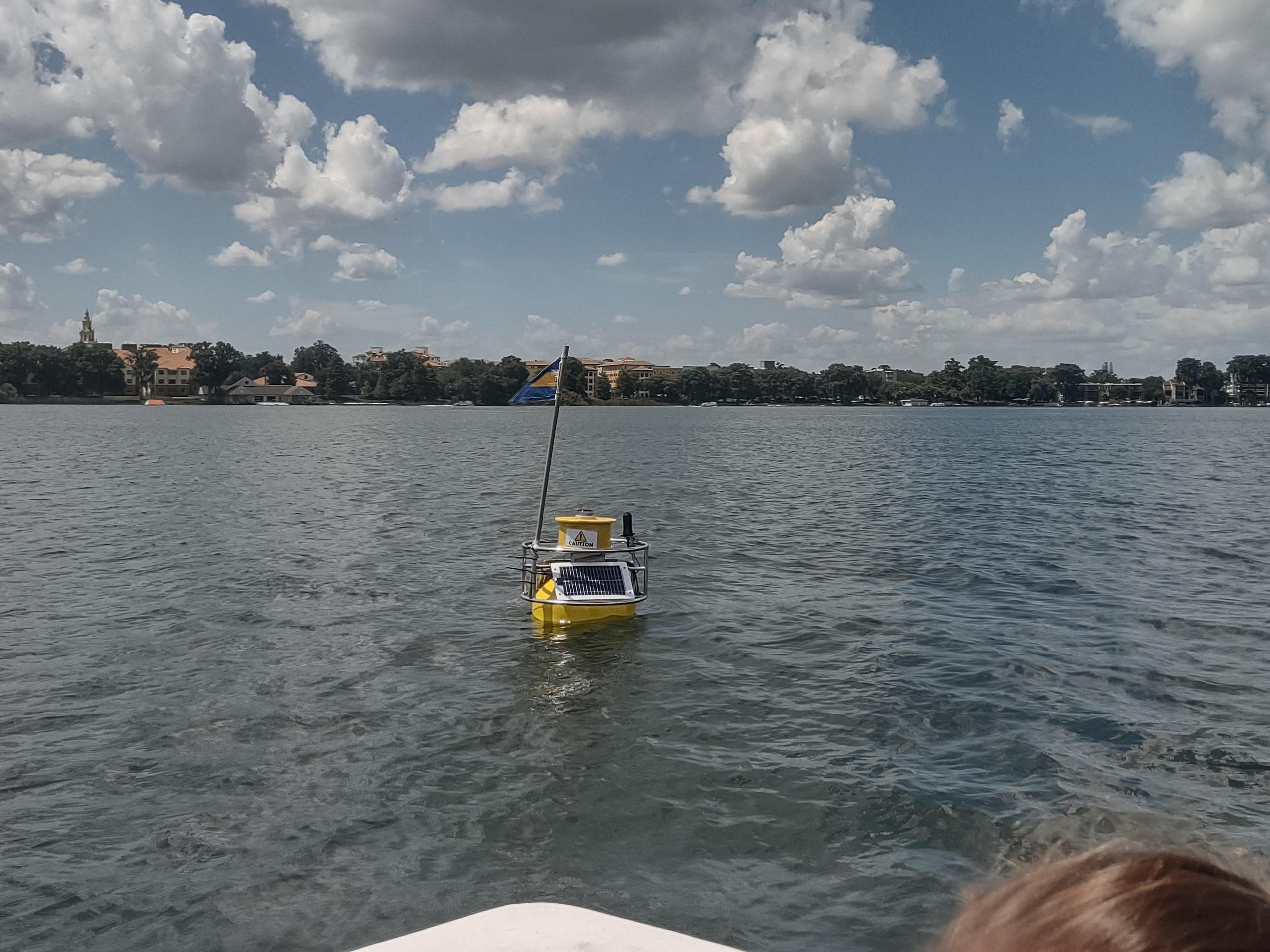
Boaters and paddleboarders may have noticed a new yellow buoy floating near the center of Lake Virginia and hoisting a Rollins College flag.
But the addition isn’t an average buoy warning of a speed zone or marking swimming boundaries.
This buoy is a first-of-its-kind for the lake to monitor water quality in real time.
Operated by the Freshwater Alliance at Rollins, the buoy is collecting data around the clock related to water temperature, pH, dissolved oxygen, algae concentrations and other factors.
Eventually, all of that data will be crunched and coded into an easy-to-use dashboard for water-goers or anyone who wants to know about the health of the lake as well as researchers like Rollins’ Emily Nodine, who is interested in understanding environmental trends and how to best manage the health of the Winter Park Chain of Lakes.
“Over time we hope to develop a livestream of data that goes into a platform that will be publicly available,” said Nodine, chairwoman of Environmental Studies and faculty director of the Freshwater Alliance.
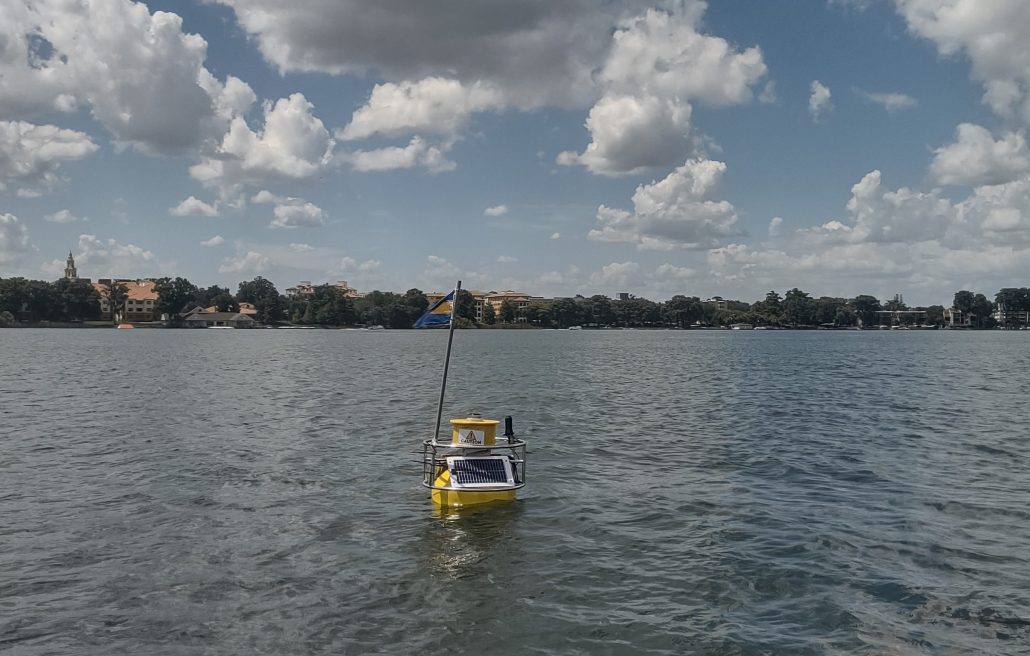
A view of the new buoy on Lake Virginia. (Photos courtesy of Rollins College)
In recent years, the city of Winter Park has closed the Chain of Lakes related to hurricane and storm activity and closed individual sections such as swimming off Dinky Dock because of algae blooms.
The buoy, which cost about $50,000 and was funded through a private donation to the alliance from the Elizabeth Morse Genius Foundation, will provide consistent sampling every 15 minutes and allow for more analysis of trends and future projections than the once per month water sampling currently done by the state and the city.
The buoy is floating near the deepest area of the lake — about 20 feet — and collects samples from about a meter under the surface to near the lake bottom. Temperature measurements from different depths will help Nodine’s team also understand how the water is moving through the lake.
And while the buoy is collecting samples from Lake Virginia on the south end of the Winter Park Chain, the lakes are connected both above and below ground and the data could provide clues about the entire system of water bodies. The chain of lakes is crucial to life in Winter Park where everything from real estate values to weekend skiers to Rollins crew and sailing teams to visitors on the Scenic Boat Tour rely on the health of the water.
“Someone who lives on Lake Osceola or Lake Maitland or even Lake Killarney, whatever Lake Virginia is doing, your lake is probably doing similar stuff,” Nodine said.
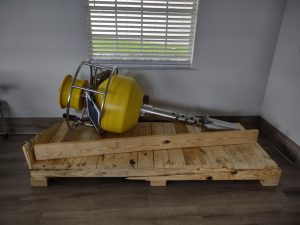
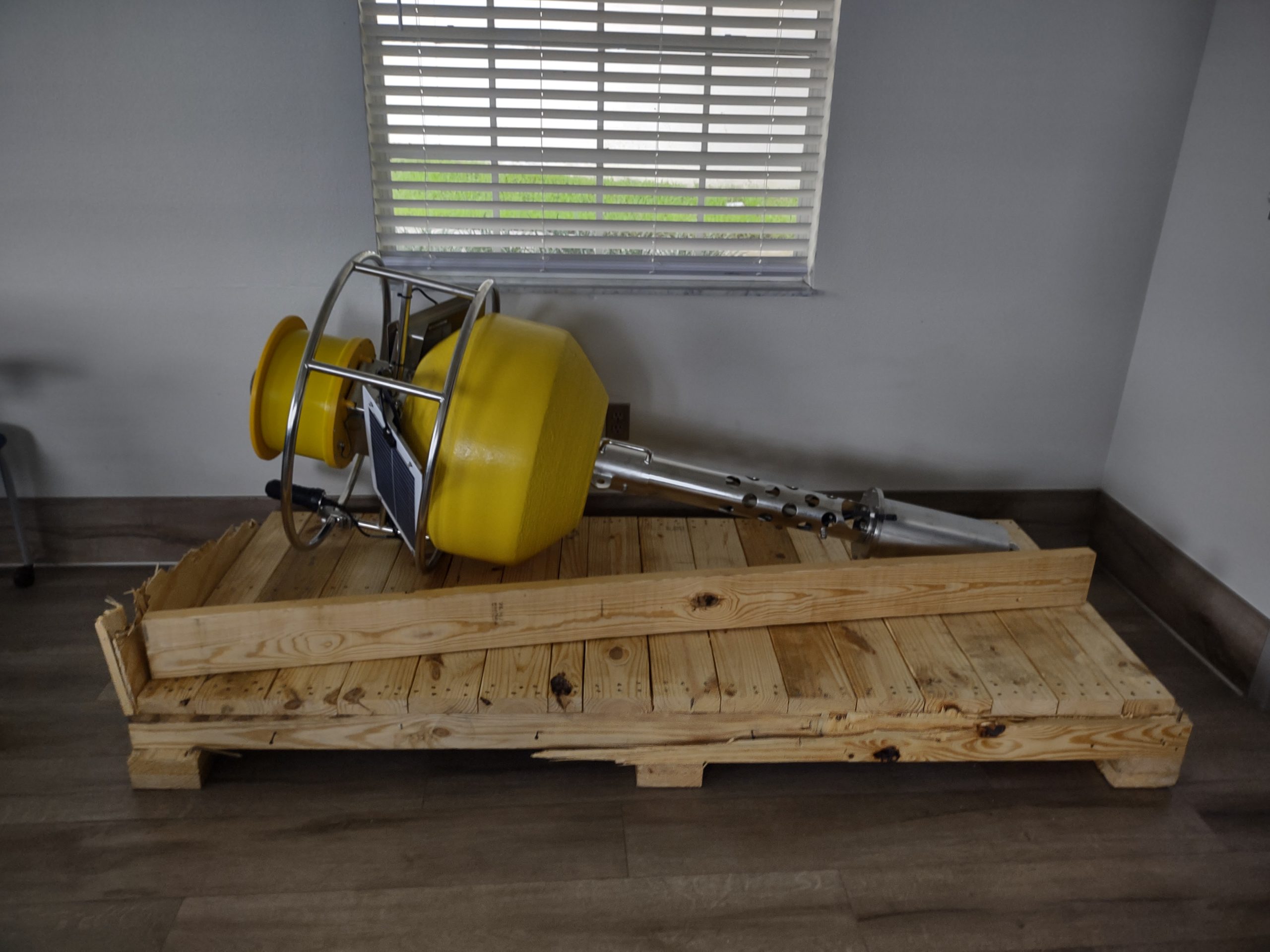
A view of the buoy before it was deployed.
The buoy is anchored near the center of Lake Virginia (coordinates 28° 35′ 15.45″ N, 81° 20′ 41.07″ W). While it will remain in a fixed location, it is not permanently installed and may occasionally be removed for maintenance or future research needs, according to a Rollins advisory.
It is equipped with safety features, including a flashing light and reflective markings. Boaters and other lake users are asked to be aware of the buoy’s presence and maintain a safe distance when navigating nearby, the advisory said.
WinterParkVoiceEditor@gmail.com
To comment or read comments from others, click here →
by Beth Kassab | Aug 20, 2026 | Chain of Lakes, Neighborhoods, News
Neighbors Tell Court They Plan to Resolve Suit Over Virginia Heights Park
In dispute is how the private park on Lake Virginia can be used after high-profile neighbors on both sides sought to limit access
Aug. 20, 2026
By Gabrielle Russon
Lawyers representing the Virginia Heights neighbors warring over a park said they are close to reaching a deal to end the legal fight and dismiss the lawsuit.
“We anticipate resolving this matter in short order,” lawyer David Meek told Orange County Circuit Court Judge Tanya Davis Wilson during a hearing Wednesday. “We anticipate this will go away shortly.”
Meek is representing Eric and Diane Holm and Brian and Caryn Albertson who sued their Virginia Heights neighbor Stephanie Guss over “filthy” kayaks stored at the park and “offending shrubs” that are visible from the backyards of the Holms and Albertsons.
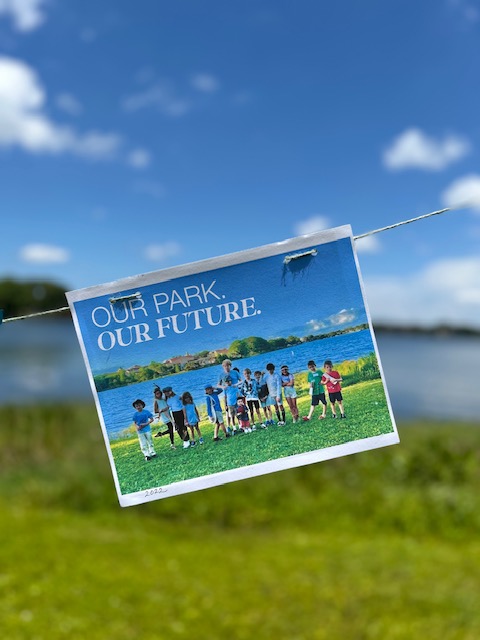
A sign hangs at the Virginia Heights park during a gathering.
The private park overlooking Lake Virginia is a beloved gathering place for residents in one of the oldest neighborhoods in Winter Park, but the spot has been embroiled in a nasty legal fight among residents.
The Holms and Albertsons, who live on either side of the park, filed an Orange County Circuit lawsuit last year against Guss. A narrow path to the park cuts along the property lines of both homes.
Eric Holm, one of the nation’s largest Golden Corral franchisees who lives in the 10,000-square-foot home just west of the park, is known for his charitable work such as serving a Thanksgiving dinner for thousands at the Salvation Army in Orlando and made headlines in 2024 when he hosted Vice President J.D. Vance (then a candidate) at his home for a fundraiser. The Albertsons built a nearly 8,000-square-foot home on the southeast border of the park two years ago.
Guss and the two couple’s lawyers filed a joint motion last week asking the courts for a two-month court delay to finish negotiating and reach a resolution to avoid going to a civil trial.
“It has had a lot of back and forth on negotiation,” Meek said during Wednesday’s hearing.
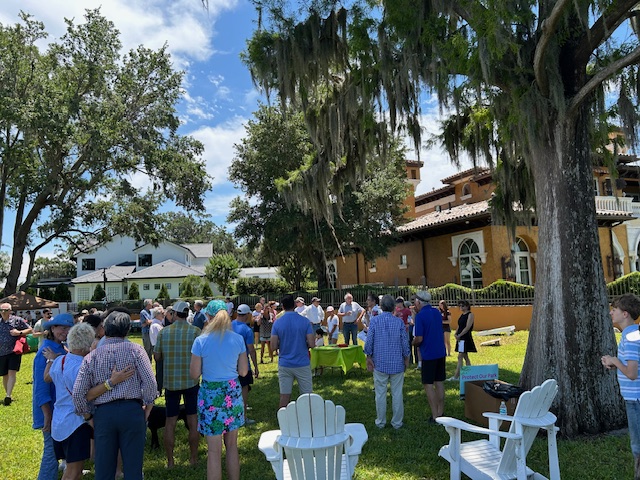
Neighbors gathered last year at Virginia Heights’ private park with homes belonging to Brian Albertson and Eric Holm in the background.
Their court filing expanded on the behind the scenes talks for the park shared by the 200 homes in the neighborhood.
“This case is unique in that while there is one named Defendant, the interests of numerous other owners of the park are involved both in the relief sought in the litigation and, to an even greater extent, in the negotiations towards a resolution that have been ongoing for an extended period of time. The extensive negotiations towards a resolution have included multiple Virginia Heights neighborhood meetings, votes of the interested homeowners, and extensive back and forth aimed at a resolution,” the lawyers said in the court filing. “The parties have been engaged in good-faith negotiations regarding a global resolution of this dispute, and anticipate having a final resolution in place in the very near future.”
The joint motion added “once a resolution is reached there will be certain tasks to be performed by both sides to bring about the full resolution of this dispute and its dismissal.”
When reached for comment, Brian Albertson said in an email Thursday, “We remain optimistic that this can be resolved between the sides and that we are nearing that resolution.”
Both sides did not respond to questions to elaborate on what “tasks” needed to be done.
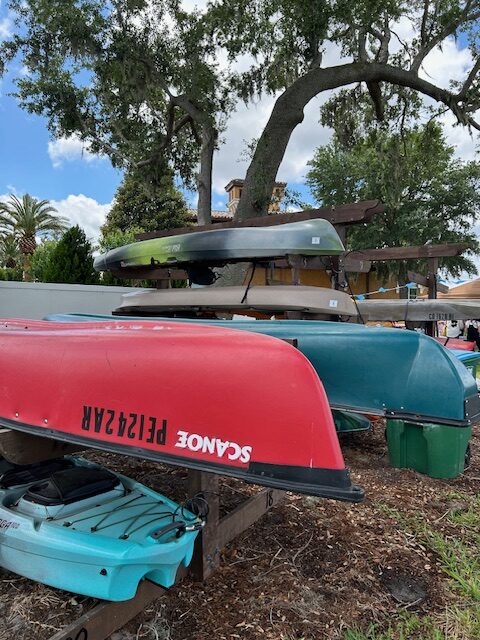
Some neighbors left about 30 kayaks, oars and lifejackets on storage racks at the park, located at 1240 College Point, the lawsuit said.
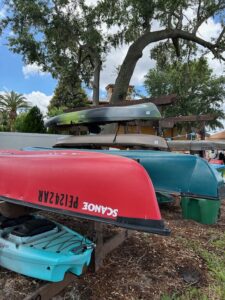
The kayak rack at the park.
“Recently, that private right to use and enjoy the park has been invaded through the taking of a portion of the Park property for private use,” the lawsuit said. “Many of the kayaks in and around the racks are filthy, showing no signs of use within the last year or more and are covered in dust, dirt, and mildew.”
The Holms and Albertsons complained bushes were also planted at the park.
“The planting of these bushes, like the erection of the racks, is an improper taking of the park for personal use,” their lawsuit said.
Guss became the target of the lawsuit since she helped coordinate the neighborhood’s inquiries for the boat racks. Neighbors quietly rallied around Guss and raised money to help with her legal expenses. Some neighbors said they feared they might be sued next.
The lawsuit noted Guss had “co-conspirators that are yet-to-be-identified members of the community” as the Holms and Albertson took Guss to court in 2024 to unsuccessfully find out the other neighbors’ identities.
“Consequently, Plaintiffs have initiated this lawsuit for the purpose of pursuing available remedies against Guss, and as their identities are revealed, Guss’s co-conspirators,” the lawsuit said.
Residents of the neighborhood said Holm and Albertsons installed cameras and floodlights and are using legal action to intimidate people from using the space for neighborhood holiday parties, Halloween costume contests and more.
The Holms and Albertsons previously told the Winter Park Voice in a statement their lawsuit’s goal “is to get clear, workable guidance that everyone can follow in 2026—so deeded homeowners can enjoy the park while the adjacent homes can maintain reasonable privacy and security.”
Some neighbors sent an anonymous statement to the Voice in January.
“For over a century, Virginia Heights Park has been our neighborhood’s heart, where families gather, children kayak, and over 200 homeowners enjoy deeded lakefront access specifically platted for community use. The park has evolved over the decades through neighbors’ collaborative efforts: maintaining and mowing the grass, planting trees, maintaining kayak racks, installing picnic tables, all funded and maintained by volunteers preserving our shared space,” their statement said. “Today, this tradition of community stewardship faces an existential threat, not from neglect, but from litigation.”
WinterParkVoiceEditor@gmail.com
To comment or read comments from others, click here →
by Beth Kassab | Aug 19, 2026 | City Commission, Historic Preservation, Zoning and Development
Merrywood Sold for $15 Million to New Buyer
A city official says the request for a lot split will likely be tabled instead of heard at next week’s City Commission meeting
Aug. 19, 2026
By Beth Kassab
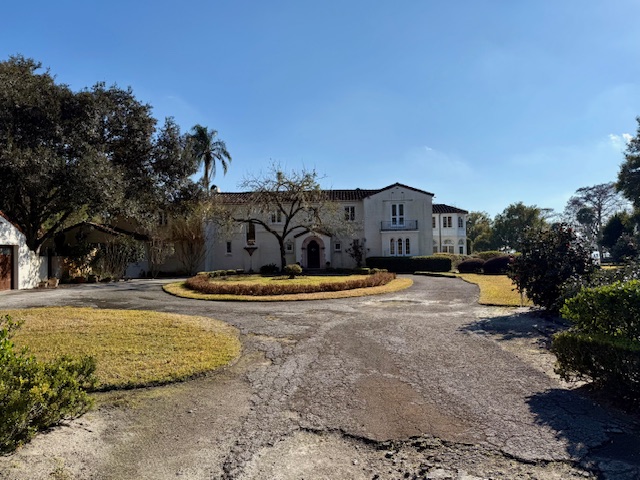
The historic home known as Merrywood was sold this week for $15 million to a company called Lake Osceola Holdings LLC, which is tied to an Orlando attorney and an estate advising firm called Cypress Row Advisors.
A deed dated Aug. 18 was filed with the Orange County Comptroller’s Office naming Raymond and Cathleen Gilmer as the sellers and the new company that was just created in June as the buyer for $15 million.
Winter Park Planning Director Allison McGillis said she spoke with Tara Tedrow, who previously had the property under contract for a reported $12 million and was requesting a lot split, and said she now expects Tedrow to ask for the lot split discussion to be tabled. The discussion had been scheduled for next week’s City Commission meeting.
Winter Park’s land development rules generally prohibit subdividing lakefront lots. Tedrow was seeking special permission through a change to the city’s comprehensive plan that governs development.
That prompted an outcry from historic preservationists who wanted to save the 90-year-old estate that is among the last remaining examples of the influence architect James Gamble Rogers II left on Winter Park.
The buyer, Lake Osceola Holdings LLC, filed notice of the new company with the state of Florida on June 10, according to state records. That was a week after the Planning & Zoning Board recommended that the City Commission approve the lot split and about two weeks before the first hearing regarding the house in front of the City Commission.
Carla Deloach is listed as the manager of the company and it’s Orlando address is the same as Cypress Row Advisors where Deloach is a senior attorney.
The sales deed was prepared by Jason Williams of the Lowndes law firm, where Tedrow is also a shareholder.
Tedrow began seeking the lot split last year, which she has said would allow her to build a family home on the vacant portion of the nearly 4-acre property and sell the other portion with the Merrywood house. Undeveloped lakefront lots are scarce in Winter Park.
Tedrow said at multiple public meetings that she hoped to find a buyer to preserve Merrywood, but said the house was in a state of severe disrepair.
Tedrow and Mick Night, the Sotheby’s real estate agent handling the transaction, said no one had come forward to preserve the home despite months of marketing the property because it was in such rough shape. As a result, they said at the June 24 City Commission meeting, there was little choice but to demolish the property.
Tedrow said her contract was contingent on the city approving the lot split.
The City Commission voted 3-2 that night to change the comprehensive plan to allow for a split that would only apply to the home at 1020 Palmer Ave. but added conditions: the combined total of two new homes that could be built on the lots would not exceed 30,000 square feet and at least one be fashioned in a style adjacent to architect James Gamble Rogers II, the local architect who built Merrywood and is known for helping to shape the city’s aesthetic character.
Attorney Matt Morgan, who also lives in Winter Park, then came forward with a $10 million offer, later upped to $12 million, to preserve the home. But he never heard a response from the sellers.
“I don’t know what to think because nobody knows what the intention or the plan is,” Morgan told the Voice on Wednesday morning after hearing word of the sale. “I think it’s a wait and see thing.”
McGillis said she doesn’t know who the buyer is, but that she heard from Tedrow that it’s a couple who emerged after the first hearing related to the lot split request.
“What she told me is that [the new buyers] are comfortable enough to close on the property without any guarantee,” of a lot split, McGillis said, adding that she understood all options are likely on the table from preserving the house to demolishing it.
While a permit is already in place would allow for the home to be bulldozed any day now, the owners and Tedrow verbally agreed to hold off on demolition until the second reading of the comprehensive plan change — which had been scheduled for next week and now is likely to be delayed or even cancelled all together.
Tedrow said she facilitated the demolition permit in an effort to bring the conversation about the house in front of the Historic Preservation Board. The 1938 Merrywood property is listed the Florida Master Site File, which means the demolition permit received a 90-day hold. The current permit is good through the end of August.
The home is not on the city’s historic register, leaving city officials without any power to stop demolition. McGillis recommended that a historic designation be one of the conditions of the lot split approval — a condition the city has required and approved before — but the commission rejected that after they heard no one was willing to preserve the home.
Betsy Owens, executive director of preservation group Friends of Casa Feliz, said the group would still like to see the home maintained.
“Until the house comes down we remain hopeful that a preservation option exists,” she said. “It would be a terrible loss if the house were demolished given that there is a known vetted buyer in Matt Morgan, who was willing to preserve the house.”
For now, the future of the estate remains in limbo.
“The saga is to be continued,” Morgan said.
WinterParkVoiceEditor@gmail.com
To comment or read comments from others, click here →

by Beth Kassab | Aug 14, 2026 | City Commission, News, Police and Public Safety
Commissioners Want Safety Class and Other Rules for Kids on E-Bikes
Winter Park is still considering exactly what rules to put in place and how to enforce them
Aug. 14, 2026
By Gabrielle Russon
Winter Park is considering imposing new regulations aimed to crack down on people driving electric bikes and motorized scooters dangerously around town.
The City Commission held a workshop Thursday to discuss how they want to craft a future city ordinance although they did not take an official vote. No public meeting date has been scheduled yet for the City Commission to vote on the final ordinance, spokeswoman Clarissa Howard said afterward.
The issue of e-bikes and e-scooters has been a hot topic in Central Florida. Just ahead of the new school year, Orange County Public Schools banned the devices for all students unless they have a valid driver’s license or learner’s permit. School officials expressed frustration that state and local governments have not acted sooner to pass any safety reforms.
On the workshop’s agenda, draft language of the ordinance proposed a 10 mph speed limit for any electric bicycle or motorized scooter traveling on sidewalks, shared-use paths, trails and parks. E-bikes and e-scooters would be banned on sidewalks within the central business district, Hannibal Square Neighborhood Commercial District or Orange Avenue District just like bicycles are.
But city officials questioned whether to include a specific speed limit at all.
Winter Park Police Chief Tim Volkerson said he was hesitant about the challenges of enforcing a 10 mph limit.
“Conceptually, I like the 10 miles an hour, but the reality is if you set a speed limit of 10 miles an hour, I’m going to have a line of people at my door wanting to know why we’re not running radar on sidewalks and giving kids tickets for going 11 and 12 mph on the sidewalks,” Volkerson said. “If it’s in ordinance, there is going to be an expectation that we are going to enforce it.”
He also warned some electric vehicles young people are riding don’t have speedometers.
“It’s hard to hold a 13- or 14-year-old kid accountable for going 10 miles an hour when he doesn’t have any method of determining that he’s going 10 miles an hour,” Volkerson said.
City officials suggested not having a specific speed limit at all but crafting the ordinance to say “unsafe speeds” or “carless” driving was prohibited on e-bikes and e-scooters.
However, Commissioner Elizabeth Ingram said if the city left it “broad like that, everyone’s going to have their own opinion of what is careless.”
Under the proposed ordinance, e-bike and motorized scooters would need to yield the right-of-way to any pedestrian.
Winter Park officials nixed a proposed provision to require e-bike and e-scooter drivers to carry a government-issued photograph ID.
Anyone under 16 will be required to take a city-approved safety education class to ride in city limits.
“I absolutely love the idea of requiring kids to attend the class. I think it’s very, very smart,” said Volkerson, who added that young people are already required to take a class to ride dirt bikes.
Volkerson balked at the idea of the city issuing a card to prove young people took the course. He preferred they get a certification of completion.
“They blow through stop signs,” Mayor Sheila DeCiccio said of young offenders she has witnessed. “They need to just learn the basic rules of the road.”
The proposed ordinance said parents or legal guardians would be held responsible for minors who get cited for violating the ordinance. City officials did not discuss how much the fines would cost.
“This is about accountability,” Commissioner Craig Russell said.
Other city officials acknowledged the city had limited leverage to handle repeat offenders since the city would not be giving licenses although Volkerson pointed out the city can impound e-bikes and e-scooters
“Tow company doesn’t care if it’s a bike or a car. You are going to pay a high impound fee for that,” Volkerson said.
WinterParkVoiceEditor@gmail.com
To comment or read comments from others, click here →

Recent Comments