by Anne Mooney | Feb 20, 2022 | Election, News
A Decades-Old Debate
by Geri Throne / February 2022
To develop or not to develop; that’s a question Winter Park has debated for decades.
These days, with little unused space left in the city, the question has more to do with redevelopment. Should a golf course be developed as a subdivision? Should a lakefront residential lot become part of a commercial project? Should a swampy parcel be filled with dirt to build a home?
How the city should deal with such questions is the subject of six city charter amendments on the March 8 ballot. Five would set a higher bar for major land-use decisions involving wetlands construction, lakefront zoning, parks, residential density and the sale of city-owned property. A “supermajority” vote of 4-1 would be required for approval in certain situations, instead of a simple 3-2 majority. The sixth amendment would require an additional public hearing if a project changes considerably after it was submitted.
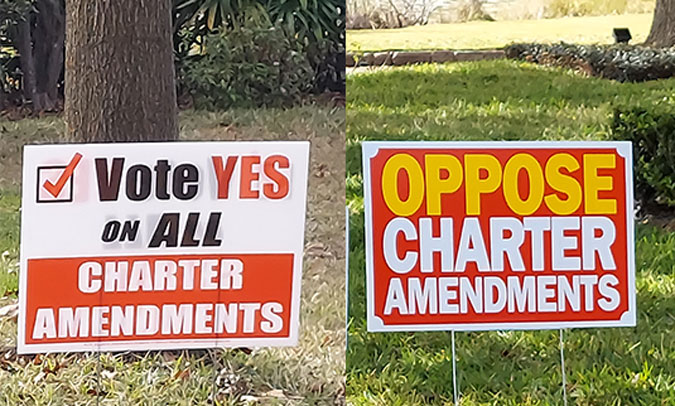
Sentiment for and against the amendments is evident. E-mails are clogging inboxes. Signs are popping up all over town.
Opponents sympathetic to development say the amendments set too high a bar and would make future land-use change impossible. Supporters concerned about preserving the city’s character say the amendments wouldn’t stop growth but would result in more compromise and public involvement for major changes.
PAST CLASHES OVER DEVELOPMENT
Tension between commercial and residential priorities has a long history in Winter Park. In the 1950s, as Interstate 4 was being designed, a push to extend Lee Road to downtown Winter Park failed as a result of residents’ objections. A decade later, neighborhood opposition squelched the dream of two consecutive mayors who wanted highway bridges built over Lakes Osceola and Killarney. The mayors’ priority was to move traffic easily to the new university east of the city.
Every decade since has seen clashes over land use. In the 1970s, the battle was over building heights. In later years, it was over road widenings, new subdivisions and the expansions of such established entities as the Winter Park YMCA, the Winter Park Hospital and Rollins College.
In the late 2000s, the biggest issues were the proposed SunRail commuter train and the Carlisle mixed-use high-rise. SunRail and its downtown station prevailed. The Carlisle – a massive condominium and retail building – didn’t. The high-rise would have loomed over Central Park in the current Post Office location. A two-year fight ended with the city buying out the developer with reserve funds and residents’ donations.
THE CURRENT CHARTER DEBATE
Among those supporting the charter changes are all current city commissioners and 1000 Friends of Florida, an organization that advocates for smart growth. The nonprofit group, which endorsed all six amendments, has advocated for a decade for supermajority votes when land-use changes can affect a city’s unique sense of place. Last year, it reaffirmed its support of supermajority votes. Its president, Paul Owens, said such changes “should have the highest level of support” and deserve more than a simple 3-2 majority. You can find the 1000 Friends of Florida document here.
Other amendment supporters say a 3-2 vote is too easy for major land-use changes unlikely to be reversed. Take the sale of rare city-owned land, says Winter Park Mayor Phil Anderson. “Once sold, the opportunity to use it for vital city operations is gone.” The same irreversibility applies to rezoning parks, he says, noting that currently it would take only three commission votes to decide to sell the West Meadow of Central Park and rezone it for offices and condos.
Anderson notes the importance of carefully considering land-use changes that could affect property values and alter the city’s quality of life. For such changes to pass with a 4-1 vote, commissioners would have to discuss them thoroughly and reach consensus. Compromise would be likely.
Opponents of the charter changes include former mayors Steve Leary and Ken Bradley and former commissioners Pete Weldon and Sara Sprinkel. Weldon filed last month to create the Winter Park Governance political action committee, which mailed out fliers against the amendments. The bulk of the PAC’s budget was contributed by real-estate developer Allan E. Keen’s company, Keewin LLC, which gave $10,000.
Weldon’s posts online describe the issue through the lens of past commission decisions. He accuses the current commission of being afraid that its use of Progress Point on Orange Avenue as a park could be overturned in the future. He sees the amendment on lakefront lots to be tied to the since-abandoned proposal for a hotel on Lake Killarney. The amendment dealing with residential density increases arose from the Orange Avenue Overlay debate, he says.
The amendments “will deter investment, paralyze Winter Park, and make serving on the city commission meaningless,” Weldon said in a Jan. 6 post.
SUPERMAJORITY VOTES NOT NEW
Central Florida is no stranger to supermajority votes. Neighboring Seminole County, for example, recently required them to dispose of natural land that the county obtained for conservation.
Supermajority votes aren’t new to Winter Park either. Previously, the city code required them for such decisions as changes to the city’s comprehensive land-use plan. But that requirement was dropped in 2013 when Ken Bradley was mayor. All mention of supermajority votes was scrubbed from the code.
Dropping the code requirements was easy because code changes need only the vote of three commissioners.
Changing the city charter, however, is much harder. Commissioners must ask voters for approval. So, if a majority of city voters approve the amendments this election, it would take a majority of city voters to remove them in the future. Think of the charter as a local constitution. It defines the essentials of how a city government works, its organization, powers and functions. Voters alone can amend it.
In the March 8 election, Winter Park voters will decide whether to set that high bar for major zoning and land-use changes in the future.
To comment or read comments from others, click here →
by Anne Mooney | Feb 11, 2022 | Election
Winter Park Candidates Stake Their Positions
by Geri Throne / February 11, 2022
As the March 8 city election nears, the candidates for Winter Park City Commission sometimes sound pretty similar. In their public debates and appearances, all four voice support for values most Winter Park voters hold dear: preserving the city’s unique character; valuing its green space; keeping a lid on taxes.
Similarities are especially evident in the Seat 3 race between entrepreneur Anjali Vaya and attorney Kris Cruzada. In the Seat 4 race, however, stark differences are the rule between incumbent Todd Weaver and challenger Elijah Noel.
SEAT 4 CONTRASTS
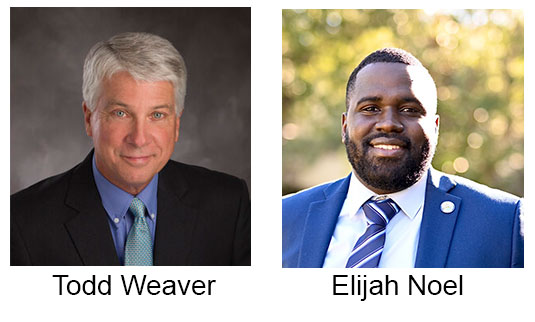
In recent forums and debates, Weaver, who is running for his second term, touted his record on issues such as green space and development and endorsed all six city charter amendments on the ballot. An aerospace and mechanical design engineer, he attended the University of Central Florida.
Noel, a 2020 Rollins College graduate with a degree in international business, sees little to like in the current commission. He accused the board of seeking more green space than the city needs and trying to concentrate power in the hands of a few. He asked for the votes of people “discontented with what the city commission is doing.”
A two-year resident of Winter Park, Noel manages a downtown Orlando lounge. He previously worked on the campaigns of former mayor Steve Leary and commissioner Sarah Sprinkel. “I’m running because I’ve noticed a lot of change in the mindset of the city commission, a change from forward thinking to a lot more stagnation,” he said.
Weaver, on the other hand, said he is proud of the current commission and its handling of pandemic-related economic challenges and development. In an effort to achieve unanimous votes, he said, the commission often negotiates during debate on decisions. “Everyone gives and takes a little bit. That was lacking when I first became commissioner.” Weaver has lived 25 years in his Lake Bell neighborhood, which was annexed into Winter Park in 2004.
SEAT 3 UNANIMITY
 In the Seat 3 race, Anjali Vaya and Kris Cruzada both have expressed support for buying the Winter Pines golf course. Both said the Post Office should stay at its current downtown location if possible, but the city should be prepared to negotiate if the Postal Service decides to move. If the city acquires the site, they both said, the land should become green space. Both endorse the proposed charter amendments on the March 8 ballot.
The two bring differing backgrounds and professional experience to the race, however. Cruzada has degrees and work experience in both accounting and law — skills he says would serve him well as a commissioner dealing with budgets, financial analyses, codes and statutes. He has a sole-practice law firm and also is a director in a family-owned land-management business. Cruzada spent his childhood in Winter Park and moved back in 2006. He serves on Orange County’s Development Advisory Board.
Vaya’s strength is in technology. After earning a master’s degree in healthcare administration and working in that field, she developed a furniture e-commerce website and then formed a technology consulting business in the Northeast. A native of Zambia, she became a U.S. citizen in 1999 and moved to Winter Park in 2007. She says her ownership of two technology businesses helps her understand the needs of small business and the importance of good communication. She is vice-president of the Indian American Chamber of Commerce and sits on the citizen advisory board to Winter Park’s Community Redevelopment Agency. She ran unsuccessfully for the Orange County Commission in 2020.
GREEN SPACE A BIG ISSUE
In debates, Noel has accused the city of wasting money turning the Progress Point lot on Orange Avenue into a park and buying the Winter Pines Golf Course when the money would be better used to fix roads and sidewalks. “We’re spending a lot of money on a lot of property we can’t afford to maintain.” Calling himself a “huge advocate for green space,” he said he would emphasize quality over quantity.
Weaver made no apologies for wanting to add more green space. “I want to keep the park in Winter Park.” The city has a budgeted schedule for repaving its hundreds of miles of roads and it already owned the Progress Point site, he said. The city won’t need taxpayer money to buy the Pines golf course or maintain it because “it’s a profitable business,” he said.
Both Vaya and Cruzada agreed with the commission’s desire to buy the Pines golf course and described the $7.4 million purchase price as a good deal. Vaya praised the commission for its debate on the deal. “There was a lot of dialogue and transparency in the meeting that night.” Cruzada, who lives along the golf course, said the city followed the rules. He noted that the city charter doesn’t require referendum approval to buy parkland. He said the city should identify more money-making opportunities at the course so it can pay back the bond issue quickly.
ORANGE AVENUE OVERLAY
Noel criticized the city commission for rejecting a task force’s advice for the redevelopment of Orange Avenue. If elected, he would “listen to the experts,” he said. “It’s our job as leaders not to assume we’re experts on building and zoning codes, but to study on it, listen to residents and make the best judgments.” The city should install a money-making use at Progress Point Park to help pay for its maintenance, he said, so it is “not just another park with more trees.”
Weaver said the commission was justified in repealing the initial Orange Avenue redevelopment plan, which was proposed by property owners and recommended by city staff. “It was very controversial.” The current plan is “more fair,” he said. He noted that the revised version includes incentives for developers to provide workforce housing.
CHARTER AMENDMENTS
Weaver and Cruzada described as “no brainers” the charter amendments requiring four votes for irreversible decisions. They both gave examples. “We don’t want to make it easy to build in wetlands,” Weaver said. Four votes would ensure that the city has a compelling reason for selling its property, Cruzada said. “Once you sell, you can’t get it back,” he said.
Vaya noted that the city previously required supermajority votes for such decisions. Asking voters to put the requirement in the city charter “will go a long way in protecting the city’s charm” and will reduce divisiveness, she said. Noel opposes all six amendments. He described the charter changes as a way of “keeping the power in one place” and reiterated that the city isn’t “hearing enough from its residents.
To comment or read comments from others, click here →

by Anne Mooney | Jan 17, 2022 | Election
Winter Park Candidate Forum
Meet the Candidates for Commission Seats 3 and 4
To comment or read comments from others, click here →
by Anne Mooney | Jan 13, 2022 | Election
Charter Amendments on March Ballot
Voters Will Decide on Super-Majority Voting Requirements
by Anne Mooney / January 13, 2022
In addition to choosing candidates for Commission seats #3 and #4, the March 8 ballot will ask voters to decide on six amendments to the City Charter requiring a Super-Majority vote in certain instances. The so-called Super-Majority is four out of five Commission votes; currently, Commission actions need only a Simple Majority of three out of five votes.
Winter Park goes back and forth on the subject of Super-Majority votes. The last time it came around was in 2014, when the Commission passed an ordinance abolishing Super-Majority votes. What one Commission can enact, the next Commission can repeal.
Only voters can decide
This time, instead of having the Commissioners decide by ordinance, the Commissioners have chosen to let the voters decide the question in the form of amendments to the City Charter. Charter Amendments passed by voters can only be repealed by voters.
Super-Majority votes can be wonky, boring, complicated subject matter – and it can also have a profound effect on the way our City will develop and grow into the future.
The ballot questions ask voters if they want a higher bar — four out of five Commission votes — in six distinct situations. To cast informed votes, voters must understand each situation – so hang in there.
All ballot questions will refer to Sections 2.08 and 2.11 of the Winter Park City Charter. We have left out that verbiage here to save your eyes and your patience, but you will see the language on the ballot. To read the full ballot questions, click here: https://cityofwinterpark.org/government/election-info/. This language also will appear on Sample ballots, which will be mailed February 18.
Question #1 – Sale of City-Owned Property
“Shall . . . the Charter be amended to require at least four of five members of the city commission to vote in favor to approve the conveyance of . . . city-owned property?”
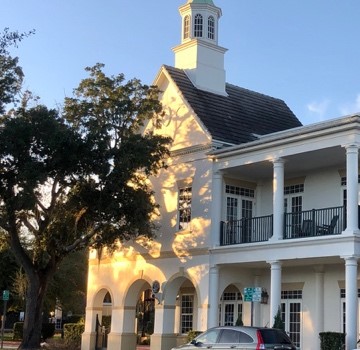
Welcome Center
Simply put, if the City wanted to sell a piece of property it owns, like City Hall or the Welcome Center, four Commissioners would have to vote in favor.
Question #2 – Rezoning Parks & Public Lands
“Shall . . . the Charter be amended to require at least four of five members of the city commission to vote in favor to (i) approve . . . rezoning of city-owned park land; and (ii) approve rezoning or change of use of land currently zoned public and quasi-public district or zoned parks and recreation district.”
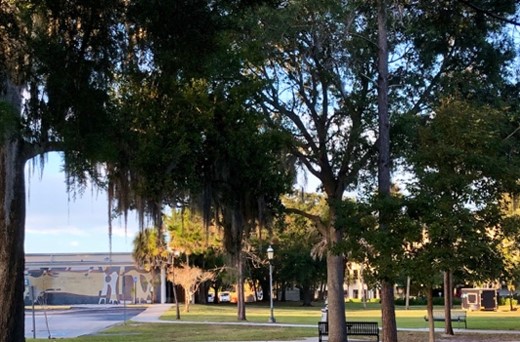
The rezoning of parks and recreation land is pretty straightforward. If this amendment passes, parks and recreation land, such as the West Meadow, could not be changed to another use without four of the five Commission votes.
West Meadow
Public and Quasi-public (PQP) rezoning is more complicated, as it is not limited to uses one might ordinarily associate with public spaces. PQP zoning can include schools and uses associated with schools, like gyms, dorms, bookstores, dining halls, theaters etc., post offices, parking lots, museums, medical care facilities, nursing and convalescent homes and assisted living complexes, public utility services, uses in performance of governmental services, churches and community service organizations, along with a host of uses associated with facilities of this sort.
Commissioner Carolyn Cooper said of this proposed amendment, “I do think changing use in property that is currently serving the public and creating part of our collective public realm should receive the support of an overwhelming majority of local leaders before its use is redirected.” Cooper also pointed out that many of the PQP uses serve only a narrow group and pay no taxes.
Question #3: Residential and Lakefront Property Map Amendments
“Shall . . . the Charter be amended . . . [for] rezoning (i) from a residential to a non-residential category, or (ii) lakefront property from a residential use to a commercial use, mixed-use, medium density residential use or high density residential use?”
 This amendment would make it more difficult for higher density types of development of single-family residential property, particularly lakefront single-family residential. It would also provide increased protection for residential communities against commercial encroachment.
Question #4: Density and Intensity Increases
“Shall . . . the Charter be amended . . . rezoning that increases the maximum allowed residential units per acre (density) or floor area ratio (intensity) by more than twenty-five percent from the existing maximum allowed density or intensity of use?”
This amendment would require four of the five Commission votes to increase density (units per acre) and intensity (square footage) of development by more than 25 percent.
Question #5: Development in Wetlands
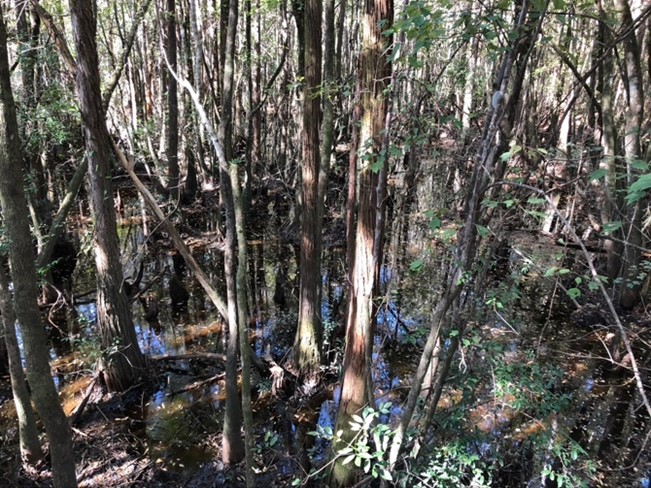
“Shall . . . the Charter be amended to require at least four of five members of the city commission to vote in favor of . . . development within wetlands?”
Question #6: Ordinance Changes During Adoption Process
“Shall . . . the Charter be amended to require an additional public meeting and reading of a proposed ordinance . . . if, during the adoption process either (i) a substantive or material change is made, or (ii) a change is made to a proposed zoning or comprehensive plan amendment ordinance resulting in an increase in the maximum allowed density or intensity of uses or a change to the permitted uses?”
If, in the process of adopting an ordinance, a substantive change occurs in the language of the proposed ordinance, the meeting at which the change occurs will be considered the “First Reading” of the ordinance, and there will be an additional noticed public meeting and another Reading and the public will have the opportunity speak to that change.
To comment or read comments from others, click here →
by Anne Mooney | Jan 7, 2022 | Election, Uncategorized
Meet the 2022 City Commission Candidates
by Anne Mooney / January 2, 2022
Note: This article was updated January 13 to reflect recent changes in the vote-by-mail ballot schedule.
Mark your calendars for the Candidate Forum, Jan. 27, 9:00 to 10:15 a.m. at the Winter Park Public Library, 1052 West Morse Blvd., sponsored by the Winter Park Voice, the Park Avenue District and the Orange County League of Women Voters.
Mike Lafferty will moderate
 Mike Lafferty, former Opinion Editor at the Orlando Sentinel, has agreed to moderate the Forum, which is free and open to the public. The Forum will follow the League of Women Voters protocols for timing of candidate responses, overall fairness and vetting of audience questions. This election is non-partisan.
Cruzada and Vaya for Seat #3
Two candidates, Kristopher Cruzada and Anjali Vaya, will vie for Commission Seat #3, long held by outgoing Commissioner Carolyn Cooper, who has served the maximum allowed four consecutive terms in office. “Carolyn Cooper . . . those are going to be big shoes to fill,” said Cruzada.
Weaver for Seat #4

Todd Weaver
As of this writing, Commissioner Todd Weaver is running unopposed for re-election to Commission Seat #4.
Candidate filing isn’t over yet
But that could change. The formal period for candidate filing runs from Noon, Jan. 10 to Noon, Jan. 18, so until 12:01 p.m. Jan. 18, we won’t know for sure how many hats are thrown into the ring.
Vote-by-mail ballots go out Feb. 2
The Candidate Forum is slated for Jan. 27. The Orange County Supervisor of Elections will begin sending vote-by-mail ballots to those who have requested them on Feb. 2. The last day to request a vote-by-mail ballot is Feb. 26. The election is March 8. If a runoff election is necessary, it will be held April 12.
Deadline to register is Feb. 7 — Be Ready! Time is short.
If you have questions about your voter status, go to https://www.ocfelections.com/ to make sure your information is up to date and to check your vote-by-mail status. It is important to do this now. The deadline to register is February 7.
From Forum Sponsors
“We hope this candidate forum can underscore the importance of small businesses and local community partners in the day-to-day considerations of future candidates,” said Forum sponsor Sarah Grafton, President of the Park Avenue District. “We understand the importance of civic engagement and we are proud to do our part.”
Reflecting the sentiments of the three sponsors, Grafton went on to say, “We are invested in the future of our city and in those who serve it.”
To comment or read comments from others, click here →
by Anne Mooney | Mar 17, 2021 | Election
Election Recap 2021
How Winter Parkers Saw the March 9 Election
by Anne Mooney / March 17, 2021
In an effort to make sense of the recent mayoral election, I polled a group of WP Voice readers – chosen because of their frequent activity on the Facebook group and their differing points of view – and asked them the following ten questions. A little over half the readers I approached responded, and to them, I am grateful.
Here are the questions and the substance of the responses. I agreed not to attribute any answer to any particular respondent.
- What single issue do you believe most strongly influenced this election?
All respondents cited future development as the most important issue. Since what the Commission does is primarily land use, a candidate’s vision of what the city should look like and how it should grow is always central. While there seemed to be a clear difference between the two candidates’ approaches to growth and development, the reality is that despite what they say they will do, the Mayor has just one of five votes.
In this race, the question of how the City will develop centered on the Library and the Orange Avenue Overlay. This respondent spoke for the rest when s/he wrote, “I think the OAO properly refined by P&Z and the Commission would not have been as hot an issue except that it came on the heels of the Library-Events Center. I have never seen so many people angry at how that project was handled from the start, people who were in favor of the Library are upset, and I think that dictated the way the last two Commission races went; and even as deep as her roots are in WP, I think that Library sealed Sprinkel’s fate.”
- Was there an issue that was not addressed that you believe should have been?
While about half the respondents said simply, “No,” the other half brought up the issues of ethics and accountability. “What is the score card by which voters can hold you accountable?” wrote one.
- What issue would you ask Phil Anderson to address in his first 100 days?
As you’d expect, this one garnered a variety of topics. Respondents wanted Anderson to bring the Commission together and set strategy for the next two to three years. Demonstrate that he’s going to respect and abide by the Comprehensive Plan. Pursue efforts to acquire the Post Office property, and assess the City Manager’s efforts to assist in this process and, in general, evaluate the City Manager’s service to the City.
Several urged that Commission meetings be reorganized to reduce or eliminate marathon meetings and to create greater opportunity for working people to participate. Nearly everyone wanted Anderson to bring clarity and direction to the Orange Avenue Overlay process. “I have seen lots of good ideas,” wrote one, “but we ought not let that area languish.”
Respondents saw a need to gain firmer control of decisions and approval on the library-events center, and to clarify the relationship between the City and the Library Board of Trustees. One wrote: “The fact that a non-elected, self-perpetuating Board, with only token representation from the City [one Commissioner sits on the Library Board] has so much authority over a major asset of the City is a strange arrangement. Before signing a lease with this entity, the Commission should have taken time to examine that relationship. The Library Board should have members appointed, as do other Boards, by the Mayor and Commissioners, and the City should reserve final authority on any major decisions.”
- Was there a campaign video, flyer, website page or other campaign collateral piece that stood out to you? (Or that you even remember?)
Most said they tossed the collateral material and thought it was a waste of money. Those who took the time to read the mailers tended to remember the negatives. One was disheartened to see a mailer that painted Anderson as “anti-woman,” calling it a “low blow.”
One respondent pointed out that the timing of the Events Center video “preview,” which featured Sarah Sprinkel prominently and had Mayor Steve Leary assuring us the project is on time and on budget, was probably not coincidental. Several respondents remembered (negatively) the “Important Tax Information” letter endorsing Sprinkel that was signed by Ken Bradley and Mike Miller.
There was a definite bias in favor of digital media, with social media and campaign website videos of both Sprinkel and Anderson viewed as more genuinely informative and less cumbersome than the collaterals that came on paper.
- Was there a slogan or catch phrase from either campaign that resonated with you?
Resounding “thud” here – all respondents except one answered No. The sole respondent who recalled a campaign slogan was clearly an Anderson supporter.
- How did you feel about the debates? Did they help you decide which candidate to support? Were there too many or too few, or just right?
The most interesting responses here were the ones that preferred the Sentinel video interviews with the two candidates to any of the debates. They found the Sentinel videos more informative and interesting.
All respondents agreed there should be public forums where the candidates share and contrast their views. The Library debate got high marks, and no one said there were too many opportunities to see the candidates square off in front of an audience. Respondents were united in their belief that the Chamber of Commerce debate would be improved by having a neutral moderator curating the questions.
- In hindsight, how do you think that ‘wild card’ question from the Chamber of Commerce should have been handled?
Respondents were unanimous in their opinion that the question as written should never have been asked. ‘Biased,’ ‘loaded,’ ‘inappropriate’ and ‘disgraceful,’ ‘offensive’ and ‘ham-handed’ were among the adjectives used.
One respondent wrote, “I thought both candidates fielded the question in equally good ways. Sarah shook her head and then went to the substance, which was fine. Phil directly addressed the problem with the question, which was also fine.”
Another respondent, who did not see the debate but who heard about the question, was a bit more pointed: “This moderator apparently prefaced a question submitted by someone with this charge of Sunshine Law violations . . . . If he was put up to it, it is vile, and if this guy did it on his own, either the President or the Chair of the Chamber should have immediately risen and made it clear to all that that statement was out of bounds and had no place at that debate.”
- For an ‘off year,’ a 34 percent turnout is quite high. Of the nearly 8,000 people who voted, however, nearly 3,000 waited until election day rather than voting by mail. Why do you think so many waited?
Most respondents thought people were happy to have an excuse to get out of the house. There was no early voting site in Winter Park, and Winter Park is a pretty traditional town where voters like to go to the polls on election day.
Several respondents expressed the opinion that 34 percent was a poor showing, but when compared with 15 percent for Ocoee, 19 percent for Windermere and 13 percent for Winter Garden, Winter Park is looking pretty good.
- Was there anything about the election that surprised you?
There are some good quotes here – let them speak for themselves.
“Neither candidate stooped to the level of bringing up dead relatives.”
“Phil Anderson won without any negative campaigning.”
“The audacity of the notion of putting residents first at City Hall was exactly what was needed.”
“The Commission should take note that the trend over the last few election cycles demonstrates that the residents want smaller scale, slower growth.”
“Keep your message positive and stick to the issues. Even mud slung by surrogates of the candidate tends to bounce back and sully the candidate her/himself.”
Many thanks to Lisa Coney, Bill Segal, Sandy Womble, Chele Hipp, Jack Miles, Jan Hommel, Doug Bond and Beth Hall, who gave the Voice permission to use their names. Thanks also go to additional respondents who did not wish to be identified. The care and thought that went into all of the responses speaks volumes. It is very clear that these people, our neighbors, are committed to our City and care deeply about our community.
To comment or read comments from others, click here →

Recent Comments