by Beth Kassab | Aug 3, 2024 | City Commission, News, Orange Avenue Overlay, Uncategorized, Zoning and Development
Rollins faculty housing proposal returns with big changes
The apartment building and other projects such as a retail and restaurant development along Fairbanks and zoning for the new Blue Bamboo to be considered at upcoming P&Z meeting
Aug. 2, 2024
By Beth Kassab
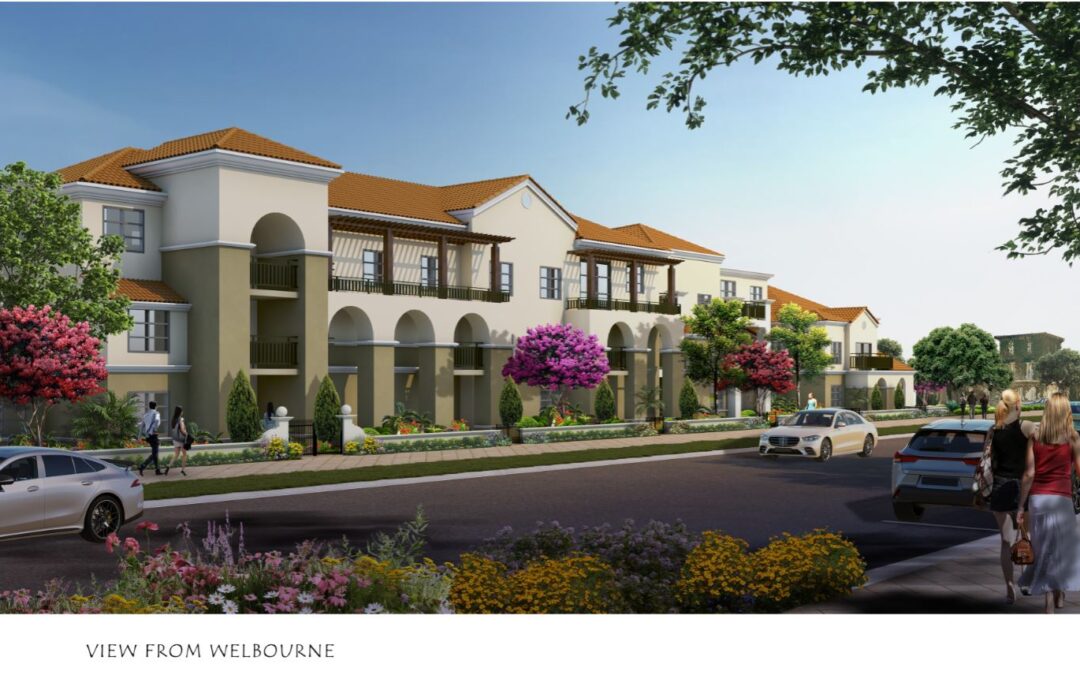
Rollins College is back with a new version of its plan to build a downtown apartment building designed to give faculty and staff an affordable option in a city where the median home price was nearly $600,000 in June.
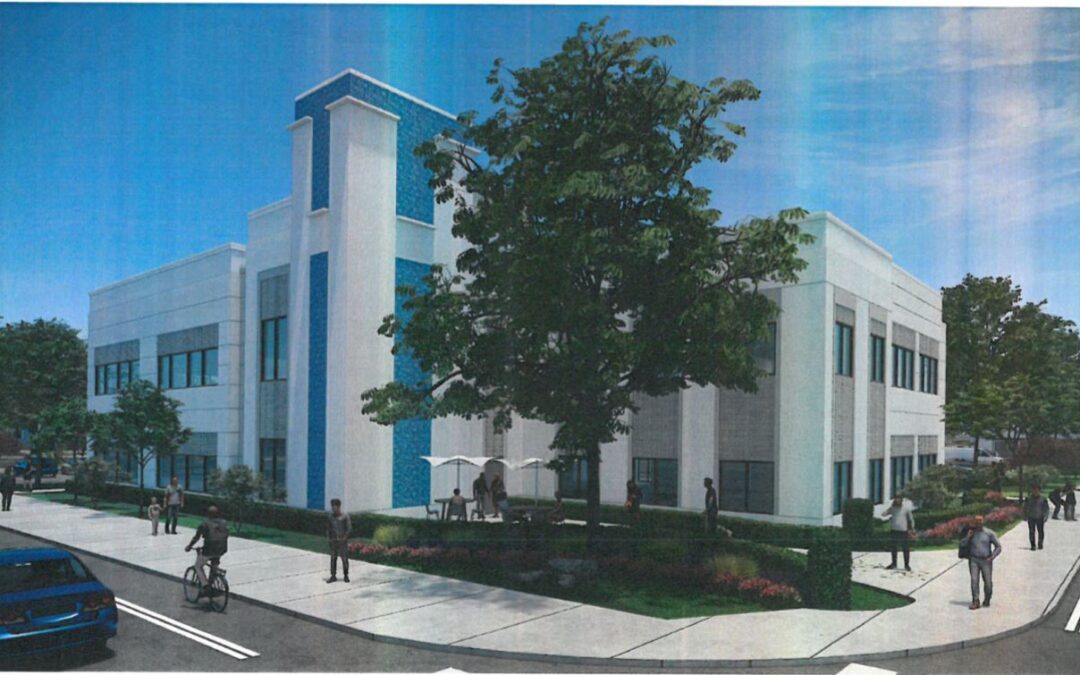
The revised proposal, which will be considered at Tuesday’s Planning & Zoning Board meeting, includes a new look as well as additional conditions for the 45,842-square-foot project with 30 units.
Also new: signals of a potentially warmer reception to the concept by some residents of the nearby Douglas Grand Condominium building who previously panned the architecture and, along with some City Commissioners, called the project incompatible with the neighborhood.
“Attendees praised the new appearance,” reads a summary of a meeting this summer between college representatives and Douglas Grand owners.
Though some condo residents continued to offer suggestions such as adding real or etched stone along with the textured stucco on the building’s facade to enhance the Mediterranean architectural theme.
Rollins “already made significant and costly revisions and does not intend to revise the architecture again,” college representatives noted in the same document included in the meeting materials.
The college also addressed calls from the community to opt out of its property tax exemption as a nonprofit educational institution and contribute to city funds to help cover the cost of police, fire and other services.
“It should also be pointed out that Rollins pays approximately $1.2 million annually property taxes,” according to the summary of the meeting with Douglas Grand residents submitted by Rollins. “In addition, for the demographic occupying the units, it is unlikely there will be an excessive or frequent burden on police or fire departments.”
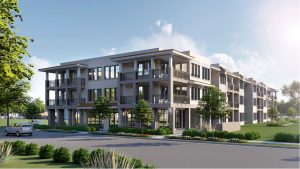
An earlier rendering of the Rollins faculty housing project shows how the design as changed in comparison with the latest rendering shown at the top of the page.
There does appear to be new consensus, however, when it comes to another sticking point: parking.
According to a staff report as well as the summary of the meeting with condo residents, there is support for an option that would require Rollins to provide 58 parking spaces for the 30 units rather than the code-mandated 75 spaces. One of the conditions of the agreement is that Rollins will provide a 5-foot easement along West Welbourne Avenue for the city to create more on-street parking.
“This takes into account the available on-street parking and the additional on-street parking previously discussed,” according to the staff report, noting the option also allows for the creation of a “pocket park” with additional landscaping and tree canopy at the corner of Welborne and Virginia to enhance the appeal of the project for neighbors.
Other conditions include:
- Rollins will prohibit student housing and classroom instruction in the building and commit to using the land for faculty and staff housing for 30 years.
- Units will be leased for a minimum of 6-months and only plants and patio furniture are allowed on balconies.
- Rollins and the city will coordinate undergrounding nearby powerlines and there will be some kind of solar power installation on the roof.
New retail and restaurant space on Fairbanks
The P&Z Board on Tuesday will also consider a request to build a 26,210-square-foot building for retail shops and restaurants at the corner of West Fairbanks Avenue and Capen Avenue.
The agreement is significant for multiple properties, owned by companies controlled by the Holler family and once involved in a lawsuit against the city over zoning rules brought by changes to the Orange Avenue Overlay.
Plans call for a one-story development and 106 parking spaces on the lots at 805, 801, 771 W. Fairbanks Ave. and 555 S. Capen Ave.
The development would not only improve those lots, but would provide a new future turn lane at Fairbanks Avenue and Denning Drive, land for a flood control project and allow the city to purchase a residential lot for $250,000 that could be used to build affordable housing.
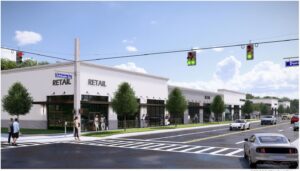
A rendering shows what the development at Fairbanks Avenue and Denning Drive could look like.
City staff is recommending the board approve the conditions for the development, including that the owners landscape and maintain a 10-foot land donation on the north side of West Fairbanks Avenue until a turn lane can be constructed there to improve traffic flow. In addition, the property owner will donate three vacant lots on Comstock Avenue for stormwater retention and to help with flood control near MLK Park and Lake Midget and sell a vacant residential lot to the city for $250,000.
In exchange, the city will waive transportation impact fees for the owner on some additional properties, including 860 W. Fairbanks, the former Orlando RV dealership.
Blue Bamboo zoning change
The City Commission approved a lease earlier this summer for Blue Bamboo Center for the Arts to take over the old library building as a new performance venue and office space.
In order for the new plans to move forward the city must approve new zoning for the property, which is technically designated for multi-family housing, though the land has long been used as a public library.
City staff is recommending the zoning be changed to a category known as PQP or Public, Quasi-Public District and that the board approve a change to the permitted uses for that category to include “performance art venues together with ancillary gallery, educational, rehearsal, recording studios and offices to support the like, within a city-owned building.”
If approved by the P&Z board the change will go before the City Commission for final approval.
WinterParkVoiceEditor@gmail.com
To comment or read comments from others, click here →
by Beth Kassab | Jul 25, 2024 | Election, News, Uncategorized
Let us hear your questions for County Commission District 5 candidates
The four candidates for the seat that represents Winter Park will appear at a public forum on Aug. 6
July 24, 2024
Staff Report
Voters will have the chance to hear directly from Orange County Commission candidates for District 5, which represents Winter Park, at a public forum on Aug. 6 at Westminster Winter Park.
The event at 7 p.m. is sponsored by the Orange County League of Women Voters and will be moderated by Winter Park Voice Editor Beth Kassab. Doors will open at 6:30 p.m. at Westminster, 1111 S. Lakemont Ave.
The public can also tune in live to watch the forum or watch a recorded broadcast on the League’s Facebook page. 
What questions do you have for the candidates who will be on the Aug. 20 ballot? You can leave them in the comment section below or email WinterParkVoiceEditor@gmail.com.
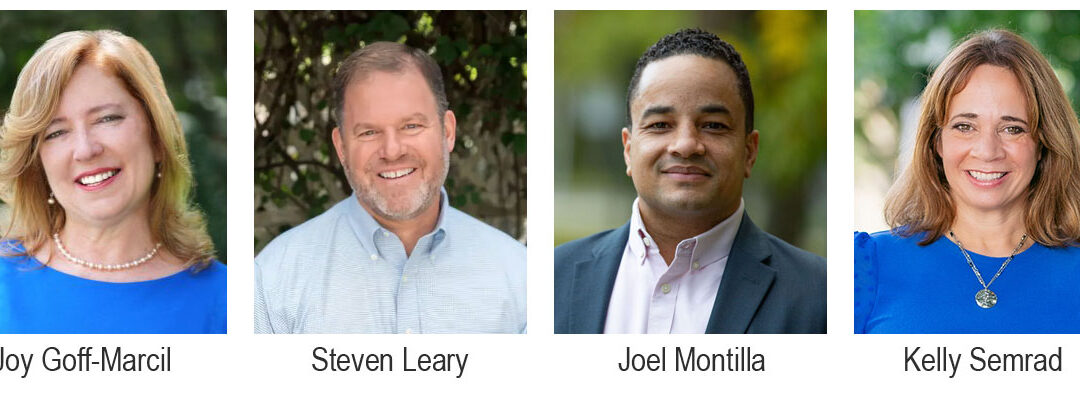
Vying for the technically non-partisan seat are: Former Maitland City Council member and former legislator Joy Goff-Marcil; former Winter Park Mayor Steve Leary; attorney Joel Antonio Montilla and Kelly Semrad, a UCF associate professor of tourism economics.
Key issues in the race include how to spend the county’s Tourist Development Tax, a levy on hotel beds; how to protect rural lands; policies for improving the region’s overcrowded roads and other transportation woes and more.
The winner will replace Emily Bonilla, who has reached term limits for her seat.
If none of the four candidates receives 50% plus one of the vote in August, then the top two vote getters will face off in November.
What else is on your Aug. 20 ballot? Take a look here.
Requests to cast a mail ballot must be made by Aug. 8 at 5 p.m.
The Orange County Supervisor of Elections office reported that it has received more than 90,000 requests for mail-in ballots so far. That is below the 214,555 requests for the primary in 2020 and 195,935 in 2022.
The lagging number this year is the result of a change in state law by the Florida Legislature, which now says that vote-by-mail requests expire after each federal election cycle and voters must re-submit those requests.
WinterParkVoiceEditor@gmail.com
To comment or read comments from others, click here →
by Beth Kassab | Jul 24, 2024 | City Commission, News, Uncategorized
Winter Park lifts prohibition on Sunday morning alcohol sales
For years, the city has restricted the sale of alcohol on Sunday mornings until after 11 a.m.
July 24, 2024
By Beth Kassab
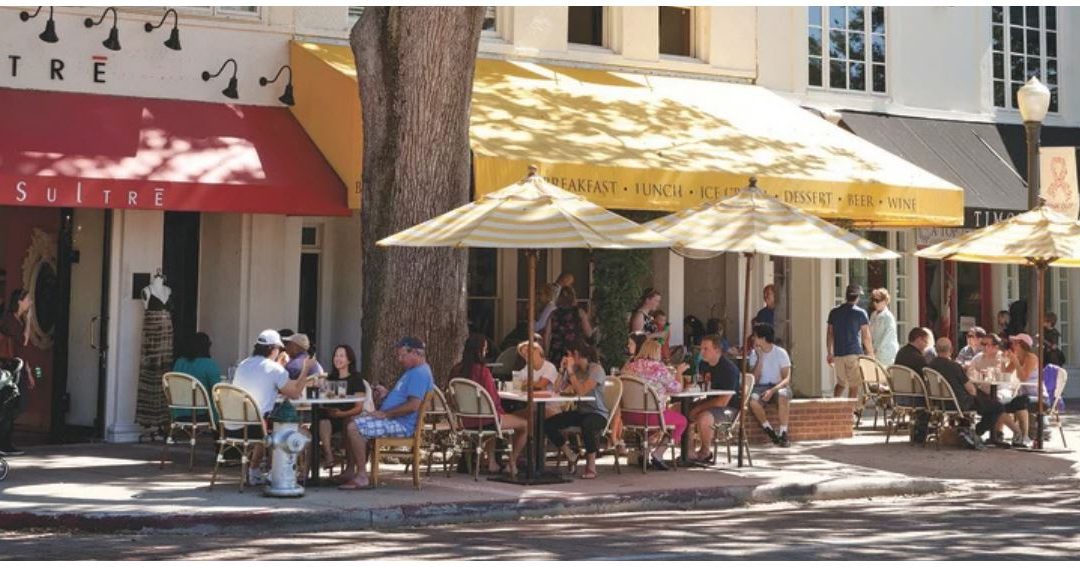
Winter Park grocery stores and restaurants offering a boozy brunch can soon get an earlier start on Sunday mornings.
The City Commission voted 4-1 to allow alcohol sales as early as 7 a.m. rather than 11 a.m., making the time consistent with the other six days of the week. Commissioner Craig Russell was the only dissenting vote.
Mayor Sheila DeCiccio said the change was prompted by grocery managers who complained about routinely confused and disappointed customers who stopped in early on Sundays to stock up for a day at the beach or a football party only to learn they had to come back later for beer and wine.
Planning & Zoning Director Allison McGillis said Maitland, Orange County and Seminole County all allow sales as early as 7 a.m. Orlando is an outlier with a 9 a.m. start time. A few years back, Winter Park prohibited liquor sales until noon, but the city changed the restriction to 11 a.m. to accommodate the mimosa and Bloody Mary crowd at local brunch spots.
A grocery store manager, who declined to say where he worked, spoke at the meeting in favor of the new earlier time.
“I have personally witnessed friends planning for beach outings, football or Mother’s Day and they can’t do the shopping,” he said. “Many employees and customers have asked why and I haven’t been able to give a good reason.”
Russell, in casting a vote against moving sales up to 7 a.m., said he saw no need for the change.
“I have a belief that Sunday is a day of rest. I say leave it alone,” he said. “… I wouldn’t’ look to compromise my principles on agreeing to something like this.”
Winter Park to keep property tax rate the same
Commissioners voted Wednesday to hold the same property tax rate for the 17th year in a row.
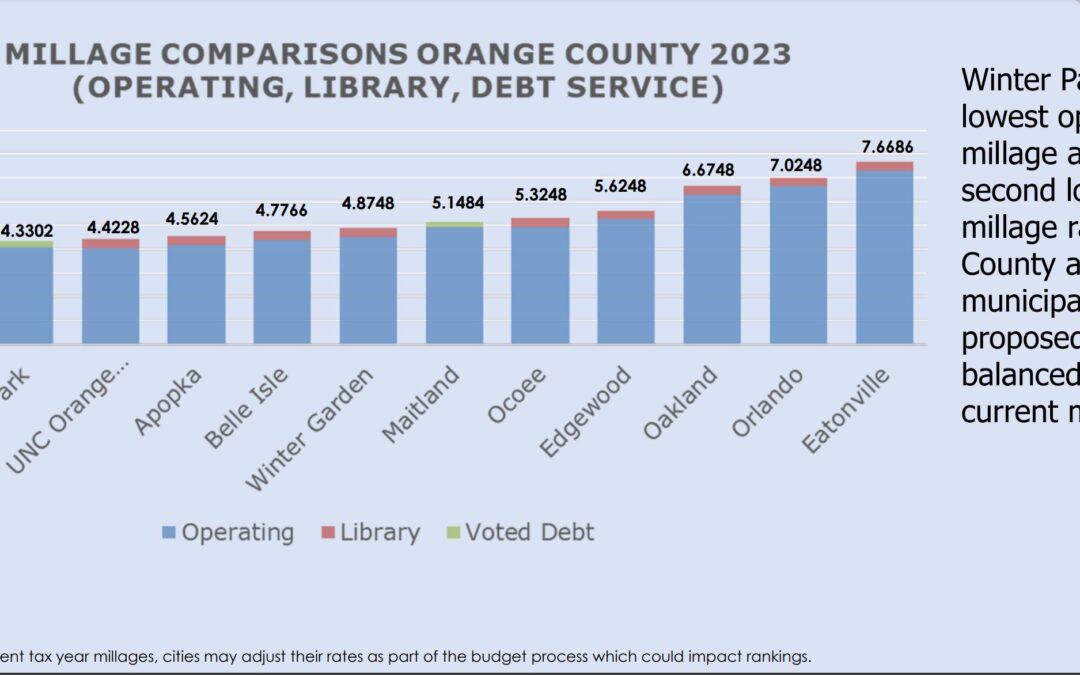
That means the millage rate will remain steady at 4.0923 mills, though tax revenue will increase because of rising property values. The proposed $214.6 million budget includes a 3% or $6 million increase over the current year as property taxes remain the key driver of growth in the city’s general fund.
WinterParkVoiceEditor@gmail.com
To comment or read comments from others, click here →
by Beth Kassab | Jul 17, 2024 | City Commission, News, Uncategorized
Golf carts are fun, but are they street-legal in Winter Park?
Here’s what to know to about legal low-speed vehicles and how to avoid fines up to $500
July 17, 2024
By Charles Maxwell
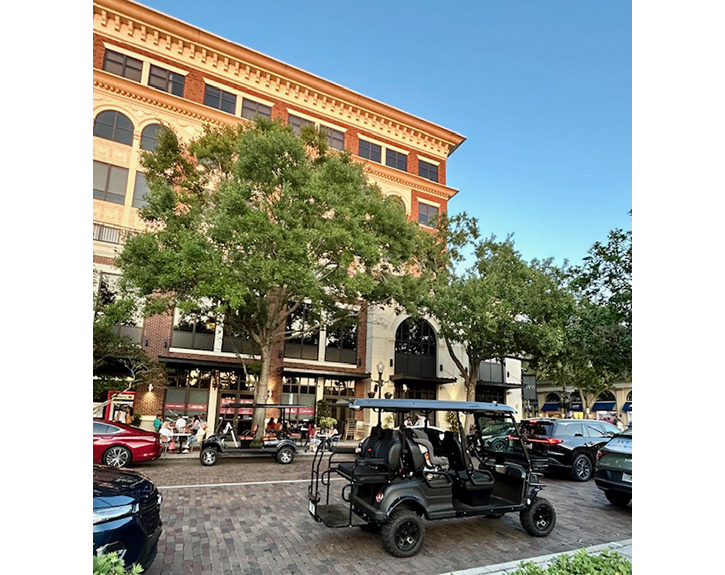
Once only used along Central Florida’s fairways and greens, golf carts are now commonplace on Winter Park’s brick roads.
Residents like Jason Bristol find them a quick and easy way to travel to Park Avenue or even to Park Maitland School.
“I bought my first one back in 2005, and I’ve owned a total of five,” said Bristol, who lives in Baldwin Park. “I’ve been using it so long, I know all the backroads and take it everywhere- I’ve even valeted it downtown (in Orlando).”
But not everyone is as educated as Bristol when it comes to using the street legal version of golf carts known as low-speed vehicles.
That left city officials on a years-long campaign to make people aware of the difference and, more recently, for Mayor Sheila DeCiccio to ask the city attorney for a report on potential liability related to golf cart accidents.
Winter Park police chief Tim Volkerson and the department are actively working to remove golf carts from Winter Park roads.
“We went through a period of time where there was an influx of [illegal] golf carts being operated on the roadway,” Volkerson said. “While I do not have specific numbers, the agency did conduct an enforcement/education period, which was successful in reducing those operating golf carts on the roadway.”
The city posted a guide for residents to help them understand the differences between the legal and the illegal versions. Drivers can face up to $500 fines for operating an illegal cart on the roadway.
The street-legal kind must have a Vehicle Identification Number and features such as a seat belt for each seat, brake lights, turn signals, side mirrors and a windshield. Owners are required to have insurance and register the vehicles and operators must have a driver’s license.
They are permitted on city streets with a speed limit of 35 mph or less.
Standard golf carts don’t have all of those features, can be driven by anyone 14 and older and in most cities like Winter Park, can only be used on golf courses. (Some places, like the Villages, allow golf carts on roads.)
Volkerson says there have been no cases of severe injury or death involving a golf cart in Winter Park. But DeCiccio has monitored the situation closely and heard complaints from some residents about golf carts and LSVs.
In an article DeCiccio published last fall, she noted “the most common observation is the reckless driving and age of the drivers and occupants,” with residents claiming to have seen minors operating LSVs, with as many as six people per cart.
Bristol, who owns a street-legal cart and has five kids, said his family now much prefers taking their six-passenger LSV around town over their car.
And he’s noticed plenty of other people seem to have the same idea. Once one of only a few residents with an LSV in his neighborhood, he’s noticed their use on the rise: “Literally everyone has them now.”
WinterParkVoiceEditor@gmail.com
Charles Maxwell graduated from Winter Park High School and Florida Atlantic University with a BA in Multimedia Studies. His work has appeared in the South Florida Sun Sentinel and The Boca Raton Tribune, and he is a contributing writer for Keeping it Heel on the FanSided network. He enjoys watching sports, finding new food spots, and playing pickleball with friends and family.
To comment or read comments from others, click here →
by Beth Kassab | Jul 13, 2024 | City Commission, News, Taxes, Uncategorized
City budget talks kick off with modest increase in spending proposed
Commissioners will be called on to set priorities in coming weeks
July 12, 2024
By Beth Kassab
Residents got a first glimpse at next year’s city budget — a $214.6 million proposal with a 3% or $6 million increase over the current year as property taxes remain a key driver of growth in the general fund.
The plan calls for the city to maintain the same property tax rate its held for 16 years, though residents will see additional fee increases for trash pick-up as a result of a contract negotiated last year and there are signals pointing to more fee increases for other services ahead.
Public safety remains the biggest expenditure in the general fund, rising from about 35% in 2024 to more than 42% in the new budget. The increase comes with four new proposed positions, including two new firefighters/emergency medical technicians, a fire logistics manager and a police grant and accreditation manager that will be upgraded from a part-time to a full-time position.
While inflation continues to put pressure on wages and building costs, the city’s general fund will see almost 7% growth to nearly $83 million as a result of increases in home values, fees for services and Winter Park’s share of the state sales tax. Other funds are flat or seeing declines.
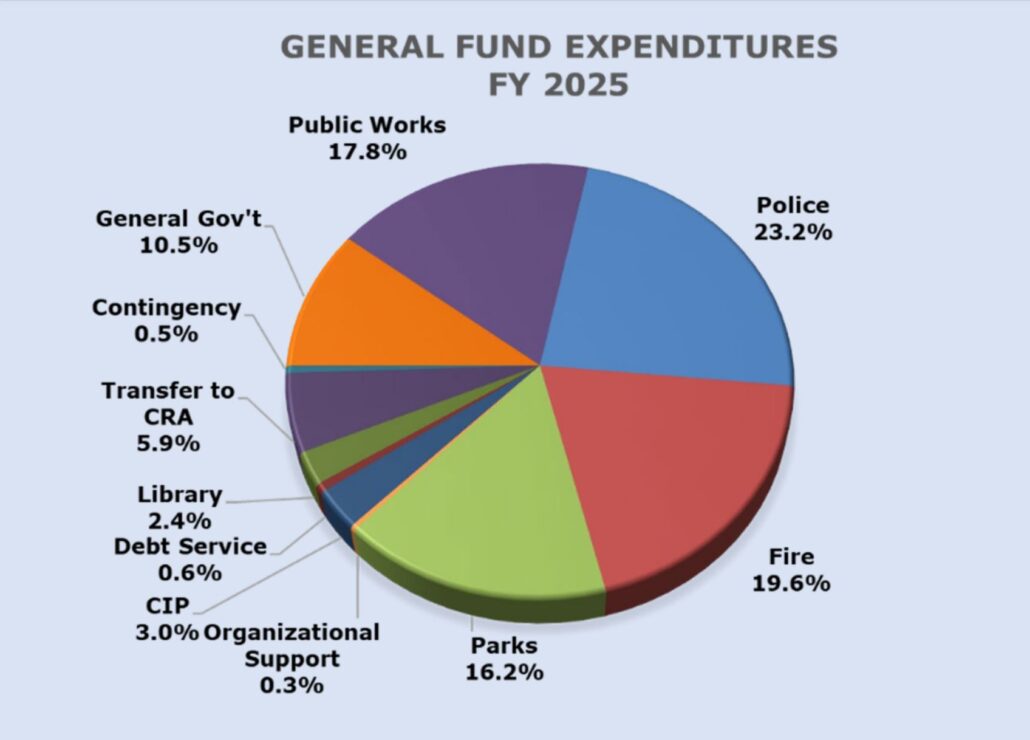
The city’s proposed budget shows where dollars are coming from in the general fund. Source: City of Winter Park budget documents
The water utility, for example, is expected to see declining cash flow as inflation pushes up the costs to maintain the system, according to the budget presentation. The water rates customers pay are driven by the state’s regulatory agency called the Public Service Commission, but the index for regular increases are “are likely insufficient to handle future demand for investment,” the presentation said.
In addition, the city-owned electric utility will “likely need to consider a rate increase” next year due to higher costs within the power portfolio.
Also at play is the future of the city’s Community Redevelopment Agency, which uses a portion of county tax dollars to fund projects in a special district that covers downtown. The city is looking to the county to extend the CRA (which otherwise would sunset in four years) and expand its borders, but the Orange County Commission has yet to take up the matter.
Overall, there are about $126 million worth of projects in the city’s 25-year plan that don’t currently have a funding source attached to them. That means commissioners will need to continue to set priorities and make choices about how to manage the competing interests that come from wanting to maintain relatively low property taxes and fees for residents with improving services, infrastructure and amenities.
The proposed budget set aside a contingency of about $450,000, roughly the same as last year. The city’s reserves are expected to grow to about $21.2 million or about 27% of the recurring annual operating costs in the general fund, the proposal says. It would take about $2.7 million more to reach the goal of 30%.
WinterParkVoiceEditor@gmail.com
To comment or read comments from others, click here →
by Beth Kassab | Jul 2, 2024 | City Commission, News, Uncategorized, Zoning and Development
Medical office approved on corner of Aloma and Lakemont
The project led by a group of physicians will bring development to the long vacant lot
July 2, 2024
By Beth Kassab
A new medical office building will stand at the empty corner at Lakemont and Aloma avenues after the City Commission unanimously approved the project with conditions late last month.
Residents objected to the height of the building and raised questions about traffic, particularly left-hand turns, but commissioners settled on conditions that they said would alleviate many of the concerns.
The nearly 18,000-square-foot proposal for the two-story building came after Verax Investments purchased the land from Fifth Third Bank earlier this year for about $2.7 million, according to property records. Verax is a real estate development group led by a group of local physicians including Dr. Ravi Gandhi, a well-known brain surgeon with Orlando Neurosurgery.
The development will herald a major change for the last wooded parcel of the intersection.
“We all know that SR 426 is broken,” said resident Beth Hall. “Please don’t let this be the commission that breaks Lakemont.”
The developers agreed to preserve two live oak trees on the property.
They also agreed to build a 6-foot high wall on the edge of the property that backs up to residential lawns and the wall must be constructed before the building is started.
Among other conditions, the developers will also post signs prohibiting left-hand turns out of the property and give over a strip of the land to the city to eventually widen Lakemont. .
WinterParkVoiceEditor@gmail.com
To comment or read comments from others, click here →


Recent Comments