City Says the Problem Causing Smelly Water is Now Resolved
But the odor caused after lightning struck a water treatment plant could linger a few more days. Plus, state budget wins for Winter Park projects
July 10, 2025
By Beth Kassab
Residents complaining of a strong sulfur smell coming from their faucets in recent weeks got some good news on Thursday: The damage likely caused by a lightning strike to the ozone generator at one of the city’s water treatment plants appears to be resolved though the odoriferous problem may continue for a few days.
City Hall posted the update on Thursday afternoon after complaints about the smell and lack of information about it surfaced publicly at the City Commission meeting on Wednesday.
A power surge during a lightning storm hit the water treatment plant, one of three that supplies water to residents, on June 27 and city staff has been working ever since to bring the machine that oxidizes the city’s water to help purify it and reduce the rotten egg smelling sulfur often associated with Florida groundwater.
The water is safe to drink and the output from the damaged plant was reduced and treated with additional chlorine while repairs were underway, City Manager Randy Knight said.
“Twelve days of sulfur smell is a lot,” Cathy Baumgardner, who lives just north of Howell Branch Road, told the commission on Wednesday. “That’s not the big issue. The big issue is the lack of communication. Nobody contacted us … we didn’t know it was healthy until we called and asked.”
David Zusi, director of Water and Wastewater Utilities, said the water plants had withstood lightning strikes before but never one so severe that a portion of the treatment system was offline for so long. He said a number of experts, including the manufacturer of the ozone generator, which removes hydrogen sulfide from the water, were called in to help resolve the problem.
“This issue was extremely difficult to diagnose because no fault code was generated within the system,” the official update read. “Please note it may take a few days for the water with elevated hydrogen sulfide to flow out of the distribution system before it returns to normal odorless water.”
City to get $800k in project dollars from state
At at time when local governments are scrapping for every dollar from Tallahassee, Winter Park officials said this week that three projects requests made it into Gov. DeSantis’ final budget, escaping the veto pen.
DeSantis signed the $117.4 billion budget last week after cutting $567 million in line-item vetos.
The largest score is $500,000 to replace the bridge on Stirling Avenue over Howell Creek. The 70-year-old bridge will be replaced, including drainage for surface water, sidewalks and railings over the bridge.
The city will also receive $250,000 to dredge Lake Lillian at Mead Gardens.
And $62,500 will go toward bollards or sturdy posts that act as a barrier between pedestrians at events and vehicles.
Winter Park Approves Limits on Protests and Activity at Library and Events Center
In a split vote, the City Commission approved a new ordinance that they claim is based on complaints over photo shoots and one small protest at the public buildings
July 10, 2025
By Beth Kassab
The Winter Park City Commission on Wednesday voted 3-2 to approve an ordnance that draws a boundary around the Library and Events Center as essentially a new “no protest” or gathering zone.
Mayor Sheila DeCiccio and commissioners Craig Russell and Kris Cruzada voted in favor of the ordinance. Commissioners Warren Lindsey and Marty Sullivan voiced strong objections to the change and voted against it.
DeCiccio and city staff say the ordinance is needed to protect groups and individuals who rent space in the buildings for weddings, corporate meetings and other events from disruptions from people who may want to stage protests or use the $41 million complex’s unique architecture as a backdrop for extensive photo shoots or other gatherings.
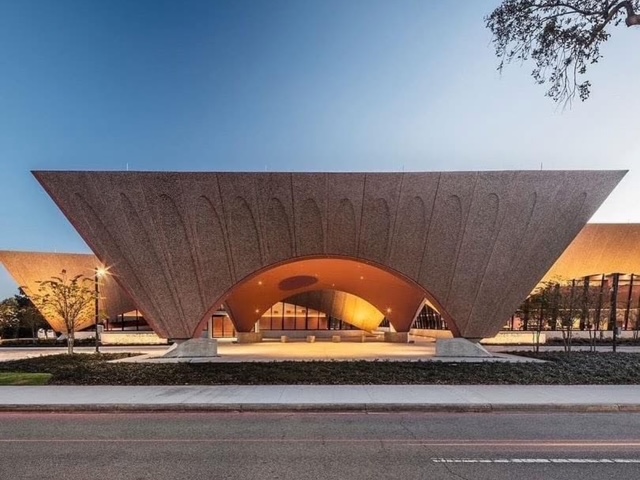
The Winter Park Events Center opened in late 2021 and was designed by British architect David Adjaye.
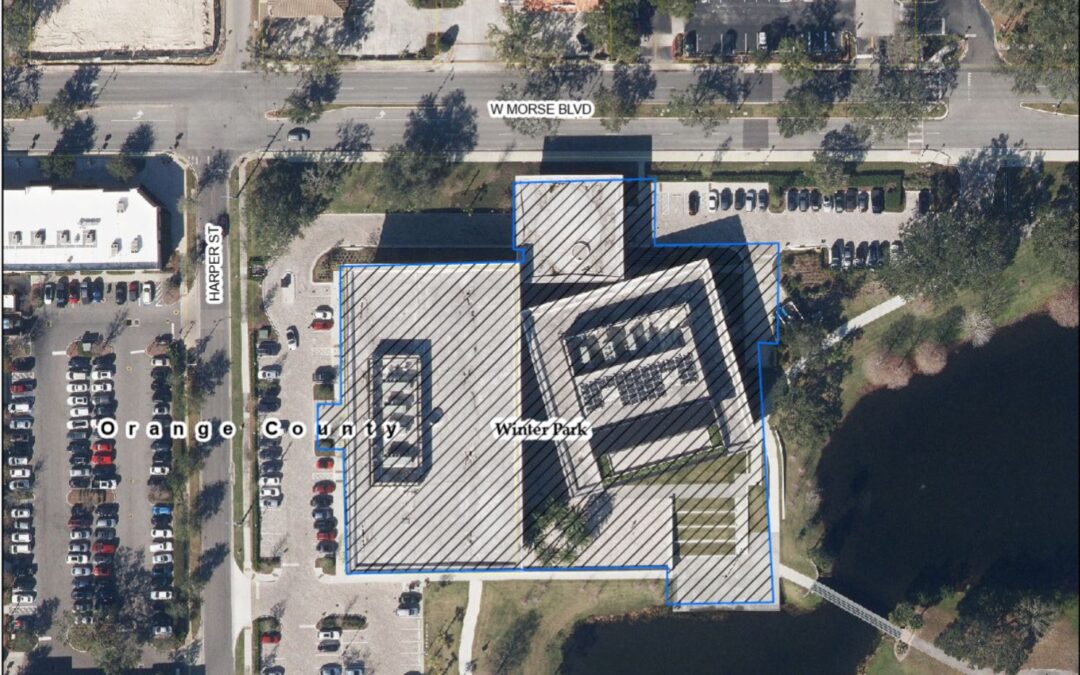
The new “no protest” area — the blue line drawn around the complex in the image above — mostly hugs the outline of the buildings, but also includes a large amount of outdoor space on the southeast corner of the building, which has large windows looking out onto Martin Luther King Jr. Park.
Lindsey, a criminal defense attorney, noted the irony of the city imposing what he views as First Amendment restrictions on the same week Winter Park plans to dedicate its commissioned larger-than-life bronze statue of King at an installation in the park known as Unity Corner.
“I think it’s interesting that this coming up Saturday we are going to be dedicating the statue … probably within 200 or 300 yards of the restricted areas,” he said, noting that the monument includes the words “courage is the power of the mind to overcome fear.” “I think a lot of times there a temptation that because we’re fearful of something we will overreact and Martin Luther King Jr. provided us instruction on that.”
He called the ordinance an “unnecessary use of government power.”
“We should be very, very careful how we use our power, especially how we use our police power,” he said. “And the only real argument for passing this thing is to deal with a hypothetical problem that has not occurred … that is something we should be very careful about doing.”
A list of 15 “disturbances” since the beginning of this year provided by the city is not enough justification for the ordinance, Lindsey and Sullivan argued. Of those, 10 are described as “photo shoot with props” or “prom photos.” One noted a “changing booth” and “lights.”
The other disturbances were listed as “cars blocking traffic” or “skateboarding/rollerblading/scooter.” Only one was listed as “group with signs” or anything resembling a demonstration or a protest.
A police dispatch call log noted someone called police just after 6 p.m. on May 15 to report “6-7 people outside on the south side near the lake, holding up signs protesting.”
About the same time the police arrived, the caller called back to report “her boss says they are allowed to be there.”
At the time, the events center was being rented by the Orlando Lawyers Chapter of the Federalist Society for an event featuring Josh Blackman, who was recently appointed by President Donald Trump to the Religious Liberty Commission’s advisory board of legal experts. Blackman is a constitutional law professor at South Texas College of Law Houston.
Winter Park attorney Michael Sasso is the president of the Orlando chapter.
Sullivan said people should be required to pull permits for elaborate photo shoots and that there are laws on the books already to address cars blocking traffic or disorderly conduct. But the kind of demonstration that occured on May 15 should not be limited.
“I have it from a reliable source there were four people at 5:30 in the afternoon standing there with small signs,” he said. “To me, that should be an allowable public gathering and that in my mind illustrates how this [ordinance] goes beyond what is needed … this prohibits activities that in my mind are permitted First Amendment activities.
City Attorney Daniel Langley argued that the city is allowed to put more restrictions on the library and events center because it’s not “traditional public forum” because it’s rented out and used by other entities.
He said that perimeter is drawn tightly around the buildings and, in many cases, “they could move two feet into the parking lot and continue that activity.”
The ordinance calls for a warning to be issued before people are trespassed from the area and potentially given a fine.
Commissioner Craig Russell said he is in favor of the ordinance because it’s about safety and protecting the space for those renting the venue.
“… We’re also not trying to recreate Tiananmen Square either as a city, so I think this is a very reasonable measure,” he said, referring to the 1989 crackdown on protests by the Chinese government. “Out of all the green spaces we have in the city, why there? It’s a unique space and we have the responsibility to protect it … I truly believe it’s not about stifling rights or anything of that nature.”
DeCiccio, also an attorney, cited a U.S. Supreme Court case over a municipal bandshell that she said allows the city to put restrictions in place.
She said the ordinances “does not silence voices,” but sets aside a “relatively small area” to be protected from potential disruptions.
The parade normally features the two university bands playing in Orlando’s Pop-Tarts Bowl.
“Florida Citrus Sports is the entity that determines whether or not they will have an event. Once we hear from them, then the city works with FCS for the Parade of Bands event coordination and logistics,” Winter Park spokeswoman Clarissa Howard said. “They are in discussions right now and will determine if there is a Parade of Bands at the end of July. At this point, we don’t have a confirmation yet”
It is the same kickoff time as last year that forced officials to scratch the parade because of the logistical challenge of transporting hundreds of band members into Winter Park and feeding them before the game and the bands’ other responsibilities.
Blame the new expanded college playoff system for the earlier kickoff times.
City and FCS officials told the Winter Park Voice last year they were disappointed the parade wasn’t happening in 2024 but would try again in 2025 although they warned they couldn’t make any guarantees.
The parade shuts down Park Avenue as crowds line the street to hear the music and watch the mascots and cheerleaders go by. Then the masses gather in Central Park for a drum-off. The event, which is free, draws all ages and has been a tradition since 2007 in Winter Park.
“It has been a crowd-pleaser every year,” Johnny Miller, Winter Park’s special events manager, said at the time.
The marching bands are scheduled to make pregame cameos this year for tailgating at Tinker Field and a pep rally at Pointe Orlando. However, if there’s no parade, that means Winter Park residents miss out on the convenience and the magic of having the festivities right in the heart of their quaint downtown.
WinterParkVoiceEditor@gmail.com
Gabrielle Russon is a freelance reporter and former reporter for the Orlando Sentinel, where she covered K-12 education, colleges and universities and the tourism industry. She lives in Orlando with her family and writes about politics, education, theme parks and the courts.
Beef over Today Show visit, no more flouride and what to do over private pickleball noise
The City Commission also approved a new lease for the Benefit Shop at its most recent meeting
May 29, 2025
By Beth Kassab
Winter Park has had it up to the top of the Knowles Chapel steeple with giving away free publicity to the neighboring city of Orlando.
Earlier this month the Today Show filmed its third hour from Central Park as small crowd gathered to watch.
The city waived the park rental fee for Visit Orlando, the tourism marketing agency that coordinated the Today Show’s visit and that receives more than $100 million in taxpayer dollars intended to benefit the region.
Mayor Sheila DeCiccio said she was surprised that the show never thanked or even mentioned Winter Park on air. She said Visit Orlando representatives told the city the reason is because the show was an Orlando event intended to promote Orlando.
“I propose on a go forward basis that visit Orlando gets nothing from Winter Park for free unless credit is given to Winter Park or they can pay fees like anyone else renting the park,” DeCiccio said.
“They didn’t say at all they were in Winter Park?” asked Commissioner Craig Russell.
“Not one word,” DeCiccio responded.
“Oh, no you can’t … no …,” Russell said back.
“And they stayed at the Alfond Inn, too,” DeCiccio said, referring to the luxury hotel owned by Rollins College just off Park Avenue.
The segment featured an interview with Michael James Scott, the Broadway actor known for playing the Genie in Disney’s musical version of Aladdin who grew up in Central Florida and attended Dr. Phillips High School in Orlando, as well as chefs from three Orlando restaurants.
The Today Show snub comes on the heels of the New York Times’ “36 Hours in Orlando,” which recommended readers actually spend many of those hours in Winter Park and featured a large photo of Winter Park’s Scenic Boat Tour.
Fluoride to leave city water
City Manager Randy Knight told commissioners that the city would stop adding fluoride to its water system by July 1 in order to comply with a recently passed state ban.
He said it’s possible fluoride will be out of the water system before July because the city’s supply may run out before then and the utility did not order more because of the new state law.
At a Utilities Advisory Board meeting earlier this week, Water Utility Director David Zusi said the concentration of fluoride in Winter Park’s water was low and the additive does not affect the taste or water softness or hardness. As a result, residents won’t be able to detect the change, he said.
Alison Yurko, a member of the advisory board, said she wanted to make sure customers know that the change is a result of state law rather than local policy.
“I think this is going to have a very unfortunate effect on kids at the lower income level who don’t go to the dentist,” she said.
The American Dental Association and the American Academy of Pediatrics support using fluoride to help prevent cavities in children, especially in underserved communities. They also cite a lack of evidence for health harms when fluoride is at the current low levels used in most community water systems in the U.S.
The Florida Legislature and Gov. Ron DeSantis backed the state ban in the wake of renewed scrutiny over the additive driven by Robert F. Kennedy Jr., national secretary of Health and Human Services, who has called fluoride an “industrial waste,” citing its potential health risks.
Public health studies conclude that risks related to fluoride exposure are generally associated with receiving either too much or too little and do not apply to the low concentrations found in most public water systems.
Private pickleball? Commissioners worry over noise
There’s been a change of plans for a prominent corner near Park Avenue that may lead to new city regulations for private pickleball courts.
But Jon Phelps’ idea for the property has changed said City Planning & Zoning Director Allison McGillis. Plans now call for a one-story building that still includes a Storyville Coffee, but also a swimming pool and pickleball court to go along with the private residence portion of the building.
Commissioner Warren Lindsey raised concerns about potential noise from the courts so close to other businesses.
“I think we need to proactively address private pickleball courts,” he said.
McGillis said the city’s codes include regulations related to tennis courts, but not pickleball courts, and said noise complaints related to pickleball are common.
Commissioners asked her to come back to the group with recommendations for how to revise the city’s rules to address noise and any other concerns.
New lease for Benefit Shop
At the previous City Commission, members voted to pursue a 3-year lease with the Benefit Shop, a thrift store that once operated out of City Hall and raises money for local charities by re-selling household goods and clothes.
But on Wednesday the Commission voted 3-2 to change the term to five years with Commissioners Marty Sullivan, Kris Cruzada and Craig Russell in favor.
The shop, a longtime fixture in Winter Park, wanted a 35-year lease to move to the Lake Island Park building in MLK Park. But commissioners felt that was too long and limited future commissions who might need to consider additional uses for the building at some point.
Debbie Glaser, a co-manager of the shop, said it plans to re-open on Fridays and Saturdays from 9:30 a.m. to 2 p.m. at the new location beginning this week. She said the shop now has more than 20 volunteers and hopes to add additional hours in the future.
Winter Park city officials also said they were attempting to help Austin’s Coffee relocate and will try to negotiate a new lease with the Benefit Shop
May 15, 2025
By Beth Kassab
The City Commission approved changes to the historic preservation ordinance that are designed to discourage unapproved demolitions with clear potential consequences and to ensure homeowners don’t deviate from plans approved by the Historic Preservation Board.
Commissioners voted 4-1 to pass “Version 1” of the changes that say owners who knock down or dramatically alter historic structures without permission after going through the certificate of review process can be required to build the structure back exactly as it was, including using authentic exterior materials. In addition, they could lose any variances the historic board granted that allowed the project to move forward.
Commissioner Marty Sullivan was the only dissenting vote because, he said, he wanted “Version 2” of the proposed changes, which included the option of a financial penalty for such unauthorized demolitions capped at 30% of the building’s county assessed value — though Sullivan suggested the cap increase to 60%.
“I think 30% is way too little,” Sullivan said.
The debate over the ordinance, which had been delayed from earlier this year, centered on whether or not to include the monetary penalty, which drew fierce opposition from some in the city’s historic districts who viewed it as far too punitive.
But the version approved by the commission is potentially even more punitive when you consider the cost of losing variances on setbacks or other building rules.
Variances, or exceptions to the usual building code, are viewed as a clear benefit for historic owners to encourage them to preserve the outside architecture of buildings. For example, if the typical required buffer between a home addition and the property lot line is 20 feet, historic owners might be allowed to build to 10 feet.
As a result, losing those variances, as the ordinance says could happen in the case of an unauthorized demolition, is a “huge deal,” said John Skolfield, a builder who was elected earlier on Wednesday to serve as chairman of the Historic Preservation Board.
“If you think about the house in question that started all of this … we approved a beautiful design that brought it to 7,200 square feet,” he told the commission. “You have to build back without the variances, that’s a $500,000 to $800,000 ding.”
Last year, however, all but a small portion of the first floor and the chimney was torn down. The contractor agreed to pay $100,000 to make amends for the mistake and the project was allowed to go forward.
The episode set off a major debate and led to the ordinance changes.
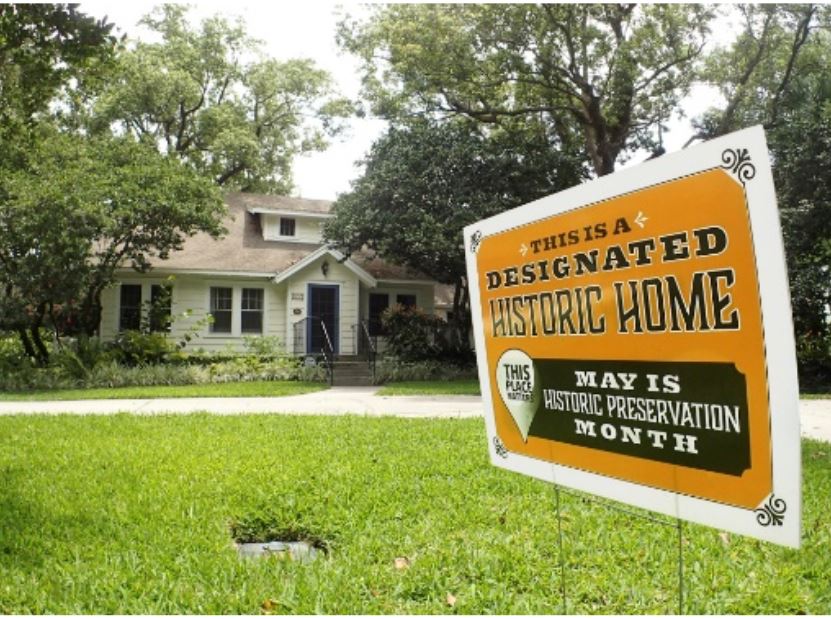
Winter Park has about 400 historic structures including the College Quarter and Virginia Heights districts and individually designated homes and commercial buildings.
The historic board only has a say when it comes to major exterior alterations of buildings, not minor changes or repairs or interior projects. Window and door replacements or roof replacements, for example, are not required to come before the board so long as they stay consistent with the architectural style and must only follow the typical building permit process.
The new ordinance also requires additional checks on construction plans to make sure what the contractor does matches approvals given by the board. And it requires additional due diligence to make sure owners and contractors are aware earlier in the process if there is a part of the structure they won’t be able to save.
The city purchased the property rented by Austin’s and other businesses last year and the coffee shop has known for at least a year that the lease will end so that the city can use the property to add a turn lane on Fairbanks Avenue and make drainage improvements.
City Manager Randy Knight said the city has hired a broker to help Austin’s find a new location, will allow the owners to take anything from the property that they wish to take and will also return the security deposit.
But for Austin’s loyal supporters, that isn’t enough.
Speaker after speaker bashed the city for taking away a place that they said is considered a “sanctuary” by many in the arts community.
Mayor Sheila DeCiccio said she was frustrated by the misinformation she heard.
“We are not evicting Austin’s … they have had over a year to find a new space,” she said. “… We are paying a Realtor to help them.”
She explained that the intersection at Fairbanks and Denning is busy and accident prone and residents deserve a solution. They also deserve a fix, she said, to the drainage and flooding problems that occur in the area.
“Please take that into consideration when you criticize this commission,” she said.
Benefit Shop lease uncertain
The city is attempting to negotiate a new lease with the Benefit Shop, a thrift store that raises money for local charities by selling used household goods and clothes.
The group operated in City Hall for years but the space is now needed by city staff. The Benefit Shop is interested in moving to a small building at MLK Park where the city just spent $10,000 to fix the air-conditioning system.
But the Benefit Shop wants a lease that extends to 35 years with the city covering all major costs such as maintenance and insurance.
DeCiccio and other commissioners said that term was too long and could prohibit future commissions from additional uses of the building. The commission voted to attempt to negotiate a three-year lease for $1 each year at the Lake Island Park building. The Benefit Shop would be responsible for the insurance beginning in its second year.
A final deal, if reached, will come back to the commission for approval.
An unapproved demo, a $100k penalty and hours of debate
How a demolition in College Quarter led to proposed changes to Winter Park’s Historic Preservation rules, which will be up for a vote Wednesday by the City Commission
May 13, 2025
By Beth Kassab
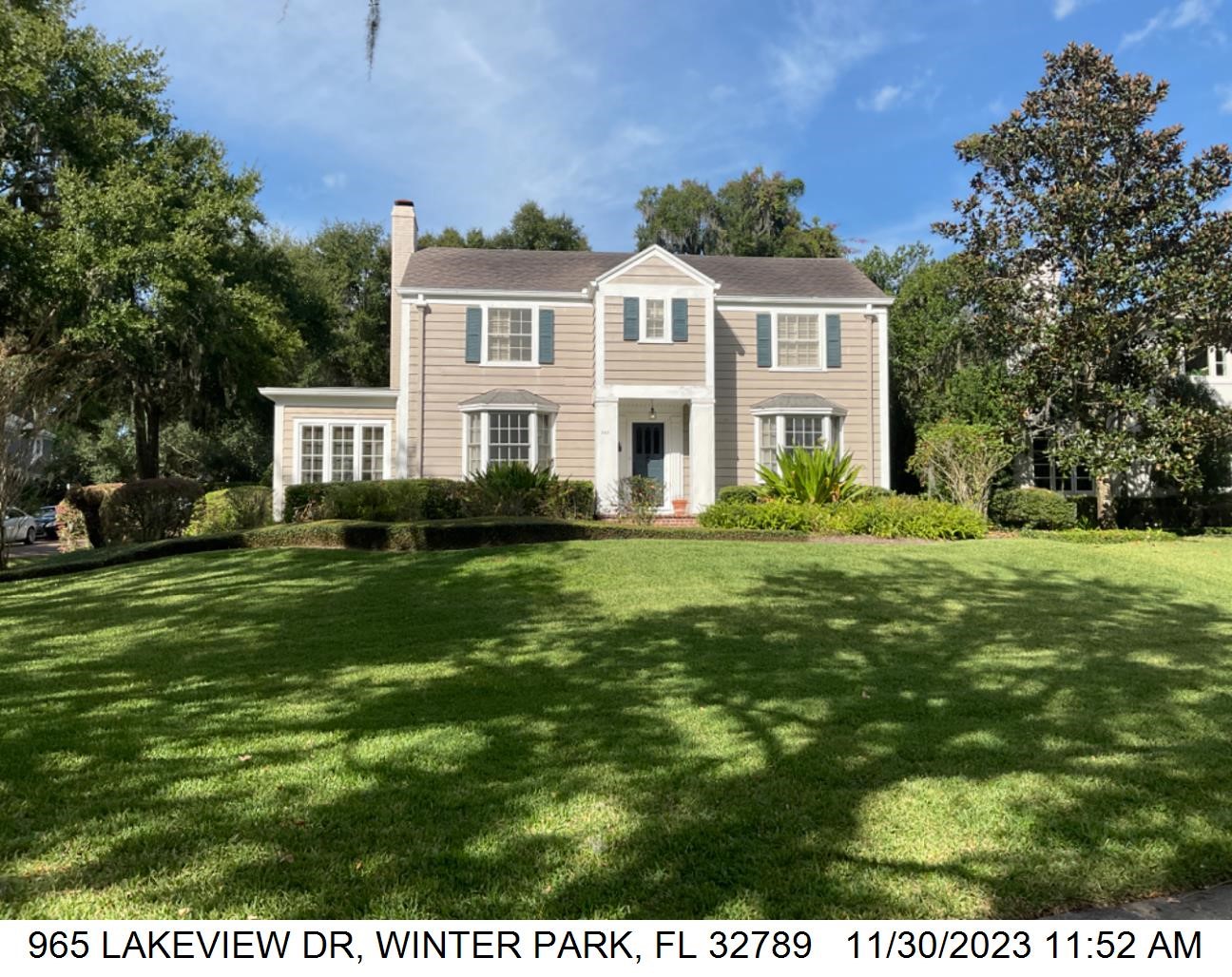
A year ago, custom builder Charlie Clayton stood before the Historic Preservation Board and apologized, offering to make amends for the unauthorized demolition of a large portion of 965 Lakeview Drive, a 1936 home overlooking Lake Virginia in the College Quarter Historic District.
“I can’t take back what happened,” Clayton told the board on May 8, 2024. “… My interest is not to decimate the resources of the city … I’m not a guy who goes in and tries to destroy the town. I don’t get in trouble like this, but I’m in trouble now.”
Clayton said he even went door to door in College Quarter, one of the largest collections of near-century-old homes in the region, to explain how the second floor of the house was torn down, leaving just the chimney and a small portion of the first floor standing.
The board had only approved the demolition of a garage behind the house and the city ordered work to stop on the project when it learned of the demolition.
Clayton blamed miscommunication with his crew on the site and told the Historic Preservation Board he was prepared to pay $25,000 toward the city’s Historic Preservation Fund and complete the project in a way that would deliver the same end result — a new face on the front of the house that adds additional second-story windows and removes historically inaccurate columns added before the current historic preservation rules were in place.
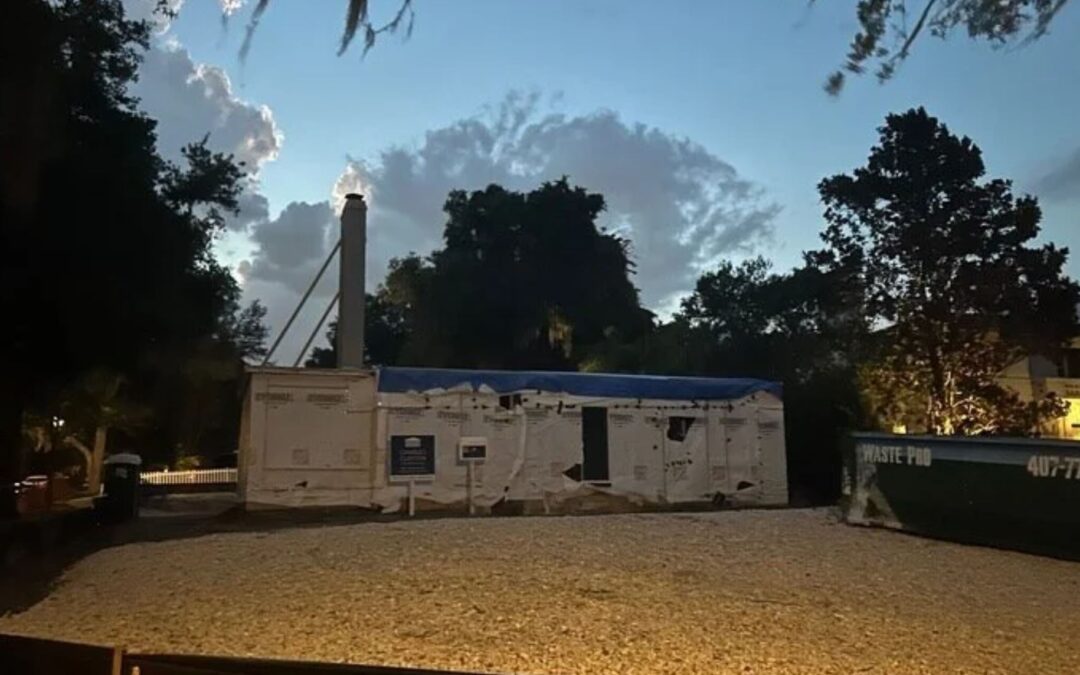
A photo from the Orange County Property Appraiser shows how the home at 965 Lakeview Drive looked in 2023. The above image shows what the home looked like last year after demolition.
Ultimately, the historic preservation board and staff negotiated the payment to $100,000 and allowed the project to continue. Clayton paid the money the next day.
The board, though, could have issued what some preservationists argue would have been a harsher penalty: Require the homeowner and contractor to reconstruct the home exactly as it was and take back the building variances granted to the project that allowed the homeowner to add square footage to the home.
That choice — a financial penalty or a requirement to build back what was lost and lose valuable variances — will be at the center of the debate expected Wednesday when the City Commission considers proposed changes to the Historic Preservation ordinance touched off by what happened at the Lakeview house.
Commissioners will decide if they want the ordinance to explicitly offer the option of a payment (capped at 30% of the structure’s assessed value) in the event of an unauthorized demolition. Or if they will lean more heavily on the threat of removing variances and requiring reconstruction of an improperly demolished building.
The proposals follow a year of intense debate over the demolition and the historic preservation board’s response.
Ryan Phillips, who owns the home, recorded a conversation with a board member on the sidewalk in front of his house without the board member’s permission and used that to allege he was threatened and treated unfairly.
He spoke at multiple public meetings to allege impropriety over the city’s request that Clayton pay the penalty and lodged state ethics complaints against members of the historic preservation board, a city attorney and former Planning Director Jeff Briggs.
The Florida Commission on Ethics dismissed all eight of those complaints on April 30 because of a “lack of legal sufficiency.”
Phillips and Clayton did not respond to messages seeking comment for this story.
The variances Phillips was allowed to keep for his new construction after the demolition allowed for the home to grow from its original size.
Such variances are key perks for homeowners in historic districts, which enforce architectural standards for the exterior of homes.
Members of Winter Park’s Historic Preservation Board, along with city staff, say they have a job to do: maintain the historic character and authenticity of some 400 properties in the city’s resident-approved historic districts and individually-designated sites.
Their job is not, as retired Planning Director Jeff Briggs once put it, to be the “Historic Replica Board” — or one expected to sign off on every requested demolition or ignore violations of the city’s code. That would render the group a toothless overseer of new construction.
“Basically, it opens the door for everyone to ask for forgiveness and not permission,” Briggs said of violations that harm or destroy historic structures without the board’s approval.
And while the Lakeview house is a recent example of an unauthorized demolition. It’s not the only one.
At the historic preservation meeting last month member Lee Rambeau said changes to the ordinances are needed and she was in favor of adding explicit language about fines.
“I’ve seen a number of properties come before us and the final outcome did not look like what we approved,” she said.
Proposed changes to the ordinance also include stricter application requirements and add a “pre-application” review by the board so that property owners can receive early design feedback before spending a lot of money on detailed renderings. The changes also would require property owners to give more detailed information about the materials they will use and architectural elements.
The change also attempts to cut down on unexpected requests for demolitions after a project starts by requiring applicants to submit a “due diligence assessment” identifying all proposed demolitions or alterations in advance.
A number of historic property owners, including Clayton, spoke out at a community meeting earlier this year against including fines as part of the proposed changes.
At the Historic Preservation meeting in April the board ultimately voted to recommend the version of the ordinance without the fines.
Aimee Spencer, who recently rotated off the board, said that version is potentially harsher on homeowners.
In the case of the Lakeview house, she said, the board attempted to “exercise empathy and kindness” and not penalize the homeowner for work done by the contractor without his knowledge. The project was allowed to proceed as planned rather than have its variances revoked.
But the case became one of what she saw as a “sore winner,” she said.
Wade Miller, who until last month served as board chairman, also said he saw the rebuild requirement and loss of variances as a harsher penalty.
But members of the public and board members spoke against including the fines in the ordinance.
“If that is what I am hearing from the community and members of the board, then so be it,” he said. “… we will see how that plays out … and I think it ultimately will become a much more severe outcome in the future for homeowners of historic properties.”
Betsy Owens, executive director of Casa Feliz, one of Winter Park’s most prominent preservation stories, said a fine could be viewed by some property owners as a cost of doing business rather than a preservation incentive. A requirement to rebuild a demolished structure is considered a best practice in other cities that also value historic preservation such as Coral Gables or Charleston, she said.
“I think the best way to make things right is to have you rebuild what you knocked down,” she said. “Losing variances is a stronger disincentive than a fine.”
We Depend on your support, make a tax-deductible donation here.
Mission
The Winter Park Voice is a trusted nonprofit journalism site that covers our City Hall and beyond. We endeavor to engage, inform and connect citizens on all sides of issues affecting the quality of life in Winter Park.





Recent Comments