Adjaye to Reveal Library Design Concept
Adjaye to Reveal Library Design Concept
Nov. 1 at the Rachel Murrah Civic Center
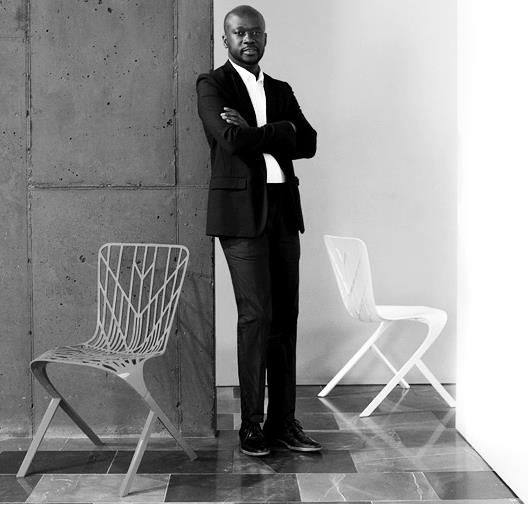 Architect Sir David Adjaye will present his long awaited conceptual design of the new Winter Park Library & Event Center.
Wednesday, Nov 1, 5:30 to 7:30 pm
Rachel D. Murrah Civic Center
1050 W. Morse Blvd.
The event will be a special meeting of the Winter Park City Commission. Mayor Steve Leary will open the meeting and introduce members of the library-event center design team, which will feature lead architect Sir David Adjaye. Public input will follow the formal presentations.
Library-Event Center Design Team
The design team assembled for this project are Pizzuti Solutions, the Owner’s Representative that will work with City staff to manage the project, budget and schedule; HuntonBrady Architects, which will develop the signature architectural design in partnership with Adjaye Associates; and the construction management team, which will consist of Brasfield & Gorrie and Lamm & Company.
Sir David Adjaye
Sir David Adjaye was knighted by Queen Elizabeth II and named one of 2017’s 100 most influential people by TIME magazine. His firm is known for its innovative approach to library design. Adjaye’s projects include the award-winning Idea Stores in the London Borough of Tower Hamlets and the Smithsonian Institution’s National Museum of African-American History & Culture, which opened September 2016 in Washington, D.C.
Listen to Live Broadcast
Those unable to attend can watch the presentation broadcast live on the following outlets.
cityofwinterpark.org/facebook
cityofwinterpark.org/#nextchapterwp
Orange TV Channels:
Spectrum (formerly BrightHouse) Channel 488
Comcast® – Channel 9
CenturyLink® – Channel 1081 (HD) Channel 81 (SD)
WSWF (digital over the air) Channel 10 – 2
Young Composers Return to DPAC
Young Composers Return to DPAC
UCF, Orlando Phil Present 2017 National Young Composers Challenge
Mark the date: Sunday, November 12, 1:00 to 5:00 pm, in the Walt Disney Theater at the Dr. Phillips Center for the Performing Arts. Experience an unforgettable musical afternoon as the University of Central Florida, the Orlando Philharmonic Orchestra and the National Young Composers Challenge (NYCC) join to present the 2017 Composium.
Bring the Family
Professional musicians from the Orlando Philharmonic Orchestra and the UCF faculty will perform classical compositions written by six young musicians aged 13 to 18. Dress is casual. Children are welcome. Admission is free. More information is available at http://www.youngcomposerschallenge.org.
Part Concert, Part Seminar
The Composium is part concert, part rehearsal, part recording session and part seminar. Winning compositions, chosen from thousands submitted by teen composers from around the world, are rehearsed, discussed and recorded before a live audience.
Founded in 2005, the NYCC is a non-profit charitable organization whose goal is to promote the creation of new orchestral music and foster the careers of the next generation of American composers. The purpose of the Composium is to build greater understanding of and support for symphony orchestras and the creation of new orchestral music.
‘You Will Never Again Hear an Orchestra in Quite the Same Way’
“The level of sophistication of these orchestral works is mind-blowing,” said Steve Goldman, Executive Director of the NYCC. “This is a rare chance to witness new orchestral works by America’s top young composers performed for the first time by the Orlando Philharmonic Orchestra.”
“Once you have attended a Composium,” said Goldman, “you will never listen to an orchestra performance in quite the same way again.”
‘Central Florida’s Commitment to Classical Music’
Dean Jeff Moore, of the UCF College of Arts and Humanities, said this event is good for the young composers, but also the Orlando community. “UCF is committed to providing access for people to pursue their passions,” said Moore. “The longtime partnership between UCF, the Orlando Philharmonic and now the NYCC demonstrates Central Florida’s commitment to the past, present, and future of classical music.”
‘Support for Young Composers is Essential to the Future of Music’
“The Orlando Philharmonic Orchestra is proud to partner with UCF and the National Young Composers Challenge,” said Executive Director Christopher Barton. “This opportunity to support the development of our next generation of composers is both exciting for our audiences and essential to the future of music.”
National Young Composers Challenge is a 501(c)3 non-profit charitable organization supported by grants and in-kind donations from the University of Central Florida, Rollins College, Full Sail University, Timucua Arts Foundation and the Goldman Charitable Foundation. http://www.youngcomposerschallenge.org
Villa Tuscany Memory Care
Villa Tuscany Memory Care
‘Forget It,’ Says Commission

At their October 9 meeting, Commissioners once again denied Villa Tuscany’s application for conditional use for a 31,000 square foot memory care facility at 1298 Howell Branch Road with a decisive 5 – 0 vote.
Villa Tuscany Revises Application for Conditional Use
In March 2017, after the Commission denied their application for a somewhat larger memory care facility, Villa Tuscany sued the City in an attempt to reverse the decision. The developer and the City entered into a mediated settlement process, overseen by a Special Magistrate. City Manager Randy Knight led the negotiations for the City. The result was the revised application for conditional use and variances presented October 9.
Applicant Still Seeks Variances
City Planning Manager Jeff Briggs explained in his presentation to the Commission that the developer had made three basic changes. The building was reduced from three stories to two stories, although the overall height of the building was dropped by only four feet, from 35 feet to 31 feet. The planned facility would accommodate 49 beds instead of the original 51 beds.
Second, the parking lot was moved from a 25-foot setback from Lake Temple to the 50-foot setback specified by City Code.
Third, the building was shifted eastward on the property to protect the view of the neighbors across Lake Temple. The shift in location put the building to within 15 feet of the sinkhole on the property. Code requires a 50-foot setback from any wetlands, so approval would involve a setback variance of 35 feet.
No Commission Guidance for Staff During Negotiations
“This mediated settlement process is certainly interesting from the staff’s perspective,” observed Briggs. Staffers who engaged in the negotiations were advised by City Attorney Kurt Ardaman that they were not allowed to speak with Commissioners about the project while the negotiations were underway.
“We had to base our decisions based on comments we heard from some of you at that March public hearing,” said Briggs, “and we had to kind of guess, to be perfectly honest.”
Briggs said he thought the reduction in number of stories and increased setback from Lake Temple might be sufficient for a staff recommendation of approval, but deferred to the Commissioners.
Well-Organized Community Opposition
The applicant then presented their case, followed by a brief Commission discussion, which consisted chiefly of Commissioner Sarah Sprinkel’s motion to deny and Commissioner Carolyn Cooper’s second.
Residents of the neighborhood, led by spokespersons Barry Render and Nancy Freeman, opposed the project on grounds that the structure is incompatible with the surroundings and is simply too large.
They acknowledged that while there are commercial buildings to the north and east of the property, those buildings are around 3,000 square feet – one-tenth the size of the proposed memory care structure. In fact, Freeman pointed out, the proposed Villa Tuscany project is larger than City Hall.
Freeman and Render said the neighbors did not object to the purpose of the project. They cited the example of Alabama Oaks, another memory care facility in Winter Park that is owned by the same applicant. Alabama Oaks is a series of small cottages that house the residents and staff of the facility, one which the neighbors feel would be suitable in their neighborhood.
Drone Photos Show Flooding at the Site
The citizens’ presentation included drone photographs taken several weeks after Hurricane Irma hit this area September 10. Photographs show the proposed building site would still have been under water as of the October 9 meeting. One can assume the additional impervious surface of a large building and 25-space parking lot would cause the water level to rise further.
Dr. Render concluded the neighbors’ presentation with a request. “We would like a project that is proportionate in size and scale, is compatible with our neighborhood, one that would preserve the charm and beauty of north Winter Park and one that would require zero variances.”
Thumbs Down 5 – 0
At the end of the day, the Commissioners unanimously denied both the application for conditional use and the Mediated Settlement Agreement.
The applicant still has the opportunity to seek relief in the court system.
Recent Comments