Public Records Access Model of the Future – Your Local Library
Public Records Access Model of the Future – Your Local Library
Guest Columnist – Barbara Petersen
Editor's Note: Articles written by citizens reflect their own opinions and not the views of the Winter Park Voice. As Winter Park discusses the library services of the future, many opportunities come to mind.
Informed Citizens Are Key to Civic Wellbeing
The Florida First Amendment Foundation (FAF) believes the library has an important opportunity to partner with local government to enhance access to public information and to more efficiently manage public records requests.
Library Supports Citizens’ Need for Public Information
We believe there is a natural synergy between the Winter Park library and the Winter Park municipal government. Libraries are known to be apolitical and non-bureaucratic. Highly skilled in information management, the library is uniquely suited to assume more responsibility to support the public information needs of the community under Florida’s open government laws, known in the vernacular as our Sunshine Laws.
Library is Ideal Repository of Public Documents
The 21st-century library can be a digital community center which helps foster an informed and engaged community. The library of the future can add tremendous value by increasing access, adding credibility and generating valuable public information that contributes to the civic understanding and institutional memory of a community like Winter Park.
Working with organizations like the First Amendment Foundation, the Winter Park library could serve as custodian of public documents and answer public records requests. The library could catalog and hold public records in a cloud-based repository accessible by the entire community.
Investigative reporters, community-based organizations, and business entities would be encouraged to deposit information into the repository that they’ve obtained through the public records requests.
Cloud-Based Repository Most Efficient
A citizen’s request for public records through a central library repository removes layers of bureaucracy, reduces the escalating costs of accessing public records and leads to a more informed and engaged citizenry.
The Florida First Amendment Foundation would willingly join this partnership. Through Winter Park’s leadership, this could become a national model. What a wonderful value-added component to a library’s 21st- century services.
Editor’s Note: Barbara Petersen is President of the Florida First Amendment Foundation, which works to preserve and protect open government laws (www.floridafaf.org). She is past Chair of the National Freedom of Information Coalition and served as Chair of the Commission on Open Government. Petersen is based in Tallahassee.
Library Teams Up with Aspen Institute
Library Teams Up with Aspen Institute
Leaders Gather to Discuss 21st-Century Library
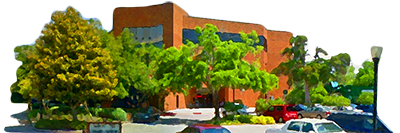 The Winter Park Public Library partnered with the Washington, D.C.-based Aspen Institute to convene community gatherings to discuss the role of the 21st century library. A panel discussion on the evening of June 8 at the University Club was open to the general public. The following day, a group of 30 community leaders gathered at the Civic Center for a day-long roundtable discussion.
Public Forum at University Club
The library dialogue led off with a Wednesday evening event entitled, “Your Winter Park Library: A Conversation About the Future.” The panel discussion was moderated by Amy Garmer, Director, Dialogue on Public Libraries, from The Aspen Institute. The formal presentation was followed by lively input from the audience.
Featured panelists were John Bracken, V.P. for Media Innovation at the John S. and James L. Knight Foundation, and Richard Adler, Principal, People & Technology and Distinguished Fellow, Institute for the Future.
“We are excited to have John Bracken share his extensive knowledge and national perspective on what it takes to create and sustain healthy, informed and engaged communities in the digital age,” said Winter Park Library Executive Director Shawn Shaffer. “And Richard Adler’s vast insight into the successful marriage of people and technology . . . will set a strong foundation for the Winter Park Library Dialogue.”
Winter Park Will Be Model for Other Libraries
“Winter Park is the first of five communities across the country that we will be working with in the next year and a half,” explained Garmer. “The engagement of the City of Winter Park in exploring the future of the library and the opportunities to re-envision its role for the 21st century will serve as a model for other communities across the country.”
Community Leaders Meet – By Invitation Only
The public event was followed the next day by an invitation-only meeting of community leaders and representatives who gathered to discuss how the library can meet changing community needs in an environment of rapid, radical change in information technology. For a list of attendees, click here.
The Winter Park library dialogue was based on a framework established by The Aspen Institute in 2014 that explores how libraries can respond to increased demands for high-speed information access, changes in our education and job training systems, and community services to help people compete in a changing economy.
Round Table Discussion
Participants in Thursday’s moderated roundtable addressed four strategic opportunities.
1. Aligning library services in support of community goals
2. Providing access to content in all formats
3. Cultivating leadership and citizenship in the community
4. Ensuring the long-term sustainability of the library
In the coming weeks, The Aspen Institute will report the results of the June meetings.
‘Be Grateful for the City You Live In’
Amy Garmer remarked on how impressed she was by the level of sophistication, knowledge and commitment she encountered in Winter Park. “Winter Park is unique,” she said. “You are so fortunate. Be grateful for the city you live in.”
Visioning Steering Committee Completes Draft Report
Visioning Steering Committee Completes Draft Report
Creates Foundation for Comp Plan Review
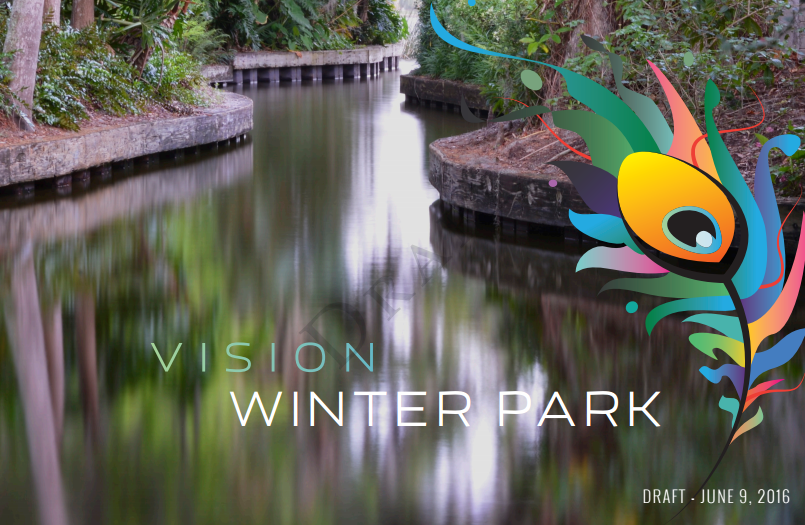
After more than a year’s work, the Visioning Steering Committee voted yesterday to approve their final draft report. The report will be presented to the City Commission for approval July 11.
Winter Park Now “City of Arts & Culture”
Winter Park vision statement has gone from “The city of culture and heritage,” to “The city of arts and culture, cherishing its traditional scale and charm while building a healthy and sustainable future for all generations.”
Four Vision Themes
Four main themes emerged from numerous meetings and conversations with the community.
- Cherish and sustain Winter Park’s extraordinary quality of life.
- Plan our growth through a collaborative process that protects our City’s timeless scale and character.
- Enhance the Winter Park brand through a flourishing community of arts and culture.
- Build and embrace our local institutions for lifelong learning and future generations.
Vision to Guide Comp Plan Review
This new vision of Winter Park is designed to provide a framework for the 2016 review of the City’s Comprehensive Plan, which ensures that Winter Park’s growth management plan meets state and federal regulations as well as “the stated vision for the city.”
The Vision Plan conclusion reads as follows. “This document provides an overarching direction for the future of Winter Park and establishes the foundation upon which other regulatory documents can build.”
To read the entire Visioning draft report, go to https://cityofwinterpark.org/docs/government/boards/other-info/VSC-vision-winter-park-draft-2016-06-09.pdf.
Recent Comments