
What Does Winter Park Stand to Lose if Property Tax Cuts Pass?
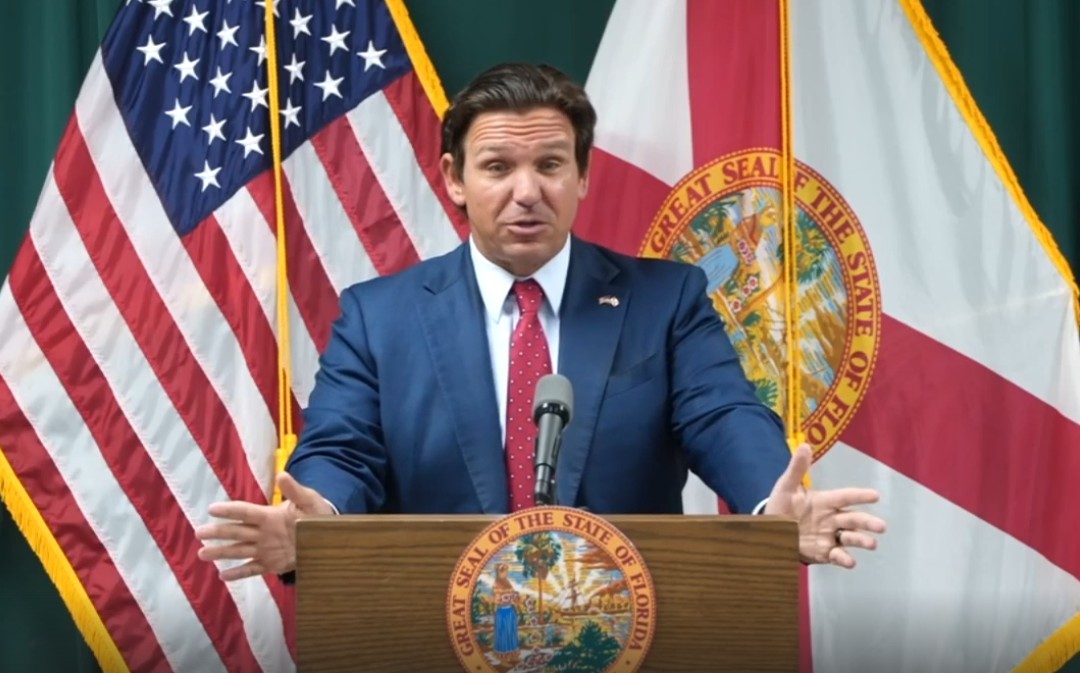
Voters are expected to decide a ballot amendment in November initiated by Gov. Ron DeSantis and the Florida Legislature that could dramatically alter how local governments operate
June 5, 2026
By Beth Kassab
What does Winter Park stand to lose if voters approve the plan by Gov. Ron DeSantis and the Legislature to dramatically reduce property taxes?
A picture of the potential fallout is becoming more clear just days after the Florida House and Senate voted to send the measure to the November ballot. Here’s what we know so far:
How much money will Winter Park lose?
Let’s break down the numbers.
In 2025, Winter Park collected about $48.5 million in taxes, according to Orange County Tax Collector Scott Randolph. The bulk of that, or about $41.1 million, is what is targeted by the state ballot amendment. Those are the dollars collected on real property — houses and businesses — based on that property’s assessed value.
Tax money that comes in from real property is divided into two categories: Homestead (the houses people live in and claim as their primary residence) and non-homestead (commercial properties, businesses, second homes or rental properties or other land).
The change ordered by the Legislature garnering the most attention is a reduction in what cities and counties will collect on homesteaded property. (Note: The Legislature revised DeSantis’ proposal, which would have also reduced taxes that support schools. So the new rules would not apply to school taxes.)
Winter Park collected $19.8 million in 2025 from homesteaded properties. If voters approve the proposed increase to the homestead exemption from $50,000 today to $250,000 in 2028 then those collections would drop to about $14.2 million, according to Randolph’s projections. The reduction would first be felt, to a lesser extent, by cities and counties in 2027 when the homestead exemption would jump to to $150,000 before increasing to the full $250,000 the following year.
So that’s a loss of $5.6 million based on today’s numbers or a 28% reduction in collections on homesteaded properties. The overall hit to the city’s tax roll appears closer to 12% because stormwater fees ($6.3 million), tangible property taxes ($1 million on equipment and furnishings in businesses or rental properties) and non-homesteaded property taxes ($21.2 million) aren’t affected by the change to homestead exemptions.
How big of a deal is that $5.6 million loss?
Well, thumb through this year’s Winter Park budget and you can get an idea of what $5.6 million means in real terms:
- This year the city spent $5 million more just to cover basic cost-of-living and 3% merit raises for city staff, including more competitive wages for police and additional emergency call center staff as the city took on dispatch duties for Maitland.
- The entire capital improvement budget for the Community Development Agency, which is funded entirely through property taxes, totaled $5.7 million. That included $3.2 million to fix drainage and infrastructure problems on West Fairbanks Avenue, Canton Avenue and the MLK Park basin. Another $2.5 million went to the Park Avenue Refresh project, which includes new street lighting, sidewalks, landscaping, underground infrastructure and other work.
- The rebuilding of Fire Station 62 on Lakemont Avenue is estimated at $5.8 million, a project the city put off again this year because it didn’t have the funds.
Mayor Sheila DeCiccio predicted noticeable cuts will be made if the new proposal goes into effect.
“This will be devastating,” DeCiccio said after the Legislature’s vote. “We will be assessing what services the city may have to cut.”
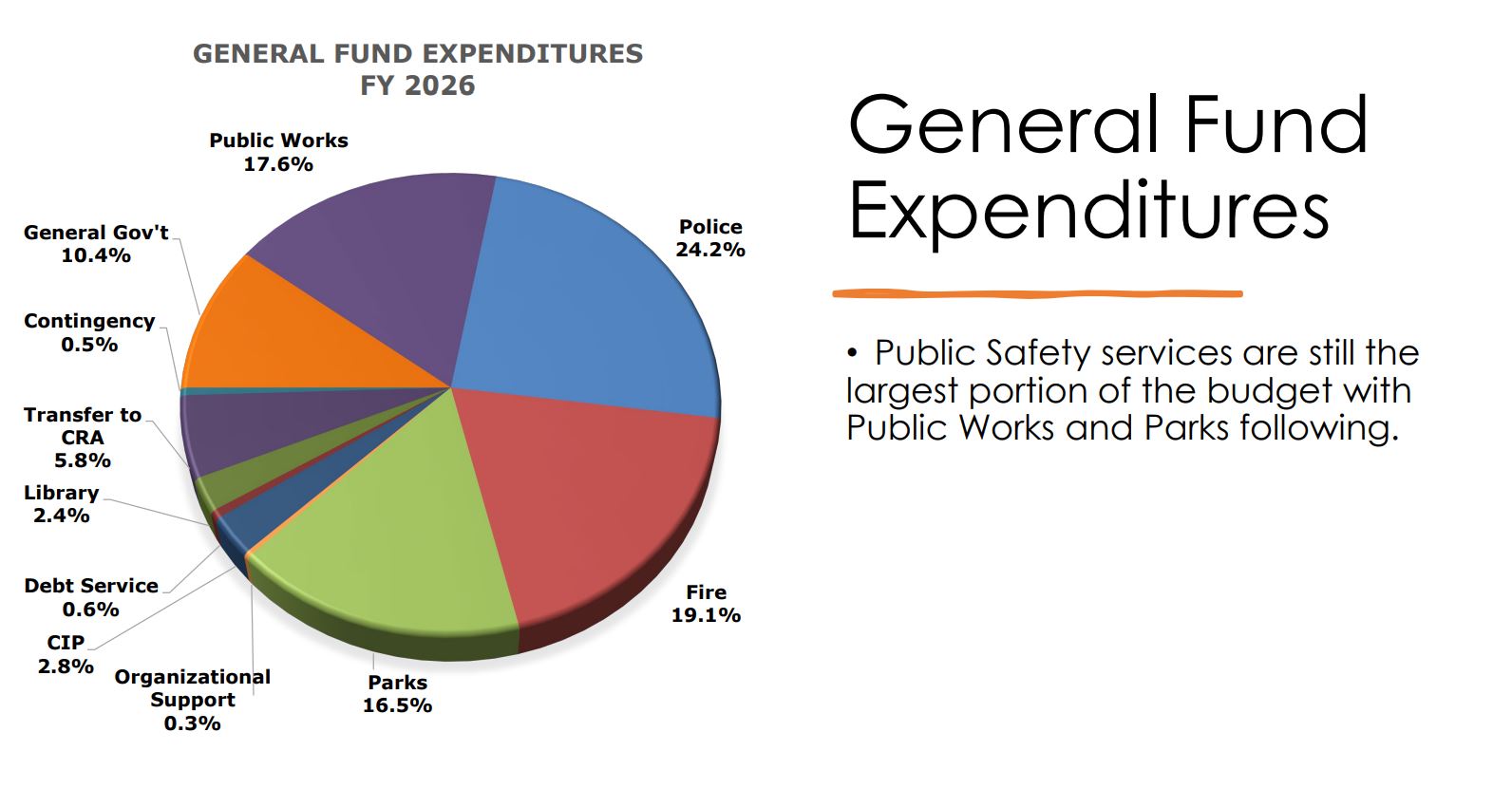
The entire city budget is $233 million this year. That includes the two utilities that fund themselves with a combined nearly $100 million in what customers pay for water and electric service.
Beyond that, the single biggest source of revenue for the city is property taxes.
Those taxes are the biggest contributor to the city’s almost $90 million general fund, which is responsible for all of the front-line services like police and fire rescue (the two biggest expenses), parks and recreation and public works.
“Property taxes are continuing to row the boat for the city’s fiscal picture, rising 7.6% and accounting for 44% of General Fund revenue,” reads the budget document from last year. “This stabilizing force is what keeps most city services humming. Its rate of growth is sufficient to support the existing level of city services, but it is limited in what it can provide in excess of just staying on course.”
So is that all?
No. There’s more. The ballot amendment would also hamstring cities and counties by limiting future growth in the amount of taxes collected on non-homesteaded properties.
The cap on annual assessment increases for those properties — anything from a Publix grocery store to an Amazon warehouse to a vacation home — would drop from 10% to 5%.
That represents future savings for billion-dollar corporations and less future revenue for local governments to use for police, fire rescue, roads and everything else property taxes pay for.
Growth in property values is how a city like Winter Park, which has enjoyed a brisk real estate market for years, has managed to increase its budget without raising the tax rate for 18 years.
A little more than half of the city’s total ad valorem collections or about $21.2 million come from non-homesteaded properties owned by everyone from small business owners to deep-pocketed corporations who will save money as a result of the new cap.
The exact amount of future unrealized growth is hard to quantify, city officials say.
But this chart from the budget shows the importance of the increase in assessed values year to year: 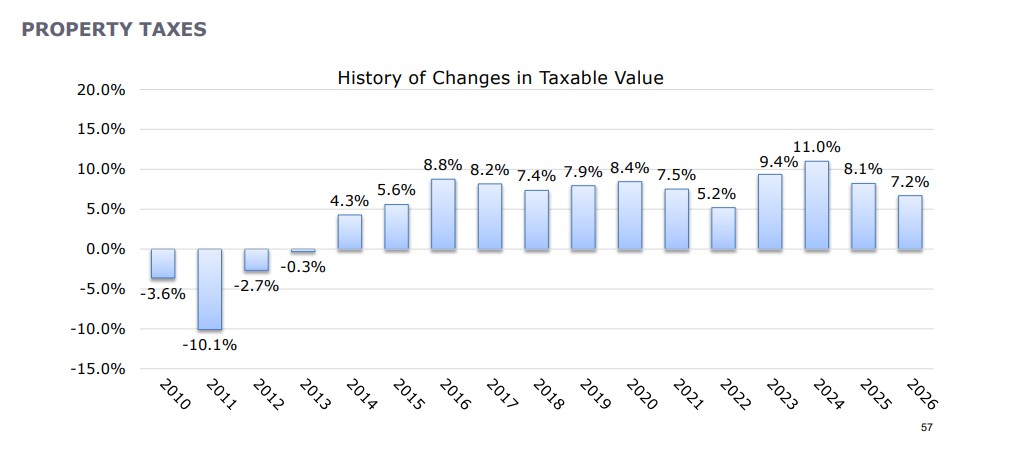
But even before the new ballot amendment was in play, city officials were beginning to warn of a softening in that growth and the need for belt-tightening.
“The General Fund is seeing continued increases in property tax revenue due to increasing valuations in existing real estate which has traditionally been the primary support of the majority of the growth in revenues over time,” the budget reads. “However, this revenue source is continuing its slowing trend and could indicate tighter years ahead.”
If approved, the new cap will exacerbate that picture.
What else does the ballot amendment do?
In addition to reducing revenue cities and counties have to work with, the measure would also restrict how that money is spent.
Property taxes would only be able to pay for items that fall in one of the following buckets, according to a Senate press release:
- Public safety, including law enforcement, fire service, and emergency medical service
- Education and public schools (additional funds beyond operational expenses covered by school board taxes)
- Road and bridge construction and maintenance, stormwater control, and other infrastructure projects
- Natural resource projects, including flood control measures
- Retirement benefits of local government employees
- Bond obligations
- Operations and administration of county officers and commissioners and municipalities, and approved expenditures
Assistant City Manager Michelle del Valle, who will be in the top role next year when the changes begin to take effect after City Manager Randy Knight retires, said city staff is already starting to assess what may or may not fit into those categories. Some items in question, she said, are considered core services that residents have come to expect.
“The biggest one that we’re going to have to start working on is Parks and Recreation,” she said. “But also the library … all of our cultural partnerships.”

This year the Parks budget is nearly $15 million. The city spent about $2.4 million on its library this year. And more than $500,000 went to cultural and nonprofit organizations through the general fund and the CRA such as Mead Botanical Gardens, Winter Park Historical Association, Winter Park Day Nursery, United Arts, Blue Bamboo, Polasek Museum, Enzian Theater, Heritage Center, Welbourne Day Nursery and Winter Park Playhouse.
DeCiccio said the attempt to cut local budgets is an extension of a longstanding effort by Tallahassee to chip away at the power of local governments.
“Where are people supposed to go?” DeCiccio asked. “Are they supposed to go to the state to complain about potholes in the roads? It’s very, very frustrating.”
The proposed ballot amendment, she said, strips voters of a layer of autonomy and accountability to closest to where they live.
It’s more often the city and county commissioners vs. state officials who run into residents at the grocery store or in the school pick-up line and hear their frustrations about uneven sidewalks or broken streetlights, a desire for more shade trees or a plea to help the arts.
“What about libraries? What about playgrounds? They are taking away our ability to fund these items,” DeCiccio said. “We have the No. 1 children’s library in the state that’s now open seven days a week. How are we going to keep paying for that?”
What can cities do in response?
Even before the proposal to cut property taxes, cities like Winter Park began raising prices on everything from after-school programs run by the parks department to stormwater fees and electric rates to compensate for rising costs in recent years.
For example, at the most recent City Commission meeting, commissioners approved a contract extension for Waste Pro, which provides garbage collection. The city doesn’t make money off the contract — it’s a pass through — but residents’ monthly rates have shot up from $14.99 in 2022 to $22.22 in 2025.
And residents could pay more in other ways.
Cities and counties could choose to increase the millage rate on properties — something Winter Park has avoided for 18 years — to blunt the effect of the proposed changes.
“If county and municipal governments raise millage rates to recoup the lost revenue, that would result in higher property taxes on the portion of the value of homestead properties that remains taxable, as well as on the many properties that do not qualify for the substantially higher exemption, including the properties of new Florida residents and second homeowners, commercial properties (including apartment complexes), and industrial and agricultural properties,” reads an analysis from the conservative-leaning Tax Foundation. “This would make Florida’s property tax system far less neutral and disincentivize the purchase of certain classes of property.”
Or, the foundation argues, policymakers could choose to increase the sales tax to help make up for lost property taxes.
“Since Florida’s tax structure includes no individual income tax, sales taxes and property taxes are the primary sources of state and local tax revenue,” the group said. “Replacing the lost property tax revenue with sales tax revenue would require substantially higher local and/or state sales tax rates, a sweeping expansion of the sales tax base (likely to more than just final personal consumption), or a combination of these approaches.”
Winter Park doesn’t set the sales tax or the local gas tax. That’s done by a combination of state and county officials. But it does share in sales and gas tax revenue, though that revenue is far less than property tax revenue for the city.
Winter Park’s 2026 budget included $5.6 million from sales tax and just under $1 million from the local option gas tax, a fraction of the more than $41 million it received in property taxes.
What happens next?
As with any ballot amendment, there is likely to be litigation and fights over the ballot language.
But once it makes the November ballot, at least 60% of voters must approve it in order for it to pass. That’s a heavy lift in Florida.
In 2024, there were six constitutional amendments on the Florida ballot and all but two failed to capture the required 60% approval. That was the year an amendment to legalize recreational marijuana and to limit government interference with abortion received 56% and 57% of the vote, respectively, but fell short of the 60% threshold.
But an amendment related to property tax exemptions passed with 66% of the vote. It provided for an annual inflation adjustment for the value of the homestead property tax exemption that applies to non-school taxes.
Two years earlier, though, a 2022 amendment to increase the homestead exemption for public service workers including teachers, law enforcement officers and others failed with 59% of the vote.
What about Winter Park’s next budget?
City officials say they still plan to present a proposed budget to the City Commission in July on the typical schedule.
The next budget is based on the 2026 tax roll and would not be impacted by the proposed changes, which aren’t set to take effect until next year if they win voter approval.
But officials say they are cognizant of what potentially lies ahead and are taking that into account.
At the recent commission meeting, for example, DeCiccio balked at spending a few thousand dollars on a historic preservation consultant, at least for now, because of the potential cuts.
The City Commission usually begins to hear public input on the budget in August and must adopt it by the end of September before the start of the next fiscal year in October.
WinterParkVoiceEditor@gmail.com
In the worst case scenario that this passes, I would suggest selling the Old Library to a tax paying user is a no brainer to lessen the pain.
Beth, your perspective only favors arguments against the referendum. Perhaps there is an other point of view. That is, that the dramatic increases in assessed values over the past 10 years have resulted in local governments finding ways to spend every penny of related property tax increases.
Did Winter Park really need Seven Oaks Park (over $5 million), to purchase properties at Denning and Fairbanks (over $5 million), numerous increases in general fund headcount that serve no one, and many other spending boondoggles and lost opportunities?
Approval of the referendum will have a very positive impact, assuring local governments will only be able to increase millage rates for stuff the voters really want, otherwise elected officials will be replaced.
So, I suggest each commission member detail the spending they will cut after the referendum is approved, and then each member let us know the millage rate increase they would support to recover specific priorities they think we can’t live without. Let’s have a debate about what matters.
This is not my “perspective.” These are the numbers and the policy decisions that will now be before voters and local officials. Which new city positions “serve no one?” Interesting how you offer no specifics. The main driver of personnel costs among most local governments (not just Winter Park) is the police department, which has significantly increased wages. Do you suggest police wages be reduced? Reasonable people can argue about the merits of spending on Seven Oaks Park. But that alone won’t fix the hole that could emerge here.
Beth, please note that the title of your article is “What Does Winter Park Stand to Lose if Property Tax Cuts Pass?” There is not one mention of potential positive impacts for taxpayers.
The story is about the impact to local government. I know this isn’t a convenient fact for you, but some of the services provided by local governments is the reason your home is worth what it is worth: utility service, emergency services, swimmable lakes (at least most of the time), schools, a library, even fresh flowers when you walk down Park Avenue. The story doesn’t say there’s no fat to trim. The story lays out what is going on. Winter Park (and other local governments will lose money) and the state moves a step further away from home rule. Remember when that was a thing people cared about?
Mr. Weldon has a known precedence for voting “NO” on such measures as the Florida legislature has proposed, but he left this out of his comment. He was a active proponent and contributor to a similar catastrophe. One only has to Google “The Kansas Experiment”. The former city commissioner donated some $250,000 in a single election cycle (2016), much of which was donated to tax-cutting legislators…in Kansas.
The resulting calamity to Kansas revenue was unbelievable, but predictable. Schools closed, essential government workers, teachers, public safety personnel etc were laid off statewide. I’ll let you read about it yourself.
Thankfully, many or all of the crackpot legislators were removed from office in the following years. The tax structure prior to this very bad idea, was returned to previous levels and Kansas was returned to a viable state.
According to the mayor of Sanford, Art Woodruff, Sanford has an $87,000,000 General Fund budget. The city has 67,000 residents. WP has 30,000 residents and a $90,000,00 budget. hmm….Police and fire in Sanford $46,000,000. In WP $39,000,000.
Sanford mayor posted the city’s General Fund online.
Beth, Todd Weaver is lying. Please ask him to document his claim. Pete
I agree – having lower homestead property taxes will increase housing prices, and taxable values.
There needs to be serious discussion about spending, both smarter spending and reduction of waste. Winter Park – like much of America – has allowed governing bodies to spend-to-budget and waste tax revenues.
Great job of sifting through the numbers, Beth, and explaining all this
One only has to enter “Peter J Weldon” in the search on OpenSecrets.com.
Contributions are listed there, including dark money PACs like Club for Growth.
The Winter Park refresh is a complete waste of money — to the tune of $8.5 million, I believe. Parks and general government are big budgets, and I’m sure those can be shaved. There’s a lot of “fat” in the budget that can be trimmed. Almost 40% of the budget is non-essential…
I agree with Mr Weldon. In the recent years, revenue to the government has just about doubled. Tighten your belt and figure it out. Stop wasting our money.
There are very few, if any, homestead properties in Winter Park valued at less than $250,000. If the referendum passes (and the tax rate is not increased), nearly every homestead property owner would see their property taxes decline by $853 in 2028 and $1,705 in 2029 (City of Winter Park and Orange County taxes combined).
Approval of the referendum will have a very positive impact, assuring local governments will only be able to increase millage rates for stuff the voters really want, otherwise elected officials will be replaced. This is the way government is supposed to operate.
“Winter Park loses” is all you need to know about this propaganda site. Taxpayers saving money is a “loss” for WP! Obviously, the Left is squirming. I’m happy but this news site is a laugher.
According to these projections, Winter Park would still collect about $43,000,000 in taxes. That should be plenty to repair roads, provide emergency services, pay staff and maintain schools, parks, etc. Our city has wasted plenty of money on 7 Oaks Park, etc.
The current homestead exemption is $50,000 and hasn’t changed in 18 years despite huge increases in property values. It’s time to raise homestead exemptions in line with home values, and $250,000 is still less than the percentage of exemption 18 years ago. It’s time for our elected officials to become more fiscally responsible.
Anyone who thinks there is no fat to be trimmed hasn’t ever reviewed a budget. Most certainly they’ve never run a business. The old “we’ll be forced to reduce police and essential services” argument is just silly. NEITHER side of this debate wants that, and there is other fat to be found ——if we just look. Bring in any generic mid-level manager from the private sector and I bet you they’ll find plenty, in just a few hours of reviewing expenses.
Thank you Beth for clearly explaining a complex topic. Those in favor of this are looking short-term. Will the police also fill potholes? Will Pitt and Peter weed the beds on Park Ave? Certainly we can revisit the budget but those who are supportive of this massive loss of city funds don’t seem to care much about quality of life for the community.
Anonymous posts are so WPV.
The primary issue I have with this is the state erasing local control.
A number of commentators suggest there is a lot of fat in Winter Park’s budget–but they don’t specify where that fat is, nor whether it is in some of the features that distinguish Winter Park and make it the desirable city it is.
(It’s also notable that “biased journalism” often means “I don’t like the facts you print.”)
Has the Winter Park Chamber taken a position on this issue? How about the Park Ave Retail Association?
It’s been beaten to death by Pete and Pitt, but the fact remains that if you list out all the things the City Commission has spent money on over the last 5-7 years for things over and above the basic City Services that citizens count on, it is staggering. Add in poor fiscal decisions about virtually giving away the old library for example, it is hard for the City to claim such doom and gloom is upon us through no fault of their own.
If the mayor and commish team can’t figure how to fix potholes because of a measly 5% reduction in property tax revenue, they are inept. They should resign.
Raising the Homestead Exemption to $100,000 is a fair and reasonable idea. It is overdue with inflation over the Years, and would especially benefit less well off homeowners. With the phenomenal growth in expensive new homes in WP in the last few Years the hit would be minimal .
The current millage is well below the State maximum and hasn’t changed in 18 years. The City Commission could easily recapture the “loss” if that is what you call it, but they probably wouldn’t be re-elected which is the only leverage voters have currently to stop wasteful spending on projects like 7 Oaks Park and purchasing private property that was generating tax revenue. Had the Denning property been sold with provisions of providing open space it would be generating tax revenue today. It’s not a taxing problem, it’s a spending problem.
Many folks only see what’s above ground when they decry “wasteful spending” by Winter Park’s government.
Sure, he Park Avenue Refresh is replacing some brickwork, planters, streetlights and trees. But the project is also replacing a great deal underground infrastructure, all of which is 60+ years old. Our utilities live in a harsh environment and maintenance and replacement is sometimes necessary…and expensive. These types of hardware are much more expensive these days, since the pandemic drove commercial materials pricing well beyond that of inflation.
As far as Seven Oaks goes, it is not just a park. The City added over 100 parking spaces to promote quality development in the corridor. The park was also designed to provide stormwater management and retention, which was non-existent in the entire Orange Avenue area. Flooding was common prior to these improvements.
And having a small park is a much better long-term use of the property, than a short term sell-off.
Consider the Source: this Governor and Legislator held no debate, held no hearings, took no questions, evaluated no options in railroading this tax overhaul. The so-called special session lasted a matter of hours. Would you elect major knee replacement surgery or major hip replacement after your surgeon offered you just 2 days to prepare, and stated, “ sorry, I have no time for Q/A”. Well, maybe you would. That’s ok—but your unanticipated walking cane and ultimately your walker —not to mention the constant nerve pain —at all hours—will come home to roost—the result of a miscalculated, bad decision. As Robert Louis Stevenson said so well: “Sooner or later, we all sit down to a banquet of consequences”. Caveat emptor.
CJ Williams- Is allowing the referendum to reach FL voters in November truly the equivalent of railroading? One can only imagine the vetting, from all sides, that will occur between now and election day. The discussion on this site is a tiny example of the airing of various viewpoints. Voters will have plenty of time to do their research…if the referendum even survives to reach the ballot after all challenges.
I wonder if put to a vote by WP residents, would any of these be approved:
The development of 7 Oaks Park
The purchase of the Austin’s Coffee site/Denning Ave
The Winter Playhouse renovation
The Park Ave refresh
The purchase of the Winter Park Pines Golf Course
The very favorable low rental rate for Blue Bamboo in the old library
And on an on…
I would suggest one to none would be approved.
Only Seven Oaks criticized? Nobody is mentioning the dead (literally the turf now) and unnecessary second golf course? How many actual WP residents play there vs non residents anyway?
The previous owner of the WP Pines golf course was retiring. His buyer options were somewhat limited, since the course was originally built on a wetland. Development would have required serious foundational improvements and a large amount of stormwater retention, limiting the developeable land area.
The surrounding neighborhoods were often flooded, and the City Commission heard those neighbors regularly.
The City purchased the land for about $80k/acre; an absolute steal in Winter Park.
Significant stormwater improvements were blended with the re-engineering of the course, and the neighborhood is no longer subject to the frequent historical flooding.
Other options for stormwater management were much more costly (buying and demolishing several homes for ponds).
And having another activity venue and 93 acres of green space are a win-win for the City, the environment and the surrounding area.
I highly recommend everyone read the Wall Street Journal’s Editorial Board opinion of 6/10/26 entitled “Florida Makes a Property Tax Mistake” which devotes a lot of ink on this very topic.