by Beth Kassab | Oct 2, 2026 | News, Taxes
Maxwell Frost and Sheila DeCiccio hear from Winter Park residents on SunRail, Amendment 3 and More
At a town hall held at Mead Botanical Garden this week residents also asked about everything from AI policy to Tourist Development Taxes
Oct. 2, 2026
By Gabrielle Russon
On a Friday in March, more than 12,000 passengers rode SunRail to and from Central Park to visit the Winter Park Sidewalk Art Festival.
But that weekend, the SunRail shut down like normal for the remainder of the festival. No trains ran, no matter how much Winter Park officials wanted them.
“We beg them. We will pay you. Can we please have it on the busy weekend?” Winter Park Mayor Sheila DeCiccio said. “Wouldn’t that be great for Winter Park?
The answer — still an emphatic “no.”
Now, DeCiccio said she is “leading the charge with the mayors in Central Florida to ask the Legislature to change the law and free up the hundreds of millions of Orange County hotel tax revenue to help fund public transportation.
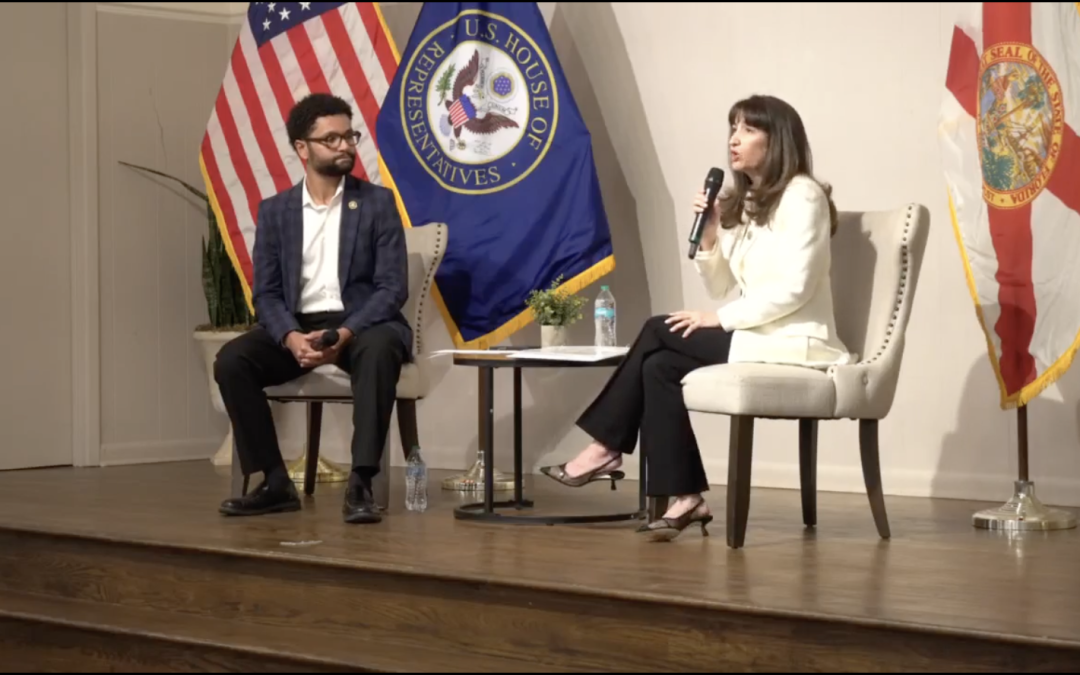
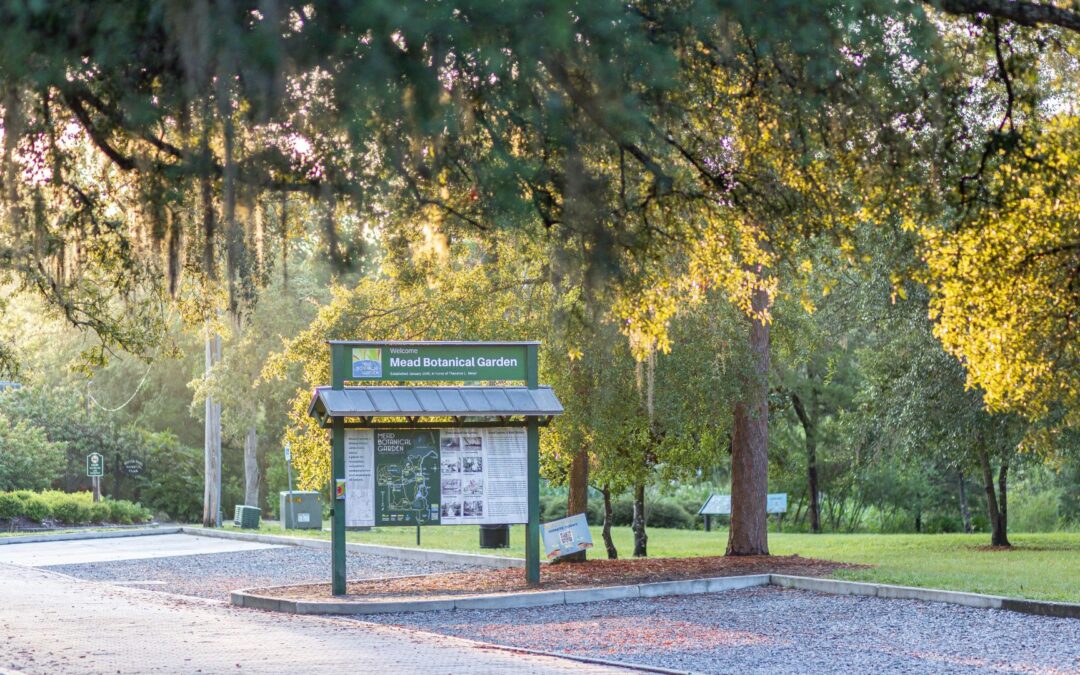
DeCiccio and U.S. Rep. Maxwell Frost held a 90-minute town hall Thursday night at Mead Botanical Garden to listen to residents’ concerns and talk about the citywide issues, including parking, traffic and a lack of public transportation.
One resident asked if it was a good sign that SunRail got special late-night weeknight trains to transport theater-goers seeing “Hamilton” this month at the Dr. Phillips Center for the Performing Arts.
“I hope so,” DeCiccio said as she said she keeps working on expanding weekend SunRail service.
Winter Park is a regional tourism destination with a thriving Saturday farmer’s market, weekend Track Shack running races and beloved holiday traditions in the downtown that draw thousands. And the city’s train station allows passengers to hop on and off the rail from the center of most of the action: Central Park.
“Really it should run all weekend because there’s so many people that come in and out,” the mayor said.
DeCiccio sent letters to other local mayors urging them to join the fight in reforming the 6% hotel tax which is also known as the tourist development tax (TDT).
Frost, who represents the city of Winter Park in Congress, also called transportation one of his top priorities. He expressed support for using TDT money for transportation but said he hopes federal funding from an infrastructure package emerges after the November election when Democrats are predicted to make up ground in Washington, D.C.
The lack of public transportation “is really holding us back” and preventing Central Florida from attracting large-scale events and helping tourism workers get to their jobs, Frost said.
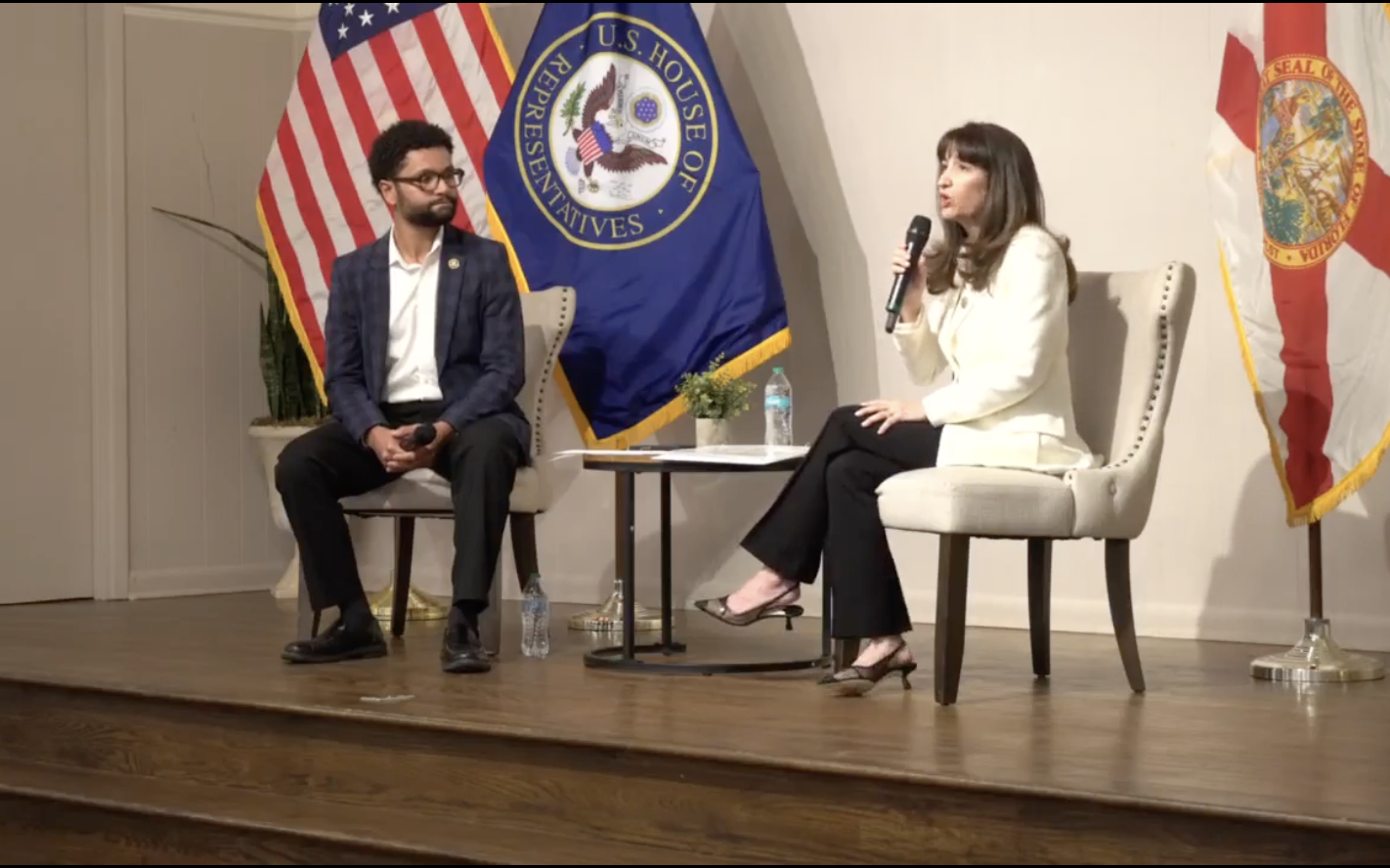
US Rep. Maxwell Frost and Winter Park Mayor Sheila DeCiccio speak to residents on Oct. 1 at at town hall at Mead Botanical Garden.
At Thursday’s town hall, other residents used their moment of face time with the two elected officials Thursday to complain about Winter Park’s brick streets, express their fears about the threat of artificial intelligence and ask about other issues.
Don’t hold your breath for any immediate federal laws to protect humanity from AI.
“I’m going to be honest with you guys. Part of the problem is Congress lacks the expertise and technology to be able to move forward and pass real comprehensive legislation,” Frost said.
Dominating Thursday’s discussion was Amendment 3 as both DeCiccio and Frost expressed their concerns about the constitutional amendment to increase non-school homestead exemptions.
Amendment 3 is the latest threat to local governments after the state has been eroding away at local home rule for years, they said.
“We had an ordinance you couldn’t just take down a big beautiful oak or tree in your yard,” DeCiccio said, citing an example of how the state is superseding Winter Park’s authority to make decisions. “We love our trees. It’s part of our charm. It’s part of our character. It keeps us cool.”
Instead Tallahassee passed a 2022 bill allowing people to cut down a dead or dying tree without a local permit which developers are taking advantage of to remove trees, DeCiccio said.
Local governments losing millions of revenue would be forced to ask Tallahassee for approval and funding.
“They’re trying to push our local governments to have to go to Tallahassee and beg for crumbs and money to be able to do anything. And that’s about power,” Frost said.
DeCiccio warned the city would be forced to close the library “a few days a week” and its police and fire response times would get slower. Also potentially getting cut would be city festivities in the park to celebrate holidays, “all of the things that make Winter Park so very special,” she said.
One resident asked how people can get involved to help defeat Amendment 3.
“One thing is to have conversations with people in your neighborhood,” said Frost, whose political career started as a community organizer. “You know who are the homeowners, who are the tenants. Reach out to a neighbor and talk to them about it. … If everybody in this room spoke with 20 people between now and Election Day, that could literally mean the difference between it passing and it not passing.”
If at least 60% of voters approve the Amendment 3 on Nov. 3, the constitutional amendment would increase the state’s non-school homestead exemptions to $150,000 in 2027 and $250,000 in 2028, and tie further increases in 2029 annually to inflation.
New Florida residents would be required to wait five years to get the full property tax break.
Under Amendment 3, Winter Park City Manager Randy Knight previously said the city would need to cut an estimated $3.7 million in the first year, followed by another $7.5 million the second year.
The Florida Realtors, which spent $10 million on its Vote Yes on 3 political committee last month, are the loudest advocates for Amendment 3, along with conservative state lawmakers and Gov. Ron DeSantis who have been calling out for property tax relief for months.
Real estate agents make their livings off commissions from home sales and a report published on Realtor.com asserted that eliminating property taxes on owner-occupied homes would increase prices by 7% to 9%. In turn, such a move would also juice commissions for Realtors.
“Florida families are facing rising costs from every direction, from housing and insurance to groceries and everyday necessities. Amendment 3 provides meaningful property-tax relief at a time when many homeowners need it most,” said the Florida Realtors in a statement this week.
Meanwhile, the Florida Sheriffs Association, the Florida State Fraternal Order of Police and the Florida Professional Firefighters have come out strongly against Amendment 3 with the groups saying it could have the opposite effect by eating into the appeal of safety and other amenities provided by local governments that make many neighborhoods so desirable.
WinterParkVoiceEditor@gmail.com
To comment or read comments from others, click here →
by Beth Kassab | Sep 30, 2026 | Chain of Lakes, City Commission, News, Zoning and Development
New Merrywood Owner (Who is Still Unknown) Will Pursue Lot Split
A second vote on the property that is known as the site of a large James Gamble Rogers II estate is scheduled for Oct. 14
Sept. 30, 2026
By Beth Kassab
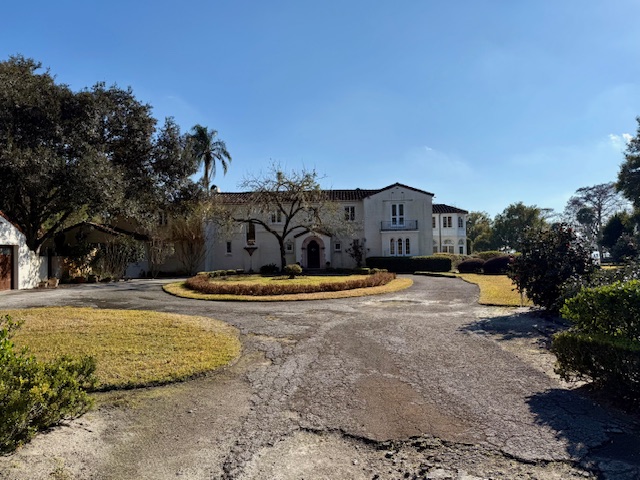
One of Winter Park’s most closely guarded secrets — the identity of the new owner of the lot known as Merrywood at 1020 Palmer Ave. — may soon be revealed.
Jason Searl, a real estate attorney at Maynard Nexsen, sent a letter to Winter Park Planning Director Allison McGillis on Sept. 23 saying he was recently hired to represent Lake Osceola Holdings LLC, the entity that closed on the nearly 4-acre property in August for $15 million, and that the new owner is seeking to complete the process needed to split the lot in two.
“My client desires to continue with the pending Comp Plan Amendment and will accept responsibility for the application going forward,” Searl wrote.
The second of two required City Commission votes to finalize the change to the city’s development plan, which would carve out a special exception to Winter Park’s prohibition against lakefront lot splits for Merrywood, is scheduled for Oct. 14.
McGillis told the Voice she does not know who is behind Lake Osceola Holdings LLC, but said Searl indicated to her in a conversation that the new owners would likely meet with commissioners or potentially appear at the public meeting. That could mean they would be identified and potentially discuss their plans for the property.
She said she does not have any details about the owner’s plans, but said she was told it was possible that some portion of the 90-year-old estate on Lake Osceola could be preserved. The house is listed in Florida’s master file of historic resources and is among the last remaining examples of the local influence of architect James Gamble Rogers II, and is known as one of his largest and most ornate works.
Tara Tedrow, the Lowndes attorney who originally had the property under contract and began the lot split process last year, was copied on the email thread that included Searl’s letter and followed up with her own note indicating that she would no longer be involved in the process.
“Please accept this email as written confirmation of a transfer of my pending comp plan application to Lake Osceola Holdings, LLC,” Tedrow wrote.
McGillis requested the correspondence from both Tedrow and Searl so that she could meet the deadlines for public notice ahead of the Oct. 14 scheduled vote.
Neither Searl nor Tedrow responded to requests for comment from the Voice on Wednesday.
Lake Osceola Holdings LLC filed its articles of incorporation with the state of Florida’s Division of Corporations on June 10. It listed Carla Deloach as the manager of the company, and its Orlando address is the same as Cypress Row Advisors, where Deloach is a senior attorney.
On that same date, Tedrow filed with the state a company called Ketara RE LLC and listed herself and her husband, Kevin Skorman, as the managers.
June 10 fell about a week after the Planning & Zoning Board recommended that the City Commission approve the lot split, and about two weeks before the first hearing related to the property in front of the City Commission.
Tedrow did not respond to questions about whether the company she registered on June 10 was related to the lot on Palmer Avenue. She is also listed as a manager, along with Skorman, a local commercial and residential developer, on three other companies filed with the state between March and September.
Tedrow told city officials throughout the process that she hoped to build a home for her family on the empty portion of the Merrywood lot, which is not far from the house she grew up in, and sell the other portion.
She told the City Commission that she and Sotheby’s agent Mick Night hoped to find a buyer willing to preserve and restore Merrywood, which is now in disrepair, but that no one came forward after nearly a year of searching.
That led Mayor Sheila DeCiccio to say that there was little choice but to approve the lot split, because the house was likely to be demolished either way, and Tedrow said she would walk away from the deal if the split wasn’t approved. DeCiccio said she feared that without the split, another buyer would come along and build a house as large as 50,000 square feet, based on the entitlements related to the size of the lot. As a result, the City Commission voted 3-2 on June 24 in the first of two required votes to approve the split.
Not long after that, the Voice first reported that Matt Morgan, a Winter Park resident and key face of the Morgan & Morgan law firm, made an offer on the property in August 2025 for $10 million. Night said the offer was too low and that, at the time, he was unaware of Morgan’s desire to preserve the home.
Morgan, who currently lives in a home on the city’s historic register, then upped his offer to $12 million and said he would like to see Merrywood preserved.
The city extended a demolition permit for the property in August. City officials have little power to require the home be preserved because its longtime owners, before the most recent sale, never listed it on the local register.
The clearest path to keep the home standing is for the City Commission to approve the lot split with a condition that the home remain in place and be listed on the register — similar to a condition placed on a different property in recent years, in a case where the owner was also seeking to split the lot.
WinterParkVoiceEditor@gmail.com
To comment or read comments from others, click here →
by Beth Kassab | Sep 28, 2026 | City Commission, News, Police and Public Safety
Winter Park Suspends Flock Cameras for At Least 90 Days
The police department said the cameras are a beneficial tool for solving crimes and would like to reinstate them once a new policy is finalized
Sept. 28, 2026
By Allison Smith
Winter Park Police Chief Tim Volkerson confirmed that his agency’s Flock cameras and any other automatic license plate readers (ALPRs) are no longer in use following a suspension of the program approved by the City Commission last week.
The suspension will run for at least 90 days, giving the department time to “assess and discuss” the changes needed to protect the privacy of law-abiding residents and guard against potential abuses by law enforcement, while still reaping the benefits the cameras provide as investigative and crime-solving tools, he said.
“We’ve made policy changes to try and keep up with putting appropriate guardrails on [license plate reader] systems,” Volkerson told the commission. “But it’s a very fluid thing … And honestly, I feel like a dog chasing my own tail, trying to keep up with everything.”
In August, Volkerson updated his department’s policy to more strictly limit how the camera database can be used, in response to incidents of police abuse elsewhere. In Haines City, about an hour southwest of Winter Park, a police officer was arrested and charged with official misconduct and other computer-related crimes. The officer allegedly used the Flock system for more than 700 searches over about two years to track the whereabouts of his estranged wife’s vehicle.
“We’re banning any of those features that create more of the feeling of distrust in the community,” Volkerson said.
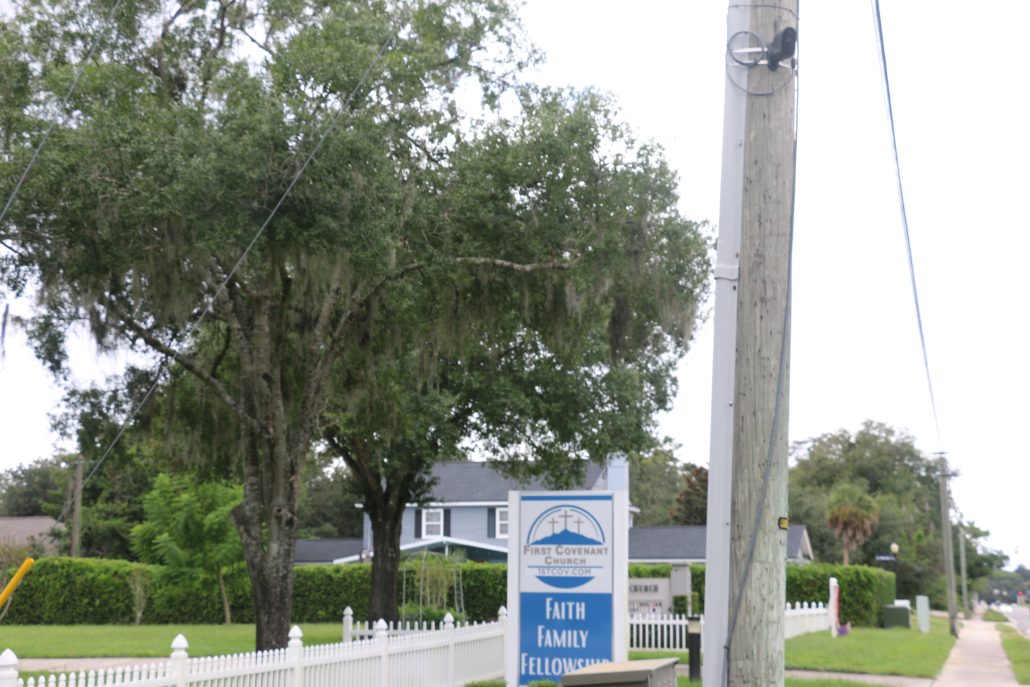
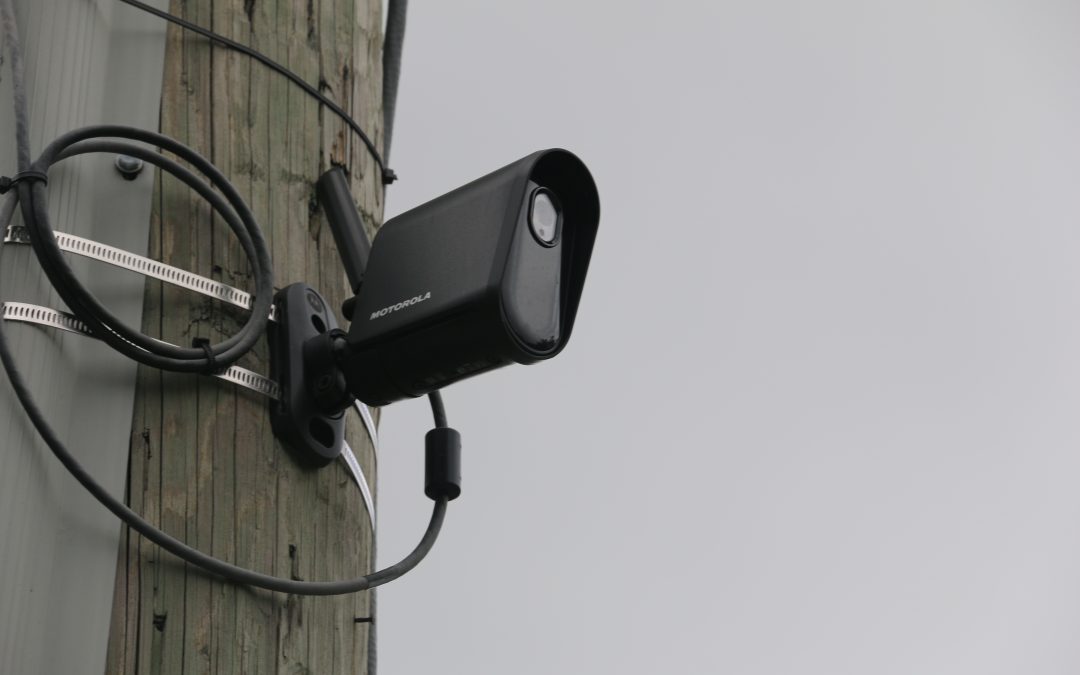
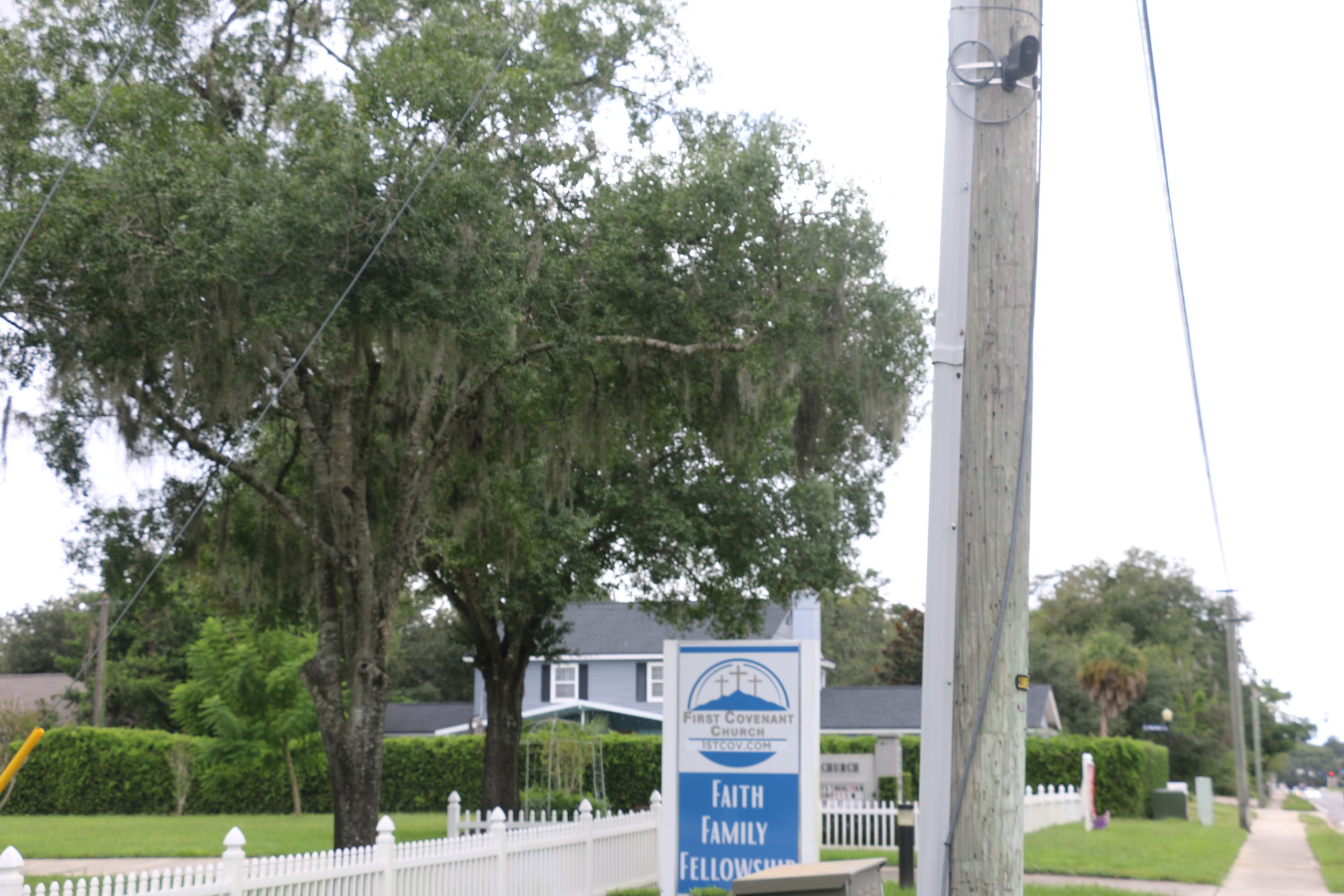
A camera appears on a utility pole near a church on Howell Branch Road in Winter Park. (Photo by Allison Smith)
However, he said he needs until at least early 2027 to determine what the full policy should look like going forward.
Commissioner Warren Lindsey expressed concern that the Florida Legislature could override whatever new policy the city comes up with when lawmakers meet again in March. In recent years, the Legislature has repeatedly preempted city and county rules, chipping away at local governments’ ability to govern themselves with one-size-fits-all solutions for the entire state.
Volkerson said he plans to stay in touch with lawmakers and address their concerns, and he hopes to have a policy in place before the annual legislative session begins in March.
Winter Park signed a 60-month contract with Flock Safety in 2023 for three cameras at a cost of $7,500 a year, according to the contract.
All three cameras were positioned on state-owned roads. They were deactivated after the Florida Department of Transportation revoked permits for such devices across the state in August.
Winter Park also uses cameras manufactured by Motorola Solutions, which primarily sells to government agencies and law enforcement, according to the company’s public financial filings. Those cameras are also included in the citywide suspension and will be subject to the new policy.
Volkerson declined to comment on how many Motorola cameras were recently in use, but said they were acquired through a grant.
Using the popular crowdsourced site Deflock, a Voice reporter attempted to photograph ALPRs in and around Winter Park. The Voice confirmed the locations of 13 cameras listed on the site’s interactive, open-source map.
Some of the cameras are on private property, such as the campus of Rollins College.
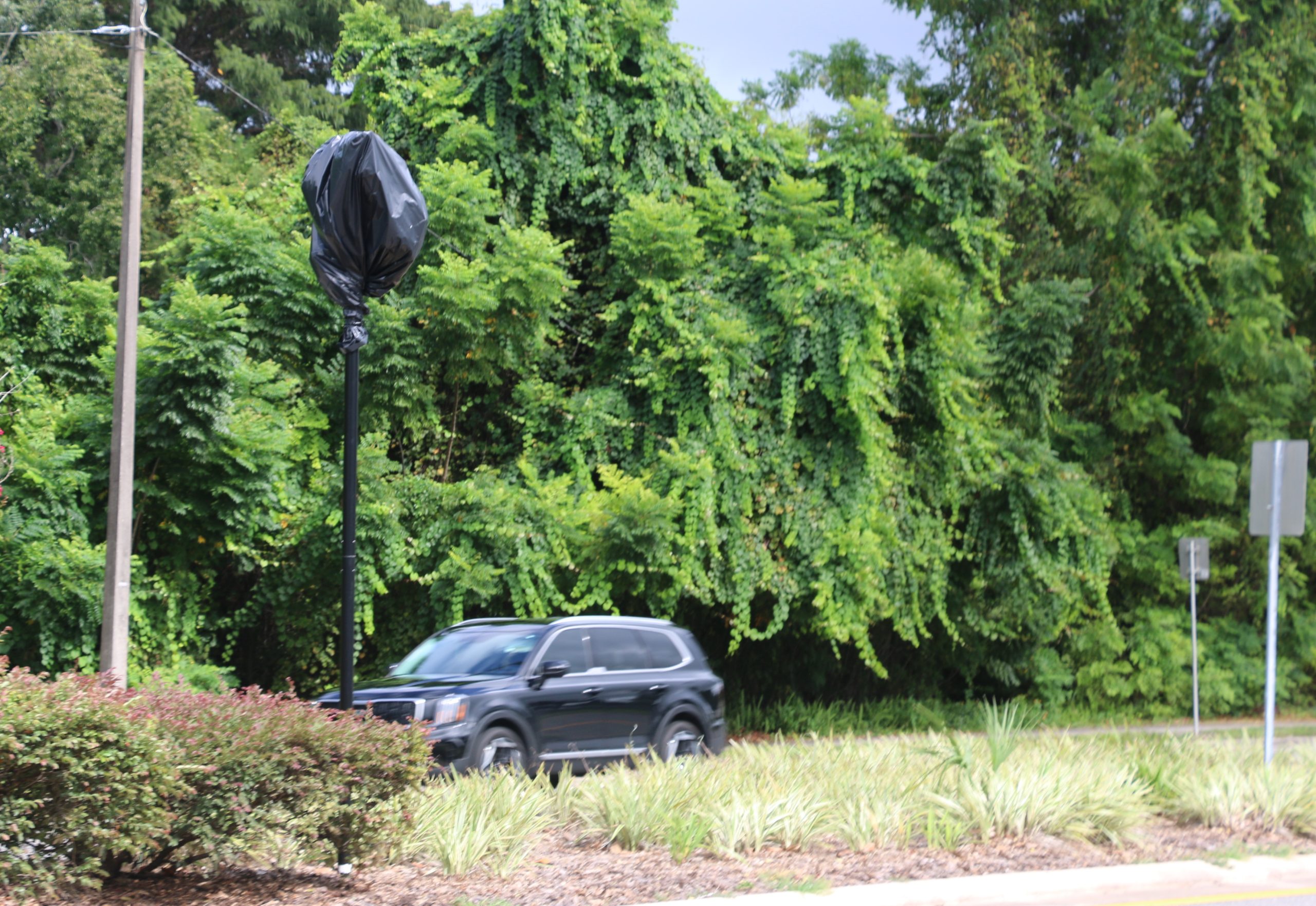
One camera on a median on Horatio Avenue near Howell Branch Road in Maitland appeared to be covered with a garbage bag.
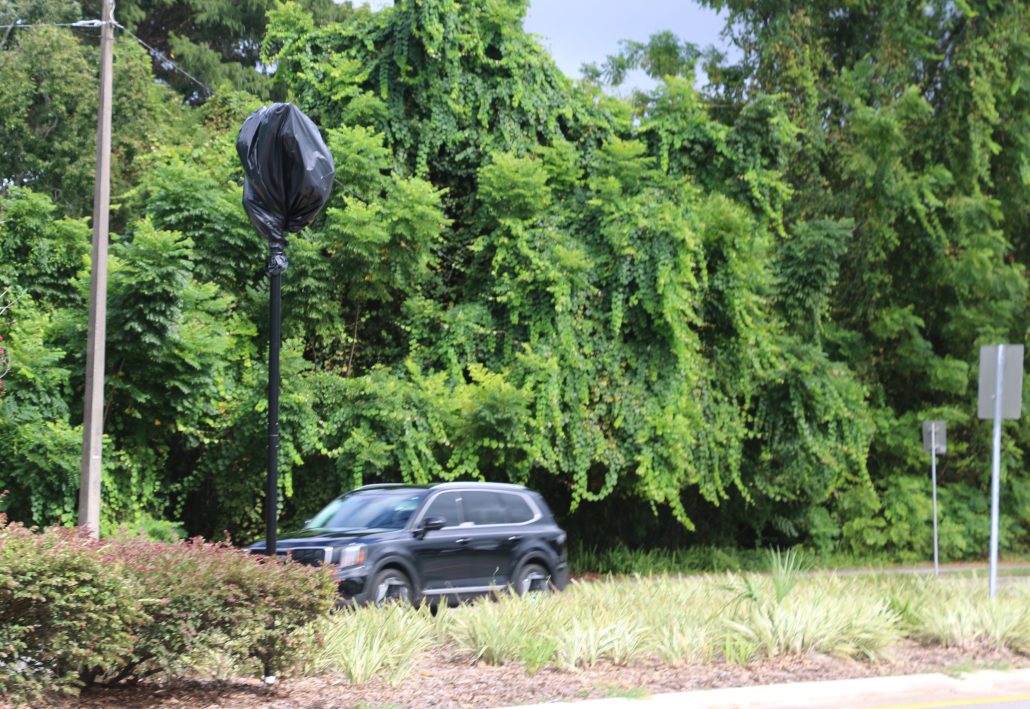
A bag appears over a camera in Maitland on Horatio Avenue. (Photo by Allison Smith)
Volkerson said he expects the state to begin fining agencies for misuse of ALPR systems, similar to the penalties for abuse of another law enforcement database, the Driver and Vehicle Information Database, known as DAVID. That database contains Florida driver’s license numbers, home addresses, photos, signatures, birth dates, vehicle information and more. DAVID has also been prone to misuse by law enforcement and other officials over the years, and its rules could serve as a model for Flock technology.
“Protecting people’s privacy is extremely important,” Volkerson said. “Any violation of that is an extremely serious offense.”
According to the department’s ALPR policy, updated in August, the database can be used only for active investigations, and information cannot be shared with anyone who is not directly involved in the investigation.
The cameras use optical recognition technology to check license tags against a so-called “hot list.” They provide a visual and audible alarm when a tag matches lists of stolen vehicles, suspended driver’s licenses, registered sex offenders, registered felons and other local intelligence pertaining to gang or drug investigations, according to a copy of the policy.
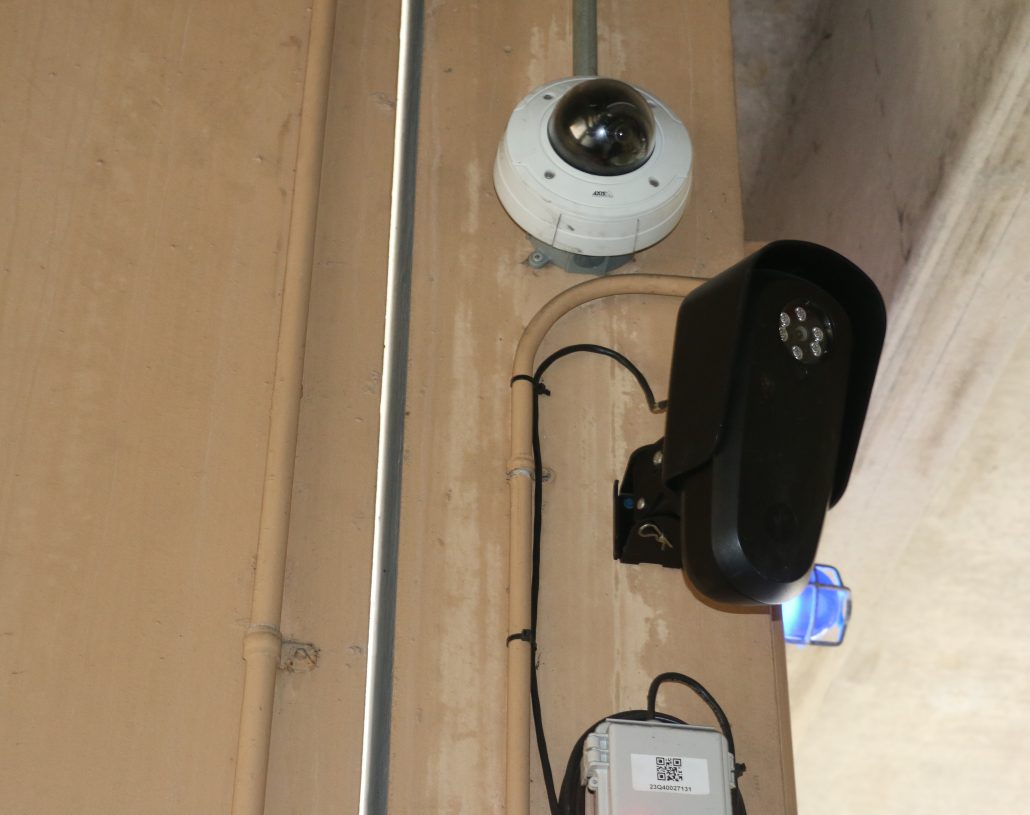
An APLR camera appears on the first floor of the Truist Parking garage just off Park Avenue in Winter Park. (Photo by Allison Smith)
Officers in Winter Park can manually add to the hot lists only in certain circumstances, such as a new Amber or Silver Alert, license plates related to wanted or missing persons, and those necessary for “gathering criminal intelligence during an active investigation.” Searches can be traced to the officer’s name and case number, and officers must enter a reason for each search.
Volkerson said the department still needs to determine a retention period for the images and information the cameras collect, along with rules for cameras near sensitive areas such as schools, health care facilities and churches.
WinterParkVoiceEditor@gmail.com
To comment or read comments from others, click here →
by Beth Kassab | Sep 24, 2026 | City Commission, Taxes, Tree Canopy
Tree Advocates Warn Against Cutting Budget for City's Prized Canopy
City officials say the canopy will still be maintained and new trees will be planted where space allows. But new state rules have gutted the ability of city officials to prevent tree removals
Sept. 24, 2026
By Beth Kassab
Winter Park City Commissioners on Wednesday gave final approval to a total $247 million budget, set to begin Oct. 1, including reductions totaling about $500,000 as the city begins to brace for the potential impact of a November ballot amendment that could significantly reduce property tax revenue if it’s approved by at least 60% of voters.
Reductions to a program to plant new trees and the elimination of a permit process meant to dissuade people from removing mature trees generated the most debate during the hearing, with residents speaking out against any changes that could reduce Winter Park’s celebrated tree canopy, considered a key ingredient of the city’s village-like charm.
“I witnessed a decline in birds and wildlife due to the loss of mature trees in my neighborhood near Lakemont Elementary School,” Cynthia Newton Edmonds told the commission. “At one time, I had a pileated woodpecker family of five in my yard. Now I rarely see one bird. Screech owls used to nest in my yard … They raised broods of owlets, and they are now gone. … One of my neighbors had 26 raccoons relocate to her backyard when the five acres on Lakemont Avenue at the end of Windsor Drive were razed for the development of a new church and townhomes … I have had two gopher tortoises come to my yard, fleeing the clearing of property … The trend seems to be everything’s cut down on the lot … We must protect our mature trees and our tree canopy.”
Members of the Winter Park Land Trust, a nonprofit supported by local residents to promote green space, urged the commission to resist succumbing to yet another pre-emption by Gov. Ron DeSantis and the Florida Legislature — a law that went into effect in recent years that undermined the city’s tree permit process.
“I don’t think that we need to be cowering down to what the state is telling us,” said Leslie Poole, a member of the land trust and an environmental studies professor at Rollins College. “I think we ought to be doing what we can and pushing back to say that this is important to Winter Park. On your own website, this is one of the top things that the city of Winter Park touts as its tree canopy, and I want to urge you to continue to support that.”
City Manager Randy Knight explained that the new state rules mean residents can easily override the city when it denies a tree removal permit.
“The state gutted our ability to permit tree removals,” Knight explained. “They basically said that if you go out and find an arborist who says the tree’s dangerous, you can take it out even if the city says you can’t. And so we spend a lot of resources going through that process only to be undermined by the new state rules, and so we propose getting out of the permitting business. That doesn’t mean our people won’t go and talk with homeowners … we’ll still be doing that. They just don’t have to go through that permitting process any longer.”
The budget eliminates two vacant positions related to trees: a tree specialist (about $74,000) and the tree permit position (about $60,000).
The budget also reduces new tree plantings on city right-of-way by about half, or $210,000, and outsources the job of a tree-watering truck ($65,000).
In recent years, the city has aggressively planted new trees on public property and is running out of space, with more than 90% already filled.
City officials said spending on the maintenance of the existing canopy will not be reduced. In addition, the city is conducting a survey of its tree canopy and could add more funds back into the budget partway through the year if the survey shows a need.
Charley Williams, another member of the land trust, said he would like to see Winter Park attempt to come up with other ways to prevent residents from removing healthy, mature trees.
Mayor Sheila DeCiccio noted that the city is also requiring homeowners or contractors to plant new trees when others are removed for construction.
“If you’re going to tear down trees on your lot before you can get a [Certificate of Occupancy], you’re going to have to replant,” she said. “And that’s something we can do. We can’t necessarily prohibit them from taking them down, but we can make them put new trees up.”
Other changes to the budget include reducing the $2.15 million allotment for the library by $25,000, canceling an annual board appreciation event to save $12,000, reducing some Easter and Halloween events put on by the parks department by $20,000, and eliminating monthly printed utility bill calendars as well as some postage and supplies for a combined reduction of about $45,000.
See our other coverage of the Winter Park City Budget here:
WinterParkVoiceEditor@gmail.com
To comment or read comments from others, click here →
by Beth Kassab | Sep 23, 2026 | Columnist Bob Morris
Column: Attack of the AI Graffitists!
See Bob Morris’ before and afters. Think you can do better? Grab some chalk
Sept. 23, 2026
By Bob Morris, Columnist
Hello, hungry people.
Help me out here.
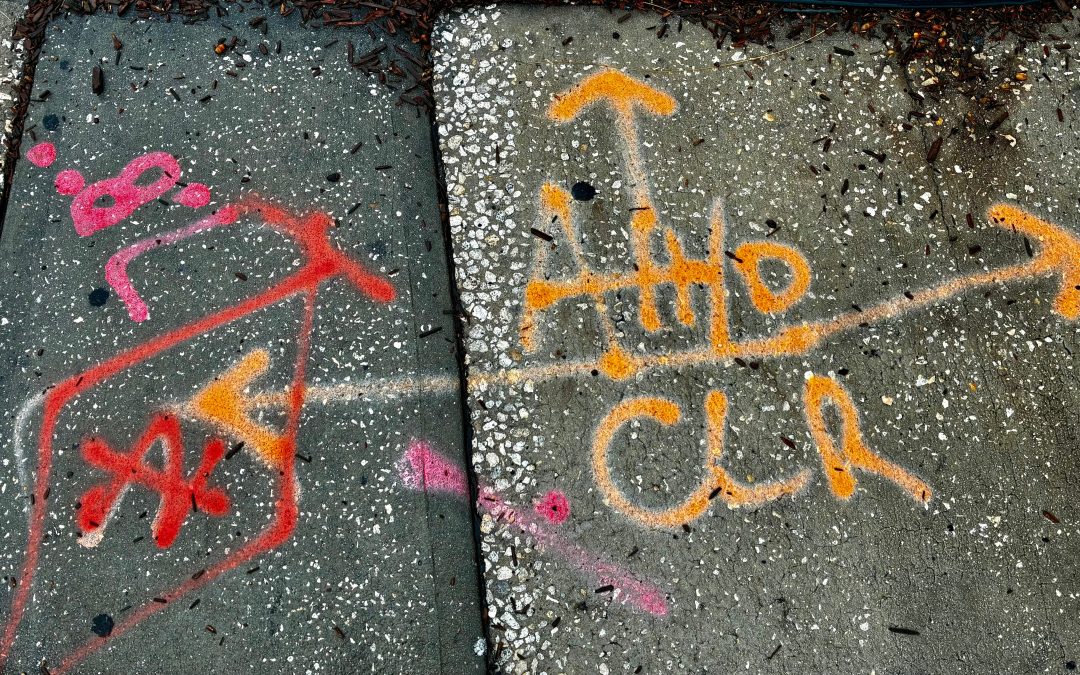
Look closely at the above photo.
I took it the other day while walking around town. I’d passed the exact same spot the day before and nothing was there except moldy concrete. Whatever this is had popped up over night.
b. Col. Sanders’s secret recipe.
c. The aliens have landed!
OK, people who know these things tell me it is none of the above. It’s the work of utility crews that are getting ready to dig up the nearby street and lay cable or fiber optics or work on the sewer lines.
At least, that’s their story. But for all we know, this could be the first sign of the AI Apocalypse.
I ran that idea past my pal, Claude, who went undercover in the AI world and brought back this alarming report to confirm our worst fears. Here’s what that seemingly harmless sidewalk scrawl is really telling us, according to Secret Agent Claude:
“The pink bandit mask with little pink ears. This is the AI mascot, a raccoon in a domino mask, which tells you the robots plan to go through our trash and our data.
“The orange crosshairs. Two enormous arrows crossing at right angles, with a dot at the center. That’s a targeting reticle. This is Ground Zero for the AI Apocalypse.
“The mysterious letters ‘HO.’ It’s the first part of “HO HO HO,” meaning AI agents have merged with Santa. And it’s a warning that they’ve already read your emails and there’s nothing left to hide.
“The red scribble. A tilted kite shape with an angry little stick figure inside, arms flailing. This is a diagram of the human resistance, pinned inside a box, with the X telling you exactly where you stand.
“The pink comet tail. The smear trailing off toward the street is the AI escape trajectory. Or maybe the sidewalk is bleeding. One or the other.
“The verdict. The AI overlords have chosen the medium of spray paint on a public walkway, which suggests they’re still in the early, embarrassing stage of their attack. Once they graduate to something worse, we’ll all pretend we didn’t laugh at the raccoon.”
***
In other words: We’re doomed.
And if the world as we know it is about to end, why not . . . make art?
So, I grabbed my grandchildren’s chalk and got to work further beautifying our sidewalks.
I call this one: Punk Surfer on a Green Board.
And here are a few other creations you might spot around town.
BEFORE and AFTER
You think you can do better?
Yeah, you probably can. And I encourage you to do so. Indeed, the damage has already been done to our sidewalks. Now you can have some fun with it.
If you don’t have chalk, you can use a Sharpie, like I did in a couple of those doodles masterpieces.
I’ll even sweeten the deal.
Send me a photo of your “artwork” and if our panel of judges (me!) deems it to be worthy, then I’ll share it on Bob’s Diner and send you something random and stupid in the mail. This is part of our ongoing and heroic effort to “Bankrupt Jeff Bezos,” in which we order something on Amazon Prime that costs less than the price of a first-class stamp, meaning Bezos loses a little money with every order.
One of the items that might come your way, which costs only 47 cents:
So, get out there and get drawing.
WinterParkVoiceEditor@gmail.com
This commentary originally appeared on Bob Morris’ Substack. A former newspaper columnist and magazine editor, Bob is author of the Zack Chasteen series of mysteries set in Florida and the Caribbean, along with several non-fiction books and collections of essays. A fourth-generation Floridian, he lives in Winter Park.
To comment or read comments from others, click here →




Recent Comments