by Beth Kassab | Sep 19, 2026 | City Commission, News
Amendment 3 would bring property tax cuts — and tough choices — to Winter Park
City Manager Randy Knight said during a Winter Park Chamber forum that the city could ‘survive’ the cuts, but warned they would come with painful budget trade-offs
Sept. 19, 2026
By Gabrielle Russon
Winter Park government will “survive” if Amendment 3 passes in November, although City Manager Randy Knight warned that property tax cuts would not come without “pains.”
In the first year, the city would need to axe an estimated $3.7 million from a $90 million budget, followed by another $7.5 million the following year, which Knight called “doable.”
But when the city conducted an exercise last month to practice eliminating nonessential services, such as wintertime pool access, Knight quipped, “You would’ve thought we had canceled Ted Lasso.”
Knight was part of a trio of speakers who expressed concerns about Amendment 3 during Friday’s Winter Park Chamber of Commerce panel, held in front of business and community leaders. Joining Knight were Orange County Tax Collector Scott Randolph and Florida TaxWatch CEO Jeff Kottkamp.
The Winter Park Chamber of Commerce has not taken a public stance on Amendment 3, although other economic organizations, including the Orlando Economic Partnership, have spoken out against it.
Under Amendment 3, a Winter Park taxpayer who receives the maximum benefit would save about $850 in the first year and $1,780 in the second year, which equals nearly $150 a month, Knight said.
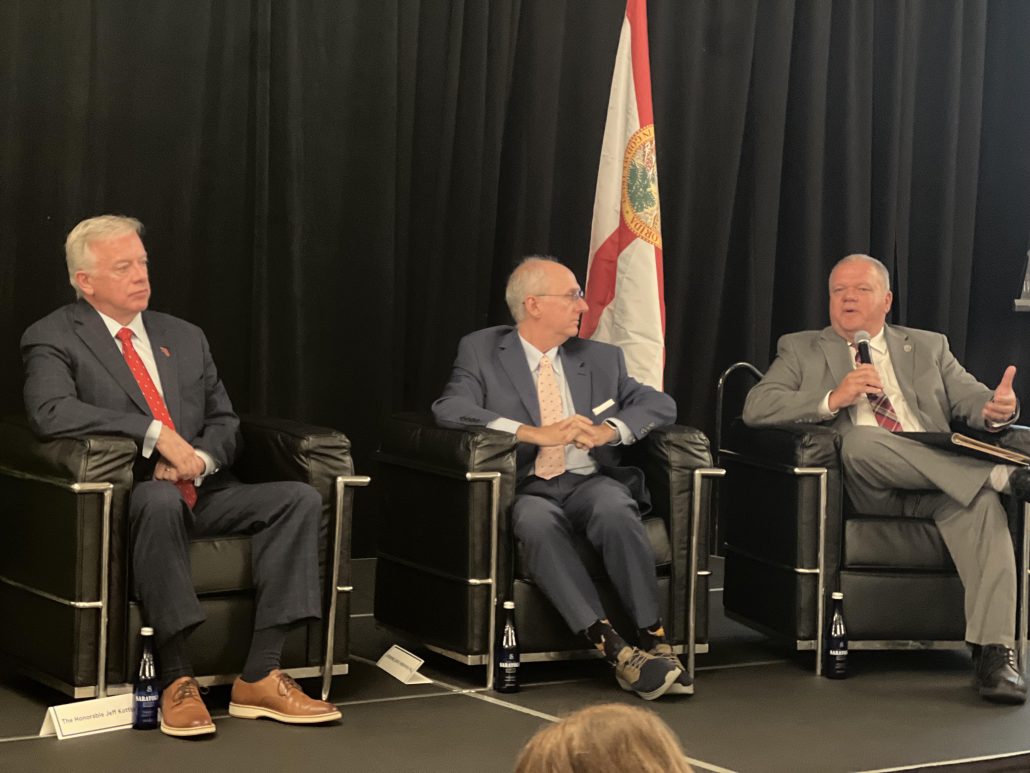
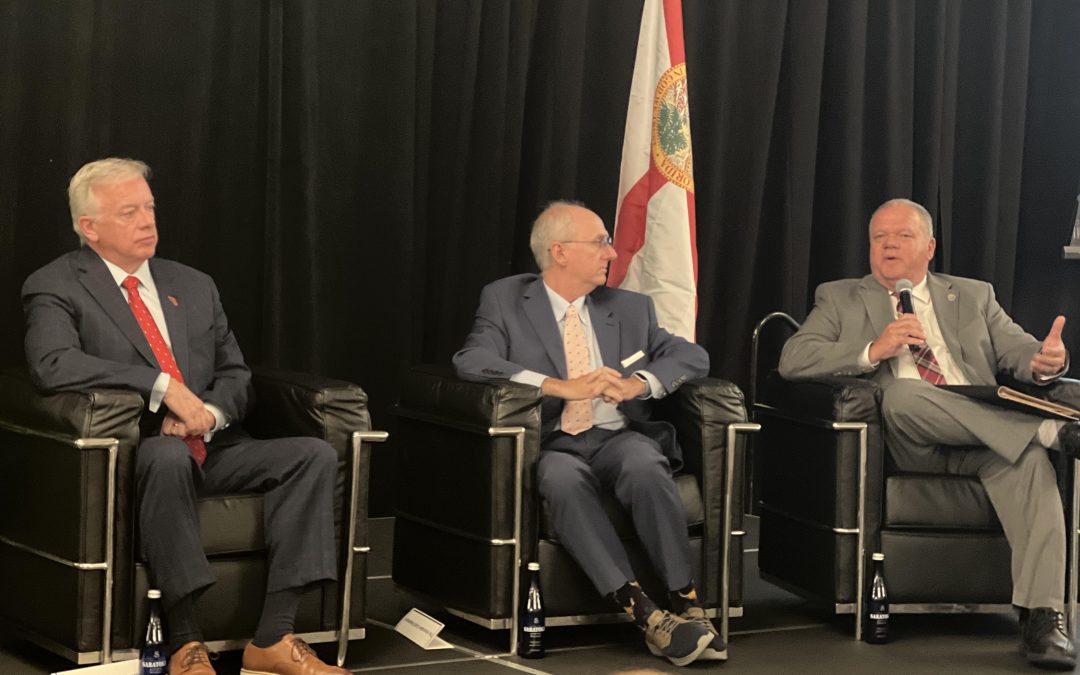
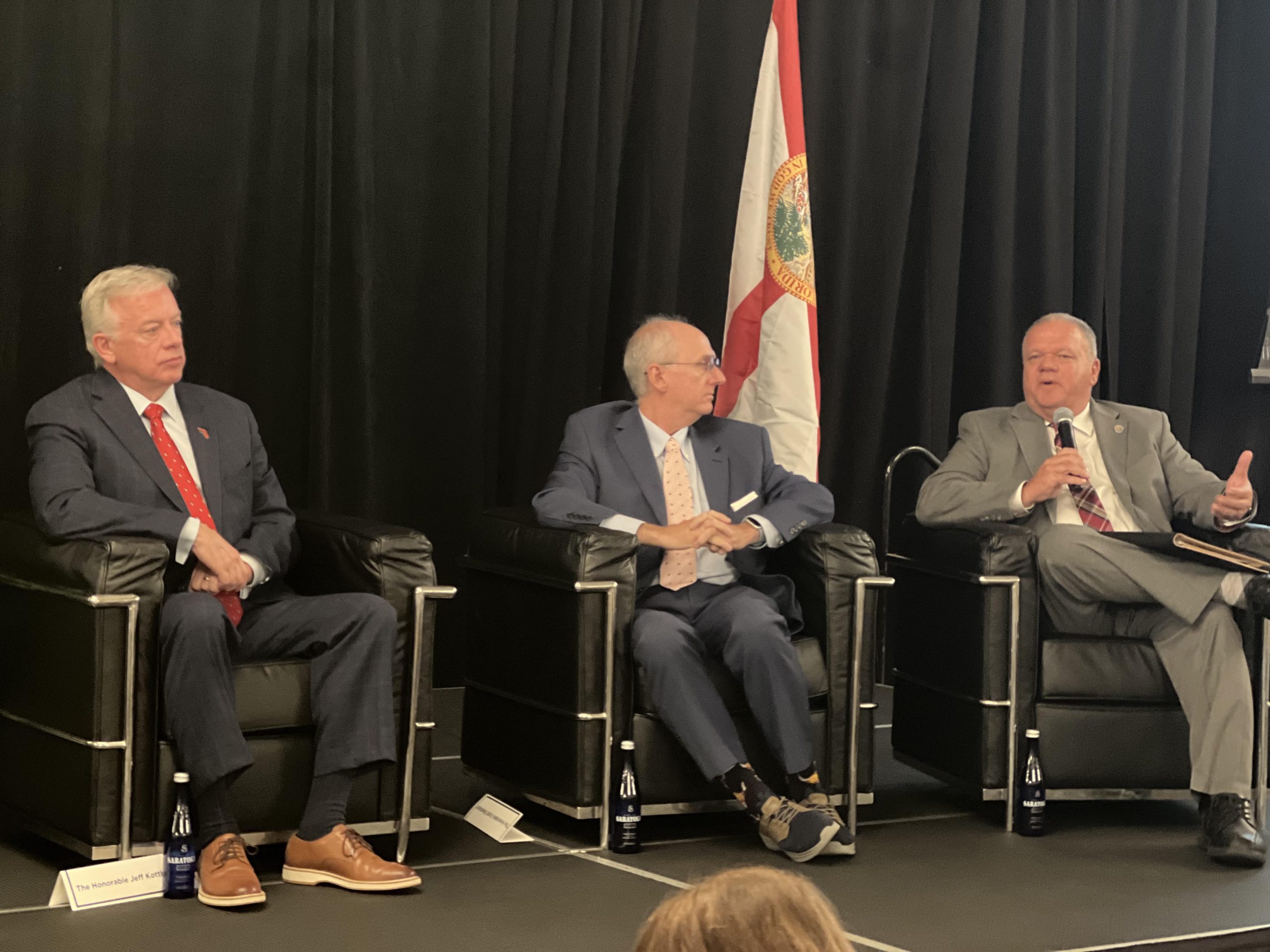
TaxWatch CEO Jeff Kottkamp, Orange Tax Collector Scott Randolph and Winter Park City Manager Randy Knight discuss the anticipated impacts of an amendment on the November ballot that would raise the homestead exemption. The Winter Park Chamber of Commerce hosted the forum on Friday.
With those savings come trade-offs, the panel warned.
Knight said Amendment 3 could force the city to raise its millage rate, increasing taxes on renters, businesses and homeowners of more expensive properties to make up for lost property tax revenue.
Local governments may also raise fees, Kottkamp said.
“You may vote for this thinking you’ll get a property tax reduction when, in fact, you won’t,” said Kottkamp, a former state lieutenant governor.
For local governments, the amendment could also have an impact on other fronts if they miss out on federal or state grants because they can no longer provide matching funds, Randolph said.
If at least 60% of voters approve Amendment 3 in November, the constitutional amendment would increase the state’s non-school homestead exemption to $150,000 in 2027 and $250,000 in 2028, with further increases tied to inflation beginning in 2029.
The ballot amendment would also cut local government tax revenues by limiting future growth in the amount of taxes collected on non-homesteaded properties. The cap on annual assessment increases for those properties — anything from a Publix grocery store to an Amazon warehouse to a vacation home — would drop from 10% to 5%.
New Florida residents would be required to wait five years to receive the full increased property tax exemption.
Randolph, a Democrat and former state lawmaker, questioned whether the Legislature’s five-year waiting period for new residents was constitutional because it treats out-of-state and Florida residents differently for tax purposes.
“Look, Florida is built on the idea of attracting new people. I don’t know how you’re supposed to attract a business or attract a young couple or even a retiree coming into this marketplace,” Randolph said. “They’re already going to be paying the highest full market value when they buy the house. And then you’re going to tell them, ‘Oh yeah, you know what? Just for giggles, we’re not even going to give you the $250,000 exemption for five years.’”
The state Legislature voted to put Amendment 3 on the ballot during a three-day special session in June. The vote came without the state conducting any deeper economic impact studies to understand the consequences of overhauling property taxes statewide.
“When you have something this important, the way this was done was just not right. You don’t drop a bill and say, ‘Vote on this in three days,’” Kottkamp said.
State lawmakers acted after facing pressure from Gov. Ron DeSantis, who had been calling for property tax reform to lift the burden on residents struggling with rising costs. DeSantis has argued that people who have already paid off their homes are unfairly hit with rising property taxes and that local governments’ budgets are ballooning with wasteful spending.
DeSantis also expressed disappointment that Amendment 3 doesn’t go far enough to reduce school taxes because state lawmakers protected school funding in their ballot proposal.
Meanwhile, critics question whether Amendment 3 is another move by the state to take more control away from local governments, which set their own spending priorities.
Randolph called it “absurd” to say current homeowners are being “taxed out of their home” because the state’s Constitution already contains an amendment capping the annual increase in the assessed value of a homesteaded home at 3%, or the Consumer Price Index, whichever is lower.
But the ones “getting killed” by property taxes are new homeowners who purchased homes in the past five years, Randolph said.
“This amendment doesn’t fix that at all,” Randolph said. “And that’s what I wish Tallahassee would focus on — the fairness and the equity across the board — because if property taxes are supposed to reflect the services that are provided, we have shifted so much of that to the new entrants into the market.”
Instead of Amendment 3, Kottkamp is advocating for the state to make changes after the Florida Taxation and Budget Reform Commission meets next year. The commission, which convenes every 20 years, could develop a more thoughtfully laid-out proposal to reduce property taxes, he said.
In a conversation where all three panelists expressed skepticism and concerns, the most optimistic sentiment came from Kottkamp, who offered this assessment of Florida:
“This is still the greatest place to live and do business in the country, which means in the world. We just want to make sure we keep it that way,” he said.
WinterParkVoiceEditor@gmail.com
To comment or read comments from others, click here →
by Beth Kassab | Sep 15, 2026 | Chain of Lakes, News
No Paid Parking at Dog Park After All
The park at Lake Baldwin was slated to be part of a pilot project to charge non-residents for parking
Sept. 15, 2026
By Beth Kassab
An agreement between Orlando and Winter Park unearthed from 24 years ago means the city of Winter Park can no longer move forward with plan to charge non-residents to park at the dog park on Lake Baldwin, City Manager Randy Knight said late Tuesday afternoon.
The agreement, he said, requires that residents in Orlando and Winter Park have equal access to two parks — one controlled by each jurisdiction — along the lake bordered by both cities.
“If the pilot program went forward at Lake Baldwin Park, Orlando residents would need to be exempted from the parking fee the same as Winter Park residents, which administratively would be a larger undertaking,” Knight said in a news release announcing the update. “As a result of this document and input received from citizens, the city is removing Lake Baldwin Park from the Pay for Parking Pilot Program but will continue to move forward with the pilot at Dinky Dock. The technology behind this program is still important important to explore as a tool to manage parking more effectively.”
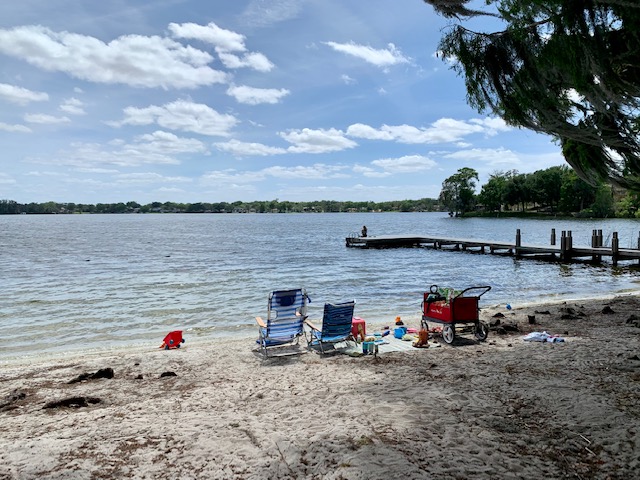
A view of Dinky Dock on a summer day.
The City Commission approved the six-month pilot program last week as part of a plan to raise more money as well as find a new way to reduce parking snarls in other parts of the city if the trial period is considered a success.
Some details are still not known, such as the exact cost to park at Dinky Dock, which is often busy on the weekends as people from surrounding cities use the dock for jet skis and other watercraft on Lake Virginia.
WinterParkVoiceEditor@gmail.com
To comment or read comments from others, click here →
by Beth Kassab | Sep 15, 2026 | Arts and Culture, City Commission, News, Taxes
Parking Fines to Increase, E-Bike Fines also added as Budget is Finalized
The City Commission also reduced the amount of money set to go to nonprofit Men of Integrity Mentoring Program and turned down requests to add dollars for the library and Blue Bamboo back into the budget
Sept. 15, 2026
By Beth Kassab
Winter Park will bring in additional revenue next year through higher fines for parking tickets, fees for non-residents to park at Dinky Dock and the dog park at Lake Baldwin, and new fines for kids and adults who violate recently approved rules governing the use of e-bikes and e-scooters.
The City Commission also made last-minute tweaks to the budget that takes effect Oct. 1, reducing the amount of money the nonprofit Men of Integrity Mentoring Program will receive and rejecting calls to restore cuts to the Winter Park Library and Blue Bamboo.
Some details remain unclear, including exactly how much the new fines for parking and micromobility violations could bring in.
The fees for non-residents to park at Dinky Dock and the dog park have not yet been set but could be in the range of $2 to $3 per hour. The pilot program is expected to start later in the year after a company is selected to administer it.
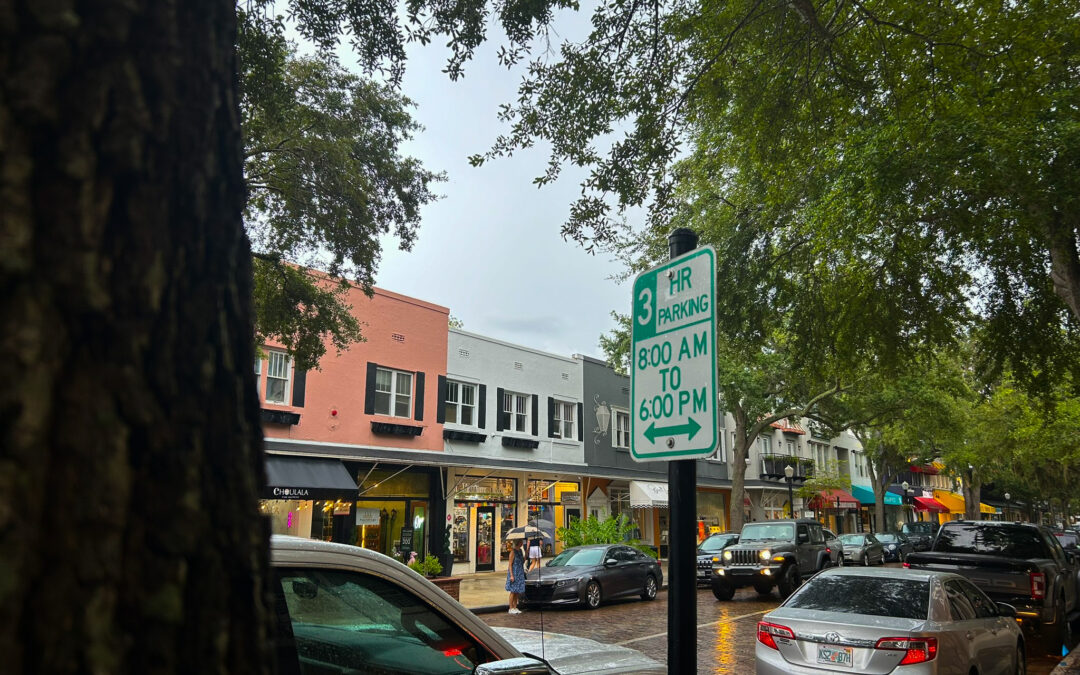
Motorists who park along the curb facing the wrong direction, overstay the allotted time at a curb or otherwise park in an unlawful manner will now face a $30 fine, up from $25.
Commissioner Elizabeth Ingram pushed for even higher parking fines, noting that the discussion occurred during a meeting that lasted more than five hours, with a substantial portion devoted to parking concerns related to a proposal to build a synagogue and daycare downtown.
She said she was “shocked” to learn that parking fines are only $25 and suggested they could be as high as $75 or even $150 to help change motorists’ behavior.
“It doesn’t hurt enough to teach someone,” she said.
City Manager Randy Knight warned that complaints would pour in if fines were raised that high.
“We get complaints about $25 all the time, and so if you go to $75 … maybe you each get to serve as cashier one day a week,” he said in jest.
Police Chief Tim Volkerson said his team issues parking fines every day and noted that Orlando recently raised its fine to $35.
The commission settled on a $30 fine for parking violations.
The group also raised the fines for violating the new micromobility ordinance to $35 for a first offense and $75 for a second offense.
When it came to the portion of the budget — about $480,000 — that the city spends on local nonprofit groups, a proposed $45,000 allocation for Men of Integrity was reduced to $20,000.
Commissioner Warren Lindsey said he wasn’t comfortable with the amount, given that the group is already provided free space at the Community Center and because commissioners are being forced to make some cuts that he called “painful and uncomfortable.”
Men of Integrity serves about 24 boys, including 10 in high school and 14 under the age of 12, said Antwon Carter, the group’s leader. Many of the kids attend Winter Park schools, but some travel from outside the city to attend the weekly program. An administrator for the program provided the Voice with a copy of Men of Integrity’s most recent tax form, which shows that the group’s revenues are typically less than $50,000.
Ingram attempted to restore some funding for Blue Bamboo in response to pleas from one of the group’s leaders but did not win enough support.
Officials from the Winter Park Library also asked the commission to consider restoring a $25,000 cut to its budget but did not win support.
Even with the $25,000 reduction, the Winter Park Library is still slated to receive nearly $50,000 more than last year in support from the city’s main budget and the Community Redevelopment Agency budget, for a total of $2.5 million.
The second required vote on the city budget is scheduled for Sept. 23.
WinterParkVoiceEditor@gmail.com
To comment or read comments from others, click here →
by Beth Kassab | Sep 15, 2026 | Arts and Culture, City Commission, County News, Election, News, Taxes
Will Orange Mayors Join Push to Rethink how Tourist Taxes are Spent?
Winter Park’s resolution is the latest sign of growing pressure to use the county’s nearly $400 million in annual Tourist Development Tax revenue for transportation, affordable housing and other needs
Sept. 15, 2026
By Beth Kassab
Mayor Sheila DeCiccio sent an email this week to her counterparts in other Orange County cities urging them to adopt resolutions in support of using the Tourist Development Tax to help pay for local needs such as transportation improvements and more affordable housing.
Winter Park adopted such a resolution last week that calls for Orange County to “explore every avenue to expand alternative uses of the tax, including but not limited to transportation and affordable housing, adding additional pennies, and lowering the 40% threshold for tourism promotion, and to make this a legislative priority.”
“This is the direction we need to go considering potentially November and the regional areas wanting to get access to public transportation,” said Commissioner Kris Cruzada during a brief discussion.
“November” referred to Amendment 3 on the Nov. 3 ballot, which could significantly reduce property tax collections by increasing the homestead exemption for homeowners and capping property tax growth on commercial and other properties. Property taxes pay for local police and fire departments, road and infrastructure work, parks and recreation and other services provided by local governments.
But the outcry over how Orange County spends its enormous haul of tax dollars collected on hotel rooms — a record $385 million last year — started long before the push this year to threaten property tax revenues.
A disparate chorus of local voices, from County Commissioner Kelly Semrad — who represents Winter Park and was elected on a platform that included reforming TDT in 2024 — to a few local lawmakers and Orlando Sentinel columnist Scott Maxwell, who was one of the earliest advocates for change, has reached a crescendo in recent years, urging that the largesse be used to help solve problems that stem from hosting 75 million visitors a year and housing the low-wage workers who power the tourism industry.
DeCiccio’s effort appears to be the first to attempt to organize mayors to come together on the topic and push for change at the county level.
Commissioner Warren Lindsey applauded her leadership shortly after the unanimous vote on Winter Park’s resolution.
“Hopefully it’ll make a difference to not only people in Winter Park but everyone in the Orlando area,” he said.
The wording of the resolution mirrors a recommendation made last month by Mayor Jerry Demings’ most recent Citizen Advisory Task Force, which, in a stunning rebuke of the long-held status quo, also voted down spending the tax on yet another expansion of the Convention Center, a parking garage at Camping World Stadium and more projects at the University of Central Florida.
Instead, the 34-member group, made up of appointees of county commissioners and city mayors, recommended spending more of the dollars collected from levies on hotel rooms on grants to support local arts and culture, as well as ecotourism projects.
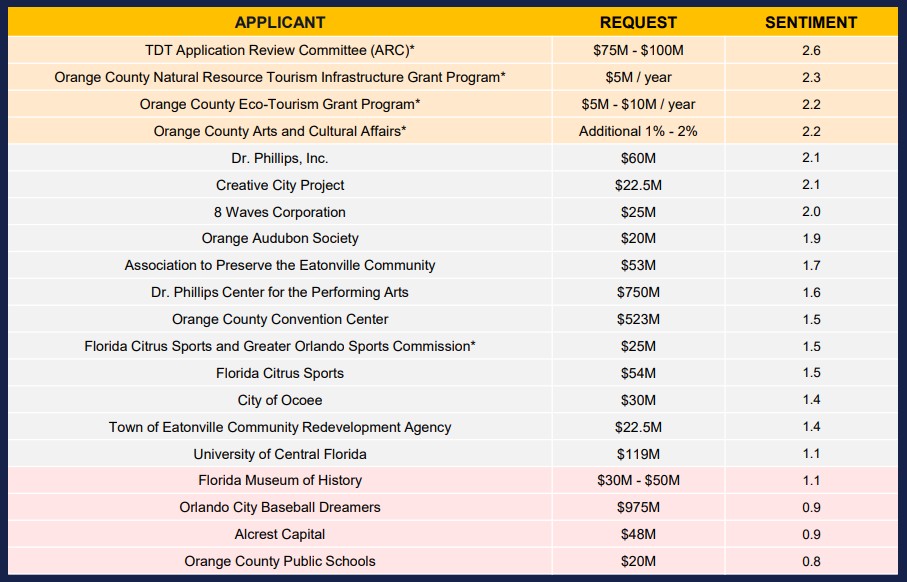
The projects related to the Orange County Convention Center, Florida Citrus Sports, the University of Central Florida as well as the bottom four projects on the above list were NOT recommended by the citizen task force.
The Orange County mayor and Board of County Commissioners arguably have the most power to change the way TDT money is spent.
They have the ultimate say over which projects get the dollars each year within the current confines of the spending rules. And, if other counties across Florida provide any guide, they could succeed in getting state permission to use the dollars for local needs if they made a deliberate lobbying push in Tallahassee.
But Demings, who has served as Orange County mayor since 2018, has not made a major effort to that end — or at least not a public one. Such a campaign would likely involve not only making a case to state lawmakers but also attempting to coalesce the major hotels, as well as Walt Disney World, Universal Orlando and other attractions, behind the idea.
November will also bring a new mayor for Orange County for the first time in eight years and, in another sign that the tide could be turning, both candidates recently rejected the idea of another convention center expansion and said they would support broadening how TDT dollars can be spent.
Linda Chapin moderated a forum last week between Tiffany Moore Russell and Chris Messina for the Orange County League of Women Voters and tried to pin both candidates down on the topic.
Chapin, who served as Orange County’s elected leader in the 1990s and just co-chaired the citizen task force, asked if they would support a convention center expansion.
Moore Russell, a former county commissioner and clerk of court and a Democrat in a very blue-leaning county who lives in Horizon West, hedged her response somewhat on the idea that “data” could one day show a need for more investment in the center.
“I would not have supported the expansion of the convention center unless I saw data that showed me where are we trying to go, what is it trying to achieve, and what’s the return on that investment,” she said. “And so, out of all the projects that I’ve seen so far, I’m a fan of the cultural and arts projects because I think they enhance our quality of life in this community. I am not a fan right now of building any major facilities until we know how do we support those who work in tourism? … We know we have a transportation challenge when it comes to those who visit here and those who work in the industry, as well as affordable housing and workforce housing. So for me, I’m not a fan of big projects right now because I think we need to support those who make our industry thrive in this community.”
Messina, a businessman and Republican who lives in unincorporated Winter Park, said he does not support an expansion because the convention business has changed and said he would have given more support to a proposed long-shot baseball project known as the Dreamers.
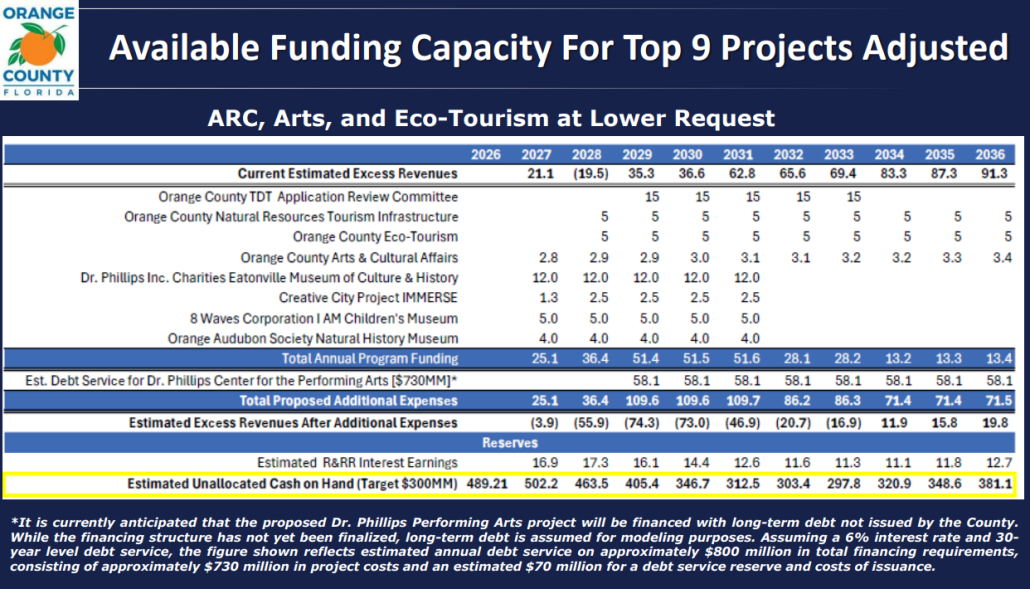
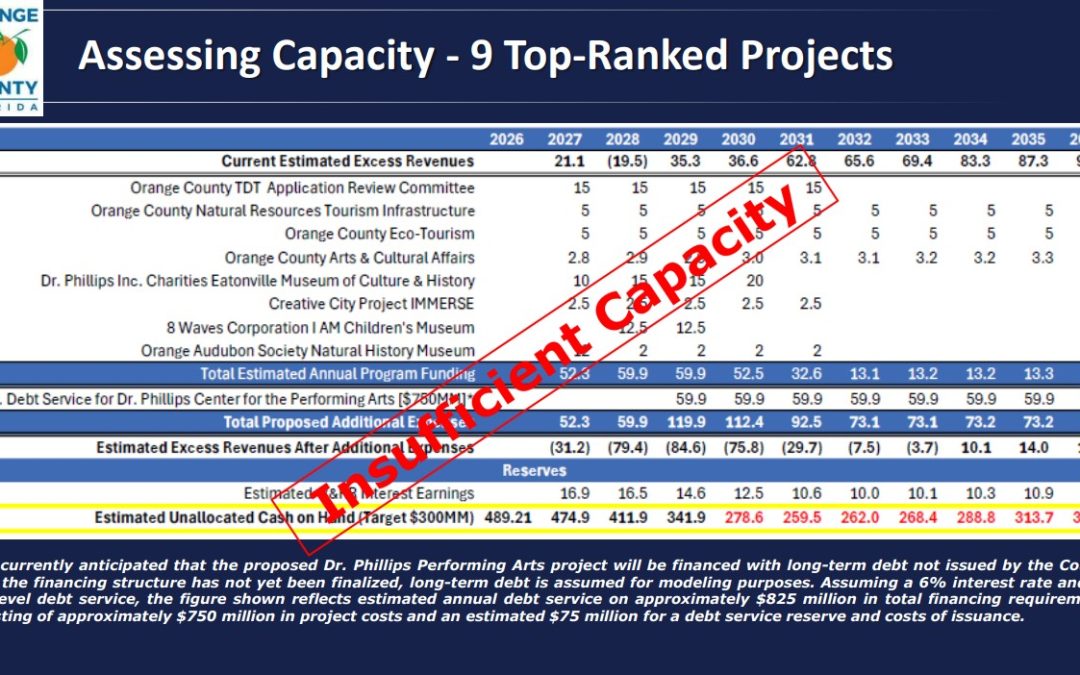
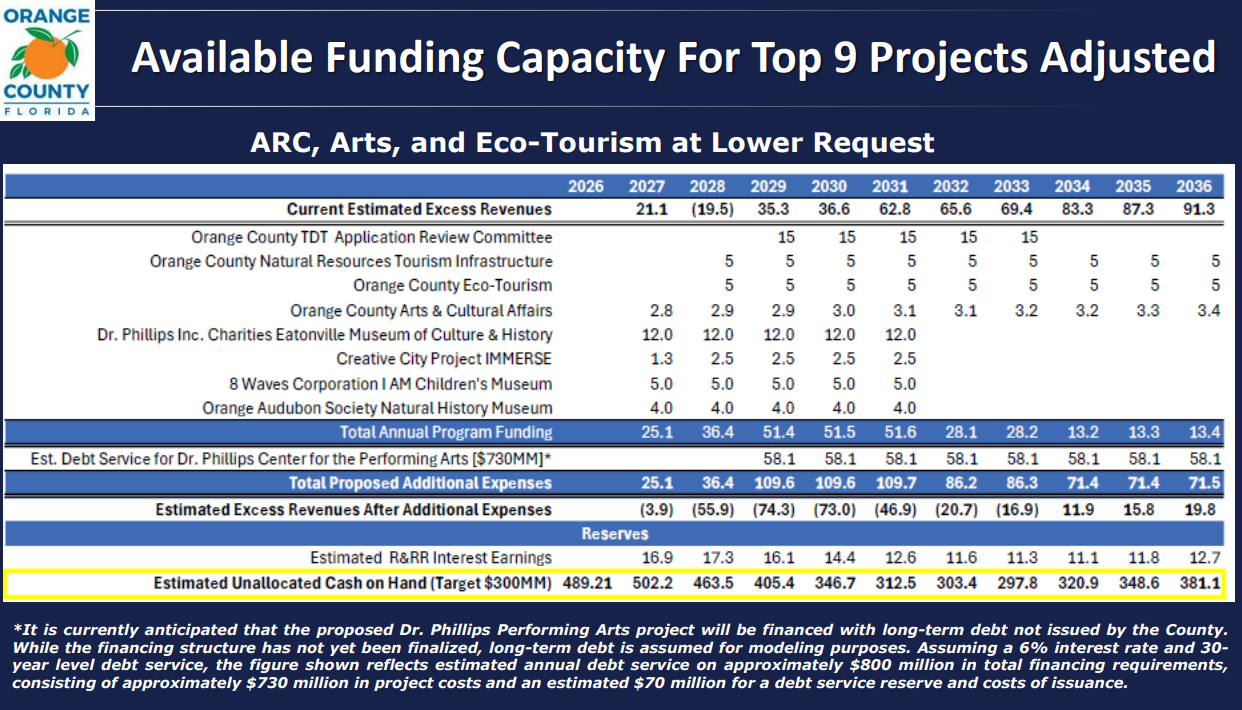
Under one scenario, a chart provided by Orange County, shows how the projects can be funded and maintain reserves. Multiple scenarios were presented at the county meeting on Aug. 25.
“There are only so many very large conventions you can bring into Orange County,” he said. “So I know we lost the Home Builders convention, and it was sort of like the sky is falling for some people, but that’s actually not the case. It’s better to be targeting two medium-sized conventions. They’ll bring more money, more business into Orange County than one large convention. One thing, though, I’ve been very public about that I would have done with the TDT dollars, is I would have looked at supporting the Dreamers in some way, shape, or fashion.”
When Chapin followed up about how the candidates would like to see Tourist Development Dollars used, Messina said he supported using them for tourist-related transportation, but not much else.
“I think we can look at an expanded definition of what tourism is, and without trying to go too far,” he said. “So, for instance, we have a world-class firefighting center, and we have a world-class SWAT team here. So why don’t we do some marketing around that and bring firefighters from around the world, SWAT teams from around the world, for a competition? That’s one thing we could do. Second thing, we can expand it to include transportation that’s focused on bringing tourists to their primary destinations, so from the airport to one of the big hotels or the theme parks. I think that’s a good use of the expanded TDT dollars. But beyond that, to affordable housing? I think that’s a stretch too far and will run us into a brick wall in terms of the legislation.”
Moore Russell was more willing to expand uses but echoed concerns expressed by Demings that the governor and state legislature could attempt to seize on the pot of money for their own use if given an opening.
“I want to marry this also with a question you asked previously about home rule,” she said during the forum. “So I am open to expanding the legislation, but I’m concerned that Tallahassee will take over the control of how we spend our TDT dollars. So we have to be very mindful and keep our eye on the control of our local dollar … But I do believe there is an opportunity to look at our statute about how we can support indirectly, or things that are impacted by tourism. So, you know, transportation — not just moving those who visit Orange County, but the people who work in this industry. There are many who ride the bus, to get to our theme parks, to get to our hotels, who are making sure that we are a great destination to visit. I believe we can justify with the data why we should invest those dollars. Workforce housing down on I-Drive for people to be able to live where they work? I think we can justify that.”
Today, the money is primarily used to pay off debt related to the convention center, as well as support its operations and maintenance, along with subsidizing advertising for the tourism industry and paying debt for the city of Orlando on the arena used by the Orlando Magic.
County officials have long pointed to a state law that governs the tax and limits its uses as the reason the pot of dollars can’t be used to pay for mass transit, public safety, affordable housing or other essential needs.
But other counties have succeeded in carving exceptions into the law when they have made a deliberate lobbying push.
For example, some beachfront counties are now allowed to use tourist tax dollars to fund lifeguards and law enforcement services “which are needed to address impacts related to increased tourism and visitors to an area.” And in 2024, the Legislature allowed local governments in the Florida Keys to use a portion of the money to purchase or build affordable housing.
A critical issue now is the timing of when the County Commission will vote on projects recommended by the task force or move to reintroduce the convention center or other proposals into the mix.
If Demings pushes the matter forward in the final months of his term, then it’s possible there won’t be any money left for the county to spend on other needs such as public transit.
Both DeCiccio and Semrad have expressed concerns about that happening.
A county spokeswoman said a date for the next vote and discussion in front of the Orange Commission has not been set, but that Demings intends to hear the matter before new commissioners and a new mayor take their posts on Nov. 17.
WinterParkVoiceEditor@gmail.com
To comment or read comments from others, click here →
by Beth Kassab | Sep 10, 2026 | City Commission, News, Zoning and Development
Plans for First Synagogue Roil Winter Park
The project, which also includes townhomes, drew 30 public speakers and failed to win enough support despite more concessions from Chabad
Sept. 10, 2026
By Beth Kassab
People affiliated with Chabad of Greater Orlando left City Hall disappointed on Wednesday night after final approval for what would be Winter Park’s first permanent synagogue was delayed until late October with commissioners saying they had too many concerns about parking, traffic and potential disruptions to those who live near the site in the heart of the bustling shopping and dining district.
Commissioner Elizabeth Ingram, who voted in favor of the project during the first hearing on the proposal on Aug. 26, said she was torn and having second thoughts after listening to more people and hearing concerns about construction related to the Rollins art museum nearby.
“We have residents who are concerned about this. And we have residents who are part of Chabad. And so I’m just trying to listen to both here,” Ingram said near the end of a more than two-and-a-half-hour discussion that drew 30 people who signed up to speak. “Going back to the current construction on the Rollins Art Museum, all of that traffic and parking impact is not being reflected in the traffic analysis right now … And I’m just hesitant now of whether this is the right time to approve this before we know what that traffic analysis would look like.”
As development debates in Winter Park so often go, the discussion featured a list of names recognizable for their careers or civic involvement and highlighted the city’s role as a home to people who wield influence across the region and beyond. Public meetings can sometimes take on an aura of a C-SPAN version of “Lifestyles of the Rich and — Locally — Famous.”
Much of the discussion centered on traffic worries from residents on or near Interlachen Avenue where homes and condominiums are valued at $2 million or far higher and where several churches already run preschools that contribute to congestion on top of the expansion of the Alfond Inn and museum construction.
Frank Santos, chief executive officer of Rosen Hotels & Resorts, lives next door to the proposed site and is concerned about parking as well as noise and disruption from a planned rooftop patio on top of the synagogue that will be rented for events and a playground for the daycare.
“I did send you all an email suggesting that you visit the site on a Saturday morning, which would be during the worship hours of the synagogue,” Santos told the commission. “I did that and sent you photographs and there was absolutely no parking in and around the area … I spoke to one merchant there, and they told me that parking beginning at 8 a.m. on a Saturday morning is non-existent with the Farmers’ Market.”

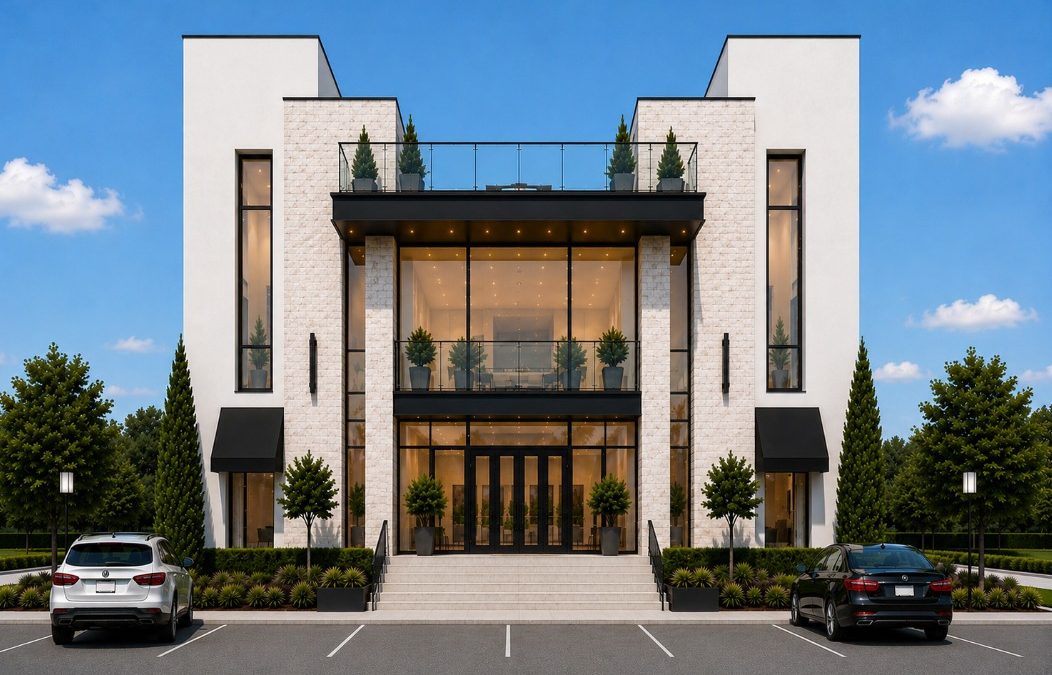
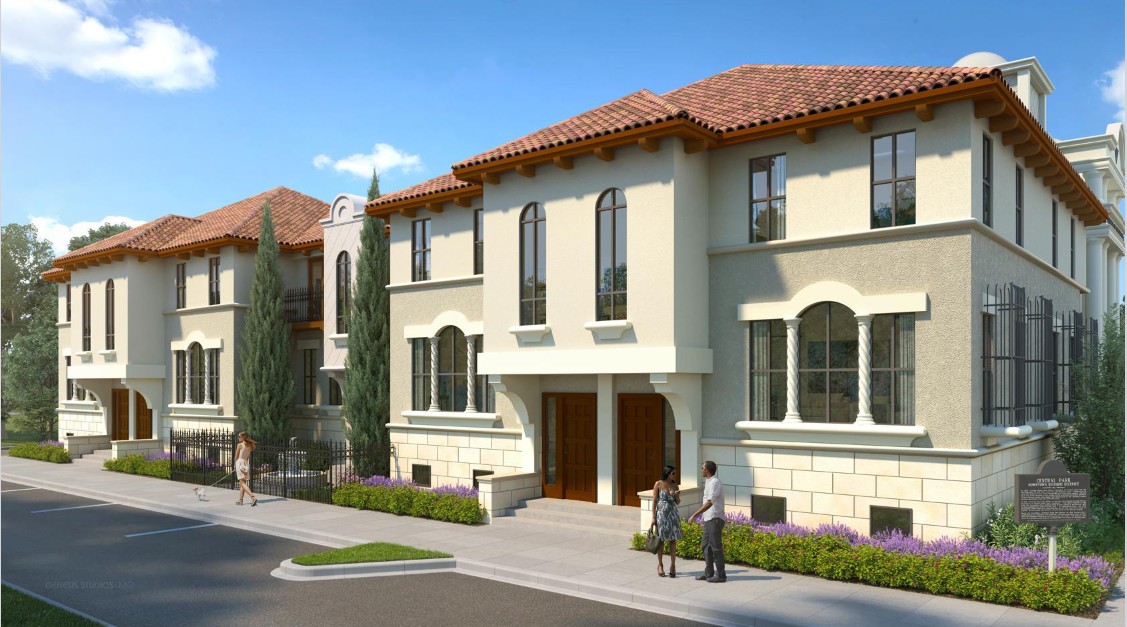
A rendering of what the proposed townhomes could look like.
Janet Robison, who lives near the Alfond Inn and said she has lived in her home on Lake Osceola for nearly 30 years, said she feared another big project in the neighborhood.
“I really enjoy living downtown,” she said. “Unfortunately, living there has been progressively more difficult, and people are always like, ‘Well, they can accept a little of this and all of that.’ But it’s adding up, all this accepting of things.”
But for some in the Commission Chambers, the logistical realities of development were outweighed by what they saw as a greater need — for Chabad to find a permanent home after it lost its Maitland building to a fire in 2024.
“Throughout this process, we’ve heard a sentiment that sounds reasonable on its face: We support a synagogue in Winter Park, just not at this location,” said Marni Stahlman, who attends the Chabad and is also chief executive of the Mental Health Association of Central Florida. “I ask you to think carefully about what those words mean in practice because there is a painful history behind telling Jewish people they’re welcome just somewhere else. This is not a hypothetical location. This is a property made possible through a donation that has been made available so that our congregation can finally a establish home.”
Ultimately, Ingram said she did not want to vote against the project and hoped that a resolution could come about to some of the concerns by the next vote. She joined Mayor Sheila DeCiccio and Commissioner Warren Lindsey, who both voted against the project previously, in a motion to table a decision until Oct. 28.
Commissioner Craig Russell also supported the delay after it became clear the development no longer had the votes to pass, but Russell said he preferred to go ahead and approve the project.
He expressed frustration at what he called “the cherry-picking and hole-poking of the engineer’s designs” when the commission can rely on city staff to vet projects and make sure they are built to code.
“The staff is going to keep them accountable, and they won’t get a [certificate of occupancy] if any of the stuff doesn’t work,” Russell said. “But none of us up here are architects or engineers.”
He also pointed to what he said was a critical fact that was being glossed over in the debate, which is that the new development will provide more parking than what exists currently for the El Cortez apartment buildings. The apartments would be razed at the corner of Morse Boulevard and Knowles Avenue just a block off Park Avenue to make way for the synagogue that includes a daycare and a rooftop patio for events and, separately, five townhomes.
Commissioner Kris Cruzada, the lone vote against tabling the matter, said he also wanted to see the project approved, noting the number of concessions Chabad made in order to satisfy concerns of neighbors and city officials. He said the Chabad proposal is less dense than a strictly residential proposal that could create up to 55 units on the lot.
“What they’re proposing is a drastic reduction in what could possibly be there,” Cruzada said. “… And here we have an applicant willing to bend over backwards to try and do this. They jumped through a lot of hoops to get here, you know, this is a difficult decision, and so in coming to a conclusion, I look at the conditions that they’re looking to go through, even to their potential detriment. The other churches don’t have caps to limit the number of kids that go there.”
Lindsey said he was struggling with the number of residents who argued for a need to limit new traffic and development.
“Everybody is in favor of the synagogue, and enthusiastically in favor of the synagogue,” he said. “And what we’re concerned about is pretty much every resident that lives in this neighborhood — I don’t know any of them that have not said this is going to create an incompatible and difficult traffic congestion problem that is going to be harmful to their enjoyment of their property. I mean, it’s been virtually unanimous.”
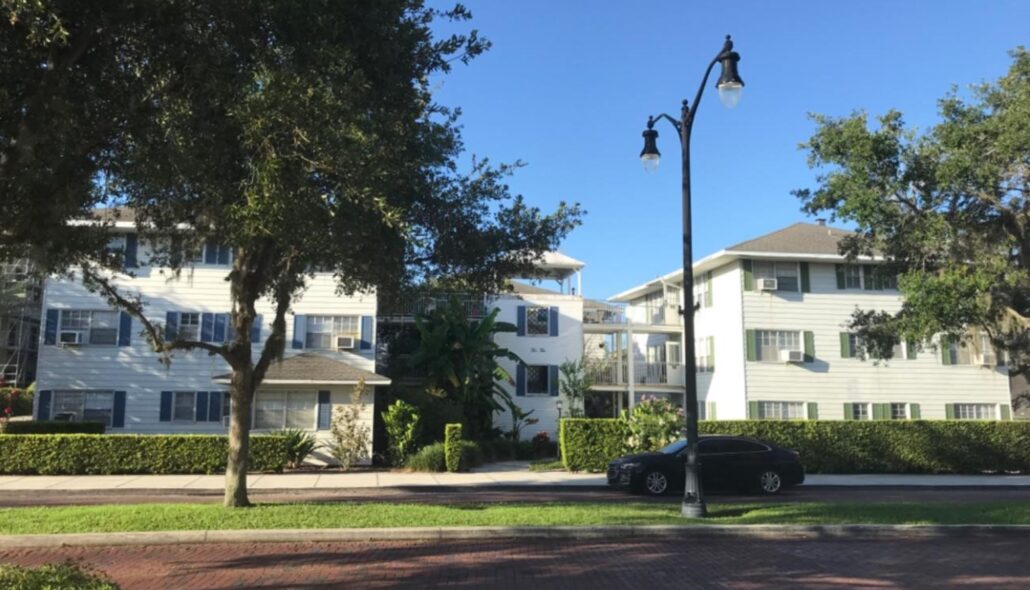
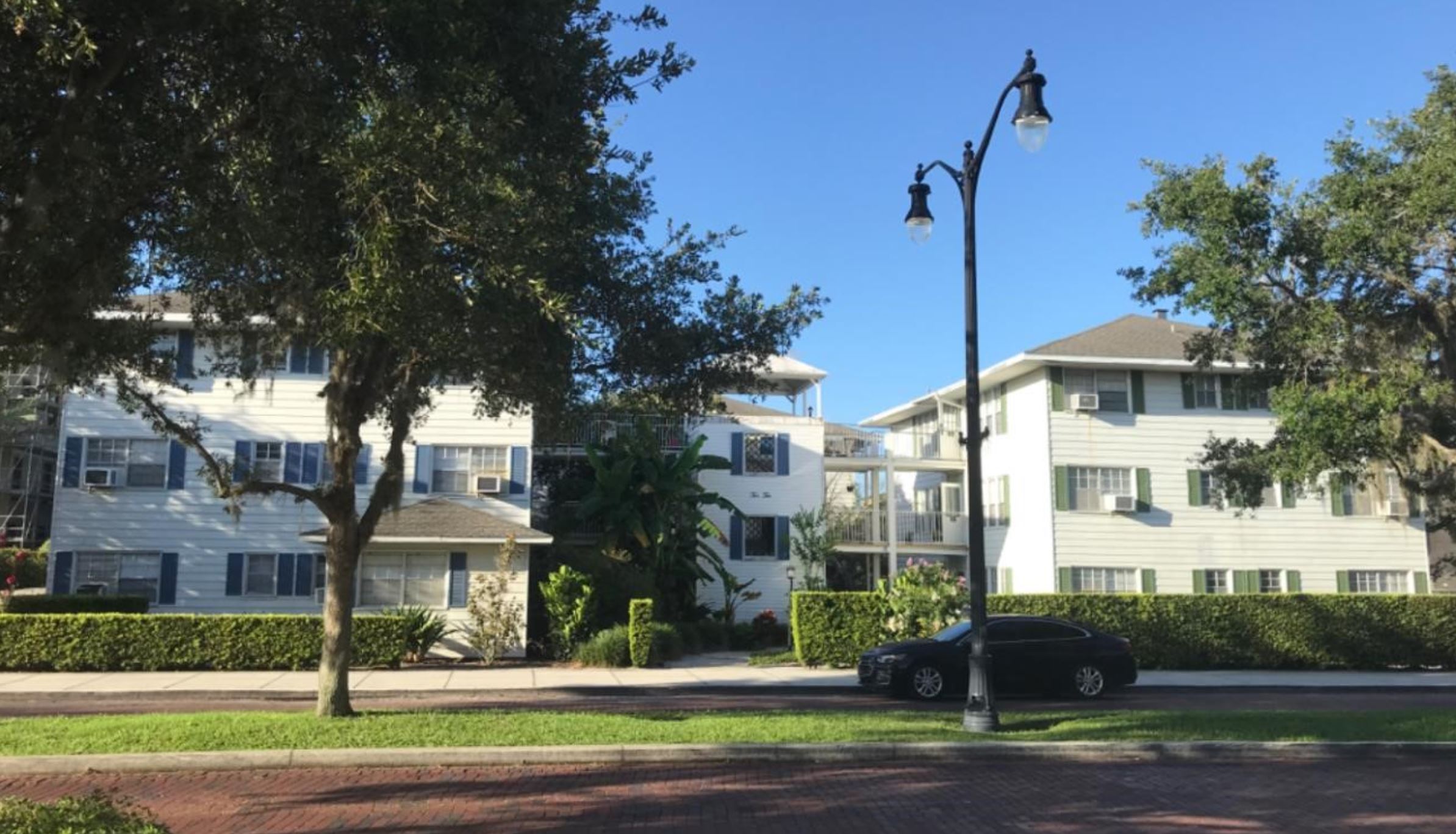
The El Cortez Apartments along Morse Boulevard.
Rabbi Dovid Dubov, who helps lead the Chabad, said the group agreed to even more conditions since the August vote such as limiting the days the rooftop patio can be rented to four per week and lowering the cap of children in the daycare from 60 to 50 as well as adding parking spots.
“Even since our last hearing, we have agreed to more, and I think the honest truth is that we have reached a point where we have extended ourselves as far as we reasonably can to make this work,” he said before the vote to table the proposal. “So, if everyone here supports a synagogue in our city, then I hope tonight we can turn that theoretical support into practical support. Theoretical support leaves us searching for a home, and practical support allows us to build one.”
DeCiccio suggested that more changes could occur to the proposal before the next vote at the end of October. She pointed to the site, which is 0.6 acres, and the amount of development the plans call for that would involve child pick-up and drop-off traffic for the daycare and catering trucks or other traffic for special events.
“No one can stand in that area and say it is not a mess now,” she said. “Plus, I am sure that the synagogue will be successful and is going to grow … For this proposal to work at this location, the developer and synagogue, I am feeling must scale back, perhaps by eliminating the townhomes or the rooftop venue or daycare. Or by limiting the project to just the synagogue alone. As proposed, the development is just too intensive for this site.”
WinterParkVoiceEditor@gmail.com
To comment or read comments from others, click here →
Recent Comments