by Beth Kassab | Oct 5, 2026 | Election, Environment, News
No Budget, No Power, No Paycheck: Who Wants to Serve on Orange's Soil and Water Board?
Three of five seats on the board charged with helping people keep their soil and water clean are on the Nov. 3 ballot
Oct. 5, 2026
By Beth Kassab
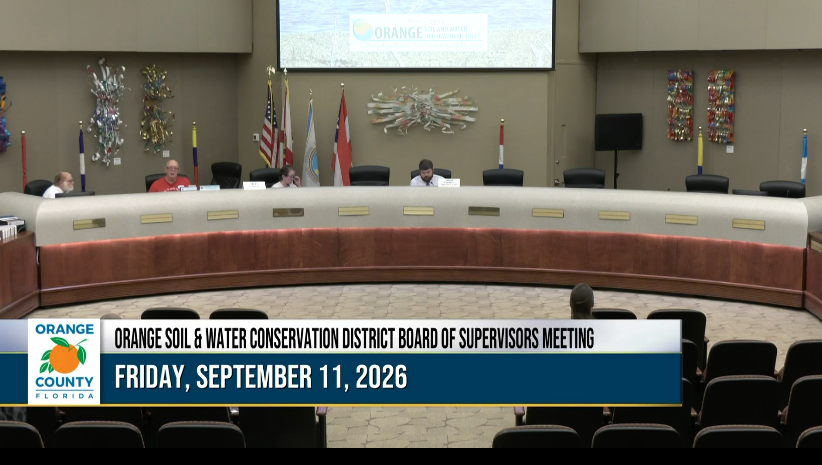
The five people elected to serve on the Orange County Soil and Water Conservation District don’t have a budget, don’t have any power, don’t receive a paycheck and lack even basic tools like official district email addresses.
When it comes to civic and government jobs, the soil and water board is as humble as it gets. PTA presidents and homeowners association board members get more glory because they typically have a budget to spend, some authority and perhaps receive a round of appreciative applause at an end-of-year banquet.
Yet for nearly 80 years, voters in Orange County have elected supervisors to a board that few understand or ever see.
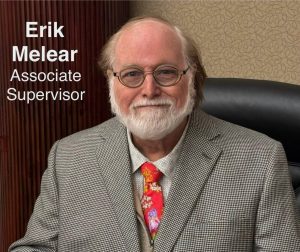
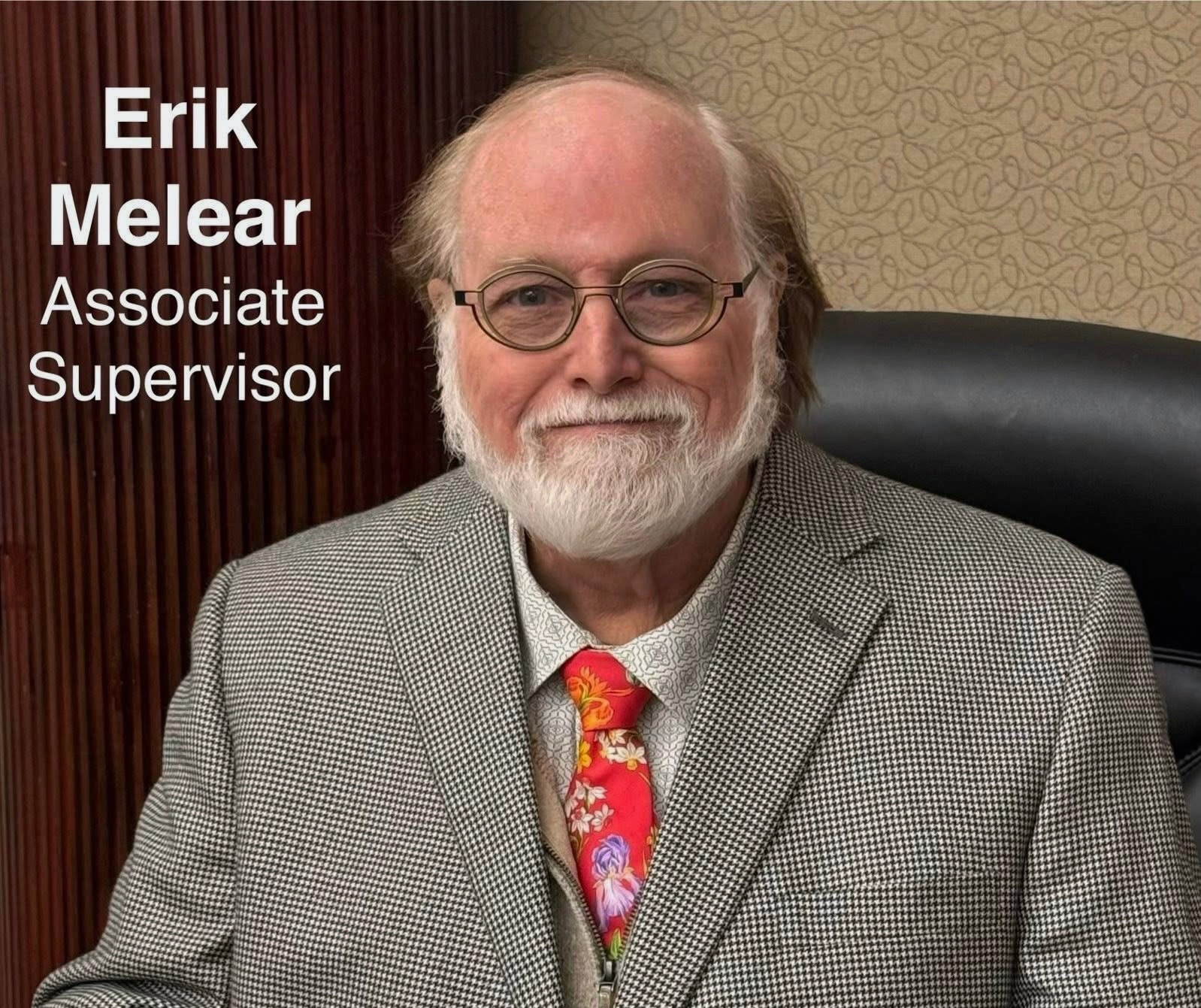
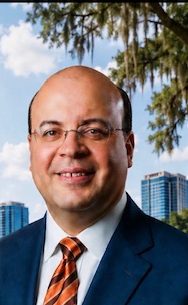
Erik Melear
Those campaigning this time around, like candidates before them, face a steep climb in convincing voters that their choices near the very bottom of the Nov. 3 ballot matter.
“Why do you even exist?” is a question Erik Melear, a candidate for Seat 3 on the district board, says he has heard plenty of times.
“But we do have a role to play,” he said. “Unfortunately, when you have no budget, no taxing authority and no other resources, it becomes very difficult to develop and do things.”
The state began creating soil and water districts across Florida as far back as the 1930s and charged them with carrying out local programs to conserve and protect soil, water and land for agricultural purposes.
In recent years, lawmakers in Tallahassee have tried a series of efforts to wholesale abolish the districts, though none has succeeded.
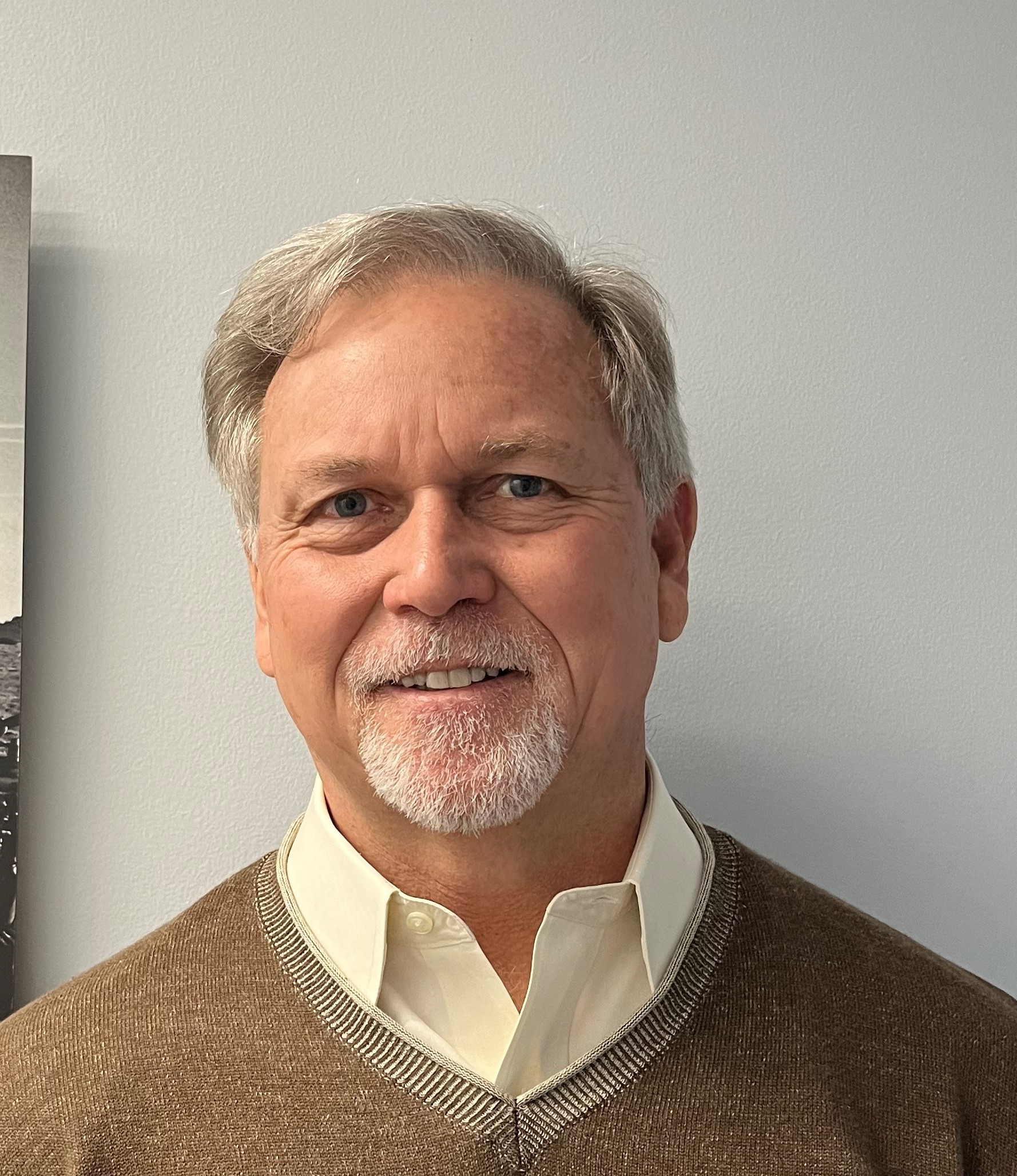
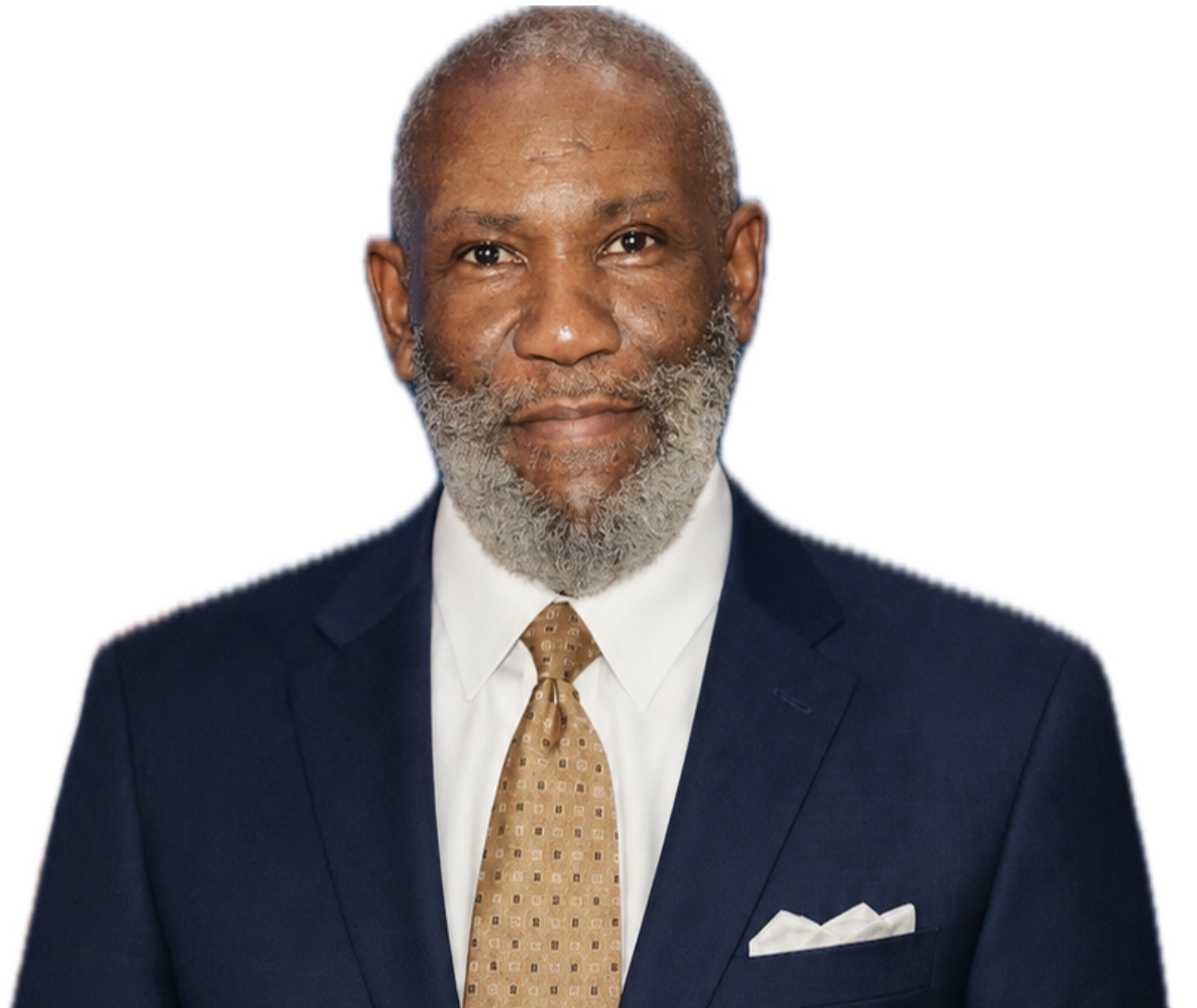
Chuck Drake, a geologist who specializes in potable water who previously served on the St. Johns River Water Management District, is also a candidate for Seat 3 and said he understands the push to get rid of the board if it isn’t effective.
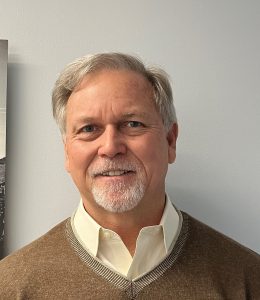
Chuck Drake
“I don’t like government for government’s sake,” he said, but at the same time as a native Central Floridian who has spent his more than 40-year career focused on groundwater, he said he understands the local challenges related to finding fresh supply and water quality.
Drake, who also serves as president of the American Institute of Professional Geologists, pointed to converting septic tanks to sewer as one specific way to add to the reclaimed water supply.
“I’d like to find out what they really do,” he said of the board. “And see if I can add any benefit to it,” noting there could be grant opportunities the previous board members have failed to seek.
Several candidates argued that a board focused on teaching residents best practices to maintain clean water, the local tree canopy and growing plants and food could surge back to relevance. They point to an age of AI data centers that consume water and power, soaring grocery prices and environmental challenges such as frequent named storms.
“If we can teach you how to conserve water, which saves money, how to keep soil healthy, which reduces landscaping costs, how to maintain a mature tree canopy that not only reduces your water bill, but also your power bill and can increase your property value …,” said Melear, who works as a senior project manager for the city of Orlando’s water utility. “Then the district board has the opportunity to be an ombudsman to communicate with government agencies and HOAs and community groups and serve as a nexus for information so they can make the prudent and wise decisions that affect all of us.”
Melear already volunteers as an associate supervisor for the district and is working to establish partnerships with Orange County Public Schools for community gardens and contests to engage students. He raised $500 from a labor union over the summer for his campaign and gave himself another $500.
Drake, like five out of the eight candidates running for the three open seats, isn’t raising campaign money.
The third candidate for Seat 3, which includes much of central Orange County, from Orlando, Edgewood and Belle Isle south to the county line, is Jose Antonio Rodriguez. He also has not raised any funds and did not respond to emails or phone calls seeking comment.
Jimm Middleton, a candidate for Seat 5, also sees untapped potential for the district.
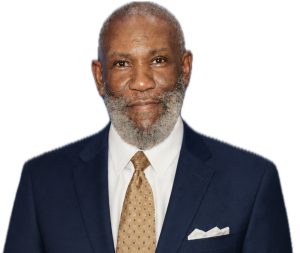
Jimm Middleton
“The board should have a strategic plan in place so they can get things done and, by golly, make announcements about what is going on,” said Middleton, an IT manager at Walt Disney World. “They are too quiet about it.”
He said he was first inspired to run for the board in 2016, unsuccessfully, after seeing the reports about lead in the water in Flint, Mich. He said he is driven by an interest in service and the environment and wants to help people in Central Florida learn to keep their water and soil clean.
“I do not see this as a springboard to run for a higher office,” he said. “I’m doing it solely for the purpose of helping out the community.”
Some board members have sought other offices without leaving much of a mark on the district. Multiple current candidates blame that inactivity as one reason behind the weak state of the board today, though its biggest problem is the absence of a regular source of funding.
Daisy Morales, who was elected to the district board in 2014, missed nearly a year of meetings in 2019 and 2020, which other board members said made it difficult to conduct business. She ran for a state House seat and won in 2020 but lost re-election. This year, she ran for House District 43 but lost the Democratic primary to Samuel Vilchez Santiago.
Middleton isn’t raising any money for his campaign. Zack Green, the other candidate for Seat 5, which includes Maitland, Winter Park and the northeast rural portion of the county, did not respond to requests for comment and also has not reported any financial contributions.
“I’m doing it the old-fashioned way,” Middleton said. “I’m talking to people. I’m posting on social media. It doesn’t make sense to ask people to donate money to this campaign when the current board doesn’t have any money. If you’re going to donate, donate to the board itself.”
According to the district’s current budget plan, it will hold a fundraiser in November, an attempt to raise the board’s profile and build a cash balance that is starting from nearly zero. The district projects about $3,000 in cash and nearly $1,000 in expenses, including renting a post office box, maintaining its rudimentary website and buying supplies for outreach and education events, such as handouts and volunteer shirts.
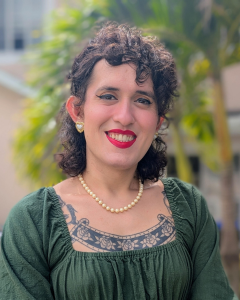
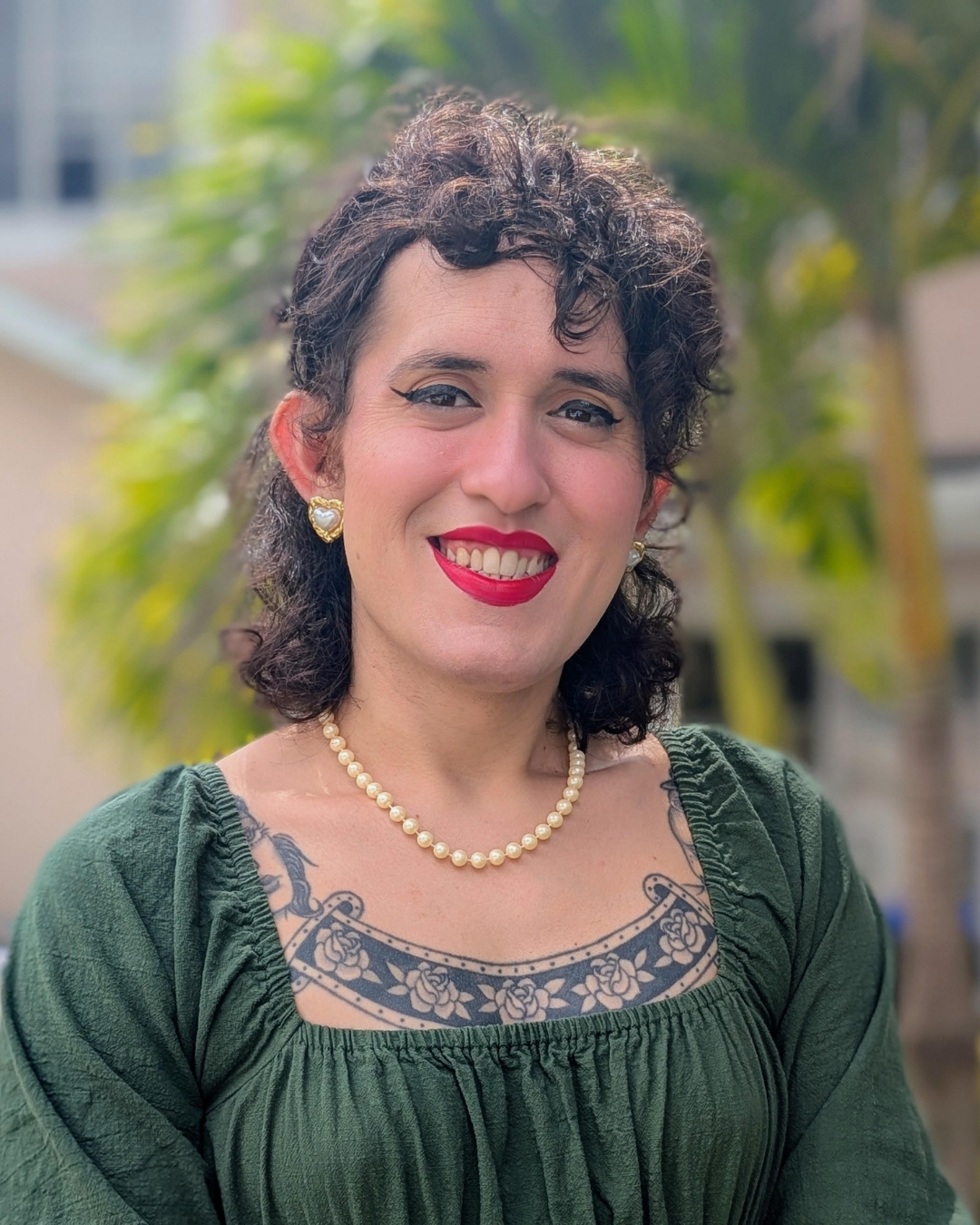
Quinnie Perez
Its most critical budget item is a donation in the form of space and services from Orange County government valued at about $11,000. The donation includes a meeting room for the board, broadcasts of its meetings on OrangeTV and some legal services.
The board members use their personal email addresses to conduct business and, without a staff, volunteer for different roles such as acting as treasurer, keeping records, sending out agendas and minutes and updating the website and Facebook page.
Quinnie Perez, a candidate for Seat 1, is the only candidate who has raised substantial funds: about $4,500, more than the district itself currently has to spend.
She said she wants to bring her experience on other political campaigns and in community organizing to the district to jumpstart awareness of its purpose.
Perez describes herself as the daughter of Mexican farmworkers. She grew up in Ocala and now works in the medical cannabis industry.
“It doesn’t matter if you are running for soil and water or city council or something else, there’s a lot going on with our environment and it’s very important we are advocating for these issues,” she said. “It’s the kind of position that you can make your own, and that’s what I plan on doing by holding regular office hours, even if it’s in the library, and showing people how they can access grants that are available to them.”
In addition to running for an office few voters know about, Perez says she has faced challenges as a transgender woman who has sometimes been met with hostility online.
“I do get stares,” she said. “I always direct them back to the policy. I’ve gotten more harassment on social media than anywhere else … it can work to my advantage because I stand out. It would be a historic race if I’m elected.”
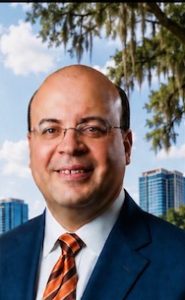
Vicente Perez Carreno
Perez would be the first openly transgender person elected in Florida if she is successful in November.
Vicente Rafael Perez Carreno, who is also running for Seat 1 and serves as the district’s current volunteer treasurer, said he believes in the mission of the district and wants to help it raise more funds through private donors, partnerships and grants.
As an immigration and employment lawyer who also serves as legal director for Casa de Venezuela in Orlando, he said he is driven to run by his passion for environmental issues and an appreciation for the role agriculture plays in the local and state economy.
“One of our greatest challenges is public awareness,” Perez Carreno said of the district, noting that the group must do more to foster collaborations with other organizations such as the school district and recruit more volunteers willing to spread its message across the urban and more rural areas of the county.
Doug Sahr, the third candidate for Seat 1, which covers the southwest portion of the county from Oakland through Winter Garden and Windermere down to Lake Buena Vista, did not return calls seeking comment.
Perez Carreno has joined with Melear and Middleton to run as an unofficial slate for the three seats up for grabs this year. They call themselves “Team VEJ,” for their first initials.
For voters who live in the areas covered by Seats 1, 3 and 5, the soil and water candidates will appear nearly last on their ballots, just above the state constitutional amendments.
None of the candidates has the name recognition, dollars or buzz of those at the top of the ballot for U.S. Senate, governor or even Amendment 3, which would increase homestead property tax exemptions. But some are choosing to count their wins one voter at a time, particularly as mail voting has already started and early voting is set to begin Oct. 19.
Melear, for example, said he was recently at an Einstein Bros. Bagels working on a mock-up of a campaign sign when a woman sat down next to him and happened to notice the name.
“She said, ‘Oh, I just voted for him,’ and I said, ‘Oh, I happen to be him,'” Melear recounted. “I was almost moved to tears.”
WinterParkVoiceEditor@gmail.com
To comment or read comments from others, click here →
by Beth Kassab | Aug 21, 2026 | Chain of Lakes, Environment, News
How Healthy is Lake Virginia? New Buoy Sends Real-Time Data
The project from the Freshwater Alliance at Rollins will help scientists and average lake goers know more about the quality of the Winter Park Chain of Lakes
Aug. 21, 2026
By Beth Kassab
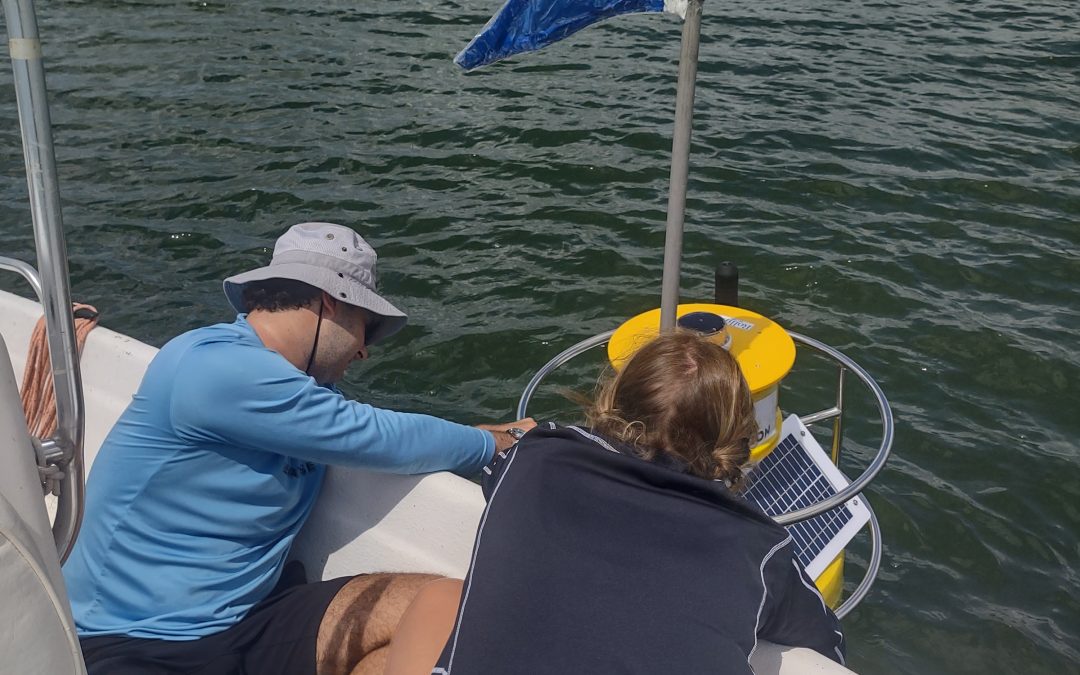
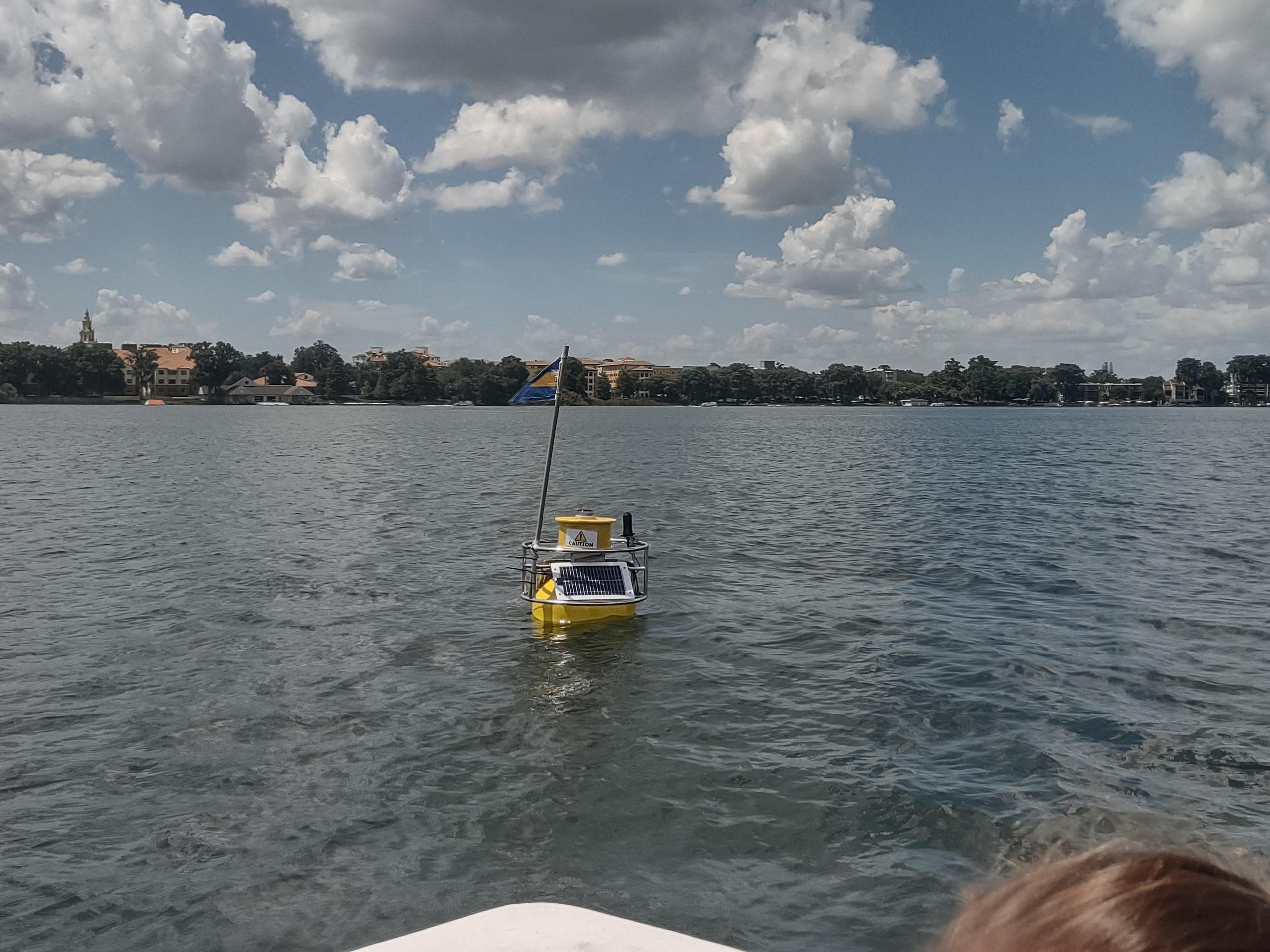
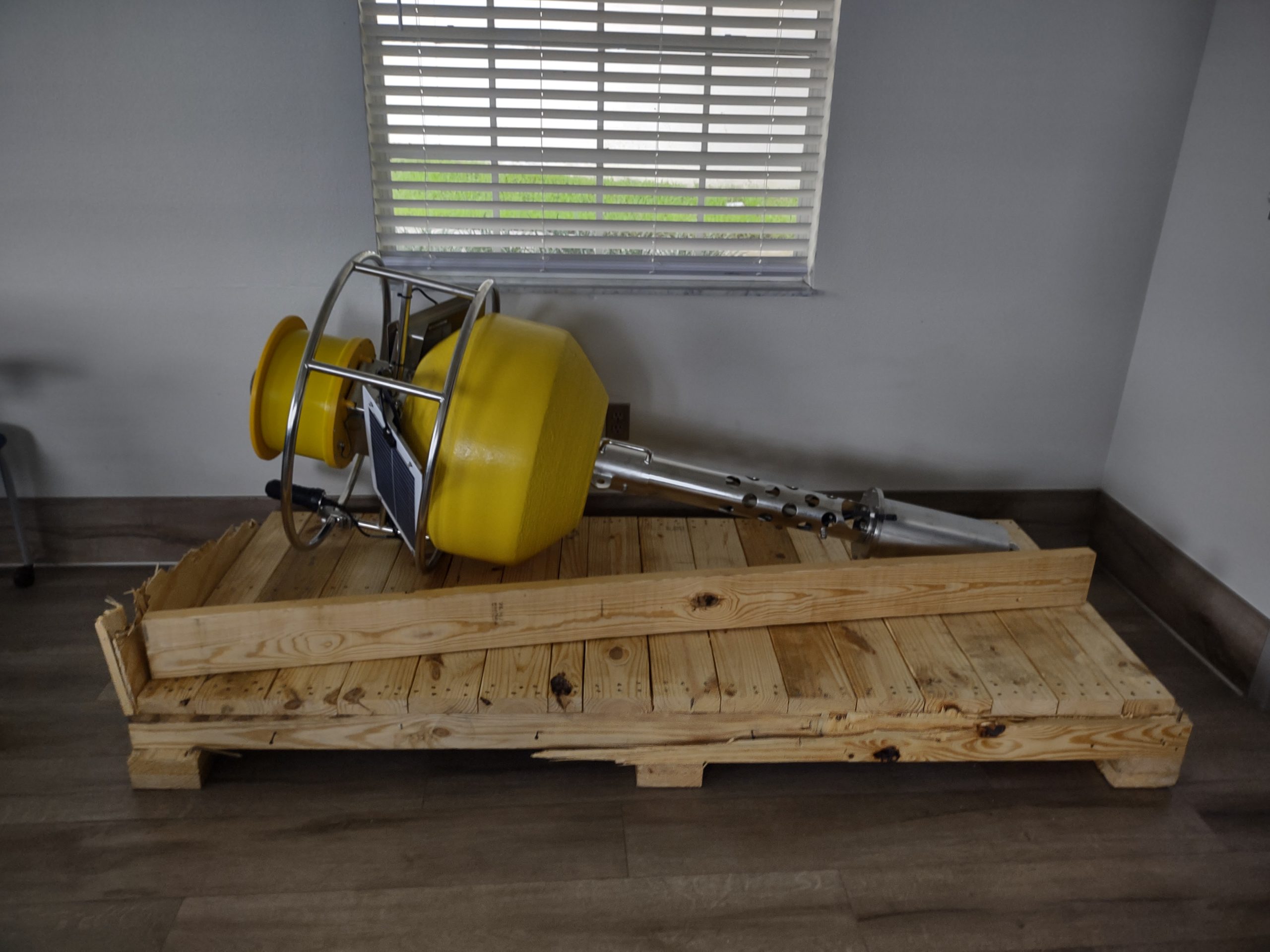
Boaters and paddleboarders may have noticed a new yellow buoy floating near the center of Lake Virginia and hoisting a Rollins College flag.
But the addition isn’t an average buoy warning of a speed zone or marking swimming boundaries.
This buoy is a first-of-its-kind for the lake to monitor water quality in real time.
Operated by the Freshwater Alliance at Rollins, the buoy is collecting data around the clock related to water temperature, pH, dissolved oxygen, algae concentrations and other factors.
Eventually, all of that data will be crunched and coded into an easy-to-use dashboard for water-goers or anyone who wants to know about the health of the lake as well as researchers like Rollins’ Emily Nodine, who is interested in understanding environmental trends and how to best manage the health of the Winter Park Chain of Lakes.
“Over time we hope to develop a livestream of data that goes into a platform that will be publicly available,” said Nodine, chairwoman of Environmental Studies and faculty director of the Freshwater Alliance.
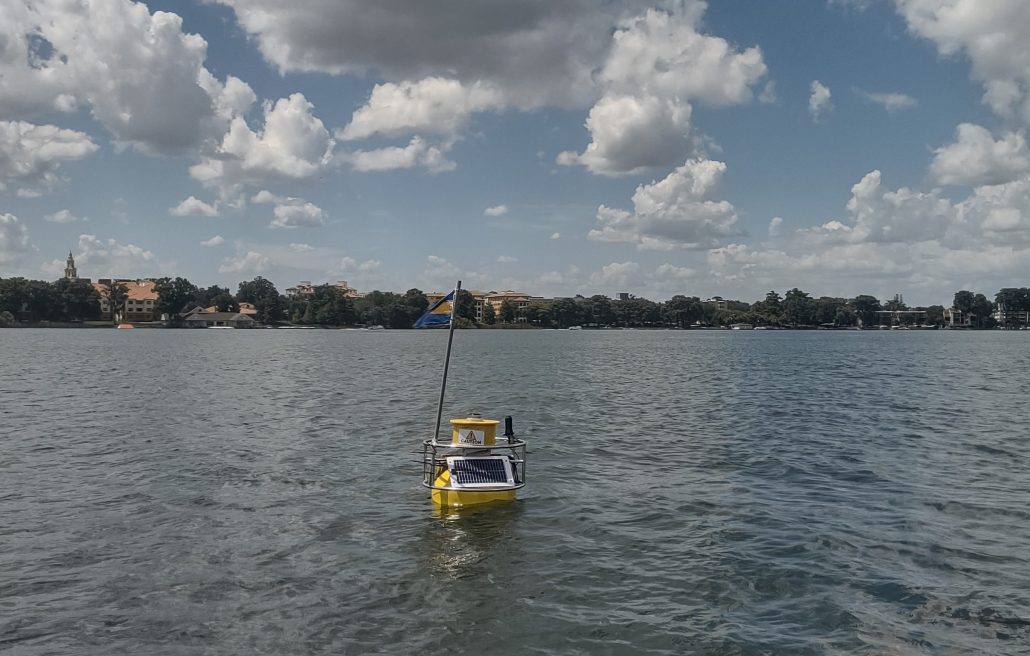
A view of the new buoy on Lake Virginia. (Photos courtesy of Rollins College)
In recent years, the city of Winter Park has closed the Chain of Lakes related to hurricane and storm activity and closed individual sections such as swimming off Dinky Dock because of algae blooms.
The buoy, which cost about $50,000 and was funded through a private donation to the alliance from the Elizabeth Morse Genius Foundation, will provide consistent sampling every 15 minutes and allow for more analysis of trends and future projections than the once per month water sampling currently done by the state and the city.
The buoy is floating near the deepest area of the lake — about 20 feet — and collects samples from about a meter under the surface to near the lake bottom. Temperature measurements from different depths will help Nodine’s team also understand how the water is moving through the lake.
And while the buoy is collecting samples from Lake Virginia on the south end of the Winter Park Chain, the lakes are connected both above and below ground and the data could provide clues about the entire system of water bodies. The chain of lakes is crucial to life in Winter Park where everything from real estate values to weekend skiers to Rollins crew and sailing teams to visitors on the Scenic Boat Tour rely on the health of the water.
“Someone who lives on Lake Osceola or Lake Maitland or even Lake Killarney, whatever Lake Virginia is doing, your lake is probably doing similar stuff,” Nodine said.
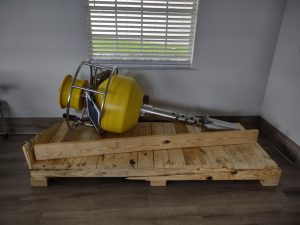
A view of the buoy before it was deployed.
The buoy is anchored near the center of Lake Virginia (coordinates 28° 35′ 15.45″ N, 81° 20′ 41.07″ W). While it will remain in a fixed location, it is not permanently installed and may occasionally be removed for maintenance or future research needs, according to a Rollins advisory.
It is equipped with safety features, including a flashing light and reflective markings. Boaters and other lake users are asked to be aware of the buoy’s presence and maintain a safe distance when navigating nearby, the advisory said.
WinterParkVoiceEditor@gmail.com
To comment or read comments from others, click here →
by Beth Kassab | Jul 3, 2026 | City Commission, Environment, News, Police and Public Safety
Gov. Ron DeSantis Vetoes Winter Park Police Request but Allows Mead Garden Project
Sen. Jason Brodeur said the decisions follow the governor’s preference for regional impact over budget items that he may view as favoring one city
July 3, 2026
By Gabrielle Russon
The city of Winter Park scored an environmental victory and took a public safety hit as Gov. Ron DeSantis signed the new $117.6 billion state budget this week.
DeSantis vetoed $62,500 for Winter Park Police to buy more security barriers to protect crowds at outdoor public events. Meanwhile, $500,000 escaped DeSantis’ veto pen to fund a water clean-up project at Mead Garden that will leave an impact on the greater region’s environment.
“We were disappointed to learn the city’s Police Department Vehicle Threat Mitigation project was included as one of the $1.7 billion projects vetoed by the Governor,” Winter Park Mayor Sheila DeCiccio said in a statement. “We are, however, grateful for the approval of the Mead Garden Regional Nutrient Reduction grant that remained funded at $500,000. This grant will meaningfully support the city’s efforts to regionally improve water quality throughout the interconnected lake systems of Winter Park and Maitland, benefiting both Orange and Seminole counties.”
State Sen. Jason Brodeur, R-Sanford, who sponsored both funding requests on the Senate side, elaborated why he thought the Governor vetoed the $62,500.
“I’m disappointed for the community, but I think it speaks to the Governor’s focus on truly regional needs over a request by a single municipality, favoring projects that benefit multiple municipalities, like a watershed project. It’s not always the case but that is what was portrayed to me,” Brodeur said in a statement.
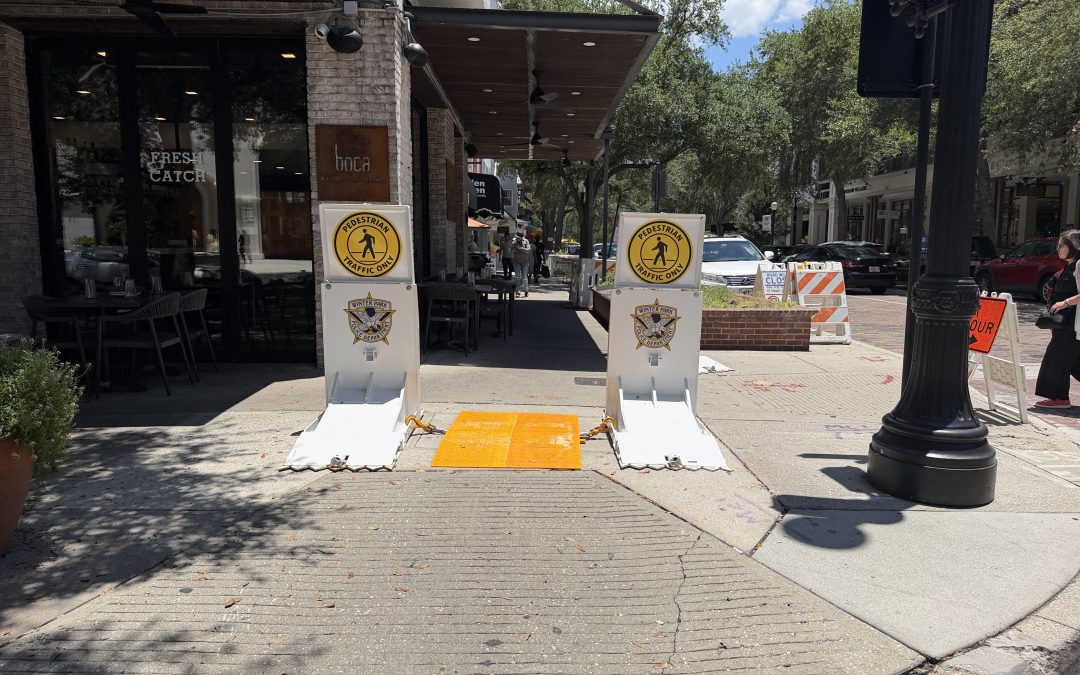
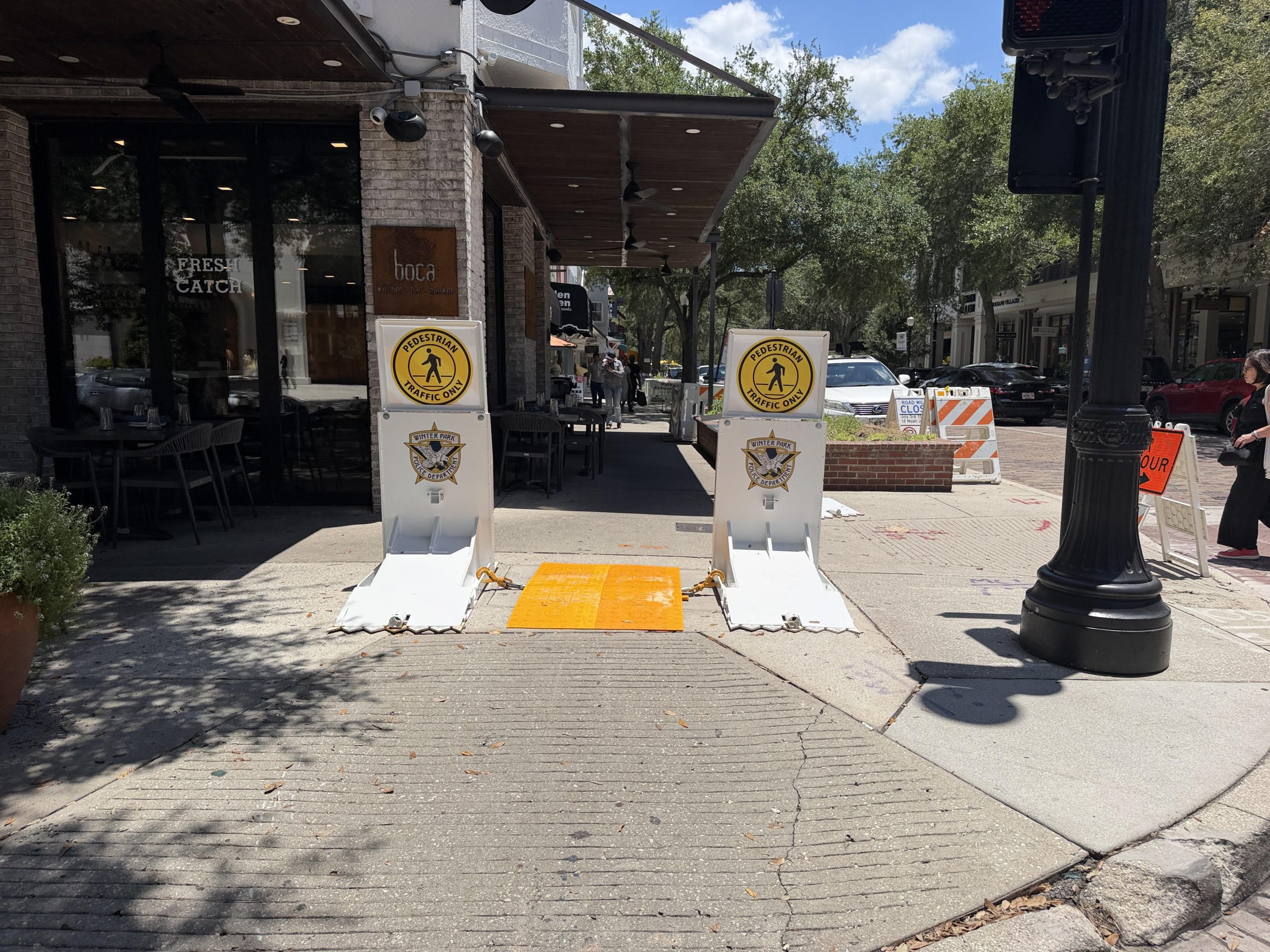
Last year, Winter Park Police previously received $62,500 from the state and bought security barriers — a trailer with eight barriers and a gate — that will protect Watermelon 5K runners and Fourth of July event-goers this weekend.
Winter Park Police Chief Tim Volkerson said he had been hopeful to receive the same amount of money this year to buy more barricades.
“We will continue to seek alternative funding opportunities to acquire equipment to enhance community safety for our public events,” Volkerson said in a statement. “This is a continuous process as technology and the landscape of public safety evolves.
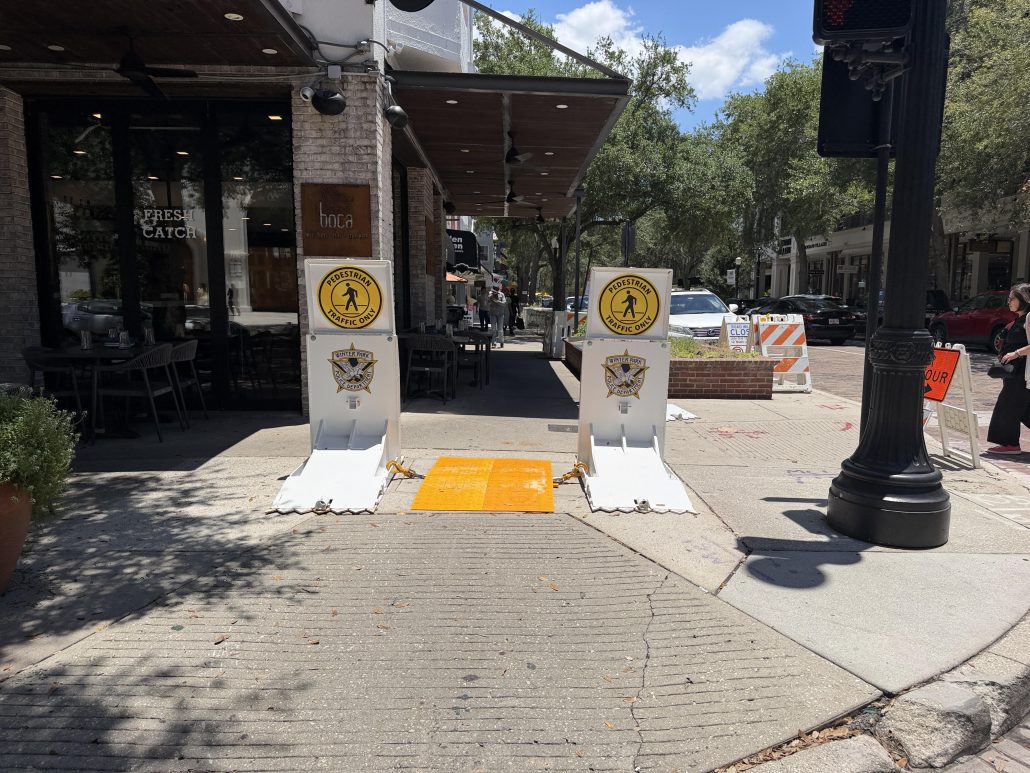
Barriers purchased by Winter Park Police last year help protect pedestrians and businesses along Park Avenue during special events. (Photo courtesy of Winter Park Police)
Winter Park City Commissioner Warren Lindsey shared the same sentiment that he was dismayed about the police funding veto.
“It was a very practical and necessary security protection that would really benefit thousands of citizens, not just Winter Park citizens, but citizens throughout Central Florida that attend different concerts and events around and in Central Park,’ Lindsey said in an interview. “Anything that we can do to enhance their protection is just a win for everybody and it helps provide peace of mind.”
Lindsey also said he was thankful DeSantis did not axe the $500,000 to filter excessive nutrients from Alice’s Pond in Mead Garden.
“It’s really one of our crown jewels of Winter Park,’ Lindsey said of Mead Garden.
He thanked Brodeur and state Rep. Anna Eskamani, D-Orlando, who had sponsored the funding in a bipartisan effort.
DeSantis vetoed about half of Eskamani’s projects, according to Eskamani, who is often a fierce critic of the governor.
Eskamani said she was grateful the Mead Garden funding survived, calling it a crucial non-partisan issue to protect the environment. She had also been optimistic it would advance because DeSantis himself has campaigned on water quality through his term, she said.
“This is going to be a really important investment,” Eskamani said. “All of our bodies of water are interconnected, and when we’re able to create improvements with one of these major parks, it absolutely will impact the entire community.”
Ahead of the DeSantis vetoes, the Florida TaxWatch criticized state lawmakers for sponsoring $380 million worth of water projects in the state budget which the group dubbed as “budget turkeys” in its annual report. The group said its opposition wasn’t targeting the value of the water projects but the budget process itself since the lawmakers-supported projects circumvented a formal, competitive review.
When asked about Florida TaxWatch’s criticism, Eskamani said, “I definitely think there can always be more transparency in the state budget.”
She added, “With that said, water projects tend to be some of the most important projects with a lot of merit” and argued Florida needs more grants for inland communities to clean up their lakes and rivers.
WinterParkVoiceEditor@gmail.com
To comment or read comments from others, click here →
by Beth Kassab | Jun 23, 2026 | City Commission, Environment, News, Taxes, Utilities
Winter Park Residents to Pay More for Electricity and Water in Proposed Budget
Higher electric bills for Winter Park are likely to be a trend in the coming years, according to projections
June 23, 2026
By Beth Kassab
Winter Park residents and business owners will pay more for water and electricity under budgets approved by the city’s Utilities Advisory Board on Tuesday.
The proposed budgets, which require ultimate approval by the City Commission by the end of the summer, call for the non-fuel portion of electric rates to increase 7.7% beginning at the start of the new financial year in October while water rates will increase 4.46%.
Translated to dollars on utility bills, Winter Park residents who use about 4,000 gallons of water per month pay roughly $54 today and that would go up to about $57 (an estimated $2.49 increase), still below the regional average of just higher than $60.
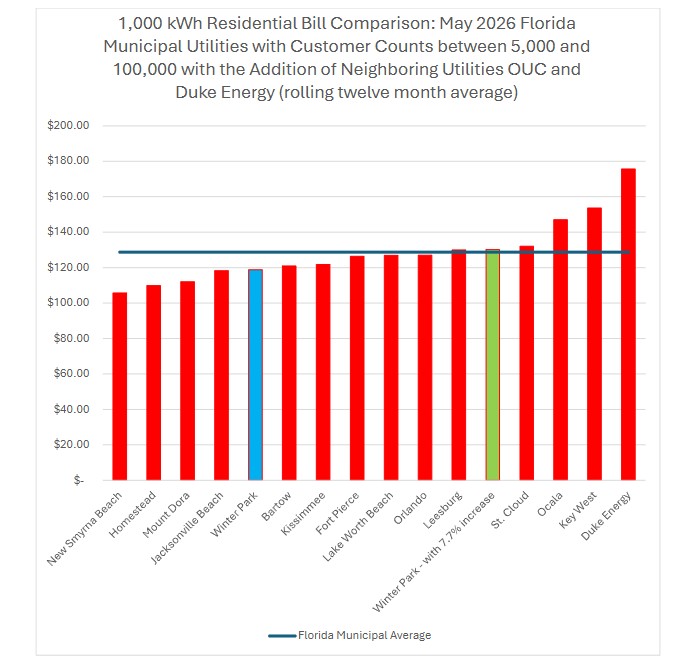
But for electricity, the price change would put Winter Park above the average for municipal utilities in Florida with fewer than 100,000 customers.
Winter Park would become the fourth most expensive with rates at just under $141 or so per 1,000 kilowatt hours or an increase of about $7. The rate today is just under $134 and is 10th most expensive.
The proposal follows a 4.8% increase residents saw this year over 2025 in their total bills, including a 7.44% increase in the non-fuel portion of the bill.
Higher rates don’t just support the utility, but also help prop up the city’s general fund responsible for paying for police, fire, parks and other essential services. The city collects a 6% franchise fee on electric bills so when rates go up so does the amount of dollars transferred to the general fund. The proposed budget for 2027 shows a $256,000 increase to $3.2 million transferred to the general fund.
In the case of both the city’s water and electric utility the cost of providing services is going up faster than the city’s revenues, Finance Director Wes Hamil told the advisory board.
For about 20 years, the city has had an ordinance that called for water rate increases to mirror the increase allowed by the Florida Public Service Commission, which this year is 2.46%
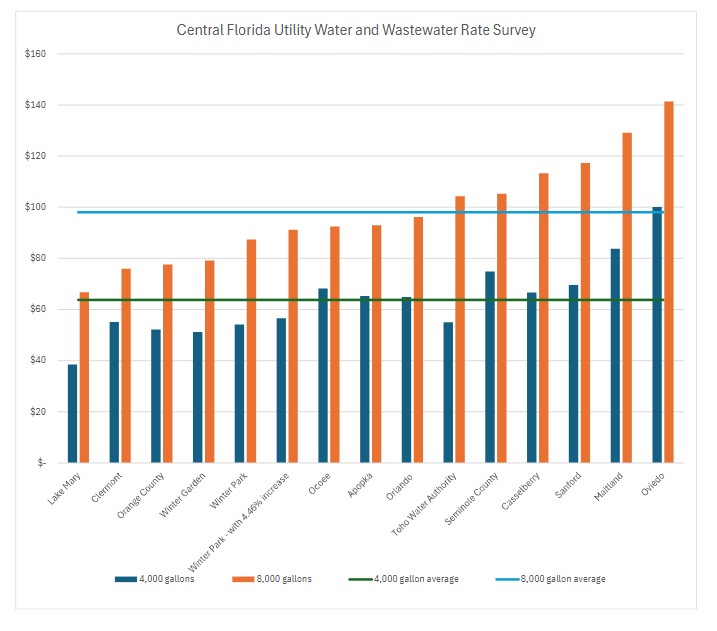
“However, those rates have not been adequate to cover the cost increases being experienced,” read Hamil’s presentation to the board.
The picture is even more stark on the electric side where projections show a series of rate increases will be needed in the coming years. Higher rates are necessary, according to the documents, to keep up with the rising cost of providing power to the city and projects such as undergrounding electric lines and paying off the debt the city took on to purchase the utility from Duke Energy (then Progress Energy) 20 years ago.
Winter Park has enjoyed years of providing some of the lowest costs in the region.
“It’s a little unrealistic to expect that will always be the case because we’re doing things others aren’t,” Hamil said, pointing to debt from the purchase and undergrounding.
By 2030, there is projected to be a nearly $10 million gap between the amount of revenue brought in by rates and the amount that will be required to run the operation, according to a preliminary cost of service study discussed by the board on Tuesday.
The study projected that rates will need to rise an average of 6.3% for each of the next five years to balance the budget.
The city of Winter Park doesn’t generate it’s own power and relies on contracts from other utilities like OUC and Florida Municipal Power Association.
The OUC contract expires at the end of this year and FMPA ends the following year. Costs are expected to go up as those contracts are renegotiated.
Also up for debate will be the city’s net metering policy or how it pays customers who generate power through their own rooftop solar panels.
More than 200 customers do so in Winter Park and that number has been rising in recent years, according to the presentation.
At issue is whether Winter Park will continue to credit them at what is known as the “retail rate” or the lower “wholesale avoided energy cost” or some combination of the two.
Budget hearings will begin at the City Commission next month.
Update: A previous version of this story has been updated to reflect more exact numbers provided by the city of Winter Park of electric bill averages before and after the proposed rate increase.
WinterParkVoiceEditor@gmail.com
To comment or read comments from others, click here →
Recent Comments