
by Concerned Reader | Feb 9, 2021 | News
Special Commission Meeting Called Over Chamber Flap
1:00 p.m. — Thursday, February 11, 2021
by Anne Mooney / February 9, 2021
After cancelling the February 10 regular Commission meeting, because there would not be a three-member quorum physically present, a Special Meeting of the Commission has been scheduled for Thursday, February 11 at 1:00 pm at the WP Community Center at 721 New England Avenue. Virtual meeting attendance is also available by clicking https://cityofwinterpark.org/government/live-broadcasts/
This will be a Special Commission meeting. Commissioners can vote to take action, and public comment will be taken.
The Commission will discuss events from the February 5 debate between mayoral candidates at the Winter Park Chamber of Commerce and whether to take action.
Loaded Question
At issue is the final debate question posed to the candidates, in which Commissioners were accused of collusion:
“It was dismaying to see the members of the city commission blatantly colluding to spike the Henderson project, which was approved by P&Z [Planning & Zoning] and was supported by the residents of Winter Park three to one over those opposing the project. As mayor, how would you ensure the commission enacts the wishes of the majority of WP residents, not just the agenda of an entitled few?”
Mayoral candidate Mayor Phil Anderson expressed his own dismay at the content of the question and stated his objection to the decision to air the question to Chamber President Betsy Gardner Eckbert.
After a brief burst of social media activity, each with its own version of events, the Anderson campaign and the WP Chamber of Commerce Board of Directors issued the following joint statement.
Joint statement issued by WP Chamber and Anderson Campaign
“Following an unfortunate incident at the Winter Park Chamber of Commerce Mayoral Candidate Forum this past Friday, The Chamber and Phil Anderson’s campaign have come to terms with the matter and look forward to placing it behind us in an effort to bring our community together. The Chamber thanks Mr. Anderson and Ms. Sprinkel, the two mayoral candidates, for participating in the Forum.”
To comment or read comments from others, click here →

by Concerned Reader | Feb 2, 2021 | News, Opinion, Zoning and Development
In Answer to ‘A Letter to Winter Park Residents’
Editor's Note: Articles written by citizens reflect their own opinions and not the views of the Winter Park Voice.
Guest Columnist Peter Gottfried / February 2, 2021
 Peter Weldon, a former Commissioner, recently wrote to “fellow Winter Park Residents” outlining his opposition to Phil Anderson’s candidacy for Mayor. Mr. Weldon, as many of you know, ran for City Commission three times. He was elected to one term 2016-2019. He lost in 2008 to Phil Anderson, and again in 2019 to Todd Weaver.
Questionable arguments
In his recent letter, Mr. Weldon seeks to lay what he sees as the current Commission’s shortcomings at Phil Anderson’s door and to question Anderson’s character in the process. These questionable arguments deserve closer examination.
First, Weldon claims, “the actions of Commission members Weaver, Sullivan and DeCiccio bring Phil Anderson’s judgment into question.” If you think about that even for a minute, you’ll realize it’s a bit of a stretch.
Weldon’s assertions
Mr. Weldon wants you to believe that the current Commission . . .
- “Voted to increase the property tax rate 11.5%.”
FALSE: The tax rate (millage) did not change in 2021 and has not changed for 13 years.
- “Voted to “rescind” the Orange Avenue Overlay, changing our Comprehensive Plan in violation of our laws, resulting in legal action against the city (case number: 2020-CA-004388-O).ci”
MISLEADING: Absolutely no laws were violated. In fact, the judge recently granted the City’s motion to dismiss the Orange Avenue Overlay developers’ lawsuits against the City.
- “Spent several hundred thousand dollars for consultants for additional Orange Avenue traffic studies and to plan a design they (the Commission) like for the City owned Progress Point property on Orange Avenue. Their plan has no professional planning input, and they offer no strategic justification for it, nor clarify who they expect will pay for implementation (you?).”
MISLEADING: This statement is very misleading. Professional planning input has been provided at every step through contracts to professional architectural and engineering firms; in addition, many professionals have donated their time, free of cost, to advise the Commissioners during their many work sessions.
- “Commissioners Sullivan and DeCiccio recently voted to spend $2,800,000 from our emergency reserves outside the annual budget process with no planning and they tried to hide the expense by “borrowing” the money from our water and sewer emergency reserves.”
MISLEADING: This is again misleading. First, there was no attempt to ‘hide’ the expense, it was openly discussed and had the support of Mayor Leary. The funds the current commission plans to borrow will be replenished with funds made available from soon-to-be retired bonds for the Public Safety Building. There is some irony in the fact that Weldon supports a mayoral candidate who gave $1million of taxpayer money to the Dr. Phillips Center for the Arts as a “donation.” No other City in central Florida, except the center’s home city of Orlando, gave a penny.
- “Insisted on a “back yard chicken” ordinance. Do you want chickens in your neighborhood?”
TRUE: The chicken ordinance was limited to 25 permits on a limited two-year trial basis. So far, two permits have been granted, a third application is still pending, but as yet, we still have no chickens. As a self-proclaimed property rights guy, Mr. Weldon might have been expected to support such a measure. Backyard chickens are already approved in Orange County, Maitland and Orlando, and all three jurisdictions report no problems so far.
- “Voted to diminish our city’s sovereignty by committing Winter Park’s support to an unaccountable state mandated planning agency.”
FALSE: This regional planning initiative does not in any way affect our sovereignty. It is a Memorandum of Understanding with the East Central Florida Regional Planning Council. It requires no City funding, only cooperative planning efforts. Considering we have approximately 1,000 new residents coming into central Florida every week, why wouldn’t it be prudent to ask for regional planning assistance, especially if it is free? Wouldn’t we want to be a part of the regional planning that directly affects our traffic, roads and water resources?
- “They are now considering spending millions of dollars to buy land on Fairbanks to ‘improve traffic’ without having any idea whether traffic will improve or not.”
MISLEADING: This from the same person who voted to sell City-owned land that was adjacent not only to Fairbanks Avenue but also to Martin Luther King Park. We all know Fairbanks traffic needs improvement, and professional traffic engineering firms are actively assisting the current Commission in their planning efforts.
To comment or read comments from others, click here →
by Concerned Reader | Sep 10, 2020 | Custom Author, News, Taxes
FY 2021 Budget Passes First Reading
Millage Rate Unchanged
Chickens Squeak Through
by Anne Mooney / September 10, 2020
Chickens will come home to roost
Despite emails indicating Winter Park was split down the middle on the backyard chicken question, the ordinance creating a two-year backyard chicken pilot program narrowly squeaked through its second and final reading on a 3-2 vote – with a few amendments.
Among the raft of amendments was reduction of maximum coop height to six feet, requirement for a fence to obscure the coop from neighbors and a requirement to obtain written permission from all neighbors whose property abuts the property with the chickens. A provision for 48-hour warning before inspections was removed, allowing Code Enforcement to make unannounced spot inspections. Coops can be in backyards only, not side yards. Chicken owners who receive repeated complaints will face escalating fines, and a “three-strikes-you’re-out” rule will remove the chicken owner from the program on the third complaint.
None of the current Commissioners will apply to keep backyard chickens.
Commission passes 2021 Budget, millage rate on First Reading
The FY 2021 Budget passed on a 5-0 vote with only one amendment, proposed by Commissioner Sheila DeCiccio, to grant up to 3.5 percent raises to City staff rather than freezing their salaries.
Mayor argues for rollback rate
The millage rate was kept at 4.0923 for the 13th year, despite arguments by Mayor Steve Leary to drop the millage to the rollback rate of 3.9509. The rolled-back rate represents the millage rate that would generate the same level of property tax revenue as the prior year, excepting growth due to inflation factor and new construction.
Dropping the millage rate to the rollback level would mean removing the contingency, but Leary said he felt comfortable the $17 million in reserves would cover any contingency.
Vice-Mayor: “Situation is too fluid.”
Vice-Mayor Carolyn Cooper disagreed. “I am not comfortable,” she said, “because the City is cutting services and curtailing and freezing staff. First, the City brought us a balanced, but curtailed budget. Then we were told that revenue projections were even lower, but that was followed by state projections that changed again.”
Cooper went on to point out just how fluid the situation might be. “Orange and Osceola Counties have a backlog of foreclosures stacked up until the moratorium is lifted. What happens then? What about people being evicted from apartments? And if empty property remains vacant, what will happen to property valuations? I believe it is prudent to hold back on costs and continue to accrue the same millage rate we have had for 12 years.”
The August 18 Orlando Business Journal noted Central Florida is still dealing with high unemployment and pandemic. “Orlando attorneys were prepared for a wave of evictions and foreclosures when the statewide moratorium neared expiration at the end of July.” According to the most recent data available, the unemployment rate for metro Orlando was 16.5 percent in June, while the rate in Florida was 10.7 percent.
To comment or read comments from others, click here →

by Concerned Reader | Aug 1, 2020 | Custom Author, Headline, News
Commission Raises Tax Cap
But Will They Raise the Tax?
by Anne Mooney / August 1, 2020
At their July 22 meeting, the Commission set a tentative millage rate of 4.5623. That figure represents a cap, a not-to-exceed number, and it’s the first raise in 13 years. Between now and September 23, the Commission can decide to leave the rate at its current level of 4.0923, they can raise it a little, or they can raise it to the 4.5623 cap set at the July 22 meeting. Much depends on information the City still does not have, such as information regarding available funds from the state in FY 2021. Ultimately, those projections will depend upon the depth of the recession caused by the coronavirus pandemic.
Nothing is final until September 23.
Because each year’s budget is adopted by ordinance, two readings with public input are required. The first reading of the FY 2021 budget is September 9; the second and final reading is September 23. The FY 2021 Budget will be adopted and the final millage rate will be set when the Commission votes on September 23.
It’s not just the City that sets the tax rate.
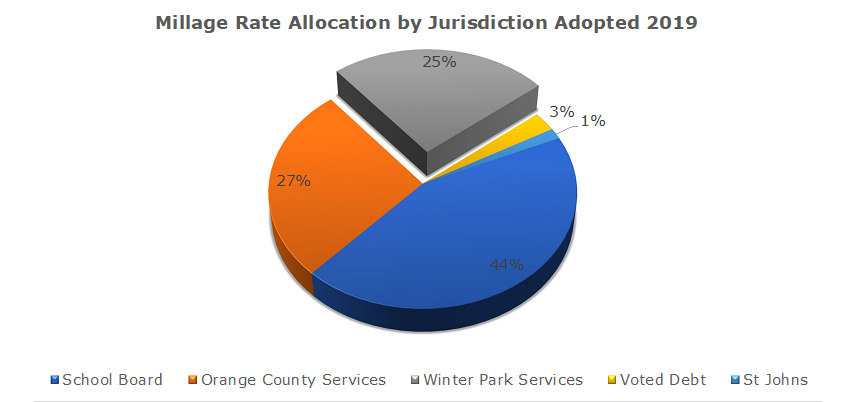
The City establishes the millage rate by creating a draft budget that seeks to balance projected expenses and revenues. Simultaneously, four other entities are doing exactly the same thing – each with eyes on our tax dollars. Our tax bill is based on a combination millage rates set by five entities — Orange County, St. Johns River Water Management District, the School Board, the City of Winter Park and the private debt created by Winter Park voters to build the Public Safety Complex and the Library-Events Center. These five millage rates will combine to form the rate we will pay on the assessed value of our property. The current rate for Winter Park is 16.3156.
Only about 25 percent of that total goes to support City services, while 44 percent goes to the schools and 27 percent goes to Orange County.
The economy has contracted in the pandemic.
According to Finance Director Wes Hamill, the City is currently facing a shortfall in 2020 of about $3 million due to the coronavirus pandemic. Hamill said he believes that by cutting costs, but without cutting services, there is still a good chance the City will break even by the September 30 year end. Some events, such as the Fourth of July parade, were cancelled because of the pandemic, thus saving those funds. Several open City positions have been frozen. If there is still a shortfall at the end of September, Hamill said the City will use reserves to cover the difference.
SunRail contribution postponed.
Hamill says he anticipates a $1.4 million decline in the FY 2021 budget from 2020. He did have one piece of good news, though. The City’s obligation to contribute to Sunrail has been delayed for two years, and will not begin until 2023.
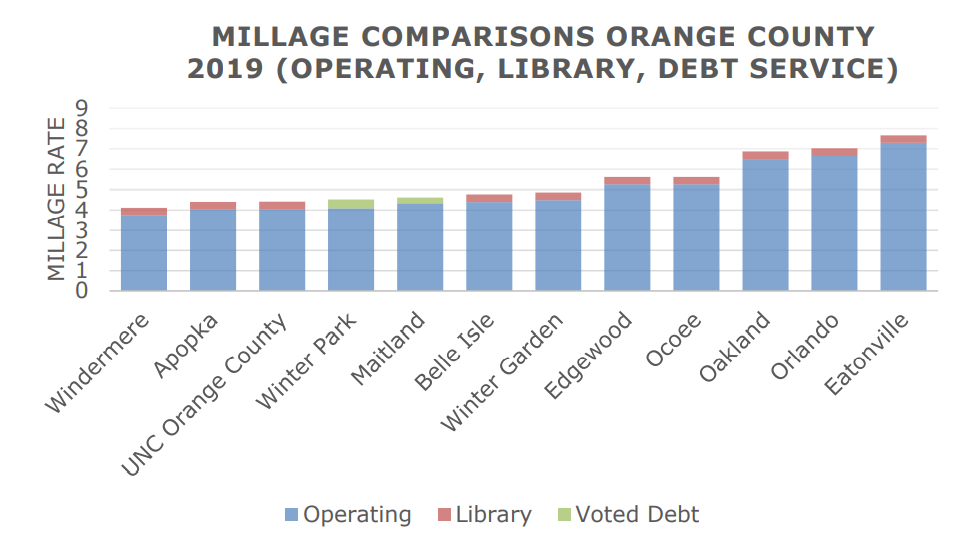
Despite the doom-and-gloom spin circulating the blogosphere, the City remains in good shape. The proposed budget document points out, “Winter park is fortunate to have the lowest operating millage rate among major jurisdictions in Orange County.” A comparison of tax rates is below.
To review the entire 401-page document, click here. https://cityofwinterpark.org/docs/departments/finance/budget/proposed-budget-2021.pdf
What does this mean for us?
The chart below illustrates the impact a rise to the current Winter Park millage cap would have on the average Winter Park homeowner. (This does not include increases from the other four taxing entities.) The chart was prepared by Finance Director Wes Hamill and Assistant City Manager Michelle Neuner.
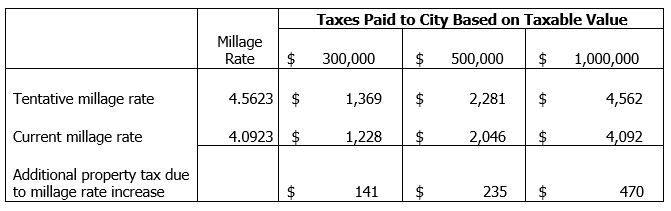
There is still much we don’t know about FY 2021projections, and these are very uncertain times. “If you asked us to guess on a hurricane, we’d be pretty good,” said Michelle Neuner. “This year, in a pandemic, it’s a little tougher.”
To comment or read comments from others, click here →
by Concerned Reader | Jul 14, 2020 | News, Opinion
WP Needs a Financial Advisory Board
Open Letter to Mayor & Commissioners
Editor's Note: Articles written by citizens reflect their own opinions and not the views of the Winter Park Voice.
Guest Columnist Jim Fitch / July 14, 2020
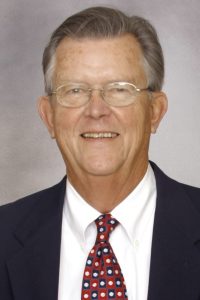 The City of Winter Park has a budget of $170 million. This breaks down to a General Fund of $59 million, $33 million for Water & Sewer and $44 million for the Electric company. The budget document is 401 pages.
Discussions have begun for the FY2021 City Budget, and the annual marathon of Commission workshops to review it is on the schedule.
I believe the City might consider another, perhaps saner, approach to the Budget. That would be to create a Financial Advisory Board (FAB) to review the budget, department by department, and to do it closely, constantly, steadily over the period of a year.
Each Department has a broad category called Operating Expenses, encompassing everything that department does. Take one example. On Page 264 of this year’s budget, we find Street Sweeping. That department has one employee who is paid $77,011. Their operating expenses total $273,670. The annual budget for the department is $350,681.
The document indicates that streets are planned to be swept every two weeks. My street, Via Genoa, is lucky to get swept once a quarter. Most street sweeping is done by individual home gardeners.
So, there is one well-paid operator and one piece of equipment. An FAB might be able to delve into the details of what actually is included in that $350,681.
The City Manager of Haines City, FL instituted an FAB some years ago. The FAB consisted of five people — a banker, an educator, a housing administrator, a retiree and a civil engineer. Over the course of the year, the FAB met during the week with each department. The meetings were held in the early evening. They were publicly posted, open and informative – and they rarely lasted past 8:00 pm. The FAB spent 125 hours reviewing the $40 million budget. The five Haines City Commissioners spent less than 10 hours reviewing the budget, but they had the advantage of the knowledge and the advice of the FAB.
The Haines City FAB made several recommendations to the Commission about such things as the annual millage rate, adoption of a Fire Service fee, purchase of a $700,000 fire truck and other capital equipment and the reorganization of the Water, Sewer, Parks & Recreation departments. The Haines City Commission adopted all of the FAB recommendations. The Commissioners felt the FAB provided a valuable service to the City.
With the size of the Winter Park City Budget – not to mention the size of the budget for a single project, the Winter Park Library-Events Center – we, the taxpayers, would be well served with a Financial Advisory Board.
I believe the City Manager wants to hire yet another outside consultant to audit the Library-Events Center Project. It’s only Taxpayer’s Money. . . .
(No, I am not available to serve on such a Board.)
To comment or read comments from others, click here →

by Concerned Reader | Jun 30, 2020 | Custom Author, News
Change is Necessary
by Mary Daniels / June 30, 2020
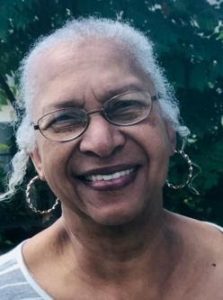 Events since the death of George Floyd at the hands of Minneapolis police have raised more questions than answers. Floyd’s death seems to have been the proverbial ‘straw that broke the camel’s back.’
What to do? First, we examine those questions. The answers will come when we are able to engage in honest conversation about the systemic racism that has plagued our culture for 400 years. The black community is not the only community to suffer from racial injustice, but it is my community and the community for which I can speak authentically.
What can we do?
One has to look deep within oneself and acknowledge the fact that the problem has and does exist. No problem can be solved unless you can first truly acknowledge that there is a problem.
Does one have to ask why “Black Lives Matter”?
Black lives have NOT mattered in this society’s system for 400 plus years, when our ancestors were first brought here as slaves in the hulls of ships in inhumane conditions.
The institution of slavery created systemic racism.
We’ve all been told for years that our system works. “If it’s not broken why fix it? it’s worked for years!” Yes, but for whom does it work? And who is being disenfranchised by our system?
Who needs to worry they might be killed while they’re driving, jogging or simply walking home? Should a doctor unpacking his car in the driveway of his home be worried? Should you be worried, sleeping in your bed, that authorities with no warrant and without announcing who they are will break into your house and open fire?
On May 25, George Floyd, a 46-year-old black male, was murdered on national TV in Minneapolis, Minnesota.
Mr. Floyd was handcuffed by a white police officer who had his knee on Floyd’s neck for eight minutes and 46 seconds. Mr. Floyd was crying he couldn’t breathe, asking for help and calling for his [deceased] Mom.
While Officer Chauvin knelt on Floyd’s neck, looking into the middle distance with his hands in his pockets, and while two other officers knelt on Floyd’s back and a fourth officer stood by watching, George Floyd took his last breath.
If this brutal act of murder did not touch everyone, there is definitely something wrong. This ls one of many such events across this nation. And they continue.
Winter Park finally speaks in a soft voice.
On June 4, ten days after Floyd’s death, Winter Park Chief of Police Michael Deal posted a message on cite-news stating the City of Winter Park was committed to de-escalation and has banned excessive use of force, such as the use of choke holds.
On June 24, City Manager Randy Knight posted a letter on the city website on behalf of the Mayor, Commissioners and Staff as a follow-up to the June 22nd Commission meeting. The mayor himself has never spoken.
Being silent sends the wrong message.
Although conversations on racism are difficult, especially for white people, we can start the process by reaching an understanding that black people did not create racism.
Black people were thrown into it by being brought over in the hulls of slave ships and sold as chattel to slave owners. They suffered inhumane treatment, raping of the ladies and their daughters, and filthy congested conditions. The males, for sale to slave owners like cattle, were seen as inferior because their skin was black.
These captives were stripped of their culture, their birthright and even their names. As slaves, they were required to assume the surnames of their new masters.
What was my great-grandfather’s name?
These were people who were good enough to breast-feed your white babies, raise your white kids, cook your food, clean your homes, wash your clothes, plant and harvest your food — but not good enough to sit at a table and share a meal with you or sit next to you at Church or at a restaurant or on a bus.
The color of our skin, that beautiful brown and black complexion, that color you yearned for when you sat in the sun to get a tan, was what made black people perceived as something dirty and inferior.
How does this 400-year history of systemic black oppression play out within the context of the history of Winter Park?
Black Men Mattered in 1887, when the Town of Winter Park was incorporated.
At that time, there were not enough registered Democratic white voters for the community to become a town. One black man, Gus Henderson, editor of Winter Park’s first newspaper, The Advocate, rallied the black Hannibal Square Republicans to march across the tracks after sunset to exercise their voices and their right to vote. It was the black Republican vote that secured the incorporation of Winter Park as a town.
Walter B. Simpson, a land-owner, was elected Alderman and served from 1887 to 1893.
Frank R. Israel, a land-owner, also served as Alderman from 1887 to 1893.
De-annexation
Once the white power brokers had achieved their goal of incorporating the Town of Winter Park, they sought to overturn the election results because they did not want blacks to serve in any governing capacity. Initially they failed. Later succeeding, they finally were able to remove the Hannibal Square community from the town limits. Hannibal Square, as a whole, was kicked out of the Town of Winter Park.
Re-annexation
Thirty years later, in the 1920s, Winter Park still lacked the required number of registered voters to achieve their new ambition to become a City. Once again, they needed those black Republican voters. So the Hannibal Square community was brought back and restored as part of the City of Winter Park. The rest is history. No black man or woman has served in an elected capacity since 1893.
Black Women Matter.
Some 50 years ago, a black woman, Mary Allen Howard, ran for City Commission. She was told she would never win. In 2019, 50 years after Mary Allen Howard’s unsuccessful bid, a young black Winter Park entrepreneur, Barbara Chandler, also ran for a City Commission seat. Chandler is the manager of the Hannibal Square Heritage Center. She lives in Winter Park.
In the course of her work, Chandler learned the history of the Hannibal Square community, which has had no representation since 1893. As she continued to meet the residents, Chandler became concerned and inspired. She asked herself, ‘what I am doing to make a difference to help eradicate such disenfranchisement through systemic racism?’ Barbara’s campaign for a commission seat, though not successful, made an impact and hopefully has inspired others to be involved and to claim a voice in the city’s governing body.
Fairolyn Livingston, Chief Historian of the Hannibal Square Heritage Center, was
born in Winter Park, attended Hannibal Square Elementary, Hungerford High School, and Howard Community Jr. College. She graduated from Rollins College.
Fairolyn has researched and interviewed every contributor to the permanent collection of Oral & Pictorial History exhibits at the Hannibal Square Heritage Center. She oversees the project in which she records residents and documents their rich history in the Hannibal Square community. I often tell her she is a walking encyclopedia. The Hannibal Square Heritage Center is a program of the Crealde School of Art. Everyone is welcome to come there and learn the history of what was a thriving community.
All Lives Matter
I have heard people respond to the “Black Lives Matter” movement by saying, ‘All lives matter.’ All lives do matter – but in our current system, black lives matter less. That is wrong!
What is my Name? Can you see me? Yes, I am still HERE in 2020!
My name is Mary Daniels. I am beautifully Black! I Matter!
Yes, “BLACK LIVES MATTER”!
SILENCE Is Not an Option. Change Is Necessary. We Are ALL Humans and We All MATTER!
Mary Daniels is a citizen of Winter Park. About who she is, Mary writes, “All that anyone is came from the beginning ancestors Adam & Eve. So then, who are we blacks, and even more importantly, who are you whites – and all the different races of the world? We breathe, bleed and have the same organs as all other human beings. I make no apology for my being born black, my culture and heritage of being a strong, respectful, beautiful woman of color.”
To comment or read comments from others, click here →
Recent Comments