by Beth Kassab | Jul 11, 2023 | City Commission, News, Uncategorized
Residents to pay more for parks, utilities, garbage pick-up and more
City points to inflation, looming recession, weaker housing market as drivers for raising local fees in proposed budget
By Beth Kassab
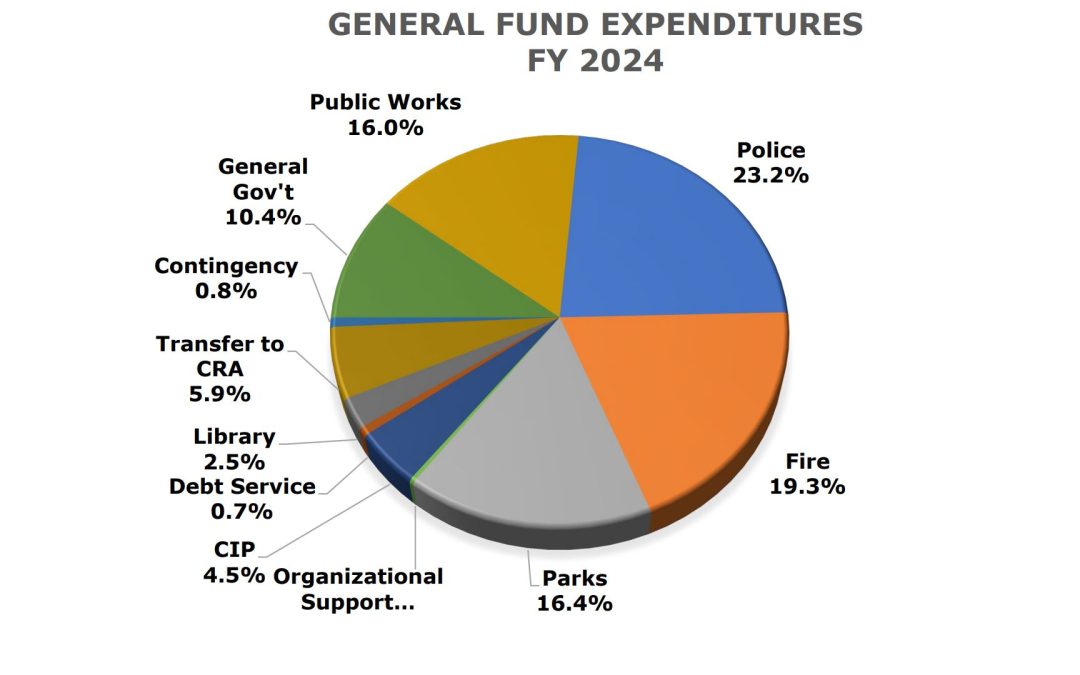
Winter Parkers will notice a jump in fees for park facilities, ambulance rides, water utilities and garbage collection if next year’s budget is approved. The proposed $207 million budget represents a 4.2% increase over FY2023.
The preliminary budget, which does not include a property tax millage rate increase, also does not include several high-profile requests such as the purchase of the Bank of the Ozarks property, keeping the library open on Sundays, two additional police officers, one additional firefighter or increasing the city’s cash reserves.
The budget will be considered by the City Commission for the first time on Wednesday and final approval is expected by September.
City leaders pointed to inflation and the higher cost of wages as justification for raising fees and trimming other costs even as home values increased and translated to 10% growth in the city’s General Fund led by property tax revenue.
“As a result of upward pressure on operating costs, the proposed budget defers and trims some capital investments, raised fees across many areas, and had to prioritize among many needs presented by departments and community stakeholders,” reads the budget overview.
Proposed fee increases include:
- The cost of the city’s garbage collection contract with WastePro is set to go up by 45%, sending fees up by about $20%. The budget estimates homeowners will pay about $5 extra on average each month to account for the higher prices.
- Fees associated with the city’s parks, facilities and programs will go up by 5% to raise an additional $350,000 to cover higher expenses of maintaining the buildings and greenspaces.
- Ambulance transport fees will go up by 10% to raise an additional $100,000 to $150,000. The fee hasn’t been raised in more than five years and is sometimes covered by health insurance or Medicare rather than residents, the proposal noted.
- Water and sewer rates will go up by 7% in line with the index put out by the Public Service Commission, which regulates investor-owned utilities across Florida.
- Stormwater rates, which help cover the cost of drainage and infrastructure to prevent and reduce flooding, will go up 8% next year following two previous years of increases of 5% each. Owners of the largest homes will pay more while owners of smaller properties could pay less, according to the new rate structure.
Meanwhile, nonprofit groups traditionally supported by the city or its Community Redevelopment Agency are seeing across-the-board proposed increases:
- Winter Park Library will receive $1.9 million, a $92,000 increase.
- Mead Botanical Gardens will receive $93,500, an $8,500 increase.
- Winter Park Historical Association will receive $88,000, an $8,000 increase.
- Winter Park Day Nursery will receive $38,500, a $3.500 increase.
- United Arts will receive $18,400, a $1,400 increase.
- Blue Bamboo will receive $11,000, a $1,000 increase.
- Polasek Museum will receive $25,300, a $2,300 increase.
- Enzian Theater will receive $10,000, a $3,000 increase.
- Heritage Center will receive $50,000, a $10,000 increase.
- Welbourne Day Nursery will receive $38,500, a $3,500 increase.
- Winter Park Playhouse will receive $44,000, a $4,000 increase.
- Depugh Nursing Home will receive $25,000, a $2,000 increase.
Leaders noted that the yearly $100,000 obligation to the Dr. Phillips Performing Arts Center will end after next year. But the city’s local share of operating the SunRail commuter train, which has a stop in Central Park, is expected to come due next year and the first payment is budgeted at $146,000. The annual payment is expected to be $350,000 in future years.
To comment or read comments from others, click here →
by Beth Kassab | Jun 30, 2023 | Uncategorized
Commissioners: Florida Legislature overreached to block local development rules
Winter Park attempts to put some guardrails on affordable housing projects after state’s Live Local Act removed local control
By Beth Kassab
Winter Park is working to ensure developers don’t exploit a new loophole in local development codes created by the Live Local Act passed by the Florida Legislature this year in an attempt to promote more affordable housing projects.
Commissioners expressed unanimous support for a new city ordinance that would require developers to document that affordable housing projects are actually providing units that are truly affordable and won’t quickly convert to market-rate apartments or condos.
Mayor Phil Anderson said the new ordinance being crafted now by city staff represents an attempt to “preserve home rule” after the new state law prohibits cities from restricting the height and density of new affordable housing projects.
The act is Gov. Ron DeSantis’ $711 million investment in affordable housing, but changes in the new law will alter how cities and counties can govern themselves. For example, the act allows affordable housing developers to construct buildings at maximum height and density, limiting a City Commission’s ability to restrict the number of units per acre to protect the the aesthetics, charm and consistency in a neighborhood.
“Occasionally the state Legislature overreaches and, in this case, they have overreached by preempting some of our land-use ordinances in the spirit of trying to create more affordable housing,” Anderson said during Wednesday’s meeting. “I want to thank our planning department for taking a look at the unintended consequences of this preemption.”
Planning and Zoning Director Jeff Briggs said the Live Local Act (SB 102) now allows affordable housing developers to ignore certain local requirements such as the height of new buildings. But the law does not require those developers to prove they are building affordable units.
“There are no requirements for a developer to provide any data that they are, in fact, providing affordable housing,” Briggs said. “All this does is ensure that people are authentically and honestly doing affordable housing.”
The Live Local Act takes effect on Saturday and the city’s new ordinance is slated to come back to the City Commission for approval later in July.
“I think we’re getting quite used to preemptions,” said Commissioner Marty Sullivan, a reference to a number of prohibitions by the Legislature in recent years that have usurped the authority of locally-elected city and county officials.
To comment or read comments from others, click here →

by Beth Kassab | Jun 30, 2023 | Uncategorized
Largest homes will see increased stormwater fees
Costs will go up on some properties as the city seeks revenue to fight flooding, improve water runoff system
By Beth Kassab
City Commissioners this week approved higher stormwater fees for owners of the largest homes while those in the smallest homes will pay less, a move which could bring in an estimated additional $600,000 a year for sorely needed infrastructure projects to help control flooding and drainage.
The more than 540 owners of homes larger than 8,900 square feet will see the largest jump in price — an estimated $24.61 per month or nearly $300 a year more than under the old fee structure.
Houses less than 2,899-square-feet are likely to see a decrease in stormwater fees, with the smallest homes seeing the largest savings. The price drop is estimated to range from about $9 a year to about $60 a year.
That’s a reversal from the old fee structure, which required smaller homes to pay more per square foot than many larger ones.
“Right now the fees were a little bit regressive,” said Finance Director Wes Hamil. “The rate proposed is a little bit of a decrease for residential customers who have less square footage and it’s going to be an increase for residential properties that have more impervious surface area … It does give us some additional funding and we’re hearing a lot about demand for stormwater improvements so it’s a much needed funding source.”
Some on the increased revenue will come from another change approved by commissioners: monthly stormwater fees will now be part of property owners’ ad valorum tax bills rather than collected as part of utility customers’ monthly bills. That means owners without active utility service will now be billed. As a result, renters, who typically pay monthly utility bills, but not annual property taxes, will no longer be directly billed for the fees.
Residents on the city’s west side experienced severe flooding after Hurricane Ian as well as other storms and have voiced concerns for months over whether the city is doing enough to address the problems.
Douglas Avenue, just across Denning Drive from Martin Luther King Jr. Park, flooded again recently after a 45-minute rainfall, resident Bonnie Hamilton told commissioners on Wednesday.
“I really hope and pray that the city is doing everything … whatever you can do to fix the infrastructure in the Hannibal Square area,” she said of the historically Black neighborhood, noting one neighbor recently left her car keys behind while she went on vacation so other neighbors could move her car if the street floods again.
Commissioner Sheila DeCiccio expressed some urgency later in the meeting, asking city staff if reports related to proposed improvements will be ready for the heavy storm season later this summer and early fall.
“When are these reports going to come in? Six months from now? The season’s going to be over,” she said. “We have to do something.”
Final approval of the new rates will come later this summer as commissioners finalize the next budget.
To comment or read comments from others, click here →
by Beth Kassab | Jun 10, 2023 | News, Uncategorized
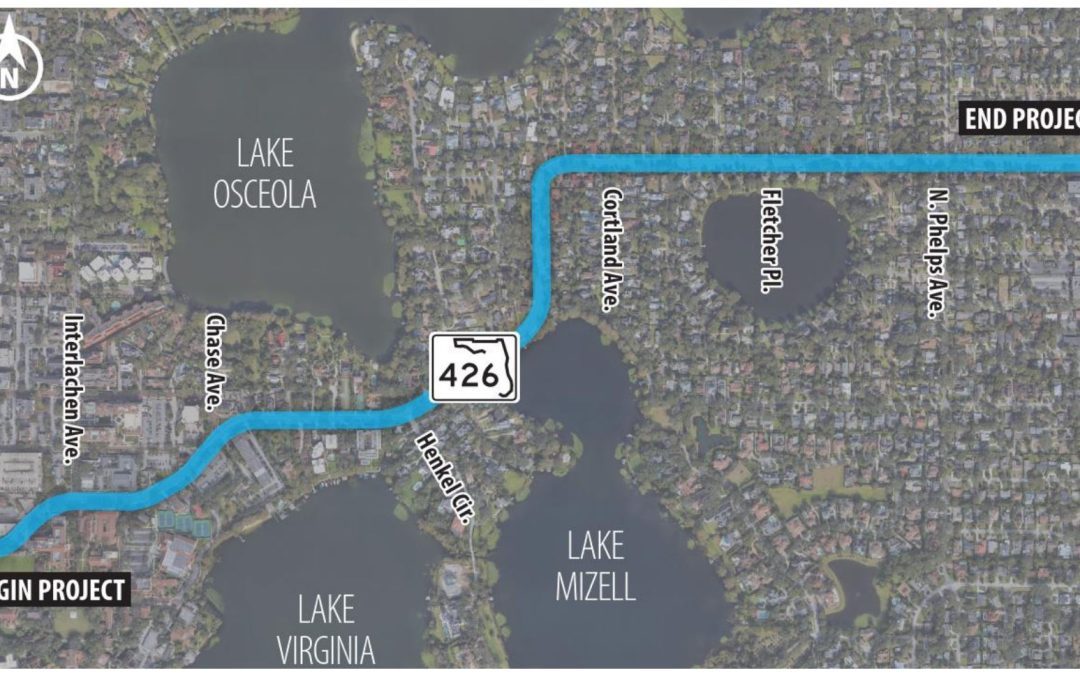
How can we fix S.R. 426?
The state is seeking citizens’ input on plans to rehab the road and improve safety along the 1.7-mile stretch
More than 600 car crashes, including 203 injuries and two deaths, occurred on the curved sections of S.R. 426 between Park Avenue and Lakemont Avenue between 2017 and 2022 — statistics the Florida Department of Transportation is looking to combat with a series of changes to the road.
Construction is slated to begin in 2026 to add features like landscaped medians, pedestrian barriers, raised intersections and crosswalks to the narrow and curvy passage.
Residents can drop in to a meeting in-person or virtually on Tuesday between 5:30 and 7 p.m. at the Winter Park Events Center. A 20-minute video presentation will play on a loop and FDOT staff will be on hand to answer questions and hear ideas. For more information and link to connect virtually click here.
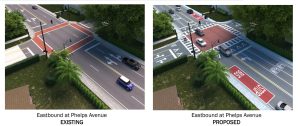
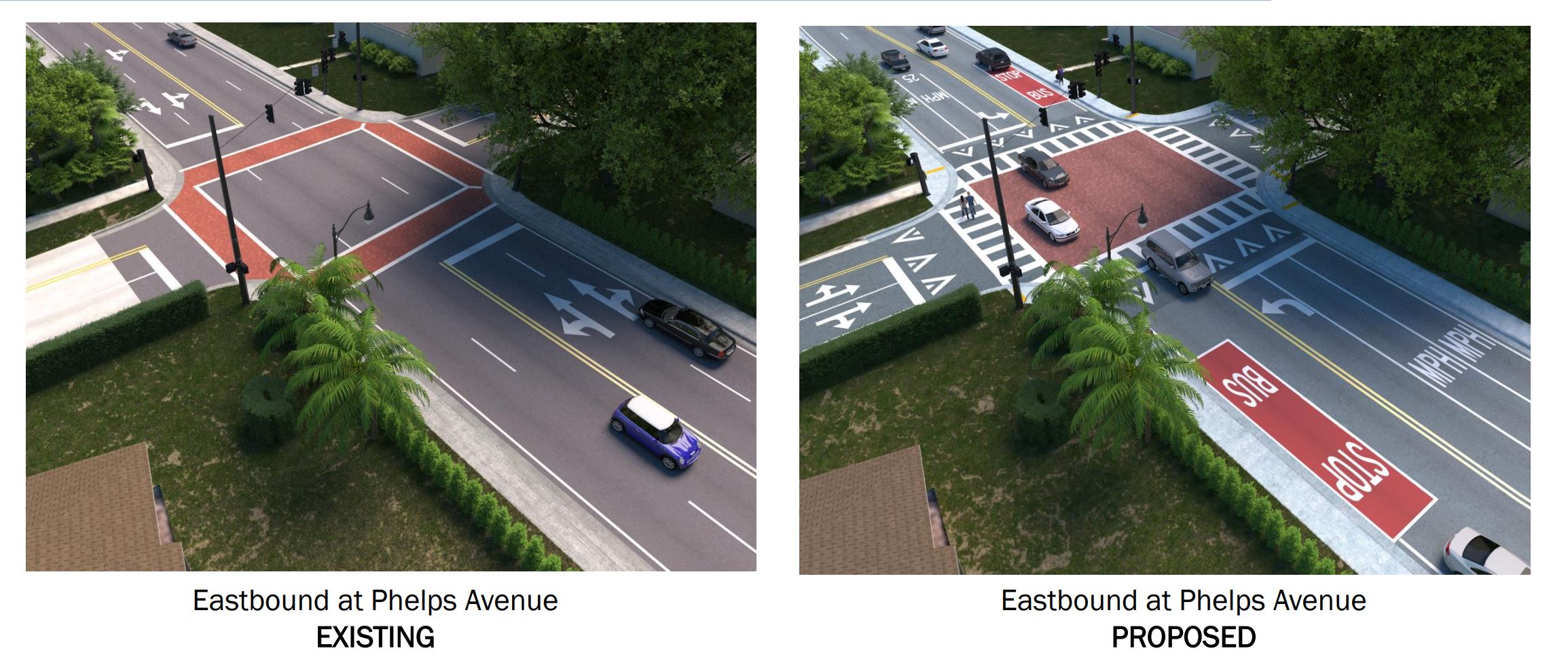
One potential new design for S.R. 426 at Phelps Avenue, the site of the highest number of traffic crashes.
To determine exactly how the plan looks, the state is presenting two alternatives to residents and will combine the best features of both into the final design, according to materials provided by FDOT.
The idea is to reduce traffic speeds and increase driver awareness through the corridor that serves as an important east-west connector from Winter Park to Oviedo and beyond. Speeding is common through one of the main curves near Alberta Avenue, known as the Southern Curve, where the posted limit is 25 miles per hour, but FDOT data shows the average speed is more than 34 miles per hour.
Distracted driving and lane departures were the most common factors in the traffic accidents on the stretch, FDOT reported.
To comment or read comments from others, click here →
by Beth Kassab | May 11, 2023 | City Commission, News, Uncategorized
City Manager Randy Knight applied for Ron DeSantis' Disney oversight board
Knight did not immediately respond to a request for comment
By Beth Kassab
City Manager Randy Knight applied for the top job at the new Central Florida Tourism Oversight District, created by Gov. Ron DeSantis and the Legislature to take back power from Walt Disney World over the special taxing district formerly known as Reedy Creek.
Knight’s resume was one of four received by the board, the Orlando Sentinel reported. He did not immediately respond to a request for comment.
Knight, who has worked for Winter Park for more than 20 years, let commissioners know privately after Wednesday night’s meeting that he applied for the job, according to three commissioners.
“Randy let me know he had been asked to submit his resume for the position last night,” said Mayor Phil Anderson. “But I’m relieved that Randy will continue to be able to work on the commission’s priorities.”
DeSantis’ board hired Glen Gilzean, president of the Central Florida Urban League and a former lobbyist for Step Up for Students, for the position at a salary of $400,000. The Legislature created the new board in the wake of a political showdown between DeSantis and Disney after the company spoke out last year against about the law known as “Don’t Say Gay” and stopped making political contributions in Florida. Disney has filed a lawsuit alleging that the state’s actions are a retaliatory response to the company’s free speech.
Commissioner Marty Sullivan said Knight, who earns about $220,000 in his current role, also told him last night that he applied.
“He said the job paid $400,000 and he couldn’t pass up the opportunity,” Sullivan said.
To comment or read comments from others, click here →
by Beth Kassab | May 11, 2023 | City Commission, News, Orange Avenue Overlay, Uncategorized
Commissioners: Can we buy Winter Park Playhouse building?
The potential purchase is an alternative to a new building at Seven Oaks Park as the City Commission also considers concepts for the old library
By Beth Kassab
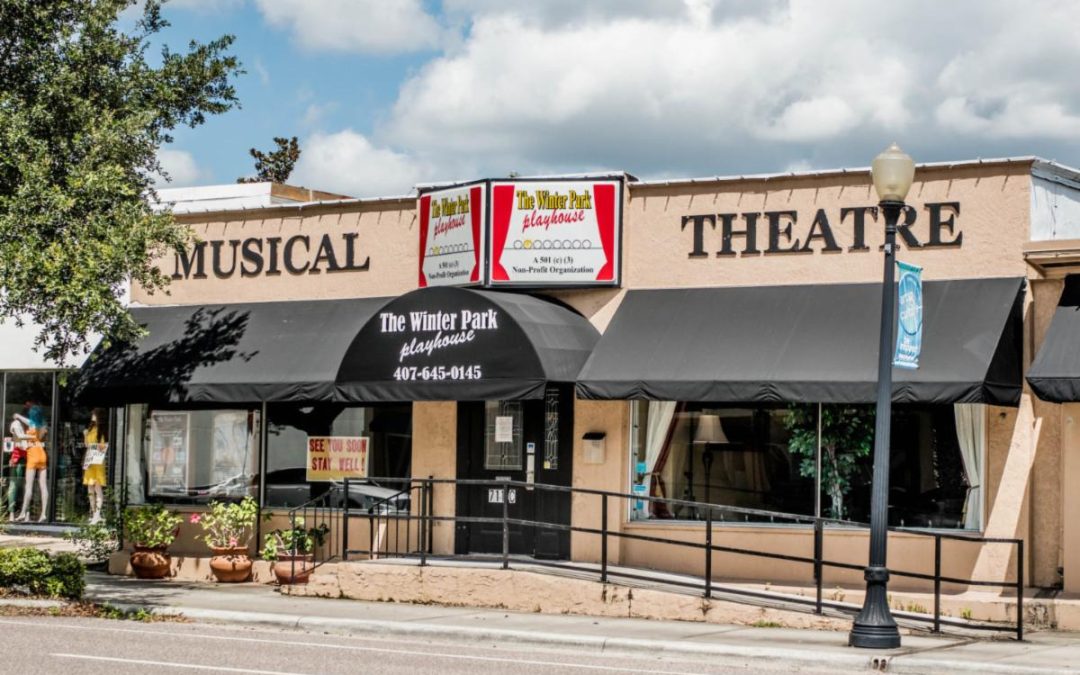
Winter Park City Commissioners on Wednesday tossed around the idea of using Community Redevelopment Agency funds combined with Orange County Tourism Development Tax dollars to buy the building occupied by the Winter Park Playhouse, currently on the market for about $4.25 million.
The potential purchase came up as an alternative to allowing the theater, which is set to lose its lease at 711 N. Orange Avenue as early as next year, to build above the parking lot at the new Seven Oaks Park.
That concept has been discussed since February, though some commissioners have been hesitant to commit to the idea because of the likely need for more parking in the future as well as concerns about how the structure would alter the look and feel of the park.
“I want to do everything we can do to keep [the playhouse], but we don’t know what 10 years is going to bring for Seven Oaks and that whole area could change,” said Commissioner Sheila DeCiccio.
Heather Alexander, executive director of the playhouse, said she is open to the city’s help to purchase the current building, but also remains interested in building at the park or even the old Winter Park Library site.
Ultimately, commissioners voted to put on hold for two weeks a Request for Proposal for the air rights above the Seven Oaks parking lot.
Earlier in the meeting, the commission voted to go forward with asking for redevelopment concepts for the old library and, once again, voted to give preference to proposals that keep the old building rather than demolish it. Commissioner Todd Weaver pushed for the change, arguing it would be wasteful and harm the environment to take down the 1978 building. That amendment passed by a 3-2 vote with Mayor Phil Anderson and DeCiccio dissenting.
Last year the commission issued an RFP for the site and required the building stay put, but abandoned the concept for office and other uses earlier this year.
This time they voted to allow residential units as part of the plans, though some commissioners expressed reservations about the city retaining ownership over a building with apartments or condominiums.
Six nonprofit groups expressed interest so far in being part of such a proposal. Groups are still invited to write letters of interest, Anderson said.
He also advocated for a community meeting to be held on the redevelopment of the old library so people who live nearby can have a better understanding of what to expect and weigh in on the concepts.
To comment or read comments from others, click here →

Recent Comments