Will Winter Park Play Ball?

Will Winter Park Play Ball?

Possible Stadium Deal Has Potential to Fast-Forward Development of NW Winter Park – including Lee Rd. “Punch-Thru” to Denning Dr.

Minor League Baseball, in the form of the Brevard County Manatees, is being batted around the City Commission Chambers once again.

On January 21, the Economic Development Advisory Board (EDAB) joined Mayor Bradley and city officials in an in-depth discussion of stadium-building and related development in and around Denning Drive and 17-92.

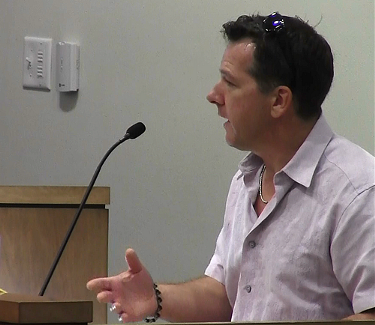
Included in the discussion was the possibility of a developer-driven revival of the Dept. of Transportation’s long-planned “Punch-Thru” of Lee Road to Denning Drive. Click video image below to see the “Punch-Thru” excerpt from the 1/21 EDAB hearing.

Mayor Bradley opened the discussion by characterizing the proposed baseball stadium as a “generational opportunity” for Winter Park. Mr. Bradley, City Manager Knight, Economic Development Director Stone, EDAB Chair Reicher and Chamber CEO Chapin were prominent participants in the discussion. Click the video image above to see the entire baseball discussion (parts 1 & 2).

The Manatees, or the “Tees,” as they are affectionately known, are currently using the 8,100-seat Space Coast Stadium in Viera, which is too large, both for the intimate nature of minor league baseball and for the declining wealth and population in Brevard County brought on by the withdrawal of the NASA space program.

The Manatees are an “Advanced A” or “High A” level team that is part of the 12-team Florida State League. Their major league affiliate is the Milwaukee Brewers.

The ‘Tees are now looking inland to greater Orlando which, according to the Madison Consulting Group, who prepared a Facility Assessment study for the City of Winter Park, “is currently the largest market in the country without regular season-affiliated professional baseball.” While the market area is Central Florida, Winter Park is squarely in the cross-hairs for targeting a stadium location.

Madison Group Stadium Facility Assessment

At the January 13, 2014, City Commission meeting, City Manager Randy Knight requested and the Commission authorized a 45-day period to further study the feasibility of bringing minor league baseball to Winter Park.

City Staff: Give Us Five Months to Negotiate Best Deal for City.

As the 45-day review period draws to a close, the Commission has scheduled a 4pm workshop meeting for Monday, February 17, to consider a newly-released staff report that recommends moving forward with negotiations. City staff envisions a 5-month evaluation process ending in August, at which time “staff hopes to be in the position to make recommendations that will include whether or not moving forward makes sense and if so, a ranking of the sites, how the stadium project could be funded, proposed deal terms/agreements and who should throw out the first pitch.”

Staff Baseball Stadium Analysis

Rollins’ Harper Shepherd Field Back in Play as Possible Stadium Site.

Earlier this year, Rollins College was negotiating possible equity partnership in the minor league baseball effort, but the Rollins Board of Trustees voted to withdraw because of the expense of reorienting and enlarging Harper Shepherd Field and because they felt unable to meet the Manatees’ schedule requirements of a 2015 opening. Rollins subsequently expressed interest in “becoming a tenant” if a new stadium is built. But now, Rollins has re-emerged as a possible partner to the City and the Manatees. The new city staff report acknowledges that “after discussion with Rollins representatives, the Harper Shepherd Field site was added back as a potential site.”

City “Tree Farm” on Lee Rd. Eliminated as Stadium Site.

While suggesting that “other sites could surface as feasible during the next phase of the study if we proceed,” city staffers reversed course on the tree farm – eliminating the city-owned property “as a potential stadium site at this time” explaining that “lack of good access, visibility and the neighborhood impacts led staff to remove that site from current consideration.”

Stadium Economics 101: What Are Costs/Benefits?

As of now, the current “short list” of sites includes Martin Luther King, Jr., Park on Denning, the Ravaudage development on Lee Road, the current site of the VoTech school on Webster & Denning and Harper Shepherd field.

The city staff report’s cursory financial analysis of each site indicates that the “Funding Gap” in each case – the funds needed to develop a site in addition to the dollars contributed by the principals – ranges from $11 million (Harper Shepherd) to $35.5 million (Ravaudage).

During the 1/21 EDAB workshop, Mayor Bradley commented on possible stadium “income streams” including ticket sales, naming rights, concessions, lease revenue and event revenue among others.

He summed up the project’s net benefit by concluding that “First and foremost, the economic benefit that comes from a place like this is outside the park . . . I think if most municipalities figure out a way to have some return and/or break even for the amenity, they probably are ahead of the game.” Click video image above to see EDAB discussion of potential stadium revenues.

Are MLK Park and Votech at Webster & Denning the Most-Favored Stadium Sites?

The “team” of major players that is beginning to coalesce around the Manatees’ relocation to Winter Park includes Manatees owner and local orthopedic surgeon, Dr. Tom Winters; Scott Fish, principal of Nashville-based UP Development – developer of the Lee Rd./17-92 Corporate Square site which will include the new Whole Foods Market; Tennessee native David S. Freeman, part owner of the Nashville Predators hockey team; Rollins College; and, the city of Winter Park.

In his January 30 email to Scott Fish, City Manager Randy Knight updates the developer on stadium funding progress and negotiations with Orange County concerning acquisition of the VoTech site:

“We have made some additional progress since our last discussion. We have explored a few different ways to plug our funding gap and while we don’t have it all figured out yet we have learned a lot. I have had conversations with the Orange County School board employee in charge of facilities and he has committed to me that he would let me know by the end of next week what the options would be to acquire the property as well as what the process would be.”

Knight/Fish Email

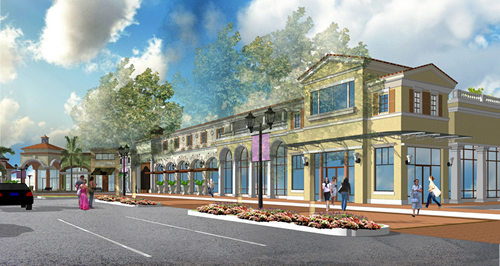
>>Click UP Development image below to see full site plan.

Will Developer Interest in Lee Rd. “Punch-Thru” Influence DOT Plans?

On February 12, Randy Knight responded to questions from the Winter Park Voice, explaining the City’s approach to UP Development and clarifying ownership of the Manatees – including Mr. Freeman’s possible involvement.

In his emailed response, Knight wrote, “I am the one who pitched the idea to Mr. Fish about considering a stadium as part of his development . . . Dr. Tom Winters continues to be the owner. A gentleman by the name of David Freeman has an option to buy a portion of the team from Dr. Winters.”

Dr. Winters and potential owner David S. Freeman appear to favor locating the stadium either in MLK Park or on the present Votech school site. Mr. Freeman wrote in an email to Mayor Bradley and City Manager Knight, “First, Tom is supportive and enthusiastic regarding the “school” site. Thus, as long as the City can acquire title to the site without any strings attached, we would be happy on that site.”

Freeman Email to City

Déjà Vu All Over Again: Predators & UP’s Scott Fish Partnered In Nashville-Area Stadium Project.

David Freeman and Scott Fish may have an opportunity to team up again if Winter Park chooses to build a stadium on the VoTech site next to Fish’s Up Development site. In recent years, Fish and investor David Freeman’s Predators worked together to keep the Franklin, Tennessee A-Game Sportsplex near Nashville afloat. Freeman also poured millions into the Predators hockey franchise. The Predators play at Bridgestone Arena in downtown Nashville, a few miles from the Grand Ole Opry.

As reported by Tennessean online news in April 2012, David Freeman “spearheaded the purchase of the team in 2007 to prevent it from being sold to a Canadian businessman intent on moving the Predators out of Nashville, [ and ] remains a member of the ownership group. Click to read Tennessean article.

Scott Fish’s WordPress blog describes his arena-saving investment in the A-Game Sportsplex as one of his “most significant accomplishments” explaining that the arena was “was losing around $30,000 per month. The 110,000-square-foot facility was on the verge of closing down, so I purchased it for $6 million . . . My daughter’s hockey team, along with a handful of others, was playing there. With the looming shutdown, all those players would have had to find a different home base. I also saw that the arena could be turned into something that benefited the entire community.”

Click HERE and HERE to read more about Scott Fish $6 Million A-Game Sportsplex investment.

UP Development’s Scott Fish Expands His Orlando-Area Real Estate Holdings.

Mr. Fish specializes in rehabilitating distressed properties and has acquired under-performing Orlando-area properties in recent years, including the Fashion Square Mall, Toys-R-Us and the Robb & Stucky store in Altamonte Springs – a property he recently sold to the Florida Conference of Seventh-day Adventists, who will relocate their Winter Park headquarters there.

UP Development’s website describes the company as a “premier retail developer focused predominately in the Southeastern United States. With over 20 years of experience. UP Development has positioned itself as a go to shop for developers, financiers, and owners with troubled assets that require creative and unique workout solutions.”

Click to see UP Development website.

Local Sports Enthusiasts See Minor League Baseball & Venue Events as “Affordable” Family Entertainment.

In an interview with the Voice, Bob King, Head Baseball Coach of Winter Park High School whose son Stephen has been playing in the minor leagues since 2006, observed that the minor league games provide affordable entertainment for families – often drawing crowds by including interactive events such as Bring Your Dog Night, or nights when kids in the audience are invited to come down on the field and run the bases. On off season evenings, minor league fields are often used for other cultural events, Coach King explained, like a symphony playing “Mozart on the Mound.”

Joey DiFrancesco, the Assistant Baseball Coach at Winter Park High, is also a big fan of minor league baseball. “As a teacher,” he told the Voice, “I am priced out of the Magic games for me and my kids . . . but if we had a minor league team, I would be the first in line.”

Winter Park Voice will expand its coverage of the UP development site on 17-92 and other Denning area developments – including the proposed stadium site search & negotiations – in future stories.

To comment or read comments from others, click here →

Baseball Stadium Plans Still Being Considered in Winter Park

Baseball Stadium Plans Still Being Considered in Winter Park

Special Alert for WPV Subscribers Only

Commission Stays in the Game. Rollins Benched?
 
On Monday night, the City Commission voted unanimously to give City staff 45 days to study potential sites for a new stadium and determine whether minor league baseball could be good for Winter Park.
The stadium has been under consideration for over a year now, but many details of the negotiations have been kept out of the the public eye. The news blackout was requested by Rollins College to protect the interests of the principals and — per the Rollins request — has been treated as “exempt” from public records disclosures by the City.
City Manager Randy Knight indicated that currently there are “four sites on the table” being considered. Ravaudage appears to have been resurrected as one of the sites — after being scratched from the list earlier this year. Martin Luther King Jr. Park on Denning Avenue is another site being considered.
Mr. Knight pointed out that bringing minor league baseball to the City may yield a multi-million dollar benefit to Winter Park. He also noted that the Orlando area may be the largest metro area in the U.S. “. . . that does not have some form of professional baseball.” Commissioner Cooper asked for a careful cost/benefit analysis by the City.
The Commission’s entire baseball discussion can be viewed by clicking the video image above.


To comment or read comments from others, click here →

Bradley/Leary Bid to Pave Meadow Parkland Fails 3 to 2

Bradley/Leary Bid to Pave Meadow Parkland Fails 3 to 2

3 Commissioners Unswayed by Appeals from Merchants & Chamber Theatrics

Story Update
In last week’s City Commission meeting, Mayor Bradley opened the hearing on downtown parking expansion by noting that three Commissioners had requested a review of City parking policy.It appears that those three Commissioners were the same three – Cooper, McMacken and Sprinkel – who, at the end of the two-hour hearing, voted against the “pave the meadow” approach favored by Mayor Bradley and Commissioner Leary.At the top of the hearing, Public Works Director, Troy Attaway stepped forward to explain how the parking expansion plan his department was implementing was put on hold due to “resistance” from citizens who were unhappy with the City’s plans (1:30 / Video, Part 1 — Also see Video, Part 2 below).Mayor Responds to Citizen Input: I Don’t Want City Run by “Email . . . Innuendo or Accusation” Early on, Mayor Bradley interrupted Mr. Attaway’s presentation in an apparent effort to make a point about halting demolition/construction plans in response to citizen complaints:

“I want to be clear on the process that we go through – since the City Commission instructed the staff to do all of this . . . what you’re doing [ halting construction ] is probably appropriate and proper . . . I’m just saying I don’t want to be run by a city of email or a city of innuendo or accusation because somebody doesn’t like something that’s happened” (1:40 / Video, Part 1).

Mr. Attaway continued with his presentation, describing plans to add 36 parking spaces (total) to both sides of Morse Blvd. between Virginia and New York, effectively reducing that segment of Morse to a two-lane road. Attaway also spoke of modifying New York Avenue to gain 5 additional spaces. Also mentioned was a prior attempt by the City to add spaces to Morse Blvd. during the building of the Park Place parking garage. That attempt was abandoned for several reasons, including citizen opposition. (8:00 / Video, Part 1).

In the follow-up to staff explanation of current parking expansion plans, a number of Commissioners, including Mr. Leary and Ms. Sprinkel, expressed opposition to narrowing Morse Blvd., citing concerns about pedestrian safety and traffic flow. Others, including Mayor Bradley, pointed out that pedestrian safety can be enhanced by a parking lane providing a buffer between pedestrians and moving automobiles.

Cooper: “We Have Lots of Angry Residents.” Bradley: “We Have Several Angry Residents.”

Commissioner Cooper noted that the intensity of public opposition to the City’s plan may have been due to the Commission’s failure to use a Commission hearing to publicly discuss the plan (instead of the Sept. 6 Strategic Planning Workshop where the plan was last discussed – a workshop that was attended by few city residents). (19:30 / Video, Part 1).

Ms. Cooper’s characterization of the strong opposition to the parking plan – illustrated by citizen outrage she encountered the weekend before Monday’s Commission meeting – was disputed by Mayor Bradley, who appeared to minimize the scope and importance of the opposition.

Cooper: “We have lots of angry residents . . . Bradley: “We have several angry residents . . . Cooper: “I had people at my house as well as many emails . . . From my personal perspective, until we have at least implemented the recommendations that came from the [ Parking Study ] consultant – which were to move employee parking – [ for us ] to start intruding into our parkland, or creating a bottleneck . . . or disturbing the beauty of a main blvd. unnecessarily – would probably be premature.”

The debate about the intensity and legitimacy of public response to the City’s parking plan quickly morphed into an intense debate questioning the legitimacy of claims and counterclaims made by the Commissioners themselves and the City’s own parking study.

Ms. Cooper and the others on the dais continued their discussion of alternatives including public parking on the site of the soon-to-be-demolished Public Works building, as well as nearby City properties including the Blake storage yard and the Swoope Ave. water plant parking area that is already paved.

Bradley & Leary Stand Alone in Support of West Meadow Parking.

Mayor Bradley introduced motions and amendments seeking to approve additional parking spaces on the Public Works site, New York Avenue and the West Meadow (including an additional “perpetual” no-parking buffer zone). Commissioner Leary seconded the motion. (21:30 / Video, Part 1).

However, in the face of continuing Commission opposition to Meadow parking, Bradley pivoted and offered an amendment denying any parking at all on the West Meadow, which would include elimination of the traditional use of the Meadow for temporary parking over 5 to 10 days for the City’s art festivals. (24:30 / Video, Part 1).

Bradley: “Put Your Money Where Your Mouth is, Folks – Either It’s a Parking Lot or It’s a Meadow.”

This last amendment – seeking to deny any parking on the meadow if the Commission failed to approve Bradley’s bid to pave parking spaces in the meadow – was based on Mr. Bradley’s assertion that since the City currently allows parking/use of the meadow for “6 months out of the year” it should be willing to permanently pave the meadow. Sarah Sprinkel seconded the amendment as Bradley proclaimed, “Put your money where your mouth is, folks – either it’s a parking lot or it’s a meadow.” (25:00 / Video, Part 1).

The Mayor’s rationale drew a rebuke from Commissioner McMacken, who called Bradley’s argument “misleading.” McMacken claimed that parking on the meadow totaled no more than 6 days per year.

Immediately following the Bradley/McMacken exchange, Commissioner Cooper shifted the discussion from meadow parking to the City’s Parking Study that is used to justify the creation of more downtown parking. She questioned the methods used to determine the current supply of parking spaces and the current demand for spaces, remarking that “The devil’s in the details.”

Cooper Disputes City Parking Study: Why Did They Remove 141 “Honest-to-Goodness Parking Spaces from Their Count?” 

According to Cooper, “If you look at this Parking Study, the parking supply that they talk about us having is not the actual number of parking spaces. The first thing they did was remove 141 of real honest-to-goodness parking spaces from their count so they could talk about “effective parking” [ which enabled them to ] . . . reduce the count of the real parking spaces by up to 15%.”

Ms. Cooper asserted that “. . . the study reduced the real supply, then on the other hand the study increased the real demand” by looking at parking demand on the weekend during the Farmers’ Market in December – “at the busiest time of the year.” (29:40 / Video, Part 1).

Sprinkel: “I Don’t Think We Should Ever, Ever Go Over Any Green Space.”

Mayor Bradley countered that 80 spaces taken away from the City’s parking supply when the West Meadow was converted from a parking lot to green space a few years ago, have never been “addressed” by the current or past Commissions. “I’m for parks as much as the next guy, but . . . the heart of our city requires convenient and accessible parking.” (32:45 / Video, Part 1).

“I don’t think we should ever, ever go over any green space” said Commissioner Sprinkel, rebutting the Mayor. “. . . I don’t know that we’ll ever make everybody happy, but I do understand that if we’ve got some green space, I don’t really want to go on top of it with pavement.” (35:20 / Video, Part 1).

Leary: “I Don’t Have a Problem” with Proposed Meadow Parking.
Cooper: “This is Crazy – to Jeopardize Our Parks and Our Boulevards . . .”

After much discussion among the Commissioners, Mr. Leary appeared to vacillate in his support for paving part of the meadow, but reasserted his support after confirming with Troy Attaway how much space would be taken out of the north end of the meadow: “I don’t want to take over the entire West Meadow with parking, obviously, [ but ] this I don’t have a problem with . . .” (38:20 / Video, Part 1).

Commissioner Cooper responded strongly to the underlying assumption of the Mayor and others that merchant-requested parking could only be attained by paving the meadow and narrowing city avenues. Cooper pointed out that the “[ Parking ] Study says City employees and Park Ave. employees should be able to park 10 minutes from their workplace. There’s no place that we’re even talking about that’s more than 5 minutes. This is crazy – to jeopardize our parks and our boulevards because employees believe they are entitled to park outside their doors.” (41:00 / Video, Part 1).

Ms. Cooper noted that other employers (like Florida Hospital) use buses to transport employees to and from parking lots. “We own buses – we own golf carts . . . There’s no reason we can’t free up some of these parking places . . . the Park Avenue merchants are never going to voluntarily do it if they don’t see the City employees stepping up and doing their part.”

In the second half of the hearing, City residents stepped to the podium to offer comments on the City’s Parking Plan.

Public comments were roughly split between support and opposition to the plan. Various residents and merchants, including Vicki Krueger, Dan Bellows, Patrick Chapin, Ken Murrah and Forest Michael expressed a range of views regarding the issue.

Part 2 of the Voice video shows all public commenters, the remainder of the hearing and the final Commission vote.

Public Comment: Park Ave. Merchant Says We Can’t Tell Our Employees Not to Park in Best Spaces.

Brian Wettstein, co-owner of the Doggie Door on Park Avenue, was the evening’s first commenter. Mr. Wettstein responded to Commissioner Cooper’s assertion that merchant employees should park farther from the Avenue by claiming that merchants don’t have the legal right to keep employees from parking in nearby, publicly-available parking spaces (00:30 / Video, Part 2).

Mr. Wettstein was followed by Vicki Krueger, who presented the history of the West Meadow starting with its transition to green space in 2008. Ms. Krueger referenced City memos and other information from that period demonstrating the City’s intent to create park space – and the compromise made at that time to put 12 parking spaces on the West Meadow. According to Ms. Krueger, the spaces were intended to be temporary: “The Compromise was to put 12 temporary parking spaces on the West Meadow. ‘Temporary’ apparently was not defined, because now it’s 2013 and they’re still there.”

When Ms. Krueger’s 3 minutes of speaking time expired, she and the Mayor disagreed over whether Ms. Krueger should be allowed to speak longer. Ms. Krueger asked for more time after showing a handful of yellow “Speaking Requests” given to her by other citizens who had granted their time to Krueger. The Mayor agreed to give her an additional 15 minutes, but only if no one else in the chamber would speak in opposition to meadow parking. Ms. Krueger declined the Mayor’s offer and spoke for an additional minute during which she began a presentation of her own parking study that showed numerous empty parking spaces available during peak times of the day. (02:40 / Video, Part 2).

Citizens Challenge Mayor Amidst Gavel Banging & Chamber Theatrics.

As Ms. Krueger left the podium, others in the audience challenged the Mayor’s limitation of her speaking time. The challenge to the Mayor was answered by Chamber President, Patrick Chapin who sprang to his feet and rushed out the chamber door dramatically proclaiming that he would return with “twenty or thirty” signed speaking forms that would enable him to request additional speaking time, too. (8:00 / Video, Part 2).

A short while later, Mr. Chapin returned to the Commission Chamber and spoke for 3 minutes. He did not offer any additional signed speaking forms. Chapin urged the Commission to accept the Parking Study at face value, saying “If we’re really going to question the validity of that Parking Study tonight, let’s just all go home . . . Can we at least pretend that that study is legitimate? It should be – it’s done by professionals .”

Chamber President Chapin: Merchants “Passionate.” We Need 280 More Parking Spaces.

Chapin alleged a “deficit of 280 parking spots” and implied that the merchants he represents are still upset about parking that was lost when the West Meadow was originally converted to parkland. “Believe me – I’m holding a group of merchants at bay, because they’re passionate about their 80 [ West Meadow ] spots that were taken away . . .” (20:40 / Video, Part 2).

Forest Michael, an urban planner who participated in planning the West Meadow green space, spoke to the Commission and rebutted the view of Mr. Chapin and others who believe that turning the meadow to parkland resulted in the “loss” of downtown parking spaces.

Michael reminded the Commission that the City and associated planners all worked together to “relocate” the parking spaces from the meadow to the Park Place garage next to Panera. (29:45 / Video, Part 2).

After the City residents had their say, the Commission restarted their discussion of creating parking permanently and/or temporarily at various City properties located close to the downtown shopping district. Those properties include “Blake Yard” on Blake St. near City Hall, the Swoope Ave. Water Plant parking area and the Progress Point site on Orange Ave.

McMacken: Let’s Take a “Systematic” Look at Additional Parking Options in Future Hearings.

Ultimately, the Commission was unwilling to entertain any options beyond the originally discussed alternatives on New York Ave., Morse Ave., Public Works parking and the West Meadow. Commissioner McMacken summed it up by pointing out that entertaining so many ideas in a manner that was not “systematic” is “how [ we ] wind up in the mess we’re in . . .” McMacken asked the Commission to vote only on the original motion and amendments and to bring back the other alternatives for discussion and possible vote at a future hearing. (44:15 / Video, Part 2).

Mayor Bradley closed out the discussion by asserting that the City does, in fact, have a parking problem. Mr. Bradley indicated that he was open to many of the parking suggestions made by the Commissioners and twice mentioned the option of building a parking garage. Immediately following the Mayor’s comments the Commission voted on the original motion and amendments. (50:45 / Video, Part 2).

 First Amendment: Eliminate plan to build 12 parking spots in the West Meadow.

Amendment Passed

Commissioners Cooper, Sprinkel & McMacken voted “Yes.”

Mayor Bradley and Commissioner Leary voted “No.”

  Second Amendment: Eliminate all parking at all times in the West Meadow [ would eliminate current practice of parking in meadow during art festivals and special events. ]

Amendment Failed

Mayor Bradley and Commissioner Sprinkel voted “Yes.”

Commissioners Cooper, Leary & McMacken voted “No.”

  Motion: Approve Parking Plan to create additional parking in and around Public Works (after building is demolished) and on New York Avenue — but not on Morse Blvd. or in the West Meadow. Motion also includes a ”buffer” in West Meadow where no parking is allowed.

(Approximate size of buffer is same as area that was originally planned for new parking spaces.)

Motion Passed Unanimously.

To comment or read comments from others, click here →

Citizen Protest Puts West Meadow Parking Lot “On Hold”

Citizen Protest Puts West Meadow Parking Lot "On Hold"

City Residents Dispute Parking Plan Rationale & Parking Survey Analysis

On November 2nd, at about 8:00am, Vicki Krueger received an early-morning visit from her neighbor. “I was about to go to the Farmers’ Market when a neighbor knocked on my door. She informed me that her husband had just been at the Meadow and had noticed that a tree had been cut down on the edge of the park across from the Post Office.”Ms. Krueger’s condo, located across from Central Park, is a three minute walk from the Central Park’s “West Meadow,” the grassy green space south of the Post Office. In an interview with the Voice, Ms. Krueger confirmed that when she and her neighbor walked down to inspect the West Meadow that morning, they “saw the stump where a tree had been cut down“ and also saw that part of the West Meadow “had been marked-off with orange tape” next to the Post Office parking lot.

Ms. Krueger told the Voice that several days prior to her discovery of the marked-off area, she had learned of the city’s interest in paving part of the meadow, but mistakenly believed that no action would be taken before further Commission discussion.

Krueger Challenges City Surveyors and Public Works Official.

On Monday, November 4, at about 7:00am, Ms. Krueger again visited the Meadow parking site. Within minutes of her arrival, Krueger says that “two City employees arrived and began to survey the property.” Ms. Krueger questioned the surveyors, “I asked them whether there was a work order, who had signed it. They confirmed there was a work order but didn’t know who signed it.”

City Had Planned to Pave 12 New Parking spaces on West Meadow by Nov. 30.

Don Marcotte, Asst. Director of Public Works, arrived at the Meadow shortly after Ms. Krueger spoke with the surveyors and, according to Krueger, “Confirmed that the paving was going forward.” Ms. Krueger says she handed Mr. Marcotte a copy of an independent parking garage study and “after some discussion, he told us that the work would be stopped, at least for the day.“ Click the button below to view the Public Works memo discussing the Parking Expansion timeline.

Public Works Memo

Citizens Dispute City’s Parking Rationale – Conduct Their Own Parking Availability Surveys.

Over the last two weeks, several citizens – including Ken Murrah, Vicki Krueger and others – have written the City asking for reconsideration of the city’s plans to expand parking in and around Morse Blvd. and Central Park. Mr. Murrah and Ms. Krueger have each conducted independent surveys of parking availability near Park Ave. Their counts of available parking spaces over multiple days/hours/locations are at odds with the City’s own parking surveys. The City surveys are a key factor in the City’s decision to expand parking. Click the button below to view the City’s Parking Study.

Parking Study

The Voice contacted the City asking for comment from City Manager Randy Knight, Public Works Officials Troy Attaway or Don Marcotte on the delayed implementation of the City’s parking expansion. Clarissa Howard, the City’s Communications Director, responded with a statement saying , “The city did have plans to move forward, however, due to public input received, this project was delayed until after the City Commission had an opportunity to discuss further at their Monday, November 11 City Commission meeting.”

Did Commissioners and City Staff Agree to Meadow Parking Expansion Without Actually Voting on It?

We spoke with Ms. Howard at length about the City’s decision-making process – the process that led to the City’s initial decision to pave a section of the West Meadow by Nov. 30. We asked about the hearings, meetings, public notifications and votes that led to, and ultimately authorized, City staff to add 100+ parking spaces in and around downtown.

On Friday, Ms. Howard told the Voice that her research – done in the limited time she had to respond to our questions – indicated that parking expansion was discussed at several meetings including the June 24, 2013 Commission meeting (during which a consultant presented the City-commissioned Parking Study), and the Sept. 6 Strategic Planning Session. According to Ms. Howard, the Commission did vote to formally “accept” the Parking Study during the June 24 meeting – and asked City staff to come back with specific recommendations to expand parking.

Click the button below to view the staff Parking Study analysis.

Staff Parking Study Analysis

Ms. Howard indicated that in the Sept. 6 Strategic Planning Session attended by Commissioners and City staff, Public Works Director Attaway presented his suggestions for creating 100+ additional downtown parking spaces including making/paving new spaces in the West Meadow. However, it appears that since this meeting was a work session – not a formal Commission/Board meeting – no actual vote was taken regarding the West Meadow paving, nor was any formal notice given to the community that City staff would implement the paving/parking expansion administratively (without a formal vote by the Commission).

Parking Expansion and Paving the Meadow Will Be Discussed in Today’s 3:30pm Commission Meeting.

Multiple sources have told the Voice that even though City Commissioners will discuss the City’s Parking Expansion plan, they may or may not decide to vote on paving the West Meadow. Sources confirm that inaction by the Commission could result in City staff moving forward as planned to pave the meadow and implement the rest of the Parking Expansion.


To comment or read comments from others, click here →

City Hall Should Put the Well-Being of Homeowners First

City Hall Should Put the Well-Being of Homeowners First

As High-Density Development Accelerates, Our Quality of Life Suffers


Guest Columnist / Sally Flynn

Winter Park Citizen
Am I the only resident in Winter Park who still believes we should be a City of Homes? A city that cares for its residents first before big business and developers?

This was the vision of those who founded Winter Park and the reason my family settled here in 1961. We decided to make Winter Park our home because of the ambiance of this city – the eclectic architecture, the lakes, the green spaces, the tree canopy and the warmth of the people we met who shared our values.

Winter Park is changing – and faster than most people realize. It is becoming an urban, commercial city, not a City of Homes.

There is this constant urgency from our elected officials and those they have appointed to our Boards, to diversify our tax base. Our taxes are lower than some cities near us.

They say the portion paid by our residential taxes is too great but as a City of Homes, that is what should pay our taxes. If City Hall focuses on its homeowners, instead of commercial interests, homeowners like myself will be willing to pay the taxes that maintain our quality of life.

We say we are a City of Culture and Heritage but our heritage is disappearing and without a sense of history, we will be nothing.

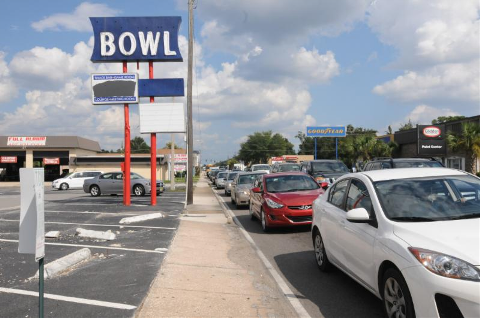
High-Density development is increasing fast in Winter Park. This will hurt our quality of life, as traffic becomes more and more unbearable. In his interview with the Voice, Peter Gottfried clearly illustrated one downside of High-Density development when he admitted that “one of the biggest issues is traffic…Lakemont is now bumper to bumper.” Mr. Gottfried has seen for himself how part of our city’s charm is vanishing, noting that when he and his wife “drive down Park Avenue in the evening…it usually turns into a white knuckle drive – it’s not a pleasant experience anymore.”

Our city is changing. We now face a threat that our park land will be decreased and our city services reduced.

Change comes; change can be good but only if it enhances what we already have. Our home values will decline if we lose what we have always loved and treasured about Winter Park.

My hope is that there are enough people in Winter Park who are aware of what is happening and who will care enough to act before it is too late.


To comment or read comments from others, click here →

Open Letter to Mayor and Commissioners

Open Letter to Mayor and Commissioners

Re: The Blueprint for Development in Winter Park


Former Secretary State of Florida, Dept. of Management Services

Thirteen years ago, Nancy and I had our first dinner on Park Avenue. Interestingly, our server also worked as an appraiser. When I asked her why we should buy a home in Winter Park vs. somewhere else, she was quick and clear. This is a great community with good schools. Demand is steady for homes in Winter Park, even in down markets. Most important, we have a wonderful quality of life.

Turns out she gave us good advice. We quickly discovered that the quality of life we enjoy here is the result of the years of effort that went into developing and refining our Comprehensive Plan. Winter Park has a blueprint for growth that was put together with community involvement over a long time and is key to our success as a community.

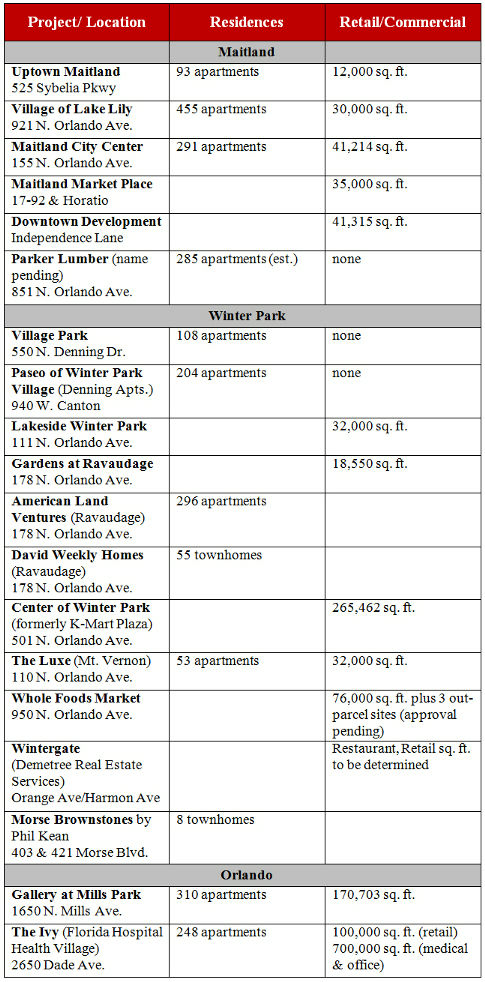
We have the good fortune to be governed by a set of rules and regulations and that is both understandable and appropriate. Those rules, however, are being challenged by developers who are coming into our community with their eyes on the “big returns” and many of us feel we are not being adequately represented by those on the Planning and Zoning Board (appointed by the Mayor) or sitting on the City Commission. We are seeing a huge increase in density, for example, in the North Denning corridor. Large structures are being squeezed onto small pieces of property; and it’s not just one. We have seen the former Department of Motor Vehicles building lot stripped clear in preparation for another high-density structure.

Folks that brought us the Great Winter Park Land Swap of 2011 have a contract on a property on 17-92. It is apparently too small to build what they want, and they have had the audacity to request the city give them access to Winter Park property by the Rachel D. Murrah Civic Center to build a parking garage. Really? It is astonishing that such a request would clear the hurdle to make its way to the commission to be considered.

Does this bother you at all? Do you care what the citizens think about this?

I think we should have responsible commercial development that conforms to the Plan and to the rules we have. Any exceptions should be subject to close public scrutiny. If you attempt to sell us the standard party line, “We need to do whatever’s necessary to attract development to maintain, lower or keep taxes down,” . . . I say to you: “Show me,” and I will stand there until you do. We should NOT be making periodic changes to a plan we spent months almost years to complete. In the words of Mayor Bradley “In my four years on the council, I’ve found if we try to rush things, bad things happen.” (September 12, 2013 Winter Park Forum). I have to agree with the Mayor and ask why the urgent need to make changes and if there is a need why do so without appropriate due process including broad community input and involvement.

When a developer asks to increase density on a property, I believe board members and commissioners have a fiduciary responsibility to demonstrate publicly how that will benefit the city or impact our tax base. If the impact is not significant, why would we say yes and have to live forever with the consequences?

As you know, our property tax bills are public information, so I will use ours as an example. Ours was $12,393.71 for 2013. Only $3,003.27 or 24% of that went to the city of Winter Park, and that included debt service of $224.01. State Law directed $3,724.40 or 30% to Public Schools, Local School Board assessed $2,313.03 or 19%, Orange County got $3,047.26 or 18%, St Johns Water Management District got $227.65 or 2% and there were Non-Ad Valorem Assessments of $45.79. So allowing multiple exceptions to our density rules will reduce my $2,965.99 in Winter Park taxes by how much? Please tell me I am waiting.

And why are you not asking us what we think?

Don’t assume you know what we want. Listen to us. Ask us, and above all have the intestinal fortitude to say no when no is the right answer.

When you ran for office, every one of you promised to represent the interests of Winter Park’s citizens. We believed you, and we elected you.

Many of us are now beginning to believe that our trust in you was badly misplaced. Please show us that isn’t so and do so before the quality of life we enjoy in Winter Park is negatively impacted.

Respectfully,

Jack Miles


To comment or read comments from others, click here →