Candidate Face-Off – Part One
Candidate Face-Off – Part One
Candidate Face-Off – Part One
Anne Mooney / February 8, 2020
 Jeffrey Blydenburgh, Marty Sullivan, Carl Creasman and Sheila DeCiccio met early Friday morning at the Chamber of Commerce for the first of two debates on issues which two of them will face during their terms in office as Winter Park City Commissioners. The second debate will be held at the Winter Park Public Library on Wednesday, February 19, at noon.
Eight questions were posed during the hour-long session, moderated by the Chamber’s Government Affairs Committee Chairman, attorney Lee Steinhauer. There was a respectful atmosphere of comradery among both audience and candidates that has been missing from Winter Park in recent years. Each question, with a brief description of the candidates’ responses, appears below. Full video is posted at the end of this article.
- What is your vision for Orange Avenue between 17-92 and Fairbanks Avenue (i.e., the Orange Avenue Overlay District)?
Candidates approved of the Orange Avenue Overlay process and thought it was an excellent start. They also thought the project still has a way to go. They agreed that Progress Point should be preserved for public use, and they liked the idea of a park and a theater district there. Some expressed concern about excessive entitlements for developers, traffic, stormwater management and open space. They agreed that how it gets implemented is now what’s important.
- Pass-through commuters and I-4 runoff traffic are a problem. There are those who are critical of the proposed overlay who fear that multi-use density would make matters worse. Others who are supportive of the overlay would say that the overlay would employ traffic-calming methods. What is your view of corridor traffic that you will bring to this commission, should you be elected?
Candidates acknowledged that Winter Park traffic is a regional issue, and that the City needs to work with FDOT & neighboring communities to figure this out. They spoke about multi[-modal transportation, turn lanes at major intersections, smart signaling and the so-called “last mile” – public transit necessary to move people from their cars to Sunrail or other modes of public transport. They also spoke of the need for dynamic traffic modeling, and agreed that Sunrail should transition from commuter rail to transit rail.
- How do you feel about Incentivizinig developers with additional entitlements if they’re willing, in return, to underwrite the cost of storm water treatment & filtration?
Like all infrastructure questions, this is about the pressure Central Floridians are feeling from heavy, rapid population growth. The candidates expressed, each in his or her own way, a desire for developers to give back some of what they get from the City, but cautioned against “giving away the store.” They also agreed that our responsibilities to minimize flooding and keep our water clean exist on regional, local and personal levels.
- The Commission is considering the purchase of Winter Park’s downtown Post Office to expand green space near Central Park at a price of $7.5 million. Although the US Postal Service did not initiate the sale of this property, under what conditions should the city purchase this property?
Candidates agreed the City should strive to expand Central Park, but not everyone agreed on the appropriate cost. All were committed to keeping the retail part of the Post Office in the city core and relocating only the distribution center.
- Are zoning and ordinance inconsistencies the reason Winter Park is seeing signs of blight along its major gateway corridors?
Candidates agreed that Winter Park’s zoning ordinances need updating. They found the overlay concept useful in this regard, because it offers an opportunity to help small businesses as well as large developers. Sullivan pointed out Winter Park’s bus stops as one unnecessary example of blight. People awaiting buses sit on transformers or curbs with no protection from sun or rain. There is CRA money to fix at least some of this, and he urged that the city proceed immediately to remedy the situation.
- How do you view Sunrail’s current and future usefulness and the transition to assume local management costs in 2021?
Blydenburgh began by pointing out that it has taken a while for people to change their habits and begin to use Sunrail. The others agreed we’ve made a good start, but we need to continue to invest to make it a workable system. It should become a transit system, not a commuter system. Our cities need adequate connectors to the airport. Sullivan suggests considering a parking structure behind the Winter Park Sunrail station and expansion of the current rail schedule to include nights and weekends – especially during weekend events like the art festivals.
- One Commissioner believes their community-wide advocacy for or against a project prior to Commission review is okay. Others feel it is a violation of Florida’s ethics and sunshine laws. What do you believe is proper and right?
Sullivan acknowledged that if two Commissioners communicated about an issue outside a public meeting, they would be in violation of the Sunshine law. Creasman noted the intent of the law was to “protect” the policy-making process from politics. DeCiccio spoke to the need for increased transparency in the City and thought more communications should flow from the City. Jeffrey Blydenburgh spoke of the need for more collaboration among Commissioners and of the inconvenience and difficulty created by the law’s requirement that all decisions take place in the public eye.
The question, which interrupted the flow of the debate, was a reference to “Cooper’s Perspective,” in which Commissioner Carolyn Cooper emails constituents about issues that are scheduled for an upcoming Commission agenda. It appeared to have come as an afterthought, but no member of the Chamber was available for comment or confirmation at the time of this writing.
Is this a violation of Florida Sunshine Laws? Established in 1995, Florida’s ‘Government in the Sunshine Law’ provides a right of access to governmental proceedings of public boards or commissions. According to <floridabar.org>, “The law is equally applicable to elected and appointed boards and has been applied to any gathering of two or more members of the same board to discuss some matter which will foreseeably come before that board for action. There are three basic requirements of section 286.011, Florida Statutes: (1) meetings of public boards or commissions must be open to the public; (2) reasonable notice of such meetings must be given; and (3) minutes of the meetings must be taken and promptly recorded.” For more information, go to https://webprod.floridabar.org/wp-content/uploads/2018/09/18-RW-Opengovernmentoverview.pdf
Reached for comment, Commissioner Cooper had this to say. “This is clearly not a violation for me to communicate with the people who elected me to represent them. Wouldn’t you rather have your elected officials provide you with information and facts upon which to base an informed decision? There is nothing in any law that prevents me from sharing information about important issues in our city that impacts the lives of all of us. I will never stop communicating with my constituents. The people with whom I cannot communicate, outside of a formally noticed meeting, are my colleagues who sit with me on the Commission.”
- If elected, will you uphold the Commission’s vote to move forward with the Winter Park Library & Events Center?
After acknowledging the project was “contentious” and “painful,” all four candidates were clearly eager to put aside the differences and to move ahead. Yes, they all support the project. They agreed they missed the Civic Center and looked forward to it “coming back to life,” as one put it. They all expressed the need to bring the project in “on budget and on time.”
The acknowledged budget was a maximum $41.7 million. “That’s got to be the final price when we’re all done,” said Blydenburgh. Sullivan responded, “It’s now time for us to come together and make sure that this is the best library and events center possible to serve our citizens.”
Closing Remarks
Blydenburgh: “As commissioner, I would represent 29,000 citizens. People matter – everyone of you matters. We all have the good fortune to live in Mr. Rogers’s Neighborhood. We may not always agree, but we all work together, we live together, and that’s how we should behave together.”
Creasman: “In deciding to run, I thought about the tone we have with each other, both here and on a national level, and that makes me nervous. I know where that possibly can go. It’s important to keep in mind that what should drive us is how much we care for one another. Every person matters, every person has value and every person’s voice should be heard. We are our best together.”
DeCiccio: “I respectfully request your vote on March 17. I have the experience and I have the time to devote to being your City Commissioner. We are the stewards for the next generation, and it is our responsibility to leave this city better than we found it. We have some serious issues to work on, but I truly believe the best is yet to come.”
Sullivan: “Critical projects that need critical thinking and knowledgeable oversight are the Library and Events Center and the Orange Avenue Overlay. We need leadership with a strong engineering background. I seek to achieve a more citizen-focused government. We are a premier urban village, and I will work to preserve what’s best about our community.”
Commission Approves Canopy, Seeks P.O. Property
Commission Approves Canopy, Seeks P.O. Property
by Anne Mooney / January 30, 2020
In contrast to January 13 – 16, the Commission breezed through its January 27 meeting, even though they discussed several items of major importance to the community, among them acquisition of the US Post Office property and approval of the Canopy project.
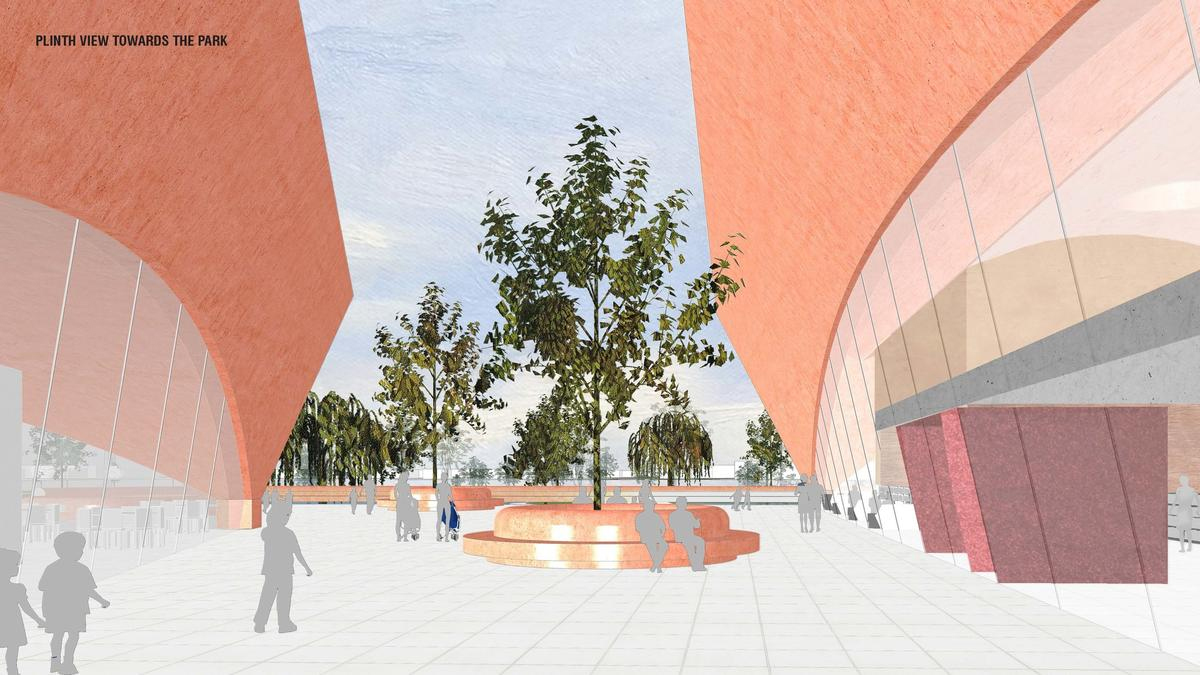
Canopy Approved 3-2, and is No Longer the Canopy
The big news – well, it’s long past being news, this being Winter Park – is that the library-events center project finally received a 3-2 thumbs-up from the Commission. The issue had been tabled at the earlier January 13 / 16 meeting. Mayor Steve Leary and Commissioners Greg Seidel and Sarah Sprinkel voted to proceed with the Library-Events Center project now that there is a construction budget, despite the fact that project funding is still shy several million dollars – how many million depends on which math you use. Commissioners Carolyn Cooper and Todd Weaver voted against.
Commissioner Greg Seidel moved to rename the project The Winter Park Library and Events Center. The motion passed 4-1, and the ‘Canopy’ moniker is a thing of the past.
How to Spend CRA $$$?
Prior to the regular Commission meeting, the six-member Community Redevelopment Agency (CRA), consisting of the five City Commissioners plus Orange County Representative Hal George, met to discuss their spending priorities for the millions of unallocated tax dollars that will flow into the CRA before it sunsets in 2027.
#1 CRA Priority – Acquire Post Office Site to Expand Central Park
Cooper led off the conversation with her list of priorities. Lengthy discussion that followed revealed very little disagreement among the Commissioners. First on the priority list was to give City Manager Randy Knight and City Attorney Kurt Ardaman the green light to negotiate with the US Postal Service to secure the current Post Office site for the purpose of expanding Central Park. The plan is for the retail Post Office to remain in the City core, and for the City to work with USPS to relocate the distribution facility to somewhere outside the City core.
The price tag to the City could easily run six to seven figures, but Commissioners agreed on a 5-0 vote that it was worth it to secure land to expand Central Park.
Other priorities included a $750,000 enhancement to the Library, lighting and tree design for SR 17-92, $3 million for MLK Park improvements, an $8 million downtown parking garage, $4 million for a parking garage that will not be in the park but will service MLK Park and $200,000 a year for affordable housing. The CRA will maintain a 20 percent reserve fund.
Presentation from Dr. Phillips Performing Arts Center
Immediately after the CRA meeting adjourned, the regular Commission meeting opened with a presentation by DPAC President and CEO Kathy Ramsberger. DPAC is celebrating its fifth anniversary. The audience at City Hall was treated to a full array of statistics on attendance, programming, past and future fundraising and the center’s fiscal health in acknowledgement of the City’s status as a major donor to the arts center.
Ramsberger noted that over the past five years, DPAC has doubled their business, climbing from $22 million the first year to ‘close to’ $44 million, partly the result of growing ticket revenue outside Orlando. “This is an international organization – a destination,” said Ramsberger, “generating over $700 million in economic impact.”
Approval of Library-Events Center
Going from one grand project to the next, the Commission took up the question of the Winter Park Library and Events Center, deciding on a 3-2 vote to proceed with the project.
A Very Expensive ‘Done Deal’
As the Library-Events Center project moves forward, and Winter Park looks forward to a grand new facility, it may be wise to keep in mind points made by dissenters, including the citizens who offered public comment and the Commissioners who voted against the project because they felt it had strayed too far from the initial concept approved by the voters.
As Peter Gottfried pointed out, nearly 11,000 people voted on the $30 million bond issue, and it squeaked through on a margin of just 214 votes.
Need Public Transit, Not Parking Spaces
UCF Professor Jay Jurie questioned the emphasis on parking lots and garages and said, “We may very well be at the end of the fossil fuel era.” He likened the current planning process to “classic Maginot Line” planning, referring to French plans to repel a German invasion which, said Jurie, were unsuccessful because the French “were planning for the last war, not the war that was coming.” He urged the Commission to “look forward” and to be mindful of the climate crisis and the need for an effective and efficient public transit system.
Cost-per-square-foot Comparison
Several speakers, including Commissioner Weaver, compared the cost per square foot of the Library-Events Center to the recently completed Wellness Center, which came in at $525 per square foot, and the new wing of Winter Park Hospital, which cost $661 per square foot. The per-square-foot cost of the Library-Events Center is projected to be $854.
Not the First Adjaye Design to Break the Budget
William Deuchler was one of several who noted the shift in emphasis from the library to the events center. “When we voted for the bond issue,” said Deuchler, “the emphasis was on the library, not the events center. With the TDT/ARC grant, the emphasis shifted to the events center. Citizens who voted for the project expected the City to build what was promised and to do so within budget.”
Deuchler cautioned that the Adjaye-designed African American Museum of History and Culture in Washington D.C. is an example of what could happen here. Over the course of that project, the structure increased in size by 14 percent over initial specifications and costs went over original budget projections by “a whopping 80 percent,” according to Deuchler. Initial projection was $300 million; final cost was $540 million.
Adjaye himself admits that, when it comes to his work, “whether working on a house or a grand civic project, . . . controversy is normal.” In 2019, Adjaye told London’s Financial Times reporter Helen Barrett, “If you want a tasteful and elegant thing, you’re not going to come to David Adjaye. I’m interested in clients who have a strange site that has a difficulty. Those are the projects I gravitate towards, and those are the kind of clients that gravitate towards me.”
Citizen Comments
Following the library-events center vote, the Mayor opened the floor for public comment. Four people, only one of whom was from Winter Park, spoke in strident tones objecting to the presence of the Winter Park Police Department’s armored car at the recent Martin Luther King birthday celebration in Hannibal Square. That armored car has appeared in previous Hannibal Square events, as well as in the Christmas and St. Patrick’s Day parades. It seems to be a draw for kids – of all ages.
The speakers, citing strife on a national level between police and African Americans, particularly young black men, urged the City to emphasize peace and community building rather than a display of police force at events celebrating the life of Martin Luther King, Jr.
Police Chief Michael Deal expressed surprise, as he had worked closely with community leaders in the Hannibal Square neighborhood to plan the participation of his department in the event. “Well,” said Deal, “I have the next year to work with the community to see what they want, and if they are uncomfortable with the armored car, we’ll plan something else.”
“Above all, I want to honor the life of Dr. King,” said Deal. “He did not go to jail 29 times and give his life for his cause to perpetuate this kind of dissension. Our mission is to go into the community and build positive relationships with people, especially the children.”
Starbuck’s on Lee Road
After a second vote by the Commission to move forward on negotiations with the USPS and the approval of a plat of 10 single family homes on New York Avenue on land previously owned by the Christian Science Church, the Commission unanimously approved a free-standing Starbuck’s on Lee Road. Shortly afterward, the meeting was adjourned.
Window of Opportunity to Expand Central Park
Window of Opportunity to Expand Central Park
Open Letter to Mayor and Commissioners
Editor's Note: Articles written by citizens reflect their own opinions and not the views of the Winter Park Voice.Guest Columnist Beth Hall / January 26, 2020
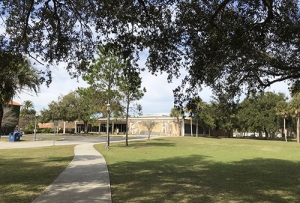 What is the Most Laudable Use for CRA Funds?
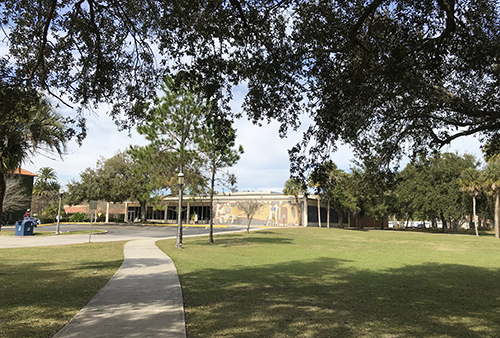
Looking over the agenda for tomorrow’s Commission meeting, 1/27/2020, I see both the library-events center and the Post Office acquisition are coming before you. I know the use of CRA funds is contemplated both for funding part of the library-events center and for acquisition of the Post Office property. I ask myself: what is the best use for CRA funds?
Is It Filling Gaps in the Library-Events Center Budget?
There is no doubt the library-events center is a very important civic project. But the thing is, we voted to issue bonds in the amount of $30 million to pay for that project. Then, we secured an additional $6 million in tourist development tax grant money for the project. Still, we lack the necessary funding to build the library and parking surfaces. The budget is approaching $42 million now. CRA money is essential to be able to dream of completing the project. Was that the way we planned it?
If precedents like the current library facility and the Rachel Murrah Civic Center tell us anything, the new building also will have a finite lifespan. Maybe an Adjaye-designed building will enjoy a longer life span – there is no way to know.
Or Should CRA Funds Be Used to Expand Central Park?
On the other hand, we have the potential opportunity to expand Central Park by acquiring the Post Office property. This is priceless — a thing of value beyond dollars and cents. Central Park is the crown jewel, the pride of Winter Park.
The significance of the Park for our city will only grow, as Winter Park becomes more and more developed, with projects at Ravaudage, Orange Avenue, Fairbanks and Lee Road already coming online.
The Window of Opportunity Closes Tomorrow
The Post Office Notice of Intent to negotiate with the City of Winter Park expires tomorrow, January 27. We must act now.
For this reason, I urge you to assign the acquisition of the Post Office property the very highest priority in terms of designating the use for CRA dollars. There is only one Park, and the opportunity to expand it is within your grasp. I cannot think of a greater legacy for this Commission or a greater gift to all generations to come.
Recent Comments