City Seeks Tourism Dollars to Fill Library Funding Gaps
City Seeks Tourism Dollars to Fill Library Funding Gaps

Hoping to raise more money for the city’s planned library and events center, a group of Winter Park officials is asking Orange County for $6 million in tourism tax revenue. The focus of their pitch isn’t books, but the number of tourists the Canopy project could lure to the city.
The carefully organized group, which included Mayor Steve Leary, City Manager Randy Knight, pitched the project to an Orange County review committee as a tourism magnet that will fill new city hotels and help local businesses.
The public was not invited to the February 18 gathering at the County Commission chambers. While both Commissioner Sarah Sprinkel and Pete Weldon were present in the chambers, Commissioners Carolyn Cooper and Greg Seidel were absent. Cooper said she was not told about it. “The only information shared with me was that one of several possible funding sources was a grant from TDT ARC. I was not told about the meeting or the presentation,” she said when questioned about her absence. Commissioner Greg Seidel stated that he had reviewed the grant application prior to the meeting and had offered his “two cents,” but has not engaged in raising funds for the project.
Canopy As Tourist Magnet
Tourism development taxes are charged on short-term rentals such as hotels, motels and AirBnb properties. Typical uses of the money permitted under state law include construction of such tourism meccas as convention centers, sports stadiums and museums. Libraries aren’t tourist draws, but the Winter Park group clearly believed a grand event center designed by a famous architect might be.
Mayor Leary opened the discussion with a power point on Sir David Adjaye, the internationally famed British architect chosen to design the project, called the Canopy. Leary touted Sir David’s knighthood by Prince William and flipped through photos of Adjaye’s many government and institutional buildings, pointing out Adjaye’s work draws visitors “from around the world.”
Adjaye Design Offers “A State Asset Open to All Classes”
Adjaye sent a specially made video in which he commented on Winter Park’s unique character. “Winter Park is an extraordinary and small community in Orlando but has extraordinary ambition with incredible leadership. . . The library and events center project came from a very rigorous study of the climate and culture.” Adjaye predicted the $40 million project would become a “. . .state asset and be open to all social classes.”
Also speaking on behalf of the city were David Odahowski, President and CEO of the Edyth Bush Charitable Foundation (EBCF), and Jane Hames, a member of the newly formed Chamber of Commerce Tourism Advisory Board. Former Mayor Ken Bradley was in attendance.
Edyth Bush Foundation Donates $750K
Odahowski announced that the Edyth Bush foundation would bestow an unprecedented matching grant of $750,000 on the Canopy project. Noting that the foundation is the third largest donor in the history of Rollins College, Odahowski characterized Winter Park as “an authentic cultural mecca” that takes its role in the regional tourism industry very seriously. “The Canopy will enhance our tourist destination and put heads in beds stimulating additional hospitality options [hotels] . . . stores staying open late. . . restaurants packed with diners. . .ringing cash registers, generating sales tax revenue and attracting more tourists,” said Odahowski.
“The Canopy Events Center will be a cornerstone for a tourism strategy enhancing our ability to host larger meetings, celebrations and trainings. . .With your support the Canopy will launch the next ‘Golden Age’ of Winter Park tourism,” he said.
Welcome Mat is Out for Tourists
City Manager Randy Knight predicted the Canopy project will conservatively result in over 5,200 additional hotel stays per year and over one million dollars in hotel revenue. Currently there are three new hotels under construction and two others in the public approval process.
He predicted the Canopy will be more sought after as a wedding venue than the Farmer’s Market, given its architect’s international fame. Knight said the Rachel Murrah Civic Center, which has been torn down, hosted 250-400 guests. The Canopy will have four separate spaces suitable for wedding parties. Knight stated the facility will have the capacity to host statewide conventions and he estimated 1,200 Winter Park hotel stays annually from those conventions.
Knight said it’s hard to predict just how many tourists might visit the site based on its architectural merits, but he noted that more than 30,000 visitors travel annually to Florida Southern to discover Frank Lloyd Wright’s work.
New Hotels Will Accommodate Increased Tourism
Some visitors could stay at the Alfond Inn, which now is planning a 73-room addition, Knight said. According to City Planning Manager Jeff Briggs, the 110-room Hilton Garden Inn and the 120-room Spring Hill Suites by Marriott recently broke ground at Ravaudage. Three other hotels are in early stages of planning and approval. Knight stated City staff is exploring selling other city-owned properties for hotel space.
Knight noted the city’s long and close relationship with the Chamber of Commerce, which is actively recruiting tourism from Brazil and the United Kingdom. Jane Hames, who chairs the Tourism Task Force of the Winter Park Chamber said an informal Chamber study found that British residents are the largest population visiting the Chamber’s Welcome Center on Lyman Ave.
Both Knight and Leary assured the Orange County board members that the Canopy is a shovel-ready project that has “wide community support.”
Nevertheless, the Canopy project has been surrounded by debate since a $30 million bond referendum was put on the ballot in 2016 for a new library, events center and parking garage. Of the 5,411 voters, 51 percent approved the bond issue. Later that year, a group of citizens collected more than 2,000 signatures to challenge the location in Martin Luther King Park, in hopes of preserving the park’s green space. That effort failed in the courts. Recently, park patrons were furious to discover that a large number of mature trees had been removed at the site.
Although the Canopy is still in the design and development stage, Knight said a feasibility study by a professional firm shows the center will easily cover its annual expenses with a profit. Knight and Leary promised they would not seek additional operational support from the tourism revenue.
Knight displayed a chart illustrating just how important the tourism dollars are to the City’s ability to build the Canopy. Of the $40.1 million needed for construction, $28.7 million will come from the net bond issue, $5.4 million from additional community support which was not described in detail, and $6 million in tourism development money. Another potential source of funds would be the sale of the existing library property on New England Ave.
Build It & They Will Come
City leaders suggested these large numbers of tourists will generate revenue on many fronts, and the activity around the canopy will drive intense redevelopment. Mayor Leary provided an aerial view of the project, claiming it’s more than shovel ready, it is shovel active. After the project is completed, he said, the City plans to plant over 1,300-caliper-inches of trees of different species.
We’ll Know in April
According to Commissioner Greg Seidel, the project plans are at a percentage of completion “somewhere in the sixties.” Seidel explained that when the plans, including all the add-alternates, reach 80 percent completion, the Commission will have adequate information upon which to base their decisions. Seidel estimated things would come together some time in April, when the City will have nearly completed plans and will have a better idea of how much money is actually available.
To View Video of Winter Park’s Presentation, click here.
2019 Election Update
2019 Election Update
Vote by Mail Ballot Deadline; Canvassing Board Update; Rollins Debate Video
Request Your Vote by Mail Ballots by March 6
If you were expecting a Vote by Mail ballot and did not received it, the Orange County Supervisor of Elections (OCSOE) advises you to contact their office to request one.
Call 407-836-8683 or 407-836-2070. Or go online to https://ocfelections.com.
You have until March 6 to request a Vote by Mail ballot. If you prefer to vote at the polls March 12, click the above link to make sure your registration is in order and find your polling place.
Cooper, Sprinkel & Seidel Will Serve on March 12 Canvassing Board
In the City Attorney’s report at the Feb. 25 Commission meeting, City Attorney Kurt Ardaman revisited the issue of the canvassing board. “The issue has come up,” said Ardaman, “can a mayor or commissioner participate in a [campaign for] a city election, even though they are not the ones running, and still be on the canvassing board?”
Ardaman said, “I have spoken with [Orange County Supervisor of Elections] Bill Cowles – and, of course he deals with a County canvassing board, and we have a City canvassing board. They are two completely different animals.”
Ardaman explained that the Florida state statutes deal with County canvassing boards, but they do not deal with City canvassing boards. City canvassing boards are controlled by the City Charter. “Notwithstanding the participation of any mayor or commissioner in this election or campaign, they have the ability to participate. It might not be the right thing, or the wrong perspective,” said Ardaman, “but the law does not allow us to appoint anybody other than those who are provided by our Charter.”
After discussion, it was agreed that Commissioner Carolyn Cooper, Commissioner Greg Seidel and Commissioner Sarah Sprinkel will serve on the March 12 canvassing board. To view the conversation, click here.
Ballots Are Secret
Earlier conversations with City Clerk Cindy Bonham shed light on the vote certification process, which is the duty of the canvassing board.
The final vote tabulation is done at OCSOE. In addition to tabulating votes cast at the polls on election day, the Vote by Mail ballots also are tabulated by OCSOE. OCSOE compares the envelope signatures with those in their data base. Envelopes with signatures that do not match signatures in the data base are given to the City canvassing board to accept or reject.
Canvassing Process Open to the Public
On election night, after the polls close, results from each precinct are electronically transmitted to OCSOE office for tabulation. The three members of the City canvassing board go to OCSOE offices, where they will canvass votes that are in question. The process is open to the public. Any citizen is welcome to observe, but no one may interfere with the canvassing board.
When a questionable envelope is accepted by the canvassing board, it is given to OCSOE to include in the tabulation. Rejected envelopes are set aside unopened.
According to City Clerk Cindy Bonham, envelopes that are rejected are never opened by the canvassing board. So, while board members may be able to identify the voter, no one at the City ever knows how a voter votes.
According to Cindy Bonham, “OCSOE makes every effort to ensure every vote is counted correctly.”
In a small town such as Winter Park, even one vote can make the difference. Just ask Joe Terranova – Winter Park Mayor 1997 – 2000.
Rollins Debate
The third and final candidate debate between Commissioner Peter Weldon and his challenger Todd Weaver was sponsored by Rollins’ Democracy Project. Only Weaver and Weldon were present for the debate. The third candidate, Barbara Chandler, was absent.
Time to Party!
Time to Party!
Celebrate Community & Greenspace at the Winter Park Land Trust Kickoff
Feb. 28 – Farmers Market – 6 pm
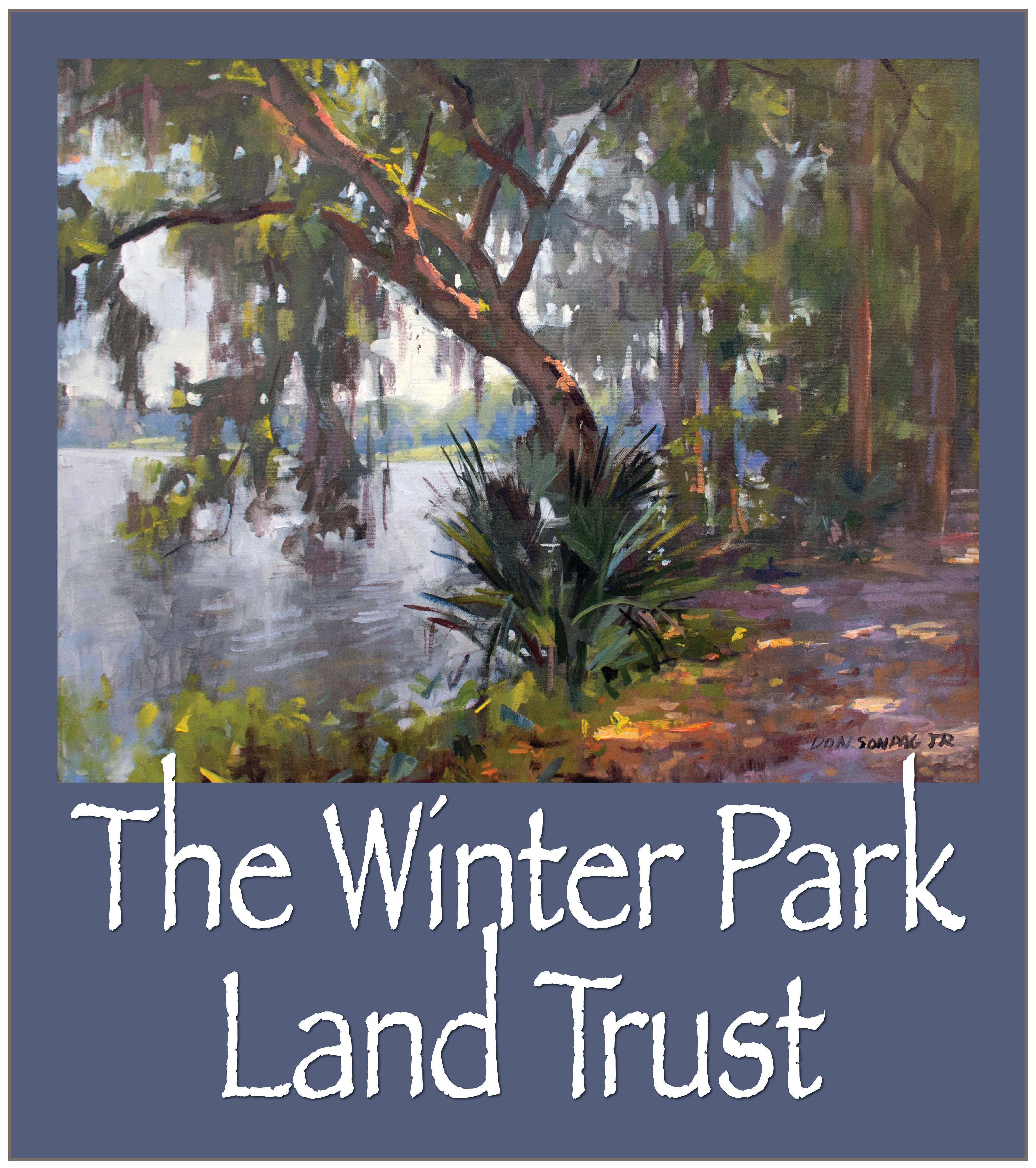
The Winter Park Land Trust inaugural kickoff event at the Farmer’s Market on Thursday, Feb. 28 at 6:00 pm promises to be one great big party. There will be music, refreshments and something for everyone. Everyone is welcome – so come on out!
What’s a Land Trust?
Learn how land trusts work around the United States and hear about the Winter Park Land Trust’s vision to help plan, expand and protect urban parks and green space throughout Winter Park and surrounding communities.
Featured speakers from the City of Winter Park, the City of Orlando, the Alliance of Florida Land Trusts, the Nature Conservancy and, of course, the Winter Park Land Trust, will be joined by 15 groups at information tables, where representatives will be on hand to discuss their visions for urban parks and greenspace in Winter Park.
Participating Groups at Information Tables
City of Winter Park
City of Orlando
Nature Conservancy
Alliance of Florida Land Trusts
1000 Friends of Florida
Rollins College
University of Central Florida
Stetson University
Winter Park History Museum
Mead Botanical Garden
Audubon Society
Florida Native Plant Society
Winter Park Garden Club
IDEAS for Us
Winter Park Land Trust
Please forward this announcement to everyone you know who has an interest the future of parks and green space in Winter Park.
Recent Comments