Why, Oh Why?
Why, Oh Why?
On the Branding of the Winter Park Library
Editor's Note: Articles written by citizens reflect their own opinions and not the views of the Winter Park Voice.Guest Columnist Michael Perelman
On March 26, 2018, the concept of creating a unique brand for the to-be-developed new Library and Events Center was brought to the Winter Park Commission. This concept arose from the Library and Events Center Task Force based on a recommendation by Sam Stark at the January 24, 2018 meeting of that Task Force. The recommendation presented was to use ‘The Canopy’ as the brand; this, is in spite of there being a local business already using that brand – the Canopy Café’.
The Commission made no determination at that meeting, but asked that the item be brought back with some style guides. This occurred on April 9 when a number of visuals were presented. These proposals included:
Winter Park Library at the Canopy 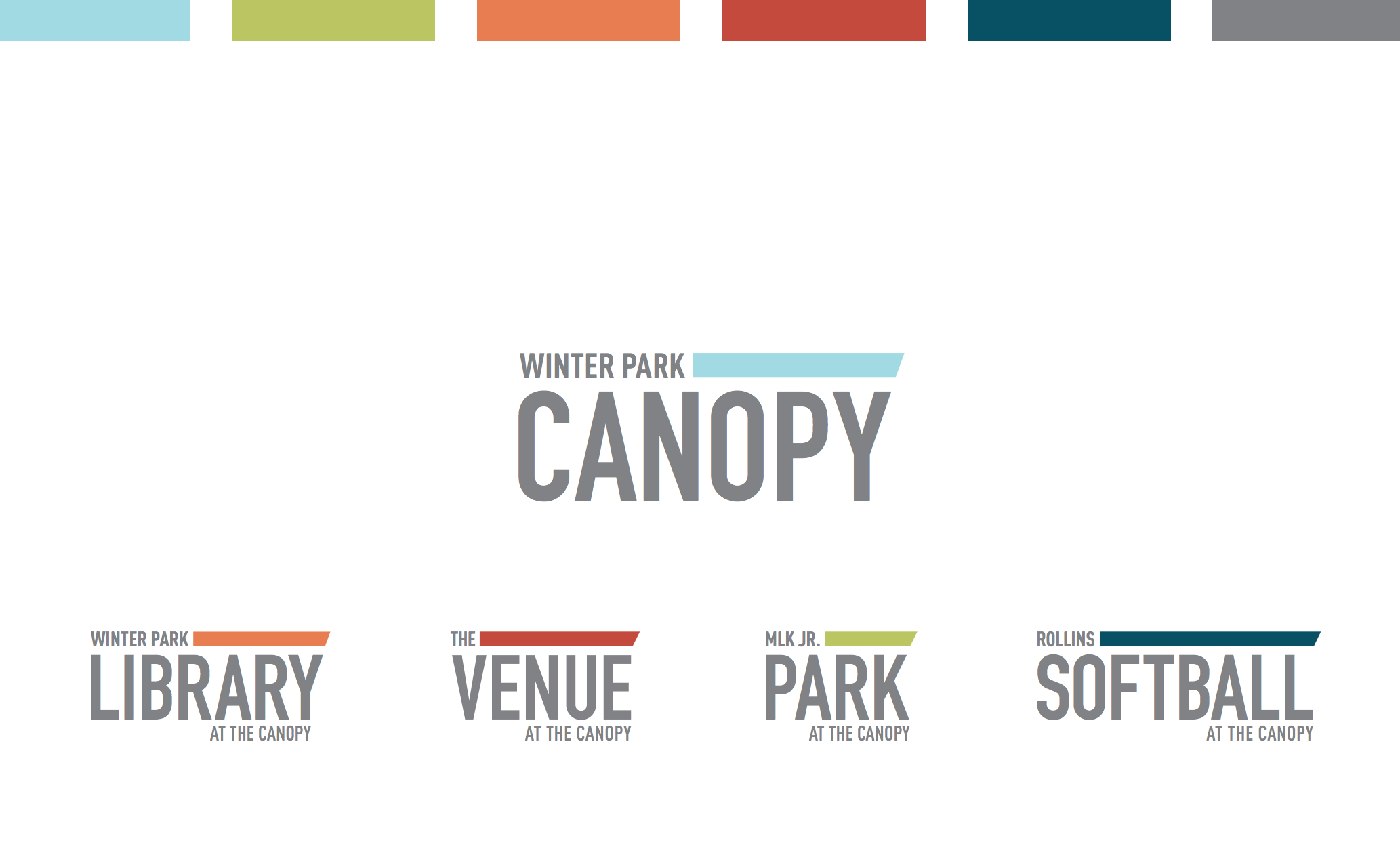
The Venue at the Canopy
Rollin’s Softball at the Canopy
MLK Jr Park at the Canopy
On April 09, the Commission did not take a position, though Commissioner Seidel did highlight a concern about a ‘potential annexation’ of MLK Park.’ The proposal was tabled for further discussion at the next Commission meeting.
The topic did not appear on the agenda of the April 23 meeting; but, a number of members of the public (including myself) did raise the topic during the Citizen Comments part of the agenda. None spoke in favor of the branding concept; all were opposed.
To my mind, it is unclear why these new structures demand a unique brand. We already have a strong brand – Winter Park! Why must this be undermined? And, to suggest that MLK Park, and everything in it, should be a subset of the Canopy is to add insult to injury!
What we need is a ‘Winter Park Library,’ and a ‘Winter Park Events Center.’ These names are self-explanatory, and reflect our values as a community.
Lessons from Charleston
Lessons from Charleston
Quality of Life Drives Economic Development
Editor's Note: Articles written by citizens reflect their own opinions and not the views of the Winter Park Voice.Guest Columnist Bob Bendick

I recently traveled to in Charleston, South Carolina, to attended a gathering of people from around the country who are engaged in the conservation of large landscapes for their benefits to people and nature.
What Charleston Can Teach Us
We had the opportunity to take a field trip and to hear from several of the community leaders who have been involved in land conservation and historic preservation in the South Carolina Low Country over the last 30 years. While Charleston itself is much larger than Winter Park, and the Low Country region is larger than the Orlando Metropolitan Area, there are lessons from the Charleston experience relevant to Winter Park and Central Florida.
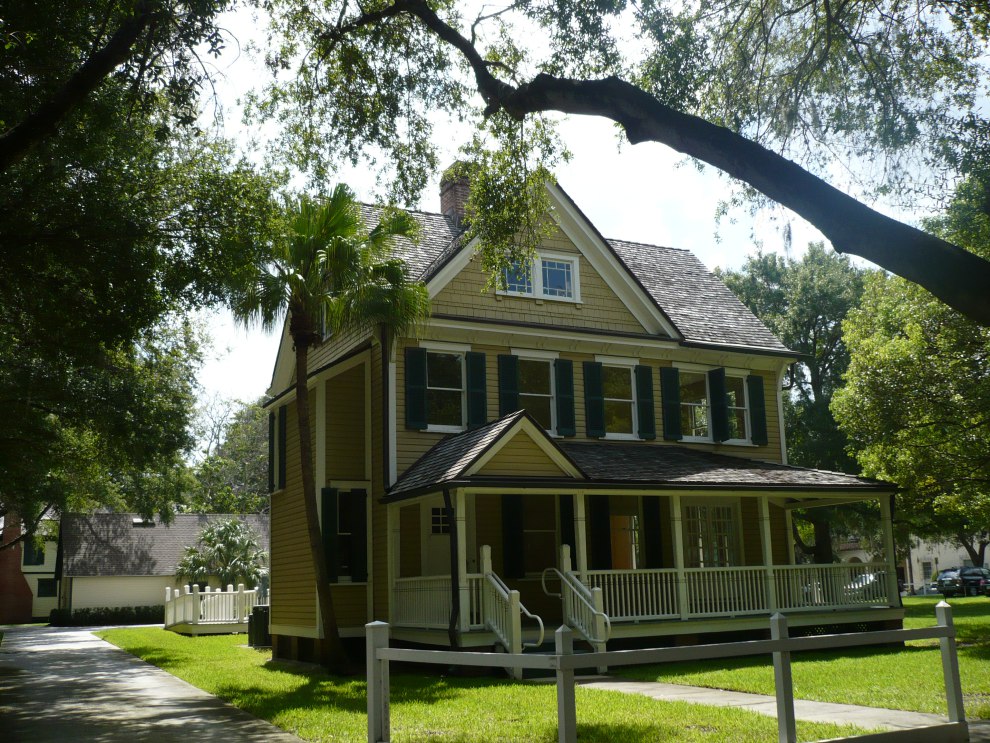
Knowles Cottage
Legacy of Structures & Green Space
Charleston has an important history and a legacy of historic structures and green space. The people of Charleston have cared for the historic fabric of the city and have adopted local ordinances to ensure that historic structures are protected and that the scale of new buildings in the downtown area fit in with the traditional scale of the community.
Charleston’s Green Belt
Similarly, both within the city and in surrounding areas, there has been a sustained effort to protect open space for its ecological, cultural, and recreational values. This has been accomplished by cooperation with federal agencies, by bonding to finance land acquisition in Charleston County, by creative development plans, and by private landowners donating the rights to develop their rural lands. As a result, there is now a greenbelt of conservation lands two-thirds of the way around the city, and there are many places where people can access parks, refuges and waterways.
Everyone’s History Matters
Another part of Charleston’s history is important to this story. Charleston was the point of entry into North America for a large number of the African slaves brought to this country prior to the Civil War. Charleston is sensitive to this aspect of its past, and has worked hard to ensure that the African American community and its history are recognized and respected as Charleston moves forward.
Public-Private Partnerships Strengthen City Character
One clear reason for the success of conservation and historic preservation in Charleston has been extraordinary cooperation among non-profit organizations, local government, state and federal agencies and private businesses working together to protect the character of the region. Economic development interests have recognized the value of Charleston’s heritage and have contributed to its protection. For example, Boeing made funds available to purchase a key parcel of forest land for conservation to offset the environmental impacts of the construction of its large new aircraft manufacturing plant at the Charleston Airport.
Southern Charm is Strong Economic Driver
The protection of the historic and environmental character of the Charleston Region has not been an impediment to the economy of the city and the surrounding area. In fact, the quality and character of life in Charleston has been a key stimulus to economic development. It has attracted second home construction, tourism and the location of high-wage manufacturing. All of this has made the Charleston region one of the fastest growing in the country.
Protecting Winter Park’s Character is a Wise Long-term Investment
The lessons for Winter Park and Central Florida seem clear–that protecting the historic and natural character, scale, attractiveness and diversity of Winter Park and the surrounding region should not be thought of as opposed to the economic well-being of the city and central Florida, but as a long-term investment in the assets of our community that will attract quality growth while providing a sense of place, history, and belonging to the people who live and work here.
Double-Density Cluster Housing
Double-Density Cluster Housing
Coming to a Winter Park Neighborhood Near You
Editor's Note: Articles written by citizens reflect their own opinions and not the views of the Winter Park Voice.
Guest Columnist Jan Hommel
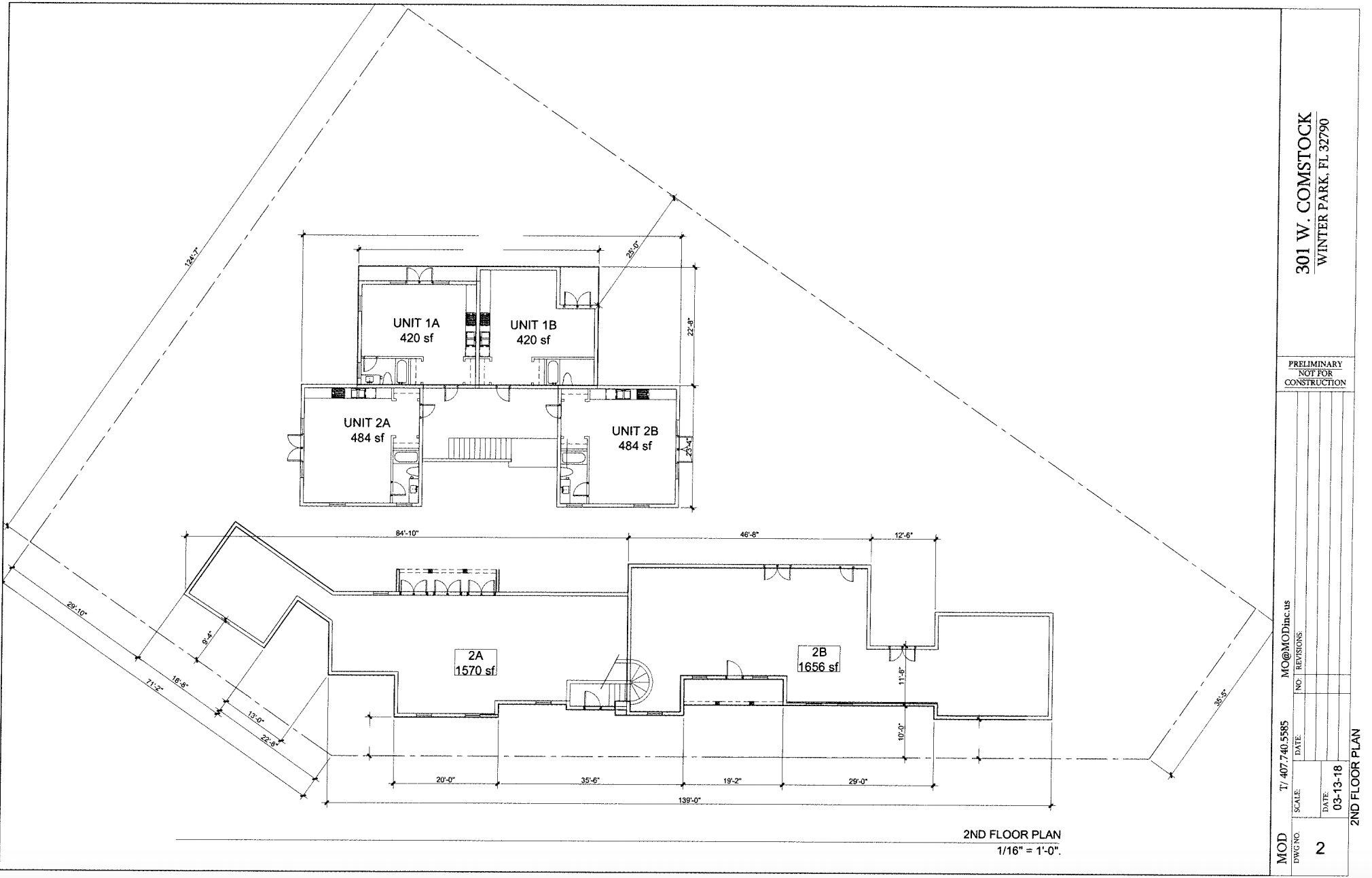
On Monday, April 23, developer Dan Bellows will ask the Commission to grant conditional use and associated variances for a rental apartment complex on the property at 301 W. Comstock – formerly City property known as the Blake Yard.
Each of the four rental units will have its own detached two-car garage with a 420- to 480-square foot “accessory living space” above it. To the casual observer, that would be a garage apartment. So, are there four apartments or eight?
Blake Yard sits between the Grant Chapel, the railroad tracks and the Lyman Avenue Villas. The property is easily accessible to Park Avenue via the new walking path on the tracks. The long promised silent train crossings, now under construction, further enhance the desirability of this lot.
About a year ago, the City saw a chance to cash in on Blake Yard. City reserves were at a low ebb at the time and needed bulking up, so it seemed an opportune time to issue a Notice of Disposal (NOD). According to the NOD, the property would be zoned R-2 and allow a maximum of four units. The property appraised at $450,000.
City-Owned Property Merits Special Consideration
The sale of city-owned property usually goes through a rigorous review process. After all, city staff and the Commission have a responsibility to ensure the City is not negatively impacted and receives full benefit from the sale.
Round One — Monkey Business at City Hall
The disposal of the Blake Yard property came before the April 10, 2017 Commission meeting. Two parties, Dan Bellows as Winter Park Redevelopment Agency Ltd., and Rowland and Co., with architect Phil Kean, submitted competitive bids for the property. Both bids were below the appraised value.
After lengthy discussion, the Commissioners decided not to accept either bid and asked Planning Director Dori Stone to negotiate with the two bidders to see if one or both would agree to meet the appraised value. Stone would then bring the issue back before the Commission at the next meeting on April 24, 2017.
Round Two – Back to the Drawing Board
At the April 24, 2017 meeting, following the second phase of the bidding, Dori Stone recommended that the property be sold to Bellows’ Winter Park Redevelopment Agency, Ltd. because he was the highest bidder by $1,000.
The commission was headed in that direction until Rosemary Hayes, the attorney for Rowland & Co., disclosed some information she had gotten from a public records search. She found that on Friday, April 14, 2017, before close of bidding, Rowland & Co. had bid $455,000. Bellows had submitted a bid that offered “$450,000 OR $1,000 higher than another bid.”
Ms Hayes’ public records request also revealed a communications thread between City staff and Mr. Bellows, which included information about the Rowland bid.
City Manager Randy Knight emphasized that all communications between Bellows and City staff occurred after the bidding was closed. Rowland & Co. and their attorney were not party to any of these communications, however.
On a motion to approve Bellows’. bid of $456,000, Mayor Leary and Commissioner Weldon voted yes. Commissioners Seidel, Sprinkel and Cooper voted no. The motion failed and the project was sent back out for bids.
Three’s a Charm
Finally, at the May 22, 2017 meeting, the Commission voted 3-2 to sell the property to Bellows’ Winter Park Redevelopment Agency Ltd. for $481,000. Cooper and Seidel voted no, but this time Sprinkel joined Weldon and Leary to approve the sale.
The sale received final approval on second reading at the July 24, 2017 Commission meeting.
A New High in High-Density Living
In April 2018, Bellows’ plans for the old Blake Yard sailed through Planning & Zoning on a unanimous vote to approve.
Bellows is seeking to introduce a new model for high density living in Winter Park. In the style of the James Gamble Rogers-designed Barbour House Apartments, Bellows plans to build four rental apartments, each with a detached two-car garage – and each of those two-car garages sports a second-floor “accessory living space.”
Pesky Conditional Use Requirement
According to code, the scale of buildings in R-2 should blend in with the neighborhood, in this case, single family homes and duplexes. Bellows’ proposed four-unit apartment building is hardly in keeping with either the adjacent Lyman Avenue Villas or the single family homes on Comstock.
Staff thinks the apartment building blends right in. Evidently Planning & Zoning did, too.
The Neighbors? Not So Much
Since this project requires a conditional use, neighbors’ concerns should have been addressed. Were they? No.
Despite the fact that the neighbors met with City staff to voice their concerns, hired an attorney and showed up in force at the P&Z meeting, their pleas fell on deaf ears. The neighbors should have kept their money and saved their effort.
Neighbors say the scale of the building is a problem. They worry about the variance Bellows received to place his looming building three feet closer to the new bike path than code allows.
Additionally, Bellows must take two valuable parking spaces from Grant Chapel — now Hudson’s Event Venue — to access the apartments from Lyman. The Chapel didn’t have enough parking in its old use. In its new incarnation, the event center is woefully under-parked.
And Those Garage Apartments?
Remember, 301 W. Comstock is zoned for four units. What code loophole allows four units to morph into eight? Here are staff’s arguments supporting the garage apartments:
- The space for the apartments is within the Floor Area Ratio (FAR) limits.
- The garage apartments won’t have separate utility hook-ups.
- The garage apartments don’t have kitchens. According to code, garage apartments are not allowed to have kitchens or cooking facilities. These will not have a 240 volt hook-up, so technically, there is no kitchen. This one got a laugh from those of us who forsake the microwave for the oven only at Thanksgiving.
- City code prohibits short-term rentals and subletting of garage apartments.
No Subletting? No AirBnB? Then What’s the Point?
The neighbors weren’t buying it — and you shouldn’t either. Subletting is more than likely. The garage apartments will make the rental price on the main apartments much more palatable if the tenant sublets or runs an AirBnB. Any way you look at it, the density will double.
There is no Enforcer
The City admits it is unable to police the “no subletting” rule, and they are certainly unable to police the rule against short-term rentals – AirBnB, etc. In fact, Dan Bellows prominently advertises a property on AirBnB, complete with photos of “Host Dan.”
If the units were Condos, with a proper Home Owners Association, perhaps the owners would police each other to prevent illegal subletting, but as rental units, there are no controls.
The neighbors are justifiably concerned about the “double density” of this project. Parking is inadequate for eight units. Residents and their guests will be forced to use nearby streets — Lyman and Comstock.
There is Still Time to Show Your Support – Monday, April 23
This project comes before the Commission on Monday, April 23. Please help stop this green-lighting of ill-conceived projects by the City, the Staff and Planning & Zoning.
Beware the Slippery Slope
If this level of density is allowed in one neighborhood, every neighborhood in town is vulnerable. We are all in this together. Let your voice be heard.
Write to MayorandCommissioners@cityofwinterpark.org, to ask them to reconsider their decision, and show up at the meeting on Monday, April 23rd.
Recent Comments