Beards Sprout, Nails Glitter
Beards Sprout, Nails Glitter
To Show Support for WPPD Officer in Need

Master Police Officer John Reynolds
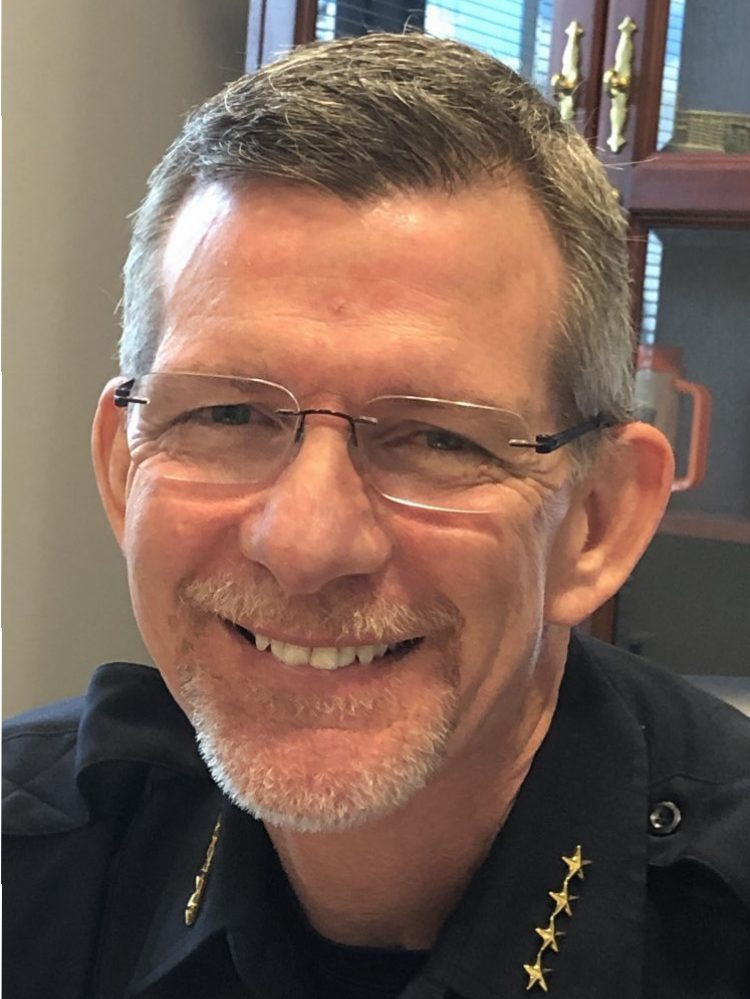
Winter Park’s Finest changed their dress code for the holidays. Unaccustomed facial hair on the men and festive fingernails on the women celebrate “No Shave, Pretty Nails December.” 
Unfortunately, the reason is not all mistletoe and holly and it is anything but jolly. This is a fundraising effort on behalf of Master Police Officer John Reynolds, who was diagnosed with Stage 4 cancer last spring. Many Winter Parkers know this 47-year-old husband and father of two as a Resource Officer at Lakemont Elementary School. Reynolds is a 15-year veteran on the Winter Park Police Force and well liked in the community.
He needs our help.
His earlier treatments were not effective, so Officer Reynolds now must travel to New York for treatment. The treatments are every other week, and travel expenses for Reynolds and his wife are not covered by insurance.
“This is a long road for the family,” said newly-bearded Police Chief Michael Deal. “They just hit a new deductible in October – and the travel will not be covered. We are doing our best to help the family – and we sure could use some help from the community.”
To support Officer John Reynolds, please click here:
https://www.gofundme.com/fnncmt-help-john-kick-cancer
You may also send donations to Officer John Reynolds c/o Captain Pam Marcum, Winter Park
Police Department, 500 N. Virginia Drive, Winter Park FL 32789.
2019 Commission Hopefuls
2019 Commission Hopefuls
Cooper, Weldon & Weaver . . . so far

Although it won’t begin in earnest until after the holidays, rumblings are already audible.
Commissioner Carolyn Cooper, Seat #3, Commissioner Peter Weldon, Seat #4 and challenger Todd Weaver have all declared their intention to run for Winter Park City Commission.
Weldon, originally elected in 2016, will seek a second term. Long-time Winter Park resident Todd Weaver will challenge Weldon in the race for Seat #4.
To date, no challenger has announced opposition to Carolyn Cooper in the race for Seat #3. Cooper is seeking a fourth and final term. Commissioners’ service is limited to four 3-year terms in office.
There is plenty of time for a challenger to make his or her intentions known. The official filing dates to run for Winter Park Commission are January 17 – 22, 2019.
The election is March 12, 2019.
Saving Winter Park’s Unique Character
Saving Winter Park’s Unique Character
Editor's Note: Articles written by citizens reflect their own opinions and not the views of the Winter Park Voice.Guest Columnist Bob Bendick
Winter Park is becoming an island in a sea of urban sprawl.
 I was reminded of this a couple of days after the recent forum on the future of Winter Park at Rollins College, when I drove to St Petersburg for a meeting. There was a lot of traffic both going and returning, but It was not just the time lost sitting bumper to bumper that made the day tiring–it was also the scale and pace of the I-4 corridor which is quickly becoming one almost-continuous 100-mile wide urbanized area.
The day’s drive and my relief in arriving back in Winter Park, and taking a walk with the evening clouds reflected in Lake Virginia, made me think more about the Rollins forum.
What is it about Winter Park that still makes it such a good place to live? From my perspective five positive attributes of our city were highlighted at the forum by the presentations of the panelists and the question and answer session that followed.
Winter Park retains a human scale
Winter Park was originally planned and continues to retain a comfortable human scale, in contrast to the increasingly large and impersonal scale of the surrounding metro area — think ten lanes of rushing traffic on the soon-to-be-completed widening of I-4.
Greenspace, lakes and trees connect people and nature
Greenspace, lakes and trees bring people into contact with nature in every part of our city. The tree canopy reduces air pollution and traffic noise. Views of the lakes are everywhere, and our parks are heavily used.
There are many opportunities for walking and biking within the city
It is possible and enjoyable to walk or bike in Winter Park, particularly to and around the downtown area. Where heavily trafficked roads decrease walkability, like the 17-92 and Fairbanks/Aloma corridors, the quality of the Winter Park experience is diminished.
Winter Park has a sense of place and history including a vibrant town center
Unlike so much of Florida today, Winter Park is not generic. It has a coherent history that is reflected in its architecture and, particularly, in Rollins College and its downtown. It conveys a sense of place — not just anyplace.
The city is a diverse community
Winter Park thankfully retains racial and ethnic diversity, which enriches the life and culture of the city. It is still a community with events that bring people together in shared experiences.
As is the case in other places around the country that have managed to retain a distinctive grace and character, people want to move here.
Winter Park is at a crossroads.
The pressure for more development and redevelopment is not necessarily negative unless that growth undermines those attributes that make the community a good and unique place to live and work. Winter Park can accommodate growth and change while planning on a community-wide basis to retain the assets that make it unique.
We need to add greenspace to balance growth
This means adding and connecting greenspace as the city grows, ensuring that new development is consistent with the scale and character of the city, resisting and, where possible, mitigating the impacts of heavily trafficked transportation corridors on our quality of life. It means creating new opportunities for alternatives to automobiles, consciously acting to retain the diversity of the community, and reinforcing the vitality of our downtown.
Planning for investment in the City will foster a robust economy
The experience of similar communities is that planning for public and private investment that further enhances the city’s character will not diminish the city’s economy, but will make it that much more attractive for quality development. Perhaps more importantly, respecting the unique assets identified by the Rollins College panel will help ensure that Winter Park will still feel like home to the generations of residents who follow us.
Recent Comments