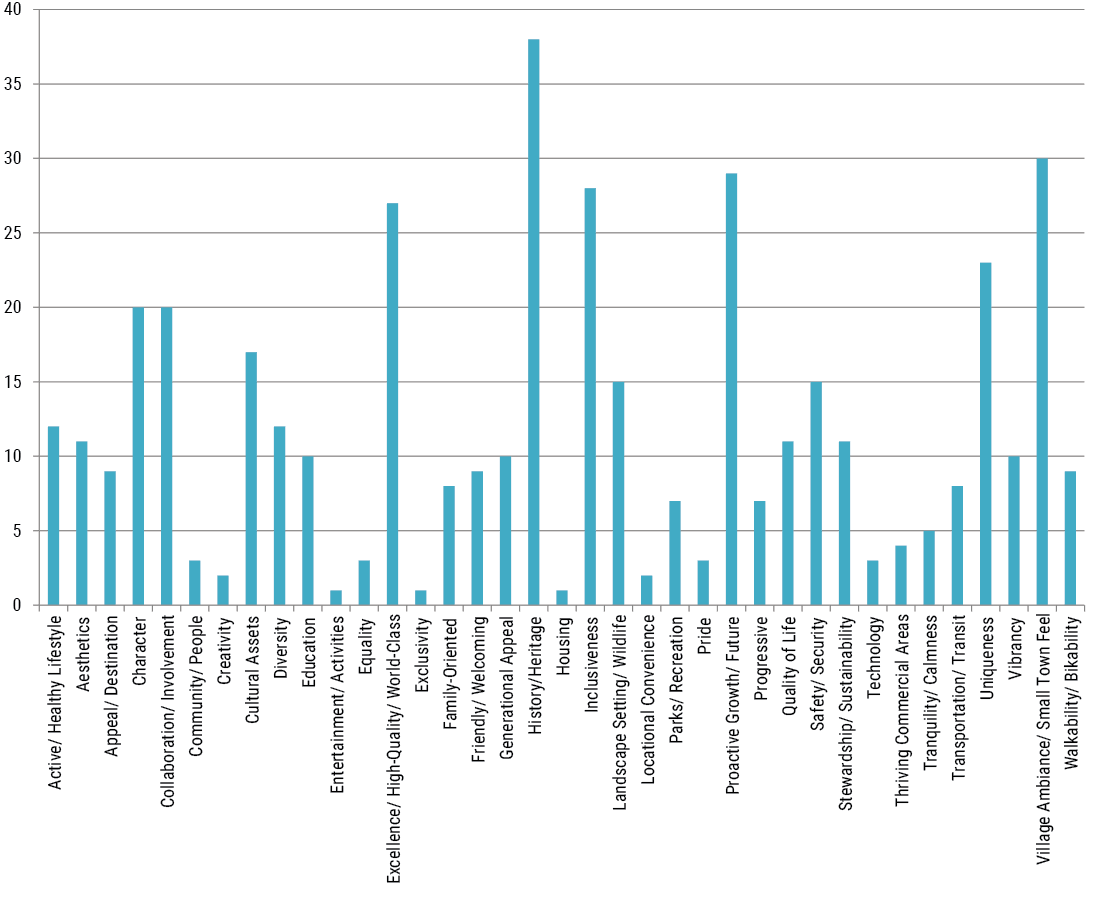
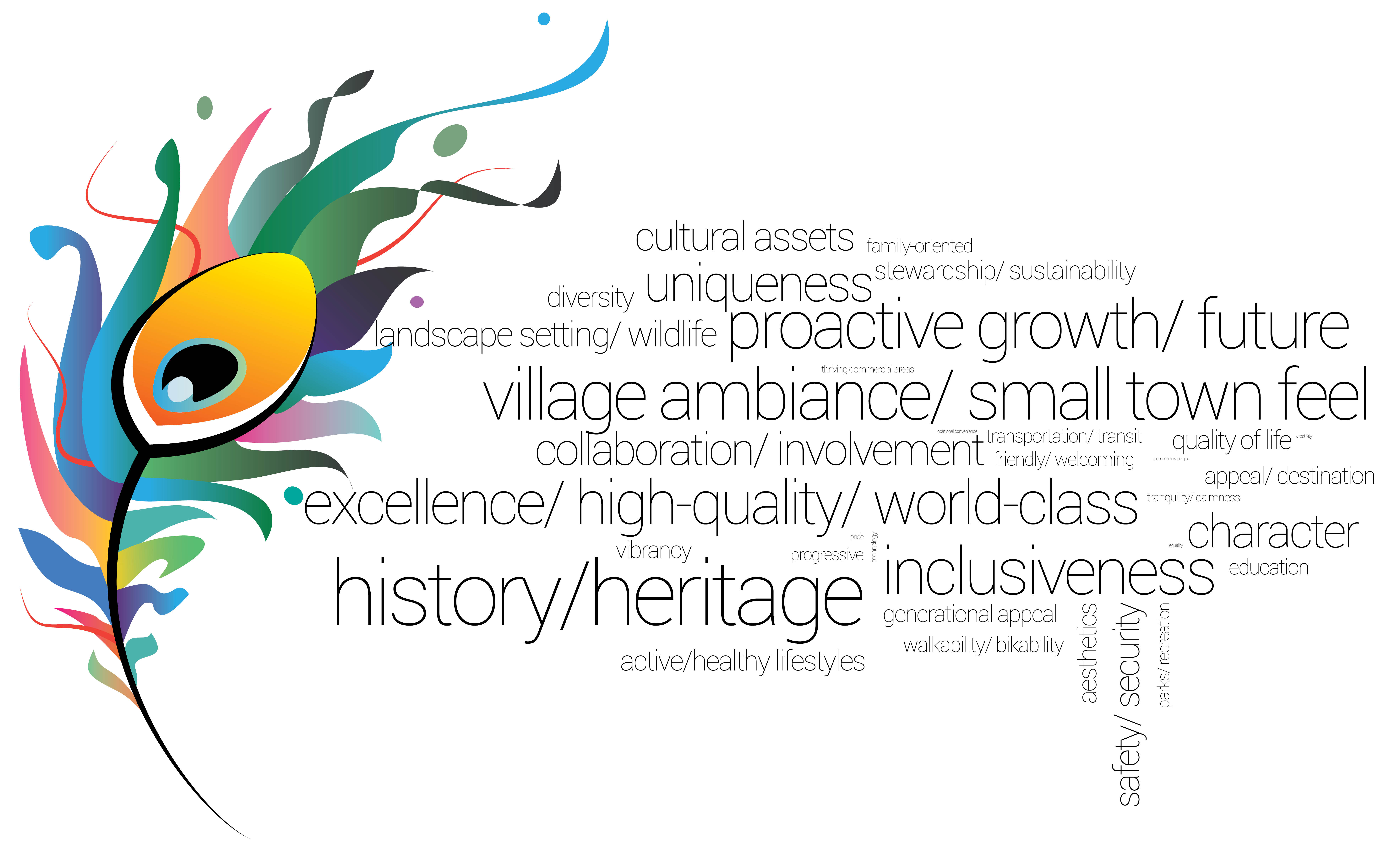
Winter Park’s Visioning Task force has spent more than a year coming up with a vision of how the City will grow and develop. Among the exercises the Task Force conducted was a survey in which citizens were asked what, about Winter Park, was most important to them. The results are illustrated in the graph below. “History/Heritage” beat every other descriptor hands down.
Draft Vision Statement: No Heritage There
Yet, in the final draft of their report to the Commission, the Visioning Task Force removed the word Heritage from the city’s vision statement. Winter Park went from being “The City of Culture and Heritage” to being “The City of Arts and Culture. . . .”
Historic Districts: Ever More Difficult
Meanwhile, on March 15, after running on a one-plank platform of property rights, Peter Weldon was elected to the City Commission. Throughout his campaign, Weldon promised to undo the combined work of the Citizens Committee on Historic Preservation and the Historic Preservation Board, whose members had worked for more than a year to craft a revised Historic Preservation Ordinance. The Commission had approved the revised ordinance in November 2015.
That ordinance lasted a little more than six months. On May 23, the voting threshold for formation of an historic district was restored. The votes required went from 50 percent plus one to two-thirds. The revised ordinance makes designation of historic districts in Winter Park more difficult than in any other Florida city.
Voluntary Historic Designation ‘Encouraged’ . . .
The amended ordinance calls for the City to publish a list of properties which either carry historic designation or are located in an historic district, so that prospective buyers will have prior knowledge of what they are getting into if they purchase a house that has been designated or is located in an historic district. It also contains language about “encouraging voluntary participation.”
Toward that end, Commissioner Weldon drew up a list of six suggested encouragements, which the Historic Preservation Board (HPB) met to discuss in a June 22 work session. Proposed incentives include reducing or waiving building permit fees, waiving the fee to underground utility service, small need-based rehabilitation grants, ornamental streetlights for districts, a complicated ‘transfer of development rights’ and staff assistance with National Register applications.
But Under-funded
City Planning Director Dori Stone told the HPB there is a total of $50,000 in the City budget for historic preservation incentives. Stone stated that historic preservation, especially updating the Florida Master Site File (an inventory of properties that have been or could be designated historic) will “definitely take a back seat” to the upcoming Comprehensive Plan review.
“Words Do Matter,”
. . . one Voice reader posted on this website. And these words – history and heritage – are still important to those who call Winter Park home. At the June 27 Commission meeting, Commissioner Sarah Sprinkel called on the City to celebrate her heritage. Sprinkel was talking about citizens and their contributions to the City. “Heritage is more than a building,” she said. And to Sprinkel, Winter Park’s heritage is important and worthy of a celebration.
Another way Winter Park could celebrate her heritage is to restore the word heritage to the Winter Park Vision Statement. The final draft of Vision Winter Park will come before the Commission at its next meeting on July 11.
City staff and members of the Visioning Task Force have spent a great deal of time meeting with and listening to the citizens.
Did they hear?
The restoration of this small word, which has no fiscal impact, would carry a great deal of weight with the citizens of Winter Park.
The Winter Park Public Library partnered with the Washington, D.C.-based Aspen Institute to convene community gatherings to discuss the role of the 21st century library. A panel discussion on the evening of June 8 at the University Club was open to the general public. The following day, a group of 30 community leaders gathered at the Civic Center for a day-long roundtable discussion.
Public Forum at University Club
The library dialogue led off with a Wednesday evening event entitled, “Your Winter Park Library: A Conversation About the Future.” The panel discussion was moderated by Amy Garmer, Director, Dialogue on Public Libraries, from The Aspen Institute. The formal presentation was followed by lively input from the audience.
Featured panelists were John Bracken, V.P. for Media Innovation at the John S. and James L. Knight Foundation, and Richard Adler, Principal, People & Technology and Distinguished Fellow, Institute for the Future.
“We are excited to have John Bracken share his extensive knowledge and national perspective on what it takes to create and sustain healthy, informed and engaged communities in the digital age,” said Winter Park Library Executive Director Shawn Shaffer. “And Richard Adler’s vast insight into the successful marriage of people and technology . . . will set a strong foundation for the Winter Park Library Dialogue.”
Winter Park Will Be Model for Other Libraries
“Winter Park is the first of five communities across the country that we will be working with in the next year and a half,” explained Garmer. “The engagement of the City of Winter Park in exploring the future of the library and the opportunities to re-envision its role for the 21st century will serve as a model for other communities across the country.”
Community Leaders Meet – By Invitation Only
The public event was followed the next day by an invitation-only meeting of community leaders and representatives who gathered to discuss how the library can meet changing community needs in an environment of rapid, radical change in information technology. For a list of attendees, click here.
The Winter Park library dialogue was based on a framework established by The Aspen Institute in 2014 that explores how libraries can respond to increased demands for high-speed information access, changes in our education and job training systems, and community services to help people compete in a changing economy.
Round Table Discussion
Participants in Thursday’s moderated roundtable addressed four strategic opportunities.
1. Aligning library services in support of community goals
2. Providing access to content in all formats
3. Cultivating leadership and citizenship in the community
4. Ensuring the long-term sustainability of the library
In the coming weeks, The Aspen Institute will report the results of the June meetings.
‘Be Grateful for the City You Live In’
Amy Garmer remarked on how impressed she was by the level of sophistication, knowledge and commitment she encountered in Winter Park. “Winter Park is unique,” she said. “You are so fortunate. Be grateful for the city you live in.”
After more than a year’s work, the Visioning Steering Committee voted yesterday to approve their final draft report. The report will be presented to the City Commission for approval July 11.
Winter Park Now “City of Arts & Culture”
Winter Park vision statement has gone from “The city of culture and heritage,” to “The city of arts and culture, cherishing its traditional scale and charm while building a healthy and sustainable future for all generations.”
Four Vision Themes
Four main themes emerged from numerous meetings and conversations with the community.
Cherish and sustain Winter Park’s extraordinary quality of life.
Plan our growth through a collaborative process that protects our City’s timeless scale and character.
Enhance the Winter Park brand through a flourishing community of arts and culture.
Build and embrace our local institutions for lifelong learning and future generations.
Vision to Guide Comp Plan Review
This new vision of Winter Park is designed to provide a framework for the 2016 review of the City’s Comprehensive Plan, which ensures that Winter Park’s growth management plan meets state and federal regulations as well as “the stated vision for the city.”
The Vision Plan conclusion reads as follows. “This document provides an overarching direction for the future of Winter Park and establishes the foundation upon which other regulatory documents can build.”
In the closing minutes of the May 23 Commission Meeting, Mayor Steve Leary announced the formation of a three-member Comprehensive Plan Task Force. Leary explained the purpose of the task force is to “help [staff] synthesize all the information from the advisory boards and to keep [the review process] on schedule.”
Comp Plan Task Force
Named to the task force are Nancy Miles, Marc Reicher and Laura Turner.
Reicher served as chair of the Economic Development Advisory Board. Laura Turner is a certified city planner who has also served on Winter Park advisory boards. Nancy Miles served on the Tennis Advisory Board and the Library Task Force.
Comp Plan: How We Grow
The Comprehensive Plan is the blueprint for how the City develops and grows over the years. The City reviews the plan every seven years and makes a formal report to the Florida Department of Economic Opportunity (DEO). The plan was last updated in 2009, so is due for review in 2016.
City May Choose to Update Comp Plan – or Not
According to the DEO, the state agency that oversees Comp Plan reviews, the City may “determine whether the need exists to amend the comprehensive plan to reflect changes in state requirements since the last time the comprehensive plan was updated.” The DEO website notes that Florida has relaxed its regulations to afford local governments “more discretion” in determining whether they need to update their comp plans.
WP Review to be Public Process
City Communications Director Clarissa Howard told the Voice that the Winter Park Comp Plan review, “. . . will be a thorough public process to review each element [and] will involve the input and analysis of city staff, advisory boards and residents. The city will offer a variety of opportunities for public participation at advisory board meetings, special public workshops and City Commission meetings.”
City to Publish Comp Plan News
“All dates, locations and times will be posted on the Comp Plan page of the city website at www.cityofwinterpark.org/comp-plan,” Howard wrote.
Howard also noted that information will be emailed regularly to those who sign up for the Comp Plan email subscription at www.cityofwinterpark.org/citEnews.
The Winter Park Public Library will host three Community Conversations next week. Meetings will be in the Library Community Room on the first floor.
Dates & Times:
Wednesday June 1 — 9:30 a.m. to 12:00 Noon
Thursday, June 2 — 5:30 to 8:00 p.m.
Saturday, June 4 — 12:00 Noon to 2:30 p.m.
Public Conversations About the New Facility
Residents will have the opportunity to get facts about the proposed project. Discussion will include the characteristics and best practices of 21st-century libraries. Library personnel will be on hand to gather residents’ feedback to further define our community’s priorities for materials, services and programs in the new facility.
Open-House Format
The three sessions will follow an informal, open-house-style format. Flexible times are designed to accommodate as many residents as possible.
We Depend on your support, make a tax-deductible donation here.
Mission
The Winter Park Voice is a trusted nonprofit journalism site that covers our City Hall and beyond. We endeavor to engage, inform and connect citizens on all sides of issues affecting the quality of life in Winter Park.

Recent Comments