Blue Bamboo Looks to Lease Space to Visual Artists
The performing arts venue has hit multiple obstacles as its rent for the old city library building increases
Sept. 3, 2026
By Beth Kassab
Beset by the death of its founder last year, construction delays and increasing rent, Blue Bamboo Center for the Arts is now facing the loss of $12,900 in annual funding from the city as it presses forward with a new plan to lease space on its second floor to visual artists.
City Commissioners appeared in agreement at a budget work session last week to end its yearly contribution to Blue Bamboo, one of seven local nonprofits that has traditionally received dollars from the city in recent years.
“Why are we funding Blue Bamboo if they are paying us rent?” asked Mayor Sheila DeCiccio at the work session called for commissioners to evaluate potential cuts to the budget as financial pressure intensifies on local governments as voters prepare to vote in November on property tax reductions.
The commission is set to take its first budget vote next week.
The day before that meeting, Todd Weaver, a former city commissioner who is now vice chairman of Blue Bamboo’s board, appeared before the group to ask for a month-long extension to secure a certificate of occupancy for the second floor of the old library building that the group leases from the city.
Weaver said construction was nearly complete and the group would begin paying the new higher rent amount this month. The commission granted the extension for the group to bring the space into compliance with the Americans with Disabilities Act and other city codes.
Weaver told the Voice the second floor will be partitioned into 21 visual art studios that artists can rent.
The plan comes about three months after a contentious meeting between Blue Bamboo Chairman Jeff Flowers and the City Commission in which Flowers was seeking changes to the group’s lease because, he said, he was having trouble finding an arts group that could afford the rent in the wake of the original tenant walking away and construction delays as well as the death last year of founder Chris Cortez.
The commission did not agree at the time to grant the group any rent reductions or allow it to deviate from keeping the building as an arts hub.
So far, the group has invested about $1.5 million into the building, including more than $900,000 in grants from Orange County’s Tourism Development Taxes.
The music venue on the first floor opened more than a year ago and boasts a calendar full of events most weeks from Thursday to Sunday.
Weaver said he could not speculate on when the visual artist spaces will open on the second floor.
On the Chopping Block: Police, Fire, Community Groups, Trash Collection
This week, in an email to residents, Mayor Sheila DeCiccio asked what should be cut in the city budget as a result of state-ordered reductions
Aug. 7, 2026
By Beth Kassab
After years of stripping power from locally elected mayors and commissions when it comes to everything from regulating where apartments can be built and how tall to whether cities can ban gas-powered leaf blowers or plastic straws, state leaders have reached a new level of micro-managing local governments: mandatory lists of budget fat.
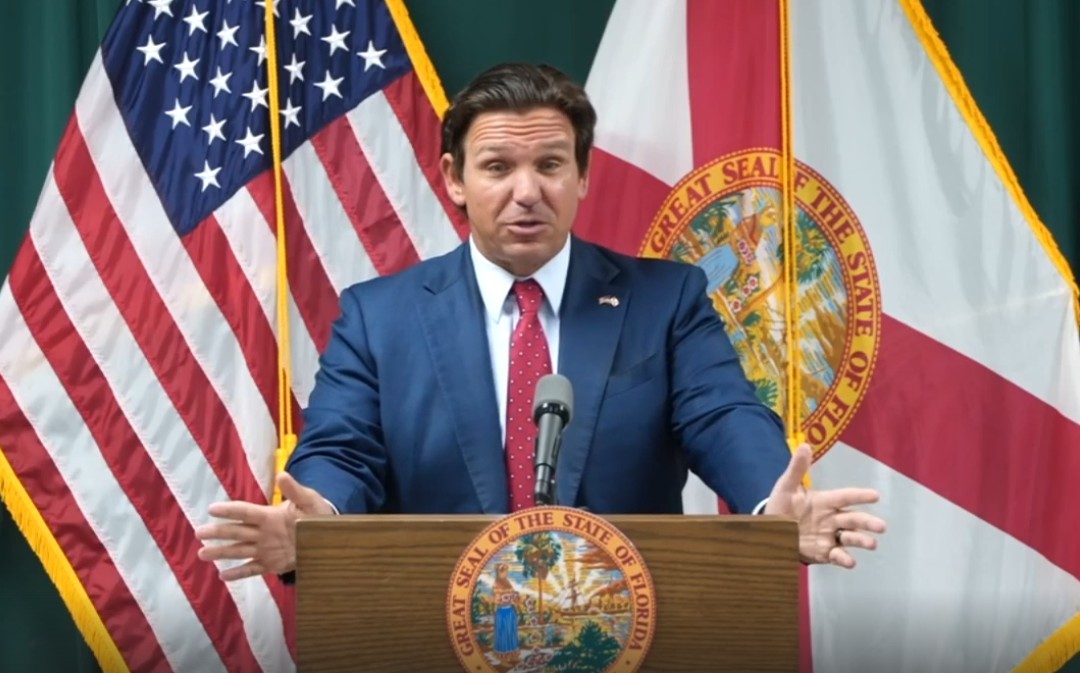
Cities and counties will be required to publish those lists starting next year as a result of a new law (HB1329) signed by Gov. Ron DeSantis this summer.
But Winter Park is getting a jump on the exercise.
With potential property tax cuts looming in the form of Amendment 3 on the November ballot, city managers asked each department to lay out cuts to reduce their budgets by 10% (This exercise will be mandatory for local governments next year as a result of the new law.)
The results?
Here’s just a sample of what’s on the budget fat list in City Hall:
Eliminate a code enforcement officer position that is currently vacant ($75,000)
Eliminate funding for the Public Art Advisory Board ($15,000)
Eliminate the mailed printed version of quarterly Winter Park Update newsletter and monthly inserts in utility bills ($71,900)
Eliminate the use of accepting cash for city services like permits or other needs at the City Hall windows ($50,000)
Eliminate two vacant firefighter positions ($200,000)
Close a Fire Rescue engine company ($1.25 million)
Begin closing the library every Monday ($210,000)
Reduce garbage collection to one day per week ($300,000)
Reduce tree plantings, canopy maintenance and eliminate residential tree permits among other changes ($600,000 combined)
Eliminate the Historic Preservation Grant Program ($100,000)
Eliminate four police detectives, one traffic officer, one community service officer and two officers dedicated to homeless outreach ($1.15 million)
Eliminate body-worn cameras and live crime center for the police department ($300,000)
Reduce funding to community organizations such as the Winter Park History Museum, the Albin Polasek Museum & Sculpture Gardens, Mead Botanical Garden, Blue Bamboo and more. ($243,500)
You get the idea. And that’s not the complete list.
Also, to be clear, the spreadsheet of potential cuts provided by City Hall included about 45 items. Some of those were ways to increase revenue for the city (such as adding more red light cameras, which could result in $750,000 in new revenue). Even so, the total did not add up to $9.5 million or about 10% of the proposed budget’s nearly $95 million general fund. The proposed all-funds budget, which includes the utilities and other funds, is up to $247 million.
The Voice totaled the spreadsheet to about a $7.8 million overall reduction (including some revenue gains proposed).
“As you can see, getting to a budget cut of 10% would not be painless,” Mayor Sheila DeCiccio told the community in an email she sent out this week. “It could mean fewer police officers and detectives, longer emergency response times, reduced park maintenance, one-day a week trash collection, and fewer community programs.”
She asked residents in the email what they prefer to cut, explaining, “I’m writing this email because I believe you, our Winter Park residents, deserve to see the potential cuts that are being discussed. As always, I’m committed to full transparency.”
Winter Park staff estimates Amendment 3 would require cuts of $3.4 million in 2028 and $6.7 million in 2029. So far shy of the 10% exercise. But not far off once a few years into the new tax structure if it wins by the required 60% of voters in November.
The Voice has heard from some readers who appear to be under the impression that police and fire or other “essential services” can not be cut under Amendment 3, which would increase the homestead exemption ultimately to $250,000.
But that’s not the case. Cities and counties will still provide emergency services, to be sure, but at what level?
Florida House Republicans approved language that would ban local governments from reducing money for law enforcement, firefighters, and first responders below the level in either fiscal year 2025-26 or 2026-27, whichever was higher. But the Senate never approved that version and it died during the Legislative session.
That’s why police and sheriffs’ organizations have spoken out about the potential impact of the amendment and cuts that could result from it.
“The Florida Sheriffs Association is significantly concerned with Constitutional Amendment 3, which potentially allows Tallahassee to control your local budgets, creates longer law enforcement response times, limits communities’ abilities to provide road repairs and stormwater removal — these are a few things voters deserve to be aware of,” the organization said this week on Facebook.
And the soaring cost of police and fire service is a main driver of the growth in the budget the City Commission will consider this month.
Record-high pension costs for police officers and firefighters as well as a new labor contract with the Fire Union that included a 12% pay increase in 2026 will account for 70% of new costs in the proposed 2027 budget.
In 2021, for example, the starting salary for a Winter Park police officer was $22.84 an hour or about $48,000 a year. Today it’s $30.34 an hour or more than $63,000 a year.
Police Chief Tim Volkerson has said the increases are the result of pressure on wages from other departments who have raised pay as they have struggled to hire and retain officer.
The city has 121 full-time police staff and three part-time staff slated for 2027, up from 115 full-time staff and 13 part-time staff in 2023.
The budget for the fire department is up from $13.2 million in 2020 to a proposed nearly $19 million for next year. The department has grown from 81 full-time staff and two part-time staff in 2023 to 84 full-time staff and three part-time staff.
Translated into savings for individuals residents, homesteaded property owners would pay about $818 less per year to Winter Park. The total tax savings per year for Winter Park homeowners if the ballot measure passes would be $1,783, including the reduction paid to the city as well as the reductions in taxes paid to Orange County and St. Johns River Water Management District. (Taxes paid to schools would remain unchanged under the tax proposal on the ballot.)
The City Commission is slated to hear public input and consider portion of the budget at this meetings this month on Aug. 12 and Aug. 26 before final adoption of the budget by the end of September.
The attorney and Winter Park resident said he would like to preserve the house. The real estate agent for the sellers said the offer was too low.
July 6, 2026
By Beth Kassab
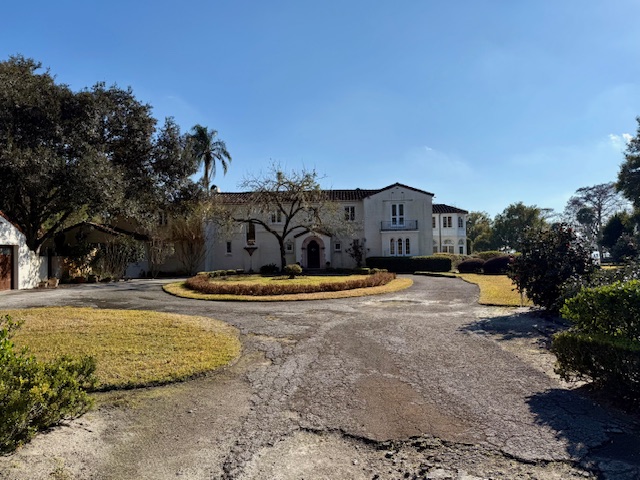
Matt Morgan, the Morgan & Morgan attorney who lives in a home on Winter Park’s Historic Register, said he made a verbal offer of $10 million last year to purchase the entire Merrywood lot and reinitiated the offer last week with, he said, the intention of preserving the nearly 90-year-old estate that is significant because of its age and as the largest and most ornate home built by architect James Gamble Rogers II.
Mick Night, the real estate agent handling the transaction, said the sellers considered Morgan’s offer to be too low. He said he didn’t include the information in his discussion with the commission because he never had a conversation with Morgan about saving Merrywood.
“There was never a discussion with Matt about preserving the house a year ago,” Night said. “His offer was for the land.”
Morgan agreed that such a discussion did not take place. He added that his offer at the time was not contingent on a lot split and that he is interested in seeing the home maintained.
Lakefront lot splits are generally prohibited by Winter Park, which is why the amendment to the comprehensive plan is required. The change requires a second vote after the state takes 45 to 60 days to review the amendment, likely landing the next time the City Commission considers the matter sometime in August.
A greenlight for the lot split would pave the way for the old house to be demolished — a demolition permit is already active and set to expire Aug. 31 — and two new lakefront homes to be built in its place.
“They [the City Commission] heard there’s no other options … yes there is,” Morgan told the Voice after reading news stories about the vote. “If I see a bulldozer pull up to that house and I didn’t say something, it would bother me.”
Commissioners were told that more than 100 people toured Merrywood and not a single person was willing to purchase and preserve the home because it was too expensive, required too much work or both. Commissioners heard about the attempts to market and sell the estate from one of the sellers as well as the prospective buyer who has the property under a contract that is contingent on the lot split receiving final approval and Night, the Sotheby’s real estate agent who represents them both.
Morgan walked through the home with Night nearly a year ago in early August just as the property became available. Morgan said that a short time later he sent Night a voice memorandum communicating the $10 million offer that he says was not contingent on a lot split. By the time Morgan heard back from Night, he said it was early September and Night told him that that the property went under contract shortly after Morgan toured the estate.
That contract belongs to Tara Tedrow, the land use attorney with the Lowndes law firm who grew up next door to Merrywood and applied for the comprehensive plan change that would allow the lot to be split in two so that she could build a home for her family on one portion while the other is sold.
Night said $10 million was too low for Cathy and Raymond Gilmer, the siblings who inherited the property when their parents, who had lived in the home since 1977, died.
“That was not a number the Gilmers, last summer or anytime since then, have ever been open to selling the property for,” Night said.
Night declined to give the price of Tedrow’s contract on the lot. During a public city work session on June 22 he estimated the land value of the lot to be in the range of $13 million to $15 million.
Night told the City Commission that, while he never listed the home on the MLS, more than 100 people toured the property, including what he estimated to be 15 to 20 people qualified to make such a high-dollar purchase and that none offered to preserve Merrywood.
“All left the property shaking their head, hands in their face,” Night said during a June 22 work session with the City Commission. “They just don’t see it. We haven’t had traction with one buyer.”
Two days later at the regular Commission meeting, Mayor Sheila DeCiccio asked Night: “Is there anyone interested in purchasing that home?”
He replied, “The answer is no. Not one of the viable buyers, much less anyone else, left that house and said, ‘Wow, there’s so much potential here.'”
Night told the Voice on Monday that his comments at the commission meetings intended to convey that he didn’t receive what he considered to be “bona fide offers.”
“There have been many offers,” he said, but none have been “anywhere near reality” on price.
At one point in the June 24 meeting, Tedrow suggested that the price of the Merrywood portion alone would be about $12 million if the lot was split. It’s unclear how that figure is reconciled with Night’s estimate that the land value of the entire lot is at least $13 million.
Morgan said if the city allows the lot split without assurance that the house is preserved then “the city gives everything and gets nothing in return.”
“If the city voted to allow this, they are voting to allow all residents to split lots in the future and get nothing in return,” Morgan said. “It would be one thing if there was some type of meaningful consideration for the city in exchange for the lot split, most notably, preservation of a very important historic home to the city. However, as currently contemplated, in my opinion — the buyers would likely make a meaningful profit and the people (the city) would get nothing in return.”
Morgan isn’t inexperienced when it comes to historic homes. He spent $10.5 million in 2022 for a house that sits on about 3 acres on Winter Park’s Lake Maitland, according to property appraiser records. The 1926 home was designed by Maurice Kressly, another notable local architect, and was placed on the city’s historic register in 2002 by previous owners. It is larger than Merrywood at about 10,000 square feet.
He told the Voice that his original $10 million offer for the entire Merrywood lot still stands and that he made a second $5.5 million offer on Friday to purchase a portion of the lot and preserve Merrywood.
“I think it’s important to the community that the home not be torn down,” Morgan said in a text message to Night on Friday that he shared with the Voice. “For that reason, I am offering to purchase the Merrywood estate for 5.5M. We can split the lot at 1.835 acres each parcel and the current contingency contract holders can build their home on their 1.835 acre lot. I will make a covenant to the city that I will not tear the house down … Alternatively, my offer for 10 million for the entire parcel stands.”
It would be difficult or impossible, according to documents filed with the city and public discussion, to split the lot exactly in half with a straight line from Palmer Avenue to the lake without removing a portion of the Merrywood house that was added on in the 1960s as well as a portion of the swimming pool.
Morgan said if he purchased the entire lot he would also want the ability to split it in the future, but his interest didn’t hinge on that.
“I said of course I’d love that optionality [of a lot split] if I could get it, but it’s such incredible land and such an incredible house that wasn’t a contingency for me,” Morgan said.
He agreed the home is in need of a lot of work and would be expensive to restore. He said if he was the buyer he would look to renovate Merrywood over a number of years and not right away.
The chairman of the board of Friends of Casa Feliz, a group that advocates for preservation and worked with Tedrow and Night to get the word out about the house in hopes of finding a buyer, said news of Morgan’s offer is “extraordinarily encouraging.”
“It demonstrates what many preservation advocates have said from the beginning: Merrywood can be saved, and there is a real market in Winter Park for significant historic properties,” said a statement from Chairman John Bill.
He urged the City Commission to make saving Merrywood a condition of the approval of a lot split.
“To reward the demolition of this resource, now that there is a demonstrated buyer, with a change to our comp plan without requiring designation, would be unconscionable,” the statement said.
At the end of the discussion during the June 24 commission meeting, Tedrow said the sellers were willing to wait until the next vote before they demolish the house even though they are permitted to do so anytime.
DeCiccio said the agreement would “give another 45 to 60 days for someone to come forward for that property and purchase it and designate it historic so we’re buying more time.”
It remains to be seen if Morgan’s offer will be enough, if another buyer will step forward or if Merrywood will be the latest Gamble Rogers house to be reduced to photographs in an archive.
Night and Morgan are planning to meet to discuss the property.
The nonprofit music venue did not receive the assurances it was seeking from the City Commission that there was room to renegotiate the lease for the old library building
June 25, 2026
By Beth Kassab
No clear resolution emerged Thursday from a contentious meeting over the future of the Blue Bamboo, which was seeking a rent reduction or some other accommodations from the city government to continue operating in the old library building.
But none of the five commissioners expressed support in the work session for changing the terms of the Blue Bamboo’s lease, though Commissioner Elizabeth Ingram suggested handing the lease to another arts organization that could perhaps sublease space to the nonprofit music venue.
At issue, is the Blue Bamboo’s ability to meet its lease obligation when the rent is scheduled to double in August without subleasing the second and third floors.
Blue Bamboo Director Jeff Flowers said no arts organizations can afford the necessary rent on those floors and that he’s also been hampered by construction delays. He said he wants the flexibility to divert from the original vision of transforming the building into an arts hub and, instead, potentially lease space to non-arts nonprofits or commercial businesses.
Mayor Sheila DeCiccio quickly countered that she’s heard from a number of arts groups and the problem is not that they can’t afford the rent, but that they can’t work with Flowers and other leadership at the Blue Bamboo.
“We have letters from people who said they could not deal with you,” DeCiccio said, noting that Flowers and Blue Bamboo Founder Chris Cortez dictated the amount of the rent and other terms and were made aware of issues in the building that would need to be addressed during construction.
“You came to the commission with the rent figures,” DeCiccio said to Flowers. “We didn’t fight you on that. You gave us those.”
Flowers said the assertion that other arts leaders were unable to work with him on lease terms is false.
But Theresa Smith-Levin stood up to talk about why Central Florida Vocal Arts walked away from dealing with the Blue Bamboo nearly a year ago after working with the organization for more than a year to secure the city lease as well as a grant from Orange County funded by hotel hotel tax money.
She said she was shocked to read in Flowers’ recent memo to the commission that CFVA “lacked the financial capacity” to meet the lease.
She pointed to her organization’s tax return that showed stronger financial growth and capacity than the Blue Bamboo.
Smith-Levin said her group had no problem assuming half the rent or about $11,000 per month.
What she said she was unwilling to do was accept what she called a “bait and switch” of terms such as restricting CFVA’s operating hours to only before 5 p.m. and capacity limitations. She said the terms were unworkable for an arts organization that relies on evenings to host rehearsals and provide lessons for students.
She said the terms were in “direct contradiction” to the conversations she had with Cortez, who died of brain cancer last year just months after she walked away from the deal.
Flowers said he was “misrepresented” and asserted their disagreement actually hinged on whether CFVA could rent out space to others.
At one point, Ingram — whose own background is as an opera singer — suggested Smith-Levin’s group could take over the main lease of the building and rent space back to the Blue Bamboo so that it would not lose its investment in construction on the building.
Commissioner Warren Lindsey asked Flowers if he had a Plan B if he were unable to continue to meet the terms of the lease.
Flowers offered that he did not want to lose his organization’s more than $2 million work on the building.
“First, the plan is let’s work together and come up with a plan that works for both of us,” he said.
A number of people from the community spoke in favor of the Blue Bamboo and the opportunities it provides for younger musicians as well as the paying gigs it provides professionals.
DeCiccio, the only commissioner who voted against the lease in 2024, suggested that perhaps Flowers could attempt to secure additional grant dollars that would allow the organization to move to its own building.
Lindsey echoed that point, saying he appreciated the venue’s contribution to the arts, but that the commission needed to protect its interest in a highly-visible building.
“We have to be good stewards,” he said. “It’s a city asset.”
Blue Bamboo Seeks Rent Decrease or Other Changes to Lease
The music venue opened in the city building that was once a library last year but has failed to secure upper floor tenants to help cover rent that is scheduled to increase in August
June 22, 2026
By Beth Kassab
The Blue Bamboo will ask city commissioners this week for rent relief, changes to its lease that could allow for a private school or a commercial tenant on its upper floors or other changes that Executive Director Jeff Flowers says is necessary to sustain the group that transformed the old city library into a performing arts venue.
A City Commission work session is scheduled for Thursday afternoon to discuss a series of options proposed by Flowers.
In August, Blue Bamboo’s lease on the city-owned building is scheduled to double from $11,000 per month to $22,000 per month.
“Current earned revenue from performances and traditional nonprofit arts tenancy alone is insufficient to sustain this increase,” reads a memorandum from Flowers to the city.
A reckoning over the lease is playing out a year after the nonprofit held its first performance in the city space followed quickly by upheaval when Central Florida Vocal Arts, the original tenant slated to take the second floor and help pay the rent, walked away from the deal and then, a few months later, the death of Blue Bamboo founder Chris Cortez from brain cancer.
Since then, Flowers, a former Maitland city commissioner and Blue Bamboo board member who financed the early construction of the new venue, took over leadership of the small nonprofit and has tried to secure new tenants to occupy the second and third floors.
Flowers said the Blue Bamboo has hosted nearly 200 events so far and invested $2.3 million, including more than $1 million in grants, in renovating the building. Orange County pledged nearly $1 million in the form of a Tourist Development Tax grant toward the project.
City spokeswoman Clarissa Howard confirmed the Blue Bamboo remains current on its lease payments to date.
Any changes to future rent amounts or other changes to the lease will be a policy decision made by the Commission.
The elected officials could decide to offer the Blue Bamboo a rent reduction or changes to the lease that would make it easier for the organization to sublease out the second and third floors. Or the Commission could decide to hold to the original lease and potentially sell the building or use it for a different purpose if the Blue Bamboo can’t continue to meet the terms.
The arrangement is likely to be complicated by intensified budget pressures facing Winter Park and other local governments as Gov. Ron DeSantis and the Legislature are pushing voters to approve property tax cuts on the November ballot, a measure that would result in significant revenue reductions for cities and counties.
Mayor Sheila DeCiccio was the lone vote against the Blue Bamboo lease in 2024 after she questioned the group’s financial wherewithal to follow through on the terms it proposed to the city.
Cortez and Flowers assured the commission at the time that the group’s business plan was viable.
Then-Commissioner Todd Weaver championed the Blue Bamboo from the dais and joined the Blue Bamboo’s board of directors after he left office and is now listed as its vice president.
Awarding the lease for the old library to the Blue Bamboo ended the city’s years-long quest to find a use for the prominent building left vacant after the Library & Events Center opened on Morse Boulevard at the end of 2021.
On Thursday, commissioners are slated to discuss the matter but are prohibited from taking votes during a work session. The lease is likely to be up for an official vote sometime this summer.
What Does Winter Park Stand to Lose if Property Tax Cuts Pass?
Voters are expected to decide a ballot amendment in November initiated by Gov. Ron DeSantis and the Florida Legislature that could dramatically alter how local governments operate
June 5, 2026
By Beth Kassab
What does Winter Park stand to lose if voters approve the plan by Gov. Ron DeSantis and the Legislature to dramatically reduce property taxes?
A picture of the potential fallout is becoming more clear just days after the Florida House and Senate voted to send the measure to the November ballot. Here’s what we know so far:
How much money will Winter Park lose?
Let’s break down the numbers.
In 2025, Winter Park collected about $48.5 million in taxes, according to Orange County Tax Collector Scott Randolph. The bulk of that, or about $41.1 million, is what is targeted by the state ballot amendment. Those are the dollars collected on real property — houses and businesses — based on that property’s assessed value.
Tax money that comes in from real property is divided into two categories: Homestead (the houses people live in and claim as their primary residence) and non-homestead (commercial properties, businesses, second homes or rental properties or other land).
The change ordered by the Legislature garnering the most attention is a reduction in what cities and counties will collect on homesteaded property. (Note: The Legislature revised DeSantis’ proposal, which would have also reduced taxes that support schools. So the new rules would not apply to school taxes.)
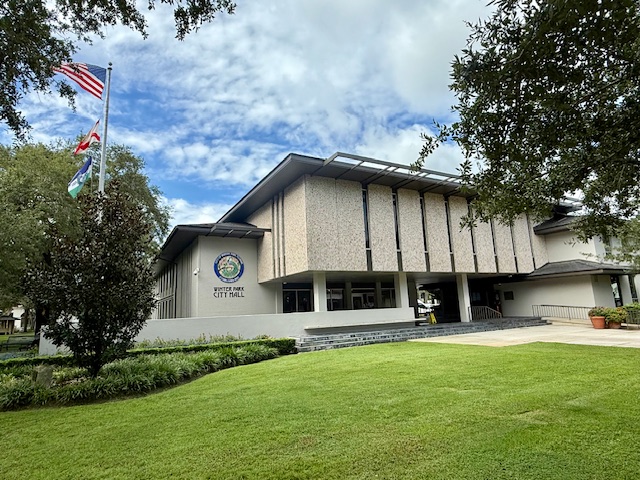
Winter Park City Hall
Winter Park collected $19.8 million in 2025 from homesteaded properties. If voters approve the proposed increase to the homestead exemption from $50,000 today to $250,000 in 2028 then those collections would drop to about $14.2 million, according to Randolph’s projections. The reduction would first be felt, to a lesser extent, by cities and counties in 2027 when the homestead exemption would jump to to $150,000 before increasing to the full $250,000 the following year.
So that’s a loss of $5.6 million based on today’s numbers or a 28% reduction in collections on homesteaded properties. The overall hit to the city’s tax roll appears closer to 12% because stormwater fees ($6.3 million), tangible property taxes ($1 million on equipment and furnishings in businesses or rental properties) and non-homesteaded property taxes ($21.2 million) aren’t affected by the change to homestead exemptions.
This year the city spent $5 million more just to cover basic cost-of-living and 3% merit raises for city staff, including more competitive wages for police and additional emergency call center staff as the city took on dispatch duties for Maitland.
The entire capital improvement budget for the Community Development Agency, which is funded entirely through property taxes, totaled $5.7 million. That included $3.2 million to fix drainage and infrastructure problems on West Fairbanks Avenue, Canton Avenue and the MLK Park basin. Another $2.5 million went to the Park Avenue Refresh project, which includes new street lighting, sidewalks, landscaping, underground infrastructure and other work.
The rebuilding of Fire Station 62 on Lakemont Avenue is estimated at $5.8 million, a project the city put off again this year because it didn’t have the funds.
Mayor Sheila DeCiccio predicted noticeable cuts will be made if the new proposal goes into effect.
“This will be devastating,” DeCiccio said after the Legislature’s vote. “We will be assessing what services the city may have to cut.”
The entire city budget is $233 million this year. That includes the two utilities that fund themselves with a combined nearly $100 million in what customers pay for water and electric service.
Beyond that, the single biggest source of revenue for the city is property taxes.
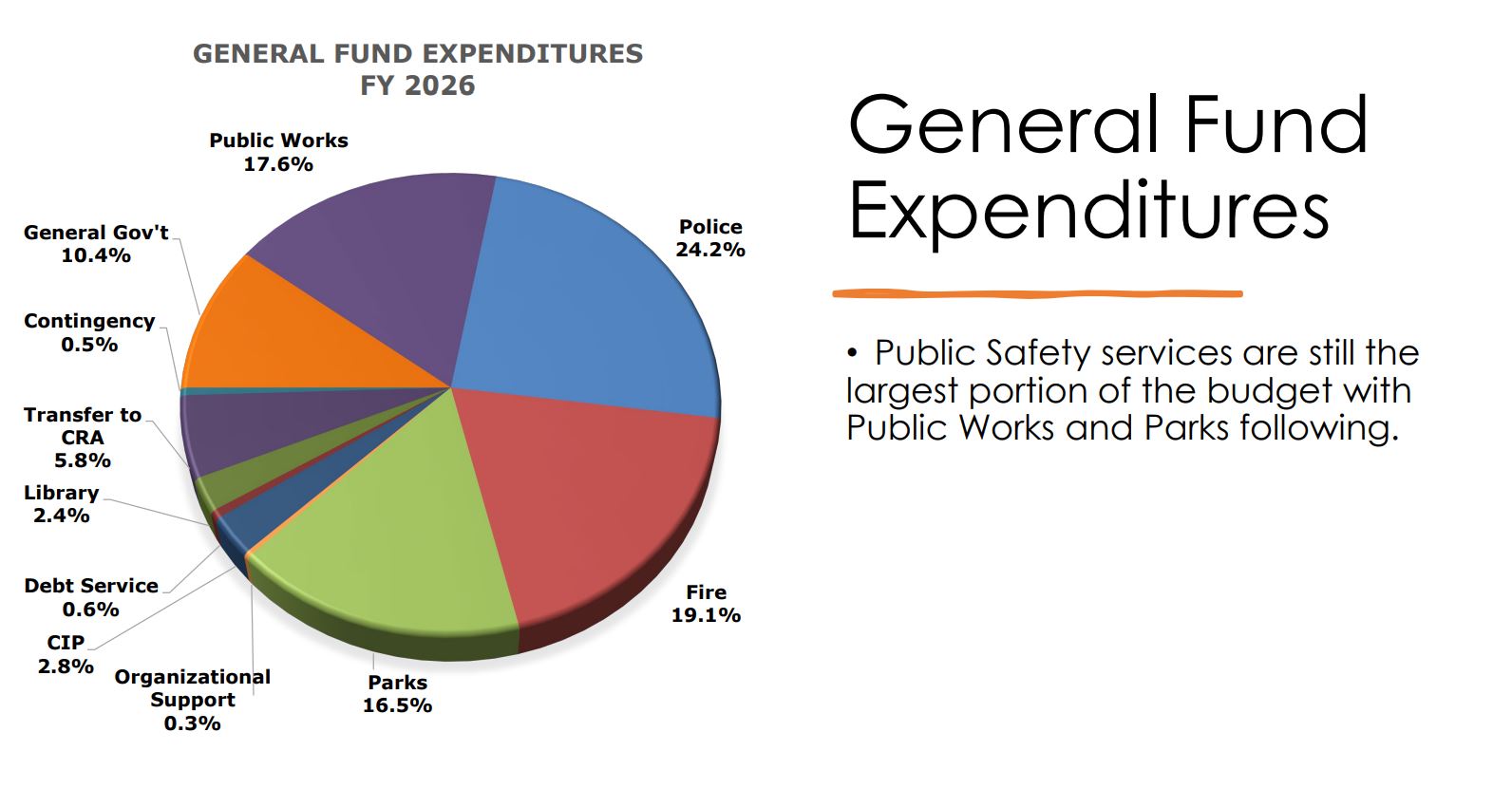
Those taxes are the biggest contributor to the city’s almost $90 million general fund, which is responsible for all of the front-line services like police and fire rescue (the two biggest expenses), parks and recreation and public works.
“Property taxes are continuing to row the boat for the city’s fiscal picture, rising 7.6% and accounting for 44% of General Fund revenue,” reads the budget document from last year. “This stabilizing force is what keeps most city services humming. Its rate of growth is sufficient to support the existing level of city services, but it is limited in what it can provide in excess of just staying on course.”
So is that all?
No. There’s more. The ballot amendment would also hamstring cities and counties by limiting future growth in the amount of taxes collected on non-homesteaded properties.
The cap on annual assessment increases for those properties — anything from a Publix grocery store to an Amazon warehouse to a vacation home — would drop from 10% to 5%.
That represents future savings for billion-dollar corporations and less future revenue for local governments to use for police, fire rescue, roads and everything else property taxes pay for.
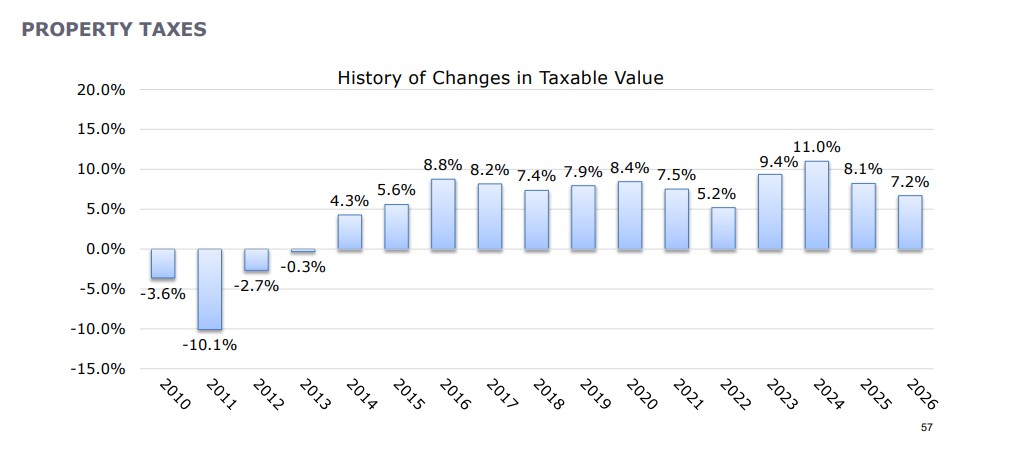
Growth in property values is how a city like Winter Park, which has enjoyed a brisk real estate market for years, has managed to increase its budget without raising the tax rate for 18 years.
A little more than half of the city’s total ad valorem collections or about $21.2 million come from non-homesteaded properties owned by everyone from small business owners to deep-pocketed corporations who will save money as a result of the new cap.
The exact amount of future unrealized growth is hard to quantify, city officials say.
But this chart from the budget shows the importance of the increase in assessed values year to year:
But even before the new ballot amendment was in play, city officials were beginning to warn of a softening in that growth and the need for belt-tightening.
“The General Fund is seeing continued increases in property tax revenue due to increasing valuations in existing real estate which has traditionally been the primary support of the majority of the growth in revenues over time,” the budget reads. “However, this revenue source is continuing its slowing trend and could indicate tighter years ahead.”
If approved, the new cap will exacerbate that picture.
What else does the ballot amendment do?
In addition to reducing revenue cities and counties have to work with, the measure would also restrict how that money is spent.
Property taxes would only be able to pay for items that fall in one of the following buckets, according to a Senate press release:
Public safety, including law enforcement, fire service, and emergency medical service
Education and public schools (additional funds beyond operational expenses covered by school board taxes)
Road and bridge construction and maintenance, stormwater control, and other infrastructure projects
Natural resource projects, including flood control measures
Retirement benefits of local government employees
Bond obligations
Operations and administration of county officers and commissioners and municipalities, and approved expenditures
Assistant City Manager Michelle del Valle, who will be in the top role next year when the changes begin to take effect after City Manager Randy Knight retires, said city staff is already starting to assess what may or may not fit into those categories. Some items in question, she said, are considered core services that residents have come to expect.
“The biggest one that we’re going to have to start working on is Parks and Recreation,” she said. “But also the library … all of our cultural partnerships.”
The Winter Park Library & Events Center.
This year the Parks budget is nearly $15 million. The city spent about $2.4 million on its library this year. And more than $500,000 went to cultural and nonprofit organizations through the general fund and the CRA such as Mead Botanical Gardens, Winter Park Historical Association, Winter Park Day Nursery, United Arts, Blue Bamboo, Polasek Museum, Enzian Theater, Heritage Center, Welbourne Day Nursery and Winter Park Playhouse.
DeCiccio said the attempt to cut local budgets is an extension of a longstanding effort by Tallahassee to chip away at the power of local governments.
“Where are people supposed to go?” DeCiccio asked. “Are they supposed to go to the state to complain about potholes in the roads? It’s very, very frustrating.”
The proposed ballot amendment, she said, strips voters of a layer of autonomy and accountability to closest to where they live.
It’s more often the city and county commissioners vs. state officials who run into residents at the grocery store or in the school pick-up line and hear their frustrations about uneven sidewalks or broken streetlights, a desire for more shade trees or a plea to help the arts.
“What about libraries? What about playgrounds? They are taking away our ability to fund these items,” DeCiccio said. “We have the No. 1 children’s library in the state that’s now open seven days a week. How are we going to keep paying for that?”
What can cities do in response?
Even before the proposal to cut property taxes, cities like Winter Park began raising prices on everything from after-school programs run by the parks department to stormwater fees and electric rates to compensate for rising costs in recent years.
For example, at the most recent City Commission meeting, commissioners approved a contract extension for Waste Pro, which provides garbage collection. The city doesn’t make money off the contract — it’s a pass through — but residents’ monthly rates have shot up from $14.99 in 2022 to $22.22 in 2025.
And residents could pay more in other ways.
Cities and counties could choose to increase the millage rate on properties — something Winter Park has avoided for 18 years — to blunt the effect of the proposed changes.
“If county and municipal governments raise millage rates to recoup the lost revenue, that would result in higher property taxes on the portion of the value of homestead properties that remains taxable, as well as on the many properties that do not qualify for the substantially higher exemption, including the properties of new Florida residents and second homeowners, commercial properties (including apartment complexes), and industrial and agricultural properties,” reads an analysis from the conservative-leaning Tax Foundation. “This would make Florida’s property tax system far less neutral and disincentivize the purchase of certain classes of property.”
Or, the foundation argues, policymakers could choose to increase the sales tax to help make up for lost property taxes.
“Since Florida’s tax structure includes no individual income tax, sales taxes and property taxes are the primary sources of state and local tax revenue,” the group said. “Replacing the lost property tax revenue with sales tax revenue would require substantially higher local and/or state sales tax rates, a sweeping expansion of the sales tax base (likely to more than just final personal consumption), or a combination of these approaches.”
Winter Park doesn’t set the sales tax or the local gas tax. That’s done by a combination of state and county officials. But it does share in sales and gas tax revenue, though that revenue is far less than property tax revenue for the city.
Winter Park’s 2026 budget included $5.6 million from sales tax and just under $1 million from the local option gas tax, a fraction of the more than $41 million it received in property taxes.
What happens next?
As with any ballot amendment, there is likely to be litigation and fights over the ballot language.
But once it makes the November ballot, at least 60% of voters must approve it in order for it to pass. That’s a heavy lift in Florida.
In 2024, there were six constitutional amendments on the Florida ballot and all but two failed to capture the required 60% approval. That was the year an amendment to legalize recreational marijuana and to limit government interference with abortion received 56% and 57% of the vote, respectively, but fell short of the 60% threshold.
But an amendment related to property tax exemptions passed with 66% of the vote. It provided for an annual inflation adjustment for the value of the homestead property tax exemption that applies to non-school taxes.
Two years earlier, though, a 2022 amendment to increase the homestead exemption for public service workers including teachers, law enforcement officers and others failed with 59% of the vote.
What about Winter Park’s next budget?
City officials say they still plan to present a proposed budget to the City Commission in July on the typical schedule.
The next budget is based on the 2026 tax roll and would not be impacted by the proposed changes, which aren’t set to take effect until next year if they win voter approval.
But officials say they are cognizant of what potentially lies ahead and are taking that into account.
The City Commission usually begins to hear public input on the budget in August and must adopt it by the end of September before the start of the next fiscal year in October.
We Depend on your support, make a tax-deductible donation here.
Mission
The Winter Park Voice is a trusted nonprofit journalism site that covers our City Hall and beyond. We endeavor to engage, inform and connect citizens on all sides of issues affecting the quality of life in Winter Park.





Recent Comments