by Beth Kassab | Oct 15, 2026 | Chain of Lakes, City Commission, Historic Preservation, News, Zoning and Development
Commission Delays Merrywood Vote as Preservation Talks Continue
Matt Morgan is still trying to buy the property as Commissioner Kris Cruzada pushes for compromise for ‘conscience’ of city
Oct. 15, 2026
By Beth Kassab
The fate of Merrywood remained uncertain the morning after a more than four-hour meeting devoted to determining how much, if any, of the historic property must be preserved for its new owner to get permission from the City Commission to split the lakefront lot he purchased in August for $15 million into two.
As these debates often do in Winter Park, the discussion touched on more than the fate of one house. For many, it reflected a collective angst over losing the architectural diversity and history that, along with its walkability and lush tree canopy, have long earned the city acclaim as a destination for visitors and people seeking a Florida lifestyle in a New England-style village.
Natalie Brethauer, one of at least 10 people who signed up to speak at the meeting, illustrated that tension between old and new. She told commissioners she grew up in Winter Park, moved away for college and lived in other vibrant cities, including Denver, Houston and the Old Town neighborhood of Alexandria, Va., before returning home and marrying at the Capen House, which had been slated for demolition before it was floated across Lake Osceola to be preserved.
“The whole reason I came back to Winter Park is because it is such a unique and beautiful place to raise a family and live,” she told commissioners. “And something that I’ve noticed since moving back, and it’s really ramped up post-COVID … It looks as though it’s like a dystopian-type vibe happening here. You go down Palmer [Avenue], and to me, I describe it as like an evil villain lair in ‘The Incredibles’ movie or something. Like, what are these homes that are being built? I thought the whole point of Winter Park was its beautiful historical charm, and that was the lure and the draw, and so it’s just really sad to see a lot of that going away.”
She was referring to the proliferation of what have become known as “white box” houses. Though they aren’t always white, the homes feature sharp edges and an ultra-modern aesthetic more common in, say, Miami Beach than along the local brick streets fronting the Chain of Lakes.
After the meeting, Commissioner Kris Cruzada, who voted in June along with Mayor Sheila DeCiccio and Craig Russell to approve a lot split without any preservation conditions, said he considered Brethauer’s comments representative of part of the “conscience” of Winter Park. He said that sentiment was one reason he pushed so hard Wednesday night for a compromise that would preserve some portion of Merrywood in exchange for allowing the lot split.
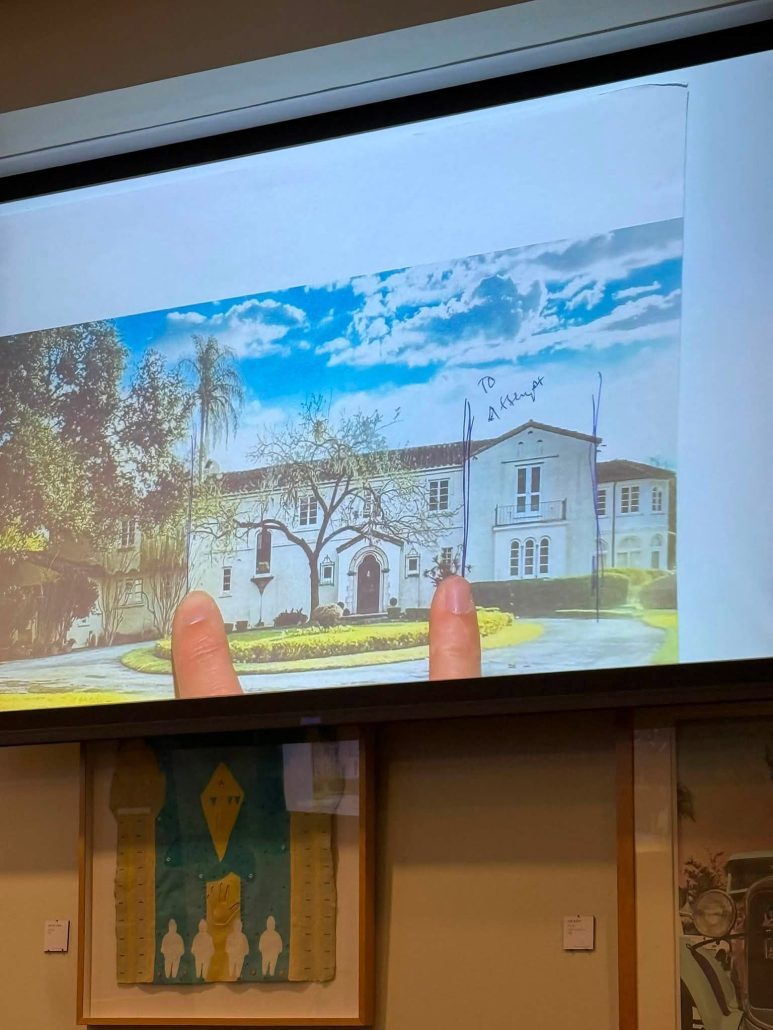
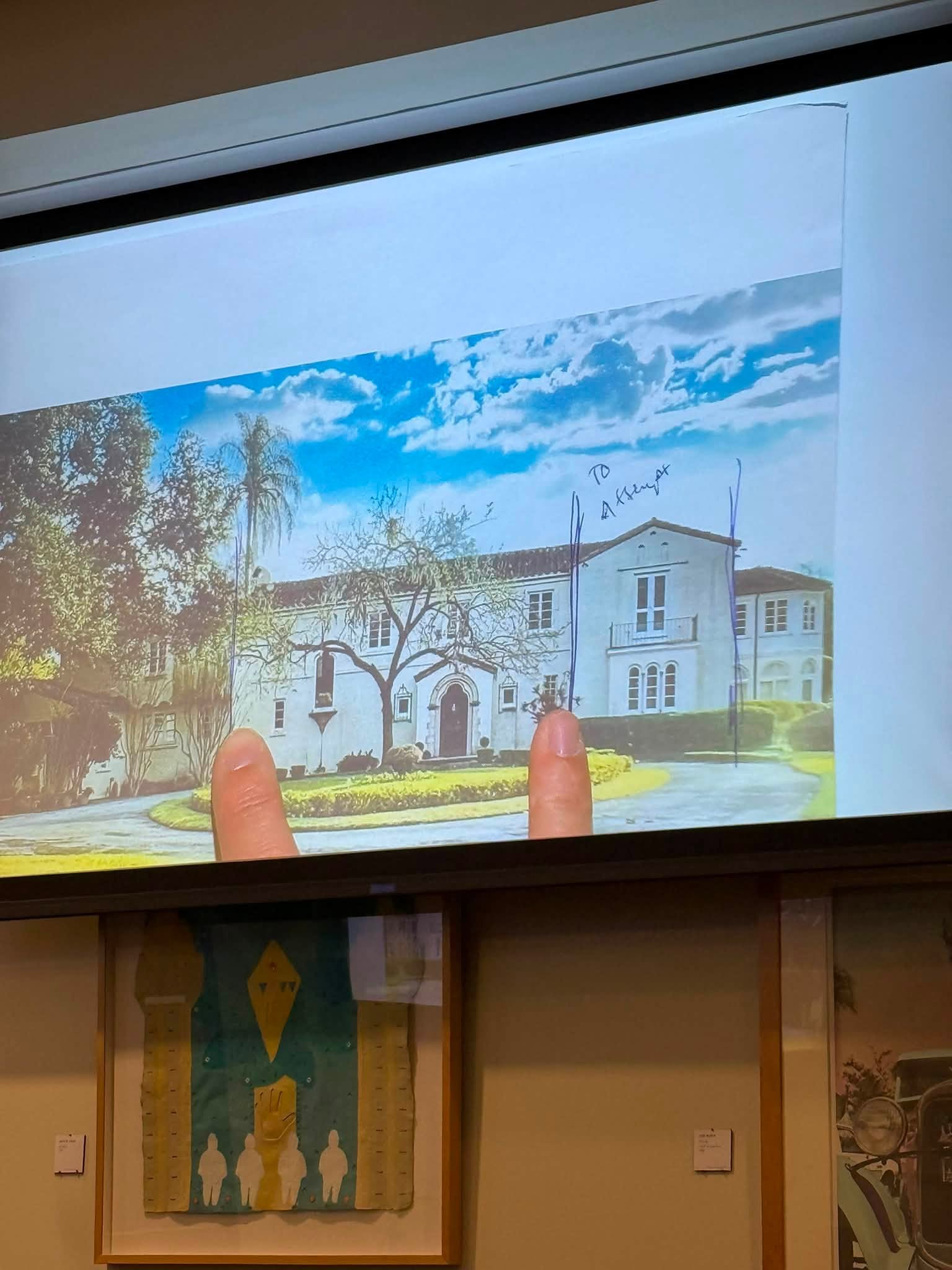
Attorney Jason Searl, who represents Steve Lockwood, points to areas on the Merrywood facade that could potentially be saved.
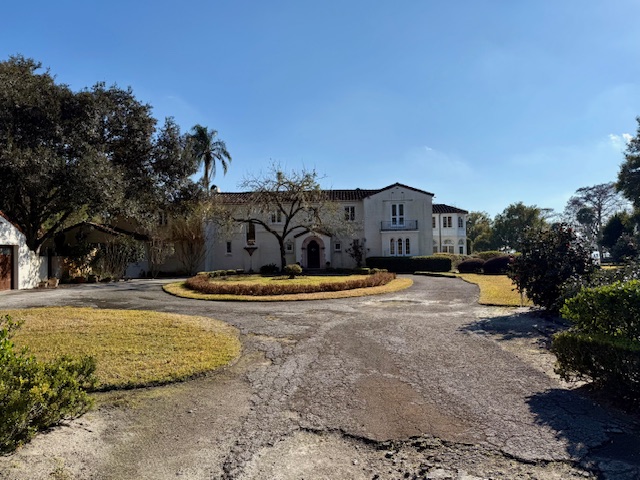
The property at 1020 Palmer Ave. has already set a record for the highest sale price in Winter Park at $15 million. It would become even more valuable if it were subdivided so that a portion could be sold separately.
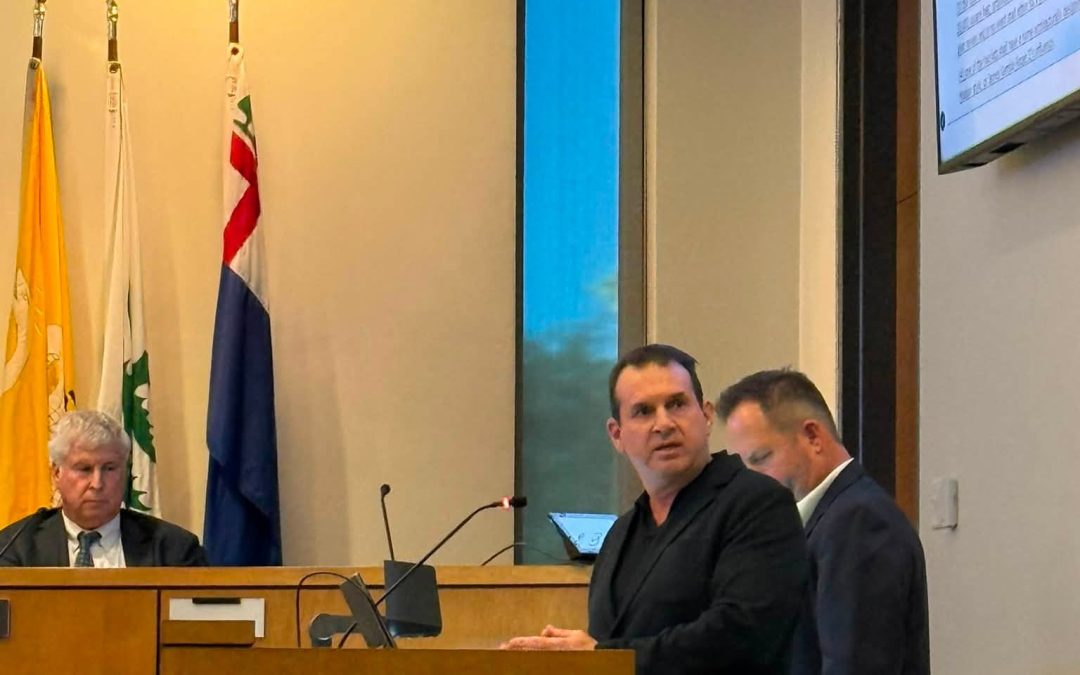
Lockwood said during the meeting that a close family friend wanted to purchase the new lot and build a house there. Lockwood, who sat through the hours-long meeting with his wife and daughter, said he plans to build a new house for his family behind Merrywood. The existing house would be at least partially demolished and converted into what he called a “guest house.”
After the meeting, Lockwood told the Voice he would hire an architect and try to determine what would be feasible under a condition proposed by Cruzada that would require preserving a portion of the nearly 90-year-old estate. The house was designed by James Gamble Rogers II and is listed in Florida’s database of historic and cultural assets.
Cruzada’s shift in position was key to the commission’s unanimous 5-0 vote to delay a decision until Nov. 11, giving new owner Steve Lockwood time to outline what portion of the house he believes could be preserved.
Commissioners discussed retaining only a portion of the facade, or front wall, while gutting everything else.
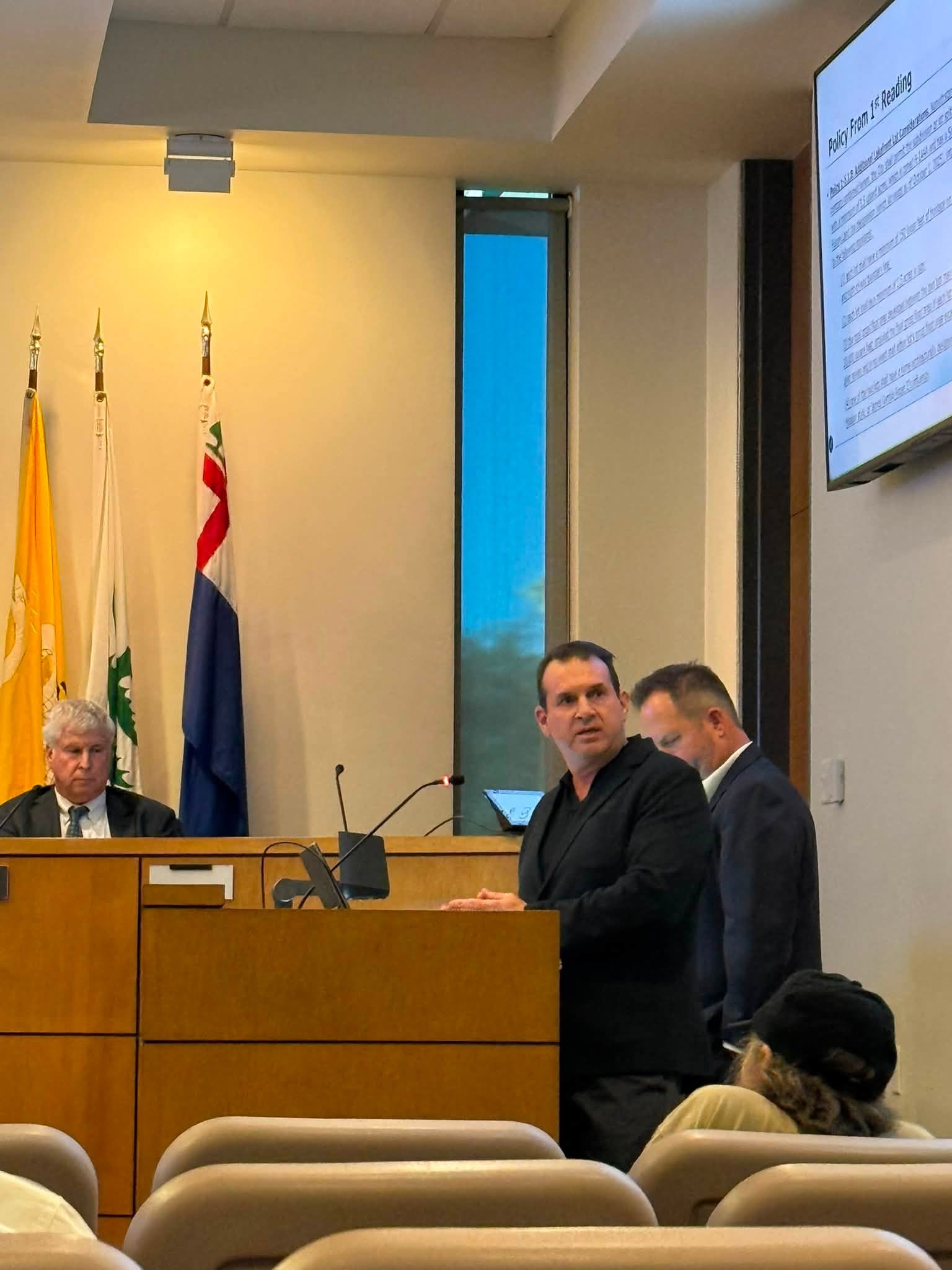
New Merrywood owner Steve Lockwood speaks at the City Commission meeting on Wednesday.
“Just like a billboard?” asked Commissioner Craig Russell, conjuring the image of an old Hollywood set piece.
Even after the meeting was recessed to give the owner and his lawyer time to try to work out some terms, it remained unclear how much of the house would need to be preserved to secure at least three votes on the commission, or how much Lockwood considered feasible and affordable.
Throughout the meeting, Lockwood and his attorney, Jason Searl of Maynard Nexsen, pointed to inspection and engineering reports that appeared to have been prepared earlier this year, when Tara Tedrow was still under contract to buy the property. The reports indicated that the house was in a state of disrepair beyond saving.
Searl showed commissioners an overhead projection of the house and pointed to a section of the facade, perhaps 30 feet long, that he said could potentially be restored.
That led to an exchange among commissioners that got to the heart of the discussion.
Commissioner Elizabeth Ingram said 30 feet was inadequate.
“That’s not the architecture,” she said. ” That’s not the beauty of the home. It’s not the house anymore. To me, if you were willing to keep that entire facade, that front whole section where you have the extra height on this side, and then you have the little rounded space around the side. That is the coolness. That is the charm and the beauty and the style of James Gamble Rogers.”
Ingram also said preserving so little would “erode” the city’s comprehensive plan, which must be amended to allow the lakefront lot to be split. The plan generally prohibits lakefront lot splits.
“That doesn’t encourage one bit of historic preservation, which we all claim to love and respect and want to promote, but then we’re going to be OK with just keeping 30 feet of this ginormous, beautiful home? Like, what are we doing?”
Cruzada argued that preserving some of the house was better than preserving none of it.
“I guess what I’m trying to do is find a path to some level of preservation or we lose it all together,” Cruzada said. “You know, we’re in an unfortunate set of circumstances. He’s here before us trying to compromise.”
“No, he’s here trying to have us compromise our comp plan,” Ingram replied.
“You’re right,” Cruzada said. “But the other side is if we don’t allow the lot split, then he’s still going to go forward with the demolition permit. Then we don’t have anything.”
Lockwood, who owns federal government medical staffing contractor Loyal Source and last year purchased the Orlando-based drinkware brand Corkcicle, and his attorney opened the meeting by saying they were unwilling to put any preservation conditions in writing beyond a commitment that Lockwood would make a “good faith” effort to preserve a portion of the house.
Searl proposed allowing any square footage Lockwood preserved to count toward the potential additional square footage of the new homes on the divided lot. The commission has sought to limit the combined size of the homes to 30,000 square feet.
Searl said that if commissioners did not approve the lot split Wednesday, Lockwood would move forward with demolishing the house and potentially seek approval for the lot split in the future. He quoted former owner Cathy Gilmer, who spoke during the June meeting and called the house “basically a waste” that falls further into disrepair every day it remains standing.
Searl said Lockwood was discouraged and offended by an open letter to the City Commission, organized by the Friends of Casa Feliz and signed by nearly 300 people, that called on the city to deny the lot split unless Lockwood agreed to designate the house as historic.
The letter came as a disappointment and a surprise, Searl said, after Lockwood spent two hours meeting with the leaders of Casa Feliz, another Gamble Rogers-designed house that was saved 25 years ago when it was moved across Interlachen Avenue to its current location on the Winter Park Nine. It now serves as a museum and popular event venue.
“When that happened, it feels like to us you’re then fighting a losing battle, and anything you say will not achieve a cooperative spirit from that group,” Searl said.
When it was Betsy Owens’ turn to speak, she explained that Lockwood knew about the letter and called for at least 80% of the house to be preserved, including the entire front elevation.
“When Mr. Lockwood and I met last week, I mentioned this letter,” said Owens, executive director of Friends of Casa Feliz. “It’s been in circulation for about two months, so this was not at all a reaction to that meeting. We were very upfront about that. We recognize an uncomfortable reality: Merrywood is not historically designated and could be legally demolished tomorrow, but today the city has something it ordinarily lacks, and that is leverage. The owner is asking you to change the comprehensive plan. That gives you an opportunity to secure preservation protections in return … We understand that saving some portion is better than losing all of it. We don’t want the perfect to be the enemy of the good.”
Lockwood later apologized for misunderstanding the open letter, saying he thought it was a new letter rather than the one Owens had already told him about.
After initially insisting he would not agree to delay the vote and would rather face a rejection than push the hearing to another meeting, Lockwood ultimately agreed to wait until November.
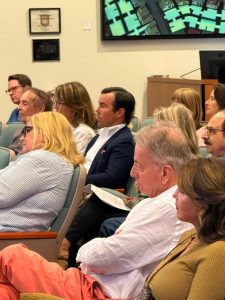
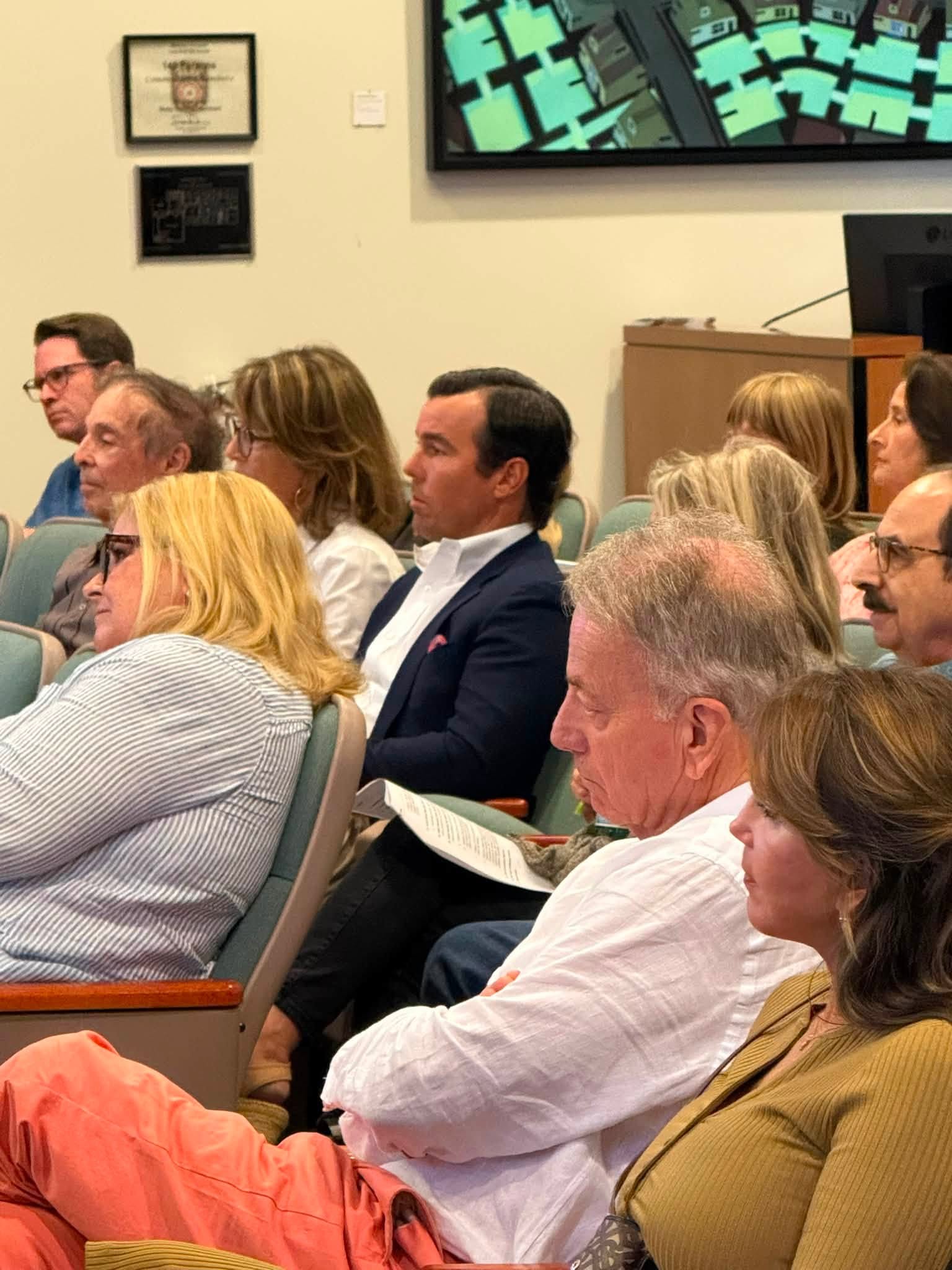
Matt Morgan, center, listens to the debate over Merrywood during the Winter Park City Commission meeting.
That leaves four weeks for a potential compromise to take shape or another twist to emerge in the saga of Merrywood.
Matt Morgan, one of the faces of the Morgan & Morgan law firm who lives in a historic home in Winter Park not far from Merrywood, sat in the commission chambers for nearly the entire meeting but did not speak.
On Thursday morning, he sent a letter to commissioners reiterating his desire to purchase the property. Morgan emerged publicly as a potential buyer over the summer after commissioners were told during the first vote that Merrywood had to be demolished because no one was willing to invest the money needed to restore it.
“I want to make certain the commission understands that I am willing to assume the financial responsibility and substantial undertaking necessary to preserve and restore the home,” Morgan wrote on Thursday morning. “I recently offered to purchase Merrywood for its pro rata share of the $12 million contract price. I also indicated that, upon reviewing the operating agreement for Lake Osceola Holdings, I would be willing to increase that offer.”
Tedrow reportedly had the property under contract for $12 million contingent on the lot split going through. Lockwood purchased the property under Lake Osceola Holdings LLC for $15 million, though his identity wasn’t known until last week and it’s unclear why the price went up by $3 million.
Morgan said Searl has told him the property is not for sale.
But Morgan said he remained hopeful the house would be preserved and expressed relief that the second and final vote on the lot split was delayed.
“Thank God they took a breath,” he said. “Because they were getting ready to entirely change the code on a hope and a prayer.”
WinterParkVoiceEditor@gmail.com
To comment or read comments from others, click here →
by Beth Kassab | Sep 30, 2026 | Chain of Lakes, City Commission, News, Zoning and Development
New Merrywood Owner (Who is Still Unknown) Will Pursue Lot Split
A second vote on the property that is known as the site of a large James Gamble Rogers II estate is scheduled for Oct. 14
Sept. 30, 2026
By Beth Kassab
One of Winter Park’s most closely guarded secrets — the identity of the new owner of the lot known as Merrywood at 1020 Palmer Ave. — may soon be revealed.
Jason Searl, a real estate attorney at Maynard Nexsen, sent a letter to Winter Park Planning Director Allison McGillis on Sept. 23 saying he was recently hired to represent Lake Osceola Holdings LLC, the entity that closed on the nearly 4-acre property in August for $15 million, and that the new owner is seeking to complete the process needed to split the lot in two.
“My client desires to continue with the pending Comp Plan Amendment and will accept responsibility for the application going forward,” Searl wrote.
The second of two required City Commission votes to finalize the change to the city’s development plan, which would carve out a special exception to Winter Park’s prohibition against lakefront lot splits for Merrywood, is scheduled for Oct. 14.
McGillis told the Voice she does not know who is behind Lake Osceola Holdings LLC, but said Searl indicated to her in a conversation that the new owners would likely meet with commissioners or potentially appear at the public meeting. That could mean they would be identified and potentially discuss their plans for the property.
She said she does not have any details about the owner’s plans, but said she was told it was possible that some portion of the 90-year-old estate on Lake Osceola could be preserved. The house is listed in Florida’s master file of historic resources and is among the last remaining examples of the local influence of architect James Gamble Rogers II, and is known as one of his largest and most ornate works.
Tara Tedrow, the Lowndes attorney who originally had the property under contract and began the lot split process last year, was copied on the email thread that included Searl’s letter and followed up with her own note indicating that she would no longer be involved in the process.
“Please accept this email as written confirmation of a transfer of my pending comp plan application to Lake Osceola Holdings, LLC,” Tedrow wrote.
McGillis requested the correspondence from both Tedrow and Searl so that she could meet the deadlines for public notice ahead of the Oct. 14 scheduled vote.
Neither Searl nor Tedrow responded to requests for comment from the Voice on Wednesday.
Lake Osceola Holdings LLC filed its articles of incorporation with the state of Florida’s Division of Corporations on June 10. It listed Carla Deloach as the manager of the company, and its Orlando address is the same as Cypress Row Advisors, where Deloach is a senior attorney.
On that same date, Tedrow filed with the state a company called Ketara RE LLC and listed herself and her husband, Kevin Skorman, as the managers.
June 10 fell about a week after the Planning & Zoning Board recommended that the City Commission approve the lot split, and about two weeks before the first hearing related to the property in front of the City Commission.
Tedrow did not respond to questions about whether the company she registered on June 10 was related to the lot on Palmer Avenue. She is also listed as a manager, along with Skorman, a local commercial and residential developer, on three other companies filed with the state between March and September.
Tedrow told city officials throughout the process that she hoped to build a home for her family on the empty portion of the Merrywood lot, which is not far from the house she grew up in, and sell the other portion.
She told the City Commission that she and Sotheby’s agent Mick Night hoped to find a buyer willing to preserve and restore Merrywood, which is now in disrepair, but that no one came forward after nearly a year of searching.
That led Mayor Sheila DeCiccio to say that there was little choice but to approve the lot split, because the house was likely to be demolished either way, and Tedrow said she would walk away from the deal if the split wasn’t approved. DeCiccio said she feared that without the split, another buyer would come along and build a house as large as 50,000 square feet, based on the entitlements related to the size of the lot. As a result, the City Commission voted 3-2 on June 24 in the first of two required votes to approve the split.
Not long after that, the Voice first reported that Matt Morgan, a Winter Park resident and key face of the Morgan & Morgan law firm, made an offer on the property in August 2025 for $10 million. Night said the offer was too low and that, at the time, he was unaware of Morgan’s desire to preserve the home.
Morgan, who currently lives in a home on the city’s historic register, then upped his offer to $12 million and said he would like to see Merrywood preserved.
The city extended a demolition permit for the property in August. City officials have little power to require the home be preserved because its longtime owners, before the most recent sale, never listed it on the local register.
The clearest path to keep the home standing is for the City Commission to approve the lot split with a condition that the home remain in place and be listed on the register — similar to a condition placed on a different property in recent years, in a case where the owner was also seeking to split the lot.
WinterParkVoiceEditor@gmail.com
To comment or read comments from others, click here →
by Beth Kassab | Sep 15, 2026 | Chain of Lakes, News
No Paid Parking at Dog Park After All
The park at Lake Baldwin was slated to be part of a pilot project to charge non-residents for parking
Sept. 15, 2026
By Beth Kassab
An agreement between Orlando and Winter Park unearthed from 24 years ago means the city of Winter Park can no longer move forward with plan to charge non-residents to park at the dog park on Lake Baldwin, City Manager Randy Knight said late Tuesday afternoon.
The agreement, he said, requires that residents in Orlando and Winter Park have equal access to two parks — one controlled by each jurisdiction — along the lake bordered by both cities.
“If the pilot program went forward at Lake Baldwin Park, Orlando residents would need to be exempted from the parking fee the same as Winter Park residents, which administratively would be a larger undertaking,” Knight said in a news release announcing the update. “As a result of this document and input received from citizens, the city is removing Lake Baldwin Park from the Pay for Parking Pilot Program but will continue to move forward with the pilot at Dinky Dock. The technology behind this program is still important important to explore as a tool to manage parking more effectively.”
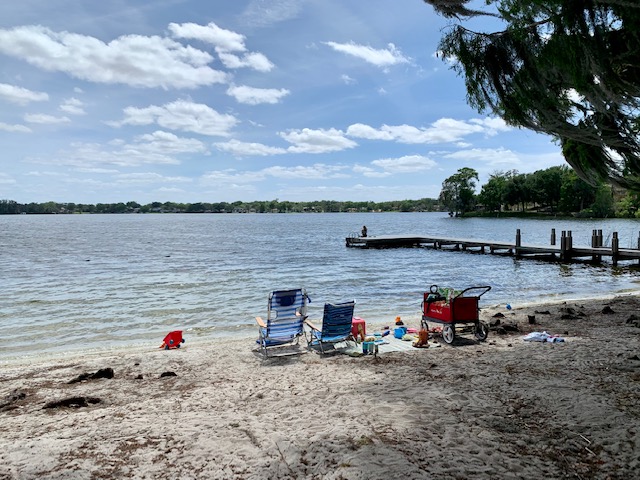
A view of Dinky Dock on a summer day.
The City Commission approved the six-month pilot program last week as part of a plan to raise more money as well as find a new way to reduce parking snarls in other parts of the city if the trial period is considered a success.
Some details are still not known, such as the exact cost to park at Dinky Dock, which is often busy on the weekends as people from surrounding cities use the dock for jet skis and other watercraft on Lake Virginia.
WinterParkVoiceEditor@gmail.com
To comment or read comments from others, click here →
by Beth Kassab | Aug 21, 2026 | Chain of Lakes, Environment, News
How Healthy is Lake Virginia? New Buoy Sends Real-Time Data
The project from the Freshwater Alliance at Rollins will help scientists and average lake goers know more about the quality of the Winter Park Chain of Lakes
Aug. 21, 2026
By Beth Kassab
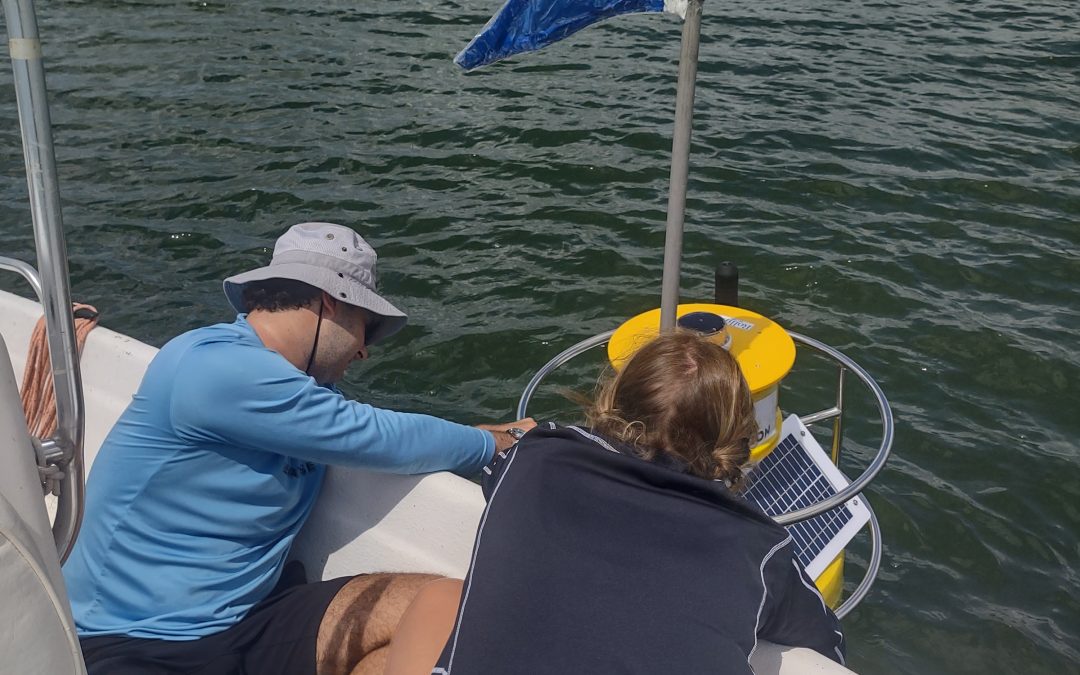
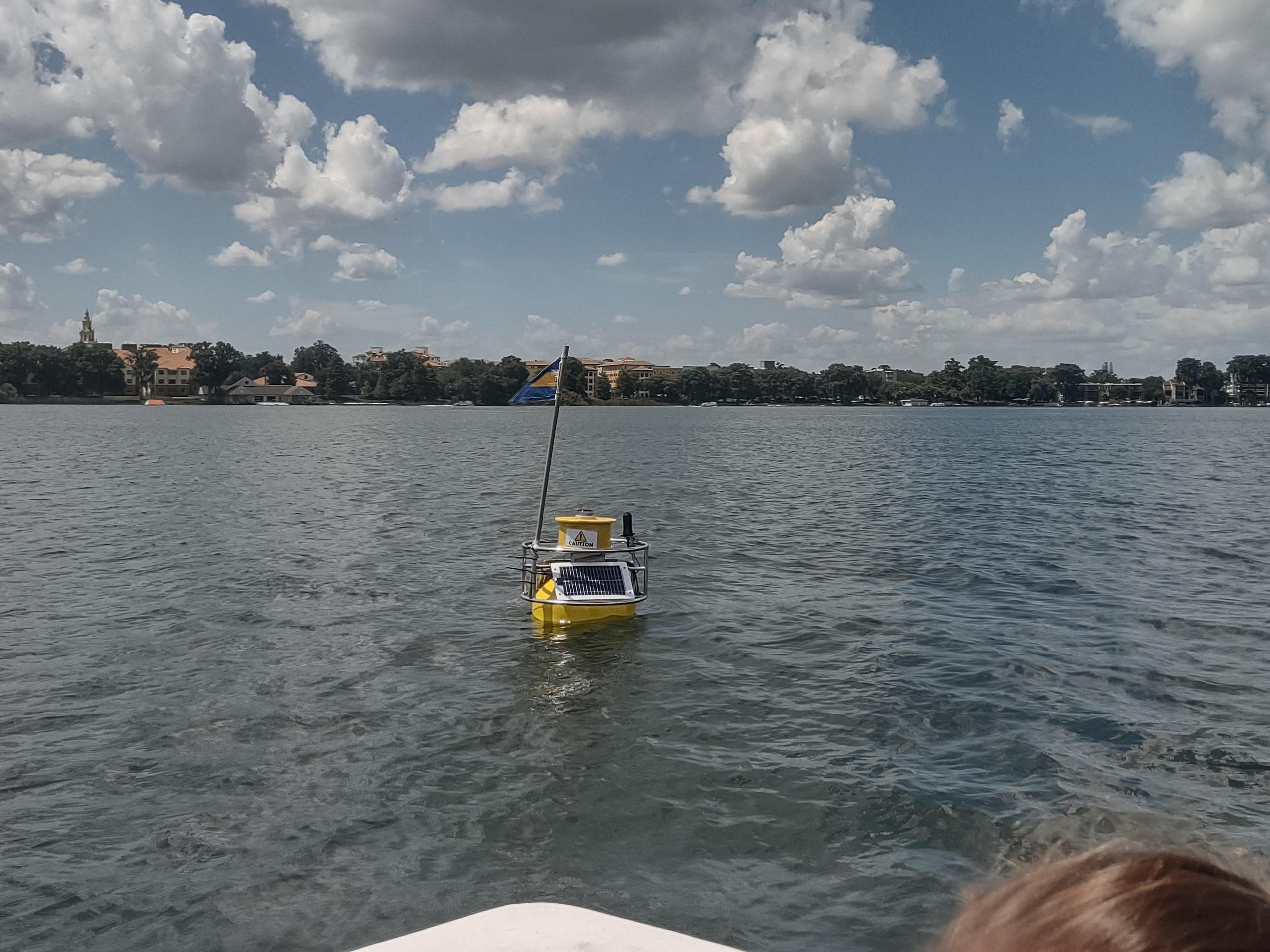
Boaters and paddleboarders may have noticed a new yellow buoy floating near the center of Lake Virginia and hoisting a Rollins College flag.
But the addition isn’t an average buoy warning of a speed zone or marking swimming boundaries.
This buoy is a first-of-its-kind for the lake to monitor water quality in real time.
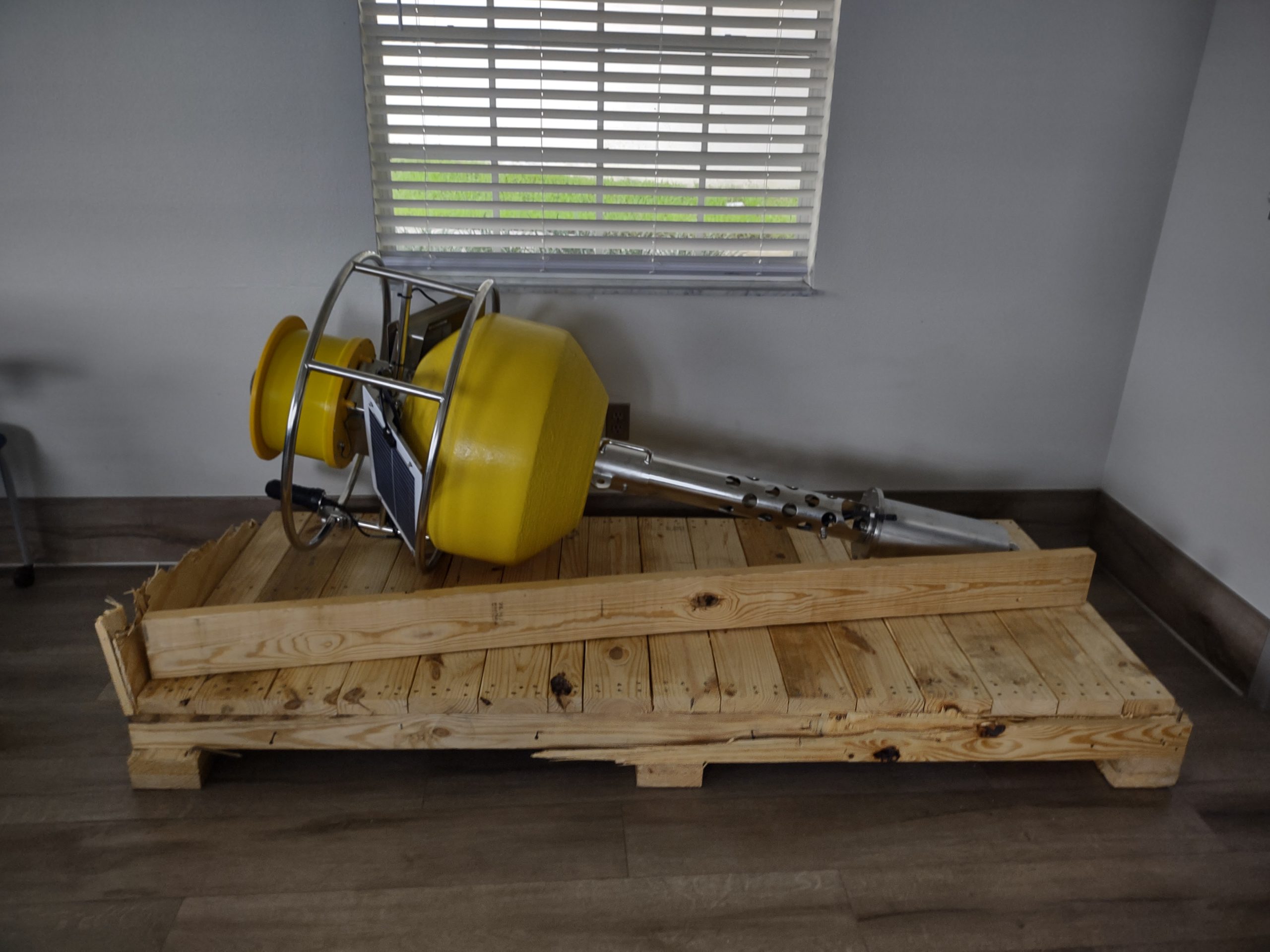
Operated by the Freshwater Alliance at Rollins, the buoy is collecting data around the clock related to water temperature, pH, dissolved oxygen, algae concentrations and other factors.
Eventually, all of that data will be crunched and coded into an easy-to-use dashboard for water-goers or anyone who wants to know about the health of the lake as well as researchers like Rollins’ Emily Nodine, who is interested in understanding environmental trends and how to best manage the health of the Winter Park Chain of Lakes.
“Over time we hope to develop a livestream of data that goes into a platform that will be publicly available,” said Nodine, chairwoman of Environmental Studies and faculty director of the Freshwater Alliance.
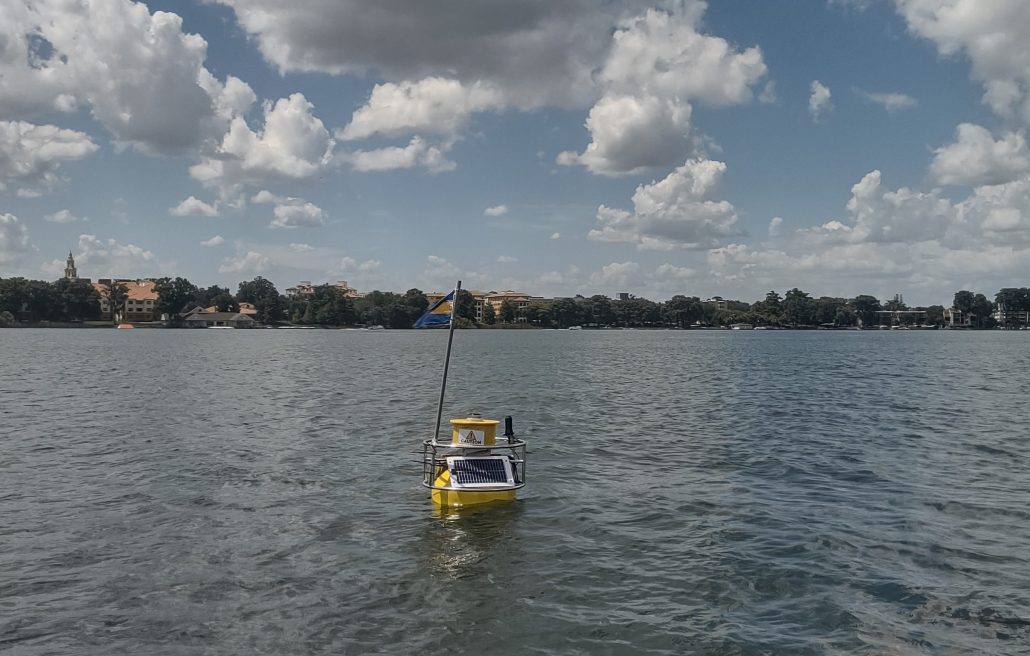
A view of the new buoy on Lake Virginia. (Photos courtesy of Rollins College)
In recent years, the city of Winter Park has closed the Chain of Lakes related to hurricane and storm activity and closed individual sections such as swimming off Dinky Dock because of algae blooms.
The buoy, which cost about $50,000 and was funded through a private donation to the alliance from the Elizabeth Morse Genius Foundation, will provide consistent sampling every 15 minutes and allow for more analysis of trends and future projections than the once per month water sampling currently done by the state and the city.
The buoy is floating near the deepest area of the lake — about 20 feet — and collects samples from about a meter under the surface to near the lake bottom. Temperature measurements from different depths will help Nodine’s team also understand how the water is moving through the lake.
And while the buoy is collecting samples from Lake Virginia on the south end of the Winter Park Chain, the lakes are connected both above and below ground and the data could provide clues about the entire system of water bodies. The chain of lakes is crucial to life in Winter Park where everything from real estate values to weekend skiers to Rollins crew and sailing teams to visitors on the Scenic Boat Tour rely on the health of the water.
“Someone who lives on Lake Osceola or Lake Maitland or even Lake Killarney, whatever Lake Virginia is doing, your lake is probably doing similar stuff,” Nodine said.
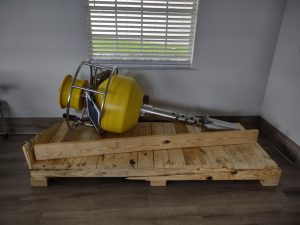
A view of the buoy before it was deployed.
The buoy is anchored near the center of Lake Virginia (coordinates 28° 35′ 15.45″ N, 81° 20′ 41.07″ W). While it will remain in a fixed location, it is not permanently installed and may occasionally be removed for maintenance or future research needs, according to a Rollins advisory.
It is equipped with safety features, including a flashing light and reflective markings. Boaters and other lake users are asked to be aware of the buoy’s presence and maintain a safe distance when navigating nearby, the advisory said.
WinterParkVoiceEditor@gmail.com
To comment or read comments from others, click here →
by Beth Kassab | Aug 20, 2026 | Chain of Lakes, Neighborhoods, News
Neighbors Tell Court They Plan to Resolve Suit Over Virginia Heights Park
In dispute is how the private park on Lake Virginia can be used after high-profile neighbors on both sides sought to limit access
Aug. 20, 2026
By Gabrielle Russon
Lawyers representing the Virginia Heights neighbors warring over a park said they are close to reaching a deal to end the legal fight and dismiss the lawsuit.
“We anticipate resolving this matter in short order,” lawyer David Meek told Orange County Circuit Court Judge Tanya Davis Wilson during a hearing Wednesday. “We anticipate this will go away shortly.”
Meek is representing Eric and Diane Holm and Brian and Caryn Albertson who sued their Virginia Heights neighbor Stephanie Guss over “filthy” kayaks stored at the park and “offending shrubs” that are visible from the backyards of the Holms and Albertsons.
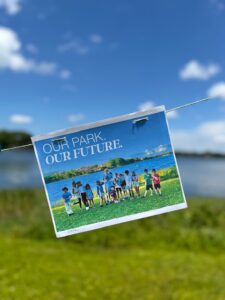
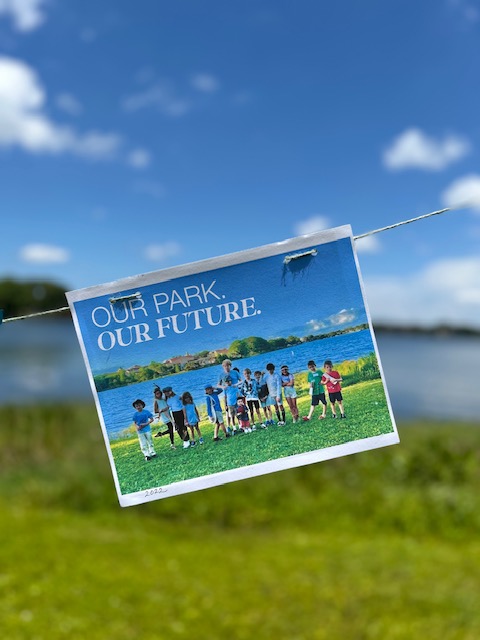
A sign hangs at the Virginia Heights park during a gathering.
The private park overlooking Lake Virginia is a beloved gathering place for residents in one of the oldest neighborhoods in Winter Park, but the spot has been embroiled in a nasty legal fight among residents.
The Holms and Albertsons, who live on either side of the park, filed an Orange County Circuit lawsuit last year against Guss. A narrow path to the park cuts along the property lines of both homes.
Eric Holm, one of the nation’s largest Golden Corral franchisees who lives in the 10,000-square-foot home just west of the park, is known for his charitable work such as serving a Thanksgiving dinner for thousands at the Salvation Army in Orlando and made headlines in 2024 when he hosted Vice President J.D. Vance (then a candidate) at his home for a fundraiser. The Albertsons built a nearly 8,000-square-foot home on the southeast border of the park two years ago.
Guss and the two couple’s lawyers filed a joint motion last week asking the courts for a two-month court delay to finish negotiating and reach a resolution to avoid going to a civil trial.
“It has had a lot of back and forth on negotiation,” Meek said during Wednesday’s hearing.
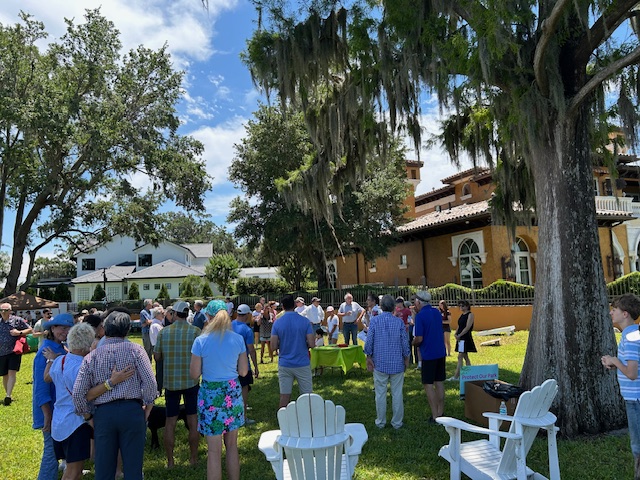
Neighbors gathered last year at Virginia Heights’ private park with homes belonging to Brian Albertson and Eric Holm in the background.
Their court filing expanded on the behind the scenes talks for the park shared by the 200 homes in the neighborhood.
“This case is unique in that while there is one named Defendant, the interests of numerous other owners of the park are involved both in the relief sought in the litigation and, to an even greater extent, in the negotiations towards a resolution that have been ongoing for an extended period of time. The extensive negotiations towards a resolution have included multiple Virginia Heights neighborhood meetings, votes of the interested homeowners, and extensive back and forth aimed at a resolution,” the lawyers said in the court filing. “The parties have been engaged in good-faith negotiations regarding a global resolution of this dispute, and anticipate having a final resolution in place in the very near future.”
The joint motion added “once a resolution is reached there will be certain tasks to be performed by both sides to bring about the full resolution of this dispute and its dismissal.”
When reached for comment, Brian Albertson said in an email Thursday, “We remain optimistic that this can be resolved between the sides and that we are nearing that resolution.”
Both sides did not respond to questions to elaborate on what “tasks” needed to be done.
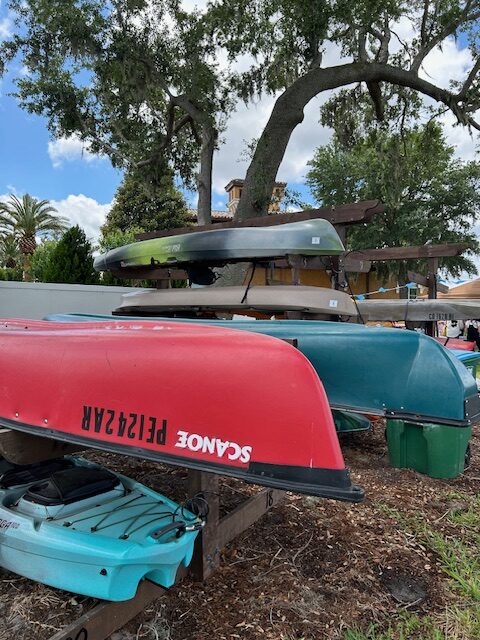
Some neighbors left about 30 kayaks, oars and lifejackets on storage racks at the park, located at 1240 College Point, the lawsuit said.
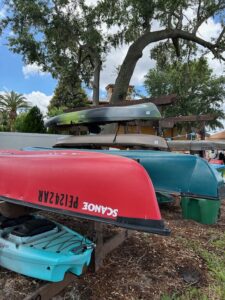
The kayak rack at the park.
“Recently, that private right to use and enjoy the park has been invaded through the taking of a portion of the Park property for private use,” the lawsuit said. “Many of the kayaks in and around the racks are filthy, showing no signs of use within the last year or more and are covered in dust, dirt, and mildew.”
The Holms and Albertsons complained bushes were also planted at the park.
“The planting of these bushes, like the erection of the racks, is an improper taking of the park for personal use,” their lawsuit said.
Guss became the target of the lawsuit since she helped coordinate the neighborhood’s inquiries for the boat racks. Neighbors quietly rallied around Guss and raised money to help with her legal expenses. Some neighbors said they feared they might be sued next.
The lawsuit noted Guss had “co-conspirators that are yet-to-be-identified members of the community” as the Holms and Albertson took Guss to court in 2024 to unsuccessfully find out the other neighbors’ identities.
“Consequently, Plaintiffs have initiated this lawsuit for the purpose of pursuing available remedies against Guss, and as their identities are revealed, Guss’s co-conspirators,” the lawsuit said.
Residents of the neighborhood said Holm and Albertsons installed cameras and floodlights and are using legal action to intimidate people from using the space for neighborhood holiday parties, Halloween costume contests and more.
The Holms and Albertsons previously told the Winter Park Voice in a statement their lawsuit’s goal “is to get clear, workable guidance that everyone can follow in 2026—so deeded homeowners can enjoy the park while the adjacent homes can maintain reasonable privacy and security.”
Some neighbors sent an anonymous statement to the Voice in January.
“For over a century, Virginia Heights Park has been our neighborhood’s heart, where families gather, children kayak, and over 200 homeowners enjoy deeded lakefront access specifically platted for community use. The park has evolved over the decades through neighbors’ collaborative efforts: maintaining and mowing the grass, planting trees, maintaining kayak racks, installing picnic tables, all funded and maintained by volunteers preserving our shared space,” their statement said. “Today, this tradition of community stewardship faces an existential threat, not from neglect, but from litigation.”
WinterParkVoiceEditor@gmail.com
To comment or read comments from others, click here →

Recent Comments