Editor's Note: Articles written by citizens reflect their own opinions and not the views of the Winter Park Voice.
Guest Columnist John Skolfield
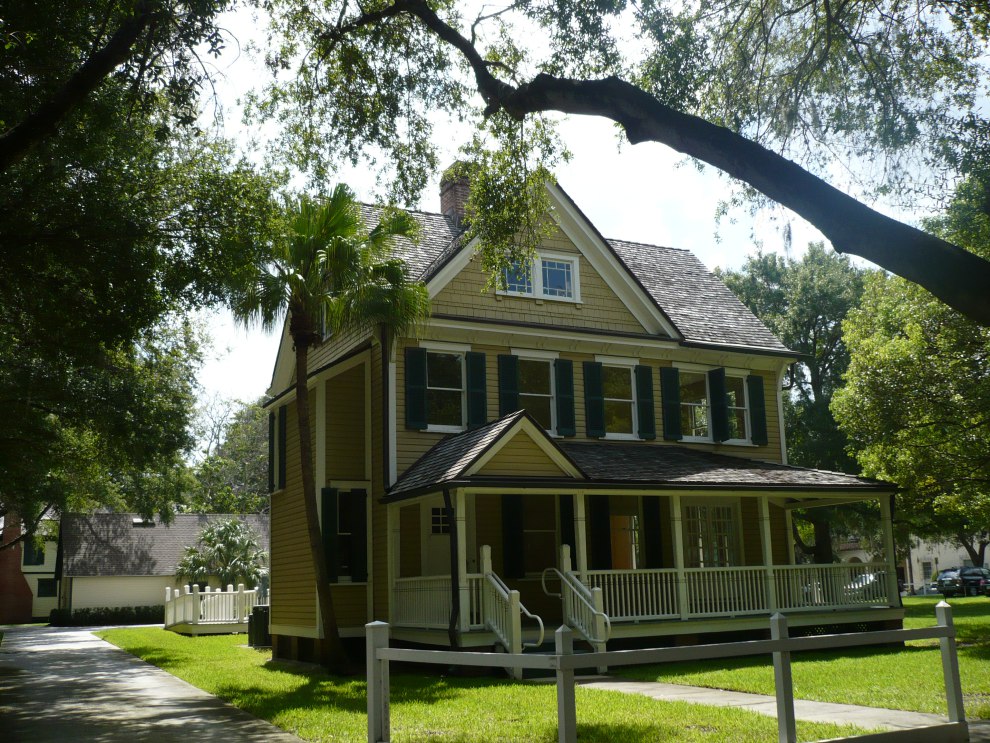
The Waddell House at 1331 Aloma Avenue was built in 1901, the year Walt Disney, Ed Sullivan and Louis Armstrong were born, the year President William McKinley was assassinated and Theodore Roosevelt became the 26th U.S. President. Hurricane Donna may have roughed up the old house in 1960, but she stood firm and hardly blinked at the Cuban missile crisis. In the end, however, she was no match for the Tennessee attorney who sheared off her façade — the intricate porch design that had been the face of this grande dame for more than 100 years.
Historic Designation in 2005
In 2005, Charles B. and Lurinda J. Smith had the home placed on the Winter Park Register of Historic Places. Mrs. Smith’s family had owned the Waddell House for well over 100 years. This act was intended to bring peace of mind and the assurance the house would be preserved and protected.
Situated on 45,600 square feet of land, historic designation allowed the Smiths to subdivide a 90-foot lot on the east, while preventing further lot splits by future owners. The Smiths could have razed the old house and, with city approval, split the lot into three 15,200 square-foot home sites. They chose instead to preserve a bit of history.
New Owners in 2019
In February 2019, fully aware of the designated historic status and the protections this provided, David and Deborah Dunaway purchased the home for $480,000. According to an email from City Planning Manager Jeff Briggs, the Dunaways met with City staff to confirm their intention to restore the home. They indicated the porch was unstable and that they planned to remove and replace it exactly like it was. Staff advised that before they could do that, their plans had to go to the Historic Preservation Board for approval.
Porches Removed Within the Year
On the weekend of July 8, however, the Dunaways applied for a permit to remove the porches, and rather than wait for the permit to be granted, they had the front and rear porches removed without a permit on the weekend of July 13-14, just before they returned to their home in Tennessee.
City Issues Stop Work Order
On Monday July 15, the Building Department issued a Stop Work Order and directed the owners to submit plans for the restoration of the porches. A tarp had been draped over the roof, but it was improperly secured, and by mid-September, the house had endured two months of water intrusion — a house with horsehair plaster walls and heart of pine floors. Briggs emailed the owners, who said they would correct the problem, but by October 7, nothing had been done to secure the tarp to prevent water intrusion. There was no reply from the Dunaways.
‘Don’t Think We Can Fix It’
Briggs wrote that the owner later said he has retained the services of Orlando Constructors and Inspectors, “to do a complete appraisal of the structural integrity of the home to determine if repairs are possible and feasible or if the home needs to be demolished.”
The neglect of the house appears to be strategic.
City Ordinance Requires Reconstruction
On Tuesday, October 29, I met with City Manager Randy Knight, Assistant City Manager Michelle Neuner, City Planning Manager Jeff Briggs, Director of Planning and Community Development Bronce Stephenson, and historic preservation expert Christine Dalton. They confirmed that City zoning code, Section 58-500, requires the historically accurate reconstruction of the removed porches and provides for heavy penalties for illegal removal.
Demolition by Neglect
In an email to Jeff Briggs, Christine Dalton, formerly Historic Preservation Officer for the City of Sanford and currently a Trustee of the Florida Trust for Historic Preservation, expressed her concern about the condition of the Waddel house. “With the information I have received so far,” she wrote, “it appears obvious that the property owners are engaging in Demolition by Neglect. They are dismantling the home and have not properly protected it from the elements. As you know, this is a strategy of many property investors – create conditions for deterioration, then hire a structural engineer to write a report stating that the building is unsafe and therefore must be demolished.”
Case Goes to Code Enforcement Board Dec. 5
On November 1, the City sent the owners a Notice of Violation advising them that a Public Hearing before the Code Enforcement Board was scheduled for 3:00 pm on December 5, 2019. The description of the violation was “Porch Structure Removed Illegally Without a Permit.”
Stated Compliance Requirements were, “Submit Plans for the Restoration of the Porch Removed Without a Permit,” with a deadline of November 15, 2019.
According to Briggs, “Nothing can happen with the home until a proposal/plans are submitted to the HPB [Historic Preservation Board], or (upon appeal) the City Commission can approve the demolition of the home.”
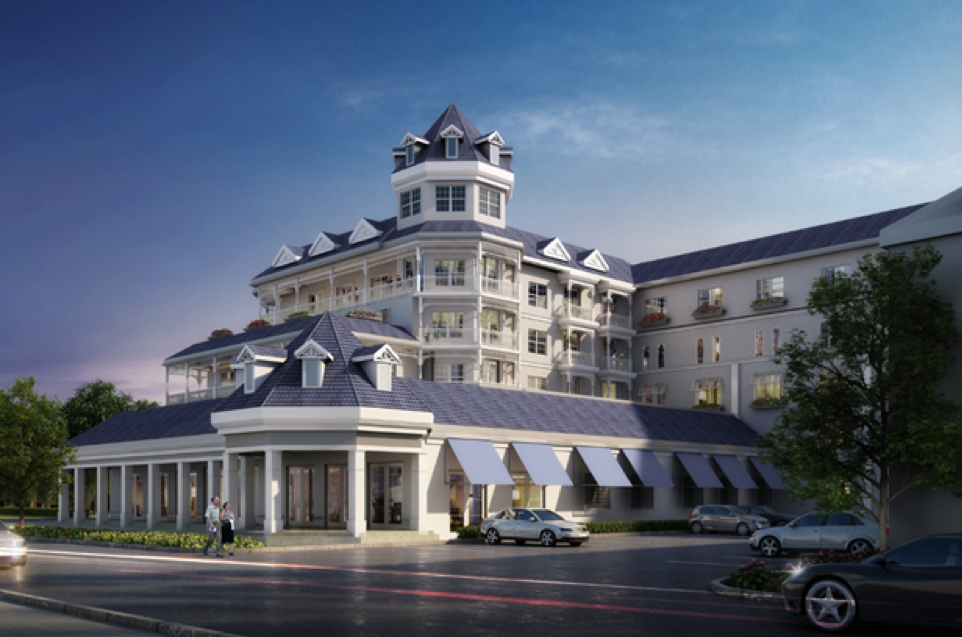
There is a great deal of information flying around about the 118-room Victorian style hotel proposed for a site on 17-92 that fronts on Lake Kilarney. Several meetings are scheduled for this week and next that should shed some light on what is actually happening. If this is a project that affects you – or just interests you – plan to attend one or more of the following meetings.
The P&Z Board will discuss the zoning changes and conditional use requests for the proposed hotel. This is for informational purposes only. The board members will take no votes and hear no public comment – but the meeting should be informative.
The developer, Adam Wonus, will host a Q&A and show the latest concept drawings at the Farmer’s Market. If you have questions about the project, here’s your chance to ask. Word on the street is the neighbors, not all of whom favor the project, plan to be in attendance.
This will be the formal P&Z hearing, where the board will vote on whether or not to move the Henderson Hotel project ahead to the Commission in late November. Votes will be taken and public comment will be heard.
Celebrate Community & Greenspace at the Winter Park Land Trust Kickoff
Feb. 28 – Farmers Market – 6 pm
The Winter Park Land Trust inaugural kickoff event at the Farmer’s Market on Thursday, Feb. 28 at 6:00 pm promises to be one great big party. There will be music, refreshments and something for everyone. Everyone is welcome – so come on out!
What’s a Land Trust?
Learn how land trusts work around the United States and hear about the Winter Park Land Trust’s vision to help plan, expand and protect urban parks and green space throughout Winter Park and surrounding communities.
Featured speakers from the City of Winter Park, the City of Orlando, the Alliance of Florida Land Trusts, the Nature Conservancy and, of course, the Winter Park Land Trust, will be joined by 15 groups at information tables, where representatives will be on hand to discuss their visions for urban parks and greenspace in Winter Park.
Participating Groups at Information Tables
City of Winter Park
City of Orlando
Nature Conservancy
Alliance of Florida Land Trusts
1000 Friends of Florida
Rollins College
University of Central Florida
Stetson University
Winter Park History Museum
Mead Botanical Garden
Audubon Society
Florida Native Plant Society
Winter Park Garden Club
IDEAS for Us
Winter Park Land Trust
Please forward this announcement to everyone you know who has an interest the future of parks and green space in Winter Park.
Go Green on February 28 – 6:00 pm — WP Farmers Market
Grab your Valentine and get ready to party!
Farmers Market — February 28 at 6:00 pm
Come celebrate the establishment of the Winter Park Land Trust with friends, food and music. Find out how you can be part of the mission of creating, enhancing and connecting our urban parks and green space for everyone’s benefit and enjoyment.
What is a Land Trust?
A land trust is a private non-profit organization whose purpose is to conserve land in perpetuity. It enhances the character of the community by providing open green space for recreation, education, the protection of water and air quality, wildlife habitat, and agriculture.
Land trusts ensure lasting stewardship of conserved lands and waters by working with government to create long-term plans looking out over several generations. Land trusts connect the planning process to the public through membership in the organization. There are more than 1,200 land trusts across the U.S., ranging from all volunteer community-based organizations to large staffed land conservation non-profits with statewide or national territories.
Why Does Winter Park Need a Land Trust?
The 2015 – 2016 Winter Park Visioning Process revealed that expanding and connecting urban parks and green space is one of Winter Park citizens’ most important community values.
A community land trust plays an important role providing additional local open space, and it can supplement the ability of city government to provide and maintain green space.
Land trusts in the United States are long-lived, because they are able to transcend the everyday operational responsibilities and the changes in personnel faced by local governments. They exist solely to support a permanent framework of parks and green space in cities and towns.
Vision and Mission Driven
“The mission of the Winter Park Land Trust is to plan, finance and manage the acquisition of land and interests in land to be used for the creation, expansion, improvement, and connecting of parkland and green space within and adjacent to the City of Winter Park.
Our vision is that the Land Trust will help to ensure that Winter Park and surrounding communities will be an area with sufficient parks and open space, where the footprint of existing parks will be increased, and wherever possible, parks and green spaces will be connected in order to balance and reduce the adverse impacts of increasing development and population density. Attractive green space will then always be an important asset and characteristic of the Winter Park area.”
By joining The Winter Park Land Trust, you can help with the process of permanent land acquisition for urban parks and greenspace in Winter Park. You can become a member now by going to the website address above – and come to the kickoff party to learn all about it!
The Winter Park Land Trust is supported through private, tax-deductible contributions. Your contribution is an effective way of acting upon your belief in creating a lasting legacy to secure the quality of life in Winter Park.
A standing-room-only crowd filled Rollins’ Suntrust Auditorium last night as panelists engaged the audience in a lively discussion about Winter Park’s future.
An audience of Winter Park residents and Rollins students joined panelists, former Commissioner Pam Peters, Entrepreneur Steve Goldman, Architect Phil Kean and Mayor Steve Leary, to explore how our city will navigate the opportunities and the issues facing it now and in the years to come.
Videos are in two parts, below, and last about an hour total.
Editor's Note: Articles written by citizens reflect their own opinions and not the views of the Winter Park Voice.
Guest Columnist Bob Bendick
I recently traveled to in Charleston, South Carolina, to attended a gathering of people from around the country who are engaged in the conservation of large landscapes for their benefits to people and nature.
What Charleston Can Teach Us
We had the opportunity to take a field trip and to hear from several of the community leaders who have been involved in land conservation and historic preservation in the South Carolina Low Country over the last 30 years. While Charleston itself is much larger than Winter Park, and the Low Country region is larger than the Orlando Metropolitan Area, there are lessons from the Charleston experience relevant to Winter Park and Central Florida.
Knowles Cottage
Legacy of Structures & Green Space
Charleston has an important history and a legacy of historic structures and green space. The people of Charleston have cared for the historic fabric of the city and have adopted local ordinances to ensure that historic structures are protected and that the scale of new buildings in the downtown area fit in with the traditional scale of the community.
Charleston’s Green Belt
Similarly, both within the city and in surrounding areas, there has been a sustained effort to protect open space for its ecological, cultural, and recreational values. This has been accomplished by cooperation with federal agencies, by bonding to finance land acquisition in Charleston County, by creative development plans, and by private landowners donating the rights to develop their rural lands. As a result, there is now a greenbelt of conservation lands two-thirds of the way around the city, and there are many places where people can access parks, refuges and waterways.
Everyone’s History Matters
Another part of Charleston’s history is important to this story. Charleston was the point of entry into North America for a large number of the African slaves brought to this country prior to the Civil War. Charleston is sensitive to this aspect of its past, and has worked hard to ensure that the African American community and its history are recognized and respected as Charleston moves forward.
Public-Private Partnerships Strengthen City Character
One clear reason for the success of conservation and historic preservation in Charleston has been extraordinary cooperation among non-profit organizations, local government, state and federal agencies and private businesses working together to protect the character of the region. Economic development interests have recognized the value of Charleston’s heritage and have contributed to its protection. For example, Boeing made funds available to purchase a key parcel of forest land for conservation to offset the environmental impacts of the construction of its large new aircraft manufacturing plant at the Charleston Airport.
Southern Charm is Strong Economic Driver
The protection of the historic and environmental character of the Charleston Region has not been an impediment to the economy of the city and the surrounding area. In fact, the quality and character of life in Charleston has been a key stimulus to economic development. It has attracted second home construction, tourism and the location of high-wage manufacturing. All of this has made the Charleston region one of the fastest growing in the country.
Protecting Winter Park’s Character is a Wise Long-term Investment
The lessons for Winter Park and Central Florida seem clear–that protecting the historic and natural character, scale, attractiveness and diversity of Winter Park and the surrounding region should not be thought of as opposed to the economic well-being of the city and central Florida, but as a long-term investment in the assets of our community that will attract quality growth while providing a sense of place, history, and belonging to the people who live and work here.
We Depend on your support, make a tax-deductible donation here.
Mission
The Winter Park Voice is a trusted nonprofit journalism site that covers our City Hall and beyond. We endeavor to engage, inform and connect citizens on all sides of issues affecting the quality of life in Winter Park.
 The Waddell House at 1331 Aloma Avenue was built in 1901, the year Walt Disney, Ed Sullivan and Louis Armstrong were born, the year President William McKinley was assassinated and Theodore Roosevelt became the 26th U.S. President. Hurricane Donna may have roughed up the old house in 1960, but she stood firm and hardly blinked at the Cuban missile crisis. In the end, however, she was no match for the Tennessee attorney who sheared off her façade — the intricate porch design that had been the face of this grande dame for more than 100 years.
 Situated on 45,600 square feet of land, historic designation allowed the Smiths to subdivide a 90-foot lot on the east, while preventing further lot splits by future owners. The Smiths could have razed the old house and, with city approval, split the lot into three 15,200 square-foot home sites. They chose instead to preserve a bit of history.


Recent Comments