The development will also include townhomes and a daycare that some neighbors said will cause too much traffic and parking problems
Aug. 26, 2026
By Beth Kassab
The City Commission on Wednesday approved a new development near Park Avenue to include a synagogue with a daycare and five townhomes after hearing from residents about the meaning of Chabad of Greater Orlando’s work and the importance of it becoming the first permanent synagogue in Winter Park.
The 3-2 vote followed more than three hours of discussions and comments, including objections from some neighbors who said they worried the project will create too much traffic, noise and parking problems. Commissioners Elizabeth Ingram, Craig Russell and Kris Cruzada voted in favor while Mayor Sheila DeCiccio and Commissioner Warren Lindsey dissented.
“I’m willing to risk parking and I’m willing to risk traffic so people and children can have a better understanding of each other,” Cruzada said just before the vote, adding, “I’m willing to live in a little discomfort” to show acceptance in the community.
DeCiccio and Lindsey supported a motion to postpone the vote, not because they oppose the synagogue, but because they wanted additional conditions on the project such as moving the location of three parking spots closer to the townhomes and an agreement that the synagogue would hold multiple simultaneous events.
“We would welcome a synagogue in Winter Park,” DeCiccio said. “We are with you. We stand with you. Attorney [Rebecca] Wilson can tell you we do this to everybody who comes in.”
Wilson of the Lowndes law firm represents the developer of the townhomes as well as the synagogue and has logged hundreds of hours in front of the Winter Park board over years answering questions about developments down to the smallest details from a commission known to publicly dissect proposals.
When the project passed on the first of two required votes, DeCiccio suggested that before the second vote next month the developer move three parking spaces closer to the townhomes on the 0.6-acre site at the corner of Morse Boulevard and Knowles Avenue where the El Cortez apartment buildings stand today.
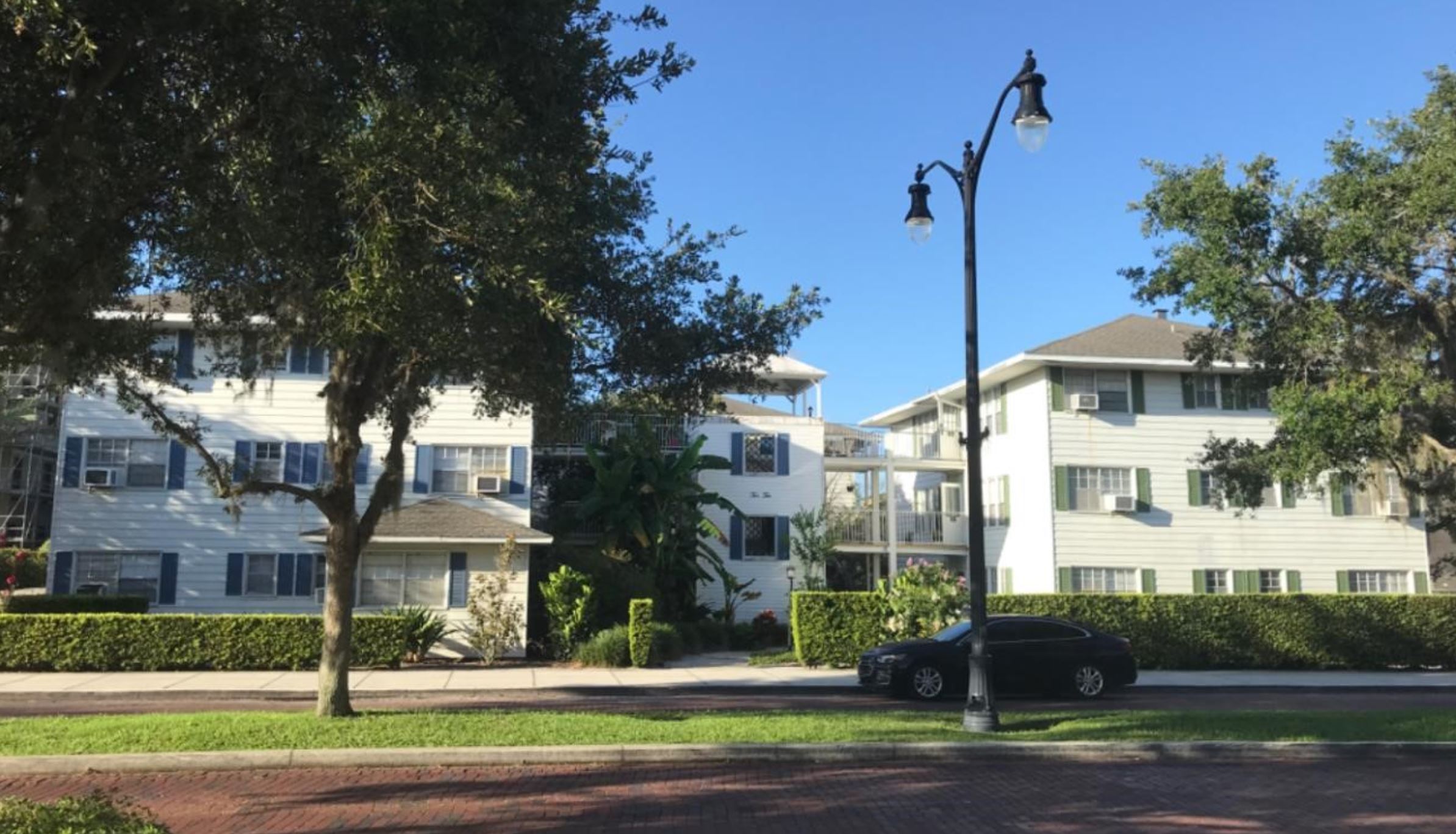
The El Cortez Apartments along Morse Boulevard.
Other conditions previously approved by the Planning & Zoning Board include a requirement that child drop-off and pick-up related to the daycare take place in the underground parking area planned for the synagogue as well as prohibiting speakers or amplified music on the rooftop patio; requiring all noise and lights from the rooftop end by 10 p.m.; any expansion of the synagogue or daycare must go back to the city for approval and car lines related to daycare drop-off or pick-up can not spill onto the public streets.
Rabbi Dovid Dubov said most services at Chabad have just 10 to 30 attendees. He also said the location proved the best option for Chabad because other sites proved too expensive or not in a location that people could easily walk to.
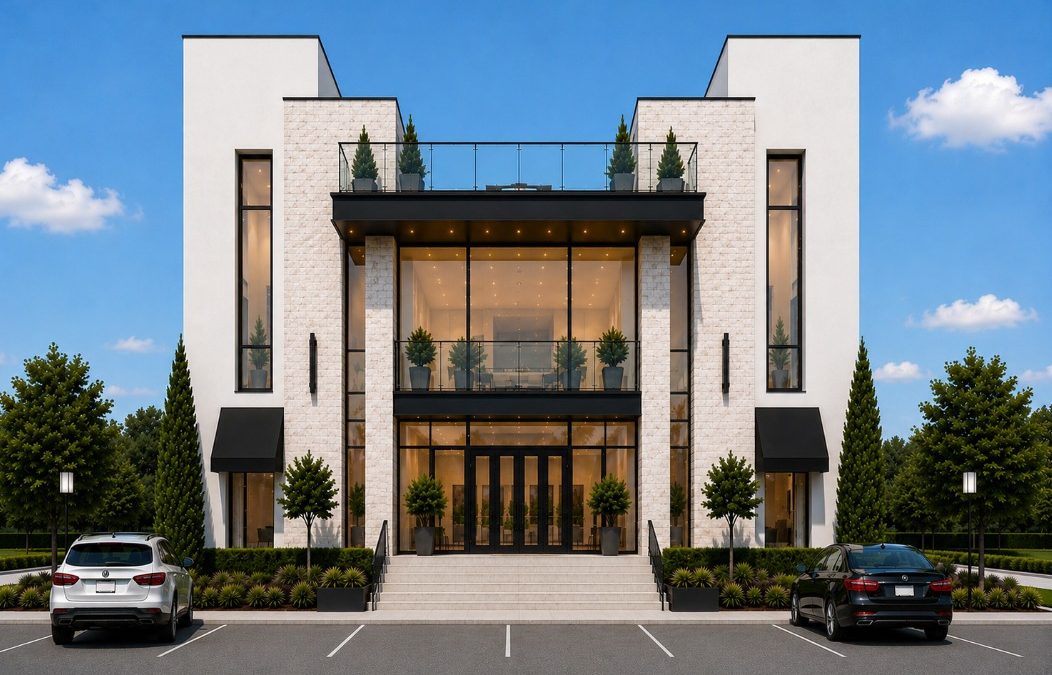
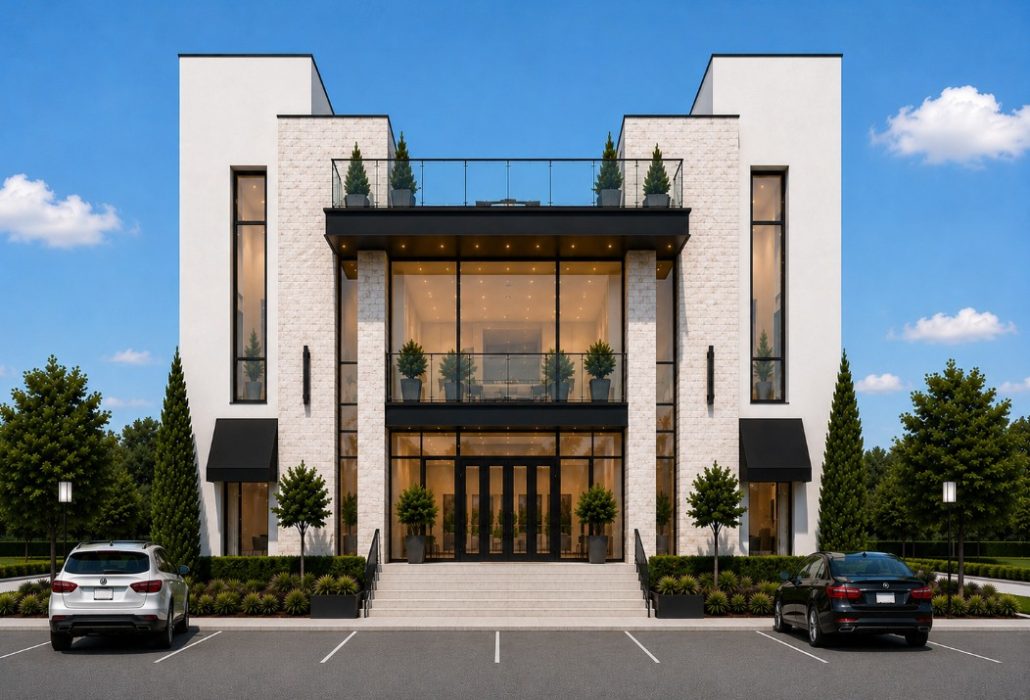
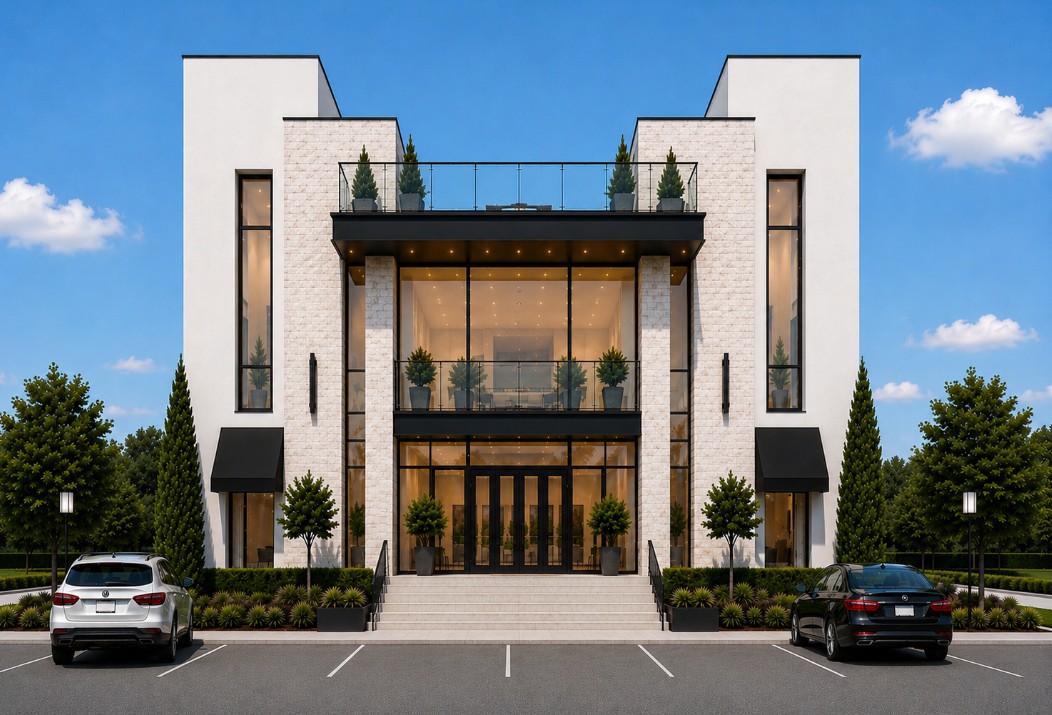
A rendering shows what the synagogue will look like from Knowles Avenue.
The 40-year-old organization lost its Maitland building to a fire in 2024 and has been operating out of a temporary space on the far end of North Park Avenue.
The proposal calls for 80 seats in the synagogue and the daycare is limited to 60 children. The five townhomes on the site are being developed separately and will be sold once completed.
Some residents who live in nearby townhomes and condominiums questioned the accuracy of a traffic study and noted how congested the small roads already become as a result of the Methodist Church preschool across Morse Boulevard and other church schools just blocks away.
Former Orange County Commissioner Ted Edwards attended the meeting on Wednesday and said he represented Frank Santos, who lives next to the site of the project and is chief executive officer of Rosen Hotels & Resorts.
Edwards said concerns centered on the Chabad’s planned rooftop event space that he said was more appropriate for a commercial area than a residential neighborhood.
People who attend the Chabad explained that Jewish law and tradition calls for some meals and events to be held outdoors, which is the reason for the patio.
Wilson pointed out that the Edyth Bush Charitable Foundation, a three-story building just one block down from the synagogue site and across Knowles Avenue, also rents out space for events without major disruptions to traffic or parking.
A city official says the request for a lot split will likely be tabled instead of heard at next week’s City Commission meeting
Aug. 19, 2026
By Beth Kassab
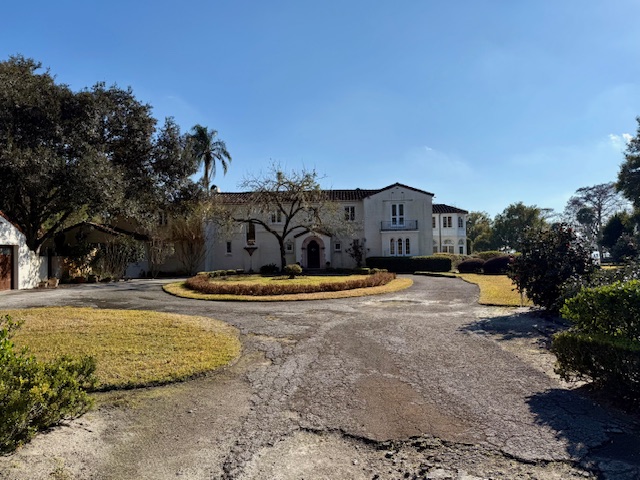
The historic home known as Merrywood was sold this week for $15 million to a company called Lake Osceola Holdings LLC, which is tied to an Orlando attorney and an estate advising firm called Cypress Row Advisors.
A deed dated Aug. 18 was filed with the Orange County Comptroller’s Office naming Raymond and Cathleen Gilmer as the sellers and the new company that was just created in June as the buyer for $15 million.
Winter Park Planning Director Allison McGillis said she spoke with Tara Tedrow, who previously had the property under contract for a reported $12 million and was requesting a lot split, and said she now expects Tedrow to ask for the lot split discussion to be tabled. The discussion had been scheduled for next week’s City Commission meeting.
Winter Park’s land development rules generally prohibit subdividing lakefront lots. Tedrow was seeking special permission through a change to the city’s comprehensive plan that governs development.
That prompted an outcry from historic preservationists who wanted to save the 90-year-old estate that is among the last remaining examples of the influence architect James Gamble Rogers II left on Winter Park.
The buyer, Lake Osceola Holdings LLC, filed notice of the new company with the state of Florida on June 10, according to state records. That was a week after the Planning & Zoning Board recommended that the City Commission approve the lot split and about two weeks before the first hearing regarding the house in front of the City Commission.
Carla Deloach is listed as the manager of the company and it’s Orlando address is the same as Cypress Row Advisors where Deloach is a senior attorney.
The sales deed was prepared by Jason Williams of the Lowndes law firm, where Tedrow is also a shareholder.
Tedrow began seeking the lot split last year, which she has said would allow her to build a family home on the vacant portion of the nearly 4-acre property and sell the other portion with the Merrywood house. Undeveloped lakefront lots are scarce in Winter Park.
Tedrow said at multiple public meetings that she hoped to find a buyer to preserve Merrywood, but said the house was in a state of severe disrepair.
Tedrow and Mick Night, the Sotheby’s real estate agent handling the transaction, said no one had come forward to preserve the home despite months of marketing the property because it was in such rough shape. As a result, they said at the June 24 City Commission meeting, there was little choice but to demolish the property.
Tedrow said her contract was contingent on the city approving the lot split.
The City Commission voted 3-2 that night to change the comprehensive plan to allow for a split that would only apply to the home at 1020 Palmer Ave. but added conditions: the combined total of two new homes that could be built on the lots would not exceed 30,000 square feet and at least one be fashioned in a style adjacent to architect James Gamble Rogers II, the local architect who built Merrywood and is known for helping to shape the city’s aesthetic character.
Attorney Matt Morgan, who also lives in Winter Park, then came forward with a $10 million offer, later upped to $12 million, to preserve the home. But he never heard a response from the sellers.
“I don’t know what to think because nobody knows what the intention or the plan is,” Morgan told the Voice on Wednesday morning after hearing word of the sale. “I think it’s a wait and see thing.”
McGillis said she doesn’t know who the buyer is, but that she heard from Tedrow that it’s a couple who emerged after the first hearing related to the lot split request.
“What she told me is that [the new buyers] are comfortable enough to close on the property without any guarantee,” of a lot split, McGillis said, adding that she understood all options are likely on the table from preserving the house to demolishing it.
While a permit is already in place would allow for the home to be bulldozed any day now, the owners and Tedrow verbally agreed to hold off on demolition until the second reading of the comprehensive plan change — which had been scheduled for next week and now is likely to be delayed or even cancelled all together.
Tedrow said she facilitated the demolition permit in an effort to bring the conversation about the house in front of the Historic Preservation Board. The 1938 Merrywood property is listed the Florida Master Site File, which means the demolition permit received a 90-day hold. The current permit is good through the end of August.
The home is not on the city’s historic register, leaving city officials without any power to stop demolition. McGillis recommended that a historic designation be one of the conditions of the lot split approval — a condition the city has required and approved before — but the commission rejected that after they heard no one was willing to preserve the home.
Betsy Owens, executive director of preservation group Friends of Casa Feliz, said the group would still like to see the home maintained.
“Until the house comes down we remain hopeful that a preservation option exists,” she said. “It would be a terrible loss if the house were demolished given that there is a known vetted buyer in Matt Morgan, who was willing to preserve the house.”
For now, the future of the estate remains in limbo.
Commissioners Want Safety Class and Other Rules for Kids on E-Bikes
Winter Park is still considering exactly what rules to put in place and how to enforce them
Aug. 14, 2026
By Gabrielle Russon
Winter Park is considering imposing new regulations aimed to crack down on people driving electric bikes and motorized scooters dangerously around town.
The City Commission held a workshop Thursday to discuss how they want to craft a future city ordinance although they did not take an official vote. No public meeting date has been scheduled yet for the City Commission to vote on the final ordinance, spokeswoman Clarissa Howard said afterward.
The issue of e-bikes and e-scooters has been a hot topic in Central Florida. Just ahead of the new school year, Orange County Public Schools banned the devices for all students unless they have a valid driver’s license or learner’s permit. School officials expressed frustration that state and local governments have not acted sooner to pass any safety reforms.
On the workshop’s agenda, draft language of the ordinance proposed a 10 mph speed limit for any electric bicycle or motorized scooter traveling on sidewalks, shared-use paths, trails and parks. E-bikes and e-scooters would be banned on sidewalks within the central business district, Hannibal Square Neighborhood Commercial District or Orange Avenue District just like bicycles are.
But city officials questioned whether to include a specific speed limit at all.
Winter Park Police Chief Tim Volkerson said he was hesitant about the challenges of enforcing a 10 mph limit.
“Conceptually, I like the 10 miles an hour, but the reality is if you set a speed limit of 10 miles an hour, I’m going to have a line of people at my door wanting to know why we’re not running radar on sidewalks and giving kids tickets for going 11 and 12 mph on the sidewalks,” Volkerson said. “If it’s in ordinance, there is going to be an expectation that we are going to enforce it.”
He also warned some electric vehicles young people are riding don’t have speedometers.
“It’s hard to hold a 13- or 14-year-old kid accountable for going 10 miles an hour when he doesn’t have any method of determining that he’s going 10 miles an hour,” Volkerson said.
City officials suggested not having a specific speed limit at all but crafting the ordinance to say “unsafe speeds” or “carless” driving was prohibited on e-bikes and e-scooters.
However, Commissioner Elizabeth Ingram said if the city left it “broad like that, everyone’s going to have their own opinion of what is careless.”
Under the proposed ordinance, e-bike and motorized scooters would need to yield the right-of-way to any pedestrian.
Winter Park officials nixed a proposed provision to require e-bike and e-scooter drivers to carry a government-issued photograph ID.
Anyone under 16 will be required to take a city-approved safety education class to ride in city limits.
“I absolutely love the idea of requiring kids to attend the class. I think it’s very, very smart,” said Volkerson, who added that young people are already required to take a class to ride dirt bikes.
Volkerson balked at the idea of the city issuing a card to prove young people took the course. He preferred they get a certification of completion.
“They blow through stop signs,” Mayor Sheila DeCiccio said of young offenders she has witnessed. “They need to just learn the basic rules of the road.”
The proposed ordinance said parents or legal guardians would be held responsible for minors who get cited for violating the ordinance. City officials did not discuss how much the fines would cost.
“This is about accountability,” Commissioner Craig Russell said.
Other city officials acknowledged the city had limited leverage to handle repeat offenders since the city would not be giving licenses although Volkerson pointed out the city can impound e-bikes and e-scooters
“Tow company doesn’t care if it’s a bike or a car. You are going to pay a high impound fee for that,” Volkerson said.
Police Chief Tim Volkerson said the cameras help enhance safety and could bring extra revenue for the department
Aug. 11, 2026
By Gabrielle Russon
Winter Park Police are looking to double the number of red light cameras in the city, a move that the police chief said would enhance safety as well as bring in new revenue amid talk of cutting the department’s budget as the state is pushing local governments to tighten their belts.
Last year, eight cameras posted at six intersections caught 24,400 violations– from blowing through a light to rolling right-on-red turns without a complete stop – and brought in $3.8 million in revenue.
Police Chief Tim Volkerson wants to add eight more red light cameras at the same six intersections, but facing different directions from the existing cameras.
“For example, Fairbanks and Orlando (Avenue) has a red light camera for westbound traffic,” Volkerson said. “It does not have a red light camera for eastbound traffic and it does not have a red light camera for north or southbound traffic.”
That intersection proved to be the third busiest of Winter Park’s red light cameras when it comes to issuing violations with nearly 3,600 tickets last year, according to police data analyzed by the Voice.
The camera on southbound Orlando Avenue at Lee Road resulted in nearly one-third of all the red light camera tickets last year. The second highest offending intersections were eastbound Lee and Orlando Avenue with 6,260 tickets.
Chief Tim Volkerson
Winter Park’s newest red light camera is at Phelps and Aloma is an intersection with a history of significant crashes, Volkerson said. That camera resulted in issuing about 1,600 red light violations last year.
Most of the violations caught on camera throughout the city are related to right-on-red turns. According to a state-required report that Volkerson is scheduled to deliver to the City Commission on Wednesday, nearly 70% of citations or 17,300 out of 25,000 violations during the 2025-26 fiscal year were for improper right turns on red signals.
Volkerson said safety is more important than money when it comes to adding red light cameras. But the topic came up at a recent City Commission work session as Volkerson presented his department’s budget, which includes keeping a community services position vacant next year to help reduce costs.
“Anyone that has lived in Winter Park would agree that the volume of cars that we have traveling through our city has increased,” Volkerson said. “The more important thing is for us to reduce crashes and even more importantly our goal is always to have zero fatalities.”
People speeding past red lights are most likely to cause T-bone or angular crashes that can have catastrophic results, Volkerson added. And Winter Park roads are active with cyclists heading out on the trails and early-morning runners training on the city streets every Saturday pre-dawn for Track Shack’s MarathonFest.
“If a byproduct is that it brings in revenue, that’s a good thing too, but that can never be and never should be the justification for doing it,” Winter Park City Commissioner Warren Lindsey told the Voice. “I would never ever support something just because it was a revenue producer when it wasn’t emphatically and primarily done for purposes of safety of motorists and pedestrians.”
A typical red light camera fine is $158 and the city of Winter Park collects $75 of that total with $2 going to police training and $73 to help fund the police budget. The rest of the money goes to the state for general revenue, health funds, and helping people with spinal cord injuries.
Volkerson is analyzing crash data to determine which intersections have the most cars passing through and the most crashes. The state requires cities to pass an ordinance in order to add new cameras and provide a reasoning for the locations.
“There has to be a nexus for us putting them there. We can’t just decide we’re going to put one at Park and Morse. We have to justify to the state why this is going there,” he told city officials at the budget work session.
Volkerson added he was not looking at school zones since those areas don’t generate enough traffic volume and are often already patrolled by officers.
Winter Park’s potential red light camera expansion comes as Floridians will be deciding whether or not to approve an overhaul of local property taxes in November.
Recently, the Florida State Fraternal Order of Police and the Florida Sheriffs Association came out strongly against the property tax ballot initiative, arguing the increase in homestead property tax exemptions could result in fewer dollars for essential services like public safety.
Volkerson declined to comment on personal stance on the ballot amendment.
“It’s up to each person to decide and vote,” Volkerson said.
Some, like Orange County Commissioner Kelly Martinez Semrad, fear that Amendment 3 will shrink funding for local governments.
“No matter how you shake it or how you roll the dice, property tax reform has an impact on the services that any municipality will be able to provide,” said Semrad, whose district includes Winter Park.
Semrad brought up whether red light camera tickets could help supplement the Orange County Sheriff’s budget if Amendment 3 passes as county officials held their own budget workshops last month.
“Ultimately we will have less revenue than than we do now … and we need to look for strategies to fill [revenue gaps]. So red light cameras might be an option,” she told the Voice. “I would rather tax somebody who made a mistake, did something wrong, ran a camera – than finding ways to tax others.”
Lindsey, the Winter Park commissioner who is also a criminal defense lawyer, said the presence of a red light camera has a real effect on drivers to make them more aware of their driving habits.
“The other thing is they’re less expensive to maintain than a police officer obviously,” Lindsey said. “You’re able to have them up there 24/7.”
Lindsey also liked that people who get cited have a process to contest their tickets and not get penalized on their driving records if they pay the civil fines.
According to the city’s report, nearly 74% of people who receive the notice of violations pay them.
In those cases, “It doesn’t affect you in the grand scheme of things on your record,” Lindsey said.
About 16% of civil violations result in a uniform traffic citation being issued because it wasn’t paid. Some drivers contest the citations in court, but the city did not report having any dismissed by a judge, though eight cases are currently pending, according to the city’s report.
There is one way to avoid the hassle altogether, Volkerson said.
“It’s really easy,” Volkerson said. “All you have to do is stop and not run the red light.”
On the Chopping Block: Police, Fire, Community Groups, Trash Collection
This week, in an email to residents, Mayor Sheila DeCiccio asked what should be cut in the city budget as a result of state-ordered reductions
Aug. 7, 2026
By Beth Kassab
After years of stripping power from locally elected mayors and commissions when it comes to everything from regulating where apartments can be built and how tall to whether cities can ban gas-powered leaf blowers or plastic straws, state leaders have reached a new level of micro-managing local governments: mandatory lists of budget fat.
Cities and counties will be required to publish those lists starting next year as a result of a new law (HB1329) signed by Gov. Ron DeSantis this summer.
But Winter Park is getting a jump on the exercise.
With potential property tax cuts looming in the form of Amendment 3 on the November ballot, city managers asked each department to lay out cuts to reduce their budgets by 10% (This exercise will be mandatory for local governments next year as a result of the new law.)
The results?
Here’s just a sample of what’s on the budget fat list in City Hall:
Eliminate a code enforcement officer position that is currently vacant ($75,000)
Eliminate funding for the Public Art Advisory Board ($15,000)
Eliminate the mailed printed version of quarterly Winter Park Update newsletter and monthly inserts in utility bills ($71,900)
Eliminate the use of accepting cash for city services like permits or other needs at the City Hall windows ($50,000)
Eliminate two vacant firefighter positions ($200,000)
Close a Fire Rescue engine company ($1.25 million)
Begin closing the library every Monday ($210,000)
Reduce garbage collection to one day per week ($300,000)
Reduce tree plantings, canopy maintenance and eliminate residential tree permits among other changes ($600,000 combined)
Eliminate the Historic Preservation Grant Program ($100,000)
Eliminate four police detectives, one traffic officer, one community service officer and two officers dedicated to homeless outreach ($1.15 million)
Eliminate body-worn cameras and live crime center for the police department ($300,000)
Reduce funding to community organizations such as the Winter Park History Museum, the Albin Polasek Museum & Sculpture Gardens, Mead Botanical Garden, Blue Bamboo and more. ($243,500)
You get the idea. And that’s not the complete list.
Also, to be clear, the spreadsheet of potential cuts provided by City Hall included about 45 items. Some of those were ways to increase revenue for the city (such as adding more red light cameras, which could result in $750,000 in new revenue). Even so, the total did not add up to $9.5 million or about 10% of the proposed budget’s nearly $95 million general fund. The proposed all-funds budget, which includes the utilities and other funds, is up to $247 million.
The Voice totaled the spreadsheet to about a $7.8 million overall reduction (including some revenue gains proposed).
“As you can see, getting to a budget cut of 10% would not be painless,” Mayor Sheila DeCiccio told the community in an email she sent out this week. “It could mean fewer police officers and detectives, longer emergency response times, reduced park maintenance, one-day a week trash collection, and fewer community programs.”
She asked residents in the email what they prefer to cut, explaining, “I’m writing this email because I believe you, our Winter Park residents, deserve to see the potential cuts that are being discussed. As always, I’m committed to full transparency.”
Winter Park staff estimates Amendment 3 would require cuts of $3.4 million in 2028 and $6.7 million in 2029. So far shy of the 10% exercise. But not far off once a few years into the new tax structure if it wins by the required 60% of voters in November.
The Voice has heard from some readers who appear to be under the impression that police and fire or other “essential services” can not be cut under Amendment 3, which would increase the homestead exemption ultimately to $250,000.
But that’s not the case. Cities and counties will still provide emergency services, to be sure, but at what level?
Florida House Republicans approved language that would ban local governments from reducing money for law enforcement, firefighters, and first responders below the level in either fiscal year 2025-26 or 2026-27, whichever was higher. But the Senate never approved that version and it died during the Legislative session.
That’s why police and sheriffs’ organizations have spoken out about the potential impact of the amendment and cuts that could result from it.
“The Florida Sheriffs Association is significantly concerned with Constitutional Amendment 3, which potentially allows Tallahassee to control your local budgets, creates longer law enforcement response times, limits communities’ abilities to provide road repairs and stormwater removal — these are a few things voters deserve to be aware of,” the organization said this week on Facebook.
And the soaring cost of police and fire service is a main driver of the growth in the budget the City Commission will consider this month.
Record-high pension costs for police officers and firefighters as well as a new labor contract with the Fire Union that included a 12% pay increase in 2026 will account for 70% of new costs in the proposed 2027 budget.
In 2021, for example, the starting salary for a Winter Park police officer was $22.84 an hour or about $48,000 a year. Today it’s $30.34 an hour or more than $63,000 a year.
Police Chief Tim Volkerson has said the increases are the result of pressure on wages from other departments who have raised pay as they have struggled to hire and retain officer.
The city has 121 full-time police staff and three part-time staff slated for 2027, up from 115 full-time staff and 13 part-time staff in 2023.
The budget for the fire department is up from $13.2 million in 2020 to a proposed nearly $19 million for next year. The department has grown from 81 full-time staff and two part-time staff in 2023 to 84 full-time staff and three part-time staff.
Translated into savings for individuals residents, homesteaded property owners would pay about $818 less per year to Winter Park. The total tax savings per year for Winter Park homeowners if the ballot measure passes would be $1,783, including the reduction paid to the city as well as the reductions in taxes paid to Orange County and St. Johns River Water Management District. (Taxes paid to schools would remain unchanged under the tax proposal on the ballot.)
The City Commission is slated to hear public input and consider portion of the budget at this meetings this month on Aug. 12 and Aug. 26 before final adoption of the budget by the end of September.
Synagogue, Daycare and Townhomes Win Approval from Planning Board
A number of residents spoke for and against the project that will result in the first permanent synagogue in Winter Park
Aug. 5, 2026
By Beth Kassab
After more than 20 residents spoke out during a two-and-a-half hour discussion, Winter Park’s first permanent synagogue won unanimous approval on Tuesday evening from the Planning & Zoning Board.
While some who addressed the board expressed concerns about traffic related to a daycare that will be run by Chabad of Greater Orlando and also noise or other neighborhood disruptions from a rooftop patio proposed for the top of the building, the board members said most of their questions about the development were answered.
The P& Z board added one condition to its approval the development, which also includes five townhomes at the 0.6-acre site at the corner of Morse Boulevard and Knowles Avenue where the El Cortez apartment buildings stand today.
Board members voted 5-0 to adopt the conditions recommended by staff and add a requirement that child drop-off and pick-up related to the daycare take place in the underground parking area planned for the synagogue.(Chairman Jason Johnson and members Bill Segal, Vashon Sarkisian, Samuel King and Charles Steinberg were in favor. Member Alex Stringfellow, who works as an urban planner and was asked to consult on the project before the application was made, recused himself from the vote and member Michael Dick was absent) The other conditions include prohibiting speakers or amplified music on the rooftop patio; requiring all noise and lights from the rooftop end by 10 p.m.; any expansion of the synagogue or daycare must go back to the city for approval and car lines related to daycare drop-off or pick-up can not spill onto the public streets.
A more modern design for the new Chabad of Greater Orlando was favored by the Planning & Zoning Board.
“It’s clear that this property could be developed at a higher capacity, which is going to bring up a whole lot of issues regarding parking and traffic,” said member Vashon Sarkisian, an urban designer. “So I think we have to consider that this is, you know, a coveted area and that there’s going to be redevelopment … so what is the right use? Well, I am in favor of this use. I think it’s, like so many people said, it’s something that’s missing in the city of Winter Park.”
Earlier in the evening, Jewish residents spoke about their desire to have a synagogue closer to their homes and the positive impact of Chabad on their lives.
“Chabad has been a part of my life for a long time. It’s where my parents met. It’s where I celebrated my Bar Mitzvah, and it’s where I’ve celebrated all my holidays,” said Daniel Isaak, 16. “… It’s about allowing a community to worship where it already lives. You know, all of my Christian friends, they all have churches in their own city, and they can practice their faith close to home surrounded by their neighbors. So why should Jewish families have to leave their own community to do the same?”
The 40-year-old organization lost its Maitland building to a fire in 2024 and has been operating out of a temporary space on the far end of North Park Avenue.
Several people who attend Chabad said only 12 to 15 people typically are at Friday evening services.
The proposal, which still must be approved by the City Commission, is capped at 80 seats in the synagogue and the daycare is limited to 60 children. The five townhomes on the site are being developed separately and will be sold once completed.
Rabbi Dovid Dubov said many people who will attend services or use the daycare will walk rather than drive, which will help alleviate traffic concerns. Jewish law prohibits driving on Shabbat, for example.
“Our responsibility is to make Jewish education available where Jewish families live,” Dubov told the board. “And today, ladies and gentlemen, there is no Jewish daycare in Winter Park. We have also worked diligently to be respectful of our neighbors. We voluntarily limited our daycare to just 60 children, approximately one-fifth the size of nearby church schools, and our traffic study demonstrates that that impact will be extremely minimal.”
But some residents who live in nearby townhomes and condominiums questioned the accuracy of the traffic study and noted how congested the small roads already become as a result of the Methodist Church preschool across Morse Boulevard and other church schools just blocks away.
Frank Santos, who lives next door, said the area is already undergoing enormous change and contending with traffic and parking problems. Santos, chief executive officer of Rosen Hotels & Resorts, which has a long history of supporting local Jewish causes led by its late founder Harris Rosen, said his own rooftop living space will be impacted by as many as 80 people using the synagogue’s rooftop deck because of the proximity.
“Chabad of Greater Orlando and it’s member should have a synagogue in Winter Park,” Santos said. “Knowles Avenue is not the right location. Find a site with less density and appropriate parking.”
Marc Hagle, who is known for constructing the largest private residence in Winter Park at 40,000-square-feet on Palmer Avenue and for taking two Blue Origin suborbital space flights in recent years, said he attended the meeting with the intention of speaking against the project, but was impressed by the presentation. Still, he noted potential traffic congestion and also questioned if redeveloping the site mostly as a synagogue would have a negative tax impact to the city because religious institutions are generally exempt from paying property taxes.
“I think the tax implications to the city are a problem,” Hagle said. “The city is facing some really interesting tax problems coming up with the laws that are changing,” he noted, an apparent reference to the amendment on the November ballot that could significantly decrease property taxes collected by local governments.
The El Cortez Apartments along Morse Boulevard.
“By putting something in the area that’s tax exempt, I think you’re creating a potential problem for the future,” he said. “We’re all interested in making sure that the city meets its obligations and it maintains standards that, quite frankly, the city hasn’t done for the past five to ten years. This isn’t the right place to say this, but the quality in the city isn’t what it used to be.”
Several longtime Winter Park residents who are Jewish noted the meaning of the synagogue after a history of discrimination against Jews across the country, including in Winter Park.
“It has been a problem being Jewish in Winter Park, to be candid,” said Barry Render, a former longtime Rollins College professor. “When I moved into my house on Via Tuscany and applied for membership in the Racket Club, which is just a block away from me, I was turned down because I was Jewish.”
He also noted that the holiday celebration in Central Park did not always include a Hanukkah menorah as it does today.
David Jasmund, who lives close to the site on Interlachen Avenue, was one of several people who attended the meeting who said they were “disappointed” that any of the concerns about the development were being linked to bigotry.
“That’s disappointing,” he said. “Unfortunately, it’s around us today in society, which I think is really depressing at times.”
Jasmund said he didn’t have any concerns related to the synagogue itself, but questioned the capacity of the roads to handle another daycare in such close proximity to others.
“I think it’s unrealistic to think that someone is going to drive a 1-year-old or a 2-year-old down into a basement … take them out of a car seat, take them upstairs, and get 60 people in and out of there without it being stacked up on Morse, Interlochen, Knowles, and maybe even Park Avenue.”
Hattie Wolfe, another speaker who lives nearby, said parking in the area is already “impossible.”
A rendering shows what the townhomes on the site will look like.
“I’m Jewish,” she said. “I have nothing against the synagogue, but I don’t think it’s the right place for it, judging by what’s happening to the town.”
Becky Wilson, the Lowndes law firm attorney who is representing the synagogue and often represents development projects in Winter Park, said the project is doing everything possible to address concerns about traffic, parking and density.
“I think what occurred to me and that I’ve grown to appreciate while working on this project is how important having a synagogue in the city of Winter Park is to the Jewish residents,” she said. “And, in particular, to have one downtown where many of the other large, important churches are also located. What I’d also say to those residents is I’ve stood here for over 20 years, and I’ve never brought a project forward where I didn’t have to answer questions about traffic, parking and density.”
P&Z Chairman Jason Johnson asked Wilson if Chabad would agree to the condition that daycare pick-up and drop-off must occur in the underground garage to help with traffic flow and she said the group would agree. He suggested parking on the site is likely a “net benefit” for the downtown area once El Cortez is gone because people utilize street parking related to the apartments.
“There are people I deeply respect on both sides of the issue who have made their their comments to the board tonight,” Johnson said. “… My main concern with the traffic was not the number of trips, but rather the flow of traffic through the site for day care drop-off and pick-up. I think if that traffic flow can be directed directly into the garage below the facility, it would help alleviate that quite a bit.”
The next step for the project is a hearing in front of the City Commission.
We Depend on your support, make a tax-deductible donation here.
Mission
The Winter Park Voice is a trusted nonprofit journalism site that covers our City Hall and beyond. We endeavor to engage, inform and connect citizens on all sides of issues affecting the quality of life in Winter Park.




Recent Comments